PÎRNĂU MIRONELA is an Associate Professor, PhD, at the Romanian-American University. She is affiliated with the Faculty of Managerial Informatics, working within the Department of Computer Science, Statistics and Mathematics. Education: Graduated from the Faculty of Automatic Control and Computers at the POLITEHNICA University of Bucharest (1992); PhD in Electronics (Specialization: Electronics and Telecommunications) from the University of Pitești (2003) Her research focuses on Web Technologies , Graphical Interface Design , Computer Graphics , Web Application Security , Social Networks , Software Engineering , Databases , and Computer Networks . She has been actively involved in professional organizations since 2009, including the IACSIT Internet Society, World Academy of Science, Engineering and Technology, International Association of Engineers (IAENG), and CSTA. Professional Memberships: 2009–present: IACSIT Internet Society 2009–present: World Academy of Science, Engineering and Technology 2010–present: International Association of Engineers (IAENG) 2011–present: CSTA
Dana Petcu is a Professor at the Computer Science Department of the Faculty of Mathematics and Computer Science at West University of Timisoara. She serves as Director of both the Institute for Advanced Environmental Research and Institute e-Austria Timisoara. With expertise in distributed and parallel computing, she has published over two hundred papers on Cloud, Grid, Cluster, and HPC computing. She is also the chief editor of the open-access journal Scalable Computing: Practice and Experience (SCPE) and has coordinated multiple European Commission-funded projects. Education: Ms. Degree in Computer Science Ph.D. in Numerical Analysis Dana Petcu's research focuses on distributed and parallel computing systems. Her current interests include Cloud & Grid computing, and HPC & Cluster computing. Previously, she worked on Mathematical software, Numerical methods, and Computer graphics. Her work bridges theoretical foundations with practical implementations, particularly in resource management, scheduling algorithms, and scalable computing architectures. She has developed significant expertise in applying these technologies to scientific computing, data-intensive applications, and multi-cloud environments. Her scholarly output demonstrates consistent focus on cloud and distributed computing evolution. Over the past decade, her research has shifted from foundational grid computing to modern cloud technologies, edge computing, and exascale systems. Key themes include resource management across heterogeneous environments, autonomic systems, security SLAs, and multi-cloud portability. Her work shows increasing interdisciplinary connections, particularly with AI/ML techniques applied to resource optimization and anomaly detection in large-scale systems. Scientific Awards: Maria Sibylla Merian-Award (2005) IBM Faculty Award (2009) MLNR Award "Spiru Haret" (2015) Romanian Academy Award "Gheorghe Cartianu" (2015) Dana Petcu has advised numerous graduate students through various master's programs in Distributed and Parallel Computing. She has secured substantial research funding as coordinator of FP7 projects HOST and SPRERS, and as scientific coordinator of mOSAIC. Her grant portfolio includes multiple European Commission-funded initiatives focused on cloud computing infrastructure, resource management, and multi-cloud environments. She has also contributed to EU Research Activities in Cloud Computing as an editor, demonstrating her leadership in shaping European research agendas in this field. She leads the Computer Science Research Center (CCI) and High Performance Computing Service Center (HPC-UVT) at West University of Timisoara. Her teams develop and maintain significant infrastructure for distributed computing research, including simulation environments like CloudSim and iFogSim. She has established strong connections between academic research and practical applications through Institute e-Austria Timisoara, fostering technology transfer and innovation in cloud computing solutions.
Luminița POPA is a Lecturer at the Automation and Information Technology department within the Faculty of Electrical Engineering and Computer Science at Transilvania University of Brașov, Romania. Her work integrates computer-aided design, simulation, and sustainability principles into industrial applications. Research Focus: Computer-aided graphics/design/modeling/simulation, Product Lifecycle Management (PLM), Industrial circular economy, and User interface design Contact: Email: luminitapopa@unitbv.ro | Address: Mihai Viteazu 5, Brașov, Romania, Building V Her recent publications highlight eco-sustainability analysis in manufacturing, circular economy applications in business processes, and robotics modeling. She utilizes tools like CAD SolidWorks and contributes to sustainable design frameworks. No scientific awards or student advisement details were explicitly mentioned in the provided text.
Evelina Anatoliivna Bazhmina is an Associate Professor at Zaporizhzhia Polytechnic University, specializing in engineering education with a focus on descriptive geometry, engineering graphics, and computer graphics. She has been affiliated with the university since 1993 and holds a PhD in Professional Education, which she defended in 2023 with her dissertation on forming a culture of independent work among mechanical engineering students using BYOD technology. Her educational background includes: Specialist diploma in 'Materials Science in Mechanical Engineering' from ZNTU (1998) Bachelor's degree with honors in 'Jurisprudence' from ZNTU (2012) Specialist diploma with honors in 'Jurisprudence' from ZNTU (2013) Dr. Bazhmina's research focuses on innovative teaching methods for engineering graphics, blended learning approaches, and the application of BYOD technology in technical education. She also has expertise in civil and family law, contributing to interdisciplinary educational approaches. Her work emphasizes student-centered learning and the development of independent work skills among technical students. Her extensive publication record demonstrates a strong commitment to improving engineering education through technology integration, with particular emphasis on formative assessment, personalized learning approaches, and the development of students' self-directed learning capabilities in technical disciplines. Scientific awards and recognitions include: Honorary badge 'For Impeccable Work' III degree (2024) Honorary certificate of the Executive Committee of the Zaporizhzhia City Council (2016) Gratitude of the Board of Education and Science of Zaporizhzhia Regional State Administration (2011) Honorary certificate of the Trade Union of Education and Science Workers of Ukraine (2011) Honorary certificate of the Department of Education and Science of Zaporizhzhia Regional State Administration (2002) Dr. Bazhmina has authored multiple textbooks and teaching materials, including 'Diagnostics of the formation of a culture of independent work of students of the mechanical engineering industry' and 'Fundamentals of engineering graphics,' contributing significantly to educational resources in her field. She teaches Descriptive Geometry, Engineering Graphics, and Computer Graphics courses at the university.
Dr. Eng. Radu Pentiuc is a Lecturer in the Department of Electrotechnics at the Faculty of Electrical Engineering, University Stefan cel Mare of Suceava. He holds a doctorate in Electrical Technologies (1997) from Universitatea "Gh. Asachi" din Iași and specializes in electric traction systems, industrial power applications, and advanced motor design. With industrial experience prior to his academic career, he bridges theoretical and practical engineering concepts. Research Focus: His work centers on optimizing electric motor efficiency, particularly in hybrid and linear induction systems. Key investigations include electromagnetic field analysis, toroidal inductor configurations, and reducing border effects in motor design. His research extends to industrial power systems, energy conversion technologies, and electric traction applications for railway systems. Publications: His articles (1994-1998) predominantly explore electromagnetic motor design, computational modeling of hybrid systems, and efficiency optimization. Recurring themes include toroidal inductors, magnetic flux analysis, and novel approaches to linear induction motor construction. Student Advising & Projects: Supervised 12+ diploma projects (1993-1998) resulting in functional prototypes, including: Reactive energy compensation devices Electromagnetic braking systems Linear motor designs Industrial power control systems Research Contracts: Coordinated/participated in 13 projects, including: Minimizing technological outputs at SPIT Bucovina SA Optimizing solar energy conversion installations Developing low-speed induction motors Hybrid motor design algorithms Patents: Contributed to 6 inventions including asynchronous linear motors, low-speed induction motors, and electromagnetic drive systems.
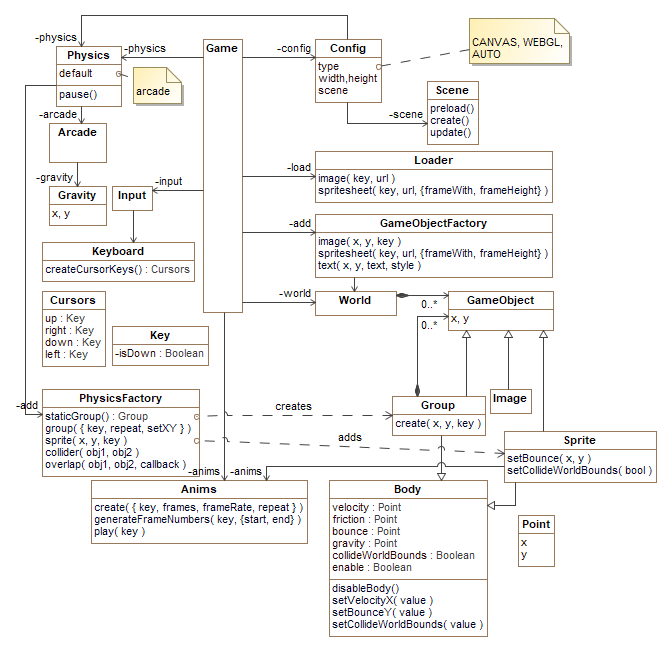
Ioan Lazar is a Lecturer in the Department of Computer Science at Babes-Bolyai University's Faculty of Mathematics and Computer Science. He is based in room 342 at FSEGA and teaches specialized courses in game development and framework design using modern web technologies. Dr. Lazar's expertise spans both 2D and 3D game programming with emphasis on: JavaScript game frameworks including Phaser WebGL and Three.js for interactive 3D graphics Physics engines (Ammo.js, Enable3D) Multiplayer game development using Socket.IO Modern web frameworks and component architectures His teaching portfolio includes two major courses: Game Development - covering geometry, physics, animations, and multiplayer implementations Framework Design - focusing on React, Redux, Web Components, and micro frontend architectures Student assessment emphasizes practical implementation through significant project components requiring physics integration, animations, and multiplayer functionality.
Andriy Volodymyrovych Zasovenko is an Associate Professor at the Department of Mathematics, Zaporizhia National Technical University, where he has been actively contributing since 2004 and serves as the person responsible for research activities at his department. Dr. Zasovenko received his higher education from Zaporizhia National Technical University, Faculty of Radio Instrumentation in 2000, specializing in "computer systems and networks" with a focus on "systems engineering," earning a Master's degree. He successfully defended his Candidate's thesis in 2009 titled "Elastic and elastic-plastic waves in rod structures" in the specialty 01.01.04 "Mechanics of Deformable Solids." His primary research focus is in the field of mechanics of deformable solids, with expertise in elastic and plastic deformation analysis of structural elements. His work spans theoretical and applied mechanics, emphasizing mathematical modeling of deformation processes, wave propagation in structures, and analysis of structural responses to dynamic loads. Dr. Zasovenko has developed numerical and analytical approaches to solve complex deformation problems, with applications in mechanical engineering, materials science, and structural design. His scholarly contributions demonstrate consistent focus on mathematical analysis of structural mechanics problems, particularly involving cylindrical geometries, beams, and shells. His research has significant applications in metal forming processes and structural engineering. Почесна грамота районної адміністрації по Жовтневому району Запорізької міської ради (2011) Почесна грамота Запорізької міської ради за вагомий особистий внесок у підготовку висококваліфікованих спеціалістів (2020) As an educator, Dr. Zasovenko teaches Higher Mathematics and has mentored numerous students. His academic service includes responsible oversight of research activities within his department. He actively participates in international conferences and collaborates with researchers from various institutions across Ukraine. Dr. Zasovenko maintains active research collaborations with colleagues at Zaporizhia National Technical University and contributes to the academic community through scholarly publications and conference presentations.
Serhiy Serhiyovych Samoilyk is an Associate Professor at the Department of Radio Engineering and Telecommunications within the Faculty of Information Security and Electronic Communications at Zaporizhzhia National Technical University. He has been active at the university since 2007 and holds the academic degree of Candidate of Physical and Mathematical Sciences, which he obtained in 2019 with a thesis on waveguide-resonator systems. His primary research focuses on microwave resonator systems, mathematical modeling, and optimization of microwave systems. He teaches a diverse range of courses including Service platforms of information systems, Fundamentals of graphic and geometric modeling, Modeling and optimization of systems and networks, and Telemedicine. His expertise spans both theoretical and applied aspects of radio engineering and telecommunications. Samoilyk's recent publications (2016-2024) demonstrate a strong trajectory in electromagnetic theory, microwave engineering, and emerging applications in telecommunications. His work shows a progression from fundamental electromagnetic modeling to practical applications in radar systems, wireless communications, and even interdisciplinary areas like telemedicine and payment systems. The publications reveal consistent contributions to both Ukrainian and international scientific communities. He maintains active research collaborations, as evidenced by his co-authorship on numerous papers across different domains. His work bridges traditional radio engineering with modern applications in IoT, blockchain, and assistive technologies, demonstrating adaptability to evolving technological landscapes. Samoilyk has taught various courses related to radio engineering, circuit design, and communications technology, contributing to the education of future engineers at the university. His academic journey from graduation in 2004 to becoming an Associate Professor reflects dedication to both research and teaching in his field.
Adriana Birlutiu is a Lecturer in the Computer Science Department at 1 December 1918 University of Alba Iulia , Romania. Her expertise lies in machine learning, computer vision, bioinformatics, and transfer learning, with a recent focus on porcelain-industry optimisation. Education Ph.D., Radboud University Nijmegen, Netherlands (2011) M.Sc., Babeș-Bolyai University of Cluj-Napoca & University of Lorraine (Erasmus), 2005 B.Sc., Babeș-Bolyai University of Cluj-Napoca, 2004 Research Interests Adriana's research spans machine learning , deep learning , computer vision , and bioinformatics . She has contributed to preference learning, domain adaptation, protein–protein interaction prediction, and automated quality control in porcelain manufacturing. Her recent projects integrate deep neural networks with industrial computer-vision systems to detect defects and recognise characters on ceramic surfaces. Publication Trends Across 15 recent publications (2010-2019), Adriana has consistently explored transfer learning , multi-task learning , and Bayesian methods . Articles cluster around two major axes: biomedical applications (protein networks, cancer relapse prediction, respiratory-motion modelling for radiotherapy) and industrial AI (porcelain defect detection, character recognition). The work shows a clear evolution from theoretical machine-learning foundations to practical, domain-specific implementations. Grants & Projects SIVAP (2016-2018): Intelligent ML & computer-vision system for porcelain manufacturing optimisation, UEFISCDI PN-III-P2-2.1-BG-2016-0333. CMRCC (2017-2018): Computational Models for Reproducing Ceramics Colors, UEFISCDI PN-III-P2-2.1-PED-2016-1835. Student Supervision & Mentoring Adriana has supervised more than 25 undergraduate and master’s theses. Her students have won multiple awards at national conferences such as In-Extenso and SCCSS-IEECC , covering topics from automated defect detection to web applications for academic scheduling. Teaching Responsibilities She teaches courses including Machine Learning , Mathematical Software , Fundamental Algorithms , Object-Oriented Databases , and Modelling and Simulation at both undergraduate and master levels.
Морозов Денис Миколайович is an Associate Professor and Head of the Department of Information Technologies in Tourism at Zaporizhia National Technical University's Faculty of Business Technologies and Economics. With a multidisciplinary background spanning engineering, economics, and management, he has been actively contributing to the university since 2007. His educational background includes three degrees: a Specialist in Personnel Management and Labor Economics from ZNTU's Faculty of International Tourism and Economics (2013), a Master of Mechanics from ZDTU's Faculty of Mechanical Engineering with specialization in Robotics (2000), and an Economist-Manager from ZSTU's Faculty of Economics and Management (2000). Морозов's research focuses on the intersection of information technologies and tourism, with particular expertise in GIS technologies for tourism, information systems in personnel management, and digital economy applications. His scholarly work demonstrates a clear evolution from early research in geometric modeling and finite element analysis toward contemporary digital transformation topics in tourism and business. His recent publications (2023-2024) reveal a strong emphasis on digital economy, blockchain applications in tourism, AI in HR analytics, and business digitalization during wartime conditions, reflecting adaptation to current technological and geopolitical realities. As an educator, he teaches a diverse range of subjects including Information Technologies in Personnel Management, Econometrics, Economic and Mathematical Models, Higher Mathematics, Internet Marketing, and Informatics. With active participation in annual scientific conferences "Week of Science" at ZNTU since 2009 and international conferences, Морозов maintains an ongoing scholarly presence while leading his department through technological changes in higher education and industry.
Răzvan Tănasie is a Lecturer at the Department of Software Engineering, Faculty of Automation, Computers and Electronics, University of Craiova, Romania. With an engineering background in Software Engineering from the University of Craiova (2004), he has been a PhD candidate since 2009 in the field of Automation, supervised by Prof. Dr. Mircea Ivănescu. He teaches several courses related to computer graphics including Computer Graphics, Graphics I (2D), Graphics II (3D), and Multimedia Design for e-Business. His research interests include: Computer graphics Artificial intelligence Image processing In his research career, he has authored over 40 scientific articles, books and manuals, and his student teams have won over 35 awards in national and international competitions. He has participated in various national and international research projects such as "Graphical System for Virtual Visual Servoing Applications" and "Autonomous Robot-Computer Vision Platforms, Intelligent, for Qualification, Sorting, Quality Inspection for Holonic Controlled Products, Services Oriented - SOFHICOR".
Mihai V. Micea is a Professor and Head of the Department of Computer and Information Technology at the Politehnica University of Timisoara. He also serves as Director of the CCCTI Research Center and Coordinator of the DSPLabs. With a B.Sc., M.Sc., and Ph.D. (Cum Laude) from Politehnica University of Timisoara, he has been a faculty member since 1996. His research focuses on intelligent robotic environments, energy management, embedded systems, and real-time hardware/software systems. He has supervised 4 completed PhD theses and currently oversees multiple doctoral candidates. Micea has authored over 125 publications, 3 patents, and managed over 50 R&D projects worth €1.88M. His awards include the 'Eminent Young Researcher of Timisoara' (2006) and the IEEE Outstanding Reviewer Distinction (2017). Education: B.Sc. in Computer Engineering (Politehnica University of Timisoara, 1995) M.Sc. in Computer Engineering (Politehnica University of Timisoara, 1996) Ph.D. in Computer Engineering (Politehnica University of Timisoara, 2005) Habilitation Degree (2015) Research Interests: His work spans intelligent robotic systems, energy optimization, signal processing, and real-time embedded systems. Key areas include cyber-physical systems, sensor networks, and secure IoT communication protocols. His recent projects include RoNaQCI (Quantum Communication Infrastructure) and TEEFIOS (Time-Efficient Framework for Smart Devices). Grants & Projects: As Principal Investigator/Manager, he has led 29 projects with total funding exceeding €1.88M. Notable projects include CloudPUTing (High-Performance Cloud Platform) and MELISSEVS (Robotic-Sensor Collaboration Models). Awards & Recognition: 2006: Eminent Young Researcher of Timisoara (ANCS) 2017: IEEE T-IM Outstanding Reviewer Labs & Teams: Founder and Coordinator of DSPLabs (Digital Signal Processing Laboratories), focusing on real-time systems and smart sensing. Active in IEEE SSIT Romanian Chapter (2013–2022) and international conference organization (e.g., IEEE ROSE 2014).
Natalia Anatolyvna Kulikovska serves as a Senior Lecturer at the Department of Computer Systems and Networks within the Faculty of Computer Science and Technology at Zaporizhia National Technical University. She has maintained a continuous academic affiliation with the university since 2010, contributing significantly to both teaching and research initiatives in computer science and technology. Dr. Kulikovska completed her higher education at Zaporizhia National Technical University, graduating in 2010 with a Master's degree in "Specialized Computer Systems" and further specializing in "Organizational Management" in 2011. Her academic credentials are complemented by multiple scholarly identifiers including Scopus (ID: 57208667683), ResearcherID (AAE-4642-2019), Google Scholar, and ORCID (0000-0003-4691-5102). Her research expertise spans semantic technologies, modeling, multi-service systems, ontology, web services, and Service-Oriented Architecture (SOA). Dr. Kulikovska's scholarly work demonstrates a progressive evolution from theoretical foundations in distributed knowledge-based systems toward practical implementations in Internet of Things applications. Her early publications focused on semantic service structures and distributed knowledge systems, while her recent work (2022-2024) shows a pronounced shift toward practical IoT applications addressing real-world challenges in environmental monitoring, temperature control, and security protocols. Analysis of her recent publications reveals a consistent research trajectory focusing on the intersection of semantic technologies with IoT implementations. Her work addresses critical challenges in data transmission integrity, system resilience, security measures for IoT devices in fog computing environments, and the integration of Big Data analytics with distributed sensor networks. Notably, her research on chatbot applications for environmental control represents an innovative fusion of natural language processing with practical IoT solutions. As an educator, Dr. Kulikovska teaches courses in modern internet technologies, information protection, software engineering, and modern programming methods. Her teaching methodology likely integrates her research findings, providing students with current knowledge in rapidly evolving technological domains. While specific details about her advising responsibilities are not available in the provided text, her extensive publication record suggests active mentorship of students in research projects related to distributed systems and IoT technologies. Her laboratory and team affiliations are not explicitly detailed in the available information, though her research focus suggests potential involvement with university centers specializing in computer modeling, intelligent systems, and IoT development. Her work on green computing in Ukraine indicates engagement with sustainability initiatives within the technological sector.
Sebastian Chelu serves as an associate teacher and PhD student at the Faculty of Communication and Public Relations, National University of Political Studies and Public Administration (NUPSPA) in Bucharest, Romania. He concurrently holds a teaching position at the Faculty of Arts, Hyperion University. His primary responsibilities include instructing the Multimedia Journalism course within master's programs and coordinating SRTV's post-production service—the largest department in Romania for image editing, sound mastering, and graphic design, handling the full spectrum of audiovisual production from raw footage to final broadcast. His research and professional focus centers on the Internet's transformative impact on media communication, particularly the rapid evolution of audiovisual content and the convergence of journalism with digital technology. He specializes in advanced post-production techniques including video editing, sound processing, color grading, and special effects, emphasizing how modern tools reshape storytelling through artistic manipulation of light and color. His work bridges academic instruction with industry practice, preparing students for multimedia journalism careers where technical software proficiency meets creative narrative development. Scientific Awards: No scientific awards, fellowships, or medals were documented in the provided materials. As an educator, Chelu mentors students in Multimedia Journalism while drawing from extensive collaborations with renowned Romanian directors including Liviu Ciulei, Geo Saizescu, Alexandru Tocilescu, and Ioan Cărmăzan, alongside television personalities such as Lucia Hossu Longin, Titus Munteanu, and Ioan Grigorescu. Though specific advisees and research grants remain unlisted, his teaching integrates real-world editing techniques and industry-standard software, providing students with practical insights into professional media production workflows and artistic decision-making processes. Chelu leads SRTV's post-production division, which unifies Romania's largest concentration of technical specialists—image editors, sound engineers, and graphic designers—within a single operational unit. This team executes the complete post-production lifecycle, from initial editing and sound refinement to complex visual effects and final color correction, ensuring broadcast-ready quality through meticulous attention to artistic detail. His dual academic-industry role positions him at the forefront of Romania's evolving media landscape, where traditional journalism increasingly merges with digital production technologies.
Florica Moldoveanu is a Professor at the Faculty of Automatic Control and Computers, University Politehnica of Bucharest. Their research focuses on Virtual Reality (VR), Medical Informatics, and Human-Computer Interaction with a strong emphasis on healthcare applications, assistive technologies, and educational technology. Developed VR systems for phobia treatment and neuromotor rehabilitation (TRAVEE) Pioneered sensory substitution interfaces for visually impaired individuals Advanced GPU-accelerated medical imaging and 3D reconstruction techniques Contributed to SDN networking and healthcare interoperability standards Research spans VR therapy systems, machine learning for emotion/fear detection, and inclusive gaming for accessibility. Collaborations include projects on real-time medical image processing and augmented reality applications in education and healthcare. Publications emphasize interdisciplinary work combining computer science with medicine/education, with over 100+ peer-reviewed articles across journals like Sensors, IEEE Access, and Symmetry. Active in conferences such as IEEE VR, HCII, and CHI.