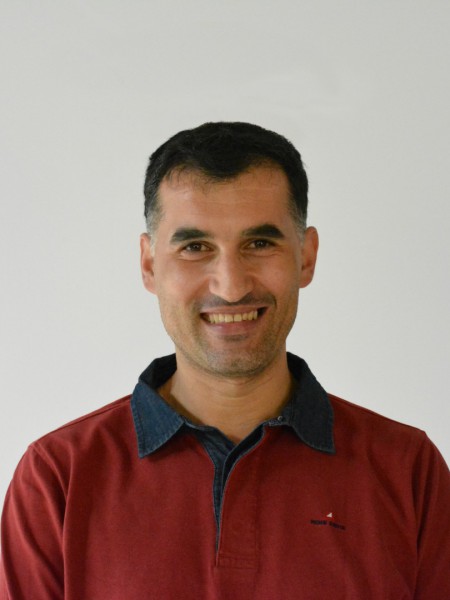
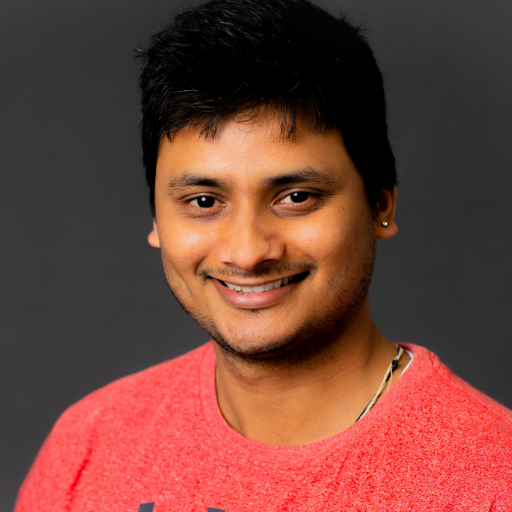
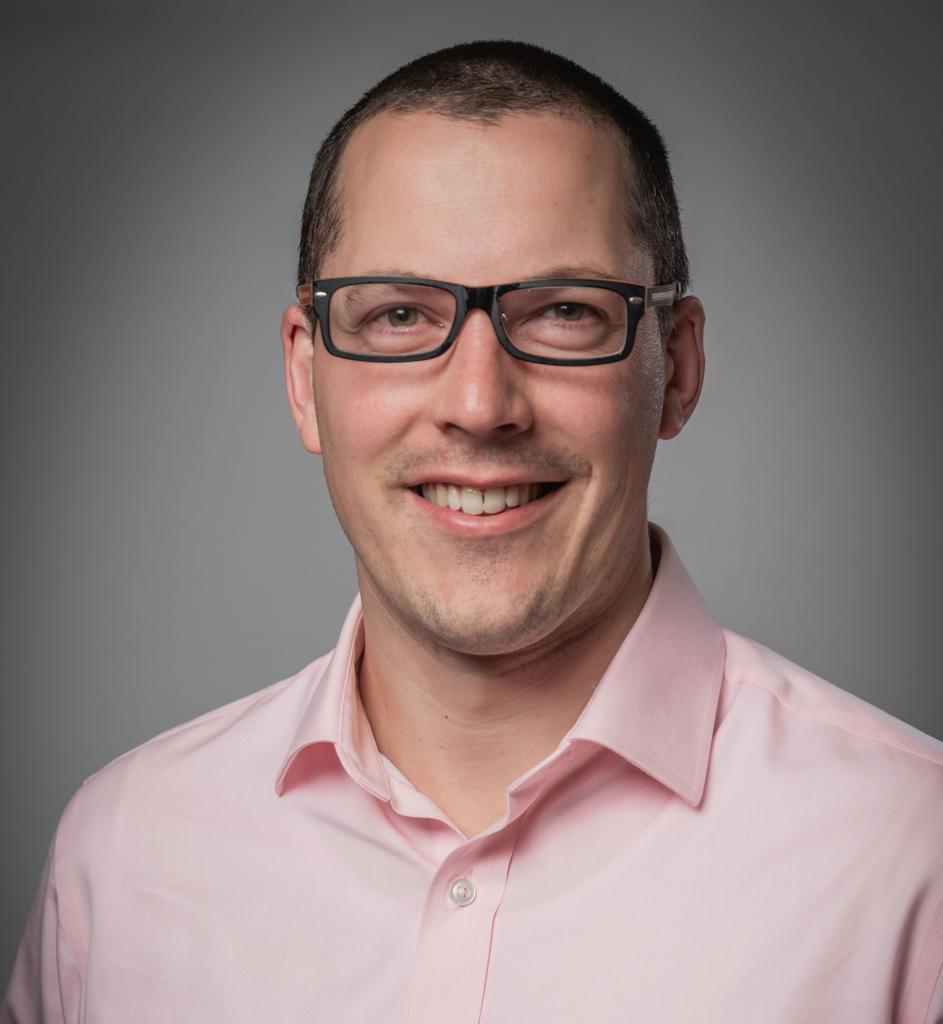
Herman Bruyninckx is a Professor at the Faculty of Engineering Sciences , KU Leuven , where he also serves as Vice-Chair of the Department of Mechanical Engineering and head of the Robotics, Automation and Mechatronics (RAM) subdivision. His research focuses on integrating formally represented domain knowledge into robotic systems for real-time, self-explanatory, and certifiable control. He advocates for open standards and software engineering practices in robotics, with a career-long emphasis on knowledge-driven robotic systems over data-driven approaches.
R. Byron Pipes is the John L. Bray Distinguished Professor of Engineering at Purdue University's College of Engineering, holding affiliations with the Departments of Aeronautics and Astronautics, Chemical Engineering, and Materials Engineering. His research focuses on advanced composite materials, additive manufacturing, polymer processing, and the development of novel manufacturing techniques for high-performance materials. He is particularly known for contributions to composite structure optimization, thermoplastic composites, and material characterization via computational and experimental methods. Dr. Pipes' work integrates multi-scale modeling, digital thread integration, and machine learning to address challenges in composite manufacturing, including fiber orientation control, thermal management, and defect prediction. His research bridges fundamental material science with applied engineering solutions, emphasizing sustainability through upcycling strategies and energy-efficient processes. He has pioneered methodologies for compression molding of prepreg platelet composites, stamp forming of thermoplastics, and embedded heating systems in additive manufacturing. His academic leadership includes roles on committees such as the Dean's Awards Committee, reflecting his institutional contributions. Scientific recognition includes the prestigious John L. Bray Distinguished Professorship, underscoring his impact on engineering education and research. His lab focuses on translating innovations from computational simulations to real-world manufacturing applications, with a strong emphasis on aerospace and automotive material systems.
Dr. Gregery Buzzard is a Professor of Mathematics and Director of the Center for Computational and Applied Mathematics at Purdue University, within the College of Science. His research focuses on computational imaging, inverse problems, and biological systems modeling, with significant contributions to image reconstruction techniques like Plug-and-Play Priors and Consensus Equilibrium. He holds the SIAM Imaging Sciences Best Paper Prize (2020) and led collaborations on algorithms for electron microscopy, CT, and hyperspectral imaging. Current students include Haley Duba (Mathematics), Samin Nur Chowdhury (ECE), and Karl Weisenburger (Mathematics). His work bridges applied mathematics and engineering, emphasizing uncertainty quantification and optimal experimental design. Key projects involve dynamic sampling strategies for microscopy and tomography, as well as multi-agent consensus frameworks for distributed imaging systems. Buzzard also contributed to cellular signaling research, particularly T-cell and B-cell receptor dynamics. Education: Ph.D. in Mathematics (not explicitly stated but inferred from career path) Grants: Multiple grants supporting imaging and computational research (details omitted) Labs/Teams: Directs the Center for Computational and Applied Mathematics (CCAM) Publications: Over 50 peer-reviewed articles, including foundational work on PnP-MACE frameworks
Dr. Shihui Wen is a Visiting Fellow at the University of Technology Sydney (UTS), affiliated with the Institute for Biomedical Materials and Devices (IBMD) and the School of Mathematical and Physical Sciences. He holds an ARC DECRA Fellowship and specializes in developing upconversion nanoprobes for biomedical applications, including super-resolution imaging and point-of-care diagnostics. His research focuses on nanophotonics, nanomaterials, and nanomedicine, with over 70 publications and 6,700+ citations. Education: PhD in 2018 from UTS, followed by postdoctoral research at IBMD. He has held visiting roles at institutions in Korea, Australia, and China. Awards include the Commercialisation Award (2023), Supervision & Mentoring Award (2023), and UTS Vice Chancellor's Early Career Research Excellence nomination (2023). Research interests include heterogeneous nanoprobe synthesis, optical properties for biomedical applications, and nanobiotechnology. He leads projects on rapid diagnostic tests for preeclampsia and SARS-CoV-2, leveraging upconversion nanoparticles for ultra-sensitive detection. Grants include ARC DECRA (DE220100846) and collaborations with the Innovative Manufacturing CRC. He serves as a guest editor for Nanomaterials and has presented at international conferences. His work bridges nanotechnology and clinical applications, aiming to improve diagnostic accuracy and healthcare outcomes.
Dr. Muhammad Sajid is an Assistant Professor in Automotive Engineering (Fluid Mechanics) at the School of Mechanical and Materials Engineering, University College Dublin. He holds a B.Eng. from NUST (Pakistan), a Master's from ENSAM ParisTech (France), a PhD from University of Cergy Pontoise (France), and completed postdoctoral research at Texas A&M University Qatar and NUST. His research focuses on integrating AI/ML with mechanical engineering challenges, particularly in fluid dynamics, renewable energy systems, and smart building technologies. He coordinates courses like Computational Fluid Mechanics and Mechanics of Fluids. His work spans experimental and numerical studies in energy harvesting, HVAC optimization, and sustainable urban infrastructure. As PI of the AIMS laboratory, he leads projects on AI-driven mechanical systems. He actively participates in international conferences and has authored over 50 peer-reviewed publications. Education: Bachelor of Engineering (B.Eng.), National University of Sciences and Technology Master’s Degree, École Nationale Supérieure d’Arts et Métiers (ENSAM) Paris Tech PhD, University of Cergy Pontoise Postdoctoral Research: Texas A&M University at Qatar and NUST Research interests include cloud-based high performance computing for fluid dynamics simulations, solar/wind energy forecasting using machine learning, IoT sensor analytics for HVAC systems, and aerodynamic design optimization. His recent work emphasizes achieving net-zero energy buildings through smart environmental control systems.
Gang Xiao is the Ford Foundation Professor of Physics and Professor of Engineering at Brown University, currently serving as Chair of the Physics Department. His research focuses on condensed matter physics, nanotechnology, spintronics, and superconductivity. He holds affiliations with the School of Engineering and the Department of Physics. Xiao has received prestigious awards including the Alfred P. Sloan Fellowship and the NSF Young Investigator Award. He leads research in magnetic materials and devices, with contributions to magnetic tunnel junctions, skyrmion-based computing, and spintronic applications. His work integrates theoretical and experimental approaches, emphasizing device innovation and material characterization. Teaching includes foundational physics courses and advanced topics in condensed matter physics. Major achievements include pioneering studies on magnetic vortex sensors, quantum oscillations in CrO2 films, and noise analysis in magnetic devices. He directs the Center for Nanoscience and Soft Matter and collaborates on interdisciplinary projects combining materials science with electronics. Xiao’s research has practical implications for sensor technology, energy-efficient computing, and advanced materials development.
Dr. Jamison H. Posey is a Clinical Assistant Professor of Marketing, Analytics, and Professional Sales at the University of Mississippi's School of Business Administration. He holds degrees from the same institution: B.B.A. (1998), M.B.A. (2003), and Ph.D. (2007). His expertise spans group decision support systems, impression management in IS development, and technology's role in trust-building within outsourcing projects. Education: B.B.A. Business Administration, University of Mississippi (1998) M.B.A. Business Administration, University of Mississippi (2003) Ph.D. Business Administration, University of Mississippi (2007) Research focuses on multilingual communication technologies, chatbot evaluation, and machine translation. His work explores how AI systems facilitate cross-cultural collaboration and improve user experience in global contexts. Recent studies address chatbot performance metrics and neural network-based comprehension predictions. Publications highlight themes like multilingual electronic meetings, trust in outsourced IT projects, and personalized search engines. While no scientific awards are explicitly noted, his contributions to AI applications and collaboration systems demonstrate significant academic impact. Advising and grants sections remain underdeveloped in available records. He is associated with the Marketing B.B.A. program and teaches courses on business software integration and technology-synergy in value chains. Office location: 1918 Briar Ridge Road, Tupelo campus.
Casper Schousboe Andreasen is an Associate Professor at the Technical University of Denmark (DTU), affiliated with the Department of Civil and Mechanical Engineering within the Solid Mechanics division. His research focuses on topology optimization, fluid dynamics, and thermal systems design, with applications in aerospace engineering, microfluidics, and sustainable energy systems. He holds a PhD (2011) and Cand. Polyt (2008) from DTU. Education: PhD in Engineering (DTU, 2011), Cand. Polyt (DTU, 2008) His research interests include fluid-structure interaction, aeroelastic wing design, thermal insulation optimization, and topology optimization for additive manufacturing. He leads projects on labyrinth seal optimization, thermal resistance walls, and high-resolution fluid topology design. His work contributes to UN Sustainable Development Goal 7 (Clean Energy) through innovative heat exchanger and insulation technologies. Recent projects involve optimizing 3D-printed walls for thermal resistance, topology-based design of hydraulic systems, and aeroelastic wing configurations under large deformations. He supervises multiple PhD students focusing on topics like exascale CFD, fiber-reinforced composites, and EHD calculations in marine engines. He is part of DTU's TopOpt group, collaborating internationally on fluid dynamics and structural optimization. His methodologies bridge computational mechanics and industrial applications, emphasizing manufacturability and high-performance design.
Hendrik Lens is a **Professor for Power Plant and Grid Systems** and **Director of the Institute** at the University of Stuttgart's **Institute of Combustion and Power Plant Technology (IFK)**. He leads the **Power Generation and Automatic Control (SuA) department**, focusing on advanced grid technologies and energy system optimization. His research emphasizes **grid stability**, **renewable energy integration**, and **converter control strategies**. Key contributions include studies on grid-forming converters, inertia-aware generation planning, and dynamic network equivalents. He collaborates internationally on projects like the *VerbundnetzStabil initiative* analyzing interconnected power systems. Publications span **18 journals/conferences in 2024 alone**, with a focus on smart grid technologies and decarbonization strategies. His work addresses challenges such as frequency containment reserves, distributed generation impacts, and stochastic unit commitment tools. Operates within the Institute of Combustion and Power Plant Technology, contributing to both academic and applied research in sustainable energy systems.
Hugh Gallagher is a Professor of Physics & Astronomy at Tufts University's School of Arts and Sciences. His research focuses on experimental particle physics, particularly neutrino oscillations and neutrino interaction physics. He has contributed to major experiments like NOvA, DUNE, and MINERvA, and leads development of the GENIE simulation software. Key areas include measuring neutrino masses, mixing parameters, and matter-antimatter asymmetry mechanisms. Education: PhD in Physics from the University of Minnesota (1996), BS in Physics from the University of Notre Dame (1991). Awards include the 2018 Lillian and Joseph Leibner Award for Excellence in Teaching and Advising. Research emphasizes neutrino-nucleus interactions, with recent work on precision cross-section measurements and model validation. His publications span neutrino oscillation parameter extraction, detector calibration, and software development for high-energy physics collaborations. Teaching includes graduate research supervision and undergraduate courses like General Physics with laboratory components. He has secured grants from the U.S. Department of Energy for neutrino experiments and future detector designs. Current projects involve DUNE (Deep Underground Neutrino Experiment) and advancing GENIE's capabilities for next-generation neutrino studies.
Carlos Brites is an Associate Professor in the Department of Physics at the University of Aveiro, Portugal. He holds a PhD from the University of Aveiro (2012) and has conducted post-doctoral research at the University of Zaragoza, Spain. His research focuses on luminescent materials, molecular logic systems, and nanothermometry, with applications in materials characterization and biomedical engineering. Education: BSc in Physics and Chemistry (University of Aveiro, 2004); MSc in Optoelectronics and Lasers (University of Porto, 2007); PhD in Physics (University of Aveiro/University of Zaragoza, 2012). Research interests include lanthanide-based luminescent thermometers, nanoscale thermal probes, and magnetic hyperthermia. He leads the Photonic Hybrids and Nanomaterials Group ( http://hybrids.web.ua.pt ), collaborating with institutions in Spain, Argentina, and beyond. Current projects involve luminescent materials for thermal sensing and energy transfer studies. He supervises PhD students in topics like molecular thermometry and nanomaterial dynamics. His work has been recognized through CICECO's inclusion in global top scientist rankings and contributions to high-impact journals in materials science and chemistry.
Aditya Shekhar Nittala is a tenure-track Assistant Professor in the Department of Computer Science at the University of Calgary, directing the DIFF Lab and affiliated with the Interactions Lab. Previously, he was a PhD student at the Max Planck Institute for Informatics and Saarland University, and conducted research at Xerox Research Center India. His research focuses on blending materials science, electrical engineering, and HCI to create novel interactive devices embedded in daily environments, particularly epidermal computing and sustainable fabrication methods. Education: PhD in Computer Science, Max Planck Institute for Informatics/Saarland University (2022) MSc in Computer Science, University of Calgary (Canada) Bachelor's in Computer Science & Engineering, M.S. Ramaiah Institute of Technology (India) Research Interests: Epidermal devices for on-body interaction Biodegradable materials for interactive prototyping Computational design tools for physiological sensors Ubiquitous computing through wearable interfaces Key Contributions: Developed PhysioSkin and Interactive Bioplastics for eco-friendly wearable devices Pioneered SoloFinger gesture recognition system Epidermal computing frameworks balancing tactile sensitivity and device robustness Awards: UIST 2022 Best Paper & Demo Awards NSERC Discovery Grant (2023) NFRF Award (2023) Grants & Labs: Directs the DIFF Lab (Devices, Interaction, Fabrication for the Future) Member of Interactions Lab at UCalgary Received funding for epidermal computing and sensor optimization projects Future Work: Expanding into interactive sports devices, gaming interfaces, and medical applications of epidermal sensors.
Stewart Weiss is an Associate Professor in the Department of Computer Science at Hunter College, part of the City University of New York (CUNY). His research focuses on Software Quality Assurance, computational biophysics, and integrating open-source software into computer science education. He holds a PhD in Computer Science from New York University's Courant Institute (1987), an M.S. from the same institute (1984), and a B.A. in Mathematics from Hunter College (1982), alongside a B.Arch. from The Cooper Union (1973). Dr. Weiss teaches courses such as Software Design and Analysis, Computer Theory, and UNIX Tools. His work spans grants from NSF and PSC-CUNY, including research in protein structure prediction via the kernel energy method and educational initiatives like 'Computing for Social Good.' He has advised on projects like the 'Gateway for Open Source Software Development' in curricula and contributed to tools for adaptive contrast sensitivity testing. His teaching philosophy emphasizes rigorous academic standards and hands-on learning. He has developed extensive resources, including tutorials on UNIX, parallel programming, and C/C++ programming. His research has explored topics ranging from mutation testing frameworks to quantum chemistry applications in molecular modeling.
Dr. Pulugurtha Markondeya Raj is an Associate Professor in the Department of Electrical & Computer Engineering at Florida International University. His expertise spans electronic and bioelectronic packaging, heterogeneous integration, wearable medical devices, and advanced passive components. He co-leads technical initiatives in electronic packaging ecosystems, emphasizing nanomaterials and industry partnerships. His research has yielded over 380 publications, 13 patents, and $14M in R&D funding, primarily from industry. He serves as an Associate Editor for IEEE CPMT Transactions and IEEE Nanotechnology Magazine, and chairs IEEE Nanopackaging committees. Education: BS (1999) from IIT Kanpur, ME (1995) from IISc Bangalore, PhD (1999) from Rutgers University. His work focuses on integrating nanomaterials into packaging for 5G, biomedical systems, and power delivery. He has advised over 40 students, many now leading roles at tech giants like Apple and Intel. Research highlights include miniaturized neural recording systems, EMI shielding innovations, and 3D glass-based packages. His articles emphasize trends in 5G packaging, bioelectronic integration, and nanomaterial-driven solutions. Awards include IEEE's Best Associate Editor (2021) and numerous best-paper recognitions. Scientific Contributions: 35+ best-paper awards, 110+ journal papers, 19 book chapters Leadership: IEEE Distinguished Lecturer (2020-2022), Co-Chair IEEE Nanopackaging Technical Committee Grants and Collaboration: Secured $14M+ industry funding; his lab's innovations are commercialized via industry partnerships. Advised students contribute to cutting-edge packaging at major electronics firms. Labs/Teams: Leads research in nanopackaging and heterogeneous integration, advancing technologies like flexible fan-out packaging and embedded bioelectronics.
Ian Mayor-Smith is a Senior Lecturer in Water and Wastewater Treatment at the University of Brighton, affiliated with the School of Environment and Technology. He is part of the Environment and Public Health Research Group and the Centre for Aquatic Environments. As Co-Vice President of the International Ultraviolet Association, he focuses on advancing UV-based water treatment technologies. His academic background includes a PhD from Imperial College London (2015) on ultraviolet reactor optimization, an MSc from the University of Brighton (2008), and a BSc in Biological Sciences (2007). His research emphasizes mercury-free UV systems, water reuse applications, and advanced oxidation processes. Key projects include Southern Water’s Phase II Reuse Program. He teaches using applied, blended learning methods, prioritizing real-world industry relevance. Supervising doctoral and MRes students, he guides research in water recycling and regulatory frameworks. His work bridges academic innovation with industrial application, addressing global water scarcity challenges through sustainable treatment technologies. Recent research trends reflect a focus on UV disinfection innovation, regulatory frameworks for potable reuse, and next-generation measurement techniques. His contributions advance environmental engineering practices while fostering interdisciplinary collaborations globally.