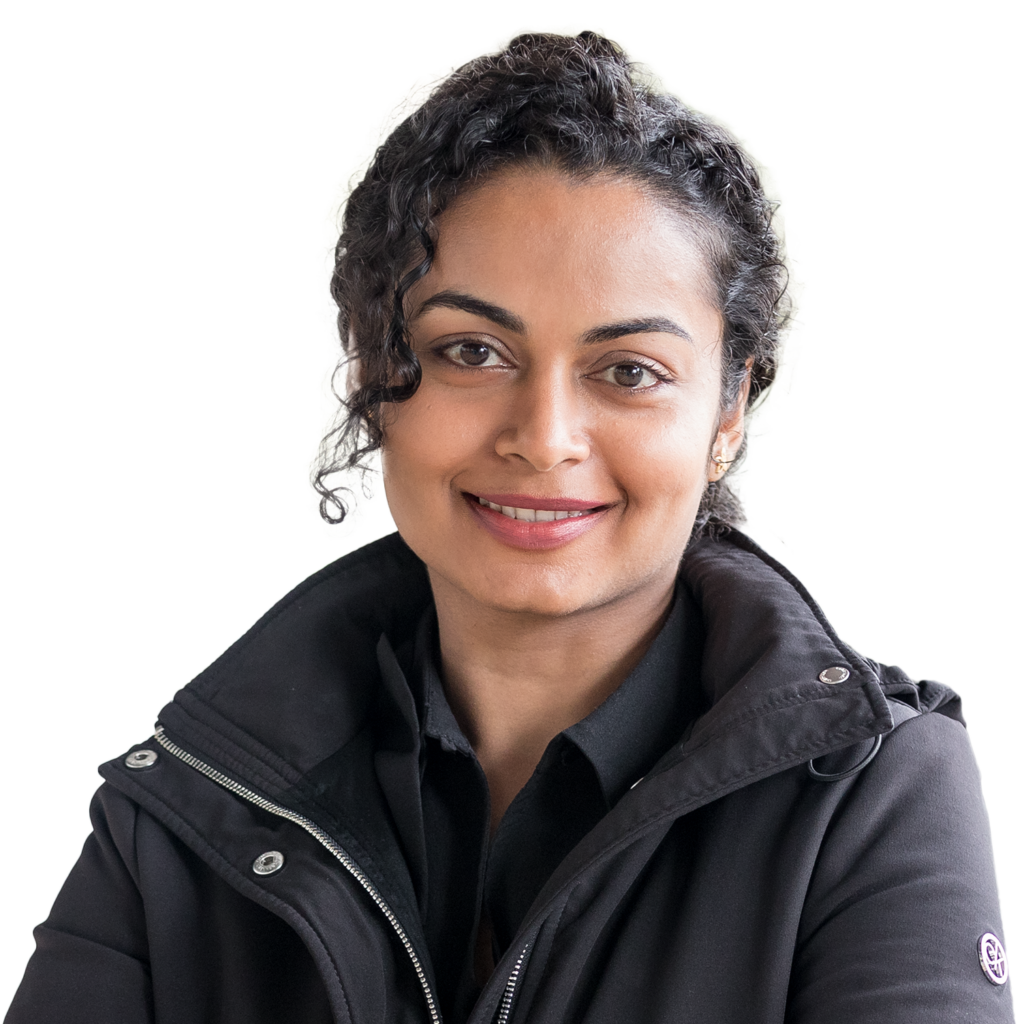
Prof. Radha Boya leads the Angstrofluidics Group at the University of Manchester, pioneering research on angstrom-scale fluidics and 2D material applications. Her work has redefined molecular transport and nanochannel engineering. Research Interests: Boya explores quantum devices, ion sieving, and mass transport via atomically thin channels, leveraging graphene and boron nitride. Her lab develops protocols for precise nanofabrication. Articles Focus: Recent publications detail innovations in unclogging nanochannels, magnetic imaging of 2D materials, and ionic liquid interactions with carbon surfaces. Awards: Royal Society Fellowship (2018) L’Oréal-UNESCO Rising Talent (2018) Fellow of the Royal Society of Chemistry (2021) Leadership: Boya promotes gender equity in STEM through initiatives like Women in Science UK-Brazil partnerships.
Andrew D. White is an Associate Professor of Chemical Engineering at the Hajim School of Engineering & Applied Sciences, University of Rochester. He holds a PhD from the University of Washington (2013). His research focuses on automating scientific discovery through AI, particularly leveraging large language models (LLMs) and deep learning techniques in chemistry. His lab develops agents that integrate literature analysis, hypothesis generation, and experimental design to advance fields like molecular dynamics and drug discovery. Education: PhD in Chemical Engineering, University of Washington, 2013 BS/MS (not explicitly stated in text, inferred from career timeline) Research Interests: Large language models for scientific automation Deep learning applications in chemistry and materials science Molecular dynamics simulations Scientific agents and autonomous systems Publications: His work includes groundbreaking studies on closed-loop AI systems for chemistry, federated learning in molecular property prediction, and multi-agent systems for drug discovery. Recent highlights include the Robin system and ChemCrow tools. Awards: Recipient of the NSF Career Award (2018), NIH Outstanding Investigator Award (2020), and the Curtis Teaching Award (2019). He also advises biotech companies and serves on the National Academy of Sciences' Chemical Sciences Roundtable. Grants & Funding: Supported by DOE, NSF (multiple grants including CBET-1751471), NIH (R35GM137966), and LLNL projects. Collaborates with institutions like Argonne National Lab and Qubit Pharmaceuticals. Labs & Teams: Leads the White Lab at Rochester and co-founded FutureHouse, a nonprofit advancing AI-driven scientific discovery. Supervises a multidisciplinary team of PhD students and postdocs in computational chemistry, AI, and biophysics.
Sridhar R. Tayur is the Ford Distinguished Research Chair and University Professor of Operations Management at Carnegie Mellon University’s Tepper School of Business. He holds a Ph.D. in Operations Research from Cornell University and a B.Tech. in Mechanical Engineering from IIT Madras. His research focuses on quantum computing applications in operations research, healthcare systems optimization, and supply chain management. He has held visiting roles at MIT, Stanford, and Cornell, and founded companies like SmartOps and OrganJet. His recent work spans quantum-inspired optimization algorithms, healthcare decision support systems, and fair resource allocation policies. He has contributed to over 110 publications, including high-impact papers in Management Science , Operations Research , and IEEE Transactions . Awards include INFORMS Fellow and NAE membership. He teaches courses in quantum integer programming, healthcare operations, and service management at the Tepper School. Education: Ph.D. (Cornell), B.Tech. (IIT Madras) Research Labs: Quantum Technology Group, OrganJet Key Awards: INFORMS Fellow, NAE Member, MSOM Distinguished Fellow Teaching: MBA Operations Management, PhD Quantum Optimization, Healthcare Systems His interdisciplinary work bridges quantum computing, healthcare policy, and logistics, supported by collaborations with industry and government institutions.
Beverley J. McKeon is a Professor of Mechanical Engineering at Stanford University, previously holding the Theodore von Kármán Professorship in Aeronautics at Caltech. Her research focuses on fluid mechanics, particularly turbulence, flow control, and boundary layer dynamics. She earned her B.A. and M.Eng. from the University of Cambridge, and her Ph.D. from Princeton University. McKeon's work integrates experimental and theoretical approaches to manipulate wall-bounded flows for drag reduction and performance enhancement. Her research interests include resolvent analysis, high Reynolds number turbulence, and the application of machine learning to fluid dynamics. She has led interdisciplinary projects on morphing surfaces and viscoelastic turbulence. Awarded the Vannevar Bush Faculty Fellowship and PECASE, McKeon has been recognized for her teaching and mentoring. Her honors include Fellowships from the APS and AIAA. She chairs editorial boards for journals like Physical Review Fluids and has served on national committees for theoretical and applied mechanics. Her academic leadership includes roles as Deputy Chair of Caltech’s Division of Engineering and Applied Science and Associate Director of GALCIT. She advises numerous students and collaborates globally on initiatives like the Stories of Women in Fluids.
N.K. Anand is a Distinguished Professor of Mechanical Engineering at Texas A&M University, holding the James J. Cain III Regents Professorship. He leads research in advanced computational methods and thermal-hydraulic systems, with affiliations to Multidisciplinary Engineering and Nuclear Engineering programs. His work focuses on physics-informed machine learning, finite volume methods, and aerosol transport in nuclear reactor contexts. Education: PhD (Mechanical Engineering, Purdue University, 1983), M.S. (Kansas State University, 1979), and B.E. (Bangalore University, 1978). Awards include the ASME James Harry Potter Gold Medal (2020) and multiple teaching/administrative excellence awards from Texas A&M. Research emphasizes fluid dynamics modeling (e.g., PINNs for periodic flows, turbulent deposition studies), heat pipe systems, and nuclear reactor thermal-hydraulics. His Versatile Test Reactor (VTR) contributions include cartridge loop designs and aerosol transport experiments. Active in high-temperature reactor safety, with facilities studying pebble beds, helical coil exchangers, and HTGR upper plenum dynamics. Publications span physics-informed ML applications, finite volume techniques, and nuclear thermal systems. Grants supported development of advanced CFD tools and reactor safety infrastructure. His lab collaborates on international nuclear energy projects and emerging AI-driven simulation methodologies.
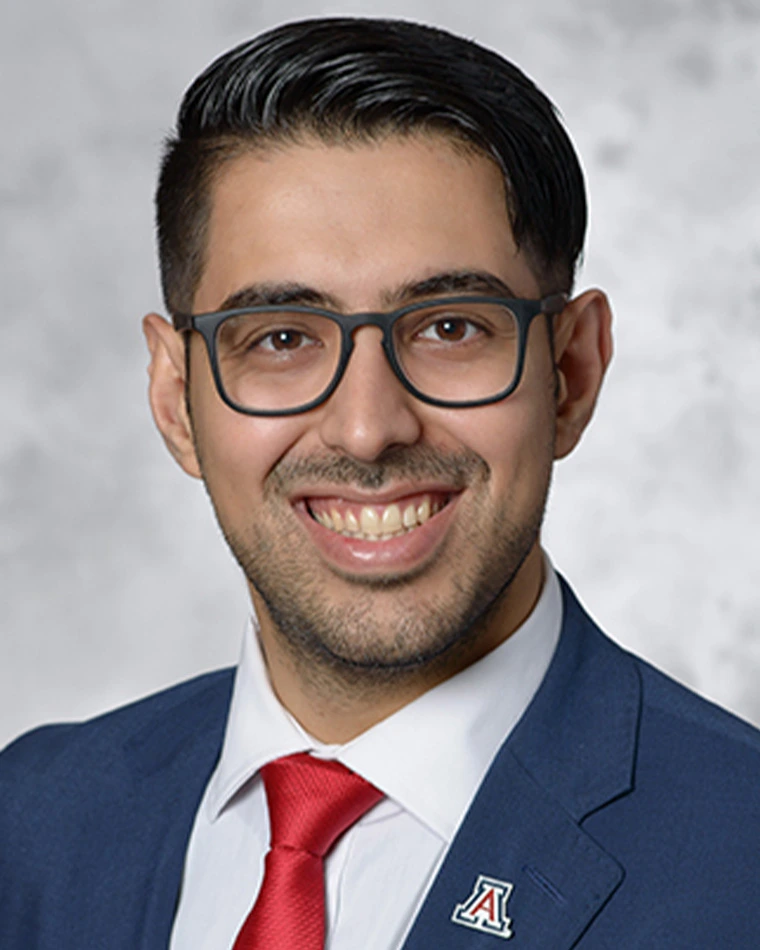
Soheil Salehi is a tenure-track Assistant Professor in the Department of Electrical and Computer Engineering at the University of Arizona, with a joint appointment in Systems and Industrial Engineering. He is the Director of the Privacy-preserving, Intelligent, and Secure Computing (PRISM) Lab, established in August 2022. Prior to this, he was an NSF-Sponsored Computing Innovation Fellow and Postdoctoral Research Fellow at the University of California, Davis. Ph.D., Electrical and Computer Engineering, University of Central Florida, 2020 M.S., Electrical and Computer Engineering, University of Central Florida, 2016 B.S., Isfahan University of Technology, Iran, 2014 Dr. Salehi's research focuses on the intersection of hardware, AI, and security. His work spans hardware and AI-enabled security in IoT , Generative AI for hardware design and security , neuromorphic and biologically-inspired AI hardware , emerging spin-based devices , reconfigurable architectures , low-power VLSI circuits , and digital twins and mixed reality for semiconductor workforce development . He also explores the application of Generative AI in personalized education . His recent publications, spanning 2023–2025, reveal a strong trend toward integrating AI and machine learning into hardware security and design. Key themes include automated secure IC design flows , AI-driven hardware obfuscation , firmware and side-channel attack analysis , security in neuromorphic and spiking neural networks , and educational frameworks using digital twins and generative models . His work appears in top venues like DAC, ICCAD, USENIX Security, IEEE TCAS-I, and ISCAS. Outstanding Reviewer Award, IEEE/ACM Design Automation Conference (DAC), 2023 Best Presentation of the Symposium Award, UC Davis Postdoctoral Research Symposium, 2021 UCF Excellence by a Graduate Teaching Assistant (University-Level), 2016 Nominated for 30-under-30 Award, UCF, 2020 Nominated for Postdoctoral Research Excellence Award, UC Davis, 2022 Dr. Salehi has secured significant research funding as PI and Co-PI, including a $300K NSF SaTC EAGER grant on Generative AI-based Personalized Cybersecurity Tutor, a $174,000 University of Arizona PIF Award, and multiple RII grants totaling over $198K. He has also received industry funding from CHEST. He actively mentors students and leads the PRISM Lab, which focuses on privacy-preserving and intelligent secure computing. His service includes roles as Technical Program Committee (TPC) Member and Session Chair at premier conferences such as DAC, ICCAD, CCS, NDSS, and GLSVLSI. The PRISM Lab, under his direction, conducts cutting-edge research in secure and intelligent hardware systems, with applications in IoT, edge computing, and workforce development. The lab emphasizes interdisciplinary collaboration and innovation in both research and education.
Martin Burke is the May and Ving Lee Professor for Chemical Innovation and Professor of Chemistry at the University of Illinois Urbana-Champaign , with additional appointments in Biochemistry, Biomedical & Translational Sciences, and multiple campus institutes including the Beckman Institute and the Carl R. Woese Institute for Genomic Biology. Education B.S. Johns Hopkins University , 1998 Ph.D. Harvard University , 2003 M.D. Harvard Medical School , 2003 Research Interests Burke’s program centers on molecular prosthetics : the design, synthesis and application of small molecules that replicate or replace missing or dysfunctional proteins. His group pioneered iterative cross-coupling (ICC) using MIDA-protected haloboronic acids to automate the construction of complex natural products and function-oriented small molecules. Current projects target ion-channel replacement in cystic fibrosis, iron-transport restoration in anemia, and non-toxic antifungals that overcome drug resistance. Scientific Awards & Honors National Academy of Medicine (2021) AAAS Fellow (2021) ASCI Member (2021) iCON Award (2019) Mukaiyama Award, Japan (2019) ACS Nobel Laureate Award for Graduate Education (2017) Thieme-IUPAC Prize in Synthetic Organic Chemistry (2014) Elias J. Corey Award (2013) Arthur C. Cope Scholar Award (2011) Research Output & Impact Burke has authored >120 peer-reviewed articles, >30 patents, and his work has been cited >20,000 times. High-impact publications in Nature , Science , and Angewandte Chemie have advanced automated synthesis, molecular prosthetics, and cystic fibrosis therapeutics. Laboratory & Training The Burke Laboratories house a multidisciplinary team of graduate students, post-doctoral researchers, and physician-scientists developing next-generation molecular prosthetics. The group is supported by NIH, NSF, private foundations, and industry partnerships aimed at democratizing molecular innovation.
Professor Shubhra Pasayat is affiliated with the Department of Electrical and Computer Engineering and Materials Science & Engineering at the University of Wisconsin-Madison. She holds a PhD (2021) and MS (2017) from University of California, Santa Barbara, and a B.Tech (2013) from Indian Institute of Technology Kharagpur. Research focus: MOCVD growth of III-nitrides/oxides for optoelectronics, power electronics, quantum materials, and bio-photonics Key applications: LEDs, LASERs, HEMTs, bio-photonics, and sanitization technologies Her research interests center on wide bandgap semiconductor materials, particularly group-III nitrides and oxides. She works on strain relaxation techniques using porous GaN substrates, quantum dot engineering for visible light emission, and high-voltage GaN HEMT development. Current projects include lattice engineering for improved crystal quality and thermal management in RF devices. Publications highlight advancements in ultraviolet lasers, high-electron-mobility transistors, and micro-LEDs. Her work spans fundamental material studies and device optimization for industrial applications like electric vehicles, 5G/6G communications, and horticultural lighting. 2024 Awards : NSF CAREER, ONR DEPSCoR, WARF Early Career Innovator 2022 Awards : UCSB ECE Outstanding Dissertation, JAP Best Paper She teaches ECE 235 Introduction to Solid State Electronics and mentors research at both graduate and undergraduate levels.
Assoc Prof Ng Teng Yong is an Associate Professor at the School of Mechanical & Aerospace Engineering (NTU), specializing in numerical modeling and simulation. With a background as Research Manager at A*STAR Institute of High Performance Computing, his work spans materials science, nanotechnology, and aerospace engineering. Current focus on graphene-based desalination membranes Expertise in molecular dynamics simulations Investigates nanoscale fluid mechanics and structural dynamics Recent publications highlight advancements in energy-efficient electrodialysis, smart robotics, and nonlinear vibration analysis. His interdisciplinary approach integrates computational methods with experimental validation in additive manufacturing and soft material mechanics.
Ivan C. Christov is an Associate Professor of Mechanical Engineering at Purdue University's School of Mechanical Engineering in West Lafayette, Indiana. His research focuses on fluid dynamics, non-Newtonian fluid mechanics, and multiphase processes, with applications in biomedical engineering, micro/nanotechnology, and advanced materials. He leads the Transport: Modeling, Numerics & Theory laboratory. Education: Ph.D., Northwestern University, 2011 M.S., Northwestern University, 2008 M.S., Texas A&M University, 2007 S.B., Massachusetts Institute of Technology, 2005 Research Interests: Soft hydraulics, computational science, scientific machine learning, nonlinear waves, and fluid-structure interactions. His work spans theoretical modeling, numerical simulation, and experimental validation in complex fluid systems. Publications: Recent work includes studies on flow-rate pressure-drop relations in deformable microchannels, physics-informed neural networks for particle dynamics, and fluid-structure interaction in cerebral aneurysms. Themes include microfluidics, elastohydrodynamics, and rheological characterization of soft materials. Awards: Fulbright U.S. Scholar (2022) Outstanding Engineering Instructor (multiple recognitions) Richard P. Feynman Distinguished Postdoctoral Fellowship (2013) Labs/Teams: Directs the Transport laboratory at Purdue, focusing on interdisciplinary research in fluid mechanics and computational methods. Collaborates on biomedical fluid dynamics and advanced materials characterization.
Mark Wallace is a Professor of Chemistry at King's College London, affiliated with the Department of Chemistry and the Faculty of Natural, Mathematical & Engineering Sciences. He holds a Royal Society University Research Fellowship (2005–2016) and has been a lecturer at Oxford University before joining King's in 2016. His research focuses on membrane protein function and artificial membrane mimics, combining optical microscopy and nanotechnology. He earned a PhD from the University of Cambridge (2002) and postdoctoral training at Stanford University and the National Institute for Medical Research. Key research interests include membrane protein dynamics, lipid bilayer engineering, and single-molecule imaging. He has pioneered techniques like droplet interface bilayers and interferometric scattering microscopy. His work has led to patents and applications in molecular sensing and medical research. Awards include the 2002 Gregorio Weber Prize and the 2015 RSC Norman Heatley Award. He is actively involved in public outreach, including video podcasts and educational competitions. Recent publications emphasize artificial ion channels, nanoparticle formation monitoring, and mitochondrial protein dynamics. His lab collaborates with institutions like the London Centre for Nanotechnology and the Rosalind Franklin Institute. Over 30 students and researchers have been mentored, with active grants from EPSRC, Wellcome Trust, and BBSRC.
Professor Peter F. Driessen is a faculty member in the Department of Electrical and Computer Engineering at the University of Victoria, with a cross-appointment in the School of Music. He holds a BSc and PhD from the University of Victoria and is a Professional Engineer (PEng). His research focuses on communication systems, signal processing, control, and interdisciplinary projects in computer music and wireless technologies. Key areas include audio/video signal processing, radio propagation, sound recording, and multimedia systems. He leads the University of Victoria Propagation Laboratory, which explores radio wave propagation and Amateur radio integration with engineering education. His work spans theoretical research and applied projects like ECOSat satellite systems, software-defined radio (SDR), and innovative musical instruments such as the Radio Drum. He supervises undergraduate and graduate projects in these domains through ELEC 499 courses. Notable contributions include the APEGBC Editorial Board Award for Best Paper (2002) and patents in wireless networking and signal processing. His teaching includes courses in signal analysis and electromagnetics, and he collaborates on interdisciplinary programs like the Music/Computer Science degree. Education: BSc in Electrical Engineering, University of Victoria PhD in Electrical Engineering, University of Victoria Research Interests: Audio and video signal processing for music and media Software-defined radio and Amateur radio technologies Satellite communication and ground station development Gesture-based interfaces and musical instrument design Error mitigation in streaming audio/video Optical and microwave-photonic systems Labs & Collaborations: Propagation Laboratory (radio wave research) UVic Experimental Radio Group (Amateur radio club) UVic Satellite Design Team (ECOSat projects) UVic Centre for Aerospace Research Grants & Awards: APEGBC Editorial Board Award (2002) Multiple US patents in wireless systems and signal processing
Cong Ling is a Professor of Information Theory and Cryptography at Imperial College London's Department of Electrical and Electronic Engineering, within the Faculty of Engineering. His research focuses on lattice theory and its applications in coding, cryptography, quantum information, and number theory. Key affiliations include the Academic Centre of Excellence in Cyber Security Research and the Engineering Secure Software Systems group. Education details are not explicitly provided in the text, but his professional experience indicates advanced qualifications in electrical engineering and mathematics. Research interests span lattice-based cryptography, post-quantum security, algebraic coding theory, and quantum-resistant algorithms. His work bridges information theory and number theory, with contributions to MIMO systems, secure communication protocols, and cryptographic protocol design. Recent publications emphasize lattice reduction techniques, quantum algorithms for the shortest vector problem, and advancements in polar codes. Notable trends include exploration of non-commutative algebras for cryptography, Gaussian sampling optimizations, and hybrid quantum-classical approaches to hard integer problems. Over 50+ articles published since 2018 reflect his leadership in lattice-based research and quantum-safe technologies. Awards: None explicitly listed in the text. Grants/Advising: No specific grants or student advisees mentioned; focus remains on collaborative research outputs. Labs/Teams: Associated with Imperial's Cyber Security Research groups and quantum engineering initiatives.
Daniel Balasubramanian is an Adjunct Associate Professor of Computer Science and Research Scientist at Vanderbilt University's School of Engineering. His research focuses on cybersecurity, software verification, and cyber-physical systems, with expertise in symbolic execution, code analysis, and formal methods. He contributes to advancing secure systems through frameworks like RAMPART for adversarial defense and Syntheto for formal verification. His work intersects edge computing, hardware security, and autonomous systems resilience. Research Interests: Cybersecurity (including ethical hacking, network defense), formal methods (verification, theorem proving), edge computing (tinyML, cloud integration), and cyber-physical systems (emulation, testbeds). His recent work emphasizes assurance provenance in software documentation and adversarially robust autonomous systems. Publications since 2019 highlight contributions to cybersecurity testbeds, reinforcement learning for penetration resistance, and hardware security against rowhammer attacks. He has explored domain-specific languages (Syntheto), incremental modeling techniques (differential-formula), and cloud-edge service resilience against adversarial perturbations. Labs/Teams: Affiliated with the Institute for Software-Integrated Systems (ISIS), focusing on integrating software with physical systems through model-driven approaches and cybersecurity innovations.
Debjit Pal is a Post-Doctoral Associate at the School of Electrical and Computer Engineering, Cornell University, and a member of the Computer Systems Laboratory. His research focuses on machine learning techniques for hardware verification, SoC validation, and FPGA optimization. Education: Ph.D. in Computer Engineering (University of Illinois at Urbana-Champaign, 2019) M.S. in Computer Science (IIT Kharagpur, 2012) B.E. in Electronics Engineering (Jadavpur University, 2008) Research Interests: Machine Learning for Electronic Design Automation (EDA) System-on-Chip (SoC) Verification Edge Intelligence as a Service Compiler Optimizations for Reconfigurable and High-Performance Computing Scientific Awards: IEEE CEDA Student Research Award (2016) Best Paper Nomination (ICCAD 2015, DAC 2018, ASP-DAC 2019) E. J. McCluskey Best Doctoral Thesis Competition Semi-Finalist (2020) Travel Grants for ICCAD/DAC/ASPDAC (2018-2019) Professional Roles: Technical Program Committee Member (DAC, VLSID), Reviewer (IEEE TVLSI, DATE, ICCAD). Collaborates with researchers like Zhiru Zhang and Shobha Vasudevan.