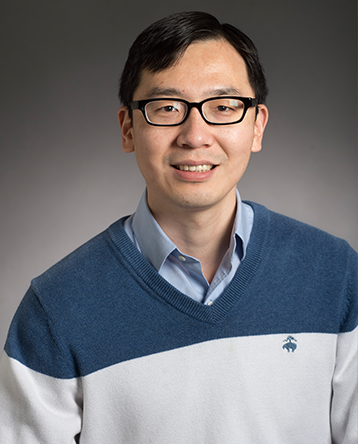
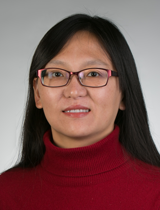
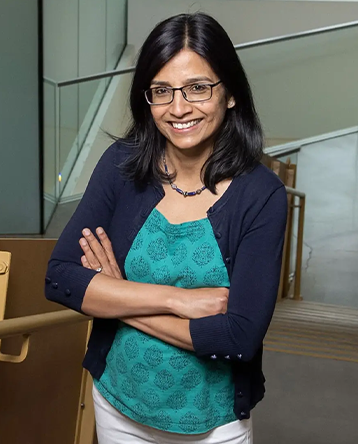
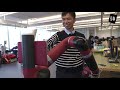
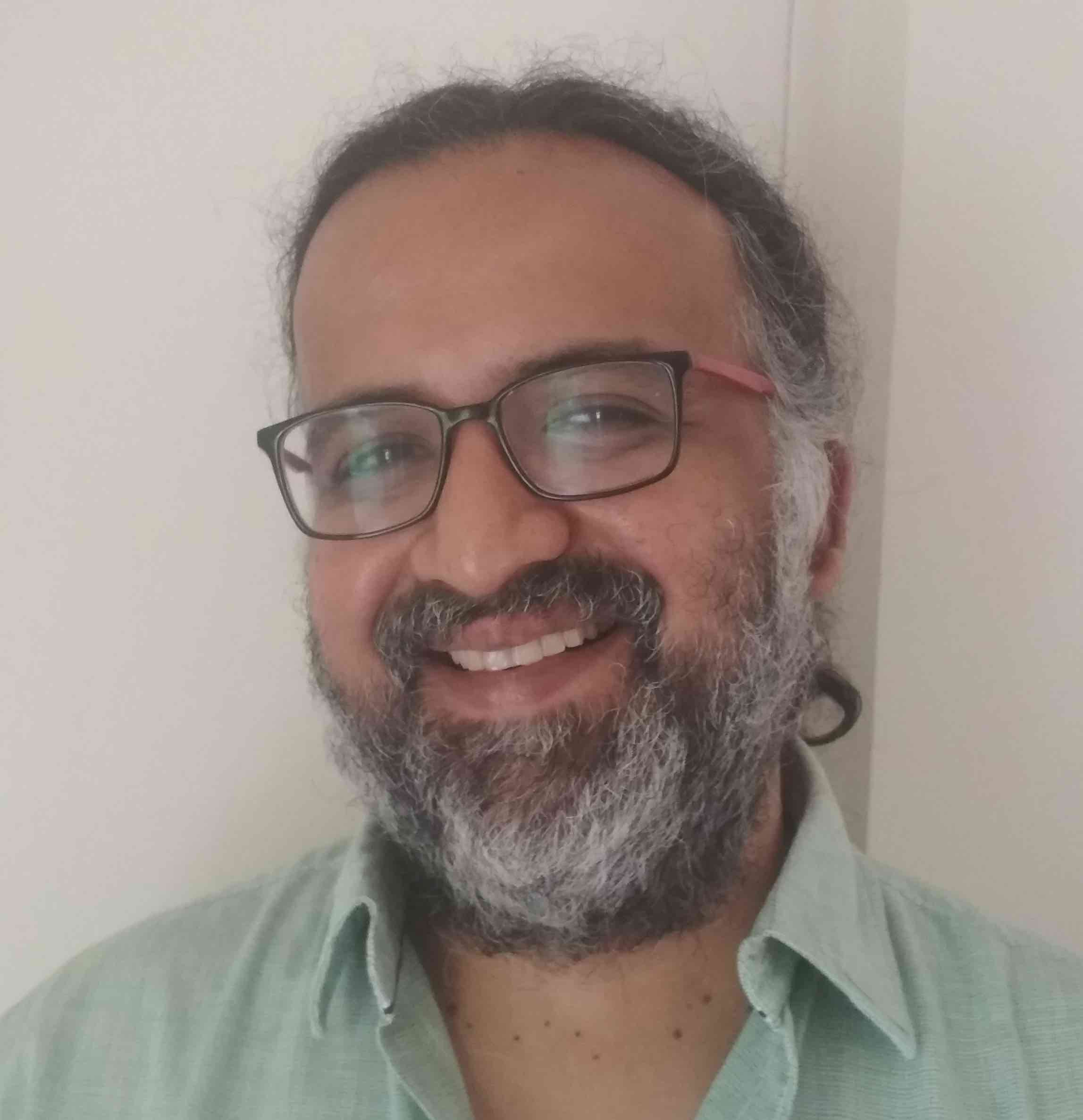
Dr. Guillermo Amador is an Assistant Professor in the Experimental Zoology department at Wageningen University & Research. His research focuses on understanding how animals interact with complex environments through locomotion, adhesion, and fluid dynamics. He investigates biological systems like insects, plants, and marine organisms to inspire bio-engineered solutions for robotics, microfluidics, and material science. Amador received his PhD in Mechanical Engineering from Georgia Institute of Technology (USA), followed by postdoctoral research at the Max Planck Institute for Intelligent Systems (Germany) and a Marie Sklodowska-Curie fellowship at TU Delft (Netherlands). His expertise spans biophysics, biomaterials, and biomechanics, with a focus on self-cleaning mechanisms and bioadhesion. He collaborates with the 4TU consortium on Dutch Soft Robotics to develop bio-inspired designs. His work bridges fundamental biology with engineering applications, emphasizing interdisciplinary approaches to solve challenges in robotics and environmental science. Amador teaches courses including Biomimetics and Functional Zoology , integrating his research into education. His research highlights include studies on cuttlefish suction cups, stick insect adhesion, and pollen transport mechanisms in pollinators.
Adrian Weller is a prominent researcher and academic at the University of Cambridge, serving as a Director of Research in Machine Learning within the Department of Engineering. He holds multiple significant leadership roles including Programme Director for Trust and Society at the Leverhulme Centre for the Future of Intelligence (CFI), and previously served as Programme Director for AI at The Alan Turing Institute, the UK national institute for data science and AI. His work bridges theoretical machine learning research with practical applications and societal implications of artificial intelligence. Weller's research interests span a broad spectrum of AI and machine learning topics with a particular focus on ensuring beneficial societal outcomes. His work encompasses explainability, fairness, robustness, scalability, privacy, safety, and ethics in AI systems. He has made significant contributions to trustworthy machine learning, including developing frameworks for AI governance, certification, and human-AI collaboration. His research group actively investigates neuro-symbolic approaches, privacy-preserving techniques, and methods for improving the reliability and interpretability of AI systems. His recent publications demonstrate a strong trend toward addressing the practical challenges of deploying AI systems in real-world contexts, particularly focusing on certification frameworks, governance mechanisms, and human-centered approaches. His work spans theoretical advances in machine learning architectures while maintaining a strong connection to societal impact, with publications appearing in top venues across AI, machine learning, and interdisciplinary applications. Scientific Awards: MBE for services to digital innovation (2022 Queen's Birthday Honours) Turing AI Fellowship for Trustworthy Machine Learning Weller actively supervises a large group of PhD students and postdocs, with current students including Juyeon Heo, Yanzhi Chen, Katie Collins, Isaac Reid, Yichao Liang, Herbie Bradley, and Shoaib Siddiqui. His former students have gone on to positions at leading institutions including Google DeepMind, ETH Zurich, NYU, and MPI-IS Tübingen. He has served on numerous advisory boards including the Centre for Data Ethics and Innovation, UNESCO's expert group on AI ethics, and the World Economic Forum's Global Future Council on AI. His research has been supported through his Turing AI Fellowship and various collaborative projects focused on safe and ethical AI development. Weller leads a vibrant research group focused on trustworthy machine learning, which actively organizes workshops and conferences including ICML 2024 (where he served as Program Chair), multiple workshops on responsible AI, and events through the ELLIS network. His group collaborates extensively across disciplines, working with researchers in computer science, social sciences, law, and policy to address the multifaceted challenges of developing beneficial AI systems.
Nadia Figueroa is the Shalini and Rajeev Misra Presidential Assistant Professor in the Mechanical Engineering and Applied Mechanics (MEAM) Department at the University of Pennsylvania. She holds secondary appointments in Computer and Information Science (CIS) and Electrical and Systems Engineering (ESE), and is a core faculty member at the GRASP Lab. Prior to Penn, she was a Postdoctoral Associate at MIT’s CSAIL and earned her PhD in Robotics from EPFL under Prof. Aude Billard. Her research focuses on physical and perceptual adaptive intelligence for robots, enabling fluid collaboration with humans in dynamic environments. Key applications include robot learning from demonstration , human-robot co-manipulation , safe navigation in human-centric spaces , and rehabilitation robotics . Her work integrates machine learning control theory artificial intelligence biomechanics psychology with guarantees of stability, safety, and robustness . Recent publications highlight advancements in reactive collision avoidance dynamical system learning intent estimation EEG-driven assistive control origami-based reconfigurable robots across platforms like autonomous vehicles and humanoid robots. She has authored a 2022 textbook on dynamical systems for robot control and received the Presidential Assistant Professorship at Penn.
Sheng Shen is a Professor in the Mechanical Engineering Department at Carnegie Mellon University (CMU) , with courtesy appointments in the Departments of Electrical and Computer Engineering and Materials Science and Engineering . He earned his Ph.D. in Mechanical Engineering (Minor in Electrical Engineering) from Massachusetts Institute of Technology (MIT) , and his B.S. and M.S. from Huazhong University of Science and Technology in China. Prior to joining CMU in 2011, he conducted postdoctoral research at UC-Berkeley . Education: Ph.D., Mechanical Engineering, MIT (2010) B.S. & M.S., Power Engineering & Engineering Thermophysics, Huazhong University of Science and Technology (2000 & 2003) Research interests include nanophotonics , nanoscale energy transport and conversion , nanofabrication , and advanced manufacturing , with applications in thermal management , light sources and devices , thermal emission control , solar energy conversion , infrared sensing , and multifunctional materials . His work leverages interdisciplinary expertise in thermal and optical measurements , material synthesis , device fabrication , and theoretical modeling . Recent publications highlight advancements in infrared radiation control , thermal interface materials , metasurface engineering , and graphene-based nanosystems . His scientific awards include: NSF CAREER Award DARPA Director's Fellowship DARPA Young Faculty Award Elsevier/JQSRT Raymond Viskanta Award CMU Dean's Early Career Fellowship Philomathia Foundation Research Fellowship Hewlett-Packard Best Paper Award Best Paper Award, Julius Springer Forum Advising spans Ph.D. and postdoctoral researchers in nanoscale energy systems, with alumni contributing to solar energy conversion , infrared sensing , and flexible electronics . His lab receives funding from ARL, DARPA, DOE, DTRA, NASA, NSF, and ONR , and recently secured a DURIP award for instrumentation.
Kenji Kawaguchi is the Presidential Young Professor in the Department of Computer Science at the National University of Singapore (NUS), where he leads the Deep Learning Lab and is a faculty affiliate at the NUS Institute of Data Science. His research bridges theoretical and applied machine learning, focusing on deep learning, large language models, and physics-informed neural networks. His educational background includes a Ph.D. and S.M. in Computer Science and Electrical Engineering from the Massachusetts Institute of Technology (MIT), advised by Leslie Pack Kaelbling, and a postdoctoral fellowship at Harvard University’s Center of Mathematical Sciences and Applications. Dr. Kawaguchi’s research interests center on the theoretical foundations of deep learning, optimization, generalization, and applications in areas such as molecular modeling, AI safety, and efficient training of large models. He has made significant contributions to understanding in-context learning, diffusion models, and neural operators for partial differential equations. His recent publications (2023–2025) reflect a strong trend toward improving the efficiency, robustness, and interpretability of large-scale models, particularly in language and scientific domains. Key themes include LLM alignment and safety, diffusion model optimization, and physics-informed learning for high-dimensional problems. Presidential Young Professor He has served as Area Chair and PC Member for top-tier conferences including NeurIPS, ICML, ICLR, AAAI, and UAI, and as reviewer for journals such as JMLR and Annals of Statistics. He has delivered invited talks at Harvard, MIT, Stanford, CMU, Brown, and Google Research, reflecting his international recognition. He actively mentors students and welcomes PhD candidates and postdocs to join his research group.
Manik Varma is a Distinguished Scientist and Vice President at Microsoft Research India, and an Adjunct Professor at the Indian Institute of Technology Delhi. He is a Fellow of the Indian Academies of Science (IASc, INSA, NASI), the Indian National Academy of Engineering (INAE), and the Association for Computing Machinery (ACM). He has received prestigious awards such as the Shanti Swarup Bhatnagar Prize and Microsoft Gold Star Award. Education : BSc in Physics from St. Stephen's College (David Raja Ram Prize) BA in Theoretical Physics from the University of Oxford (Rhodes Scholar) DPhil in Computer Vision and Machine Learning from the University of Oxford (University Scholar) Post-doctoral Fellow at the Mathematical Sciences Research Institute (MSRI), Berkeley Visiting Miller Professor at UC Berkeley His research focuses on Machine Learning (Extreme Classification, Resource-efficient ML, Supervised Learning), Information Retrieval (Computational Advertising, Dense Retrieval, Recommender Systems), and Computer Vision (Image Search, Object Recognition). Recent work includes graph-regularized encoders, label variance reduction, and multimodal classification frameworks. His publications span extreme classification algorithms like NGAME , SiameseXML , and DECAF , with applications in IoT, web search, and recommendation systems. He leads a research group at Microsoft Research India and advises PhD students at IIT Delhi. Scientific Awards : Shanti Swarup Bhatnagar Prize (Government of India) Microsoft Gold Star and Achievement Awards WSDM 2019 Best Paper Prize BuildSys 2019 Best Paper Runner-up Fellow of ACM, IASc, INSA, NASI, INAE He has supervised numerous PhD students, including Sonu Mehta and Suchith Prabhu, and collaborates with institutions like Microsoft Research India, IIT Delhi, and UC Berkeley. His research has led to scalable solutions for billion-label classification and resource-constrained IoT applications.
Cicek Cavdar is an Associate Professor at the School of Electrical Engineering and Computer Science (EECS) at KTH Royal Institute of Technology , Sweden. She leads the Intelligent Network Systems research group and specializes in Telecommunication Networks , with a focus on Beyond 5G/6G Mobile Networks , Energy Efficiency , and AI-Assisted Network Management . PhD in Computer Science (2009) from University of California, Davis and Istanbul Technical University Her research spans Cell-Free Massive MIMO , Reconfigurable Intelligent Surfaces (RIS) , UAV Communication Systems , and Green Network Technologies . She actively contributes to 6G Network Architecture and Non-Terrestrial Networks , including satellite and aerial systems. Recent publications highlight AI-driven network optimization for handover management, energy-aware resource allocation , and multi-agent reinforcement learning in complex communication environments. She teaches advanced courses in Communication Systems , Machine Learning , and Software Engineering at KTH.
Xin Guo is Professor and Department Chair of Industrial Engineering and Operations Research (IEOR) at UC Berkeley's College of Engineering, holding the Coleman Fung Chair in Financial Modeling. Her research bridges mathematical finance, stochastic control, and machine learning with applications in risk analytics and quantitative trading. Education: Ph.D. in Mathematics, Rutgers University (1999) Research Interests: Professor Guo's work centers on mathematical finance , stochastic games , and reinforcement learning . She develops theoretical frameworks for α-potential games and mean-field systems while applying signature methods and GANs to financial data. Her research addresses critical problems in portfolio optimization, fraud detection (e.g., Medicare analytics), and market forecasting, emphasizing the intersection of stochastic control with machine learning for real-world decision-making under uncertainty. Publication Trends: Recent work (2023-2025) shows increasing focus on multi-agent reinforcement learning through mean-field game theory, with applications spanning finance (corporate bonds, trading), healthcare (fraud detection), and transportation (rate forecasting). Key innovations include BSDE approaches for stochastic games, signature-based time series analysis, and theoretical guarantees for GAN training dynamics. Scientific Awards: Holds the prestigious Coleman Fung Chair in Financial Modeling, reflecting significant contributions to quantitative finance research. Advising and Grants: As IEOR Department Chair, Professor Guo mentors graduate students in stochastic modeling and financial engineering. Her research is supported by the Coleman Fung Endowment Fund, with collaborations spanning finance, healthcare, and transportation sectors through industry partnerships. Labs and Teams: Leads the Risk Analytics & Data Analysis Research (RADAResearch) Lab ( https://risklab.ieor.berkeley.edu/ ), which develops cutting-edge methodologies for risk assessment, data-driven decision-making, and game-theoretic solutions to complex systems. The lab fosters interdisciplinary work connecting mathematical theory with practical applications in FinTech and beyond.
David Noyce is a Professor and Executive Director of the Traffic Operations and Safety (TOPS) Laboratory at the University of Wisconsin-Madison's Department of Civil & Environmental Engineering. He also serves as Associate Director of the Safety Research Using Simulation (SaferSIM) Center, a University Transportation Center. His work focuses on transportation safety, traffic operations, and automated/connected vehicle systems. Key roles include leading over $35M in research since 2003 through the TOPS Lab and advancing technologies like V2V/V2I communication, winter maintenance strategies, and work zone safety. Education: PhD (Texas A&M, 1999), MS (Civil Engineering, UW-Madison, 1995), MBA (UW-Whitewater, 1994), BS (UW-Madison, 1984). Research interests span traffic control devices, driver behavior analysis, crash reconstruction, and multi-modal transportation systems. He pioneered the national implementation of flashing yellow arrow signals and developed the Wisconsin Connected and Automated Transportation Consortium. Current projects include C-V2X localization frameworks, automated vehicle safety testing, and winter maintenance efficiency. Recognized with 20+ awards, including ITE and ASCE Fellowships and the Dr. Arthur F. Hawnn Professorship. His labs offer full-scale driving simulators and field-testing capabilities for real-world validation of innovations.
Andrew Stuart is the Bren Professor of Computing and Mathematical Sciences at the California Institute of Technology (Caltech), joining in 2016. He previously held faculty positions at the University of Warwick (1999–2016), Stanford University (1992–1999), and Bath University (1989–1992). He earned his PhD from the University of Oxford's Computing Laboratory in 1986. Professor Stuart's research focuses on applied and computational mathematics , particularly Bayesian inverse problems , data assimilation for dynamical systems , and stochastic modeling . His work bridges mathematical theory, algorithm development, and applications in geophysics, materials science, and biological systems. His recent publications emphasize operator learning , machine learning for PDEs , and uncertainty quantification . Key areas include ensemble Kalman methods , Gaussian processes , and neural operators for solving and learning from complex systems. Scientific awards include the Vannevar Bush Faculty Fellowship and election to the Royal Society of Great Britain . He advises graduate students in applied mathematics, computational science, and geophysics, including Edoardo Calvello , Hojjat Kaveh , and Florian Wolf .
Aarti Singh is a Professor in the Machine Learning Department at Carnegie Mellon University and Director of the NSF AI Institute for Societal Decision Making. She leads research at the intersection of machine learning, statistics, and decision making, with applications to scientific and societal domains. Her work focuses on designing principled interactive algorithms for learning and decision making under uncertainty. Education: Ph.D. in Electrical Engineering, University of Wisconsin-Madison (2008) M.S. in Electrical Engineering, University of Wisconsin-Madison (2003) B.E. in Electronics and Communication Engineering, University of Delhi (2001) Research Interests: Professor Singh's research centers on developing interactive machine learning algorithms that go beyond finding input-output associations to make higher-level decisions about the most informative data and actions. Her work spans autonomous decision making, including active sampling, stochastic optimization, bandits, and reinforcement learning that are statistically optimal, computationally tractable, and robust. She also investigates human factors in decision making, designing algorithms that model and leverage human feedback while accounting for bias, memory effects, and calibration. Her research has applications in material science, cosmology, and peer review systems. Research Trends: Professor Singh's recent publications demonstrate a strong focus on reinforcement learning, particularly in developing more efficient and robust algorithms for decision making under uncertainty. Her work bridges theoretical foundations with practical applications, spanning from fundamental algorithm development to real-world implementation in scientific domains. There's a clear trajectory toward integrating human factors into decision-making algorithms, with significant contributions to peer review systems and preference learning. Scientific Awards: NSF Career Award United States Air Force Young Investigator Award A. Nico Habermann Faculty Chair Award Harold A. Peterson Best Dissertation Award Multiple paper awards Advising and Grants: Professor Singh has advised numerous PhD and master's students, many of whom have gone on to faculty positions or research roles at leading institutions. Her research is supported by prestigious grants from ONR, Simons Foundation, AFRL, ARL, and NSF. She serves as General Chair (2025) and Program Chair (2020) for the International Conference on Machine Learning (ICML) and has held leadership roles in multiple professional organizations. Research Team: Professor Singh leads a vibrant research group within the Machine Learning Department at CMU, with current PhD students working on topics including reinforcement learning, human-AI collaboration, and decision making under uncertainty. She also directs the NSF AI Institute for Societal Decision Making, which brings together researchers from multiple disciplines to develop AI systems that support human decision making in societal contexts.
Shoudong Huang is a Professor at the School of Mechanical and Mechatronic Engineering , University of Technology Sydney, and Deputy Director of the UTS Robotics Institute. His research focuses on mobile robot navigation , SLAM , nonlinear state estimation , and surgical robotics . He has published over 200 papers and is recognized as one of the 100 Most Influential Scholars in Robotics (Aminer, 2018). PhD in Automatic Control, Northeastern University (China) Postdoctoral Research Fellow, University of Hong Kong (1998-2000) Research Fellow, Australian National University (2001-2003) Full-time academic roles at UTS since 2004 His work addresses challenges in robot localization across extreme environments (underwater, underground mining, surgical settings) and develops globally optimal SLAM algorithms with guaranteed performance. He has secured over $4 million AUD in external funding, including ARC Discovery grants and industry partnerships. Recent publications emphasize cross-modal calibration (camera-LiDAR), interval analysis for bounded noise , and template-based deformable surface reconstruction . These span applications in autonomous driving, surgical navigation, and UAV guidance. Chancellor’s Medal for Research Excellence (2020) Supervisor of the Year (2023) Best Paper Award (2016 ICARCV) Huang serves as Associate Editor for IEEE Transactions on Robotics and International Journal of Robotics Research , and has held leadership roles in top robotics conferences like IROS and RSS. His collaborations span MIT, USC, Zhejiang University, and industry partners including PMSW Research Pty Ltd and Multiplex Constructions Pty Ltd.
Raj Ganesh S. Pala serves as a Professor in the Department of Chemical Engineering at the Indian Institute of Technology Kanpur. His research focuses on electrochemical engineering with particular expertise in energy storage systems, catalysis, and materials science. Dr. Pala maintains an active research program investigating fundamental electrochemical processes and their applications in energy conversion and storage technologies. Dr. Pala earned his PhD in Physical Chemistry from the University of Utah (1999-2005), followed by a Master's in Science (Biophysical Chemistry) from the Indian Institute of Science and National Center for Biological Science (1997-1998), and a Bachelor's in Chemical and Electrochemical Technology from the Central Electro-Chemical Research Institute (1992-1996). His research interests span electrochemical engineering, catalysis, and separation processes with applications in energy storage, water treatment, and sustainable chemical production. Dr. Pala's work bridges fundamental electrochemistry with practical engineering applications, particularly in battery technology and electrocatalysis. His recent publications demonstrate a strong focus on energy storage materials, particularly lithium-ion battery cathodes, and electrocatalytic processes for sustainable chemical production. The research spans from fundamental materials characterization to practical device implementation, with particular emphasis on improving efficiency, selectivity, and longevity of electrochemical systems. Dr. Pala is based in Office NL-II 304 at IIT Kanpur, where he conducts his research and teaching activities in the Department of Chemical Engineering. His work contributes significantly to IIT Kanpur's research initiatives in sustainable energy and advanced materials.
Amitabha Bagchi is a Professor in the Department of Computer Science and Engineering at IIT Delhi. His research spans data algorithmics, probability, networks, and theoretical computer science, with applications in distributed systems, social networks, and AI-driven platforms. He has published extensively in leading venues such as SIGMOD, VLDB, ICDE, AAAI, and KDD, often collaborating with students and researchers on problems involving graph algorithms, fairness, and large-scale data analysis. Research Interests: His primary research interests include Data Algorithmics, Probability and Networks, Theoretical Computer Science, Distributed Algorithms, Graph Algorithms, and Machine Learning Theory. He investigates algorithmic foundations for real-world problems such as food delivery optimization, social network analysis, and efficient data structures for streaming and large graphs. Publication Trends: Recent publications focus on fairness in gig economy platforms, efficient solvers for graph Laplacians, generalization in neural networks, and temporal graph querying. His work combines theoretical rigor with practical impact, often involving GPU acceleration, distributed computing, and data-aware algorithm design. Scientific Service: Editor, Algorithms (2020–present) Editor, Journal of Discrete Algorithms , Elsevier (2006–2018) Guest Editor, special issue on Algorithms for Shortest Paths in Dynamic and Evolving Networks , Algorithms (2021) Volume Editor for proceedings of ESA, ATMOS, COCOON, and others Conference Leadership: He has served on numerous program committees and as chair for conferences including ESA (Engineering Track, 2016), ATMOS (2020), and ICALP (2019). His involvement spans algorithmic engineering, transportation optimization, and theoretical computer science forums. Teaching: He currently teaches COL863: Special Topics in Theoretical Computer Science on concentration inequalities and their applications. He has previously taught advanced courses in algorithms and data structures.
Professor Marc Sorel is a faculty member in the Department of Electronic & Nanoscale Engineering at the University of Glasgow's School of Engineering. He holds a PhD from Università di Pavia (1999) and joined the Optoelectronics Research Group at Glasgow in 1998 with a Rotary Foundation fellowship. Appointed Lecturer in 2002 and Senior Lecturer in 2008, he is now a Professor specializing in integrated optics, silicon photonics, and semiconductor lasers. His research focuses on applications like quantum technology, mid-infrared optoelectronics, and nonlinear photonics. Notable projects include silicon nitride optical phased arrays and rubidium-based atomic systems. He leads a team advancing chip-scale sensors and photonic integrated circuits. Collaborations with institutions like the Quantum Technology Hub highlight his industry engagement. Research interests span semiconductor ring lasers, ultrashort pulse lasers, and coupled ring resonators on silicon-on-insulator platforms. His work integrates materials science (e.g., alumina/silicon nitride) with quantum and optical engineering innovations. Over 300 publications and presentations at conferences like CLEO and ECOC reflect his global impact. Current efforts emphasize mid-infrared sensing, cold atom systems, and high-precision laser development. His lab develops photonic components for atomic trapping, quantum communication, and biomedical sensing. Recent advancements include sub-kHz linewidth lasers and low-loss waveguides. Funding from UK Research and Innovation supports his exploration of next-generation photonic technologies.