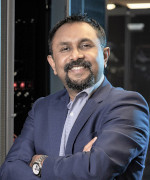
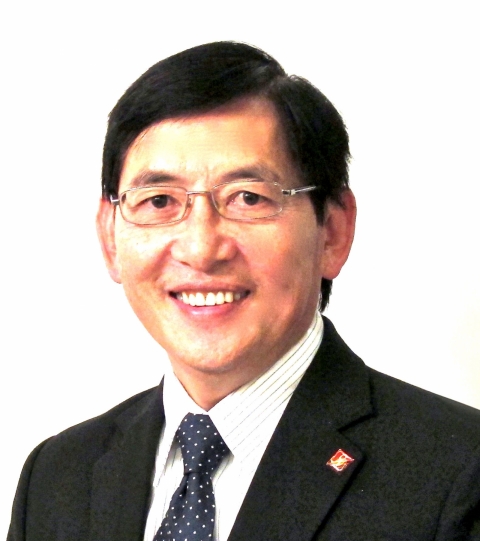
Dr. Anwar Haque is an Associate Professor in the Department of Computer Science at Western University, Canada, and a Faculty of Science Distinguished Research Professor. He holds a Ph.D. in Electrical and Computer Engineering and an M.Sc. in Computer Science from the University of Waterloo. Prior to academia, he was Associate Director at Bell Canada. His research focuses on 5G networks, IoT, cybersecurity, AI, and autonomous systems, with over 100 peer-reviewed publications and $15M in collaborative grants. Dr. Haque leads the Western Information & Networking Group (WING) Lab and is the founder/CEO of Bamboo Innovations Inc., a tech startup developing socially responsible smart technologies. Leadership roles include industry expert-in-residence in the Faculty of Science, Undergraduate Chair of the Computer Science Department, and member of Western’s Senate. He has delivered over 30 keynote talks and media features include BBC Earth and The Globe and Mail. Awards include the IEEE CCECE Leadership Award and multiple grants from NSERC, MITACS, and Bell Canada. His work spans network reliability, smart grids, and cybersecurity, with industry partnerships like the Bell-Western 5G Research Centre.
Dr. Bhavna Sharma is an Associate Professor and Director of the Chase L. Leavitt Master of Building Science Program at the USC School of Architecture. Her work focuses on decarbonization, bio-based materials innovation, and sustainable healthcare infrastructure. She leads the Keck USC Sustainable Healthcare Initiative (KUSHI) to advance environmentally conscious healthcare systems. Dr. Sharma holds a Ph.D. in Civil and Environmental Engineering from the University of Pittsburgh, with additional degrees in Art History and Architecture. Her research spans structural systems optimization from material harvesting to building-scale applications, emphasizing bio-composites like bamboo and timber. She co-chairs USC's Presidential Working Group on Sustainability, contributing to Assignment: Earth climate goals. Courses taught include seismic design, structural systems, and building science integration. Key research areas include lifecycle assessment in healthcare, seismic-resistant designs, and interdisciplinary standards for non-conventional materials. Her work bridges material science, architectural practice, and policy to address global sustainability challenges.
Dr. Richard Venditti is the Elis-Signe Olsson Professor of Pulp and Paper Science and Technology at North Carolina State University's Department of Forest Biomaterials, College of Natural Resources. He specializes in sustainable bioproducts, recycling technologies, and environmental life cycle analysis (LCA). His research focuses on transforming renewable plant-based resources into eco-friendly materials, addressing challenges like microfiber pollution and decarbonization in the paper industry. Education: PhD in Chemical Engineering, Princeton University (1994) B.S. in Pulp and Paper Technology and Chemical Engineering, NC State University (1988) Research Interests: Biodegradation of materials, fiber processing innovations, LCA of bioproducts, and upcycling waste into high-value products. Dr. Venditti leads high-impact projects, including a USDA-funded initiative to educate diverse students in bioproduct industries and a multi-organization study on microplastic fate in the environment. He has authored over 200 peer-reviewed publications and holds patents in sustainable technologies. Grants & Funding: Key projects include a $2.75M USDA program, a $2.99M NSF grant for eco-manufacturing of soft electronics, and a $1.64M DOE project on AI-driven municipal waste analysis. Awards & Recognition: TAPPI Fellow (2012), Fulbright Specialist (2009), and ACAAGS Advocacy Award (2010) for promoting diversity in graduate education. He directs the Pulp and Paper Workshop (co-sponsored by TAPPI) and teaches courses like Environmental LCA and Unit Operations. His lab explores innovations in dewatering, biomass valorization, and textile waste upcycling.
Dr. Andy Nguyen is a Senior Lecturer in the School of Engineering at the University of Southern Queensland. He holds a PhD from Queensland University of Technology (QUT), an MEng from the National University of Civil Engineering (NUCE), and a BEng from NUCE. His research focuses on structural health monitoring, integrating machine learning and deep learning techniques to assess infrastructure integrity. Key areas include damage detection in bridges, pavements, and buildings, as well as sustainable construction materials like bamboo. Nguyen leads projects such as the 'Next Generation Living Laboratory for Engineering Education and Engagement,' emphasizing real-world applications of technology in civil infrastructure. His work spans crack detection algorithms, finite element model updating, and vibration-based structural analysis. He collaborates on AI-driven solutions for autonomous vehicle object detection and smart maintenance planning. Nguyen’s contributions include over 50 peer-reviewed publications and active supervision of postgraduate research in composite materials and transport infrastructure. His research outputs highlight advancements in computational mechanics, sensor technologies, and data-driven methods for infrastructure resilience. Nguyen’s expertise bridges civil engineering challenges with cutting-edge machine learning, advancing both theoretical and applied solutions for sustainable and safe structures.
Professor Michael Ramage is a Senior Lecturer in the Department of Architecture at Cambridge University , where he directs the Centre for Natural Material Innovation . He is also a fellow of Sidney Sussex College and co-founder of Light Earth Designs . His academic background includes architecture studies at MIT and professional experience at Conzett Bronzini Gartmann in Switzerland. His research focuses on low-energy structural materials , natural material innovation , and sustainable housing in developing regions, with particular emphasis on engineered timber and bamboo . The 15 most recent publications highlight trends in modular timber construction , 3D printed earthen materials , and climate action in the building sector . Key subfields include circular economy , resource optimization , structural testing , and behavioral impacts on decarbonization . He has secured research funding from the Leverhulme Trust , Engineering and Physical Sciences Research Council (EPSRC) , Royal Society , and British Academy .
Professor Peggi L. Clouston at University of Massachusetts Amherst specializes in timber engineering and bio-based composite materials. Affiliated with the School of Earth and Sustainability's Environmental Conservation department, she has over 30 years of experience in structural behavior research and teaching. Registered professional engineer (EGBC) Associate Editor, ASCE Journal of Materials in Civil Engineering Led 2016 Massive Timber Dome project at UMass Fine Arts Center plaza Her research focuses on advanced wood materials, including CLT panels from low-value species, timber-concrete composite floor systems, and laminated veneer bamboo connections. She teaches structural timber design, bio-based composites, and material mechanics to architects, engineers, and building technologists.
Dr. Andy Nguyen is a Senior Lecturer in Structural Engineering at the University of Southern Queensland, within the School of Engineering. He is an active researcher and educator, specializing in the Structural Health Monitoring (SHM) of critical civil infrastructure such as bridges, buildings, and transport tunnels. Bachelor of Engineering (BEng), NUCE, 1999 Master of Engineering (MEng), NUCE, 2003 Doctor of Philosophy (PhD), Queensland University of Technology (QUT), 2014 Dr. Nguyen's research is at the forefront of integrating advanced technologies into civil engineering. His primary focus is on developing and deploying sophisticated SHM systems that utilize sensors, data analytics, and machine learning to provide real-time insights into the structural integrity of ageing infrastructure. His work aims to enable proactive maintenance, extend the lifespan of structures, and enhance public safety. He has successfully implemented monitoring systems on major bridges and high-rise buildings in Queensland and New South Wales, with systems capable of even detecting distant earthquake events. His research interests span Structural Health Monitoring, Machine Learning for Engineering, Damage Detection, Finite Element Model Updating, Sustainable Building Materials like bamboo, and the application of AI for automated condition assessment of transport infrastructure. The analysis of his recent publications reveals a strong and consistent research trajectory centered on the application of data-driven and AI methods to solve practical problems in civil infrastructure. His work frequently combines signal processing techniques (like Stockwell Transform) with deep learning models for tasks such as crack detection in concrete and pavement. He also conducts significant research on model updating for complex structures like cable-stayed and arch bridges, using vibration data and optimization algorithms. The integration of machine learning for overload classification and the development of cost-effective, automated monitoring systems are key trends in his recent output. Advanced Queensland Fellow (2024-2027) Dr. Nguyen is actively involved in research supervision and collaboration. He is currently supervising several postgraduate students on projects related to AI-powered condition assessment, bamboo as a sustainable building material, and railway track design. He receives research funding from the Queensland Government through his Advanced Queensland Fellowship. His research has direct practical applications, as evidenced by his public engagement, such as writing for The Conversation on safeguarding ageing bridges, and his work with the Australian Network of Structural Health Monitoring. Dr. Nguyen's work embodies the development of a next-generation 'Living' Laboratory for engineering education, where research, teaching, and real-world infrastructure monitoring are integrated. His current projects involve creating smart, automated fault detection systems and advancing 'digital twin'-based monitoring platforms for infrastructure.
Pekka Vallittu is a Professor and Chair of Biomaterials Science at the Institute of Dentistry, Faculty of Medicine, University of Turku, Finland. He holds adjunct and visiting professorships at the University of Hong Kong and King Saud University, respectively, and was awarded an honorary Doctor of Odontology from the University of Eastern Finland. With 742 peer-reviewed publications and an h-index of 111, he is a leading figure in dental biomaterials research. Current Roles: Full Professor (University of Turku, 2004–present), Director of Turku Clinical Biomaterials Centre Academic Honors: Distinguished Scientist Award (IADR), Acta Odontologica Scandinavica Big Prize His research focuses on fiber-reinforced composites (FRC), bioceramics, bioactive glasses, and nanocellulose for dental and orthopedic implants. Recent work includes sustainable 3D printing technologies and hydrating compounds for medical applications. Collaborations span oral surgery, otolaryngology, and materials chemistry. The 15 most recent articles (2025) examine biomaterial adhesion, mechanical properties, and clinical applications of fiber composites, bioactive glasses, and ceramic implants. Keywords span Biomaterials , Dentistry , 3D Printing , and Regenerative Medicine , with sub-fields like Bond Strength , Hydroxyapatite Coatings , and Ion Release . Scientific Awards: Distinguished Scientist Award (IADR), Acta Odontologica Scandinavica Big Prize, Bensow-Äyräpää Prize, George Winter Award Patents: Over 150 international patents from 45+ inventions Vallittu’s work bridges academic research and clinical translation through spin-off companies, regulatory frameworks (MDR-EU, FDA), and interdisciplinary teams in cell biology and materials science. He serves on the Board of the University of Turku (2018–present) and is a Fellow of the Academy of Dental Materials.
Dr. Qingshi Tu is an Assistant Professor in the Department of Wood Science at the University of British Columbia (UBC) Faculty of Forestry . His research focuses on integrating industrial ecology principles with computational modeling to advance sustainable bioeconomy development. Research Pillars: System-scale sustainability modeling using process simulation, statistics, and AI Environmental/economic/social impact assessment of bioenergy and bioproducts Interactions between bioeconomy, circular economy, and climate mitigation Technical Expertise: Life Cycle Assessment (LCA) Material Flow Analysis (MFA) Techno-economic Analysis (TEA) Machine Learning for sustainability Publication Scope: Dr. Tu has published 20+ articles in top journals like Journal of Industrial Ecology , Nature Communications , and ACS Nano , covering topics from nanomaterial synthesis to climate policy frameworks. His work emphasizes system-scale modeling of bioeconomy-climate interactions. Laboratory: Leads the Sustainable Bioeconomy Research Group , developing computational tools for evaluating emerging biotechnologies.
Mark Taylor is an Associate Professor at the School of Architecture and affiliated with the Center for Latin American and Caribbean Studies at the University of Illinois . His work focuses on post-disaster reconstruction, sustainable building materials, and community-centered architectural design in Haiti. Key Research Areas Disaster Recovery Architecture Laminated Bamboo Construction Midwifery Education Infrastructure Passive House Design Taylor's scholarship emphasizes innovative construction sequences and thermal comfort systems in seismic zones. His recent projects include Kay Fanm Yo (Women's House) in Léogâne, Haiti, a response to the 2010 earthquake. Awards include the AIA Central Illinois Outstanding Educator (2011). Invited talks covered topics like sustainable design processes (Solar Decathlon) and post-disaster recovery strategies.
Dr. Yunying Fang is a Senior Lecturer at Griffith University's School of Environment and Science, affiliated with the Australian Rivers Institute. She holds a PhD from the University of Sydney and previously worked at the NSW Department of Primary Industries (2013–2023). Her research focuses on Soil Biogeochemistry, Soil Carbon/Nutrient Cycling, and Greenhouse Gas Emissions, with an emphasis on Nature-Based Solutions to Climate Change and Soil Health Resilience. Education: PhD in Soil Science, University of Sydney Research Interests: Soil Carbon Sequestration Mechanisms Impact of Land Management and Climate Change on Ecosystem Processes Stable Isotope Methodologies for Soil Amendment Studies Funded Projects (Selected): Developing Standard Protocols for Microplastics in Soils (Solving Plastic Waste CRC, 2025–2028) Climate Change Effects on Phosphorus Cycling (Griffith University Internal Grant, 2023) Innovative Microbial Carrier Products Evaluation (High Performance Soils CRC, 2023–2026) Teaching & Supervision: Associate Supervisor for doctoral projects on Land Management in Rubber-Based Systems and Organic Amendments in Soil Carbon Sequestration Affiliations: Member of Australian Rivers Institute Research Entity Griffith Sciences Group
Seema Mangla is a Senior Lecturer at Oregon State University's College of Forestry, affiliated with both the Forest Ecosystems & Society and Wood Science & Engineering departments. She teaches courses focusing on renewable resources and their societal impacts. Her roles include curriculum development and instruction in interdisciplinary topics related to natural resources. Education: No formal education details provided in the text. Research Interests: Mangla's teaching emphasizes sustainable materials like industrial hemp and bamboo, exploring their agronomy, cultural significance, and applications in modern society. She also examines the historical and contemporary roles of forests and wood in civilization, addressing global resource management and societal perceptions. Grants & Awards: No grants or awards explicitly listed. Advising & Mentorship: No advising or mentorship details provided. She is actively involved in course development for Ecampus programs. Labs/Teams: No specific labs or research teams mentioned, though her coursework suggests engagement with interdisciplinary natural resource initiatives.
Tung X. Bui is a Professor of Information Technology Management at the Shidler College of Business, University of Hawaii at Manoa, holding the Matson Navigation Company Chair of Global Business. He serves as Faculty Director of the Vietnam Executive MBA Program, Chair of the Hawaii International Conference on System Sciences (HICSS), and Director of both the APEC-Study Center and Pacific Research Institute for Information Systems and Management (PRIISM), while maintaining a Senior Research Affiliate position at UC Berkeley's APEC Study Center. His academic credentials include: PhD in Computer and Information Systems, Stern School of Business, New York University PhD in Managerial Economics, University of Fribourg, Switzerland MS in Economics and Social Sciences, University of Fribourg, Switzerland Professor Bui's research bridges digital transformation , geoeconomics , and crisis management , with emphasis on Southeast Asia. His work examines computer-supported group decision systems , blockchain governance , emergency response technologies , and Vietnam's Bamboo Diplomacy foreign policy strategy through interdisciplinary lenses combining information systems, political economy, and sociology. Analysis of his 2020-2025 publications reveals three dominant trends: (1) Blockchain applications in healthcare governance and supply chain resilience, (2) Geoeconomic analyses of Vietnam's middle-power strategy amid US-China competition, and (3) Crisis communication systems validated through real-world disasters like Hawaii's Red Hill fuel leak. His work consistently integrates technical innovation with socio-political contexts across 80+ publications in top venues including HICSS and Decision Sciences . His major recognitions include: INFORMS Lifetime Research Achievement Award (2019) SRII Leadership Service Award (2014) University of Hue Honorary Professorship (2012) Five-time Shidler Kaizen Award recipient US Department of Labor and Congress commendations Through PRIISM and the APEC-Study Center, Professor Bui directs multi-institutional research on Pacific Rim information systems and trade policy, securing federal and APEC funding for projects spanning emergency response systems, digital economy frameworks, and Vietnam-US business relations. His doctoral seminar (ITM 704) trains next-generation scholars in advanced information systems research. He leads the Pacific Research Institute for Information Systems and Management (PRIISM), which develops decision-support technologies for regional governments and APEC policymakers, and co-directs the APEC-Study Center focusing on trade facilitation systems across 21 Pacific economies. These units maintain active partnerships with Vietnam's Ministry of Industry and Trade, NASA, and the US Department of Labor.
Dr Eral Bele serves as Associate Professor (Teaching) in the Department of Mechanical Engineering at University College London, with adjunct appointments at Vellore Institute of Technology (India) and external examiner duties at Coventry University. His research and teaching focus on mechanics of lightweight materials—composites, natural fibers, and cellular structures—aiming to develop lighter, stronger, energy-efficient solutions through experimental mechanics and finite element analysis. His research spans four core projects: (1) manufacturing mechanics of natural fiber composites and technical foams; (2) fracture toughness of metamaterials; (3) additive manufacturing of hierarchical microlattices; and (4) fatigue mechanics in natural structural materials. This work leverages UCL's Materials, Structures and Manufacturing Research group facilities, including mechanical testing labs, full-field strain mapping, and additive manufacturing equipment for metallic and fiber-reinforced components. Recent publications (2022–2025) reveal concentrated expertise in additive manufacturing applications, fracture behavior of novel materials, and sustainable material development—particularly in nacre-like composites, lunar regolith processing, and natural fiber foams. His work bridges experimental validation with computational modeling to advance sustainable materials engineering. Dr Bele holds the following recognition: Senior Fellow Advance HE (York, United Kingdom) His educational leadership includes serving as UCL's Departmental Tutor and Head of Undergraduate Education, designing the MSc in Future Manufacturing and Nanoscale Engineering (2023), and supervising MEng Capstone Design Projects. Internationally, he co-leads PhD training at CICY (Yucatan) on micro-CT characterization of composites and established VIT's Sustainable Manufacturing undergraduate program. His research group operates within UCL's Materials, Structures and Manufacturing Research ecosystem and maintains active collaborations with University of Toronto, CICY, VIT, and EU industrial partners—focusing on natural fiber composites, metamaterials, and sustainable manufacturing processes.
Dr Orestis L. Katsamenis is a Lecturer in Biomedical Imaging at the University of Southampton , affiliated with the Faculty of Engineering and Physical Sciences (FEPS) and the Faculty of Medicine (FoM) . He leads the 3D X-ray Histology and Biomedical Imaging Theme at the μ-VIS X-ray Imaging Centre and holds a visiting position at the University Hospital Southampton NHS Foundation Trust in the Biomedical Imaging Unit of Cellular Pathology and Child Health. Education: BSc in Materials Science (University of Patras, 2007), MSc in Materials Science (University of Patras, 2009), PhD in Bioengineering (University of Southampton, 2012). His research focuses on 3D X-ray Histology (XRH) and Microfocus Computed Tomography (μCT) applied to biological and clinical imaging , pharmaceutical technology , and bone nanostructure . He has pioneered μCT protocols for clinical histology and developed advanced 3D imaging tools for applications in drug delivery , tissue engineering , and evolutionary biology . His work spans multidisciplinary collaborations with engineers, medical professionals, and paleontologists. Recent publications highlight his contributions to 3D imaging of bone , microneedle design , 4D-printed polypills , and paleontological studies . He has received awards including the EPSRC Doctoral Prize Award (2012) and multiple scientific presentation honors (2018) . Dr Katsamenis supervises PhD student Ayesha Mohiud Din and collaborates with research groups like the Engineering Materials and Surface Engineering Group and the Institute for Life Sciences . His Google Scholar profile lists over 20 recent articles, showing his prolific and diverse research output.