Dr. Yusuf AKKOCA, currently a Lecturer at the Faculty of Economics and Administrative Sciences, Kırşehir Ahi Evran Üniversitesi, holds a PhD in Management and Organization from Ankara Yıldırım Beyazıt University (2014-2019) and an MSc from the University of Connecticut (2011-2013). His academic career at Kırşehir Ahi Evran Üniversitesi (2014-present) includes roles such as Research Assistant, Academic Advisor, and committee memberships in EFQM Model and Bologna Process initiatives. Education : PhD (Management and Organization, Ankara Yıldırım Beyazıt University), MSc (USA, University of Connecticut), BSc (Başkent University, Management Information Systems) His research focuses on Organizational Behavior , Strategic Leadership , and Human Resources , with publications analyzing talent management, organizational commitment, and the impact of job stress. His work spans interdisciplinary areas like defensive medicine in healthcare, organizational ethics, and digital transformation in Industry 4.0. Key publications include studies on competitive intelligence mediation (2025), personality traits and organizational commitment (2023), and Taylor's iron casting experiments (2021). Collaborations with scholars like Fatih Ferhat Çetinkaya and Musa Özata highlight his team-oriented research approach.
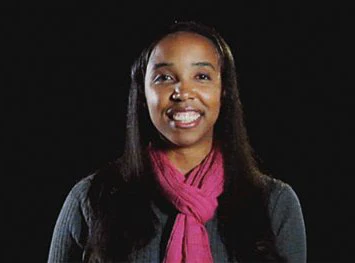
Shaundra 'Shani B' Daily serves as the Cue Family Professor of the Practice in the Department of Electrical and Computer Engineering at Duke University's Pratt School of Engineering. She also holds appointments as Professor of the Practice of Computer Science and serves as Faculty Director of the Duke Technology Scholars program. As a core faculty member in Innovation & Entrepreneurship and one of Duke's inaugural Levitan Faculty Fellows, Daily plays a pivotal role in connecting faculty with undergraduate residential life through the QuadEx initiative. Daily's educational background includes a Ph.D. from the Massachusetts Institute of Technology (2010), an S.M. from the MIT Media Lab, and B.S. and M.S. degrees in Electrical Engineering from the Florida Agricultural and Mechanical University – Florida State University College of Engineering. Her academic journey includes previous positions as an Associate Professor with tenure at the University of Florida (2015-2017) and Associate Professor in the School of Computing at Clemson University (2011-2015). Daily's research focuses on analyzing, designing, and building sociotechnical systems to support meaningful participation and success in STEM fields. Her work encompasses four interconnected strategies: understanding sociotechnical ecosystems through mixed methods approaches; employing participatory approaches that empower communities to shape technology development; designing technologies that enhance emotional development and interpersonal skills; and building supportive infrastructure through programs and curricula. Her research areas include identity-inclusive computing, human-centered design and engineering, and justice-centered STEM education, with particular emphasis on creating pathways for historically underrepresented groups in computing. Analysis of Daily's recent publications reveals a consistent focus on embodied approaches to computational thinking education, particularly through dance and movement-based learning. Her work bridges computer science education with affective computing, exploring how technologies can support emotional development while teaching technical skills. A significant thread throughout her research is the development of inclusive computing environments that address systemic barriers faced by women and underrepresented minorities in STEM fields. Educator of the Year, ACHI Magazine (2022) Program of the Year, CoNECD Conference (2022) North Carolina Black STEM Leaders, Governor Roy Cooper (2022) Capers and Marion McDonald Award for Excellence in Mentoring and Advising, Pratt School of Engineering (2021) Undergraduate Mentor of the Year, Mary Lou William Center for Black Culture (2020) Technology, Instruction, Cognition and Learning Early Career Research Award, American Education Research Association (2015) Daily has secured over $40 million in funding from public and private sources to support her collaborative research activities. Notable recent grants include the NSF INCLUDES Alliance: The Alliance for Identity-Inclusive Computing Education ($10 million), the AI Institute: Athena, and The Alliance for Interdisciplinary Innovation in Computing Education-Postdoctoral Research Fellowship. As Faculty Director of Duke Technology Scholars, she oversees a program providing comprehensive support for students from underrepresented backgrounds. Daily also serves as Education and Workforce Director for the Athena AI Institute and was appointed to develop competencies for the National Academies' Future Of Data And Computing Committee. Through her work with the Alliance for Identity-Inclusive Computing Education and the Duke Technology Scholars program, Daily has established herself as a leader in creating supportive infrastructure for learners to thrive in STEM. Her approach combines technology development with programmatic interventions to address systemic barriers in computing education. As a Levitan Faculty Fellow, she continues to bridge the gap between academic research and residential student life, creating opportunities for meaningful faculty-student connections that support intellectual and personal development.
Jina Kang is an Assistant Professor in the Department of Curriculum & Instruction at the University of Illinois Urbana-Champaign , with an affiliate appointment at the Siebel Center for Design . Her research focuses on immersive technology-supported learning environments , collaborative problem-solving dynamics , and educational data mining for understanding multimodal engagement in science education. Recent publications examine embodied cognition in STEM through gesture-based learning simulations, joint attention dynamics in astronomy VR environments, and systematic reviews of immersive technology applications in collaborative education. Her work integrates XR platforms , Bayesian knowledge tracing , and multimodal behavioral analysis to enhance science learning outcomes. She teaches graduate courses including CI 539: Introduction to Educational Data Mining and CI 489: Educational Technology Capstone Course , where students develop technology-supported learning activities using studio-based approaches.
Dr. Richard Beecroft is a Research Associate at the Institute for Technology Assessment and Systems Analysis (ITAS) at Karlsruhe Institute of Technology (KIT), working within the Research group 'Karlsruhe Transformation Center for Sustainability and Cultural Change' since 2024. He earned his Doctorate in Sustainability Sciences (Dr. phil.) from Leuphana University of Lüneburg in 2019 and previously served as Deputy Professor for Technology, Philosophy and Sustainability at Darmstadt University of Applied Sciences (2022-2023). Dr. Beecroft's research centers on sustainability transformations through Real-World Laboratories as transdisciplinary research and learning environments. His work bridges theoretical frameworks with practical applications for societal transformation, focusing particularly on methodological development for transdisciplinary research. He has been instrumental in establishing the Karlsruhe School of Sustainability and developing the Transformative Project Seminar methodology, which has been implemented across multiple courses. His recent publications demonstrate a strategic shift toward self-experimentation methodologies for sustainable lifestyle changes, with significant contributions on understanding the impacts of Real-World Laboratories and developing practical tools like the Self-Experiment Generator. His research spans sustainability science, technology assessment, education, and urban studies, reflecting the inherently transdisciplinary nature of his approach. As an educator, Dr. Beecroft has developed innovative teaching methods that connect academic learning with real-world sustainability challenges. He managed the KIT Center for Humans and Technology from 2018-2025 and has made substantial contributions to embedding higher education within Real-World Laboratories through transdisciplinary project courses. His current work explores how self-experiments can serve as tools for both personal and societal transformation toward sustainability, with practical applications designed to empower individuals to engage in sustainability transformations through structured personal experimentation.
Professor Florian Diekert is a Professor of Environmental Economics at the University of Augsburg's Faculty of Business and Economics and a member of the Centre for Climate Resilience. He leads the Environmental Economics Lab, which focuses on designing, analyzing and testing strategies for sustainable and resilient development, with particular emphasis on socio-ecological systems under pressure and group decisions under strategic and natural uncertainty. Professor Diekert received his education from the Technical University Dresden (International Relations) and the University of Oslo (MPhil in Economics, PhD in Economics in 2011). His research employs economic experiments, theoretical modeling, and statistical analysis, often in interdisciplinary collaborations with natural scientists. Prior to joining the University of Augsburg in 2023, he was a Junior Professor in Heidelberg and conducted research visits at Columbia University and UC Santa Barbara. His research spans Environmental Economics , Resource Economics , and Behavioral Economics , with specific focus on socio-ecological systems, group decision-making under uncertainty, lab-in-the-field experiments, social norms, and early warning systems for ecological tipping points. His work integrates theoretical insights with practical applications for sustainable development policy, often through interdisciplinary collaborations with natural scientists. Professor Diekert's publication record reveals a consistent trajectory of high-impact research on climate resilience, fisheries management, and collective action problems. His recent work increasingly incorporates experimental methods to investigate how environmental conditions shape economic behavior across different cultural contexts (Chile, Norway, Tanzania), and how policy interventions can improve sustainability outcomes through behavioral insights. ERC Starting Grant 'NATCOOP' for research on how nature shapes preferences and incentives of economic agents and how this affects common-pool resource management Professor Diekert advises multiple doctoral students and leads a vibrant research team including postdoctoral researchers and doctoral candidates. His Environmental Economics Lab actively participates in major international conferences such as the Global Tipping Points Conference, Nordic Annual Environmental and Resource Economics Workshop, and European Association of Environmental and Resource Economists conference, demonstrating strong international engagement in his field. The Environmental Economics Lab at the University of Augsburg brings together economists, natural scientists, and policy experts to address pressing sustainability challenges through interdisciplinary research. The lab conducts both theoretical and experimental work, with field studies in various international contexts including Chile and Tanzania, and maintains strong connections with other research institutions across Europe and beyond.
Cathy Ennis is an Assistant Professor in the Department of Computer Science at Maynooth University, Ireland, specializing in perceptually guided graphics and virtual reality. She is actively involved in research and teaching, with affiliations to the ADAPT Centre and D-REAL SFI Centre for Research Training. Education: BEng in Electronic Engineering, Maynooth University MSc in Cognitive Science, University College Dublin PhD in Computer Graphics, Trinity College Dublin PG Dip in Higher Education Teaching and Learning, DIT Research Interests: Dr. Ennis's research centers on creating realistic virtual humans and crowds, exploring multisensory perception in VR, and applying these technologies in serious games and interactive systems. Her work integrates AI, HCI, and immersive technologies to enhance user engagement and learning. Her recent publications reflect a strong focus on virtual character realism, VR-based education, and machine learning applications in animation and interaction. Notable themes include speech-animation realism, cultural VR experiences, and reinforcement learning for character control. Scientific Awards: Best Paper Award, IEEE VR 2022 Teaching and Supervision: Dr. Ennis currently teaches CS401 (Machine Learning and Neural Networks) and CS261 (Multimedia Technology). She is actively seeking PhD students and collaborators interested in VR, games, and virtual characters, particularly using machine learning for gesture generation and engagement. Labs and Teams: She is a Funded Investigator with the ADAPT Centre and D-REAL SFI Centre for Research Training, contributing to interdisciplinary research in AI, HCI, and immersive technologies.
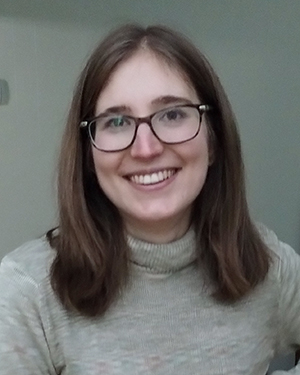
Elizabeth Richey serves as a Teaching Assistant Professor in the Department of Psychology at the University of Pittsburgh's Dietrich School, where she teaches undergraduate courses including Introduction to Psychology, Cognitive Psychology, Research Methods Lab, and specialized topics in Learning and Motivation. Holding a PhD in Cognitive Psychology from the same institution, she bridges theoretical knowledge with practical educational applications through her dual roles as educator and learning sciences researcher. Education PhD in Cognitive Psychology, University of Pittsburgh Research Focus Dr. Richey's research program investigates how cognitive, metacognitive, and motivational factors influence mathematics and science learning across educational stages from middle school to college. Her work emphasizes educational technology applications, particularly digital learning games and intelligent tutoring systems, with concentrated examination of gender dynamics, self-explanation mechanisms, and belonging interventions. Through controlled laboratory experiments and classroom-based studies, she explores how technological implementations can enhance learning equity and engagement while mitigating factors like math anxiety. Publication Trends Analysis of her 2022-2025 publications reveals a cohesive research trajectory centered on game-based mathematics education, with 80% of recent work addressing gender effects in digital learning environments. Key methodological approaches include randomized controlled trials examining mindfulness interventions, latent variable modeling of student behavior, and multi-dimensional gender frameworks that move beyond binary classifications. Her findings consistently demonstrate how contextual factors—such as narrative design in learning games and AI-human collaboration models—significantly impact learning outcomes, particularly for female students in mathematics contexts.
B. Bera serves as an Associate Professor in the Department of Chemical Engineering within the Faculty of Applied Sciences at Delft University of Technology (TU Delft), where his research focuses on fundamental transport phenomena in complex fluid systems. His work bridges chemical engineering principles with practical applications in emulsion science and microfluidics. Dr. Bera's primary research interests center on emulsion coalescence mechanisms, droplet dynamics in oil-water systems, and thermal effects on emulsion stability. His experimental approach utilizes microfluidic platforms to investigate concentrated emulsions under constrained flow conditions, with significant implications for petroleum engineering, food processing, and pharmaceutical formulations. The fingerprint analysis of his work reveals dominant themes in emulsion science (100% emulsions/coalescence), droplet dynamics (65%), and elevated temperature effects (50%). His publication record demonstrates a clear trajectory toward understanding coalescence in microscale environments, with the 2025 study on avalanche-driven coalescence in constrictions representing the latest advancement beyond his foundational 2021 work on temperature-dependent coalescence dynamics. This progression highlights increasing methodological sophistication in microfluidic experimentation and quantitative analysis of droplet interactions. Scientific recognition includes: TU Delft Education Fellow (2022) Dr. Bera maintains active engagement in pedagogical innovation, evidenced by his co-authorship of student-centered physics education research that documents open inquiry methodologies and student research experiences in experimental physics.
Leah Johnson Kempinski is an Assistant Professor in the Department of Chemistry at Michigan State University. She specializes in chemistry education, focusing on interdisciplinary support courses and scientific literacy development for introductory chemistry students. Education: PhD in Chemistry, University of Wisconsin-Milwaukee B.A. in Chemistry, Earlham College Her research explores how chemistry classes can cultivate disciplinary literacy and community engagement. She teaches courses like LB 171 and LB 171L, emphasizing the practical relevance of chemistry in everyday environments. Her recent work analyzes the effectiveness of chemistry reading groups and student success strategies, bridging educational theory with practical implementation in STEM curricula. Courses Taught: LB 171, LB 171L Contact: lejk@msu.edu
Professor Ben Horan is the Head of School of Engineering at Deakin University , Faculty of Science Engineering and Built Environment. He holds a Doctor of Philosophy and Bachelor of Engineering from Deakin University, with expertise in electrical engineering , control systems , and human-centred computing . As a leading researcher in virtual reality (VR) applications, he focuses on safety training, aged care, and extended reality (XR) systems. PhD in Electrical Engineering (Deakin University) Graduate Certificate of Higher Education (Deakin University) Bachelor of Engineering (Deakin University) His research spans VR for electrical safety training , automated vehicle interactions , and XR applications in museums . His work includes grants from the Department of Health, Melbourne Water Corporation, and City of Greater Bendigo. Recent publications analyze 360° video realism, cognitive load in virtual workplaces, and AR for Industry 5.0. Professor Horan supervises PhD candidates exploring topics like autonomous vehicle pedestrian interactions , VR stress mitigation , and industrial XR systems . He has completed supervision of 10+ PhD and Master’s students.
Dante Fratta is a Professor in the Department of Civil & Environmental Engineering at the University of Wisconsin-Madison, where he has been actively involved in research and teaching since 2000. His work focuses on geotechnical engineering, environmental monitoring, and fiber optic sensing technologies. Education: PhD (1999) – Georgia Institute of Technology M.A.Sc. (1995) – University of Waterloo Diploma (1993) – Universidad Nacional de Córdoba Research Interests: Geomaterial process evaluation using elastic and electromagnetic waves, fundamental physical behavior of soils and rocks, geophysical assessment of near-surface environments, and distributed fiber optic sensing methods. Recent Publication Trends: He has pioneered applications of Distributed Acoustic Sensing (DAS) and fiber optic technologies for geotechnical, environmental, and energy infrastructure monitoring, including wind turbines, geothermal systems, and mining operations. Scientific Awards: Benjamin Smith Reynolds Award for Excellence in Teaching (2012) Chi Epsilon Excellence in Teaching Award (2008) Best Paper Award, GeoCongress Sensing Methods and Devices Track (2006) Distinguished Alum, Universidad Nacional de Córdoba (2013) Multiple keynote and invited speaking engagements Teaching: Fratta teaches graduate and undergraduate courses in geotechnical engineering, including Foundations, Applied Geophysics, and Pre-Dissertator Research, with active involvement in Spring 2025 classes.
Dr. Terri Gomez serves as the Provost and Vice President for Academic Affairs at California State Polytechnic University, Pomona. With a 25-year career at Cal Poly Pomona, she has held significant roles including Associate Provost for Student Success, Equity and Innovation, and founding director of the PolyTransfer Program. Her work focuses on eliminating equity gaps through data-driven initiatives and collaborative academic programming. Education: Ph.D. in Political Science from University of California, Los Angeles Academic Leadership: First Full Professor in Ethnic and Women’s Studies Administrative Roles: Department Chair, Interim Associate Dean, Associate Vice President for Student Success Dr. Gomez specializes in creating systemic solutions for student success, particularly for first-generation, Pell Grant-eligible, and historically underrepresented populations. Her research explores: First-Year Experience programs Transfer student retention strategies Equity gap elimination frameworks Data-supported College-Based Student Success Teams Predictive analytics implementation Graduation Initiative 2025 compliance systems Notable achievements include: 95% degree completion rate in 2018 Summer Completion Grant Initiative Establishment of the Office of Student Success (2016) White House Initiative recognition for TRANSFERmations program Her scholarly work intersects with practical implementation of: High-impact practices (HIPs) Interdisciplinary research models Civic engagement initiatives Academic advising transformation Learning resource center development First-generation student pathway design
Anna Serra Salvi serves as a Lecturer in the Department of Specific Didactics at the University of Girona, specializing in Didactics of Social Sciences. She teaches primary and secondary teacher education programs and conducts research through the GRECA group (Research Group in Scientific and Environmental Education) within the Institute of Educational Research. Her academic qualifications include: Doctorate in Education from University of Girona (2019) Bachelor's in Philosophy and Letters (Geography and History) from University of Girona (1998) Teaching Diploma in Primary Education (Social Sciences specialty) from University of Girona (1993) Dr. Serra Salvi's research centers on sustainability education through social dimensions, particularly gender perspectives and vulnerable groups, alongside heritage/citizenship education and landscape didactics. Her work emphasizes integrating Sustainable Development Goals into teacher training while promoting proactive citizenship through gender-sensitive geographical approaches. She examines how urban environments function as learning spaces and investigates emotional dimensions of heritage education in Catalan contexts. Analysis of her 15 most recent publications reveals consistent focus on socially transformative educational practices. Her work demonstrates strong methodological preference for qualitative case studies and intergenerational analyses, particularly examining Girona's urban spaces. Key thematic clusters include pandemic-era adaptations of sustainability education (2020-2023), gender-responsive urban geography pedagogy (2021-2022), and heritage education frameworks for early childhood (2019-2020), all reflecting commitment to contextually grounded, socially just educational praxis. As faculty, she advises undergraduate and master's students in teacher education programs while contributing to GRECA's research on scientific and environmental education. Her professional trajectory spans university teaching (2015-present), secondary education (2011-2024), and primary education (1993-2011) within Catalonia's education system, providing rich practical foundations for her academic work. She actively participates in GRECA's collaborative projects examining science and environmental education innovations, with particular focus on community-based learning approaches in Girona's urban landscape. Her current research continues exploring intersections between educational practice, urban geography, and social justice frameworks.
Gareth Davies is a Swansea University researcher with cross-faculty collaborations spanning Health Informatics , Public Health , and Materials Science . His work focuses on health data science , innovation policy , and interdisciplinary solutions for healthcare and social care systems in Wales.
Prof. Dr. Valentina Dagienė serves as a Professor and Senior Researcher at the Educational Systems Group within the Institute of Data Science and Digital Technologies at Vilnius University, Lithuania. Her academic career spans several decades with significant contributions to informatics education globally, particularly through her leadership in the international Bebras contest initiative. Her research focuses on computational thinking education through constructionist learning approaches, with particular emphasis on task design that promotes deep conceptual understanding in K-12 settings. Prof. Dagienė has pioneered methods for integrating computational thinking into primary education curricula while addressing cultural differences in learning approaches. Her work bridges theoretical frameworks with practical classroom implementations, making complex informatics concepts accessible to young learners through engaging short tasks. Analysis of her recent publications reveals a clear progression toward interdisciplinary integration of computational thinking with STEAM education and digital competence frameworks. Her research increasingly addresses assessment methodologies for computational thinking skills and explores the connections between computational and algebraic thinking. The Bebras contest serves as both a research platform and practical implementation vehicle for her educational theories. Prof. Dagienė has established herself as a key figure in international informatics education through her editorial work, conference organization, and cross-national collaborations. She has fostered partnerships between educators and researchers across Europe and beyond, creating sustainable communities around computational thinking education. Her leadership in the Bebras International Contest has engaged millions of students worldwide in computational problem-solving activities. Through her work with the Educational Systems Group, Prof. Dagienė has developed comprehensive teacher training programs that support educators in implementing computational thinking concepts in diverse classroom settings. Her research on student approaches to problem-solving has informed the design of learning environments that accommodate different learning styles and cultural backgrounds.