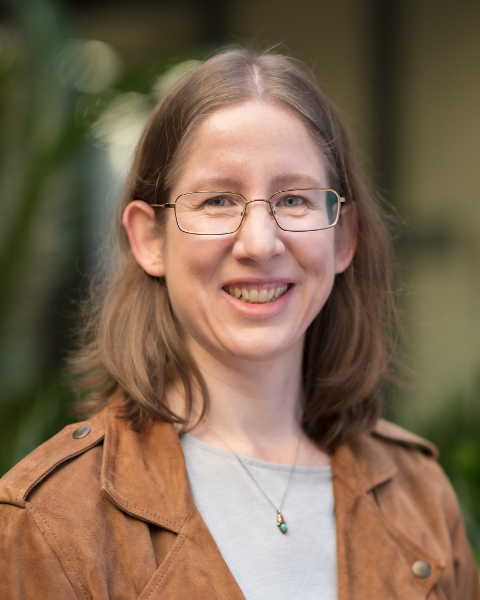
Min Kyu Kim is an Associate Professor in the Department of Learning Sciences at Georgia State University's College of Education & Human Development, where he founded the AI² Research Laboratory. His work focuses on transformative learning experiences in technology-rich environments. Education: Ph.D. in Learning, Design, and Technology from University of Georgia (2012) M.A. from Yonsei University, Seoul, Korea (2001) B.S. from Yonsei University, Seoul, Korea (1997) Kim's research explores two core questions: (1) How to personalize learning through AI and augmented reality? (2) How to create accessible learner experiences using immersive technologies. His work emphasizes adaptability, engagement, equity, and effectiveness in education. Recent publications demonstrate expertise in AI integration (34% of articles), educational assessment (29%), and writing instruction (37%). Key themes include interactive learning systems, digital literacy development, and cognitive engagement metrics.
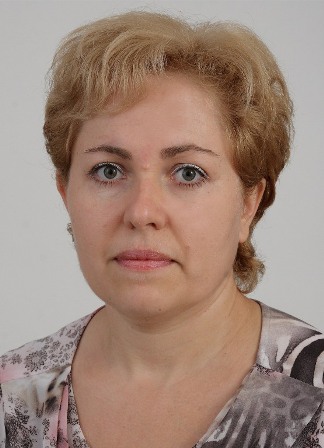
Anne McAlister is an Assistant Professor in the First Year Engineering Center at the University of Virginia. Her research focuses on engineering identity, teamwork, and sociotechnical thinking to broaden participation in engineering education. She holds a Ph.D. in Education and M.S. in Systems Engineering from the University of Virginia, and a B.S. in Chemical Engineering from The Ohio State University. Dr. McAlister’s work addresses barriers to success in engineering education and strengthens sociotechnical thinking among first-year students. Her research interests center on understanding and challenging systemic obstacles in engineering education, particularly regarding identity formation and inclusive pedagogies. Key areas include engineering culture’s impact on mental health, interdisciplinary science and engineering integration in K-12 classrooms, and graduate student role identity development. Recent publications explore elements of engineering culture affecting student mental health, inclusive classroom practices in NGSS-aligned curricula, and the multifaceted roles of engineering doctoral students. She teaches ENGR 1010: Engineering Foundations 1, emphasizing foundational skills for first-year engineering students. Dr. McAlister’s work has been published in leading journals like the Journal of Engineering Education and Science Education . Her research methodologies include mixed methods and grounded theory approaches to study identity development and educational equity.
Nuno Luis Madureira is a Full Professor in the Department of History at ISCTE – Lisbon University Institute, where he is also an Integrated Researcher at CIES-Iscte – Center for Research and Studies in Sociology. His academic affiliations include the School of Social Sciences and Humanities and the research group Historical Dynamics and Global Integration of the World . He has been a visiting scholar at Harvard University and the University of California, Berkeley, and serves on the review boards of the European Science Foundation, Research Foundation – Flanders (FWO), and the Netherlands Organization for Scientific Research (NWO). Madureira holds a PhD in Contemporary Social History from ISCTE-IUL (1996), a Master’s in Historical Economics and Sociology from the Faculty of Social Sciences and Humanities at UNL (1990), and a Bachelor’s in History from the Faculty of Arts at UL (1984). His research spans energy and environmental history, economic and business history, the history of technology and science, and historical occupations. He has authored thirteen books, including Key Concepts in Energy: Technology, Economy and History (Springer, 2014), and numerous peer-reviewed articles in journals such as Energy Policy , Technology & Culture , Business History Review , and Environment and History . His recent publications reflect a deep engagement with energy transitions, fossil fuel history, nuclearization, and the socio-political dimensions of energy systems. Themes such as energy paradoxes, oil pricing, and the historical development of electricity infrastructure recur throughout his work. He has also contributed to major encyclopedias and edited volumes in economic and social history. Madureira is the editor of Frontiers in Sustainability and has coordinated multiple collective research projects. He maintains an active research blog and is fluent in French and English. His work is interdisciplinary, combining historical analysis with insights from economics, engineering, and environmental sciences. Scientific Awards and Recognitions: Member of the permanent pool of referees of the European Science Foundation (2006–2013) Member of the College of Reviewers of the European Science Foundation (2016–2023) Member of the Research Foundation – Flanders (FWO) Review College Consultant for the Netherlands Organization for Scientific Research (NWO) He has advised on research policy and evaluation at national and European levels and is a member of ISCTE's General Board. His work on historical occupations and classification systems has been foundational in Portuguese social history. He has not advised any named PhD or Master’s students in the provided texts. He is not part-time, not retired, and currently active in research and teaching.
Dr. Robert L. Bing III is a Professor in the Department of Criminology and Criminal Justice at The University of Texas at Arlington, where he has served since 1994. He holds a Ph.D. in Criminology from Florida State University and has played a foundational role in shaping the department, serving as its first Chair from 1994 to 2006 and again as Interim Chair in 2014–2015. He is also a CAAS Faculty Fellow and has held leadership roles in diversity and inclusion initiatives at the university. Ph.D., Criminology, Florida State University, 1987 M.S., Criminology, Florida State University, 1976 B.A., Sociology, College of the Holy Cross, 1975 Dr. Bing’s research centers on race, crime, and justice, with a focus on plea bargaining, corrections, sentencing disparities, and the role of race in criminal justice education. He has extensively explored issues such as the militarization of police, day fines, and pretrial detention. His scholarly work reflects a deep commitment to equity and social justice within legal and educational institutions. The 15 most recent publications highlight a consistent focus on racial disparities, legal policy, and institutional reform. His work spans topics such as stand-your-ground laws, mentoring in criminal justice, and the criminogenic potential of healthcare systems. These articles reflect interdisciplinary engagement with public policy, victimology, and organizational behavior. Faculty Excellence Award, AAFSA (2019) Unsong Hero Award, Alpha Phi Alpha Fraternity (2018) Becky Tatum Excellence Award, ACJS (2010) Outstanding Service Award, African American Faculty and Staff (2016) Dr. Bing has advised numerous master’s students, chaired theses and comprehensive exams, and mentored early-career faculty. He has received research funding, including a $100,000 grant for the 'Community Courts Initiative.' He has served on multiple university and professional committees, including the Academy of Criminal Justice Sciences (ACJS), where he was Chair of the Section on Minorities and Women and currently serves as Trustee-at-Large. He is actively involved in community service, including the MLK Celebration Committee and Mothers Against Teen Violence. He has presented widely at national conferences such as ACJS and the American Society of Criminology, addressing topics like police-community relations, diversity in education, and sentencing reform.
Jennifer M. McDermott is an Associate Professor in the Department of Psychological and Brain Sciences at the University of Massachusetts Amherst, where she conducts interdisciplinary research at the intersection of developmental, cognitive, and affective neuroscience. She is affiliated with the Neuroscience & Behavior Graduate Program, the Center for Research on Families, and the Rudd Adoption Research Program, reflecting her broad engagement with developmental science and family dynamics. Her research focuses on understanding individual differences in cognitive development and social outcomes, particularly how early experiences shape neural and behavioral trajectories. Key areas of interest include response monitoring, executive function, emotion regulation, and behavioral inhibition in children. She employs neuroscientific methods such as ERP and behavioral paradigms to investigate how self-regulatory processes develop and how they are influenced by temperament, early adversity, and caregiving environments. The trends in her recent publications reveal a strong emphasis on early childhood development, with frequent exploration of ADHD, sleep effects on cognition, emotion processing, and the neural underpinnings of attention and inhibition. Her work often involves longitudinal and intervention-based studies, particularly with at-risk populations, including children with developmental disabilities or histories of institutionalization. Jennifer McDermott has received research support from major funding sources including NIH and NIMH, particularly through collaborative networks focused on early experience and stress neurobiology. She has mentored trainees and collaborated extensively with leading scholars such as Nathan A. Fox and Koraly Pérez-Edgar. She teaches core courses in developmental psychology, including Psych 350 (Developmental Psychology), Honors Developmental Psychology, Socioemotional Development, and a graduate seminar on Critical Periods and Developmental Plasticity, demonstrating her commitment to both undergraduate and graduate education.
Krista A. Ehinger is an Associate Professor and co-lead of the AI group at the University of Melbourne's School of Computing and Information Systems. She holds a PhD from MIT and has held postdoctoral positions at York University and Harvard Medical School. Her research focuses on the intersection of human and computer vision, including scene recognition, visual search, and depth perception. Methodologically, she combines Bayesian models, deep learning, and behavioral experiments like eye tracking. Current projects explore AI applications in space systems (e.g., SpIRIT satellite) and ethical implications of workplace surveillance via computer vision. Recent work emphasizes amodal completion (e.g., reconstructing occluded objects) and AI reasoning systems. She collaborates on medical imaging (TCAM-Diff model), autonomous driving (truck speed detection), and 3D reconstruction. Her lab actively engages in open-source tools like the SUN Database for scene understanding. Professional activities include AI ethics discussions and academic service. She advises students on Masters/PhD projects and contributes to conferences like CVPR and NeurIPS.
Mary Hegarty is a Distinguished Professor in the Department of Psychological & Brain Sciences at UC Santa Barbara. She has been on the faculty since 1988 following her PhD from Carnegie Mellon University. Her research focuses on spatial thinking, navigation strategies, and individual differences in spatial abilities, with emphasis on STEM education. She leads the Spatial Thinking Lab, employing methods like fMRI and virtual environments. Current NSF-funded projects explore navigation variability and spatial ability’s role in STEM success. Education: BA and MA from University College Dublin, PhD in Psychology from Carnegie Mellon (1988). Research Interests: Spatial cognition (e.g., mental rotation, navigation strategies), spatial representation in STEM, and effects of technology like GPS on spatial skills. Unique focus on integrating experimental psychology with individual difference analysis. Awards: APS Fellow, Spencer Postdoctoral Fellowship, former Cognitive Science Society board chair. Editorial roles at Journal of Experimental Psychology: Applied and Topics in Cognitive Science. Lab Activities: Develops VR tools for spatial assessment, collaborates on projects like Sea Hero Quest. Focuses on translating spatial cognition research into educational interventions. Current research examines neural correlates of navigation and midlife spatial aging effects.
Maureen Garvey is an Associate Professor and Coordinator of Reference Services at the College of Staten Island (CUNY). She holds Master's degrees in political philosophy from the National University of Ireland and Library Science from City University London. Her career includes roles at institutions like Bank Street College of Education, the Library Council of Ireland, and John Jay College. Her research focuses on library services innovation, particularly in virtual reference systems, public policy impacts on libraries, and resource-sharing practices in resource-constrained environments like Cuba. She advocates for student information literacy to improve retention and success. Key publications include studies on pandemic-era library adaptations, neoliberal policies in Irish libraries, and collaborative teaching methods. Garvey emphasizes libraries' societal role through scholarly contributions and practical initiatives.
Amy Jo M. Gómez is an Assistant Professor of Instruction in the Department of Biological Sciences at The University of Texas at Dallas, within the School of Natural Sciences and Mathematics. She is actively involved in science education and curriculum development, with a strong focus on microbiology and inclusive teaching practices. Educational Background: Ph.D. in Plant Pathology, Texas A&M University (2011) B.S. in Biology, Texas Woman's University (2006) Her research and scholarly interests center on improving undergraduate science education through innovative laboratory instruction and equitable teaching policies. She has developed comprehensive laboratory manuals for food microbiology and health studies, emphasizing hands-on learning and accessibility. Her work also addresses broader systemic issues in academia, such as support for adjunct faculty and inclusion of service animals in laboratory settings. The recent publications highlight a consistent trend in science education, particularly in microbiology pedagogy, inclusive policies, and curriculum design. Her scholarship bridges practical teaching tools with advocacy for equitable and accessible learning environments in the biological sciences. Scientific Contributions: Author of two widely used laboratory manuals in microbiology education Published on service animal policies in teaching labs Advocate for adjunct faculty rights and recognition Dr. Gómez is actively engaged in educational scholarship and curriculum innovation. While no formal advising or grant information is listed, her publications suggest leadership in pedagogical development and inclusive science education reform. She contributes to shaping best practices in undergraduate biology instruction at UT Dallas and beyond.
Mengqiu Cao is a Lecturer in Urban Systems Predictive Analytics and Machine Learning at the University College London (UCL) within the Bartlett School of Environment, Energy and Resources . He integrates academia and industry expertise to advance interdisciplinary research at the intersection of transport analysis and urban studies. Research Focus : Sustainable transport, urban mobility, logistics, social equity, and low carbon transitions. Teaching : Coordinates modules on climate sciences, data-driven consumer behavior analysis, and transport policy. Awards : Holds fellowships with the Royal Geographical Society, Royal Statistical Society, and Royal Society of Arts. Publications : Recent works examine green space impacts on mobility, equitable EV charging access, dockless bike-sharing patterns, and 15-minute city frameworks.
Dame Til Wykes is a Clinical Professor at King’s College London, leading the School of Mental Health & Psychological Sciences and the Service User Research Enterprise (SURE) . Her work focuses on psychological treatments for schizophrenia , cognitive remediation therapy , and digital mental health services , with international impact on research strategies through projects like European ROAMER and UK Mental Health Research Goals . Education : PhD (University of Sussex), MPhil (King’s College London), BSc (University of Nottingham) Leadership : Head of School (2020–present), Co-Director of SURE, NIHR Maudsley BRC Cluster Lead Research Themes : • Cognitive Remediation Therapy for schizophrenia and psychosis • Digital Mental Health Tools (RADAR-CNS, CIRCuiTS™ software) • Service User Involvement in research design and implementation • Ward Design and Therapeutic Environments in psychiatric inpatient care Selected Scientific Awards : British Psychological Society (2014) GUINNESS WORLD RECORD for Largest Mental Health Lesson Damehood from the Queen (2016) EPA Outstanding Achievement Award SIRS Lifetime Achievement Award (2024) Leadership and Collaborations : President of the Schizophrenia International Research Society (SIRS), Fellow of multiple academies (Medical Sciences, Social Sciences), and Trustee of Weight Concern. She co-leads projects like ECLIPSE and MEMReD , and has contributed to 17 Pharmacological and Psychosocial Treatments in Schizophrenia (3rd ed.).
Enda Hayes serves as Professor of Air Quality & Carbon Management and Director of Research and Enterprise at the School of Architecture and Environment, University of the West of England (UWE Bristol). With over a decade of professional experience in environmental science, he specializes in atmospheric emissions management including odour, bioaerosols, traditional air pollutants, and greenhouse gases. His work spans technical modeling, policy development, and community engagement across multiple international projects. Dr. Hayes holds a PhD, MSc, and BSc (Hons), along with professional memberships MIEnvSc and MIAQM. His educational foundation has enabled extensive collaboration with governmental bodies including Defra, Devolved Administrations, South African government, Irish EPA, European Environment Agency, and European Commission. His research focuses on Air Quality Management, carbon management, emission inventories, dispersion modeling, bioaerosols, water-energy-food nexus, Water Security, and ammonia emissions. Recent work demonstrates interdisciplinary approaches combining environmental science with social dimensions of pollution management. He has particular expertise in urban air quality, agricultural emissions, and health impacts of traffic-related pollution. Analysis of Dr. Hayes' 136 publications reveals evolving research trajectories from technical emission modeling toward integrated socio-technical approaches. His recent work (2023-2025) shows strong emphasis on citizen science applications, health impacts (especially on children), advanced air quality forecasting techniques, and the psychological dimensions of climate decision-making. A consistent theme across his publications is bridging technical environmental solutions with social equity considerations. Dr. Hayes leads significant research initiatives including the Horizon 2020 ClariCity Project as Technical Director, the AmmoniaN2K Project with University College Dublin and Irish EPA, multiple NERC-funded bioaerosol studies, and European Commission support on Ambient Air Quality Directive review. His projects consistently integrate scientific rigor with practical policy applications and community engagement.
Fatme Yuseinova Rashidova is a Senior Lecturer at the Technical University - Gabrovo , affiliated with the College of Engineering and the Department of Automation, Information and Control Technology . Her work bridges computer science , educational technology , and systems engineering . Research Focus: Automated scheduling, distance learning platforms, cybersecurity in Industry 4.0, and AI applications in education. Publications: 29 scientific works, including a 2025 textbook on internet-based systems and recent papers on timetabling optimization, SWOT analysis in education, and AI challenges. Projects: Participated in 14 research initiatives, including electronic voting systems, smart medicine dispensers, and cybersecurity frameworks for industrial environments. Contributions: Developed centralized timetabling systems, virtual admission environments, and online testing platforms. Her projects emphasize reducing administrative burdens, improving accuracy in educational processes, and enhancing student satisfaction.
Caroline Garaway is Professor of Human Ecology in the Department of Anthropology at University College London (UCL), serving as Head of Department since September 2022. She previously held leadership roles as Vice Dean of Education for Social & Historical Sciences (2018-2022) and Head of Teaching for Anthropology (2014-2018). Her qualifications include a PhD and MSc from Imperial College London, Senior Fellowship in Higher Education (SFHEA), and recognition for teaching excellence. Her research employs anthropological and political ecological approaches to study livelihoods in natural-resource-dependent communities, with emphasis on: Small-scale fisheries and floodplain/estuarine ecosystems across Asia (Mekong Basin), East Africa, and the UK Conservation-development tradeoffs in Marine Protected Areas Impacts of agricultural intensification and infrastructure development Integration of local ecological knowledge with scientific frameworks Fisheries enhancement and adaptive co-management systems Publications (1998-2021) demonstrate consistent focus on human-environment interactions in fisheries contexts, with recent work examining food security linkages, livelihood adaptation, and market networks in African/Asian floodplains. Research aligns with UN Sustainable Development Goals (Climate Action, Life Below Water). Awards: Provost Teaching Award for Teaching Excellence (2011) Research Supervision includes PhD candidates studying eel fisheries sustainability (Thames), socio-ecological systems (Peru), and completed projects on Tanzanian floodplain governance, West African marine fishing, and Kenyan marine conservation-tourism dynamics. She leads the Cities Aquatic Resources Project (CARP), integrating student research with urban aquatic resource studies. Additional roles include grant assessment, consultancy, and community engagement.
Kai Gehring is a Professor for Political Economy and Sustainable Development at the Department of Economics, University of Bern, and a member of the interdisciplinary Wyss Academy for Nature in Bern. He is also a research professor associated with the ifo Institute in Munich. His academic affiliations include CESifo, the European Development Network (EUDN), the Development Economics Committee of the German Economic Association, and the Globalization and Development (GlaD) group. His educational background includes a Ph.D. in Economics from the University of Göttingen (with co-supervision from Heidelberg University), where his supervisors were Axel Dreher and Stephan Klasen, and he graduated summa cum laude . He earned his Diplom (equivalent to M.Sc.) in Business Administration with electives in Economics from the University of Mannheim, and previously studied at the University of Canterbury in New Zealand. Kai Gehring’s research focuses on political economy, development, and public economics. He develops theoretical frameworks grounded in economics and related disciplines and tests them using modern econometric methods, often leveraging novel administrative, geographical, and historical data. His work emphasizes the role of culture, norms, and history in shaping institutional outcomes in both developed and developing countries. Key research themes include development cooperation and aid effectiveness, the political economy of international organizations (such as the IMF, World Bank, and EU), and the origins and consequences of group identities and horizontal inequalities in conflict and power distribution. His current research projects explore narratives on nature, climate change, and migration using natural language processing and media data; analyze resource extraction and pollution through satellite imagery and machine learning; and investigate propaganda and conflict. Although no recent publications are listed in the provided text, his methodological approach combines theory, rigorous empirical analysis, and innovative data sources across political economy and development. Ambizione Grant from the Swiss National Science Foundation Kai Gehring has supervised various research initiatives, including the "Minister Project," a citizen-science effort to compile comprehensive data on African government members’ regional and linguistic origins to study governance and development. He has received research funding through the Ambizione Grant and leads interdisciplinary collaborations with institutions such as the Wyss Academy and ifo Institute. His teaching experience spans the University of Mannheim, Heidelberg University, University of Applied Sciences Kaiserslautern, and the University of Zurich. He leads the "Minister Project," which engages global contributors to collect data on African ministers’ birth regions and native languages. This initiative aims to build a robust dataset to analyze how ethnic and linguistic diversity affects government formation and policy outcomes. The project promotes open, collaborative research and acknowledges contributors on its website, offering incentives such as Amazon vouchers and an iPad.