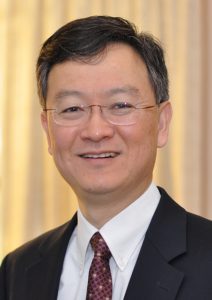
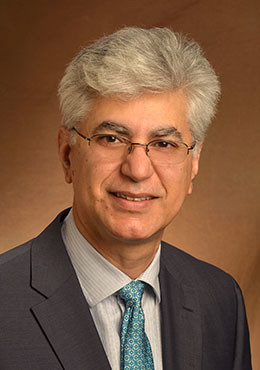
Arsalan Heydarian is an Associate Professor in the Department of Civil and Environmental Engineering at the University of Virginia (UVA) , with affiliations to the UVA Link Lab and Omni Reality and Cognition Lab (ORCL Lab) . His work focuses on user-centered intelligent infrastructure through virtual/augmented reality and data-driven design . Education: Ph.D. in Civil Engineering (USC) M.Sc. in Systems Engineering (USC) M.Sc. in Civil Engineering (Virginia Tech) B.Sc. in Civil Engineering (Virginia Tech) Research Streams: Intelligent built environments Mobility infrastructure design User-centered autonomous vehicles Data-driven mixed reality Construction automation Recent Article Trends: Spanning smart buildings , VR/AR applications , and transportation systems , his publications emphasize human-environment interaction , adaptive infrastructure , and immersive technology in civil engineering. Awards: NSF $1M Grant for inclusive AI education initiatives Labs & Teams: Co-founder of the Omni Reality and Cognition Lab (ORCL) , a leading facility for VR/AR-based infrastructure research and human behavior studies in built environments.
Dr. Saidul Islam is a Senior Lecturer at the School of Mechanical and Mechatronic Engineering, University of Technology Sydney (UTS), Australia. He joined UTS as a Senior Lecturer on July 5, 2024, having previously served as a Lecturer (May 2022-July 2024), Scholarly Teaching Fellow (May 2019-May 2022), and Postdoctoral Research Fellow (January-December 2018) at the same institution. Dr. Islam completed his PhD in Mechanical Engineering from Queensland University of Technology (QUT), Brisbane, Australia. Dr. Islam's research spans multiple critical areas in engineering and environmental science. His primary expertise lies in computational fluid dynamics (CFD), Discrete Element Method (DEM), machine learning applications in fluid systems, thermofluids, thermal management, energy storage technologies, phase change materials, and biomedical modeling. His work addresses pressing global challenges including sustainable energy systems, air pollution impacts on respiratory health, and advanced thermal management solutions for electronics and industrial applications. His research has significant implications for clean energy technologies (SDG 7), industrial innovation (SDG 9), and climate action (SDG 13). Analysis of Dr. Islam's recent publications reveals a strong focus on energy storage systems, particularly metal hydride hydrogen storage and phase change materials for thermal management. His work integrates computational modeling with experimental validation, increasingly incorporating machine learning techniques to optimize thermal systems. There's a clear trajectory toward addressing environmental sustainability through low-GWP refrigerants and clean energy technologies, while simultaneously advancing biomedical applications through sophisticated modeling of particle transport in human airways. Best Early Career Researcher (ECR) Paper Award (2019) High-Achiever HDR Student Award QUT (2017) Best Paper Award (2015) Nomination for Outstanding PhD Thesis Award (2018) Nomination for Vice-Chancellor Teaching Award-QUT (2017) Dr. Islam actively supervises Masters and PhD students in research areas including multiphase flow, CFD-DEM, human lung modeling, energy storage, PCM, hydrogen energy, heat and mass transfer, bush fire and air quality, and thermofluids. His funded research projects include 'Decarbonising commercial and industrial process heating in Australia' (2024-2025), 'Caloric heat management space technology' (2023-2024), 'Enabling Resilient Space Computing with Advanced Thermal Management' (2023-2024), and 'Mechanical Ventilation of Stenosis Airway and Targeted Drug Delivery' (2019-2021). He serves as a guest editor for special issues on occupational respiratory health and heat wave impacts, and as an editor for International Journal of Fluid Engineering and PLoS ONE.
Roshanak Nateghi is an Associate Professor in the College of Engineering at Purdue University, specializing in Industrial and Environmental Ecology Engineering. Her research focuses on climate change resilience, infrastructure systems, and data-driven modeling of urban energy-water interactions. Climate Change Adaptation Infrastructure Resilience Urban Systems Analysis Machine Learning Applications Her recent work explores post-disaster urban recovery, cooling demand optimization in heatwaves, and climate-induced shifts in energy-water nexus dynamics. She employs interdisciplinary methods combining statistical learning and physics-based models. Scientific awards and recognitions are not explicitly listed in the provided text, but her leadership in critical infrastructure resilience research is evident through numerous publications and grants. She serves as an academic advisor and collaborates with interdisciplinary teams on climate risk analytics.
Pradeep Reddy VARAKANTHAM is a Professor of Computer Science and Director of CARE.AI Lab at the School of Computing and Information Systems, Singapore Management University (SMU) . He serves on the AISingapore Scientific Committee, acts as a visiting faculty at Harvard Teamcore Research Group, and collaborates with Google's AI for Social Good team. His research focuses on collaborative and trustworthy intelligent agent systems , particularly trustworthy Reinforcement Learning methods. Applications span urban environments including Transportation, Emergency Response, Entertainment, Energy, and Security , with contributions at the intersection of Artificial Intelligence, Operations Research, Machine Learning, and Behavioral Economics . Recent publications highlight advancements in Constrained Reinforcement Learning (ICLR 2025), Safe LLM Applications (ICLR 2025), and Multi-Agent Robust Decision Making (AAAI 2025). Collaborations include Akshat Kumar, Arunesh Sinha, and Mai Anh Tien in CARE.AI Lab projects. Scientific awards include: Best Application Paper (ICAPS 2019) Best Demo Award (AAMAS 2018) Lee Kong Chian Fellowship (2016) Best Dissertation Award (ICAPS 2022) Best Paper Runner-Up (PRICAI 2024) Grants: ~6.1 million SGD for trustworthy AI training (Principal Investigator) and ~1.2 million SGD for collaborative AI projects. Current advisees include Pallavi Manohar (Research Fellow) , Pritee Agrawal (PhD student) , and Meghna Lowalekar (PhD student) .
Matti Vilkko is a Professor in Control Engineering at Tampere University's Faculty of Engineering and Natural Sciences , specifically within the Automation Technology department. He serves as Head of the Automation and Mechanical Engineering Unit. Research Focus: Industrial process control, mathematical modeling, state estimation, and optimization of metallurgical and energy systems Key Projects: Future Electrified Mobile Machines (FEMMa), Circular Economy of Water (CEIWA), Social Energy Ecosystems (ProCem), Green Electrification (HYGCEL) His work combines control theory with industrial applications, particularly in copper smelting optimization, green hydrogen systems, and smart energy networks. Recent publications show expertise in: Machine learning for wind turbine cybersecurity ASM1 calibration for wastewater treatment EU regulatory impacts on hydrogen infrastructure Finite element analysis of paperboard mechanics Price-based coordination in metallurgical processes He leads interdisciplinary collaborations across Finland, integrating automation technology with energy systems, materials science, and industrial ecology.
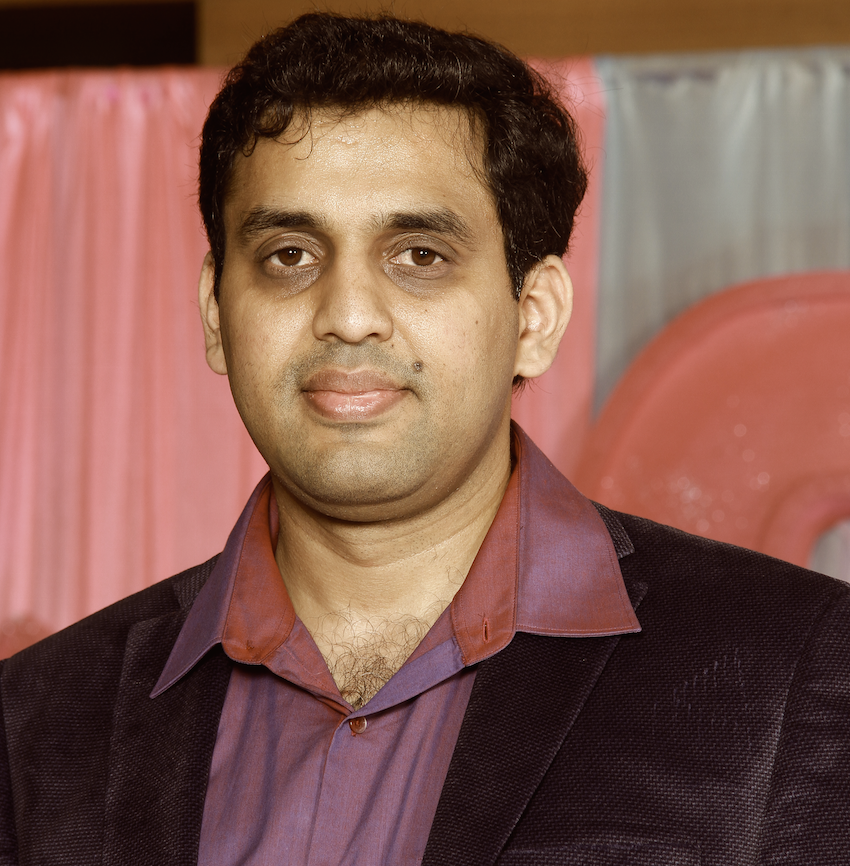
Suchi Rajendran is an Assistant Professor with a joint appointment in the Department of Industrial and Systems Engineering and the Department of Marketing at the University of Missouri, Trulaske College of Business. She is also the Director of Undergraduate Studies in ISE and actively leads research in prescriptive analytics, operations research, and data-driven decision-making across healthcare, transportation, and business systems. Education: PhD in Industrial Engineering, Pennsylvania State University Her research focuses on applying advanced analytics to solve complex real-world problems. Key areas include optimizing healthcare delivery systems, supply chain and logistics (notably blood supply chains and port operations), marketing data analytics, and emerging transportation systems such as air taxis and electric vehicle infrastructure. She leverages predictive and prescriptive artificial intelligence to forecast demand and recommend optimal operational strategies. Her recent work, highlighted in university news up to 2025, demonstrates a strong trend toward interdisciplinary, AI-powered solutions in logistics, sustainability, and public service. She frequently collaborates with industry partners like Case New Holland and Schneider Electric, and has secured funding from agencies such as the Alaska Department of Transportation and the National Science Foundation. Scientific Awards and Recognitions: Richard Wallace Faculty Incentive Grant Bob Bloss Faculty Enhancement Grant Winemiller Excellence Award in Data Analytics NSF CHOT Scholar (Penn State) Service Enterprise Engineering Fellow DAAD-WISE Fellowship (Germany) Lean Six Sigma Black Belt Dr. Rajendran is actively involved in mentoring students, having advised honors-winning graduate and undergraduate researchers. She leads an NSF-funded Research Experiences for Undergraduates (REU) program that brings 10 students annually to Mizzou to work on AI-enabled operations engineering. Her grants support hands-on, interdisciplinary research that prepares the next generation of engineers and data scientists. She is affiliated with cutting-edge research initiatives involving simulation modeling, digital communication platforms, and AI integration in industrial systems. Her lab and team focus on developing practical, scalable solutions for logistics, healthcare, and sustainable transportation, often through collaborative, real-world projects with public and private stakeholders.
Ivano Malavolta is an Associate Professor in Software Engineering at the University of Urbino , focusing on energy-efficient software, software architecture, and model-driven engineering (MDE). His research bridges robotics, mobile systems, and sustainability, emphasizing empirical methods and industrial applicability. Key Research Areas: Energy-efficient software, microservices, robotics systems, collaborative modeling, mobile application performance. Affiliations: Department of Software Engineering, University of Urbino. His recent publications highlight empirical studies on energy consumption patterns in robotics, mobile apps, and AI systems. He has contributed to frameworks like the Green Software Measurement Model (GSMM) and tools for architectural technical debt analysis. Notably, he has co-authored 15+ peer-reviewed articles in venues such as Journal of Systems and Software , Information and Software Technology , and ACM/IEEE conferences . His work often involves cross-platform comparisons (e.g., Electron vs. Web, Pandas vs. Polars) and systematic mappings of software engineering practices.
Cenk Gursoy is a Professor in the Department of Electrical Engineering and Computer Science at the College of Engineering and Computer Science, Syracuse University. He previously served as a faculty member at the University of Nebraska-Lincoln from 2004 to 2011. He holds a Ph.D. in Electrical Engineering from Princeton University and a B.S. from Bogazici University, Turkey. His research spans wireless communications, information theory, signal processing, and networking. Key areas include 5G/6G technologies, millimeter-wave communications, UAV-assisted networks, energy efficiency, intelligent reflecting surfaces, and machine learning for networking. He has made significant contributions to finite blocklength communications, QoS provisioning, and secure wireless transmissions. The recent publications highlight a strong trend in integrating machine learning—particularly deep reinforcement learning—into wireless resource allocation, network slicing, UAV trajectory planning, and anomaly detection. His work increasingly bridges theoretical information-theoretic models with practical implementations in emerging wireless systems such as RIS-aided networks, NOMA, and edge computing. NSF CAREER Award, 2006 2020 IEEE Region 1 Technological Innovation (Academic) Award IEEE Green Communications & Computing Technical Committee Best Journal Paper Award EURASIP Journal of Wireless Communications and Networking Best Paper Award IEEE PIMRC Best Paper Award Maude Hammond Fling Faculty Research Fellowship All-University Doctoral Prize (awarded twice to his students) Dr. Gursoy has advised over 20 Ph.D. and M.S. students, many of whom now hold positions at leading universities and tech companies. His research has been funded by multiple National Science Foundation grants as Principal or Co-Principal Investigator, focusing on fundamental limits of wireless systems, millimeter-wave networking, and green cloud platforms. He serves as an Area Editor for IEEE Transactions on Vehicular Technology and as an Editor for several other IEEE Transactions journals. He leads the Wireless Communications & Networking Lab and the Smart Vision Systems Lab at Syracuse University, fostering interdisciplinary research in smart networks, IoT, and intelligent sensing systems.
Mo-Yuen Chow is a Professor in the Department of Electrical and Computer Engineering at North Carolina State University (NCSU), holding the position since July 1999. He also serves as a Qiushi Chair Professor at Zhejiang University, China, and a Chang Jiang Visiting Chair Professor (2010–2013). His research focuses on Micro/Smart Grids Energy Management, Collaborative Distributed Control, and Battery Modeling. He holds significant IEEE awards, including Fellow status (2007) and the Dr.-Ing. Eugene Mittelmann Achievement Award (2020). Chow earned his Ph.D. in Electrical Engineering from Cornell University (1987), following an M.Eng. (1983) and B.S. (1982) from the University of Wisconsin-Madison. His work spans battery health monitoring, distributed control systems, and cyber-physical security in smart grids. Notable contributions include innovations in battery state-of-charge estimation and resilient microgrid management frameworks. His publications emphasize cybersecurity in distributed energy systems, AI-driven energy management, and fault diagnosis in battery systems. He has pioneered frameworks like the DEED-ADMM algorithm for multi-energy systems and developed models for solid electrolyte interface growth in lithium-ion batteries. Awards: Over 10 major IEEE awards, including recognition for service and education. Research Themes: Smart grids, distributed control, battery systems, and cyber-physical resilience. Labs/Projects: DC microgrid testbeds and collaborative distributed energy management systems.
Professor Asad Khattak is the Beaman Distinguished Professor in the Department of Civil and Environmental Engineering at the University of Tennessee, Knoxville, within the College of Engineering. He serves as the Transportation Program Coordinator and leads multiple national and regional research initiatives. He is affiliated with the UT Center for Transportation Research and the Howard H. Baker Jr. Center for Public Policy. Research Interests: His work centers on intelligent transportation systems , transportation safety , and sustainable transportation . He leverages big data and connected vehicle technologies to improve safety monitoring and urban mobility. His research has strong applications in policy, environmental protection, and smart infrastructure. Publications and Research Trends: Recent articles emphasize the use of large-scale trajectory data, connected vehicle communications, and multi-agency coordination to enhance transportation safety and efficiency. Themes include real-time incident analysis, fuel economy validation, and proactive safety management using emerging technologies. Scientific Awards: Shining Star Award, Old Dominion University Nationally ranked 4th in faculty publications among U.S. graduate planning schools (2004) Advising and Grants: As Principal Investigator and Co-Director of major initiatives, Dr. Khattak has secured 66 sponsored research and educational projects from agencies including the US Department of Transportation, NSF, EPA, and state DOTs. He mentors students and researchers through active research programs, though specific advisees are not listed. Labs and Teams: He leads the ‘Big Data for Safety Monitoring, Assessment, and Improvement’ project and co-directs the Initiative for Sustainable Mobility. He is also a key member of the National University Transportation Center partnership led by UNC-Chapel Hill.
Dr. Meghana Navnath Satpute is an Assistant Professor of Instruction in the Department of Computer Science at the University of Texas at Dallas, affiliated with the Erik Jonsson School of Engineering and Computer Science. She holds a PhD in Computer Science and has been actively contributing to research in algorithmic applications for natural language processing and wireless communication systems since 2019. Her research focuses on combinatorial optimization , particularly in solving complex problems in natural language processing and wireless network efficiency . Key areas include multidocument summarization, edge computing task allocation, and UAV trajectory planning for sensor data collection. These efforts reflect a strong interdisciplinary approach combining theoretical algorithms with real-world system design. The recent publications demonstrate a consistent trend in applying attention-based models and fine-grained optimization techniques across diverse domains such as NLP and IoT-enabled aerial networks. Her work bridges algorithm development with practical deployment challenges in distributed and mobile computing environments. Scientific Awards: No awards listed in the provided text. Dr. Satpute is involved in academic instruction and research supervision, though specific details about graduate student advising or funded grants are not mentioned in the available information. Her role emphasizes both teaching and research within the computer science curriculum at UTD. She is associated with ongoing research in intelligent systems and optimization algorithms, likely contributing to collaborative projects within the Erik Jonsson School of Engineering and Computer Science, particularly in areas related to data science, networking, and autonomous systems.
Cresantus Biamba is a Senior Lecturer at the University of Gävle, specializing in Educational Science. His research bridges education theory with technological advancements, focusing on teacher training, sustainability in education, and inclusive pedagogy. Researcher at University of Gävle (Education, Educational Science) Research interests include: Education for Sustainable Development (ESD) in global contexts Teacher education reform and policy analysis Inclusive classroom practices in the Global South Technological integration in educational systems Curriculum development for post-pandemic resilience Publication trends reveal interdisciplinary work combining AI, cloud computing, and IoT applications with educational challenges, particularly in African institutions. His articles address security optimization, healthcare technology, and sustainability frameworks. Academic activities involve collaborations with researchers in cybersecurity, AI, and energy systems, though specific grants or mentoring roles are not explicitly documented here.
Catia Trubiani is a faculty member at the Gran Sasso Science Institute in L'Aquila, Italy, specializing in software performance engineering, architectural analysis, and cyber-physical systems. Her work bridges theoretical modeling with practical applications, focusing on performance antipatterns, uncertainty quantification, and DevOps practices. In research , she explores performance modeling of microservices, federated learning systems, and cyber-physical systems, with a strong emphasis on architectural decision-making under uncertainty. Her recent articles analyze performance regression testing, aging detection in networks, and anti-pattern correlation in distributed systems, reflecting her interest in robust, scalable software solutions. She collaborates extensively with researchers like Raffaela Mirandola , Alberto Avritzer , and Riccardo Pinciroli , contributing to tools and frameworks such as PLUS (Performance Learning for Uncertainty of Software) and VisArch (Visualisation of Performance-Based Architectural Refactorings). Her work has been published in journals including IEEE Transactions on Software Engineering and Future Generation Computer Systems , as well as conferences like ICSE, ECSA, and ICPE.
Mohammad Poursina is an Associate Professor at the Department of Engineering Sciences , University of Agder, Norway. His research spans multibody dynamics , robotics , and celestial mechanics , with a focus on dynamic modeling, control systems, and biomechatronics. He has held prior academic roles at the University of Arizona and Rensselaer Polytechnic Institute. Ph.D. in Mechanical Engineering, Rensselaer Polytechnic Institute (2011) M.Sc. and B.Sc. in Mechanical Engineering, University of Tehran (2006, 2003) His work addresses complex systems through interdisciplinary approaches, including robotic rehabilitation , flexible manipulators , and molecular dynamics . Recent publications highlight advancements in trajectory optimization , VR/AR surgical training , and asteroid system modeling . He serves on the editorial boards of Multibody System Dynamics and Journal of Computational and Nonlinear Dynamics , and has organized ASME conference sessions. Key research groups: Artificial Intelligence, Biomechatronics, and Collaborative Robotics Projects: Reality-Connected Machine Simulation of Heavy Machinery (RealSim)
Octavian Mihai Machidon is an Assistant Professor at the Faculty of Computer and Information Science (FRI), specializing in mobile computing, IoT systems, and approximate computing. His research bridges technological innovation with diverse applications in agriculture, cultural heritage, and smart governance. Current research focuses on energy-efficient mobile systems, UAV-based agricultural monitoring, and smart governance frameworks Previously led H2020 Smart4All AgriAdapt project Recipient of multiple awards for research excellence and innovation His work demonstrates cross-disciplinary impact through projects like Mobiprox (IEEE IoT Journal) and SqueezeSlimU-Net (IEEE Journal of Selected Topics in Applied Earth Observations). Key trends include adaptive algorithms, real-time processing, and sustainable technology integration. 2024 - FRI Special Award for Exceptional Research Achievement 2023 - Agrobiznis 'Best Idea' award for AgriAdapt project As member of the Computer Communications Laboratory , he contributes to digital transformation initiatives and teaches courses in process automation and mobile sensing platform development.