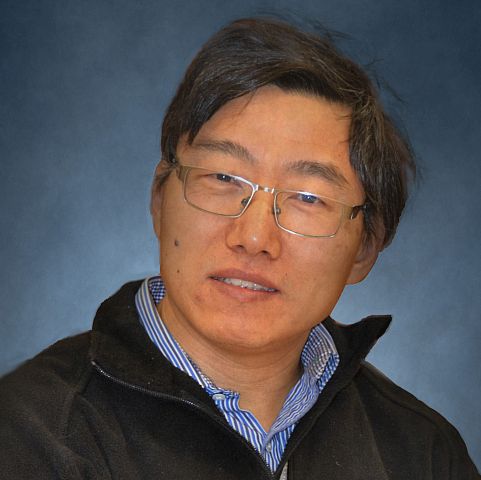
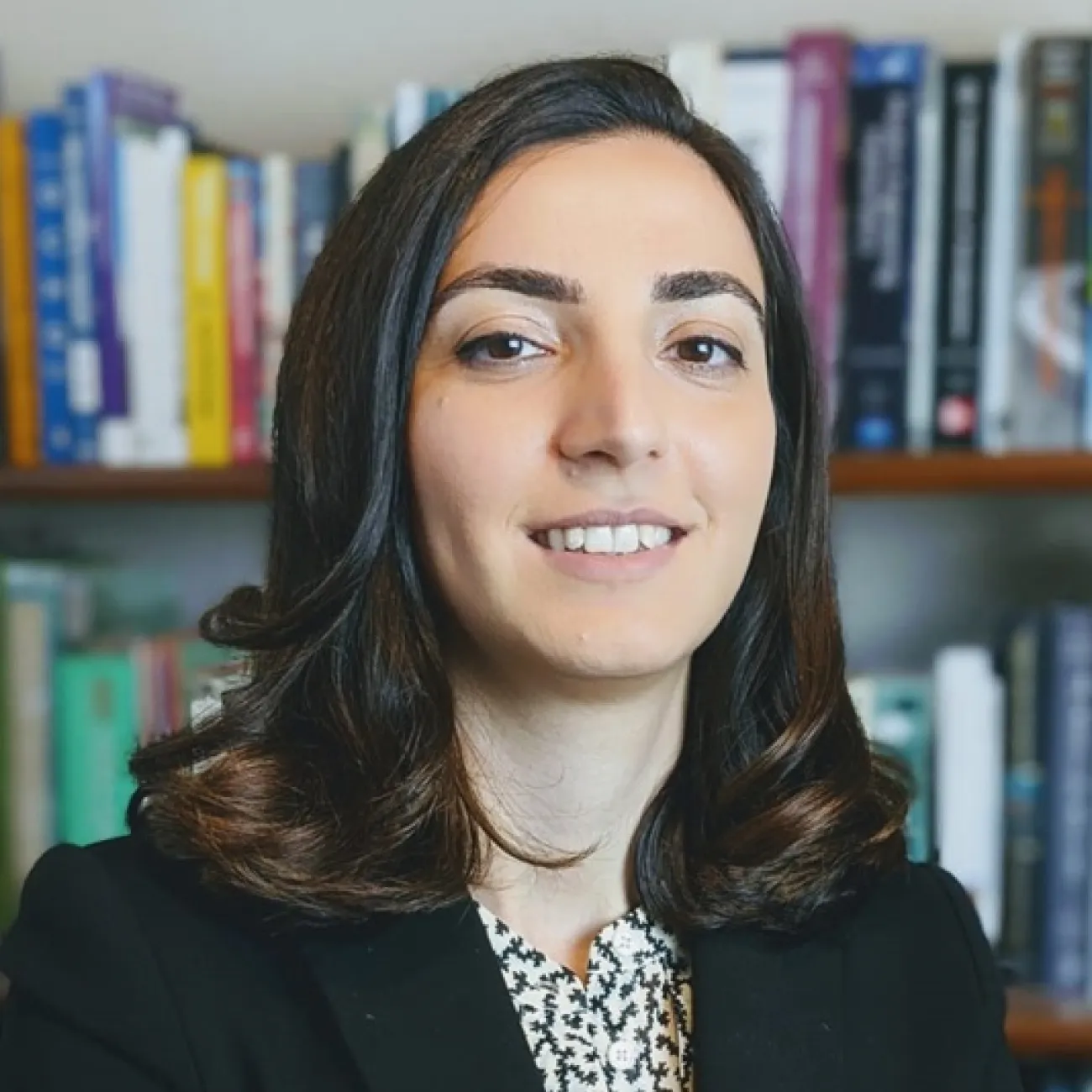
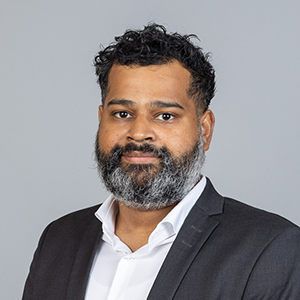
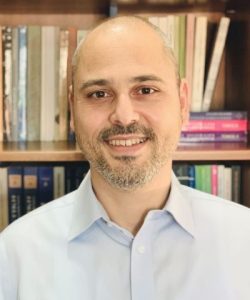
Yuvraj Agarwal is a Professor in the School of Computer Science at Carnegie Mellon University , where he leads the SYNERGY Labs . His research focuses on Systems and Networking with emphasis on Embedded Systems , Security , and Energy Efficiency in computing environments. He has been recognized with the NSF Expeditions in Computing Award for Computational Decarbonization research and multiple best paper awards. Education : PhD in Computer Science from University of California, San Diego Research Leadership : Founder/Director of SYNERGY Labs; Executive Director of NSF Expeditions in Variability (2010-2013) Research Trajectory : Recent publications highlight his work on Privacy-preserving smart classroom systems (EduSense, ClassID) IoT security labeling frameworks Audio privacy protection mechanisms Computational decarbonization of infrastructure His research combines hardware-software co-design with societal impact considerations. Scientific Recognition : NSF Expeditions in Computing Award for CoDec (2024) Ubicomp/IMWUT Distinguished Paper Award (2024) CHI Best Paper Honorable Mention (2022) Advising & Collaboration : Mentors students in IoT systems , privacy research , and green computing . Collaborates with institutions including University of Massachusetts Amherst and industry partners like Johnson Controls. Grants include NSF funding for multi-university research initiatives.
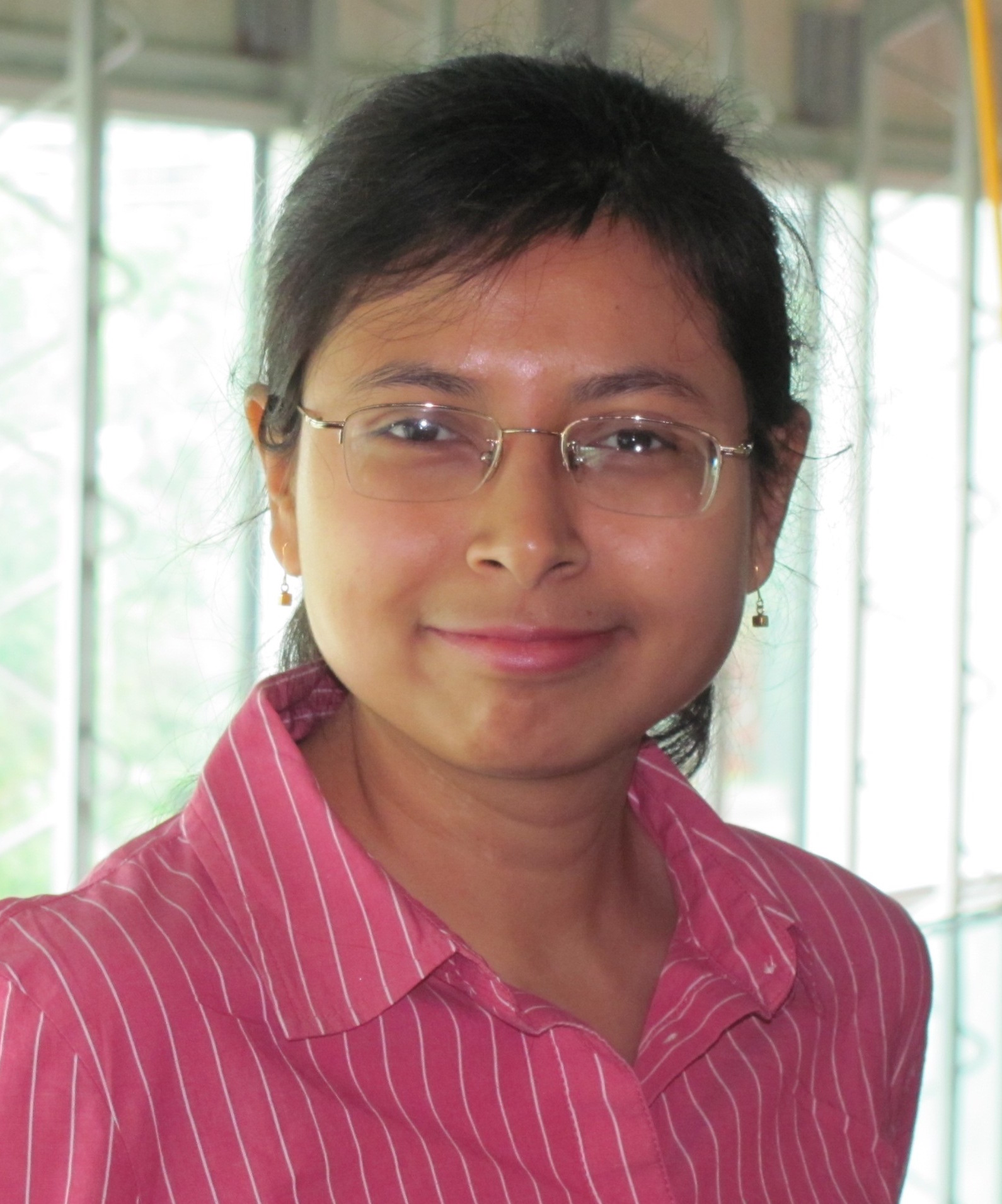
Chita R. Das is a Professor at Pennsylvania State University, known for extensive contributions in computer architecture, machine learning, and high-performance computing. Their research focuses on optimizing hardware-software co-design for edge computing, cloud infrastructure, and energy-efficient systems. Key areas include FPGA acceleration, GPU optimization, and serverless computing frameworks. Das collaborates frequently with institutions like AMD and Intel, addressing challenges in parallel computing and distributed systems. Their work bridges theoretical advancements with practical applications in recommendation systems, bioinformatics, and real-time video processing. Research interests span across hardware acceleration techniques, cloud resource management, and sustainable computing. Notable projects include adaptive training frameworks for intermittent power environments and neural-augmented game streaming for mobile platforms. Das's publications often address performance bottlenecks in modern architectures and propose novel solutions for latency and energy efficiency. Recent articles highlight innovations in serverless computing cost optimization, low-bandwidth VR streaming, and FPGA-based bioinformatics tools. Their contributions are characterized by interdisciplinary approaches combining computer architecture with machine learning and embedded systems.
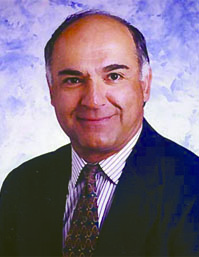
Prof. Dr. Mirko Hornung is a Professor of Aircraft Design at the TUM School of Engineering and Design, Technische Universität München. His research focuses on conceptual aircraft design, integration of propulsion systems, and evaluation of aviation technologies in operational contexts. Education and Career: PhD in Aeronautical Engineering from the University of the Bundeswehr (2003), awarded a research prize for work on reusable space transport systems. 2003–2009: Worked at Airbus Group (EADS) on military air systems, propulsion integration, and program management. Executive Director of Research & Technology at Bauhaus Luftfahrt, a think tank for long-term aviation developments. Research Interests: Aircraft design optimization, including hybrid energy systems, electric propulsion, and UAV technologies. Environmental sustainability in aviation, such as hydrogen-powered aircraft and lifecycle assessment. Aerodynamic and structural analysis, including flutter suppression and composite materials. Key Publications Highlight Trends: Focus on hybrid-electric and hydrogen propulsion for reducing environmental impact. Advancements in UAV design, including morphing wings and autonomous systems. Integration of AI-driven tools for propulsion optimization and lifecycle analysis. Scientific Awards: EADS Promotion Award (1995) Research Prize for Thesis on Reusable Space Transport Systems (2003) Advising & Grants: Directs research at Bauhaus Luftfahrt, collaborating on future aviation concepts. Engaged in interdisciplinary projects like FLEXOP UAV demonstrator and Ce-Liner eMobility studies. Labs/Teams: Active in the Aircraft Design Professorship at TUM and leadership roles at Bauhaus Luftfahrt, focusing on next-generation aviation technologies.
Qingguo Li is a Professor and Associate Head at the Department of Mechanical and Materials Engineering , Queen's University , and a member of the Ingenuity Labs Research Institute . He specializes in biomechanical system design, energy harvesting, wearable sensors, gait analysis, and load carriage systems. His research integrates robotics, biomedical engineering, and sensor technology to develop human-centric devices and mobility aids. Current Roles : Professor, Associate Head, Queen's University Research Institute : Ingenuity Labs Research Institute Lab : Bio-Mechatronics and Robotics Laboratory His work focuses on biomechanical energy harvesting , IMU-based motion analysis , and assistive device development . Key applications include stroke rehabilitation, gait monitoring, and wearable power generation systems. Articles span cable-driven robots , smart walkers , and 3D printing mechanisms , emphasizing human-robot interaction and dynamic modeling . The lab explores sensor calibration , adaptive control algorithms , and human movement optimization . Areas of impact include rehabilitation engineering , load carriage stability , wearable sensor accuracy , and assistive robotics . His team develops solutions for gait asymmetry detection , post-stroke mobility , and low-cost energy systems , leveraging machine learning and kinetic modeling .
Prof. Martin Haenggi is the Frank M. Freimann Professor of Electrical Engineering and Concurrent Professor in the Department of Applied and Computational Mathematics and Statistics at the University of Notre Dame. He holds a Dr.sc.techn. (Ph.D.) from ETH Zurich and has been at Notre Dame since 2000. His research focuses on stochastic geometry and wireless networks, including cellular, heterogeneous, vehicular, and millimeter-wave systems. He has held sabbaticals at UCSD (2007–2008), EPFL (2014–2015), and ETH Zurich (2021–2022). Education: Dipl.-Ing. (M.Sc.), ETH Zurich, 1995 Dr.sc.techn. (Ph.D.), ETH Zurich, 1999 Research interests emphasize stochastic geometry for analyzing network performance, including coverage, interference, and reliability in wireless systems. Key areas include meta distributions, spatial-temporal analysis, and network optimization. His work has been recognized with IEEE Fellow status, Clarivate Highly Cited Researcher distinction, and NSF CAREER Award (2005). Grants and Awards: NSF Award (Deep Stochastic Geometry: 2020–2023) NSF Award (Toward a Stochastic Geometry for Cellular Systems: 2015–2019) Rice Prize (2017), Best Survey Paper Award (2017), and Best Tutorial Paper Award (2010) from IEEE Communications Society Teaching includes advanced courses on stochastic geometry, wireless networks, and signal processing. His lab focuses on theoretical and applied aspects of network modeling, with collaborations in industry and academia.
Dr. Kyle Jamieson is a Professor of Computer Science at Princeton University, leading the Princeton Advanced Wireless Systems (PAWS) lab within the Department of Computer Science. He is also Affiliated Faculty in the Department of Electrical and Computer Engineering. His research focuses on wireless networking systems, 5G architecture, IoT networks, and quantum computing applications in wireless communication. He has pioneered work in reconfigurable intelligent surfaces, MIMO detection algorithms, and metamaterials for millimeter-wave networks. Dr. Jamieson has developed courses such as COS 597S: Recent Advances in Wireless Networks (graduate seminar), COS 463: Wireless Networks , and COS 418: Distributed Systems . His teaching emphasizes interdisciplinary approaches to networking challenges, including physical-layer design, computational structures for wireless processing, and cross-layer optimization. His lab’s research spans smart surfaces for 5G networks, quantum annealing for MIMO processing, and edge computing for live video analytics. Recent work includes deploying reconfigurable metamaterials for enhanced mmWave networks and developing tools like NR-Scope for 5G telemetry. While no awards are listed in the provided text, his contributions to wireless systems have advanced both academic and industrial applications in areas such as network resilience, IoT scalability, and quantum-enabled wireless processing. Dr. Jamieson’s advising focuses on graduate and undergraduate students working in wireless systems, though specific advisee names are not provided. His lab collaborates on projects like Wall-Street for roadside networking and Spider for multi-hop mmWave video analytics. External collaborations include work with Microsoft Research and guest lecturing roles at Berkeley. His research bridges theoretical foundations with practical implementations, often addressing real-world challenges in wireless infrastructure and next-generation communication systems.
Dr. Bin Tang is a Professor in the Department of Computer Science at California State University, Dominguez Hills. He holds a Ph.D. in Computer Science from Stony Brook University (2007) and dual M.S. degrees in Computer Science and Materials Science from the same institution. His research focuses on algorithmic solutions for data placement in networks, with applications in robotic sensor systems and cloud data centers. He has led multiple NSF-funded projects including 'Edge-Based Approach to Robust Multi-Robot Systems' and 'Optimal Resource Allocation in Policy-Driven Data Centers'. Dr. Tang mentors students in research competitions and has supervised numerous graduate theses. He teaches courses in operating systems, algorithms, computer networks, and cloud computing.
Dr Bahareh Zaghari (MSc, PhD, CEng, FHEA) is a Lecturer in the Electrical Power Engineering group at the University of Southampton's School of Electronics and Computer Science. Her research focuses on electrified aircraft systems, sensors with machine learning applications, electrical power systems, and nonlinear dynamics modeling. Current projects include acoustic sensing for temperature/flow measurement Co-design of electrical machines for aircraft electrification Research activities span hybrid-electric aircraft design (FutPrint50 Horizon project), fully electric aircraft development (EnabEl Innovate UK), and smart sensing systems for aerospace components. Industrial collaborations include KISTLER, iNetic, PALL Aerospace, Safran, ARUP, Embraer, and BAE Systems. Conference coordinator for IEEE Transportation Electrification Council's Electrified Aircraft committee Chair of IEEE/AIAA Electrified Aircraft Technology Symposium (2023) Panel moderator at AIAA Propulsion and Energy (2021) Her work demonstrates innovative applications of acoustic transducers in harsh environments, with contributions to temperature mapping, fault analysis, and energy harvesting systems. She currently supervises PhD student Shikhar Singh.
Ambuj Varshney is an Assistant Professor at the National University of Singapore (NUS) School of Computing , leading the WEISER research group . His work bridges electronics, wireless communication, computer science, and AI with a focus on creating ultra-low-power embedded systems for sustainable IoT deployments. University of California, Berkeley: Postdoctoral Scholar (2020-2022) Uppsala University: PhD in Sustainable Networked Systems NXP Semiconductors: Software Engineer (prior to PhD) Bachelors in Information & Communication Technology Research interests center on overcoming wireless systems' energy asymmetry through tunnel diode oscillators , LiFi-RF hybrid networks , and battery-free communication architectures . His group develops STICORS —sticker-like computers for industrial and medical monitoring. Recent publications demonstrate AudioCast 's FM-band utilization for 130m transmission, TunnelSense 's vital monitoring, and PixelGen 's diffusion model cameras. These works combine IoT sustainability, spectrum efficiency, and hardware innovation . 2024: Google Research Scholar Award 2023: MobiSys Best Demonstration 2021: Berkeley FORM+FUND Fellowship 2019: ABB's $300K Research Award As an educator, he teaches CS4222 Wireless Networking and CS5272 Embedded Software Design . Past students include Wenqing Yan (NUS/UCB PhD), Qiao Yukai , and Kunjun Li . His team collaborates with Prabal Dutta (UCB), Christian Rohner (Uppsala), and Prateek Saxena (NUS).
Professor Petri Kuosmanen is affiliated with Aalto University as a faculty member of the School of Engineering and holds a position in the Department of Energy and Mechanical Engineering and the Mechatronics unit. Doctoral Degree in Engineering and Technology, Helsinki University of Technology (2004) Licentiate Degree in Engineering and Technology, Helsinki University of Technology (1992) Master's Degree in Engineering and Technology, Helsinki University of Technology (1988) His research focuses on Industrial Internet and Rotor Dynamics , with significant contributions to elevator systems , hydraulics , and wastewater treatment plant design . Recent work includes optimizing natural frequencies in rotor systems and developing digital twins for engineering education . Key trends in his 2024 publications include: Rotor dynamics and vibration analysis Smart data validation in industrial IoT networks Cold-climate adaptations for wastewater treatment Automated fiber optics coating mechanisms Energy efficiency in aeration systems As Principal Investigator, he leads projects like DRIVE FORWARD (2024–2027) and GOOD (2021–2024), focusing on electrified mobile machinery. He actively collaborates with networks such as DAAAM International (Chair) and European CLUSTER-university network (Member).
Stelios Timotheou is an Associate Professor at the Department of Electrical and Computer Engineering and faculty member at the KIOS Research and Innovation Center of Excellence, University of Cyprus. He holds a Dipl-Ing from National Technical University of Athens, and MSc/PhD from Imperial College London. His research focuses on developing real-time distributed methodologies using mathematical optimization, machine learning, and computational intelligence to enhance efficiency in critical infrastructure systems. Research interests center on data-driven decision making for urban mobility management, traffic control systems, and energy optimization. Key areas include: Intelligent UAV-based sensing for traffic monitoring Cooperative control algorithms for multi-agent systems Optimization of renewable energy integration Robust infrastructure protection strategies Recent publications demonstrate strong focus on traffic state estimation (76%), energy system optimization (16%), and UAV applications (8%). Awarded the Cyprus Research Award (2017) and ERC Consolidator Grant for URANUS project. Secured multiple research grants focusing on real-time control systems.
Sushmita Ruj is an Associate Professor in the School of Computer Science and Engineering at the University of New South Wales (UNSW), Sydney. She serves as the Faculty of Engineering Lead for the UNSW Institute for Cybersecurity (IfCyber) and as the Taste of Research (ToR) Coordinator within the School of Computer Science and Engineering. Her academic journey includes previous positions as a Senior Research Scientist at CSIRO's Data61 (2019-2022), Associate Professor at the Indian Statistical Institute, Kolkata, and Assistant Professor at the Indian Institute of Technology (IIT), Indore. Dr. Ruj's primary research interests focus on applied cryptography, post-quantum cryptography, cybersecurity, blockchains, and data privacy. She designs practical, efficient, and provably secure protocols for real-life applications, with particular emphasis on critical infrastructure including smart grids, cloud computing, ad hoc networks, and data sharing frameworks. As quantum technology advances, her work increasingly focuses on developing quantum-safe algorithms to ensure a more secure Internet infrastructure. Her research spans multiple domains including cryptographic key management, proofs of storage, verifiable computation, vector commitments, and privacy-enhancing technologies for cloud and IoT environments. Her recent publications demonstrate a strong trend toward post-quantum cryptography solutions, with particular emphasis on blockchain applications, DNS security, and privacy-preserving protocols for industrial IoT. The research shows increasing focus on practical implementations of theoretical cryptographic concepts, with applications across multiple sectors including finance, healthcare, and critical infrastructure. Her work bridges the gap between theoretical cryptography and real-world security challenges, with growing emphasis on the transition from classical to quantum-resistant systems. Best Paper Award at ACISP 2024 JNCA Best Survey Award (2023) NSW Innovation Award (iAward) Merit Winner (2022) Women in Science Award from CSIRO (2020) ACM Senior Member (2016) IEEE Senior Member (2015) Samsung GRO award (2014) Dr. Ruj has successfully mentored numerous PhD and Master's students, with many of her former students now holding academic positions at institutions like IIT Indore, TU Wien, and CISPA Helmholtz Center. She has secured significant competitive funding including multiple Australian Research Council (ARC) grants, Samsung GRO Award, NetApp Faculty Fellowship, Cisco Academic Grant, and IBM Research grant. Her current research portfolio includes projects on blockchain-based quantum-safe digital medical passports, embedding trust in digital IDs, and resilience of supply chain unstructured data. As Faculty of Engineering Lead for IfCyber, Dr. Ruj plays a key role in UNSW's cybersecurity research initiatives. She has served on editorial boards for prestigious journals including IEEE Transactions on Information Forensics and Security and has held leadership positions in major conferences such as ACISP 2021 and Indocrypt 2020. She was also a member of the working group on "Blockchain For Cybersecurity" for the National Blockchain Roadmap of Australia and the first Blockchain Working group set up by the Reserve Bank of India.
Mehrdad Ehsani is a Robert M. Kennedy Endowed Professor of Electrical Engineering at Texas A&M University, leading the Power Electronics and Motor Drives Laboratory. He holds a Ph.D. from the University of Wisconsin-Madison and has over four decades of expertise in power electronics, electric/hybrid vehicles, and energy systems. His research focuses on sustainable energy, advanced power conversion, and vehicle electrification. Educational Background: Ph.D., Electrical Engineering, University of Wisconsin-Madison (1981) M.S., Electrical Engineering, University of Texas at Austin (1974) B.S., Electrical Engineering, University of Texas at Austin (1973) Research Interests: Sustainable power systems, electric/hybrid vehicles, energy storage, power electronics, and aerospace power systems. His work emphasizes practical applications, such as transmotor technology for energy efficiency and grid-interactive buildings. Awards & Recognition: Life Fellow of IEEE SAE Fellow (2005) IEEE Vehicular Technology Society Avant Garde Award (2001) Recipient of multiple Prize Paper Awards (IEEE-IAS) Advising & Grants: Director of Advanced Vehicle Systems Research Program. His lab collaborates with industry on patents, including over 30 granted/pending patents, and advises on sustainable transportation technologies. He has consulted for over 60 companies and government agencies. Labs & Teams: Founder and director of the Power Electronics & Motor Drives Lab, focusing on electric vehicle propulsion, renewable energy integration, and advanced control systems.
Vijay Laxmi is a Professor in the Department of Computer Science and Engineering at Malaviya National Institute of Technology (MNIT) Jaipur, India. With over a decade of active research publication from 2014-2024, Dr. Laxmi has established themselves as a prominent researcher in network security, Android security systems, and Network-on-Chip architectures. Their work demonstrates consistent collaboration with Manoj Singh Gaur and numerous doctoral students at MNIT Jaipur. Dr. Laxmi's research interests span Network Security, Android Security, Malware Analysis, Network-on-Chip Architectures, Routing Protocols, Side-Channel Attacks, Wireless Networks, and Mobile Security. Their work bridges theoretical security frameworks with practical implementations, particularly in mobile and embedded systems. Recent publications indicate a growing focus on AI-based security approaches including GAN applications for fuzzing and deep learning for image dehazing. The research trajectory shows increasing sophistication in security analysis techniques, evolving from basic malware detection to advanced side-channel attack analysis and sophisticated network security protocols. Recent publications demonstrate expertise in both theoretical frameworks and practical implementations with applications in real-world security challenges. Dr. Laxmi has mentored numerous graduate students including Vineeta Jain, Anugrah Jain, Sonal Yadav, Mohit Singh, and Gaurav Singal, who appear as co-authors across multiple publications. Their collaborative network extends to researchers at international institutions, indicating strong academic connections beyond their home institution.
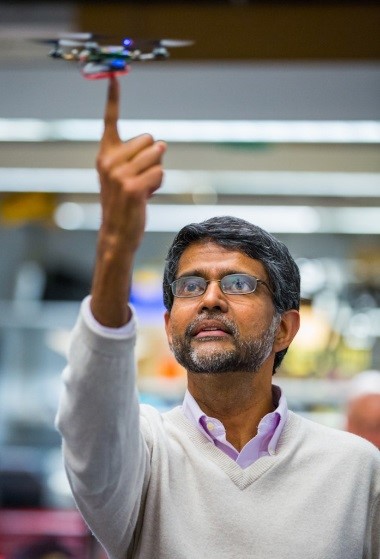
Vijay Kumar is the Nemirovsky Family Dean of Penn Engineering at the University of Pennsylvania, with faculty appointments in the Departments of Mechanical Engineering, Computer and Information Science, and Electrical and Systems Engineering. He is a leading figure in robotics and computer architecture research. Research Interests include robotics, particularly multi-robot systems and micro aerial vehicles (MAVs), as well as computer architecture innovations for machine learning, GPU acceleration, and datacenter efficiency. His work spans theoretical foundations and practical applications in autonomous systems and hardware optimization. Scientific Awards include: 1991 NSF Presidential Young Investigator Award 1996 Lindback Award for Distinguished Teaching 2012 ASME Mechanisms and Robotics Award 2014 Engelberger Robotics Award 2017 IEEE George Saridis Leadership Award Multiple best paper awards at DARS, ICRA, and RSS conferences Editorial Leadership includes serving as Editor of the ASME Journal of Mechanisms and Robotics and Advisory Board Member of AAAS Science Robotics Journal . His GRASP Lab team developed foundational frameworks for micro UAV testbeds and swarm robotics.