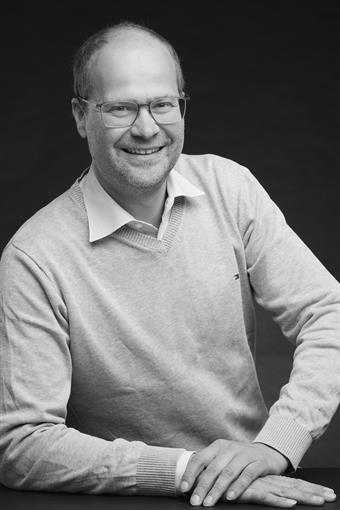
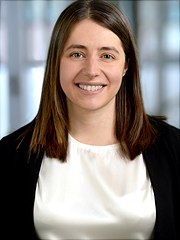
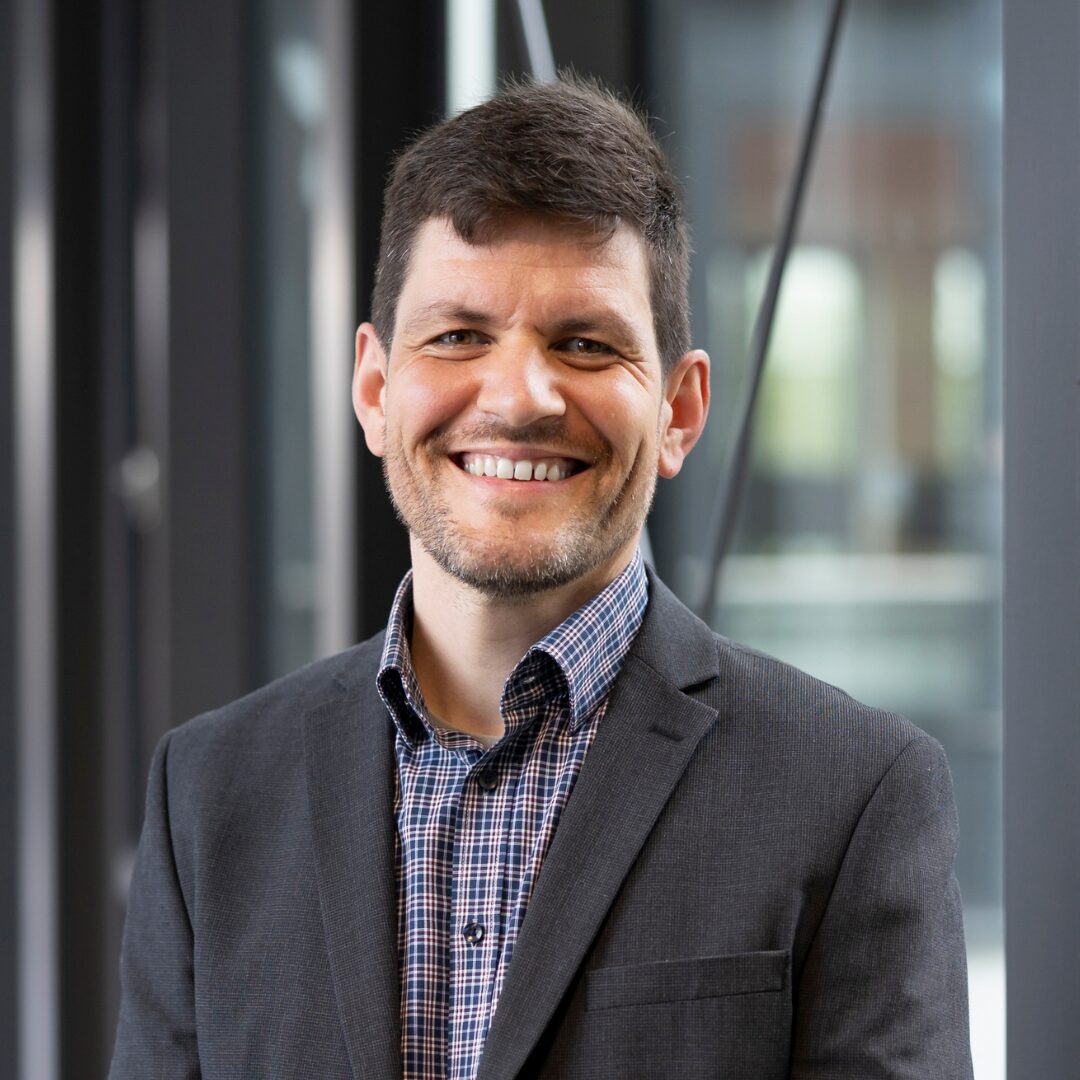
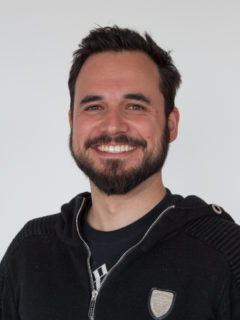
Antonello Monti is a Professor and Director of the Institute for Automation of Complex Power Systems at RWTH Aachen University. His research focuses on modern power systems, including smart grid technologies, hybrid AC-DC grids, and quantum computing applications in energy systems. Recent publications demonstrate innovations in grid resilience, EV charging optimization, quantum-assisted power system planning, and advanced simulation techniques. His team develops open-source tools like JuliaGrid for power system analysis and validates concepts through real-time testing platforms. Research addresses energy transition challenges including renewable integration, grid modernization, cyber-physical security, and next-generation optimization methods combining quantum computing with traditional power engineering approaches.
Prof. Dr.-Ing. Ralf Beck serves as Professor for Control and Regulation Technology and Automation Technology at Hochschule Düsseldorf University of Applied Sciences within the Faculty of Electrical Engineering & Information Technology. His academic responsibilities span multiple degree programs including BEng Electrical Engineering, BEng Industrial Engineering, and MSc Electrical Engineering and Information Technology. His educational background includes Mechanical Engineering studies at TU Braunschweig (1998-2004), followed by doctoral research at RWTH Aachen's Institute of Control Engineering where he earned his Dr.-Ing. in 2010 with a dissertation on predictive energy management for hybrid vehicles. Prior to his current professorship, he held progressive roles at FEV Europe GmbH from 2009-2018, culminating as Senior Project Manager for Vehicle and Powertrain Electronics. Beck's research focuses on control engineering systems with particular emphasis on automation technology, regulation systems, and model-based development approaches. His work bridges theoretical control methodologies with practical automotive applications, especially in hybrid vehicle energy management, multi-robot systems, and intelligent air path control. The Modellfabrik Fab21 serves as his primary experimental platform for model-based development applications. His publication record since 2005 demonstrates consistent contributions to control engineering, particularly in hybrid vehicle systems, emission control optimization, and calibration methodologies. Recent work shows increasing focus on distributed robotics and intelligent transportation systems, reflecting evolving research directions while maintaining core expertise in control theory applications. As an educator, Beck teaches foundational and advanced courses including Electrical Engineering III, Control and Regulation Technology, Model-Based Development, Technical Mechanics, and Advanced Control Engineering at the Master's level. His teaching integrates theoretical concepts with practical laboratory applications through the university's Moodle platform, emphasizing hands-on implementation of control algorithms and system modeling techniques.
Prof. Dr. Biliana Yontcheva is Professor of Economics at the University of Hamburg's Faculty of Business, Economics and Social Sciences, specializing in Health Economics and Empirical Methods. Her research explores market outcomes through spatial econometrics, price transmission dynamics, and competition analysis across diverse sectors including healthcare, gasoline markets, and professional services. Focus on empirical modeling of market structures Expertise in spatial competition and entry models Key contributions to understanding asymmetric cost pass-through Analyzes consumer information effects on pricing Recent publications examine market delineation methodologies , vertical integration impacts , and income inequality-product variety relationships . Collaborates with researchers across Europe on topics like transition economy dynamics and regulatory frameworks. The team includes academic assistant Birte Stadtlich at the Economics Department.
Prof. Christian Liebscher is a Professor of Advanced Transmission Electron Microscopy at the Ruhr University Bochum , affiliated with the Faculty of Physics and Astronomy and the Research Center Future Energy Materials and Systems (RC FEMS). His work focuses on developing cutting-edge TEM techniques to understand energy-related materials' atomic-scale structure-functionality relationships. He combines aberration-corrected scanning TEM (STEM), 4D-STEM, and in-situ microscopy with machine learning to analyze complex material datasets. Education and Career: 2000–2006: Study of Materials Science at the University of Bayreuth. 2006–2010: PhD at the University of Bayreuth (summa cum laude) with a thesis on phase and dislocation analysis in superalloys. 2011–2014: Postdoc at the University of California, Berkeley, and the National Center for Electron Microscopy (Lawrence Berkeley National Laboratory). 2014–2015: Staff scientist at the University of Duisburg-Essen. 2015–2024: Group leader at the Max Planck Institute for Sustainable Materials in Düsseldorf. Research Interests: Prof. Liebscher’s research bridges microscopy innovation and materials understanding. He emphasizes atomic-scale characterization of interfaces, defects, and grain boundaries in metals and alloys using advanced STEM and 4D-STEM. His work addresses how structural features—like segregation, strain, and phase transitions—impact material properties. He also pioneers machine learning tools to automate data analysis from microscopy and tomography, advancing materials dataspaces. Key topics include energy materials (e.g., PEM fuel cells), high-entropy alloys, and nanomaterials for applications like semiconductors and electromagnetic absorption. Scientific Contributions: His publications highlight trends in grain boundary phase transitions, microstructure-property correlations, and integration of AI into microscopy. For example, recent work explores how grain boundary complexions affect mechanical strength in alloys and how in-situ TEM reveals deformation mechanisms under realistic conditions. He has contributed significantly to methodologies like scanning precession electron diffraction tomography and unsupervised machine learning for atomic-resolution datasets. Labs and Collaborations: Prof. Liebscher leads the Advanced Transmission Electron Microscopy group at RUB, building on his previous leadership at the Max Planck Institute. His lab collaborates with institutions like the Lawrence Berkeley National Laboratory and integrates interdisciplinary approaches combining experimental microscopy with computational modeling.
Stefan Wildermann is a Professor at Friedrich-Alexander-Universität Erlangen-Nürnberg (FAU), where he leads the Reconfigurable Computing Group within the Chair of Computer Science 12 (Hardware-Software Co-Design) in the Department of Computer Science. He has maintained continuous research activity at FAU since 2006, progressing from researcher to his current leadership position. Dr. Wildermann earned his Diploma degree in Computer Science from FAU in 2006 and completed his doctorate (Dr.-Ing.) in Computer Science at the same institution in July 2012. His academic career has been entirely rooted at FAU, demonstrating a strong institutional commitment and progression through the ranks. His research spans multiple cutting-edge areas in computer science and engineering, with particular emphasis on reconfigurable systems and hardware-software co-design. Wildermann's work in edge computing explores efficient processing at the network periphery, while his research in organic computing investigates self-organizing systems that can adapt to changing environments. His expertise extends to optimization techniques for embedded systems, applying game theory principles and convex optimization methods to solve complex resource allocation problems. More recently, he has integrated reinforcement learning approaches to enhance system adaptability and performance. His teaching portfolio includes courses on event-driven systems, computer engineering fundamentals, embedded systems, and hardware-software co-design. Analysis of Wildermann's publication record from 2021-2025 reveals a strong focus on hardware acceleration, security, and embedded systems. His work demonstrates consistent evolution from foundational research in reconfigurable architectures toward practical applications in IoT, robotics, and secure computing. A significant portion of his recent work addresses near-data processing using FPGAs for database acceleration, while maintaining parallel research streams in side-channel security analysis and energy-efficient embedded systems design. His publications frequently appear in top-tier conferences including DATE, FPL, ASP-DAC, and HOST, reflecting strong recognition within the computer architecture and embedded systems communities. Wildermann has held significant leadership roles including Head of the Reconfigurable Computing Group since 2015 and previously served as Head of the Self-organizing Systems Group (2012-2015) and Lab Leader of the Automotive Lab within the Embedded Systems Initiative (2016-2020). His research has been consistently funded through multiple projects investigating invasive computing, reconfigurable architectures, and embedded systems design methodologies. Currently based in Room 02.116 at Cauerstr. 11, 91058 Erlangen, Wildermann continues to lead active research in the Hardware-Software Co-Design group, supervising projects that bridge theoretical computer science with practical hardware implementation challenges.
Prof. Dr. Haris Gačanin is a faculty member at RWTH Aachen University, affiliated with the Institute for Distributed Signal Processing under the College of Electrical Engineering. His research focuses on integrating machine learning with wireless communication systems, particularly in industrial IoT, edge computing, and network optimization. Current academic rank: Professor Contact: harisg@dsp.rwth-aachen.de Research Interests: Wireless systems, machine learning, signal processing, and network optimization. Key contributions include: Adaptive resource allocation in IIoT and vehicular networks AI-driven channel estimation and feedback mechanisms Security-oriented emitter identification via metric learning Federated/transfer learning for edge environments Hardware-efficient deep learning models for mmWave and THz communications Methodological Focus: Combines reinforcement learning, attention mechanisms, and robust neural architectures with practical implementations on FPGA and vehicular systems.
Umer Farooq is a Professor at Dhofar University's College of Engineering, specializing in Electrical and Computer Engineering. His research spans interdisciplinary areas including artificial intelligence, nanotechnology, educational technology, and cybersecurity. He has contributed to over 90 publications since 2002, focusing on topics such as neural networks, federated learning, IoT security, and biomedical applications. His work bridges theoretical advancements with practical implementations in fields like medical imaging, renewable energy systems, and smart education platforms. Research interests emphasize innovative solutions at the intersection of engineering and computing. Notable contributions include federated learning frameworks for education, neural network-based medical diagnostics, and secure IoT systems. Recent trends in his publications highlight advancements in machine learning for healthcare, nonlinear dynamics in electronic systems, and sustainable energy solutions. No scientific awards or grants are explicitly listed in the provided texts. Collaborations span global institutions, reflecting his active role in international academic networks.
Mitra Baratchi is an Associate Professor at the Leiden Institute of Advanced Computer Science (LIACS) , Leiden University. She leads the Spatio-temporal data Analysis and Reasoning (STAR) research group, co-leads the Automated Design of Algorithms (ADA) group, and founded the Special Interest Group on Spatio-Temporal Data Mining (SIG-SDTM) . PhD from University of Twente (Mobility Data) Master’s/Bachelor’s in Computer Engineering, Iran Research Interests focus on automated pattern extraction from spatio-temporal data across urban, environmental, and industrial domains. Key applications include: Automated Machine Learning (AutoML) for Earth Observations Time-Series Forecasting for public health (e.g., pandemic modeling) Urban Mobility Optimization with ESA, Honda, and municipalities Reliable Vehicular Communication Systems Smart Garments for Health Risk Detection Geocast Protocols for Internet-wide Communication Grant Highlights include €120K NWO-Aspasia, €2.9M Marie Skłodowska-Curie, €350K NWO-KLEIN, and €135K Center for BOLD Cities funding. She has supervised 12 PhD students and 4 current Master’s students since 2011, with notable best paper award at WWIC'16. Teaching includes Machine Learning (2020-present) and Urban Computing (2018-present) at Leiden, plus past courses in Data Visualization, Software Engineering, and Research Methods.
Leibniz Institute for Solid State and Materials ResearchGermany
Dr. Karin Leistner serves as Group Leader for Nanoelectrodeposition and Magneto-ionic Materials at the Leibniz Institute for Solid State and Materials Research Dresden (IFW Dresden). Her research focuses on the intersection of electrochemistry and magnetism, developing energy-efficient methods for voltage-controlled magnetic nanostructures. Her primary research interests include Magneto-ionic Materials , Nanoelectrodeposition , Magnetic Nanostructures , and Voltage-Controlled Magnetism . Through electrochemical approaches, she pioneers methods to manipulate magnetic properties at the nanoscale without requiring external magnetic fields, enabling applications in low-power spintronics and memory devices. Her work emphasizes redox transformations, electrolytic gating, and interfacial engineering to achieve programmable magnetism in hybrid metal/oxide systems. Analysis of her publication trends reveals consistent innovation in magneto-ionic effects (2021-2025), with increasing focus on microscale patterning (2023-2025) and energy-efficient device applications . Her research spans fundamental electrochemistry (e.g., self-terminated electrodeposition) to applied nanotechnology (e.g., magnetoresistance switching aerogels), demonstrating strong translational potential. Recent work integrates advanced characterization techniques like Kerr microscopy with electrochemical control for precise magnetic manipulation. Dr. Leistner has delivered over 20 invited talks at international institutions including TU Chemnitz, Forschungszentrum Jülich, and Simon Fraser University, highlighting her recognition as a leading expert in electrochemically controlled magnetism. Her collaborative research spans multiple continents, with publications co-authored by teams in Germany, USA, Mexico, Austria, and Slovenia. She leads research activities within IFW Dresden's nanoelectrodeposition laboratory, utilizing specialized electrochemical cells coupled with in situ magnetic characterization. Her group maintains strong collaborations with transmission electron microscopy facilities for real-time observation of electrochemical deposition processes, as demonstrated in joint work with the Wigner Research Centre for Physics.
Prof. Dr. Thomas Grätsch is a faculty member at Hamburg University of Applied Sciences within the Faculty of Technology and Computer Science, specifically in the Department of Mechanical Engineering and Production. His office is located in Room 226e at Berliner Tor 21, 20099 Hamburg, with contact number +49 40 428 75-8705. Prof. Grätsch specializes in computational mechanics with a focus on the Finite Element Method (FEM) and its applications in vibroacoustics. His research particularly addresses noise emission from wind turbines, structural vibration analysis, and mechanical system simulations. He has developed sophisticated models for predicting and reducing tonal noise in wind energy systems, with emphasis on gearbox vibrations and acoustic radiation from large structures. His publication record shows a consistent research trajectory focused on wind turbine noise simulation, with recent work (2018-2022) concentrating on hybrid multistep procedures, large-scale finite element modeling, and practical applications for noise reduction in wind energy systems. His work bridges theoretical computational methods with practical engineering applications in renewable energy technology. Prof. Grätsch holds several administrative roles including Program Coordinator for the Master's program 'Calculation and Simulation in Mechanical Engineering', Spokesperson for the Mechanics Group, Member of the Department Council for Mechanical Engineering and Production, and Deputy Member of the Confidence Committee of the Faculty of Technology and Computer Science. He is also a Member of the Editorial Board of Computers & Structures. His research projects focus on vibroacoustics, particularly addressing noise emission from wind turbines through computational simulation and structural analysis. His work has practical implications for the wind energy industry seeking to reduce environmental noise pollution while maintaining energy production efficiency.
Dr. Yulin Hu serves as a Visiting Professor at RWTH Aachen University, holding the Chair of Information Theory and Data Analytics. His research program bridges theoretical foundations with practical implementations in next-generation wireless systems, with particular emphasis on UAV-aided networks and information-theoretic approaches to communication challenges. His core research interests span multiple interconnected domains: Wireless Communications (especially finite blocklength regimes) Information Theory applications in network design UAV trajectory optimization and network integration Wireless power transfer with nonlinear energy harvesting Edge computing and distributed learning systems Data analytics for network performance optimization Analysis of Dr. Hu's 2025 publication record reveals a concentrated research thrust on UAV trajectory design, where he develops joint optimization frameworks addressing energy efficiency, security, and reliability constraints. His work consistently integrates information-theoretic principles—particularly finite blocklength analysis—to solve practical challenges in ultra-reliable low-latency communications (URLLC) and wireless power transfer. A distinctive feature of his approach is the fusion of deep reinforcement learning with traditional optimization methods for dynamic network scenarios, including no-fly zone constraints and covert operations. While no specific scientific awards are documented in the available materials, his prolific output across top-tier venues demonstrates significant scholarly impact. Details regarding graduate student mentoring and research funding mechanisms remain unspecified in the current documentation. The Chair of Information Theory and Data Analytics, which Dr. Hu leads, functions as a specialized research unit focused on theoretical rigor and algorithmic innovation for wireless systems, though specific laboratory infrastructure or team composition details are not provided.
Sebastian Rausch is a Professor of Economics at Heidelberg University and Head of the Research Department 'Environmental and Climate Economics' at the ZEW-Leibniz Centre for European Economic Research. He is also Co-Director of the Research Center for Environmental Economics (RCEE) at Heidelberg University and holds affiliations with the Centre for Energy Policy and Economics at ETH Zurich, the MIT Joint Program on Global Change, and the Mannheim Institute for Sustainable Energy Studies (MISES). Doctorate in Economics from Ruhr Graduate School and University of Duisburg-Essen Alfried Krupp von Bohlen und Halbach Foundation doctoral scholarship Co-Director of RCEE His research focuses on evaluating and designing economic policies to address climate change, with emphasis on emissions markets, energy system transitions, and computational modeling at the intersection of environmental economics, public finance, and sustainable energy systems. He employs applied general equilibrium models and empirical methods to analyze policy impacts on households, firms, and intergenerational equity. His recent publications in Journal of Public Economics , Nature Climate Change , and Energy Economics examine renewable energy support mechanisms, differentiated carbon pricing, and air quality co-benefits of climate policies. Key themes include market design for decarbonization, distributional effects of environmental taxes, and technology-specific policy instruments. Scientific recognition includes: Doctoral scholarship from Alfried Krupp Foundation Handelsblatt 2017 Top 100 Economics ranking (within top 3% RePEc publications, top 5% h-index) Science prize for doctoral work He leads interdisciplinary projects analyzing economic dividends from climate policy revenues and EU climate strategy design, with collaborations spanning MIT, ETH Zurich, and European policy institutions.
Zhangming Zhu is a Professor at Xidian University in the School of Microelectronics . He specializes in Microelectronics and Circuit Design , with a focus on Analog-to-Digital Converters (ADCs) , CMOS Technology , and Low-Power Electronics . His work addresses challenges in high-speed, high-precision, and energy-efficient circuit design. Research Interests: His publications highlight expertise in ADCs, PLLs, energy harvesting, biomedical sensors, and RF systems. Recent Publications: 2025 papers include a 12-bit 1.5-GS/s ADC , a 5-18-GHz Quadrature Receiver , and 20-bit SAR ADC with thermal error suppression. Collaborations: Frequently co-authors with Shubin Liu, Yi Shen, Ruixue Ding, and others. Applications: Work spans consumer electronics, IoT, biomedical devices, and energy-efficient systems.
Professor Martin Bohl holds the Chair of Monetary Economics at the University of Münster's School of Business and Economics. His research focuses on agricultural commodity markets, speculative bubbles, price discovery mechanisms, and the role of financial investors in commodity markets. He has led international collaborations examining European, Brazilian, and New Zealand futures markets. Education: Habilitation (2000), PhD (1995), and Diplom (1989) in Economics from Justus-Liebig University Giessen. Professional Background: Chairholder at University of Münster (2006–present), Professor at European University Viadrina (2000–2006), Assistant Professor at Justus-Liebig University (1996–1999). His research explores empirical methods in commodity price dynamics, including speculative bubbles and financialization impacts. Recent projects include analyzing agricultural commodity market efficiency and sustainable investments funded by the Alexander von Humboldt Foundation. He has published extensively in journals like Journal of Commodity Markets and Journal of International Money and Finance , addressing topics such as central bank communication, futures hedge ratios, and market volatility. While his full academic profile includes teaching roles and seminar leadership in monetary economics, no specific scientific awards or student lists are mentioned in the provided texts.
Bo Bernhardsson is a Professor in Automatic Control at the Department of Automatic Control, Faculty of Engineering (LTH), Lund University. He has been a full-time professor at Lund since 2010, following a decade (2001–2010) as an Expert in Mobile System Design and Optimization at Ericsson. He is affiliated with major research initiatives including ELLIIT (Excellence Center in Information Technology), LCCC (Lund Center for Control of Complex Engineering Systems), and WASP-AS (Wallenberg AI, Autonomous Systems and Software research school), where he has played a leadership role since 2016. His research focuses on modeling and control of uncertain and large-scale systems, with applications spanning industrial automation, mobile communications, particle accelerators, biomedical systems, and navigation technologies. He integrates theoretical control methods with practical implementations, particularly under constraints such as communication limitations, noise, and delays. His recent publications reveal a strong trend in networked control, communication-constrained estimation, and optimization-based control design. The works span theoretical advances in signal estimation under SNR constraints, event-based and stochastic control, and practical applications like IMU-radio fusion for navigation and RF field control in particle accelerators. Keywords include Control Theory, Communication Systems, Optimization, Signal Processing, and Networked Control , with subfields such as encoder-decoder co-design, virtual antenna arrays, and dynamic programming for time-delay systems. PhD in Control, Lund University, 1992 Professor in Automatic Control, Lund University, since 1999 Expert, Mobile Systems, Ericsson, 2001–2010 Bo Bernhardsson has supervised over 20 PhD and licentiate students, including Jacob Bergstedt (immune system modeling), Anders Mannesson (navigation and radio), and Erik Johannesson (control under communication constraints). His research has been funded by major entities such as the European Spallation Source and the Wallenberg Foundation. He teaches advanced courses in Linear Systems, Convex Optimization, and Robust Control, and has contributed significantly to both academic and industrial advancements in control engineering. He leads and collaborates on interdisciplinary projects involving real-time control, autonomous systems, and machine learning, often in partnership with industry and international research centers. His work in the RobotLab at LTH and on cloud-based control systems highlights his engagement with emerging technologies.