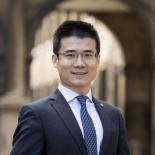
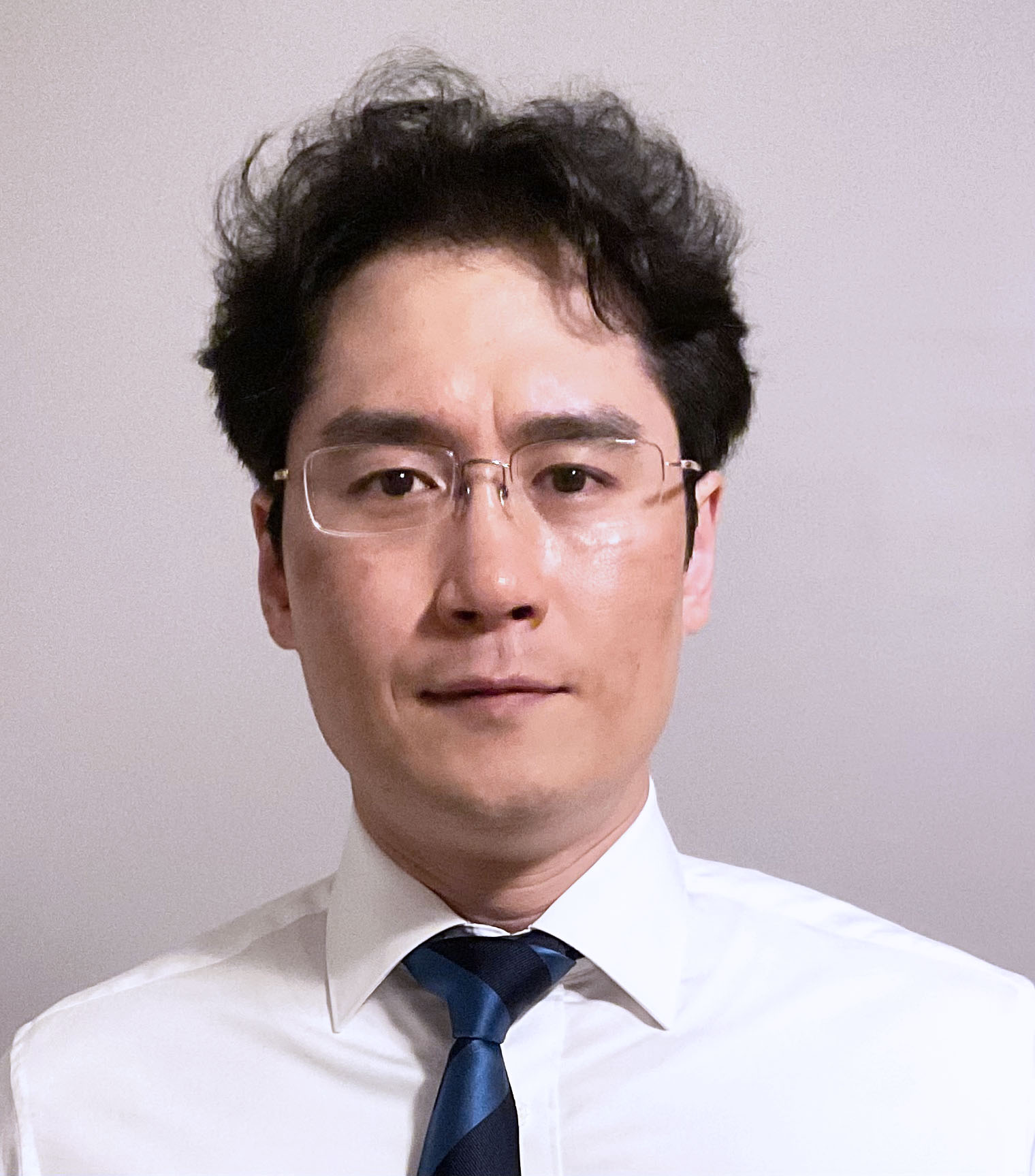
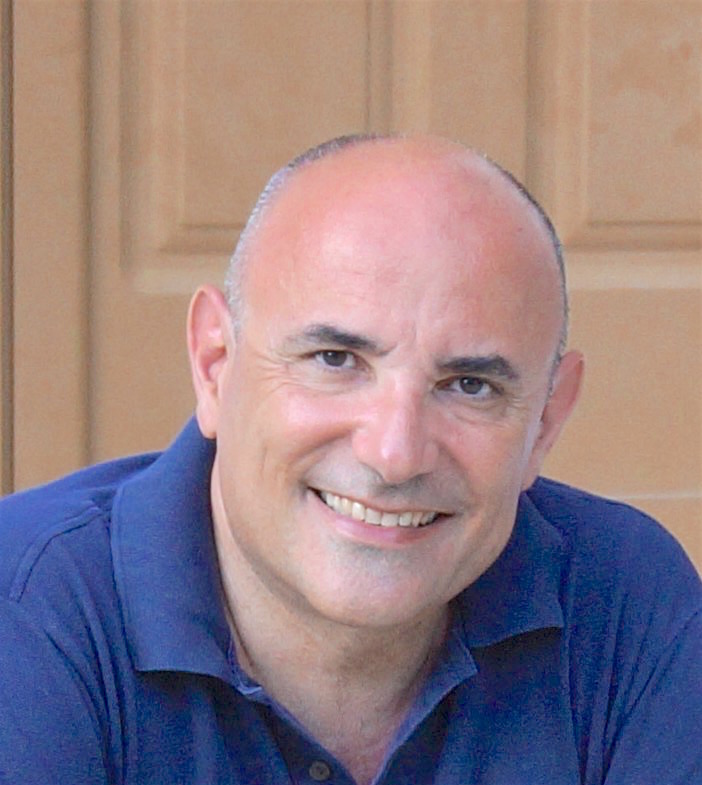
Anys Bacha is an Associate Professor at the University of Michigan-Dearborn and leads the Security and Systems Lab . He has over 13 years of R&D experience at Hewlett-Packard and holds a Ph.D. from The Ohio State University. His work focuses on secure and energy-efficient computer systems, bridging mobile/cloud computing with security research. Education : Ph.D. in Computer Science from The Ohio State University (2016) Expertise : Systems security, hardware-software co-design, machine learning for security, side-channel attacks, non-volatile memory His research explores: Novel malware defenses (ransomware, cryptojacking) Side-channel attack mitigation in speculative execution Machine learning acceleration using emerging memory technologies Security implications of non-volatile caches Peer-reviewed publications appear in top venues like IEEE TDSC, DSN, RAID, and MICRO. Notable trends include: Integration of deep learning and hardware security Systematic approaches to firmware trust Energy-conscious security mechanisms Scientific recognition includes: NSF grants totaling $1.4M+ IEEE Micro Top Picks Honorable Mentions Best Paper Award at CAL 2019 12 issued/pending patents Professional service includes committee roles at ISCA, IPDPS, and MICRO symposia, alongside memberships in IEEE and ACM.
Curtis Berlinguette is a Professor and Distinguished University Scholar at the University of British Columbia , with a joint appointment in the Department of Chemical & Biological Engineering . His research focuses on accelerating materials discovery for clean energy technologies, including solar cells, solar fuels, and CO₂ utilization. Ph.D., Texas A&M University (2004) B.Sc., University of Alberta (2000) His research integrates artificial intelligence with automation to revolutionize materials science, targeting scalable solutions for energy storage , CO₂ reduction , and electrochemical systems . Key projects include: Solar Electricity : Developing durable thin-film solar cells and solid-state hole transport materials. CO₂ Utilization : Converting waste CO₂ into fuels via electrolytic reduction. His group’s work has earned recognition through fellowships and grants , including the Canada Research Chair in Solar Energy Conversion. Recent publications highlight advancements in flow cell technology , amorphous oxide films , and catalytic alloy synthesis . Scientific Awards : Fellow of the Royal Society of Chemistry (2018) RSC Rutherford Memorial Medal (2016) NSERC Steacie Memorial Fellowship (2016) Strem Chemicals Award (2016)
Dr. Amir Koushyar Ziabari is a Senior R&D Staff Data Scientist at Oak Ridge National Laboratory (ORNL), working in the Multimodal Sensor Analytics group under the Electrification and Energy Infrastructure Division. His career spans advanced research in physics-informed computational imaging, signal processing, and machine learning applications for scientific imaging. Education: PhD in Electrical and Computer Engineering, Purdue University (2012-2016) MS in Electrical and Computer Engineering, University of California Santa Cruz (2009-2012) MS in Electrical and Computer Engineering, Sharif University of Technology (2006-2008) BS in Electrical and Computer Engineering, Amirkabir University of Technology (2001-2005) Dr. Ziabari's research focuses on "data science for science", combining data-driven and physics-based methodologies to develop computational imaging and machine learning algorithms. His work addresses image reconstruction, segmentation, and classification challenges across domains like advanced manufacturing, medical imaging, nuclear materials, and materials science. Key innovations include the SIMURGH software for X-ray CT reconstruction and diffusiveINR for energy-efficient foundation models. Recent publication trends show expertise in multi-modal imaging for additive manufacturing, thermal transport analysis at nanoscale, and physics-informed neural networks. His scientific awards include the R&D 100 Finalist, IEEE Senior Member (2022), IEEE Computational Imaging Technical Committee Member (2023), and multiple best paper recognitions. He has secured $3.5M+ in funding as PI/Co-PI and holds patents in tomographic reconstruction and thermal imaging. Dr. Ziabari contributes to professional societies (IEEE, ASTM, OSA), organizes symposia on additive manufacturing imaging, and mentors postdocs to build inclusive research environments. His collaborations with ZEISS, INL, and NIST demonstrate his ability to bridge academic research with industrial applications.
Andreas G. Andreou is a Professor at Johns Hopkins University with primary appointments in the Department of Electrical and Computer Engineering, and secondary appointments in the Department of Computer Science and the Whitaker Biomedical Engineering Institute. He co-founded the Johns Hopkins University Center for Language and Speech Processing (CLSP) and co-directs the Andreou Lab alongside Philippe Pouliquen. His research focuses on brain-inspired microsystems for sensory information processing, neuromorphic computing, and theoretical neuroscience. Education: Born in Nicosia, Cyprus; resides in Baltimore, Maryland. Research Interests: Computing Machinery, Sensory Information Processing, Theoretical Neuroscience, Pattern Analysis, Machine Intelligence, Microsystems Technologies, and Integrated Circuits. Awards: IEEE Fellow, 3rd Best Paper Award at IEEE BioCAS 2018, and recognition for the award-winning Stethovest wearable acoustic sensing array. His lab explores energy-efficient computing beyond Moore's Law, integrating neuroscience principles into microsystem design. Recent projects include quantum-inspired neuromorphic optimizers, AI-generated chips using ChatGPT4, and applications in cardiac acoustics and wearable technology. Collaborations span institutions like NSF, JHU-APL, and the Telluride Neuromorphic AI workshop. His work is supported by grants from DARPA, NSF, NIH, ONR, AFRL, and JHU-APL. He also holds honorary professorships at the University of Cyprus and Universidad Nacional del Sur.
Dr. Zhiru Zhang is a Professor in the School of Electrical and Computer Engineering at Cornell University and a member of the Computer Systems Laboratory. His research focuses on new algorithms, methodologies, and design automation tools for heterogeneous computing systems, with recent publications centering on high-level synthesis (HLS), hardware specialization for machine learning, and programming models for software-defined FPGAs. Dr. Zhang earned his Ph.D. in Computer Science from UCLA, where he co-founded AutoESL based on his dissertation research on HLS. AutoESL was acquired by Xilinx (now AMD), and its HLS tool evolved into Vivado HLS (now Vitis HLS), which is widely used for designing FPGA-based hardware accelerators. He also holds a B.S. in Computer Science from Peking University and an M.S. in Computer Science from UCLA. Dr. Zhang's research interests span hardware design, high-level synthesis, FPGA acceleration, machine learning acceleration, heterogeneous computing systems, and computer architecture. His work bridges the gap between software algorithms and hardware implementation, focusing on creating efficient design automation tools that enable specialized hardware for emerging applications, particularly in AI and machine learning. His recent publications demonstrate strong trends in differentiable programming for hardware design, sparse computation optimization, and efficient implementation of large language models on FPGAs. Dr. Zhang has received numerous prestigious awards including being named an IEEE Fellow, the Intel Outstanding Researcher Award, AWS AI Amazon Research Award, Facebook Research Award, Google Faculty Research Award, DAC Under-40 Innovators Award, Rising Professional Achievement Award from UCLA, DARPA Young Faculty Award, IEEE CEDA Ernest S. Kuh Early Career Award, and NSF CAREER Award. His papers have won multiple Best Paper Awards from top conferences including ASPLOS (2025), ISPD (2025), FPGA (2024, 2022, 2021, 2019), AutoML (2024), FCCM (2018), ACM TODAES (2012), and Top Picks in Hardware and Embedded Security (2020). His papers on HLS scheduling and application-specific instruction-set processor (ASIP) compilation have been inducted into the ACM/SIGDA TCFPGA Hall of Fame for the classes of 2022 and 2023, respectively. On the teaching side, Dr. Zhang has received the Ruth and Joel Spira Award for Excellence in Teaching (2018) and twice the Michael Tien'72 Excellence in Teaching Award (2016, 2022), the highest recognition for teaching in the College of Engineering. He teaches courses including ECE 5775/6775: High-Level Digital Design Automation, ENGRD/ECE 2300: Digital Logic and Computer Organization, ECE 6980: Special Topics on Hardware Acceleration of Deep Learning, ENGRG 1050: Freshman Engineering Seminar, and ECE 5950: Special Topics on High-Level Digital Design Automation. Dr. Zhang leads an active research group with numerous PhD students and postdocs. His current students include Jordan Dotzel, Jie Liu, Zichao Yue, Yixiao Du, Yaohui Cai, Andrew Butt, Hongzheng Chen, Jiajie Li, Niansong Zhang, Matthew Hofmann, Zhanqiu Hu, Vesal Bakhtazad, and Grace Dinh. His alumni have gone on to successful careers at companies like NVIDIA, Google, AWS AI, Meta, Microsoft, and academic positions at universities including University of Illinois Chicago and Zhejiang University. The group has received multiple research grants from industry partners including AWS, Intel, and Google.
Sairam Sri Vatsavai is a Research Fellow at the Brookhaven National Laboratory within the Computational Science Initiative . His work focuses on AI-enabled performance modeling and simulations of hardware accelerators for High-Performance Computing (HPC) systems, building on his PhD research on Photonic Integrated Circuits (PIC)-based AI accelerators. Research Interests: AI accelerators for HPC Photonic Integrated Circuits (PIC) System-level and device-level simulations Cross-layer optimization for energy efficiency Machine learning frameworks (PyTorch, Keras) Contact: ssrivatsa@bnl.gov
Wei (Celia) Xu serves as Research Professor in the Computer Science Department at Stony Brook University and Computational Scientist/Trustworthy AI (TAI) Group Lead at Brookhaven National Laboratory's Computational Science Initiative, driving innovation in AI for scientific discovery across multiple domains. Her educational foundation includes a Ph.D. in Computer Science from Stony Brook University and dual M.S. degrees in Computer Science from Zhejiang University, establishing expertise in computational methods and visualization. Dr. Xu's research centers on developing explainable and trustworthy AI frameworks for scientific applications, with notable contributions in digital twins for simulation workflows, performance evaluation of quantum/classical computing systems, and visual analytics for X-ray imaging and climate science. Her work integrates GPU acceleration and virtual reality to enhance scientific data interpretation, emphasizing model interpretability and reliability in high-stakes domains. Analysis of her 15 most recent publications (2019-2025) reveals a strategic evolution toward trustworthy AI systems, with increasing focus on counterfactual explanations for medical diagnostics, digital twin implementations for ensemble simulations, and quantum state visualization—demonstrating cross-disciplinary impact in materials science, climate modeling, and high-energy physics. Her exceptional contributions have been recognized with prestigious awards: Best Paper Award, PacificVis (2025) Best Paper Award, IEEE SC/ISAV (2020) Honorable Mention Award, IEEE VIS (2018) Women@Energy Recognition (2014) Best Paper Award, Fully3D/HPIR (2009) Dr. Xu actively mentors through her TAI research group while securing sustained funding from DOE's Biological and Environmental Research (BER) program and SciDAC initiatives, complemented by Brookhaven National Laboratory internal projects (LDRD and NSLSII DSSI). She serves on program committees for SC, VIS, and AAAI conferences and has organized workshops including NYSDS and Fully3D, demonstrating leadership in advancing trustworthy AI methodologies for scientific communities.
Chris Kim serves as a Professor in the Department of Electrical and Computer Engineering at the University of Minnesota's College of Science and Engineering. He holds the prestigious McKnight Presidential Endowed Chair and was named a Distinguished McKnight University Professor in 2022, one of the highest honors at the university. His research focuses on designing energy-efficient, robust, and intelligent integrated circuits and systems with expertise in building chips and collaborating across materials, devices, algorithms, systems, and signal processing. Professor Kim's research interests span quantum-inspired computing, cryogenic computing, machine learning hardware, neuromorphic computing, hardware security, internet-of-things, medical devices, sensor networks, and radiation hardened chips. His group has transferred key technologies to the semiconductor industry, including silicon odometer circuits for measuring circuit wear out, radiation monitoring circuits, and SPICE models for magnetic tunnel junctions. Analysis of Professor Kim's recent publications reveals a strong trend toward quantum-inspired computing and combinatorial optimization using coupled oscillator-based Ising chips. His work bridges theoretical computer science with practical circuit implementation, with significant contributions in electromigration characterization, aging sensors, and compute-in-memory architectures. The research demonstrates a clear trajectory from fundamental circuit design to application-specific implementations for real-world problems. Intel Outstanding Researcher Award (2024) for contributions to coupled oscillator based Ising chip research Semiconductor Research Corporation (SRC) Sustainable Future award (2024) for quantum-inspired computing chips McKnight Presidential Endowed Chair (2024) Distinguished McKnight University Professor (2022) Louis John Schnell Professor in Electrical and Computer Engineering (2021) Professor Kim actively mentors numerous Ph.D. and Master's students, with over 50 graduates who now work at leading technology companies including Intel, Apple, Samsung, and NVIDIA. His research is supported by significant grants from the National Science Foundation, Semiconductor Research Corporation, Samsung Electronics, and the Department of Defense. Current projects include electromigration lifetime characterization, energy-efficient circuits for cryogenic operation, characterization of single event effects in DRAM chips, and development of CMOS oscillator-based Ising computers. The VLSI Research Group at the University of Minnesota, led by Professor Kim, focuses on developing core circuit technologies for smart and energy-efficient integrated systems. The group has produced notable achievements including a 48-spin all-to-all connected Ising solver chip published in Nature Electronics (featured on the cover), and a quantum-inspired Ising chip with nearly 2,000 coupled ring oscillators. The group maintains strong industry connections and has transferred multiple technologies to semiconductor companies.
Helen Li is the Marie Foote Reel E'46 Distinguished Professor and Department Chair of the Electrical and Computer Engineering Department at Duke University. She also holds a professorship in the Department of Computer Science at Trinity College of Arts & Sciences. Her academic leadership spans both engineering and computer science disciplines, driving innovation in neuromorphic computing and AI hardware acceleration. Education: B.S. from Tsinghua University M.S. from Tsinghua University Ph.D. from Purdue University Research Interests: Helen Li's research focuses on neuromorphic circuits and systems for brain-inspired computing , machine learning acceleration and trustworthy AI , conventional and emerging memory design and architecture , and software and hardware co-design . Her work bridges the gap between theoretical AI algorithms and practical hardware implementations, with particular emphasis on creating energy-efficient computing systems that mimic biological neural processes. She explores how specialized hardware architectures can overcome the von Neumann bottleneck and enable next-generation AI applications, particularly for edge computing environments where power and computational resources are limited. Scientific Contributions: Professor Li's publication record demonstrates consistent innovation across multiple domains of computer architecture and AI hardware. Her recent work shows a clear trend toward optimizing large language models, quantum computing components, and neuromorphic systems for real-world applications. She has made significant contributions to processing-in-memory architectures, spiking neural networks, and efficient hardware implementations for recommendation systems. Awards & Recognition: Marie Foote Reel E'46 Distinguished Professor Research Leadership: Professor Li leads multiple significant research initiatives including the Center of Neuromorphic Computing under Extreme Environments Research (2024-2029), the DoD Center of Excellence in Advanced Computing and Software (2023-2028), and the PARTNER: Neuro-Inspired AI for the Edge at UTSA (2023-2027). These projects demonstrate her leadership in securing substantial research funding and directing collaborative efforts across institutions to advance the field of neuromorphic computing and AI hardware. Research Environment: Professor Li directs a vibrant research laboratory at Duke University focused on the intersection of hardware architecture and artificial intelligence. Her lab investigates novel computing paradigms that break traditional boundaries between memory and processing, with particular emphasis on brain-inspired computing models. The research environment fosters collaboration between electrical engineers, computer scientists, and domain specialists to develop practical solutions for real-world AI deployment challenges.
Paolo Gastaldo serves as Associate Professor in the Department of Naval, Electrical, Electronic and Telecommunications Engineering (DITEN) at the University of Genoa's School of Engineering. His academic appointment focuses on electronic engineering (IINF-01/A classification) with teaching responsibilities spanning undergraduate and graduate programs including Electronic Engineering and Information Technologies. His research centers on machine learning for embedded systems, specializing in neural architecture search techniques optimized for resource-constrained environments. Key investigation areas include hardware-aware AI deployment on microcontrollers, energy-efficient traffic classification, and affordance segmentation for wearable robotics. His work bridges theoretical machine learning with practical hardware constraints, targeting applications in IoT security, edge computing, and smart wearable systems. Analysis of his recent publications reveals a strong trend toward Pareto-optimal solutions balancing computational efficiency and accuracy in neural network design. His research demonstrates particular expertise in adapting deep learning models for microcontroller deployment while maintaining cybersecurity functionality. The publications consistently address the challenge of implementing complex AI tasks within strict memory and power limitations of embedded devices. Gastaldo maintains active research supervision with regular publication output, primarily through the University of Genoa's institutional repository (IRIS). His work shows strong interdisciplinary connections between computer science, electrical engineering, and robotics applications.
Professor Teng Long is a Professor of Power Electronics at the University of Cambridge , where he leads the Advanced Power Electronics Laboratory (The Long Group) . His research focuses on power electronics for transport electrification , renewable energy , and healthcare applications . PhD, University of Cambridge (2013) MEng, University of Birmingham (2009) BEng, Huazhong University of Science and Technology (2009) His work spans power semiconductor packaging , high-frequency magnetics , and multiscale energy conversion systems . He has secured over £3 million in research grants, with half from the UK government and half from industrial sponsors like STMicroelectronics and Siemens . Recent publications highlight advancements in SiC power modules for low thermal stress , self-adaptive switching technologies , and high-efficiency converter designs for AI accelerators and renewable energy systems . He is a Chartered Engineer with over 70 academic papers and 5 international patents. His group includes 3 postdoctoral researchers and 7 PhD students, fostering innovation in power electronics and transport electrification .
Taejoon Kim is an Associate Professor at the School of Electrical, Computer and Energy Engineering, Arizona State University, with research focusing on Wireless Communications, Statistical Signal Processing, and Networked Systems. His work bridges Information Theory, Machine Learning, and Optimization for applications in 5G/6G Security, mmWave/THz Communication, and Distributed Fusion. Education: PhD in Electrical and Computer Engineering from Purdue University, MS from KAIST (South Korea), BS from Sogang University (South Korea). Research interests span Machine Learning for Physical Layer design, Feature Learning, Distributed Interference Management, and Algorithms on Manifolds. Recent projects examine learnability in AI/ML-based physical layer techniques, fast beam alignment in mmWave systems, and optimization of network resource allocation. His article portfolio reveals trends in 5G/6G Security, Federated Learning, and Channel Estimation. Notable awards include the Kansas Board of Regents Faculty of the Year (2024), Miller Professional Award (2023), and IEEE Transactions on Communications Best Paper Award (2016). Scientific Honors Kansas Board of Regents Faculty of the Year (2024) Miller Professional Award for Research (2023) Harry Talley Excellence in Teaching (2022) IEEE Stephen O. Rice Prize (2016) CityU Hong Kong President's Award (2017) Active grants include NSF Convergence Accelerator Track G, ONR projects, and NASA collaborations. His research group has produced 29 US patents and supervised numerous PhD students, including Hadi Ghauch (now Assistant Professor at Telecom Paris) and Wei Zhang (now at Harbin Institute of Technology Shenzhen).
Marios D. Dikaiakos is Professor of Computer Science at the University of Cyprus where he serves as the Founding Director of the Laboratory for Internet Computing. He previously served as founding Director of the Center for Entrepreneurship (2015-2021) and Head of the Computer Science Department (2010-2014). His academic journey includes a Ph.D. from Princeton University (1994) and a Dipl.-Ing. from the National Technical University of Athens (1988). Dr. Dikaiakos' educational background: Ph.D. in Computer Science from Princeton University (1994) M.A. degree from Princeton University (1991) Dipl.-Ing. degree from National Technical University of Athens (summa cum laude, 1988) His research spans Internet Computing with a focus on Cloud Computing, Online Social Networks, and Vehicular Computing. Recent work explores Edge Computing, Fog Computing, and AI applications in entrepreneurship and social media analysis. His interdisciplinary approach combines technical computing expertise with insights into human behavior and business applications, particularly examining how technology influences entrepreneurship, polarization, and misinformation detection. His recent publications reveal a strong trend toward energy-efficient computing, AI-driven social media analysis, and the intersection of computing with entrepreneurship. The work spans technical domains like Edge and Fog Computing while addressing societal challenges including misinformation detection, polarization analysis, and sustainable computing practices. Many publications demonstrate collaborative research across computer science subfields. Dr. Dikaiakos has received several prestigious awards: Best paper award of the 14th IEEE CloudCom conference (2023) Best student paper award for BenchPilot (2022) Best paper award for 5G-Slicer (2022) Best Demo Award at the ACM/IEEE Symposium on Edge Computing (2020) As an academic advisor, Dr. Dikaiakos has successfully guided PhD students including Demetris Paschalides (2024) and Moysis Symeonidis (2022). He has been principal or co-principal investigator for 25 projects funded by the European Union and the Research Promotion Foundation of Cyprus. His service includes editorial roles at ACM Computing Surveys and Computing journals, and leadership positions in major conferences like EuroPar 2023 and CCGrid 2019. Dr. Dikaiakos founded and directs the Laboratory for Internet Computing at the University of Cyprus, which focuses on cutting-edge research in distributed systems, cloud and edge computing, and social network analysis. The lab has developed multiple research software systems released internationally and maintains active collaborations with institutions across Europe. Current projects address challenges in energy-aware computing, misinformation detection, and AI applications in entrepreneurship.
Tommaso Cucinotta is an Associate Professor at the Real-Time Systems Laboratory (ReTiS) within the TECIP Institute of Scuola Superiore Sant'Anna, Pisa, Italy. He earned a MSc and PhD in Computer Engineering from University of Pisa and Scuola Superiore Sant'Anna, respectively. His career spans academic and industrial roles, including researcher positions at Alcatel-Lucent Bell Labs (2012-2014) and Software Development Engineer at Amazon DynamoDB (2014-2016). He coordinates real-time and embedded systems research at ReTiS since 2019. Born in 1974, Potenza, Italy MSc in Computer Engineering, University of Pisa (2000) with 110 cum laude PhD in Computer Engineering, Scuola Superiore Sant'Anna (2004) His research focuses on real-time systems in cloud environments, including adaptive resource management, AI-driven performance monitoring, secure computing, and scalable NoSQL databases. He explores operating system innovations for many-core architectures, network function virtualization (NFV) optimization, and kernel-level enhancements for latency control. His work integrates formal methods with practical implementations, such as autonomic QoS control and high-performance container communication frameworks. Recent publications analyze predictive elasticity in cloud infrastructures, real-time DAG optimization on heterogeneous platforms, and AI applications for system-level performance tuning. He actively contributes to open-source tools like ARSim and AQuoSA, while mentoring MSc thesis projects on topics like Kubernetes optimization, fault-tolerant replication logs, and machine unlearning techniques for LLMs. Collaborations with industry leaders (Ericsson, Red Hat, Vodafone) bridge academic research with real-world scalability challenges. Scientific awards include the Best Paper Award at CLOSER 2020 for his work on high-performance inter-container communication frameworks. He participates in program committees of major conferences and contributes to the evolution of Linux real-time scheduling mechanisms through projects like SCHED_DEADLINE enhancements for multimedia applications.
Willie John Padilla serves as the Dr. Paul Wang Distinguished Professor in the Department of Electrical and Computer Engineering at Duke University's Pratt School of Engineering. His research spans electromagnetic metamaterials and metasurfaces with applications across microwave, terahertz, and infrared frequencies. Dr. Padilla leads the Padilla Lab, which specializes in THz, infrared, optical and magneto-optic properties of novel materials using various spectroscopic methods. Ph.D. from University of California, San Diego (2004) Dr. Padilla's research focuses on theoretical, computational, and experimental investigation of electromagnetic metamaterials with particular emphasis on artificial intelligence and deep learning applications. His work explores the tailoring of thermal radiation beyond natural materials limitations, developing metamaterial emitters based on MEMS, graphene, and liquid crystals for controlled thermal emission. His lab investigates high-temperature metamaterials capable of withstanding extreme environments for thermal photovoltaic systems. Padilla's research bridges fundamental electromagnetic theory with practical applications in energy harvesting, computational imaging, and sensing technologies. His recent publications demonstrate a strong trend toward integrating machine learning with metamaterial design and characterization, particularly physics-informed learning approaches that combine domain knowledge with neural networks. This represents a significant shift in the field toward more efficient design methodologies that overcome traditional computational limitations in electromagnetic simulation. IEEE Fellow (2025) Optica Fellow (2013) Presidential Early Career Award for Scientists and Engineers (2009) Dr. Padilla actively mentors doctoral students including Yang Deng, Rixi Peng, and Natalie A Rozman, with research spanning from fundamental metamaterial physics to practical applications. His team includes Visiting Researcher Omar Khatib and Adjunct Assistant Professor Evan Runnerstrom, creating a multidisciplinary research environment that bridges electrical engineering, materials science, and computational methods. The Padilla Lab maintains strong focus on both fundamental research and practical applications, with particular emphasis on developing metamaterial solutions for energy harvesting, thermal management, and advanced imaging systems. Current projects include developing metamaterial emitters for controlled thermal radiation beyond the Stefan-Boltzmann law and exploring high-temperature metamaterial designs for extreme environment applications.