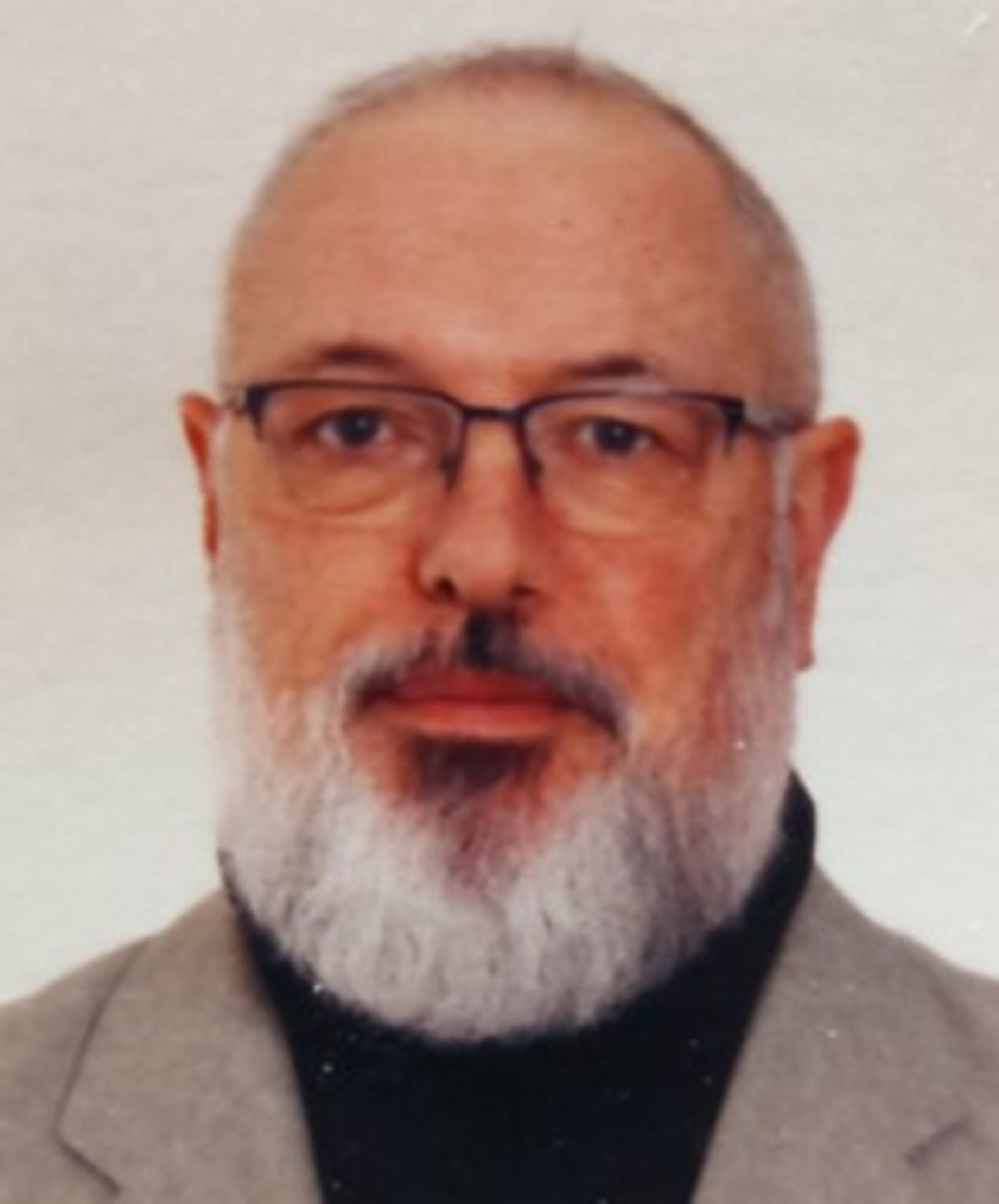
Prof. Dr. Armando Walter Colombo is a Professor at the Department of Technology, Electrical Engineering and Informatics at the University of Applied Sciences Emden/Leer. He leads the Institute I2AR as Scientific Director and coordinates the DAAD/DAHZ Binational Master in Industrial Informatics with the Universidad Tecnológica Nacional-FRRe in Argentina. His research focuses on Cyber-Physical Systems (CPS), Industrial Digitalization, Industry 4.0, and Smart Manufacturing. Key areas include asset administration shells, IoT integration, and sustainable industrial automation. He holds IEEE Fellow status and is a Distinguished Lecturer for the IEEE Systems Council. He has pioneered educational frameworks like T-CHAT and contributed to standards alignment (RAMI4.0, IEEE Industrial Agents). Recent publications emphasize Industry 4.0 compliance, digital twins, and AI in logistics. Responsibilities: DAAD Master Coordinator, Institute I2AR Director, and International Relations Officer. Awards: IEEE Fellow, Distinguished Lecturer (IEEE Systems Council). Grants & Partnerships: DAAD-funded binational programs, EU-funded PERFoRM projects. His work bridges academia and industry through platforms like the ICPS-based Digital Factory Lab, addressing SME digitalization and sustainable automation.
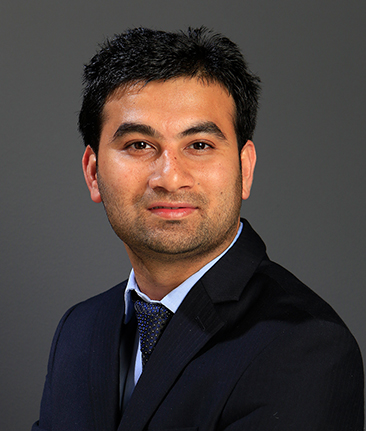
Dr. Md Al Masum Bhuiyan is an Assistant Professor in the Department of Mathematics and Statistics at Austin Peay State University, part of the College of STEM. He holds a Ph.D. and two Master's degrees in Applied Mathematics from The University of Texas at El Paso (UTEP) and a Bachelor's in Mathematics from the University of Dhaka. Dr. Bhuiyan specializes in Applied Statistics, high-frequency data analysis, machine learning, and stochastic modeling, with expertise in analyzing diverse datasets including financial markets, geophysics, meteorology, and public health. His educational background includes certifications in Big Data Analytics and SAS Base Programming. His research focuses on applying advanced statistical and computational methods to complex systems, such as financial volatility estimation, earthquake-seismic data analysis, and environmental monitoring. He teaches courses like Stochastic Processes, Probability, and Elements of Statistics at both undergraduate and graduate levels. Dr. Bhuiyan's work integrates interdisciplinary approaches, combining mathematical rigor with real-world applications. His publications span high-impact journals like Physica A and AIMS Environmental Science , addressing topics from ozone concentration prediction to volcanic activity modeling. His research trends emphasize predictive analytics, volatility modeling, and algorithmic solutions for geophysical and financial systems. While no formal awards are listed, his extensive publication record reflects significant contributions to computational science and applied mathematics. His teaching and research roles highlight a commitment to advancing data-driven methodologies across multiple disciplines.
Ehsan Kamel is an Associate Professor in the Department of Energy Management at the New York Institute of Technology's College of Engineering and Computing Sciences. He joined the university in 2017 after earning his Ph.D. in Civil Engineering from Pennsylvania State University. His research focuses on building energy modeling, sustainable construction materials, and extraterrestrial habitat design for Mars. He directs the Energy and Green Technologies Laboratory (EnTech Lab), fostering student hands-on experience in energy and green technologies. Kamel has secured over $575,000 in grants from organizations like the National Science Foundation and NYSERDA, advancing energy efficiency and sustainability initiatives. His work bridges academia with industry, addressing real-world challenges in energy systems and climate resilience. Education: Ph.D. in Civil Engineering (Pennsylvania State University, 2017); M.S. in Civil Engineering; Certified Energy Manager (CEM). Research Interests: Building energy modeling integrates physics-based simulations and machine learning to optimize energy use in buildings and urban systems. He explores climate change impacts on energy systems, low-income housing energy burdens, 3D-printed construction, and sustainable materials. His extraterrestrial research models habitats for Mars using Martian climate data and locally sourced materials. Recent Projects: Urban-scale energy modeling with HPC systems, energy burden analysis in low-income households, and Mars habitat simulations. His work has been recognized with awards including the inaugural Trailblazers in Clean Energy (2024) and AEE Energy Innovator of the Year (2023). Grants and Collaborations: Principal investigator for NYSERDA grants ($500,000) and ASHRAE-funded projects. Collaborates with universities globally and energy firms on building efficiency solutions. Manages a research portfolio totaling $575,000 since 2017. Labs/Teams: Directs EnTech Lab, advises ASHRAE student branch, and leads interdisciplinary teams on energy-smart buildings and digital twin technologies.
Florida Agricultural and Mechanical UniversityUnited States
Dr. Aavudai Anandhi is an Associate Professor of Biological Systems Engineering at Florida A&M University. Her research focuses on computational intelligence for modeling ecosystem processes at the food-energy-water (FEW) nexus, addressing environmental changes through systems engineering approaches. Key areas include artificial intelligence applications, spatial statistics, and machine learning for sustainable resource management. Education: Ph.D. in Water Resources and Environmental Engineering, Civil Engineering, Indian Institute of Science (2008) M.Sc. in Irrigation and Water Management, Indian Institute of Science (1995) B.Sc. in Agriculture, Anna University (1992) Research interests emphasize interdisciplinary sustainability solutions, climate change adaptation, and nexus frameworks for resilient ecosystems. Recent work explores land degradation, water footprint assessments, and habitat suitability modeling. Awards and recognitions include the 2018 Teacher of the Year (ASABE), 2017 Florida A&M Emerging Researcher Award, and multiple fellowships for educational innovation and research excellence. Her work bridges climate science with practical decision-making tools for agriculture and water resources. Key contributions include the Ogallala Aquifer Project (USDA Honor Award, 2013) and development of the DIEM framework for habitat threat analysis. She actively engages in educational outreach, creating tools like the 'Leaf Model for Watershed Teaching.'
Tobias Gerken is an Assistant Professor in the Integrated Science and Technology (ISAT) department at James Madison University's College of Integrated Science & Engineering. He holds a Ph.D. in Environmental & Atmospheric Science from the University of Bayreuth (Germany) and a Diplom in Environmental Science from the same institution. His research focuses on land-atmosphere interactions, including surface flux dynamics of water, energy, and trace gases between ecosystems and the atmosphere, and their impacts on weather and climate. Notable areas include flash drought mechanisms in the Northern Great Plains, agricultural land management effects on rainfall, and carbon dioxide exchanges in tropical ecosystems like the Amazon rainforest and Tibetan Plateau. Gerken has held prior appointments as an Assistant Research Professor at Penn State University and Research Associate at Montana State University. His work spans interdisciplinary projects funded by the National Science Foundation (NSF), NASA, and the Department of Energy (DOE), including studies on urban lightning patterns, climate modeling via ACT-America missions, and Tibetan Plateau ecosystem dynamics. He teaches courses on environmental science, sustainability, and applied data analysis. His research outputs emphasize climate change impacts, air pollution dynamics, and hydroclimatology. Notable studies include analyzing lightning frequency in urban regions, quantifying methane emissions from bison herds, and evaluating carbon cycle models using airborne observations. Gerken actively contributes to editorial roles in journals like Agricultural and Forest Meteorology and participates in the National Ecological Observation Network (NEON). Media engagements include discussions on wildfire smoke effects, climate destruction mitigation strategies, and agricultural climate impacts in the Great Plains. His work bridges field experiments, computational modeling, and policy-relevant climate science.
Dr. Shuolin (Shawn) Li is a Postdoctoral Research Scientist at Columbia University's Data Science Institute, collaborating with Professors Pierre Gentine, Upmanu Lall, and Tian Zheng. He holds a Ph.D. in Fluid Dynamics and Hydrology and an M.S. in Computer Science from Duke University. His research focuses on developing machine learning algorithms for Earth observations, particularly in climate model parameterization using Bayesian inference, neural networks, and physical parameterizations. He collaborates with the Learning the Earth with Artificial Intelligence and Physics (LEAP) initiative and scientists at the National Center for Atmospheric Research (NCAR). Research interests include data assimilation, environmental fluid mechanics, and interdisciplinary applications of machine learning in hydrology, turbulence, and climate science. His work bridges computational methods with physical processes, addressing challenges in sediment transport, vegetation dynamics, and turbulent flow modeling. Recent publications highlight advancements in generative data assimilation, sediment flux parameterization, and turbulence modeling. His contributions span environmental engineering, climate science, and mathematical modeling, emphasizing scalable solutions for complex Earth systems. Collaboration with LEAP and NCAR underscores his commitment to advancing AI-driven Earth science. No formal awards are listed, but his work reflects significant contributions to interdisciplinary environmental research.
Pekka Peljo is an Associate Professor at Aalto University's Department of Chemistry and Materials Science, leading the Physical Electrochemistry and Electrochemical Physics (PhysElectrochemPhys) research group since September 2018. His work focuses on charge transfer mechanisms at solid-liquid interfaces and within solid materials, with a strong emphasis on developing advanced batteries for large-scale energy storage. Education: Master's degree in Engineering and Technology from Helsinki University of Technology His research bridges Electrochemistry and Energy Storage , particularly in Redox Flow Batteries and Hydrogen Production via hydrocarbon electrolysis. Current projects include computational modeling of redox potentials, experimental flow battery designs, and scalable synthesis of cellulose nanocrystals for electrochemical applications. Selected trends from his 75+ publications include Electron Transfer at interfaces, Operando Battery Monitoring , and Sustainable Energy solutions. His work aligns with UN Sustainable Development Goals (SDGs) for climate action and affordable clean energy. Scientific contributions are recognized through grants from the Academy of Finland, EU Horizon Europe, and strategic funding for projects like CompBat (2020-2023) and H2fromHE (2024-2028). He has presented at international conferences (e.g., ELCAT, Spain, 2011) and hosted collaborations with institutions like EPFL. As Principal Investigator, Peljo leads projects such as PREDICTOR (2024-2028) for high-throughput screening of battery materials and Bi3BoostFlowBat (2025-2026). His group also investigates Hydrogen Production from natural gas and Vitamin B6-based Electrolytes for aqueous batteries.
Yingyao Hu is the Krieger-Eisenhower Professor of Economics and Vice Dean for Social Sciences at Johns Hopkins University. He holds a PhD in Economics from Johns Hopkins University (2003) and has been affiliated with the university since 2007. Previously, he was an assistant professor at the University of Texas at Austin (2003–2007). His research focuses on econometrics, empirical industrial organization, and labor economics, with a particular emphasis on measurement error models, latent variables, and dynamic discrete choice models. He has contributed to leading journals like American Economic Review , Econometrica , and Journal of Econometrics . Professor Hu has pioneered methods in nonparametric identification and estimation, addressing challenges in unobserved variables and misclassification errors. His work on labor economics includes correcting biases in unemployment rate measurements and analyzing China’s economic dynamics. He is a Fellow of the Journal of Econometrics and co-edited a special issue on measurement errors. Awards include the Denis J. Aigner Award (2022–2023) and the Kuznets Prize (2010–2012). Education: PhD (2003), MA in Economics (2001), MSE in Mathematical Sciences (2001) – Johns Hopkins University; Tsinghua University (B.E., 1994); Fudan University (M.A., 1997). Research Interests: Machine learning applications in econometrics, production function estimation, and policy analysis using satellite data. Awards: Denis J. Aigner Award, Kuznets Prize. Grants & Leadership: Oversees faculty policies as Vice Dean; coordinates departmental chair rotations and faculty mentoring. His lab, the JHU Workshop on Measurement Errors & Latent Variables, hosts interdisciplinary collaborations. Hu’s work bridges econometric theory with practical applications, influencing policy and empirical analysis in labor markets, industrial organization, and macroeconomic growth.
Pierre-Olivier Pineau is a Professor at HEC Montréal, holding the Chair in Energy Sector Management within the Department of Decision Sciences. His research focuses on energy policy, electricity markets, and sustainable development. He has a Ph.D. in Administration from HEC Montréal and a Master's in Philosophy from Université de Montréal. His expertise spans energy policy, electricity market dynamics, decision analysis, and decarbonization strategies. Current research includes environmental impacts of energy trade, electricity market modeling, and voluntary price mechanisms for energy conservation. Pineau has supervised over 30 master's and doctoral students, contributing to impactful studies in energy transition and policy. Recent publications emphasize reinforcement learning in energy demand response, price forecasting in Ontario, and decarbonization challenges in North America. He co-authored the book Games in Management Science: Essays in Honor of Georges Zaccour and received the 2024 Hubert-Reeves Prize for his work on energy balance. Pineau teaches courses on energy value chains and sustainable supply chains, reflecting his commitment to bridging academia and industry. His work addresses global energy challenges, advocating for integrated regional energy systems and equitable climate policies.
National Institute of Applied Sciences of StrasbourgFrance
Tania Landes is a Professor at the University of Strasbourg (Unistra) affiliated with the ICube Laboratory UMR 7357 CNRS/Unistra and the PAGE Group (Architectural Photogrammetry and Geomatics). Her work focuses on integrating advanced 3D modeling and geomatics techniques for urban applications. Academic Rank: Professor Institution: University of Strasbourg Research Affiliation: ICube Laboratory UMR 7357 CNRS/Unistra Research Interests : Indoor and outdoor 3D modeling with RGB-D sensors and LiDAR Semantic segmentation of point clouds for BIM (Building Information Modeling) Thermal imaging integration for urban microclimate studies Historical and cultural heritage documentation via photogrammetry Urban tree modeling and vegetation impact on thermal comfort Scan-to-BIM workflows and automation Key Projects include the TIR4sTREEt thermal infrared studies of street trees in Strasbourg and COOLTREES for quantifying urban cooling benefits from vegetation. Her publications emphasize improving 3D reconstruction workflows and modeling accuracy across domains. Scientific Contributions span 15+ years with over 50 publications, covering: Urban heat island mapping (2022 onwards) Historical building modeling (2014-2017) Mobile laser scanning applications (2020 onwards) Kinect sensor calibration for 3D modeling (2015) Microclimate simulation via LASER/F (2016) Archaeological documentation (2011)
Dr. Amirreza Khodadadian is a Lecturer in Mathematics at the School of Computer Science and Mathematics, Keele University, since August 2023. He holds a Ph.D. from the University of Vienna (2017), followed by postdoctoral positions at the Technical University of Vienna and Leibniz University Hannover. His research focuses on uncertainty quantification, numerical methods for stochastic PDEs, finite element methods, computational mechanics, and machine learning applications in nanoelectronics and biological systems. Key research interests include Bayesian inversion, multiscale modeling, reduced-order methods, and the design of nanoscale sensors. He has collaborated with institutions like the University of Oxford and secured an Austrian Science Fund (FWF) grant (476k€) for nanozyme sensor research. Dr. Khodadadian mentors postdoctoral researchers, including Dr. Samaneh Mirsian, and actively publishes in top-tier journals such as Journal of Computational Physics and Computer Methods in Applied Mechanics and Engineering . His work bridges applied mathematics with engineering challenges, emphasizing efficient numerical algorithms for real-world problems like battery degradation, groundwater contamination, and biomedical sensor optimization. Recent projects involve machine learning integration for enhanced predictive modeling. Education: Ph.D. in Mathematics, University of Vienna, Austria (2017) Postdoctoral Fellowships: TU Vienna (2018), Leibniz University Hannover (2018–2022) Grants/Awards: Austrian Science Fund (FWF) Grant: Single Atom Catalysts as Nanozymes in FET Sensors (2023) Advising: Postdoctoral Mentor: Dr. Samaneh Mirsian (Keele University) Dr. Khodadadian’s publications span computational mechanics, stochastic modeling, and interdisciplinary applications, reflecting his expertise in translating mathematical theory into practical engineering solutions.
Ana Dyreson is an Assistant Professor in Mechanical and Aerospace Engineering at Michigan Technological University and Associate Research Director at the Center for Innovation in Sustainability & Resilience (CISR). She leads the Great Lakes Energy Group, focusing on climate change impacts on electric power systems , energy transitions in cold climates , and thermal power plant modeling . Her work bridges solar photovoltaic design , electricity grid operational modeling , and the energy-water nexus . Education : PhD in Mechanical Engineering, University of Wisconsin–Madison (2018) MS in Mechanical Engineering, Northern Arizona University (2014) BS in Engineering Mechanics, University of Wisconsin–Madison (2011) Research emphasizes climate-resilient energy systems , particularly solar energy in cold climates and grid-scale modeling . Her 2025-2022 publications investigate snow mitigation on PV panels , heat pump adoption , floating solar-hydropower hybrids , and climate stressor impacts on thermoelectric plants . She develops inclusive teaching methods and advises on renewable energy deployment through initiatives like the Tech Forward Initiative on Sustainability and Resilience . Her team collaborates on multisector dynamics and energy-water-climate research in the Great Lakes region.
Jenna Tilt is an Assistant Professor in the Department of Geography at Oregon State University, affiliated with the College of Earth, Ocean, and Atmospheric Sciences. Her research focuses on the human dimensions of natural hazards, equitable disaster recovery, and community resilience through participatory methods. She holds a Ph.D. and M.S. in Social Sciences from the University of Washington’s College of Forest Resources, along with a B.S. in Environmental History from Utah State University. Her work bridges social science and environmental science, emphasizing co-production of knowledge with communities. Key research areas include wildfire recovery, coastal hazards adaptation, and the Food-Energy-Water Nexus. She leads projects funded by the National Science Foundation and Oregon Sea Grant, such as the Cascadia Coastlines Hazards Hub and Wildfire Vulnerability Explorer. Dr. Tilt teaches courses on land use planning and resilient community design, both on-campus and online. She mentors postdoctoral scholars and graduate students in environmental sciences, geography, and anthropology, focusing on interdisciplinary approaches to disaster resilience. Her advising includes students like Joshua Applegate (Green Infrastructure) and Najiba Rashid (Coastal Resilience). She collaborates with diverse stakeholders through initiatives like the Global Transdisciplinary Wildfire Research Center and the Interactive Adaptation and Collaboration Tool (InterACTWEL). Recent work explores Latinx communities’ coastal resilience strategies, floodplain risk perceptions, and machine learning applications for post-wildfire water contamination assessments. Her research emphasizes equitable adaptation pathways and trust-based decision frameworks in resource management.
Matthew Shapiro is a Professor of Political Science at Illinois Institute of Technology and a Research Affiliate at Argonne National Laboratory's Joint Center for Energy Storage Research (JCERS). His work sits at the intersection of innovation systems, sustainable development, and political communication, with a focus on climate change policy, urban environmental challenges, and the societal impacts of social media algorithms. His research spans Innovation systems contributing to sustainable development Climate change policymaking and political dynamics Transboundary air pollution governance in Northeast Asia Social media's role in political discourse and filter bubbles Urban stormwater management equity Recent publications highlight his expertise in environmental governance, algorithmic transparency, and the politicization of science. At JCERS, he examines non-politicized energy storage research, while his urban studies emphasize marginalized populations and citizen science. His methodological focus includes network telemetry, longitudinal Twitter analysis, and framing experiments.
Professor Bradley Evans is a distinguished Earth observation and remote sensing specialist at the University of New England, where he holds a position in the Faculty of Science, Agriculture, Business and Law within the School of Environmental and Rural Science. His expertise spans environmental science, biodiversity conservation, and the application of hyperspectral imaging spectroscopy to solve real-world environmental challenges. Previously, he has held significant positions including Director of Australia's Terrestrial Ecosystem Research Network and Director of Sydney Informatics Hub at The University of Sydney. PhD in Environmental Science, Murdoch University, Western Australia, 2013 Bachelor of Science with Honours in Environmental Science, Murdoch University, Western Australia, 2009 Bachelor of Science in Energy Studies, Murdoch University, Western Australia, 2009 Advanced Diploma in Marketing Management, TAFE NSW, Bradfield College, 1999 CASA RPAS sub 25kg (Multirotor Drone) certification Professor Evans's research focuses on applying advanced remote sensing techniques to environmental monitoring and conservation. His work integrates hyperspectral imaging with ecological modeling to address critical issues such as koala habitat mapping, forest health assessment, and water quality monitoring. He has pioneered approaches using plant fluorescence to model growth patterns and has contributed significantly to NASA's OCO2 mission. His recent work emphasizes the development of open-source tools for hyperspectral imaging, making advanced remote sensing more accessible to researchers worldwide. Analysis of Professor Evans's recent publications reveals a strong trend toward practical applications of hyperspectral imaging across diverse environmental contexts. His work spans from precision agriculture applications for cotton farming to koala habitat conservation, demonstrating the versatility of remote sensing technologies. The research shows increasing integration of machine learning techniques with hyperspectral data, enhancing the accuracy and efficiency of environmental monitoring systems. There's also a notable emphasis on open-source solutions, reflecting his commitment to democratizing access to advanced remote sensing technologies. 2016 – Terrestrial Ecosystem Research Network NSW – NSW Chief Scientist Award Multiple travel scholarships from NCCARF, EUFAR, and Australian Research Council 2010 Centre of Excellence for Climate Change PhD top-up Scholarship 2008 Master class Scholarship from Wentworth Group of Concerned Scientists Professor Evans has successfully supervised numerous PhD and Master's students across multiple institutions, demonstrating strong mentorship capabilities. His research is supported by substantial grants including the $198K NSW Department of Environment Koala's in the Landscape project (2023), the University of Sydney's Koala's in the Air project ($70K), and significant funding for the OpenHSI initiative. He has been a Chief Investigator for the Australian Research Council Training Centre on CubeSats, UAVs and Their Applications, securing funding for innovative remote sensing projects. His work with NASA JPL's Surface Biology and Geology Study and collaborations with international space agencies demonstrates the global impact of his research. At the University of New England since 2023, Professor Evans has established the Earth Observation Laboratory with a special focus on water and wildlife habitat (particularly koalas) and riverine water quality. He serves as Vice President of Earth Observation Australia and participates in the AquaWatch Steering Committee for the Commonwealth Department of Defence. His laboratory actively collaborates with industry partners like HyVista Corporation and academic institutions including The University of Sydney. The lab emphasizes open-source approaches to remote sensing technology, exemplified by the OpenHSI project, which has created accessible hyperspectral imaging solutions for researchers worldwide.