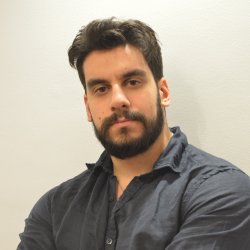
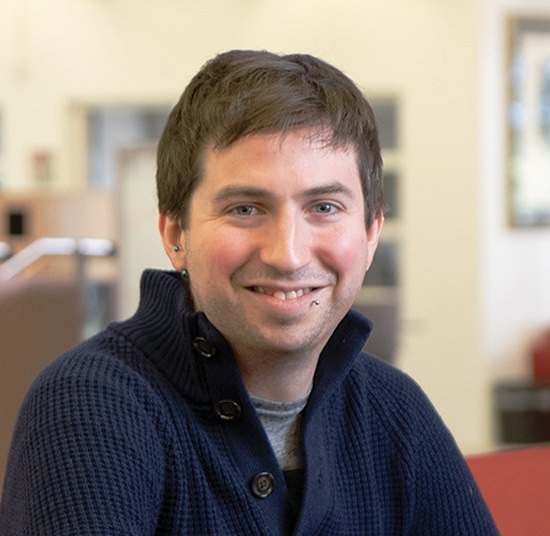
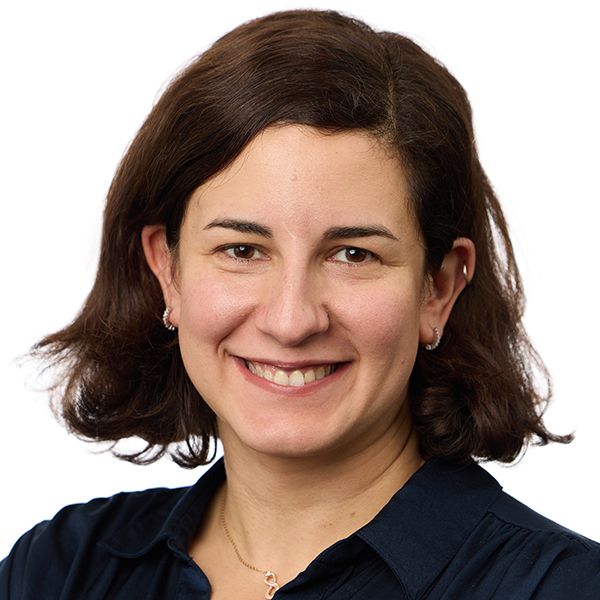
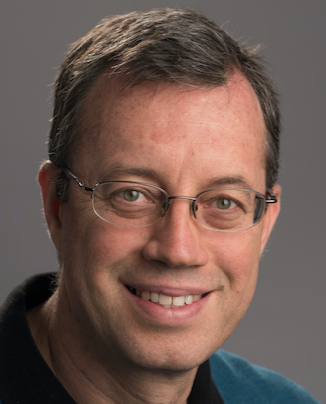
Dimitrios Tsaoulidis is a Senior Lecturer in Chemical Engineering at the University of Surrey and an Honorary Lecturer at University College London . He holds a PhD in Chemical/Nuclear Engineering and a Diploma in Chemical Engineering. University roles: Academic Integrity Officer, Senior Personal Tutor, Disability & Neurodiversity Representative Research spans clean energy (nuclear, bio, solar), healthcare (bioprocess scalability), and manufacturing using process intensification and microfluidics . His work combines experimental investigation , CFD simulations , and scale-up optimization for multiphase reactors . Notable research trends include: 15+ publications (2012–2023) on uranium extraction , biodiesel production , and pharmaceutical microfluidics , with grants from UKRI and Innovate UK . Scientific Awards : David Newton’s Award for Sustainability (UCL) Springer Thesis Award Fellow of the Higher Education Academy (FHEA) Associate Member of the Institution of Chemical Engineers (AMIChemE) Research Collaborations : Academic : Prof Panagiota Angeli (UCL), Prof Eric Fraga (UCL), Dr Maryam Parhizkar (UCL) Industrial : UK Atomic Energy Authority, National Nuclear Laboratory, GSK, Greenergy Ltd, Armfield Dr Tsaoulidis supervises PhD students (e.g., Mustapha Hamdan, Anna Tsitouridou) and PDRA staff (e.g., Dr Jamshid Zarkesh) in projects related to solar energy systems , nuclear fuel cycles , and pharmaceutical automation .
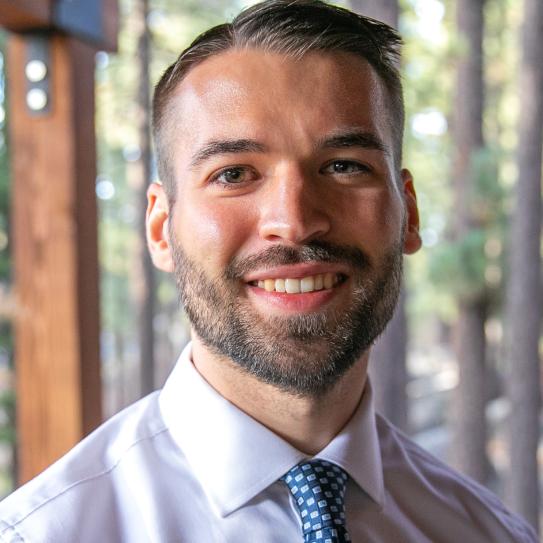
Austin Rovinski is an Assistant Professor in the Department of Electrical and Computer Engineering at New York University’s Tandon School of Engineering. He specializes in chip design, electronic design automation (EDA), and open-source hardware methodologies. His research focuses on VLSI design, domain-specific accelerators, and chiplet-based systems. Prior to NYU, he held a postdoctoral position at Cornell University and earned all his degrees (Ph.D., M.S., and B.S.) from the University of Michigan. Education: Ph.D., Electrical Engineering, University of Michigan - Ann Arbor Master’s, Electrical Engineering, University of Michigan - Ann Arbor Bachelor’s, Electrical Engineering, University of Michigan - Ann Arbor Research Focus: Developing open-source EDA frameworks like OpenROAD Optoelectronic interconnect systems for 2.5D packaging Agile hardware design methodologies Reconfigurable sparse matrix accelerators RISC-V-based manycore processors (e.g., Celerity project) Key Contributions: Austin led the development of the OpenROAD RTL-to-GDS flow and contributed to the Sirius and Celerity projects. His work emphasizes reproducibility, democratizing chip design through open-source tools. Awards: IEEE Micro Top Picks (2015) Michigan EECS Outstanding Research Award (2016) NSF Graduate Research Fellowship Honorable Mention (2017, 2018) Advising & Grants: Actively mentors graduate students in chip design and EDA. His research is supported by NYU’s Tandon School of Engineering and collaborations with industry partners. Labs & Teams: Core contributor to the OpenROAD project, part of NYU’s hardware design and EDA initiatives, and collaborator on the Celerity manycore processor project.
London School of Economics and Political Science (LSE)United Kingdom
Camille Landais is a Professor of Economics at the London School of Economics and Political Science (LSE), where she leads the Department of Economics. She serves as Director of STICERD (Suntory and Toyota International Centres for Economics and Related Disciplines) and Co-Director of the LSE-Gates Hub for Equal Representation in the Economy (H.E.R.). Additionally, she is a member of the French Council of Economic Advisers (CAE). Her research expertise spans Public Finance, Labour Economics, Applied Microeconomics, and Microeconometrics, with a focus on gender inequality, taxation policies, and child penalties. Landais holds a PhD in Economics from the Paris School of Economics. Her research interests include optimizing public spending efficiency, analyzing the economic impacts of family policies, and addressing wealth inequality through tax reforms. Recent work emphasizes the 'child penalty' phenomenon, migration responses to wealth taxation, and strategies for achieving full employment. She has contributed to high-impact publications such as the Review of Economic Studies and collaborates internationally on projects like the Child Penalty Atlas. Landais teaches advanced courses in public economics and actively engages in policy advising. She directs research centers that prioritize interdisciplinary approaches to economic challenges and inequality reduction. Her work frequently involves large-scale data analysis, including banking data and microsimulation techniques, to evaluate policy outcomes. Education: PhD in Economics, Paris School of Economics Research Centers: Director of STICERD, Co-Director of H.E.R., International Inequalities Institute Associate Teaching: EC325/EC426/EC534 (Public Economics modules) Professional Roles: Member of French Council of Economic Advisers, Editor of LSE Public Policy Review
Xiaolei Fang is Associate Professor in the Edward P. Fitts Department of Industrial and Systems Engineering at North Carolina State University. His research develops advanced statistical learning, deep learning, and optimization methods for industrial applications involving high-dimensional data, with particular focus on condition monitoring, failure prognostics, and system performance optimization. He holds a PhD in Industrial Engineering and MS in Statistics from Georgia Tech. Professor Fang's research integrates machine learning with industrial engineering to solve complex problems in predictive maintenance, quality control, and energy systems. His methodological innovations include federated learning approaches for privacy-preserving prognostics, distributionally robust machine learning models, and tensor-based statistical methods for manufacturing quality diagnostics. He has received multiple prestigious awards including the ISE Outstanding Research Award (2024), Sigma Xi Best PhD Thesis Award (2019), and SAS Data Mining Best Paper Award (2016). His research has been funded by NSF, Cisco Systems, and the US Department of Energy. Professor Fang teaches courses in Quality Design & Control, Statistical Models for Systems Analytics, High-Dimensional Data Analytics, and Optimization Models. He has supervised 9 PhD students to completion and currently advises 7 graduate students working on projects spanning federated learning for prognostics, tensor-based quality control, and machine learning applications in manufacturing and energy systems.
Norwegian University of Science And TechnologyNorway
Terese Løvås serves as Vice Dean of Research and Innovation at the Faculty of Engineering, Norwegian University of Science and Technology (NTNU), where she leads strategic development of research and innovation activities. She concurrently holds the position of Professor of Combustion and Thermodynamics within the Department of Energy and Process Engineering. Her leadership responsibilities include oversight of Centers of Excellence, Horizon Europe projects, and PhD researcher training. Her research focuses on combustion engineering and alternative fuel technologies , particularly investigating ammonia and hydrogen combustion for zero-emission engines, biomass gasification processes, and reactive multiphase flow modeling. She heads the Engine Lab at NTNU and teaches Thermodynamics, Heat, and Combustion courses. Her work bridges theoretical modeling with experimental validation in sustainable energy systems. Løvås actively contributes to major research initiatives including LowEmission (SFI center), ACTIVATE (ammonia-powered agricultural vehicles), AMAZE (ammonia zero-emission), and CAHEMA (marine ammonia/hydrogen engines). Her publications reveal strong trends in ammonia combustion chemistry , emissions reduction , and advanced computational modeling for sustainable fuel systems, with increasing focus on nitrogen oxide formation mechanisms and dual-fuel strategies. Member of the Board of Directors, Combustion Institute (2022–present) Joint Editor, Proceedings of the Combustion Institute (2019–present) Alumni Fellow in Engineering, Churchill College, Cambridge University As Vice Dean, she manages NTNU's Research and Innovation Committee and represents the faculty in NTNU's Research and Innovation Committee. She supervises multiple PhD candidates and leads international collaborations through projects funded by the Norwegian Research Council, Nordic Energy Research, and EU programs. Her laboratory work focuses on optical engine diagnostics and advanced combustion testing. Løvås maintains active industry engagement through her leadership in the ComKin Research Group and membership in the Institute of Physics and Scandinavian-Nordic Section of the Combustion Institute. Her current work emphasizes practical implementation of ammonia-fueled engine technologies for marine and agricultural applications.
John S. McCartney is a Professor and Hal Sorenson Endowed Chair in the Department of Structural Engineering at the University of California San Diego (UCSD). He directs the Englekirk Structural Engineering Center and holds editorial roles at journals such as ASCE Journal of Geotechnical and Geoenvironmental Engineering and Computers and Geotechnics. His research focuses on unsaturated soil mechanics, energy geotechnics, and geosynthetics engineering, with applications in thermal energy systems, landfill covers, and seismic response analysis. Education: B.S. and M.S. in Civil Engineering from University of Colorado Boulder (2002), Ph.D. in Civil Engineering from University of Texas at Austin (2007). Research interests include thermo-hydro-mechanical behavior of soils, geothermal energy piles, tire-derived aggregates, and seismic performance of geotechnical systems. His work combines laboratory testing, centrifuge modeling, and numerical simulations to address challenges in sustainable infrastructure and energy systems. Key awards include the Walter L. Huber Research Prize (2016), NSF CAREER Award (2011), and multiple teaching and service recognitions. He actively contributes to ASTM standards and serves as President of the IGS-NA chapter. Lab facilities are located in the Structural and Materials Engineering Building (SME 409). Courses taught include advanced soil mechanics, energy geotechnics, and geotechnical earthquake engineering.
Joakim Odqvist is a Professor and Head of Department at the Structures unit within the Royal Institute of Technology (KTH). He specializes in materials science, with a focus on phase separation in alloys, nanostructure evolution, and the mechanical behavior of advanced materials. His research integrates experimental techniques like small-angle neutron scattering and atom probe tomography with computational modeling to study materials such as stainless steels, cemented carbides, and cast irons. Odqvist teaches courses in ceramic materials, material design, and materials structures, mentoring students at both undergraduate and graduate levels. His work addresses challenges in corrosion resistance, fatigue, and additive manufacturing, contributing to the development of high-performance materials for industrial applications. Research Interests: Phase separation mechanisms, spinodal decomposition in Fe-Cr alloys, nanostructure evolution in duplex stainless steels, diffusion kinetics, and the application of statistical models to hydrogen diffusion. His studies often bridge fundamental material science with practical engineering solutions, emphasizing predictive simulations and material design. Recent Articles: His publications focus on controlling nanostructures in super duplex steels, functional gradient carbides, and statistical models for hydrogen diffusion. Key themes include optimizing heat treatments to mitigate embrittlement, understanding precipitation kinetics in additively manufactured materials, and leveraging phase field modeling to predict material behavior. These studies highlight his role in advancing materials for harsh environments, such as aerospace and energy sectors.
James Carroll is a Professor in the Department of Electronic & Electrical Engineering (EEE) at the University of Strathclyde, where he also serves as Director and Principal Investigator of the Wind and Marine Energy Systems and Structures CDT (2019–2027) and the Strathclyde lead for the EnerHy Wind and Hydrogen CDT (2024–2032). He is Co-Lead of the Wind Energy and Control (WEC) Group, one of the largest university-based wind energy research groups in the UK, comprising 8 academics and over 35 researchers. His research interests are centered on wind energy systems, with a focus on: Novel wind turbine concept development Wind turbine reliability and maintenance modeling Cost of energy and O&M cost modeling Drive train selection impact on reliability Condition monitoring and failure prediction of wind turbine components Data-driven machine learning and physical modeling for remaining useful life prediction SCADA and vibration data analytics The recent articles highlight a consistent trend in offshore and onshore wind energy innovation, with strong emphasis on predictive maintenance, cost reduction, digital twins, and novel turbine design. His work bridges engineering, data science, and sustainability, contributing significantly to renewable energy advancement. Scientific recognition includes: 2nd Place, Future Energy Competition (2019) James Carroll has been actively involved in major research projects, including EPSRC-funded CDTs and industry collaborations, focusing on hydrogen integration, digital twins for powertrains, and offshore wind maintenance optimization. He has also contributed to professional activities such as keynote speaking at the Wind Energy Science Conference 2019 and participation in EPSRC scoping workshops. He supervises research students and leads a dynamic team within the WEC Group, driving innovation in wind and marine energy systems. His research group, the Wind Energy and Control (WEC) Group, is a leading UK academic team in wind energy, fostering interdisciplinary collaboration and training the next generation of energy engineers through doctoral training programs.
Helmholtz Centre for Environmental ResearchGermany
Joakim Nivre is a Professor at Uppsala University's Department of Linguistics and Philology. He is a leading researcher in computational linguistics, with a focus on dependency parsing, Universal Dependencies (UD) framework development, and multilingual NLP applications. His recent work explores LLMs in climate change discourse analysis, pharmacovigilance explainability, and historical text processing. Key research areas: Dependency parsing theory, Universal Dependencies standardization, LLM evaluation Collaborations: SweSAT-1.0 benchmark development, ClimateEval project, PARSEME integration His 2025-2023 publications demonstrate expertise in explainable AI for healthcare, synthetic data generation for idioms, and multilingual benchmark design. Notably, he co-developed SweSAT-1.0 to evaluate Swedish LLMs and contributed to typology-informed UD revisions. Despite extensive work in NLP, no scientific awards are mentioned in available texts.
Dr. George Cantwell is an Assistant Professor in the Department of Engineering at the University of Cambridge, affiliated with Cambridge Infectious Diseases. He specializes in computational methods for inference problems, particularly in disease spreading across networks. Education: PhD in Physics from the University of Michigan; postdoctoral fellowship at the Santa Fe Institute His research focuses on network science , complex systems , and statistical inference , with an emphasis on computational approaches. His work spans theoretical and applied domains, including: Message passing algorithms for heterogeneous networks Bias correction in social network analysis (friendship paradox) Statistical inference of network structure from noisy data Modeling judicial voting behavior through network interactions Computational cognitive neuroscience of category learning Recent publications highlight interdisciplinary applications in epidemiology, physics, and cognitive science. He actively mentors students in networks, complex systems, and statistical inference.
Aman Arora is an Assistant Professor at Arizona State University's Ira A. Fulton Schools of Engineering, specializing in the School of Computing and Augmented Intelligence. His research focuses on reconfigurable computing, hardware acceleration of machine learning, and non-traditional computing paradigms like Processing-In-Memory. With over a decade of semiconductor industry experience, he bridges academic research and industrial applications. PhD in Computer Science from The University of Texas at Austin Research interests emphasize domain-specific acceleration through FPGA optimization , compute-in-memory architectures , and machine learning for CAD/EDA . His work addresses critical challenges in energy efficiency and throughput for AI workloads. Recent publications demonstrate trends toward compute-in-memory systems , FPGA-based deep learning acceleration , and sustainable hardware design . Key contributions include frameworks like SAF, CSR, and GAMA for dynamic hardware optimization. Laboratory Website: ADVENT Lab Teaching includes courses on digital hardware design (CSE 320) and advanced topics in machine learning acceleration (CEN 524/CSE 524). Industry experience informs his practical approach to research and education.
Doç. Dr. Muhammed Aras is an Associate Professor in the Department of Mechanical Engineering at Baskent University (Başkent Üniversitesi), with a research focus on sustainable machining processes, tool wear monitoring, and surface roughness optimization. His work spans advanced manufacturing technologies, energy storage systems, and biomedical device design. PhD in Manufacturing Engineering (2018), Gazi Üniversitesi MSc in Mechanical Education (2013), Gazi Üniversitesi BSc in Mechanical Engineering (2010), Tabriz Islamic Azad University Research interests include sustainable machining (dry/hard turning, cooling-lubrication strategies), tool wear analysis (CBN, ceramic and coated inserts), and surface integrity optimization using AI-based methods (firefly algorithm, TOPSIS, Grey Relational Analysis). His 15 most recent articles (2017-2024) examine topics like: Surface roughness prediction in dry hard turning Energy storage technology viability assessments Cutting parameter optimization for various steels Acoustic/vibration monitoring in machining He has received scientific awards including the Teşvik Ödülü (Encouragement Award, 2015). His patent on an automatic orthognathic surgery articulator and book chapters on tool monitoring systems demonstrate his multidisciplinary impact.
Ayse Coskun is a Professor in the Electrical and Computer Engineering Department at Boston University's College of Engineering. She serves as Director of the Center for Information and Systems Engineering (CISE) and as interim Associate Dean for Research and Faculty Development. Her research focuses on the intersection of computer systems, energy efficiency, and AI. Dr. Coskun received her PhD from the University of California, San Diego in 2009. Prior to joining academia, she worked at Sun Microsystems (now Oracle). Her research spans energy-efficient computing, cloud computing, high performance computing, computer architecture, and embedded systems, with recent work focusing on AI's impact on data center energy demands. Her publication record shows consistent innovation across multiple domains, with recent work emphasizing AI applications for improving cloud security (through frameworks like DeltaSherlock and Praxi) and transforming data centers into grid-responsive assets (Emerald AI project). Her research bridges theoretical advances with practical applications, resulting in tools adopted by industry partners including IBM. IBM Faculty Award (2020) Ernest S. Kuh Early Career Award (2017) NSF CAREER Award (2012-2017) Multiple best paper and artifact awards at top conferences As an educator, Dr. Coskun teaches courses including EC327 Introduction to Software Engineering, EC535 Introduction to Embedded Systems, and EC713 Advanced Computing Systems and Architecture. She has advised numerous PhD students including Mert Toslali, Anthony Byrne, and Burak Aksar. Her lab maintains strong industry partnerships with IBM, Intel, AMD, and Oracle, and collaborates with academic institutions worldwide including Brown University, MIT, EPFL, and CEA-Tech in France. Dr. Coskun leads the Coskun Lab, which secured a $500K grant from Sandia National Labs for AI-based analytics in high performance computing systems, demonstrating the practical impact of her research on critical computing infrastructure.
Norwegian University of Science and TechnologyNorway
Marta Molinas is a Professor at the Department of Engineering Cybernetics within the Faculty of Information Technology and Electrical Engineering at the Norwegian University of Science and Technology (NTNU). Her research spans multiple interdisciplinary domains with a focus on EEG technology and brain-computer interfaces. She actively supervises numerous Master's projects and maintains extensive international collaborations with institutions including Kavli Institute for Systems Neuroscience, RIKEN Center for Brain Science, University of Tsukuba, Juntendo University, and several European universities. Professor Molinas' research interests center on developing innovative EEG technologies, particularly her FlexEEG concept for reduced-channel EEG systems with brain imaging capabilities. Her work integrates signal processing, artificial intelligence, and neuroscience to create practical applications in mental health, sleep research, neurorehabilitation, and human-computer interaction. She specializes in EEG source imaging, machine learning for brain signal analysis, and the development of brain-computer interfaces for various applications including locked-in syndrome communication, ADHD treatment, and driver monitoring systems. Her publication portfolio demonstrates strong trends in interdisciplinary research combining neuroscience with electrical engineering and artificial intelligence. The work shows particular emphasis on developing practical EEG-based systems that minimize invasiveness while maintaining analytical power, with applications spanning healthcare, rehabilitation, and human augmentation. Her research bridges theoretical signal processing with real-world implementations through numerous student projects and international collaborations. Professor Molinas actively supervises a large team of Master's and PhD students across multiple projects, with each project typically requiring two students working collaboratively. Her research is supported through numerous international collaborations with institutions in Japan, India, and Europe, indicating substantial research funding and project leadership. She has developed a pipeline of student projects that build upon previous work, creating a cumulative knowledge base within her research group. She leads the EEG ITK research team at NTNU, which focuses on developing the FlexEEG headset prototype featuring flexible, wireless, dry electrodes designed to move across the scalp. This team works at the intersection of neuroscience, electrical engineering, and computer science, developing applications for sleep research, mental health monitoring, neurorehabilitation, and brain-computer interfaces. The team collaborates extensively with international partners including the Kavli Institute for Systems Neuroscience, the International Institute of Integrative Sleep Medicine at University of Tsukuba, and several engineering departments across Europe and Asia.
Ion Stoica is a Professor in the Electrical Engineering and Computer Sciences Department at the University of California, Berkeley, where he holds the Xu Bao Chancellor Chair. He serves as Director of the Sky Computing Lab and is Executive Chairman of both Databricks and Anyscale. His research spans distributed systems, cloud computing, and AI systems, with significant contributions to large-scale data processing frameworks. Stoica's research interests focus on the intersection of AI and systems, with emphasis on developing practical implementations that bridge theoretical foundations with real-world deployability. His work addresses fundamental challenges in distributed computing, resource management, and large-scale machine learning systems. Current projects include Ray (a distributed execution framework), vLLM (a high-throughput inference engine for LLMs), Chatbot Arena (an open platform for human preference evaluations), and SkyPilot (a framework for running AI workloads across clouds). His research output demonstrates a consistent trajectory toward more efficient, scalable systems for modern AI workloads, particularly focusing on optimizing inference performance, resource utilization, and cross-cloud deployment. Recent publications reflect growing interest in large language model serving, video generation optimization, and agent-based systems. ACM Fellow SIGOPS Hall of Fame Award (2015) SIGCOMM Test of Time Award (2011) ACM Doctoral Dissertation Award (2001) Member of National Academy of Engineering Honorary Member of the Romanian Academy Stoica has advised an extensive number of doctoral students who have gone on to prominent positions in academia and industry, including assistant professorships at Stanford, MIT, Carnegie Mellon, and other top institutions. He has received significant research funding through his lab activities and startup ventures. His research group has been particularly successful in translating academic research into widely adopted open-source technologies and commercial products. Stoica leads the Sky Computing Lab at UC Berkeley, which focuses on developing systems for AI workloads across multiple clouds. His research group has produced numerous influential open-source projects including Apache Spark, Apache Mesos, and Alluxio, which have become industry standards for large-scale data processing. The lab maintains strong industry partnerships while pursuing fundamental research in distributed systems and AI infrastructure.