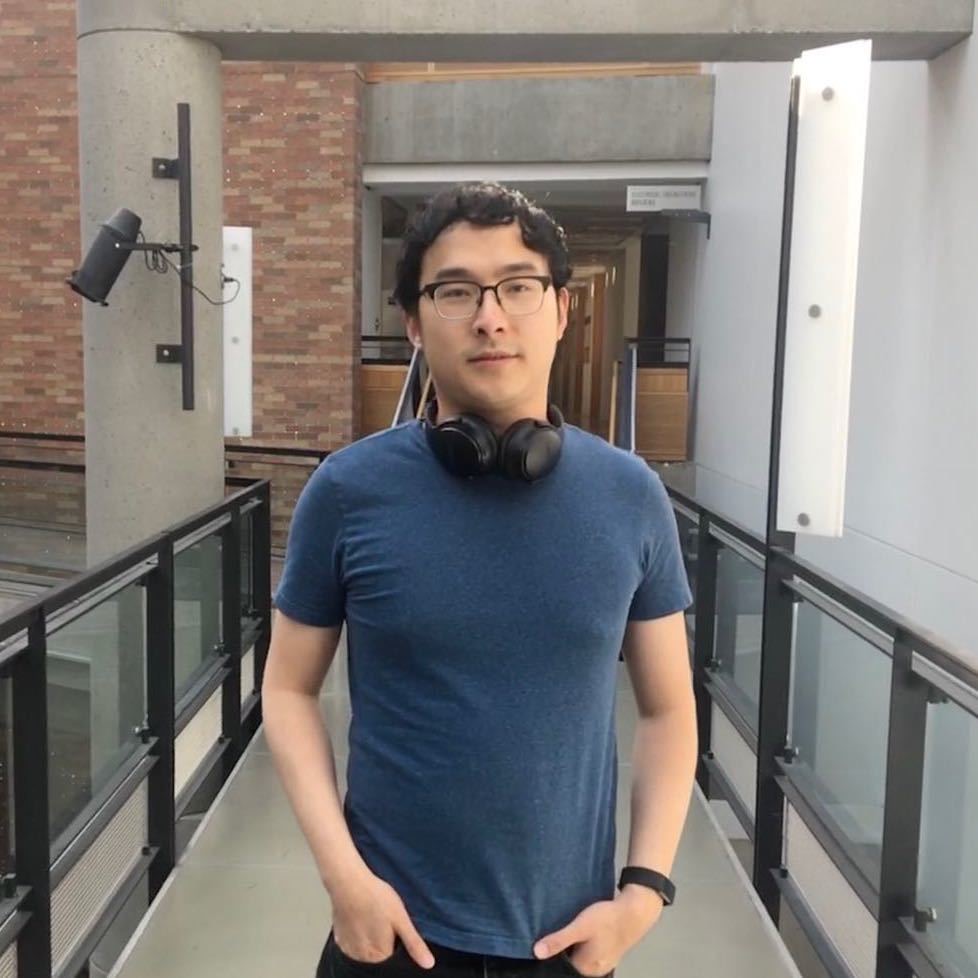
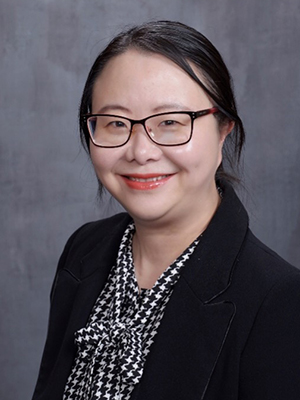
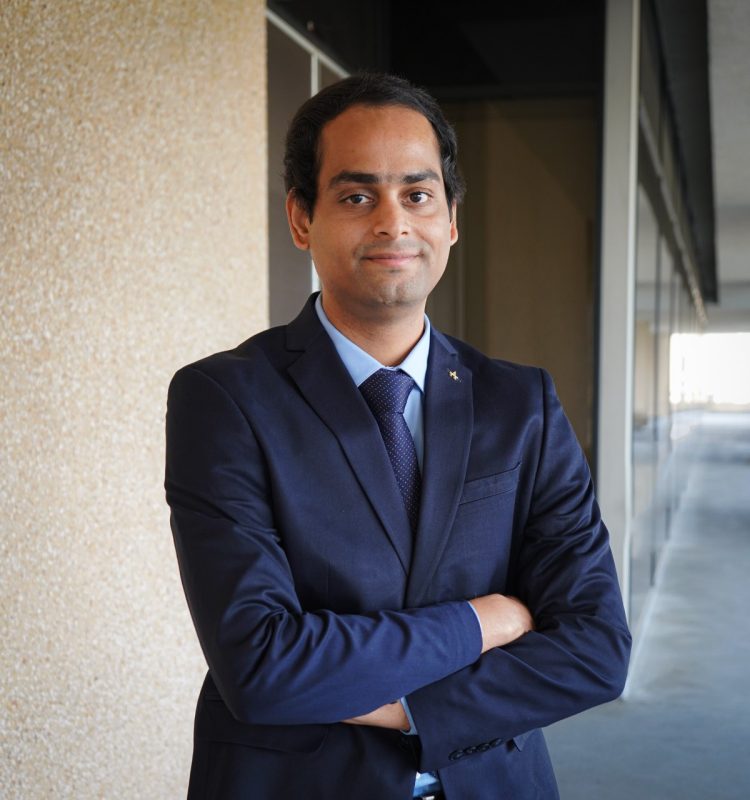
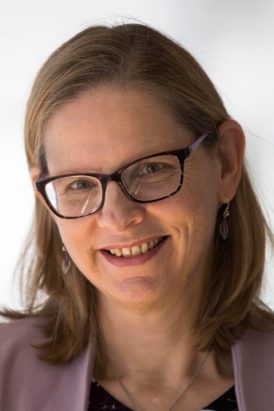
Nathan Youngblood is an Assistant Professor in the Department of Electrical and Computer Engineering at the University of Pittsburgh , with a secondary appointment in the Department of Physics and Astronomy . His research focuses on reconfigurable photonic materials and devices for energy-efficient artificial intelligence applications. Educational Background: PhD in Electrical Engineering from the University of Minnesota Postdoctoral research at the University of Oxford (2017–2019) His work explores photonic in-memory computing, neuromorphic systems, and phase-change materials to minimize computing latency and energy consumption. Recent publications highlight advancements in magneto-optical non-reciprocity, coherent crossbar arrays, and plasmonic-enhanced phase-change devices. Scientific Awards: NSF CAREER Award (2024) AFOSR Young Investigator Award (2024) William Kepler Whiteford Faculty Fellowship (2024) Dr. Youngblood's lab develops photonic accelerators like LightML and LightBulb for machine learning, emphasizing scalable integration and novel material applications in silicon photonics.
Wan Shou is an Assistant Professor in the Department of Mechanical Engineering at the University of Arkansas. His research focuses on multiscale manufacturing, advanced materials, and functional devices, with applications in wearables, robotics, and sustainable technologies. Ph.D., Mechanical Engineering, Missouri University of Science and Technology M.S., Mechanical Engineering, University of Louisiana at Lafayette B.E., Textile Engineering, Tianjin Polytechnic University, China Dr. Shou’s research spans laser-based manufacturing , nanomanufacturing , machine learning-assisted processes , and bioresorbable electronics . He explores 3D printing of polymer and metal composites, energy materials , and functional textiles for wearable sensors and environmental applications. Recent publications highlight his work in additive manufacturing , computational design of composites, and self-powered sensing systems . His team integrates machine learning with materials discovery to optimize performance. Editor’s pick of Science Magazine US Patent 11,752,700: Data-driven material formulation US Patent 11,993,850: Laser-assisted nanoparticle printing Dr. Shou’s patents and publications reflect a commitment to innovative manufacturing and environmentally conscious design . His work bridges materials science , robotics , and smart systems , advancing energy and water technologies.
Danyang Zhuo is an Assistant Professor of Computer Science at Duke University, Trinity College of Arts & Sciences, with expertise in datacenter/cloud computing and machine learning systems. He joined Duke in 2020 after postdoctoral research at UC Berkeley under Ion Stoica and a PhD at the University of Washington advised by Tom Anderson and Arvind Krishnamurthy. Education: PhD in Computer Science (University of Washington, 2019) His research focuses on improving cloud infrastructure through systems like Phoenix (application-level abstractions) and Phantora (GPU cluster simulation). Recent work explores LLM verification, tensor compression via video codecs, and fairness in LLM serving. His 15 most recent publications span operating systems, machine learning, and networked systems conferences like HOTOS, NSDI, SIGCOMM, and OSDI. Scientific honors include NSF CAREER Award (2023), USENIX Security Distinguished Paper (2023), and multiple industry research awards. He has secured major NSF grants for projects including "OS-Managed Remote Procedure Call" and "Campus-level RDMA Networking." At Duke, he advises PhD students and teaches courses such as Introduction to Operating Systems (CompSci 310) and Systems for Machine Learning (CompSci 590.05). His work appears in leading conferences and journals, with collaborations across institutions including UC Berkeley, University of Washington, and industry partners.
Zita Vale is a Full Professor at the Institute of Engineering (ISEP) of the Polytechnic of Porto (IPP), where she holds the first Full Professor position since 2017. She is a co-founder of GECAD (1999) and coordinates GECAD's Power and Energy (PES) activities. GECAD is recognized by FCT since 2004 and classified as Excellent. She has served as GECAD director (2010-2017), vice-director (1999-2009, 2017-present), and is a member of the administration board. She is also co-founder and member of the coordination board of the National Associated Laboratory on Intelligent Systems. Her educational background includes a PhD (1993) and Agregação/Habilitation (2003) in Electrical and Computer Engineering from the University of Porto. She began her academic career at the University of Porto as a Teaching Monitor (1985), Assistant (1985-1993), and Professor (1993-1998) before moving to ISEP in 1998. Zita Vale's research focuses on the design and development of artificial intelligence-based models for Power and Energy Systems. Her work spans knowledge-based systems, multiagent systems, machine learning, metaheuristics, and semantics, with applications in smart grids, energy management, electricity markets, and renewable energy integration. She has an extensive international network and has participated in 80 R&D projects, raising over 22 million Euros for GECAD. Her recent publications demonstrate a strong emphasis on optimization techniques, explainable AI, energy storage systems, and the integration of distributed energy resources in power systems. She serves as Editor-in-Chief of Applied Energy (Elsevier), a leading journal in the field with an Impact Factor of 11.2. Her citation metrics are impressive, with over 17,000 citations on Google Scholar and an H-index of 64. Editor-in-Chief of Applied Energy (Elsevier) Over 17,000 citations on Google Scholar H-index of 64 Zita Vale has supervised 29 PhD students (25 completed) and 72 MSc students (66 completed), demonstrating her strong commitment to academic mentorship. She has also been involved in numerous international and national evaluation processes, including project proposals, faculty positions, and PhD juries across 15+ countries. She has contributed to over 225 evaluation processes from 2018-2023, including 150+ project proposals/execution, 50+ Faculty/Researchers positions, 2 Habilitation juries, and 25+ PhD juries. She leads GECAD's involvement in several major research initiatives, including the National Associated Laboratory on Intelligent Systems and various European projects such as IoTalentum, TRADERES, DOMINOES, and EcoRural-IoT from Horizon 2020, as well as PRODUTECH EU DIH from Horizon Europe. Her leadership extends to international organizations where she serves as President of Intelligent Systems Applications in Power (ISAP) and Technical Committee Program Chair of IEEE PES Analytic Methods for Power Systems Committee.
Stephen W. Keckler is an Adjunct Professor at the Department of Computer Science , The University of Texas at Austin , and serves as Vice President of Architecture Research at NVIDIA . He is an ACM Fellow , IEEE Fellow , and Sloan Foundation Research Fellow . Education: BS in Electrical Engineering, Stanford University (1990) SM in Computer Science, Massachusetts Institute of Technology (1992) PhD in Computer Science, MIT (1998) Research Interests focus on computer architecture for deep learning , GPU computing , and energy-efficient systems . His work explores memory compression , network-on-chip designs , and heterogeneous computing . Publication Trends highlight advancements in deep learning accelerators , GPU memory systems , and energy-efficient architectures . Notable themes include sparsity exploitation , multi-chip modules , and fault-tolerant GPU pipelines . Scientific Recognition : ACM Fellow IEEE Fellow Sloan Foundation Research Fellow Best Paper Awards at ASPLOS 2009 and ISPASS 2011 Laboratory Affiliations : Computer Architecture and Technology Laboratory (CART) TRIPS Project (Tera-Op Reliable Intelligently adaptive Processing System) NVIDIA Research
Tariq Iqbal is an Assistant Professor at the University of Virginia , with joint appointments in the Department of Systems and Information Engineering and Department of Computer Science . He leads the Collaborative Robotics Lab (CRL) , specializing in human-robot teams and embodied AI . Previously, he was a Postdoctoral Associate at MIT's CSAIL , advised by Prof. Julie Shah , and earned his Ph.D. in Computer Science from University of California San Diego (UCSD) under Prof. Laurel Riek . Ph.D. in Computer Science, University of California San Diego (2017) M.S. in Computer Science, University of Texas at El Paso (2012) B.S. in Computer Science and Engineering, Bangladesh University of Engineering and Technology (2007) His research lies at the intersection of artificial intelligence and robotics , focusing on human-robot collaboration in dynamic environments. Key areas include motion prediction , multimodal fusion , trust modeling , and collaborative learning . His work integrates cognitive science and deep learning to enhance robotic fluency in naturalistic settings. Recent publications (2023–2025) highlight advancements in human-robot team dynamics , multimodal dataset creation , and motion prediction algorithms . Notable works include Energy-Based Transformers for scalable AI, PoseTron for motion prediction, and Accessible Navigation Mapping for assistive robotics. These contributions span trust modeling , cloud robotic infrastructure , and safety in close-proximity collaboration . National Science Foundation (NSF) CAREER Award Air Force Office of Scientific Research (AFOSR) Young Investigator Program (YIP) Award Commonwealth Center for Advanced Manufacturing (CCAM) Innovation Award As faculty, he has secured grants from NSF and AFOSR , mentored research students, and taught courses like Stochastic Modeling I (SYS 6005) and Robots and Humans (SYS 4582/6465, ECE 4502/6465, CS 6465) . His prior industry roles at IBM Watson Lab and Grameenphone Ltd. inform his applied research in telecom infrastructure and cognitive robotics . He leads the Collaborative Robotics Lab (CRL) at UVA, which develops multimodal datasets , real-time coordination algorithms , and adaptive pathfinding systems . Current projects explore human motion prediction , team synchrony , and embodied question-answering , reflecting his commitment to advancing human-robot fluency and contextual AI .
Ahmad Al-Dabbagh is an Assistant Professor in Manufacturing Engineering and holds a Principal's Research Chair in Control Systems (Tier 2) with the School of Engineering at The University of British Columbia. As a Senior Member of IEEE and ISA, he contributes significantly to the field of resilient automation and control systems through research, teaching, and professional service. His academic journey includes postdoctoral fellowships at Imperial College London, the University of Toronto, and the University of Alberta, where he also earned his PhD in Electrical and Computer Engineering. Dr. Al-Dabbagh's research focuses on designing resilient automation and control systems by addressing critical challenges in fault diagnosis, cyber security, and alarm management. His work spans theoretical foundations and practical applications in industrial control systems, with particular emphasis on detection and isolation of faults and cyber attacks, control reconfiguration, event-triggered control, remote state estimation, and alarm systems design. His research interests also extend to causality analysis, prediction methods, and root cause analysis for industrial processes. His extensive publication record demonstrates consistent contributions to control systems security and reliability, with recent work focusing on sophisticated methods for detecting false data injection attacks, analyzing alarm correlations using advanced machine learning techniques, and developing recommender systems for human operators in industrial environments. The trajectory of his research shows an evolution from foundational control theory toward increasingly complex applications in cyber-physical security and human-system interaction in industrial settings. NSERC Postdoctoral Fellowship NSERC Alexander Graham Bell Canada Graduate Scholarship (CGS – D3) Queen Elizabeth II Graduate Scholarship Governor General's Academic Medal (Gold) As a graduate student supervisor, Dr. Al-Dabbagh mentors the next generation of control systems engineers while maintaining an active research program. He serves as an Associate Editor on the IEEE Control Systems Society Conference Editorial Board and is a licensed Professional Engineer in British Columbia and Ontario. His teaching portfolio includes courses such as System Identification, Digital Enterprise, Systems and Control, and Internet of Things, reflecting the breadth of his expertise. Dr. Al-Dabbagh leads the Okanagan Laboratory for Control Systems Research, where his team develops innovative approaches to enhance the security and reliability of industrial automation systems. The laboratory serves as a hub for interdisciplinary research that bridges theoretical control engineering with practical industrial applications, particularly in the energy, manufacturing, and process industries.
Serkut Ayvasik is a Researcher at the Chair of Communication Networks at Technical University Munich (TUM). He joined TUM in March 2019 as a research and teaching associate, following his M.Sc. in Communications Engineering (2019) and B.Sc. in Electrical and Electronics Engineering (2016) from Middle East Technical University. His research focuses on: Wireless Network Resource Management for heterogeneous latency-critical 5G applications Channel State Information Prediction using depth images Network Slicing and Quality of Service optimization Machine Learning for proactive network configuration Telemedicine Applications in cross-border communication Key article trends include 5G/6G technology , IoT sustainability , digital twins , and haptic feedback systems . He contributes to IEEE and ACM journals, with recent work on Digiot (2025) and OCTOPUS (2024). Collaborations include researchers like Wolfgang Kellerer (Chair), Edwin Babaians , Alba Jano , and Fidan Mehmeti . His work spans projects such as 6G Future Lab Bavaria , DFG GGI QCDE , and ERC FlexNets .
Prof. Dr.-Ing. Werner Lang serves as Vice President for Sustainable Transformation and holds the Chair of Energy Efficient and Sustainable Design and Building (ENPB) at the Technical University of Munich (TUM), within the TUM School of Engineering and Design. Previously, he was Professor of Sustainable Building and Director of the Center for Sustainable Development at the University of Texas School of Architecture in Austin (2008-2010). Lang also directs the Oskar von Miller Forum and is a partner at Lang Hugger Rampp GmbH Architekten in Munich. Lang's research focuses on developing strategies for buildings with positive environmental footprints through regenerative energy systems, renewable materials, and closed material cycles. His work emphasizes comprehensive life cycle analysis considering ecological, economic, and social aspects. Current research areas include climate-resilient urban neighborhoods, circular economy in construction, and sustainable building materials. The ENPB institute conducts numerous research projects such as Building Climate-Municipal, CircularFTmehrRAUM, and Urban Green Infrastructure. Lang's publications reveal a strong trend toward life cycle assessment, multi-criteria decision-making, and computational approaches for sustainable building design. His recent work integrates machine learning with building performance analysis and focuses on practical implementation of circular economy principles in urban contexts, with increasing emphasis on quantifying environmental benefits of urban green infrastructure. TUM Sustainability Award 2022 Doce et Delecta (Second Prize for Best Teaching), 2019 Bayerischer Energiepreis 2014 International Building Skin Tech Award (2008) Promotionspreis der TUM (2000) Lang leads the Institute of Energy-Efficient and Sustainable Design and Building with numerous research grants including projects like Building.Lab+, NAWAREUM, and ECO+. His team includes researchers working on topics ranging from urban mining to life cycle assessment tools. The institute maintains several products and startups including MoMeBo, Bilanzlabor, and EnergyML that translate research into practical applications for the building industry.
Roy Dong is an Assistant Professor at the University of Illinois at Urbana-Champaign, affiliated with the Coordinated Science Laboratory. His research bridges Control Theory Economics Statistics Optimization to address challenges in cyber-physical systems and the Internet of Things, focusing on data manipulation, privacy, and strategic behavior in interconnected systems. His academic journey includes a Ph.D. in Electrical Engineering and Computer Sciences from UC Berkeley (2017) and dual B.S. degrees in Economics and Computer Engineering from Michigan State University (2010). At Illinois, he teaches courses ranging from Control Systems to Convex Optimization , with multiple teaching excellence awards. Roy's research explores Closed-loop effects of machine learning Causality in decision systems Incentive design for strategic agents Privacy-utility tradeoff optimization Human behavior modeling with applications in smart grids, transportation networks, and semi-autonomous vehicles. His work formulates privacy-preserving mechanisms as optimization problems, balancing data utility against user privacy in dynamic systems. Article trends show expertise in Game theory for strategic data sources Energy disaggregation techniques Nonlinear basis pursuit algorithms Privacy-aware control systems with a focus on cyber-physical systems and human-in-the-loop applications. Scientific recognition includes 'Teacher Ranked as Excellent' awards (ECE 120, ECE 486, ECE 515) Contributions to smartSDH building control and CPRL compressive sensing Roy leads the Privacy-aware Control Systems research group, collaborating with institutions like UC Berkeley and Michigan State University , and directs projects funded by grants including the New USDA NIFA grant for agricultural robot autonomy .
Michael Gasik is a Professor at the Department of Chemical and Metallurgical Engineering, School of Chemical Engineering, Aalto University. With over 30 years of experience in technology transfer, he has led initiatives across the EU, Japan, and the Middle East, including BC-Net (EC DG Enterprise). He serves as an expert for European bodies like EC/REA, COST, and ERC since 1993. His research spans biomaterials ceramic materials metals processing sustainable manufacturing additive manufacturing green energy systems and focuses on interdisciplinary applications in biomedical and environmental engineering. Recent research trends include advanced biomaterials for medical implants (e.g., PEO-coated magnesium alloys) multi-material 3D printing for industrial components green hydrogen production via HyS cycle optimization sustainable polymer composites photocatalytic nanomaterials blockchain-enabled recycling for electric vehicles Scientific accolades include 2023 EORS Ambassador for Finland 2015 National State Prize of Ukraine 2013 M.M. Dobrohotov Award 1997 JSPS Scholarship 1995 Best Doctorate Thesis Award 2007 Certificate of Appreciation for Functional Graded Materials He has secured funding through 10 EU projects, 2 IEA projects, and over 15 national projects, contributing to >300 publications and patents. His expertise extends to technology transfer leadership and peer review for journals and funding agencies in multiple countries.
Kaka Ma is an Associate Professor in the Department of Materials Science & Engineering at Texas A&M University, specializing in advanced materials processing for energy systems and extreme environments through powder-based synthesis, additive manufacturing, and sintering technologies. Educational Background: Ph.D. in Materials Science and Engineering, University of California, Davis (2010) B.S. in Materials Science and Engineering, University of Science and Technology of China (2006) His research focuses on powder-based synthesis of metals/ceramics, laser directed energy deposition, field-assisted sintering technology (FAST), thermionic/thermoelectric energy conversion materials, and ultrahigh-temperature/hypersonic environment applications, with strong emphasis on sustainability in materials engineering. Recent publications demonstrate expertise in creating functionally graded materials via controlled thermal gradients and powder morphology optimization. Analysis of 2021-2025 publications reveals dominant trends in spark plasma sintering parameter optimization, additive manufacturing of titanium alloys, high-entropy carbide development, and nanoparticle synthesis for energy applications, consistently linking processing parameters to microstructure-property relationships in extreme-condition materials. Scientific Awards: TMS Light Metals/Extraction & Processing Subject Award – Recycling (2020) Professional memberships include The Minerals, Metals and Materials Society (TMS) and America Makes. While specific advising details and grant information are not documented in the provided materials, his extensive collaborative publication record indicates active mentorship of graduate researchers and successful acquisition of research funding. No dedicated laboratory facilities or research team structures are specified in the source documentation.
Rohit Kannan is an Assistant Professor in the Grado Department of Industrial and Systems Engineering at Virginia Tech. He holds a Ph.D. and M.S. in Chemical Engineering from MIT and a B.Tech. from IIT Madras. His research focuses on integrating machine learning with global optimization and optimization under uncertainty, emphasizing energy systems applications. Previous roles include postdoc positions at Los Alamos National Laboratory and the Wisconsin Institute for Discovery. Education: Ph.D., Chemical Engineering, Massachusetts Institute of Technology, 2018 M.S., Chemical Engineering Practice, MIT, 2014 B.Tech., Chemical Engineering, IIT Madras, 2012 Research Interests: Global optimization, optimization under uncertainty, computational optimization, energy systems, and machine learning integration. Recent Highlights: Recipient of the Excellence in Teaching Spotlight Award (2024) Lead researcher in stochastic optimization and energy systems (e.g., hybrid polygeneration systems) Developed algorithms for chance-constrained nonlinear programs and distributionally robust optimization Service & Leadership: Elected Vice-Chair of Global Optimization, INFORMS Optimization Society (2025–2026) Reviewer for top journals like Operations Research and Mathematical Programming Advisor to ISE InclusiveVT and Graduate Admissions Committee Labs & Collaborations: Directs a research group advancing optimization and machine learning for energy and engineering systems. Active in interdisciplinary projects with LANL and UW-Madison.
Ralph Jimenez is an Adjunct Professor of Chemistry and Institute Fellow at JILA, University of Colorado Boulder. He holds a Ph.D. from the University of Chicago (1996) and completed postdoctoral work at the University of California, San Diego (1997-1998), followed by research at The Scripps Research Institute (1998-2003). His research focuses on quantum spectroscopy and photophysics of fluorescent proteins, leveraging quantum optics to enhance spectroscopic sensitivity and developing genetically encoded biomarkers with improved photophysical properties. Key achievements include fluorescence-lifetime-based methods to engineer brighter fluorescent proteins and machine-learning approaches to improve photostability. His awards include the Arthur S. Flemming Award (2017) and U.S. Department of Commerce Gold Medal (2017). His group's work integrates quantum engineering with biophysical studies, targeting real-world applications in molecular imaging and materials science. The Jimenez Group operates labs at JILA (B117, B119, B121) and collaborates on projects involving entangled photons, two-photon absorption, and ultrafast spectroscopy. Research themes include quantum-enhanced spectroscopy for complex systems and overcoming limitations in fluorescent protein imaging through physical chemistry strategies. His lab develops novel instrumentation, including microfluidic sorting systems and tabletop X-ray spectroscopy platforms, to advance biomarker engineering and environmental monitoring.
Nancy G. Love is the Borchardt and Glysson Collegiate Professor and JoAnn Silverstein Distinguished University Professor of Environmental Engineering at the University of Michigan, affiliated with the Department of Civil and Environmental Engineering and the African Studies Center. Her research focuses on water infrastructure, public health, and environmental systems, emphasizing interdisciplinary approaches to address challenges in both domestic and global contexts. Education: Ph.D. (1994) in Environmental Systems Engineering from Clemson University; MS (1986) and BS (1984) in Civil Engineering from the University of Illinois. Research interests include water quality, pathogen fate and transport, sustainable resource recovery (e.g., urine-derived fertilizers), and infrastructure resilience in shrinking cities. She leads the Love Research Group, which integrates chemical, biological, and computational methods to develop technologies for contaminant removal, resource recovery, and public health protection. Her work addresses pressing issues like drinking water equity in Detroit, Legionella outbreaks in Flint, and global sanitation in Ethiopia. She advocates for transdisciplinary collaboration and community-informed solutions to environmental challenges. Awards include prestigious professorships at the University of Michigan. She serves on editorial boards (e.g., ACS ES&T Engineering) and contributes to policy initiatives on water infrastructure and environmental justice. Labs/Teams: Love Research Group; Collaborations span academia, industry, and NGOs, including projects on urine diversion, sensor-mediated wastewater treatment, and civic engagement in infrastructure decisions.