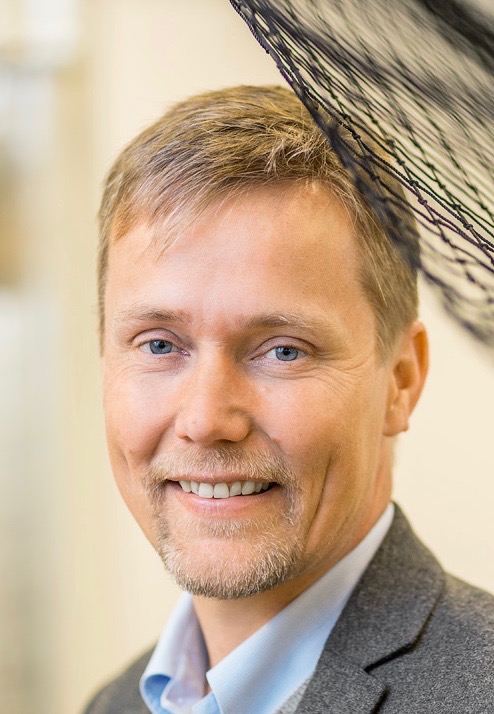
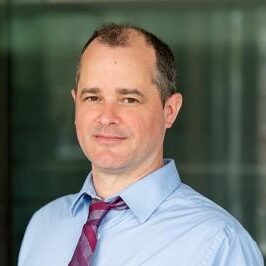
Prof. Tine De Moor is a leading scholar at Rotterdam School of Management, Erasmus University Rotterdam , holding the Chair of Social Enterprise and Institutions for Collective Action . With a PhD in History from Ghent University (2003), she specializes in long-term institutional analysis of collective action across historical and modern contexts. Department of Business-Society Management ERIM Research Member Former Utrecht University Professor (2012-2020) Research Focus: Her work examines institutions for collective action from medieval commons to modern cooperatives, with key contributions to understanding energy cooperatives, citizen collectives, and social enterprises. She leads innovative citizen science projects and investigates labor market participation patterns over the past millennium. Publication Trends: Recent articles focus on platform cooperatives in the gig economy , energy prosumerism motivations , and institutional grammar applications . She explores paradoxes in cooperative governance and develops computational models for historical institutional analysis. Awards & Grants: Recipient of prestigious honors including ERC Starting Grant NWO-VIDI Grant International Association for Study of the Commons Leadership Advising & Collaboration: She has co-authored with scholars like Daan van Weeren and David Bunders, with significant citations in environmental and social science domains. Her work informs policy on collective resource management and sustainable transitions. Labs & Teams: Founding editor of the International Journal of the Commons , she leads the CollectieveKracht knowledge platform and collaborates with Triodos Bank stakeholders. Her research integrates GIS, archival analysis, and agent-based modeling.
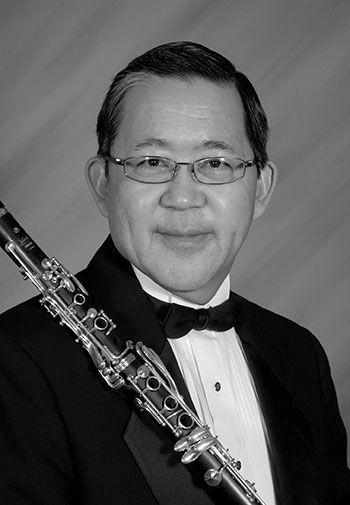
Miles M. Ishigaki serves as Professor of Music in the Department of Music within California State University, Fresno's College of Arts and Humanities. He has taught applied clarinet, chamber music, music theory, and music appreciation at Fresno State since 1987 while directing the university clarinet choir. From 1989-2017, he held the position of state chair for the National Association of College Wind and Percussion Instructors, demonstrating sustained institutional commitment. His academic credentials include: Doctor of Musical Arts in Performance, University of Oklahoma (1988) Doctoral study in Music Performance, University of Arizona (1981-1982) Master of Music in Performance, Colorado State University (1981) Dual Bachelor's degrees: Music Education and Music Performance, University of Northern Colorado (1978) Dr. Ishigaki's research centers on the dialectic between intuition and analytical understanding in musical performance, particularly regarding clarinet repertoire. His seminal work documents interpretive approaches of legendary clarinetists including Larry Combs, Stanley Hasty, and Leon Russianoff, focusing on Stravinsky's Three Pieces for Solo Clarinet. His collaborative research with Dr. Michael Rogers bridges music theory and performance practice, revealing how structural analysis informs expressive execution. This scholarly trajectory consistently examines the cognitive and technical dimensions of artistic mastery. His publications from 1988-2017 reveal evolving emphases from symposium documentation and performance analysis toward technology integration in music education, culminating in the 2017 Music Fundamentals ebook. Collectively, his work establishes clarinet pedagogy as both scientific discipline and artistic practice, with growing attention to digital learning environments while maintaining core focus on interpretive authenticity. His recognitions include: 2013 Provost's Teaching Award in Technology for innovative digital pedagogy 2006 Honorary Alumnus distinction from University of Northern Colorado Dr. Ishigaki has mentored exceptional students who have earned Fulbright Scholarships, McNair Doctoral grants, and participation in national honor ensembles. His studio consistently produces competition winners while he maintains active performance engagements with regional orchestras and international venues. Beyond academia, he serves as COO of I&M, Inc., applying sustainable technology principles to water and energy systems, demonstrating interdisciplinary impact beyond music. As founder of both the West Coast Clarinet Congress and Fresno State Faculty Clarinet Quartet, he cultivates professional communities while maintaining Yamaha Artist status. His community outreach through organizations like the Japanese American Citizen's League and Valley Children's Hospital reflects deep civic engagement alongside scholarly pursuits.
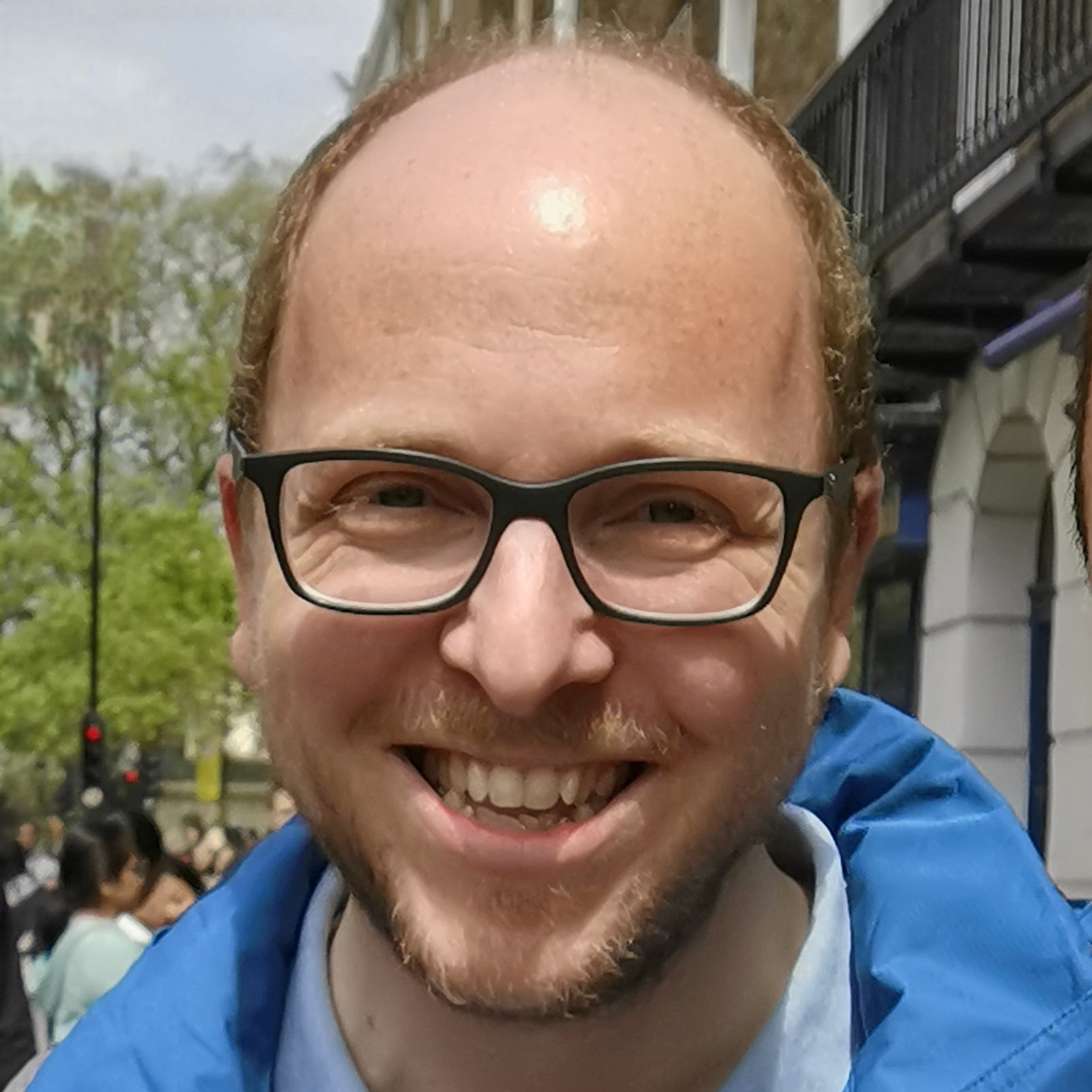
Dr. Nicola Mingotti is a Research Associate in the Department of Earth Sciences at the University of Cambridge, affiliated with the Institute for Energy & Environmental Flows (IEEF). His experimental research focuses on fluid mechanics in the context of energy transition, particularly carbon sequestration and underground hydrogen storage, while also addressing oceanic microplastics dispersion and atmospheric volcanic ash transport. Research Associate, University of Cambridge IEEF Flow Laboratory His work on multiphase flows spans volcanic eruptions, oceanic microplastics separation, and contaminant dispersion in hospital environments. Recent studies include Journal of Fluid Mechanics publications on bubble plumes (2023) and sediment-laden oceanic plumes (2022), alongside Communications Earth & Environment articles on CO2 storage (2024) and volcanic dynamics (2021). Scientific awards and honors: None explicitly mentioned in the text. As an engineering researcher, he led investigations on droplet transport in ventilation systems (Royal Papworth Hospital, 2021) and historical surgical environment design (2021). His publications demonstrate interdisciplinary expertise across environmental fluid mechanics, geological engineering, and public health.
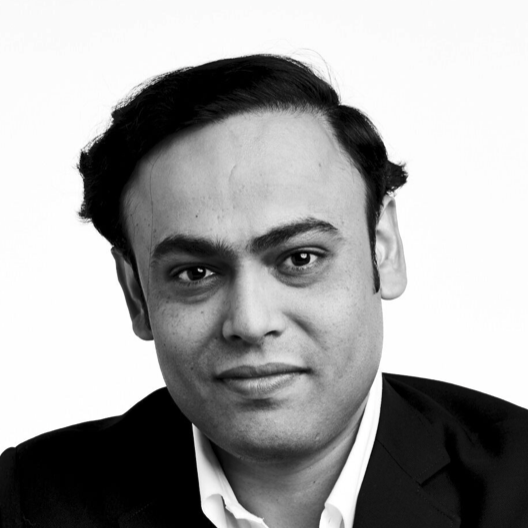
Saurabh Amin is a Professor in the Department of Civil and Environmental Engineering at the Massachusetts Institute of Technology (MIT), where he also serves as the Edmund K. Turner Professor and Undergraduate Officer. He is a Principal Investigator at the Laboratory of Information and Decision Systems and holds affiliations with the Operations Research Center and the Center for Computational Science and Engineering. His educational background includes: B.Tech. 2002, Indian Institute of Technology (IIT) Roorkee M.S. 2004, University of Texas (UT) Austin Ph.D. 2011, University of California (UC) Berkeley Saurabh Amin's research focuses on the design and control of infrastructure systems using game theory and optimization in networks. His work spans three main areas: resilient network control, information systems and incentive design, and optimal resource allocation in large-scale infrastructure systems. By concentrating on critical infrastructure domains including highway transportation, electric power distribution, and urban water networks, his research develops innovative theory and tools to enhance system performance against both stochastic and adversarial disruptions. His approach involves modeling cyber-physical interactions in infrastructures to assess vulnerabilities, developing detection and response tools for failures at various scales, and designing economic incentive schemes that improve aggregate public good while accounting for dependencies and private information among strategic entities. Amin's work bridges mathematical systems theory with practical civil engineering applications, creating a rigorous theoretical foundation for infrastructure resilience that addresses diverse failure mechanisms from natural disasters to deliberate malicious actions. His recent publications demonstrate a strong focus on decarbonization of energy systems, resilient infrastructure planning under climate uncertainty, optimization methods for complex networked systems, and game-theoretic approaches to sustainable infrastructure management. His work increasingly integrates artificial intelligence and machine learning techniques with traditional control theory to address contemporary challenges in infrastructure resilience and sustainability. The research shows a clear trajectory toward addressing climate change impacts on infrastructure systems while maintaining economic efficiency and operational reliability. Professor Amin has received numerous prestigious awards and honors: Common Ground Excellence in Teaching Award, 2025 HSCC Test-of-Time Award, 2024 MIT CEE, Distinguished Service and Leadership Award, 2023 Samuel M. Seegal Prize (SoE) – inspiring students in pursuing and achieving excellence, 2022 Earll M. Murman for Excellence in Undergraduate Advising, 2022 C3.ai Digital Transformation Institute Research Award, 2020 MIT, Ole Madsen Mentoring Award, 2020 MIT, Energy Initiative Research Award, 2020 National Academy of Engineering, China-America Frontiers of Engineering Symposium speaker, 2019 MIT, Robert N. Noyce Career Development Professor, 2015-2018 Google Faculty Research Award, 2015 National Science Foundation CAREER Award, 2015 Siebel Energy Institute Research Award, 2015 MIT, Solomon Buchsbaum AT&T Research Fund Award, 2012 Professor Amin has been actively involved in significant research projects including the C3.ai DTI project on Causal Reasoning for Real-Time Attack Identification in Cyber-Physical Systems and another on Learning in Routing Games for Sustainable Electromobility. He serves as the chief scientist on multi-institutional NSF grants, including the $9 million Foundations of Resilient Cyber-Physical Systems (CPS) project. His teaching portfolio includes courses such as 1.008 Engineering for a Sustainable World, 1.104 Sensing and Intelligent Systems, 1.020 Engineering Sustainability: Analysis and Design, and 1.208 Resilient Networks. As Undergraduate Officer, he plays a key role in shaping the educational experience for civil and environmental engineering students at MIT. Professor Amin leads the Resilient Infrastructure Networks Lab at MIT, where his team develops theoretical foundations and practical tools for infrastructure resilience. The lab focuses on the intersection of control theory, game theory, and optimization applied to cyber-physical infrastructure systems. Current research directions include pandemic-resilient urban mobility and hurricane-resilient smart grid operations, reflecting the lab's commitment to addressing pressing societal challenges through rigorous systems engineering approaches.
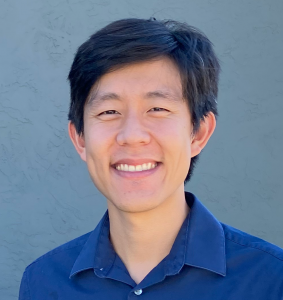
Justin Yim is an Assistant Professor at the Department of Mechanical Science and Engineering at the University of Illinois Urbana-Champaign (UIUC), where he runs the Novel Mobile Robots Lab (NMbL). His research focuses on enabling high-performance locomotion in robots through concurrent design of mechanisms and controllers, inspired by biological systems. He previously earned his PhD in Electrical Engineering from UC Berkeley (2020) and dual BS degrees in Mechanical Engineering and Applied Mechanics/Electrical Engineering from the University of Pennsylvania (2015), followed by a postdoctoral researcher role at Carnegie Mellon University (2020-2022). PhD, Electrical Engineering, University of California, Berkeley (2020) MSE, Robotics, University of Pennsylvania (2015) BSE, Mechanical Engineering and Applied Mechanics/Electrical Engineering, University of Pennsylvania (2015) His research explores legged robot design, bioinspired robotics, and locomotion dynamics, with a focus on overcoming terrain challenges through minimalist mechanical systems and control strategies. Recent work emphasizes squirrel-inspired jumping and landing mechanics, programmable substrates for locomotion studies, and energy-efficient robot mobility. Selected article trends highlight innovations in monopedal hopping with series-elastic actuators, bioinspired balance control, underactuated bipedal walkers, and cooperative cable-driven modular robots. His work bridges theoretical insights with practical applications in extreme-terrain mobility. NSF CAREER Award (2025): 'Extreme Robot Walking: Speed, Agility, and Efficiency via Reduced Degrees of Freedom' NASA Innovative Advanced Concepts Fellow (2025) Justin Yim actively mentors graduate students and leads research projects in the NMbL lab, which develops robots capable of walking, hopping, and rolling in complex environments. Recent lab achievements include a Best Demo award at the 2nd Unconventional Robots Workshop (2025) and awards for outstanding locomotion papers. He teaches courses such as ME 370 Mechanical Design I and SE 422 (ME 446, ECE 489) Robot Dynamics and Control.
Dr. Yi Huang is a Senior Lecturer in Climate Science at the School of Geography, Earth and Atmospheric Sciences , University of Melbourne . She holds a Ph.D. in Mathematical Sciences General from Monash University , where her work focused on cloud and precipitation systems over the Southern Ocean. Her research addresses fundamental questions in atmospheric processes, Earth's energy budget, and water cycle dynamics. She specializes in cloud-climate interactions, precipitation systems, geographical variability in atmospheric phenomena, and the application of field observations, remote-sensing data, and numerical modeling to improve weather and climate predictions. The recent Google Scholar articles suggest interdisciplinary work in solar cell materials and semiconductor physics, though this is not explicitly detailed in her official bio. The scientific awards section is currently empty due to no explicit mentions in the provided text. She has not been described as advising students or participating in specific lab teams in the scraped content.
Adrien Auclert is an Associate Professor in the Department of Economics at Stanford University. He holds prestigious research affiliations including Research Fellow at the Centre for Economic Policy Research (CEPR), Senior Fellow at the Stanford Institute for Economic Policy Research (SIEPR), Research Associate at the National Bureau of Economic Research (NBER), and member of the French Council of Economic Analysis. His research centers on inequality, macroeconomics, and international economics with a focus on heterogeneous-agent models (HANK). He develops computational tools like the Sequence-Space Jacobian to analyze fiscal/monetary policy, debt relief, and global imbalances. His work bridges theoretical macroeconomics with urgent policy questions, particularly examining how distributional heterogeneity shapes aggregate economic dynamics. Recent publications reveal a dominant trend in studying household-level heterogeneity's role in macroeconomic transmission mechanisms. Auclert demonstrates how fiscal stimulus, monetary policy, and trade shocks propagate asymmetrically through income/wealth distributions, with significant implications for inequality dynamics and policy design in open economies. His scientific honors include: Research Fellow, Centre for Economic Policy Research Senior Fellow, Stanford Institute for Economic Policy Research Research Associate, National Bureau of Economic Research Member, French Council of Economic Analysis Auclert actively engages in policy formulation through the French Council of Economic Analysis, co-authoring influential notes on fiscal consolidation and monetary policy. He is co-organizing the upcoming SITE workshop "Macroeconomics in the Sequence Space" at Stanford (September 8-10, 2025), advancing methodological frontiers in heterogeneous-agent modeling.
Karl Henrik Johansson is a Professor at the School of Electrical Engineering and Computer Science, KTH Royal Institute of Technology in Stockholm, Sweden, where he also serves as the Founding Director of Digital Futures. He is a Fellow of both IEEE and the Royal Swedish Academy of Engineering Sciences, and has held leadership positions including Immediate Past President of the European Control Association and IEEE Control Systems Society Vice President Diversity, Outreach & Development. Dr. Johansson earned his MSc in Electrical Engineering and PhD in Automatic Control from Lund University. His academic journey includes visiting positions at prestigious institutions such as UC Berkeley, Caltech, and NTU. His research focuses on networked control systems and cyber-physical systems with applications in transportation, energy, and automation networks. His work investigates fundamental challenges in connecting physical world systems through communication networks, exploring how wireless communication and sensor technology can enhance system robustness, reliability, energy efficiency, and safety. Current research directions include security of cyber-physical systems, distributed optimization, multi-agent systems, and applications to intelligent transportation and energy networks. Analysis of his recent publications reveals a strong focus on distributed optimization algorithms, secure networked control, multi-agent systems, and applications to transportation and energy networks. His work increasingly integrates machine learning techniques with traditional control theory, addressing challenges in privacy-preserving distributed computation, resilient state estimation, and resource allocation in complex networked systems. IEEE Control Systems Society Hendrik W. Bode Lecture Prize (2024) Swedish Research Council Distinguished Professor (2018-2027) Wallenberg Scholar (2009-2026) IFAC Young Author Prize IEEE CSS Distinguished Lecturer (2017-2019) IFAC Outstanding Service Award IEEE Fellow Dr. Johansson has supervised over 100 postdocs and PhD students, with many now holding prominent positions at institutions worldwide. His research has been supported by significant grants including the Swedish Research Council Distinguished Professor Grant (2018-2027), multiple Wallenberg Foundation grants, and numerous EU and national research projects. He has directed major research centers including ACCESS Linnaeus Centre (2009-2016) and Strategic Research Area ICT TNG (2013-2020). His research group operates within the Digital Futures initiative and maintains strong connections with industry partners through projects like the Integrated Transport Research Lab (supported by Scania and Ericsson) and Smart Mobility Lab. The group actively collaborates with international institutions and participates in major EU-funded projects addressing challenges in cyber-physical systems, transportation, and energy networks.
Christian Moormann serves as Director and Full Professor of the Institute of Geotechnics at the University of Stuttgart, where he has held his position since 2010. His leadership extends to national and international geotechnical organizations, including serving as Chairman of the German Geotechnical Society (DGGT) since 2022. His educational background includes a distinguished Diplom in Civil Engineering from Leibniz University Hannover (1989-1994), followed by doctoral studies at TU Darmstadt where he earned his Dr.-Ing. with distinction in 2002 for research on soil-groundwater interaction in deep excavations. He completed his habilitation at TU Darmstadt in 2009 on optimization of geotechnical composite structures. Professor Moormann's research spans the critical intersection of theoretical geomechanics and practical engineering applications. His work focuses on material behavior of semi-solid and variable-strength rocks, numerical methods in geotechnics, and reliability analyses for geotechnical composite structures. He has made significant contributions to deep foundation systems, pile-raft foundations, and the application of geosynthetics in construction. His recent work increasingly addresses sustainable applications including near-surface geothermal energy systems and innovative ground improvement techniques. With over 350 publications throughout his career, Moormann's scholarly output demonstrates consistent focus on practical geotechnical challenges. His publication themes reveal evolving emphasis from fundamental soil mechanics to complex system behavior, with growing attention to sustainability and reliability-based design approaches in geotechnical engineering. Professor Moormann holds numerous leadership positions that reflect his standing in the field: Chairman of the German Geotechnical Society (DGGT) since 2022 Head of the "Earth and Foundation Engineering" section of DGGT since 2018 German Delegate to Eurocode 7 Technical Committee (TC 250/SC 7) Chair of the DIN Standards Committee "Piles" (NABau 005-05-07) Member of the Professional Image Committee of ISSMGE His professional activities extend to significant consulting work through his own firm "Prof. Moormann Geotechnik Consult" established in 2010, and leadership of the PÜZ certification office. Moormann serves as an officially appointed expert for earthworks, foundation engineering, and rock engineering. His work on developing practical engineering standards through multiple DIN committees and Eurocode 7 implementation demonstrates his commitment to bridging academic research with practical engineering applications. The Institute of Geotechnics under Professor Moormann's leadership maintains strong connections with industry through its COMMAS program and extensive field testing capabilities. His team actively participates in developing practical engineering solutions for complex geotechnical challenges, particularly in deep foundation systems, excavation support, and sustainable geotechnical applications including geothermal energy systems.
Dr. Nicholas Townsend is an Associate Professor at the University of Southampton, specializing in experimental hydrodynamics, marine renewable energy, and maritime robotics. He actively collaborates with the Southampton Marine and Maritime Institute and supervises PhD students in cutting-edge maritime research.
Professor Gavan McNally is a distinguished behavioral neuroscientist at the University of New South Wales, where he serves as a Professor in the School of Psychology. He is actively engaged in research on the fundamental behavioral and brain mechanisms for learning and motivation, with applications to clinical conditions such as addictions, anxiety disorders, and mood disorders. McNally holds several prestigious editorial positions, including Editor-in-Chief of Neurobiology of Learning & Memory and Senior Editor of The Journal of Neuroscience. He also serves as President-Elect of the European Behavioral Pharmacology Society and is a Member of the Australian Research Council College of Experts. McNally's research interests span behavioral neuroscience, focusing on how fundamental brain mechanisms apply to clinical conditions. He employs a systems neuroscience approach, combining well-controlled behavioral approaches with optogenetics, chemogenetics, in vivo calcium imaging, and whole brain circuit mapping in both normal and transgenic animals. His work bridges basic science with clinical applications through collaborations with colleagues at University of Sydney, Sydney Local Health District, Monash University, and Turning Point. McNally's research particularly examines the cellular, circuit, and systems level mechanisms underlying learning, motivation, and their dysregulation in disorders like addiction. His laboratory investigates how these mechanisms translate to human conditions, with a strong emphasis on developing new treatments for psychological disorders. His extensive publication record demonstrates a clear trajectory in understanding punishment learning, addiction mechanisms, and the neural circuits underlying motivated behavior. Recent work has increasingly focused on the cognitive pathways to punishment insensitivity, the role of specific neural circuits in addiction, and translational approaches to understanding maladaptive behaviors. McNally's research bridges animal models with human studies, creating a comprehensive understanding of the neural mechanisms that govern learning and motivation, with particular attention to how these processes go awry in addiction and other psychological disorders. 2008 QEII Fellow, Australian Research Council 2009 Association for Psychological Science, International Rising Star 2010 Fellow, Association for Psychological Science 2010 UNSW Faculty of Science Staff Excellence Award for Research and Training 2011 Pavlovian Research Award, The Pavlovian Society 2012 Future Fellow (Level 3), Australian Research Council 2016 D.G. Marquis Behavioral Neuroscience Award, American Psychological Association 2017 Fellow, American Psychological Association 2019 Fellow of the Academy of Social Sciences in Australia 2021 D.G. Marquis Behavioral Neuroscience Award, American Psychological Association 2022 Ross Day Plenary Lecturer, Australasian Brain and Psychological Sciences 2023 European Behavioural Pharmacology Society Plenary Lecturer 2024 Elspeth McLachlan Plenary Lecturer, Australasian Neuroscience Society 2024 D.G. Marquis Behavioral Neuroscience Award, American Psychological Association Professor McNally actively supervises several students including Bixuan Lin, Si Yin Lui, Hannah Machet, Bart Cooley, Kelly Zhuang, and Alexandra Gregory. His current research is supported by significant funding including an Australian Research Council Discovery Project (2024-2026) on "Risky choices: From cells and circuits to computations and behaviour," another Discovery Project (2025-2028) on "Multimodal mapping of punishment learning," and NHMRC grants including a Synergy Grant on "Linking clinical and basic science discovery to find new treatments for alcohol-use disorder" and an Ideas Grant on "Novel pathways to abstinence from alcohol seeking." These projects reflect his commitment to both fundamental neuroscience and translational applications for treating psychological conditions. His teaching responsibilities include PSYC2081 Learning & Physiological Psychology and PSYC3051 Physiological Psychology. McNally's laboratory employs advanced techniques including optogenetics, chemogenetics, in vivo calcium imaging, and whole brain circuit mapping to investigate the neural mechanisms underlying learning, motivation, and their dysregulation in disorders. His team works at the intersection of basic neuroscience and clinical applications, with strong collaborations across multiple institutions to translate fundamental findings into potential treatments for addiction and other psychological disorders. The lab has made significant contributions to understanding the role of brain regions like the ventral pallidum, paraventricular thalamus, and nucleus accumbens in addiction, fear learning, and punishment sensitivity.
Tracy Xiao Liu is a Professor at the Department of Economics, School of Economics and Management, Tsinghua University. Her research focuses on behavioral market design and the intersection of economics and computer science (Econ-CS), utilizing experimental methods to explore decision-making mechanisms, incentive structures, and behavioral spillovers. Her publications span journals such as Management Science , Games and Economic Behavior , and Journal of Economic Behavior & Organization . Key themes include behavioral economics, game theory, public goods, and experimental studies on market design, incentive contracts, and social preferences. Recent work examines AI-driven economic rationality (GPT models), energy policy impacts, and virtual red packet dynamics in online groups. Tracy collaborates with scholars across institutions, including her husband Baoping Liu (Peking University, harmonic analysis). Her experimental research bridges microeconomic theory with real-world applications in education, pensions, and crowdsourcing platforms.
Nenad Miljkovic is the Founder Professor in the Department of Mechanical Science and Engineering at the University of Illinois Urbana-Champaign (UIUC), with concurrent appointments in Electrical and Computer Engineering and the Materials Research Laboratory. He directs the Air Conditioning and Refrigeration Center (ACRC) and is affiliated with the International Institute for Carbon Neutral Energy Research (Kyushu University). His research spans thermo-fluid sciences, interfacial phenomena, and renewable energy, focusing on enhancing efficiency in power generation, electronics cooling, and thermal management via micro/nanostructured surfaces. Miljkovic holds a BASc in Mechanical Engineering from the University of Waterloo (2009) and an M.S. (2011) and Ph.D. (2013) from MIT. Prior to UIUC, he was a Postdoctoral Associate at MIT and an Adjunct Assistant Professor at UIUC. His research integrates fundamental studies of phase change and electrokinetics with applied device development, including solar thermal conversion and atmospheric energy harvesting. Recent work explores frost dynamics, battery thermal management, and scalable anti-corrosion coatings. Miljkovic's publications emphasize heat transfer enhancement, droplet dynamics, and sustainable energy systems. His articles frequently address thermal management challenges in electronics and renewable energy applications, leveraging nanostructured surfaces and phase change materials. Honors include: ASME Fellow (2022) Founder Professorship, Grainger College of Engineering (2023) ASME Bergles-Rohsenow Young Investigator Award (2021) ONR Young Investigator Award (2017) NSF CAREER Award (2016) He leads the Energy Transport Research Laboratory, advising graduate students and collaborating with industry on thermal systems. Grants support work on electronics cooling, battery safety, and renewable energy integration.
Andreas Jentys is a Professor at the Department of Technical Chemistry within the TUM School of Natural Sciences at Technische Universität München (TUM). His research focuses on understanding surface reactions and transport phenomena in mesostructured, micro- and mesoporous oxides with acid/base or redox properties, as well as supported metal catalysts for gas and condensed phase reactions. He prepares materials with tailored functionality and studies their sorptive and catalytic properties using in situ electron and vibrational spectroscopy combined with microkinetic experiments. Education: PhD (Dr. techn.) in Chemistry from TU Wien (1991) Postdoctoral: Royal Institution of Great Britain (1992-1993) with Prof. Richard Catlow Academic Career: TU Wien (1998: Associate Professor), TUM (1999: Senior Scientist; 2011: Professor) Teaching: Active in TUM Asia since 2006 Research interests span catalysis, surface chemistry, material science, and chemical reaction engineering. He specializes in zeolites, bimetallic catalysts, and in situ spectroscopic methods. Recent work examines: Hydrogen evolution and carbon-carbon coupling on Cu Methane activation via Co²⁺ sites in ZSM-5 Photocatalytic systems using metal-organic frameworks Solvent effects in palladium-catalyzed hydrogenation CO₂ hydrogenation over bifunctional catalysts Publications trend toward heterogeneous catalysis, with emphasis on: Design of mesoporous and microporous materials Characterization of metal clusters and oxo species Microkinetic modeling of catalytic systems Environmental applications (NOx/CO₂ reduction) Hydrogen and hydrocarbon processing Teaching includes courses on: Reaction Engineering and Kinetics Industrial Chemical Processes I & II Fundamentals of Catalysis TC Praktikum (internship)
Dustin Tingley is a Professor of Government at Harvard University and holds a joint appointment at the Harvard Kennedy School of Public Policy . He serves as Interim Vice Provost for Advances in Learning and directs the Data Science and Technology Group and the Harvard Initiative on Learning and Teaching . He earned a PhD in Politics from Princeton and a BA in political science and math from the University of Rochester. Key Roles : Deputy Vice Provost (past), Chair of Harvard's Standing Committee on Climate Education Research Focus : Climate change politics, data science, causal inference, and international political economy His recent work explores the political economy of climate transitions , public opinion on carbon policies , and machine learning applications in social sciences . He co-founded ABLConnect , a repository for active learning pedagogy, and organized conferences on causal mechanisms , teaching with AI , and equitable classrooms . Awards : Gladys M. Kammerer Award (2015) for co-authored book Sailing the Water’s Edge Notable Publications : Uncertain Futures: How to Unlock the Climate Impasse (2023, with Alex Gazmararian) The Political Economy of the Clean Energy Transition (2025)