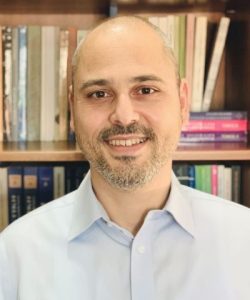
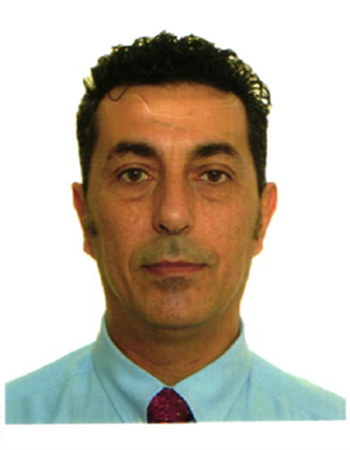
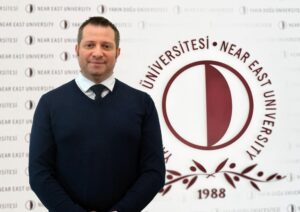
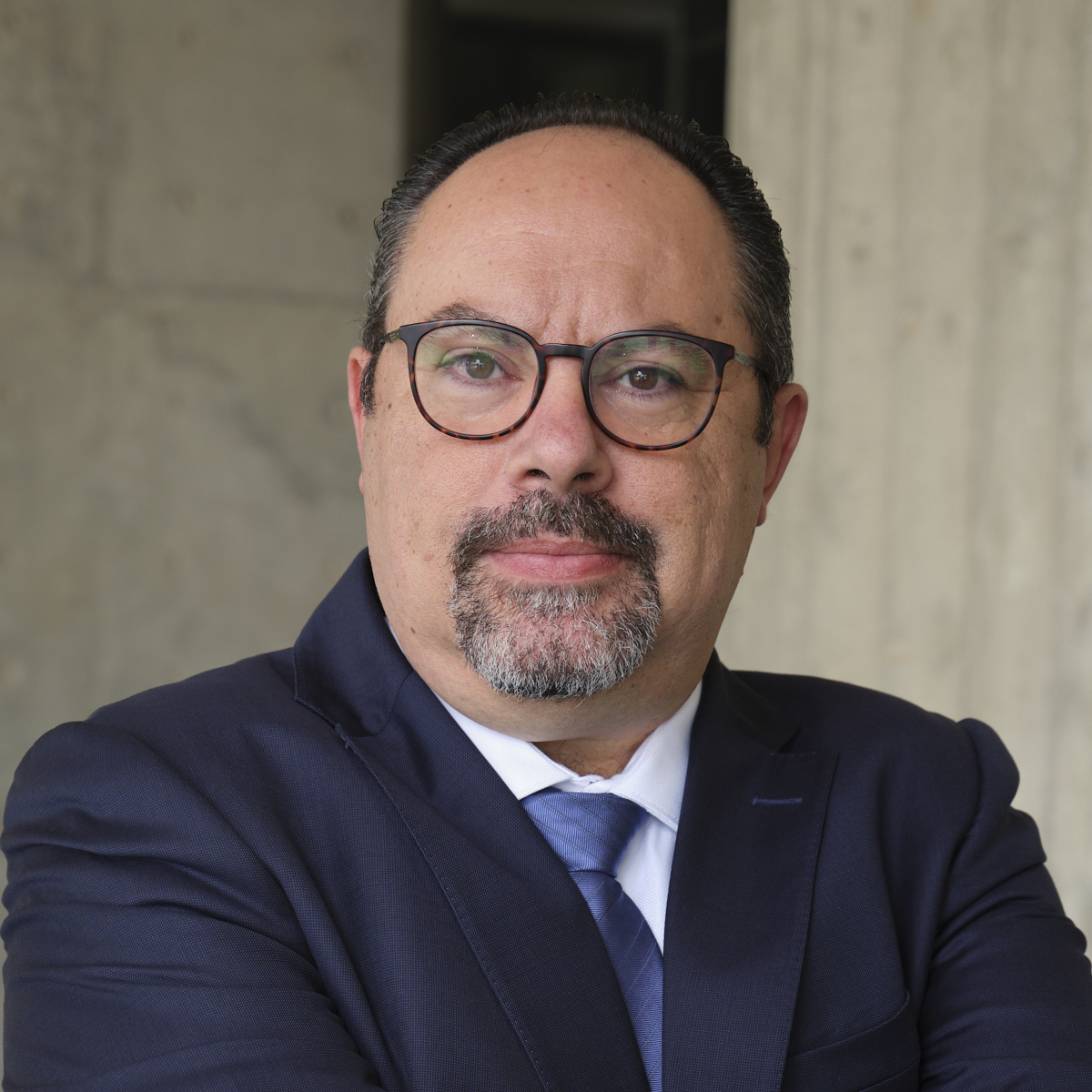
Stelios Timotheou is an Associate Professor at the Department of Electrical and Computer Engineering and faculty member at the KIOS Research and Innovation Center of Excellence, University of Cyprus. He holds a Dipl-Ing from National Technical University of Athens, and MSc/PhD from Imperial College London. His research focuses on developing real-time distributed methodologies using mathematical optimization, machine learning, and computational intelligence to enhance efficiency in critical infrastructure systems. Research interests center on data-driven decision making for urban mobility management, traffic control systems, and energy optimization. Key areas include: Intelligent UAV-based sensing for traffic monitoring Cooperative control algorithms for multi-agent systems Optimization of renewable energy integration Robust infrastructure protection strategies Recent publications demonstrate strong focus on traffic state estimation (76%), energy system optimization (16%), and UAV applications (8%). Awarded the Cyprus Research Award (2017) and ERC Consolidator Grant for URANUS project. Secured multiple research grants focusing on real-time control systems.
Zenonas Tziarras is a Lecturer in the Department of Turkish and Middle Eastern Studies at the University of Cyprus. His academic work focuses on Turkish foreign policy, contemporary Turkish politics, and the international politics and security dynamics of the Middle East and Eastern Mediterranean region. He holds a PhD in Politics and International Studies from the University of Warwick, UK, with a specialization in Turkish Foreign Policy under the Justice and Development Party (AKP). Dr. Tziarras earned his BA in Mediterranean Studies from the University of the Aegean, Greece, and his MA in International Relations and Strategic Studies from the University of Birmingham, UK. He has also attended specialization seminars in International Security at the University of Delhi, India, and in Leadership and Conflict Resolution at Koç University, Turkey, along with obtaining a certificate in Conflict Resolution and Mediation Skills from the Northern Ireland Open College Network. His research interests span Turkish foreign policy, contemporary Turkish politics, international politics and security of the Middle East and Eastern Mediterranean, political Islam, and more recently, political theology, apocalypticism, and the relationship between religion, ideology and politics. Dr. Tziarras employs Neoclassical Realist theoretical frameworks in his analysis of foreign policy behavior, with particular attention to ideational factors. His scholarly output demonstrates a clear evolution from analyzing Turkish foreign policy in the Middle East toward examining broader regional dynamics in the Eastern Mediterranean, with increasing focus on Cyprus's foreign policy and strategic position. The publications reveal a methodological consistency in applying international relations theory to concrete regional cases, particularly examining how systemic pressures interact with domestic factors to shape foreign policy outcomes. Dr. Tziarras is the co-founder of the platform Geopolitical Cyprus and serves as a member of the editorial board of the New Middle Eastern Studies Journal. He has previously worked as a Post-Doctoral Fellow in the Department of Social and Political Sciences of the University of Cyprus and as an Associate Lecturer in Security & Diplomacy Studies between 2015 and 2017.
Theodoros Zachariadis is a Professor and Interim Director of the Energy, Environment and Water Research Center (EEWRC) and the Science and Technology Driven Policy and Innovation Research Centre (STeDI-RC) at The Cyprus Institute. He previously served as Dean of the Faculty of Geotechnical Sciences and Environmental Management at the Cyprus University of Technology (2015–2020), and as Assistant/Associate Professor there (2009–2020). His expertise spans energy and environmental policy, climate change mitigation, and environmental taxation. He holds a Doctorate in Mechanical Engineering from Aristotle University of Thessaloniki. **Research Interests:** Techno-economic analysis of energy, environmental, and transport policies; environmental taxation; climate policy integration with Sustainable Development Goals (SDGs); decarbonization strategies; and green tax reforms. His work emphasizes cost-effective climate policies and equitable transitions. **Awards:** 2009 Research Prize of Cyprus (Republic of Cyprus) and 2019 Environmental Prize (President of Cyprus). He has been ranked in the top 2% of globally cited academics in Energy (2020s). **Affiliations:** Vice Chair of the Scientific Committee of the European Environment Agency, Manager of SDSN Europe, Leadership Council member of SDSN Cyprus, and former Visiting Professor at Aarhus University. He advises on EU climate policies and sustainable development. **Grants & Projects:** Extensive research on Cyprus’ energy policies, EU climate frameworks, and decarbonization pathways. Key outputs include analyses of the EU’s 'Fit for 55' package, green recovery strategies post-pandemic, and cross-border energy cooperation in the Eastern Mediterranean. **Labs/Teams:** Leads research teams at EEWRC and STeDI-RC focusing on policy design, climate adaptation, and techno-economic modeling. Collaborates with international networks like Green Budget Europe and the Journal *Energy Economics* (associate editor).
Professor Mohammed Salamah is a distinguished faculty member in the Computer Engineering Department at Eastern Mediterranean University's Faculty of Engineering. He maintains an office in room 114 and can be contacted at +90 392 630 1149/1334 or via email at muhammed.salamah@emu.edu.tr. His academic website provides additional resources for students and colleagues. Dr. Salamah earned his BS, MS, and PhD degrees in Electrical and Electronics Engineering from Middle East Technical University in 1988, 1990, and 1996 respectively, establishing a strong foundation for his career in network communications and wireless systems. His research interests span multiple critical areas in modern networking, with particular expertise in Wireless Sensor Networks, Internet of Things (IoT) security, Mobile Communications, and Energy Efficiency in network protocols. Professor Salamah has made significant contributions to the understanding of network security mechanisms, trust management systems, and optimization of wireless communication protocols. An analysis of his recent scholarly output reveals a strong focus on security challenges in IoT communication systems, controller placement optimization in software-defined wireless sensor networks, and trust-based malicious node detection schemes. His work demonstrates consistent attention to practical network performance issues while addressing emerging challenges in next-generation communication technologies. Throughout his academic career, Professor Salamah has demonstrated exceptional commitment to student mentorship, supervising numerous graduate students through their research journey. His administrative contributions include service as an associate editor, reviewer, and session chair for academic conferences. His laboratory work focuses on practical implementations of wireless communication protocols, with emphasis on energy efficiency, security mechanisms, and performance optimization for various network architectures including cellular networks, cognitive radio systems, and wireless sensor networks.
Prof. Dr. Hasan Gungor is a Professor of Economics at the Faculty of Business & Economics, Eastern Mediterranean University. He holds a PhD in Banking from Marmara University, an MBA in Business Administration from Eastern Mediterranean University, and a BA in Business Administration from the same institution. His research focuses on environmental economics, financial development, energy policy, and macroeconomic dynamics with a particular emphasis on emerging markets and policy uncertainty effects. His academic contributions include over 30 supervised theses, advising PhD and Master's students on topics such as renewable energy impacts, economic policy uncertainty, and sustainable development. He has published extensively in peer-reviewed journals, addressing global challenges like carbon neutrality, cryptocurrency volatility, and climate policy efficacy. His work often integrates advanced econometric techniques such as nonlinear ARDL models and wavelet coherence analysis. Education: 1994–1999: PhD in Banking, Marmara University 1992–1994: MBA in Business Administration, Eastern Mediterranean University 1986–1992: BA in Business Administration, Eastern Mediterranean University Research interests span environmental sustainability, financial market dynamics, and the interplay between globalization and economic growth. His recent articles highlight the role of policy uncertainty in shaping energy markets, cryptocurrency returns, and carbon emissions in G7 and BRICS economies. He actively contributes to policy discussions on sustainable development and financial stability in emerging markets.
Angelos Georghiou is an Associate Professor of Operations Management at the Department of Business and Public Administration, University of Cyprus. He previously held academic positions as Assistant Professor at McGill University (2016–2019), Post-Doctoral Researcher at MIT (2012–2013), and Postdoctoral Researcher at ETH Zurich (2013–2016). His work bridges computational methods in stochastic and robust optimization with applications in healthcare, energy systems, and operations management. Ph.D. in Operations Research, Imperial College London (2012) M.Sci. in Mathematics, Imperial College London (2008) His research focuses on stochastic optimization , robust optimization , and decision rules , addressing challenges in healthcare analytics , energy-efficient control systems , and machine learning integration . Recent publications in Management Science and Operations Research highlight his contributions to decision-dependent information discovery and computational frameworks. Key trends in his 15 most recent articles include: Advancing robust optimization techniques for multistage problems Applications in healthcare (psychiatric risk prediction) and energy systems Integration of machine learning with stochastic programming Development of tractable algorithms for complex decision environments Scientific Awards : Esdras-Minville Best Student Paper Award (2023) He serves on editorial boards of Operations Research Letters (Area Editor) and Management Science , and collaborates with institutions like MIT, ETH Zurich, and McGill University. His work with undergraduate students includes a 2021 paper in SIAM Undergraduate Research Online .
Andreas Athenodorou is an associate research scientist at the Computation-based Science & Technology Research Center (CaSToRC) of The Cyprus Institute. He holds a PhD in Theoretical Particle Physics from the University of Oxford (2004–2008) and has held postdoctoral positions at DESY Zeuthen, Swansea University, and the University of Cyprus. Prior to his current role, he was a Marie Sklodowska Curie Individual Fellow at the University of Pisa (2019–2021). He currently leads a work package in the NI4OS-Europe project. His research focuses on theoretical and computational aspects of particle physics, including lattice gauge theories, large-Nc limits, hadron structure, and beyond Standard Model physics. He specializes in applying high performance computing (HPC), data science, and machine learning to solve complex problems in quantum field theory. Notable areas include confinement dynamics via effective string theory, glueball spectroscopy, and topological susceptibility studies in QCD. His computational work spans lattice QCD simulations, development of reproducible open science workflows, and application of machine learning to phase transition analysis. He has contributed to understanding mass hierarchies in strongly-coupled systems and the neutron electric dipole moment using advanced simulation techniques. Key contributions include advancing effective string theory descriptions of flux tubes, analyzing Z_N gauge theories, and exploring β-function behaviors in SU(2) adjoint fermion systems. His work bridges fundamental theory with computational innovation, addressing both particle physics questions and methodological challenges in large-scale simulations.
Prof. Dr. Fadi AL-TURJMAN serves as the founding Dean of the Faculty of AI and Informatics at Near East University (NEU), Cyprus. He holds multiple leadership roles including Head of the Software Engineering Department and Director of the AI and Robotics Institute and the International Research Center for AI and IoT. With a PhD in Computer Science from Queen’s University (2011), he specializes in AIoT systems, wireless networks, and blockchain integration. Affiliation: Near East University Leadership: Founding Dean for AI and Informatics, Director of AI & Robotics Institute Research Focus: His work bridges Artificial Intelligence of Things (AIoT) , Blockchain Applications , and Smart Networking . He explores cybersecurity frameworks for smart cities, quantum state optimization techniques, and novel AI-driven solutions for healthcare, agriculture, and energy systems. Key Article Trends: Recent publications emphasize Transformer models for environmental monitoring, blockchain-enabled security protocols , and evolutionary algorithms for resource optimization. His research spans interdisciplinary domains including medical diagnostics, vehicular networks, and sustainable infrastructure. Scientific Awards: Lifetime Golden Award of Dr. Suat Gunsel (2022) Multiple Best Research Awards at International Venues Labs & Teams: Directs the International Research Center for AI and IoT at NEU, leading multidisciplinary teams in developing advanced networking technologies and AI-driven solutions for global value chain applications.
Klitos Christodoulou is an Assistant Professor in the Department of Digital Innovation at the University of Nicosia (UNIC), affiliated with the School of Business. He holds a PhD in Computer Science from the University of Manchester (2014), along with a BSc and MSc in Computer Science from the same institution. His research focuses on Distributed Ledger Technologies, Blockchain, Machine Learning, and Data Integration. He is a research faculty member at UNIC's Institute For the Future (IFF) since 2018 and actively contributes to ISO/TC 307 standards for Blockchain. Christodoulou has led projects like the Ripple grant and participated in EU initiatives such as EUNOMIA and DLT4ALL. He teaches blockchain courses in UNIC's MSc in Digital Currency program and serves on editorial boards, including Frontiers in Blockchain. His work explores blockchain governance, consensus algorithms, and ethical applications in supply chains. Education: BSc in Computer Science, University of Manchester (2006–2009) MSc in Advanced Computer Science, University of Manchester (2009–2010) PhD in Computer Science, University of Manchester (2010–2014) Research Interests: Blockchain and DLT architectures Machine Learning applications in finance and security Decentralized governance models Blockchain adoption frameworks Awards/Grants: Principal Investigator of the Ripple grant; EU-funded projects (EUNOMIA, DLT4ALL); contributor to Cyprus National Blockchain Strategy. Labs/Teams: Institute For the Future (IFF), University of Nicosia
Savvas G. Loizou is a faculty member at the Cyprus University of Technology , affiliated with the Department of Mechanical and Materials Science and Engineering . He established the Robotics, Control, and Decision Systems Laboratory (RCDS Laboratory) in 2011. Education: PhD in Mechanical Engineering (2005) and Eng. Diploma (2000) from National Technical University of Athens (NTUA). Postdoctoral Experience: GRASP Laboratory, University of Pennsylvania (2005–2007). His research focuses on control theory for autonomous robotic systems , with applications in underwater, aerial, ground, and micro-robotics . Key areas include multi-agent coordination , human-robot interaction , task planning , and sensor-based navigation . Recent work emphasizes logistics automation , UAV hardware platforms , and bounded control algorithms . Dr. Loizou has contributed to multi-agent formation control , underwater vision systems , and nonlinear model predictive control for electric vehicles. He is active in control system design and navigation transformations for complex environments. His laboratory, RCDS , serves as a hub for research in autonomous systems and decision-making algorithms.
Costas S. Patrickios is a Professor in the Department of Chemistry at the University of Cyprus, within the School of Natural and Applied Sciences. His academic career spans over two decades, beginning as an Assistant Professor in 1998 and progressing to his current position as Professor. His research is centered on advanced polymer systems with applications spanning materials science, nanotechnology, and biomaterials. Dr. Patrickios received his Diploma in Chemical Engineering from the National Technical University of Athens (NTUA) in 1988, followed by a Master of Science in Chemical Engineering Practice from MIT in 1990. He completed his PhD at MIT in 1993 and conducted postdoctoral research at the University of Sussex from 1994-1996. His academic journey continued with a lectureship at UMIST before joining the University of Cyprus in 1998. His research focuses on dynamic covalent chemistry , amphiphilic copolymer networks , and microphase separation in polymer systems. Patrickios has made significant contributions to the understanding of polymer synthesis , controlled polymerizations , and degradable polymer networks . His work often bridges experimental and computational approaches, particularly in coarse-grained molecular dynamics simulations of polymer behavior. Recent research has expanded into applications related to RNA and DNA yield , demonstrating the versatility of his polymer systems. Analysis of his publication record reveals a strong focus on amphiphilic polymer conetworks, with consistent exploration of their synthesis, characterization, and applications. His work shows increasing integration of computational methods with experimental approaches, particularly in understanding structure-property relationships. The research spans fundamental polymer science to applied areas including energy materials, biomaterials, and smart responsive systems. Dr. Patrickios has also contributed significantly to the field through book editing, including the comprehensive volumes Amphiphilic Polymer Co-networks: Synthesis, Properties, Modelling and Applications (2020) and Polymer Networks: Synthesis, Properties, Theory and Applications (2010), which have become important references in the field. His collaborative research approach is evident through numerous international partnerships, with co-authors from institutions across Europe and beyond. This collaborative network has enabled multidisciplinary research that bridges chemistry, materials science, and engineering perspectives.
George Pallis is a Professor in the Department of Informatics at the University of Cyprus, affiliated with the School of Science. He holds a BSc and PhD from Aristotle University of Thessaloniki. His research focuses on Distributed and Network Computing, Big Data Analytics, and Cloud/Edge/Fog Computing. He leads the Master's Program in Data Science and has secured over €5.5M in research funding from the EU, Cyprus, and industry partners like Google. Education: BSc (2001), PhD (2006) from Aristotle University of Thessaloniki. Research Interests include Internet technologies, large-scale network environments, and cloud computing. He has published over 100 articles in top-tier journals and conferences (e.g., IEEE TKDE, ACM TOIT, WWW, ICDCS) and contributed to international standards (DIN, CEN). His work spans topics like fake news detection, edge computing frameworks, and energy-efficient micro-data centers. Key Achievements: Editor-in-Chief Emeritus of IEEE Internet Computing, recipient of multiple best paper awards, and contributor to projects like RAINBOW (H2020), UNICORN, and ICARUS. His research explores cutting-edge areas such as LLM manipulation, polarization detection, and carbon-aware computing. He has supervised five PhD students and served as General Chair for IEEE/ACM SEC 2024 and IEEE IC2E 2024. His work bridges academia and industry through collaborations on AI, IoT, and sustainable computing.
Panos K. Chrysanthis is a Professor of Computer Science at the University of Pittsburgh and an adjunct Professor at Carnegie-Mellon University and the University of Cyprus. He holds a BS in Physics with a Computer Science concentration from the University of Athens, Greece, and MS and PhD degrees in Computer and Information Sciences from the University of Massachusetts Amherst. He has been affiliated with the University of Pittsburgh since 1991, serving as Director of the Advanced Data Management Technologies (ADMT) Lab. His research focuses on database systems, mobile and pervasive data management, distributed computing, and real-time systems, with recent emphasis on data streams and energy-efficient data management for IoT and sensor networks. Chrysanthis has authored over 100 peer-reviewed publications, including a book on transaction processing and consistency in distributed databases. He has received the NSF CAREER Award (1995) and the University of Pittsburgh's Provost Award for Excellence in Mentoring (2015). He has held editorial roles at the VLDB Journal, IEEE TKDE, and DAPD, and has organized major conferences like ICDE and MDM. His work bridges theoretical database research with practical applications in urban informatics, healthcare, and sustainability. Chrysanthis has advised numerous students, contributed to grants focused on big data and healthcare analytics, and co-developed tools like the ADMT Lab's experimental platforms for urban mobility and congestion. He is a Senior Member of IEEE and an ACM Distinguished Scientist.
Vasos Vassiliou is an Associate Professor in the Department of Computer Science at the University of Cyprus and Founding Academic Member & Research Group Leader at the Smart Networked Systems (SNS) Multidisciplinary Research Group within the CYENS Research Center. His work focuses on systems and protocols for improving network performance, reliability, and security in next-generation communication systems (5G/6G), with a strong emphasis on distributed AI/ML techniques, device-to-device (D2D) networking, IoT security, programmable metasurfaces, and intelligent network resource management. Department of Computer Science, University of Cyprus CYENS Research Center, Cyprus His research spans multiple subfields including D2D communication (interference management, device discovery), IoT security (blockchain solutions, intrusion detection), network optimization (traffic prediction, power management), and programmable metasurfaces for advanced beam steering. Recent projects like ERMIS (3D Indoor Positioning), ADROIT-6G (DAI-driven architecture), and METACITIES (digital twins/metaverse) demonstrate his leadership in cutting-edge research. His publications reveal a strong focus on distributed intelligence , machine learning applications , and security protocols across wireless systems. He has supervised multiple PhD students to completion and actively contributes to IEEE/ACM as Senior Member. IEEE Senior Member ACM Senior Member Teaching responsibilities include core courses like Computer Networks and specialized postgraduate modules on IoT Networks .
Professor Maria Evagorou is affiliated with the University of Nicosia , where she holds a faculty position in the School of Education , Department of Education . Her work focuses on science education, particularly on enhancing argumentation skills in socioscientific issues (SSI) and fostering cultural literacy. Research Interests : Science education, argumentation, SSI, system thinking, elementary science teaching, and digital literacy. Projects : Principal Investigator in EU-funded initiatives like Up-STEAM , NBS4Schools , and SciLMi , addressing climate change education and misinformation combat. Recent Publications : Systematic reviews on STEM reforms, STEAM curricula for girls, and SSI integration in classrooms. Key themes include dialogue, critical thinking, and pedagogical innovation. Email : evagorou.m@unic.ac.cy