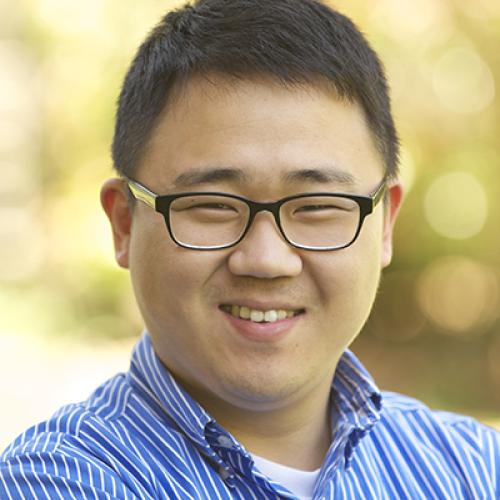
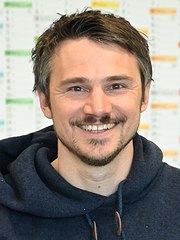
Dr. Heesung Woo is an Assistant Professor of Advanced Forestry at the College of Forestry, Oregon State University , specializing in robotics, sensor integration, and precision forestry. His work focuses on autonomous forestry machinery, AI-driven forest management, and sustainable practices. He advises two graduate students and collaborates internationally through research projects. Research Interests: Autonomous Forest Machinery Development Sensor Integration & ICT Solutions Precision Forestry via Remote Sensing/LiDAR/GIS Machine Learning for Forest Inventory Advanced Forestry Practices for Sustainability Publications emphasize innovative applications of technology in forestry, including LIDAR integration, harvester data analytics, and carbon offset project modeling. His work bridges engineering, environmental science, and policy. Dr. Woo leads the Advanced Forestry Lab at Oregon State, focusing on real-world deployment of cutting-edge technologies to address challenges in forest operations, sustainability, and resource optimization.
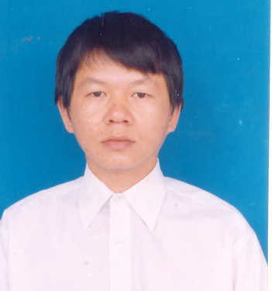
Professor Khac Duc Do is a faculty member at Curtin University, holding a position in the School of Civil and Mechanical Engineering within the Faculty of Science and Engineering. He serves in the Office of the Provost and is based at Curtin Perth campus. His research focuses on advanced control systems, nonlinear dynamics, and robotics applications in marine, aerospace, and mechanical systems. He earned a PhD with distinction in 2003 and has held prestigious fellowships including ARC Postdoctoral Fellow (2004) and ARC Australian Research Fellow (2009). His teaching includes courses like Advanced Control and Mechatronics, Navigation and Marine Control Systems, and Advanced Control Engineering. Key research interests encompass control of nonlinear systems, stochastic systems, formation control of mobile agents, fluid-structure interaction, and boundary control of PDE-governed systems. His funded projects include wave-energy converter development (2023-2026), inerter-based damper research (2019-2021), and ocean vehicle control systems. Scientific awards include ARC grants totaling over AUD 2 million. Current opportunities include scholarships in control systems/fluid-structure interaction and a postdoc position in wave-energy conversion.
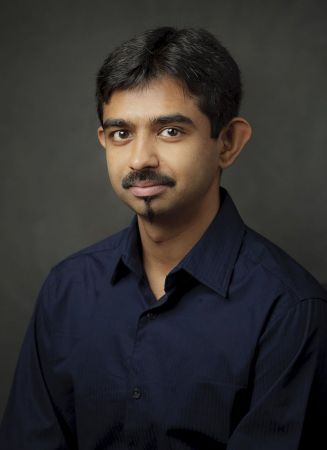
Parv Venkitasubramaniam is a Professor in the Department of Electrical & Computer Engineering at Lehigh University, affiliated with the P.C. Rossin College of Engineering. Previously, he served as a postdoctoral researcher at UC Berkeley under Prof. Venkat Anantharam. His research focuses on theoretical foundations of privacy and security in networks, leveraging statistical signal processing, information theory, and game theory. Key application areas include smart grids, transportation systems, and peer production networks. Education includes a Ph.D. and M.S. in Electrical Engineering from Cornell University, and a B.Tech from the Indian Institute of Technology. His doctoral work concentrated on wireless sensor networks, particularly distributed communication and statistical inference. Research interests span privacy-utility tradeoffs, cybersecurity in control systems, and resilient network design. He explores topics like stealthy attacks on dynamical systems, privacy-aware stochastic games, and resilient energy storage systems. Recent work emphasizes transportation system resilience and cyber-physical system security. His publications address cutting-edge challenges in anonymizing networks, detecting cyber attacks, and optimizing privacy-preserving mechanisms. Notable projects include NSF-funded research on anonymous networking and information-theoretic security frameworks.
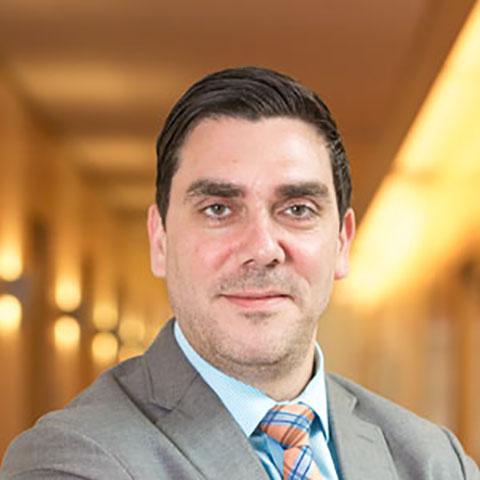
Gabriel A. Silva is a Professor in the Shu Chien-Gene Lay Department of Bioengineering at UC San Diego’s Jacobs School of Engineering, with a joint appointment as Assistant Professor in Ophthalmology. His research bridges neuroscience, theoretical physics, and applied mathematics to explore how the brain encodes and processes information, leveraging quantum logic and algorithms for advanced neural modeling. University: University of California, San Diego School: Jacobs School of Engineering Department: Shu Chien-Gene Lay Department of Bioengineering Academic Rank: Professor Joint Appointment: Assistant Professor in Ophthalmology Research Interests: Silva focuses on neural computation at cellular and network scales, aiming to abstract biological mechanisms into mathematical models that emulate brain-like processing. His work has implications for understanding neurological disorders, developing neural engineering nanotechnologies, and advancing AI systems through emergent complexity. Recent Article Trends: His publications span quantum-enhanced neural modeling, EEG-based disease detection, nonlinear dynamics in brain networks, and interdisciplinary applications of graph theory. Emerging themes include the integration of category theory for network analysis and AI optimization via emergence-promoting schemes. Labs & Teams: Affiliated with UC San Diego’s Institute of Engineering in Medicine, Silva leads research at the intersection of bioengineering, ophthalmology, and neural systems, fostering collaborations with neuroscience and quantum computing domains.
Prof. Dr.-Ing. Hans-Georg Herzog is a Professor of Energy Conversion Technology at the Technical University of Munich (TUM), School of Engineering and Design. He has headed the Energy Conversion Technology group at TUM since 2002 and is a Senior Member of IEEE and member of VDE and VDI professional organizations. His research focuses on energy-efficient electromechanical drives and related technologies critical for modern electric and hybrid vehicles. Prof. Herzog's research interests encompass energy-efficient electromechanical drives, with key expertise in design and optimization of hybrid-electric and battery-electric powertrains, automated design methods for electromechanical actuators, energy and power management systems, and analysis of loss mechanisms in soft magnetic materials. His work bridges fundamental electromagnetic theory with practical automotive applications, particularly in fault-tolerant systems and reliability engineering for electric propulsion. His recent publication trends show a strong focus on vehicular power systems, with particular emphasis on electronic fuses, fault diagnosis in multiphase machines, wireless power transfer, and reliability analysis of electric aircraft propulsion systems. The research spans from fundamental electromagnetic modeling to practical automotive applications, with increasing attention to autonomous driving power requirements and next-generation vehicle electrical architectures. Prize for Good Teaching of the Free State of Bavaria (2010) Prof. Herzog leads a substantial research team including doctoral candidates and postdoctoral researchers who contribute to his extensive publication record. His research group collaborates with automotive industry partners on various grants focused on electric vehicle technology, power system reliability, and advanced electromagnetic systems. The team regularly develops novel methodologies for machine design, fault tolerance analysis, and power system optimization. The research is conducted within TUM's Energy Technology Workshop with specialized facilities for electrical machine testing, power electronics development, and automotive power system simulation. The team maintains strong connections with industry partners in the automotive and aerospace sectors, facilitating technology transfer from academic research to practical applications.
Patrick Phelan is a Professor and Associate Dean of Graduate Programs at the Ira A. Fulton Schools of Engineering, Arizona State University (ASU). He holds additional roles as a Senior Global Futures Scientist and Editor-in-Chief of Frontiers in Energy Efficiency . His research focuses on sustainable energy systems, thermal management, and energy efficiency, with notable contributions to solar energy, thermal transport processes, and industrial cooling technologies. Phelan has extensive administrative experience, including managing the U.S. Department of Energy’s Emerging Technologies Program and the National Science Foundation’s Thermal Transport Processes Program. Education: Postdoctoral Fellow, Tokyo Institute of Technology (1990–1992) Ph.D., Mechanical Engineering, University of California, Berkeley (1990) M.S., Mechanical Engineering, Massachusetts Institute of Technology (1987) B.S., Mechanical Engineering, Tulane University (1985) Research Interests: Thermal engineering and heat transfer Sustainable energy systems and cooling Energy efficiency in buildings and industry Thermogalvanic systems and advanced materials Decarbonization and community benefit strategies Professional Associations: Fellow, American Society of Mechanical Engineers (ASME) Member, American Society of Heating, Refrigerating and Air-Conditioning Engineers (ASHRAE) Current Activities: Leading the ASU Energy Efficiency Center Contributing to the Energy for Rural Arizona initiative Advancing agricultural cold chain efficiency Teaching courses on heat transfer and energy systems (e.g., MAE 589, MAE 576)
Guangyu Cao is a Professor at the Department of Energy and Process Engineering, Norwegian University of Science and Technology (NTNU). He holds leadership roles in multiple international organizations, including the European standards working group CEN TC156 WG18, REHVA's technical committee, and the editorial board of the Journal of Building Engineering (Impact Factor 5.318). His research focuses on indoor airflow dynamics, ventilation systems in healthcare settings, and airborne disease transmission mitigation, with a strong emphasis on surgical environments and school buildings. Education: PhD in Energy Engineering (2009), Helsinki University of Technology Senior Researcher at VTT Technical Research Center (2009-2014) Research Interests: Hospital ventilation optimization, thermal comfort in clinical settings, airborne infection control, and sustainable building environmental quality. He combines experimental studies with mathematical modeling to evaluate ventilation strategies, particularly in operating rooms and isolation wards. Projects: EU Marie Curie DTN HumanIC (2024–2027) EU H2020 iclimabuilt (2021–2025) NFR POSIred (2020-2024) Labs/Teams: Collaborates with St. Olav's Hospital on indoor environment projects and leads teams in Cold Climate HVAC and Healthy Building Europe initiatives.
Professor Ingrid Bouwer Utne is a faculty member at the Department of Marine Engineering, Norwegian University of Science and Technology (NTNU). Her primary research focuses on risk analyses of ships, marine systems, and autonomy, with emphasis on operational safety, maintenance management, and risk control in autonomous maritime technologies. Key Projects: Leader of the Risk Group at NTNU, involved in the SFI Autoship initiative and ERC AdG BREACH project addressing risk-based rationality in autonomous systems. Research Interests: Autonomous systems design, probabilistic risk assessment, safety engineering, and risk-informed decision-making for marine operations. Grants & Funding: Secured funding from the Research Council of Norway, MAROFF, and industry partners for projects like ORCAS (Online Risk Management for Autonomous Ships) and UNLOCK (Supervisory Risk Control). She supervises numerous PhD students and postdocs, focusing on topics such as autonomous vessel navigation, risk modeling for underwater robotics, and decarbonization of maritime systems. Her work bridges theoretical risk analysis with practical applications in marine autonomy and safety systems.
Bruce MacDowell Maggs is a Professor in the Department of Computer Science at Duke University and serves as Vice President of Research at Akamai Technologies. His career bridges academic research and industrial innovation in computer science, particularly in distributed systems and networking. Research Interests: His work spans computer networks , distributed systems , parallel algorithms , content delivery , and fault-tolerant computing . He has made significant contributions to network routing, load balancing, scalability of web applications, and energy efficiency in large-scale systems. His research often combines theoretical rigor with practical system design. The recent publications highlight a consistent focus on scalability , network performance , and security in internet-scale applications. Key themes include query caching , traffic modeling , resilient routing , and energy optimization , reflecting his deep involvement in the infrastructure of modern web services. No scientific awards are mentioned in the provided text. Advising and Teaching: He has advised numerous Ph.D. students, many of whom are now faculty or researchers at top institutions. His former students include Ramesh Sitaraman, Anja Feldmann, and Andrea Richa. He currently advises Anat Talmy at Duke. He has taught a wide range of courses at Duke, Carnegie Mellon, and MIT, including Computer Networks, Operating Systems, Algorithms, and Discrete Mathematics. Labs and Teams: While not explicitly named, his research is closely tied to systems and networking groups at Duke and his industrial work at Akamai, a leader in content delivery networks. His collaborations with Tom Leighton and others at Akamai suggest leadership in research teams developing foundational internet technologies.
Tim Baarslag is a Senior Researcher and group leader of the Intelligent and Autonomous Systems group at CWI (The Dutch research institute for Mathematics and Computer Science). He holds the title of Professor of Mathematics of Cooperative AI at Eindhoven University of Technology and serves as a Visiting Associate Professor at Nagoya University of Technology, Visiting Fellow at the University of Southampton, and Visiting Scholar at MIT. His research focuses on automated negotiation systems for collaborative decision-making in smart energy trading, IoT, autonomous vehicles, and digital privacy. Education : MSc (cum laude) and BSc (cum laude) from Utrecht University; PhD (cum laude) from Delft University of Technology Tim pioneered the COMBINE project (NWO Vidi grant) for coordinating multi-deal negotiations and developed the widely-used Genius negotiation environment. His work appears in prestigious venues like Science Magazine , Artificial Intelligence , and MIT Technology Review . He also leads the International Automated Negotiating Agent Competition and contributes to policy through memberships in The Young Academy and Netherlands Academy of Engineering . Recent research trends emphasize multi-deal negotiation protocols (2024), preference uncertainty modeling in privacy negotiations (2022), and scalable algorithms for handling outcome spaces as large as 10²⁵⁰ possibilities. His 2023 work on search algorithms for large negotiation domains has applications in energy trading and supply chain management. Scientific Awards : Cor Baayen Young Researcher Award (2017), Springer Theses Award (2016), multiple Best Paper Awards (AAMAS 2022, WI-IAT 2015, IJCAI 2014), and recognitions as Science Talent (2018), Academic Pioneer (2020), and Young Talent (2019) As a grant recipient , Tim leads NWO Vidi project COMBINE and previously held a Veni grant for preference uncertainty research. He mentors through organizing competitions, serving on conference PCs (AAAI, IJCAI), and reviewing in top journals like Artificial Intelligence . His work bridges theory and practice through the Genius framework and real-world implementations in smart grid and vehicular platooning.
Dr. Abdallah Chehade is an Associate Professor in the Department of Industrial and Manufacturing Systems Engineering at the University of Michigan-Dearborn , where he leads the Informatics, Reliability, and Data Analytics (IRDA) lab . He holds a Ph.D. in Industrial Engineering from the University of Wisconsin-Madison (2017), with minors in Computer Sciences and Statistics, alongside an M.S. in Mechanical Engineering and a B.E. in Mechanical Engineering from the American University of Beirut. Research Interests span safe and robust deep learning solutions , explainable AI , data fusion for degradation modeling , and Bayesian statistical modeling . His work integrates AI/ML with prognostics and Internet of Things (IoT) to address challenges in reliability analytics and industrial data science . Publications highlight advancements in deep autoencoders , LSTM networks , and hybrid models for warranty forecasting , with applications in battery cells , sheet metal stamping , and rail transportation . His grants from Ford, Honda, and the U.S. Army focus on smart manufacturing , AI for sensor modeling , and digital twins . Lab Members include Ph.D. students working on topics like physics-based AI , computer vision , and deep learning for prognosis . He serves on the INFORMS Quality, Statistics, and Reliability (QSR) Council and maintains affiliations with IEEE , INFORMS , and IISE .
Dr. Nicholas Brake is an Associate Professor at Lamar University's Department of Civil and Environmental Engineering, focusing on reclaimed materials, wireless power transfer applications in concrete, and fatigue fracture modeling for pavements. His research spans recycled concrete aggregate, coal ash utilization, and electromagnetic cementitious composites. Education: Ph.D., M.S., B.S. in Civil Engineering from Michigan State University Awards: Anita Riddle Fellowship (2018), Lamar Merit Award (2018), Presidential Faculty Fellowship (2015), and multiple scholarships during his studies. His research emphasizes three key areas: 1) Material reclamation using recycled concrete aggregate, coal combustion residuals, and EAF slag. 2) Electromagnetic transport properties for wireless vehicle charging applications. 3) Fatigue damage modeling in concrete pavements. Through 3D printing integration and design-build-test pedagogy, he enhances student learning outcomes. Recent publications focus on international engineering education (2020), magnetic concrete composites (2019), and advanced testing methodologies for civil infrastructure (2018). His teaching innovation includes developing nine Lamar University courses with active learning strategies that improved student design confidence (p Scientific Awards: Anita Riddle Excellence in Teaching Fellowship (2018) Presidential Faculty Fellowship for Teaching Innovation (2015) Outstanding Teaching Assistant Award at Michigan State (2011) Dr. Brake mentors undergraduate and graduate researchers, including doctoral candidates Mahdi Feizbahr and Hossein Hariri Asli (2023-2024). His lab (LUMS) houses advanced testing systems like Instron 5965/8803, MTS Insight 100SL, and thermal analyzers for material characterization.
Prof. Dr. Martin Burger is a leading scientist at DESY and a Full Professor in the Department of Mathematics at Universität Hamburg, where he leads the Computational Imaging Group. His research bridges applied mathematics, imaging sciences, and machine learning, with a focus on inverse problems, mathematical modeling, and partial differential equations. He has held professorial positions at Universität Münster and FAU Erlangen-Nürnberg prior to his current dual appointment. Full Professor, Universität Hamburg (2023–present) Leading Scientist, DESY, Hamburg (2023–present) Full Professor, FAU Erlangen-Nürnberg (2018–2023) Full Professor, Universität Münster (2006–2018) His research interests include inverse problems, variational regularization, optimal transport, kinetic models, and mathematical modeling in biology and social sciences. He has made significant contributions to imaging reconstruction, sparse neural networks, and the analysis of transformer architectures. His work often integrates theoretical analysis with computational methods, influencing both pure and applied mathematics. The most recent articles reflect a strong trend toward interdisciplinary applications, combining deep learning with PDE-based modeling, analyzing social and biological systems via kinetic and mean-field models, and advancing mathematical imaging through graph-based and optimal transport methods. His publications span high-impact venues in applied mathematics and computational science. Calderon Prize, Inverse Problems International Association (IPIA) ERC Consolidator Grant (2014) Invited speaker at ECM (2021), ICM (2022), and ICIAM (2023) Editor-in-Chief, European Journal of Applied Mathematics (since 2017) Prof. Burger has supervised numerous PhD students and postdoctoral researchers, many of whom appear as co-authors in his publications. His research is supported by major grants, including funding from the German Federal Ministry of Education and Research (BMBF). He is actively involved in collaborative projects across mathematics, physics, and engineering disciplines. He leads the Computational Imaging Group at DESY, fostering a collaborative environment for developing novel mathematical tools in imaging science. The group works on both theoretical foundations and practical implementations, contributing to advancements in tomography, machine learning, and data analysis.
Pavan Turaga is a Professor and Founding Director of The GAME School at Arizona State University (ASU), with a joint appointment in the School of Electrical, Computer and Energy Engineering (ECEE). They lead transdisciplinary research and education initiatives spanning gaming, esports, AI-enabled media creation, computer vision, and geometric modeling. Ph.D., Electrical Engineering, University of Maryland (2009) B.Tech., Electronics and Communication Engineering, IIT Guwahati (2004) Research focuses on integrating geometry and topology with machine learning , enabling advancements in: Computer vision for human activity recognition Generative AI for immersive media Health analytics and wearable rehabilitation systems AI ethics and pandemic prediction Key publications span CVPR (2023 spotlight paper PolyINR ), DLGC workshop (2023 best paper), and ICML (2019 work on GAN priors). Recent work explores LMMs , 3D human modeling , and AI for pandemic preparedness . Scientific accolades include: ASU Founders' Day Research Excellence (2025) NSF CAREER award (2015) CVPR 2023 Spotlight paper 2024 X-Prize (Rainforest Challenge) Directed research for students like Rajhans Singh and Ankita Shukla, securing grants from NSF , DARPA , and industry partners (Adobe, Google ATAP). Founded the Geometric Media Lab , emphasizing interdisciplinary collaborations with mathematicians, health scientists, and media artists.
Prof. Dr. Janick Edinger is a Professor of Distributed Operating Systems at the Department of Informatics, Faculty of Mathematics, Informatics and Natural Sciences, University of Hamburg, Germany. He leads a research group focused on distributed, context-aware, and adaptive computing systems, with a strong emphasis on edge computing, computation offloading, and assistive technologies. Education: PhD in Computer Science, University of Mannheim Studies at National Taiwan University Studies at University of Alberta, Canada Research stays at University of British Columbia, Hong Kong Polytechnic University, and Georgia State University, USA His research explores how edge computing and computation offloading can enable efficient, privacy-preserving processing of sensor and video data close to their sources, particularly in dynamic environments. He investigates the integration of autonomous and heterogeneous systems—such as drone fleets and mobile devices—into scalable middleware platforms for real-time monitoring and decision-making in logistics and industrial operations. His work also emphasizes societal impact, contributing to accessible routing, adaptive interfaces, and crowd-sourced mapping. The recent publications reflect a strong trend in edge computing, federated learning, privacy-preserving analytics, and assistive technologies. Topics include WebAssembly-based offloading, emotion prediction via eye tracking, real-time traffic detection, and predictive maintenance in Industry 4.0, showcasing a blend of foundational systems research and applied human-centered computing. Scientific Awards: PerCom 2021 Mark Weiser Best Paper Award Best Paper Award at IEEE PerCom 2021 for 'Voltaire: Precise Energy-Aware Code Offloading Decisions with Machine Learning' Prof. Edinger actively advises students and leads research projects involving grants and collaborations. His team includes PhD candidates and researchers working on middleware, edge systems, and context-aware applications. He has served on conference program committees, such as shadow PC member for EuroSys 2021, and publishes in top venues including IPDPS, PerCom, CHIIR, and COMPSAC. Labs and Teams: He leads the Distributed Operating Systems research group at the University of Hamburg, where he mentors students and collaborates on projects involving edge computing, IoT, and adaptive systems.