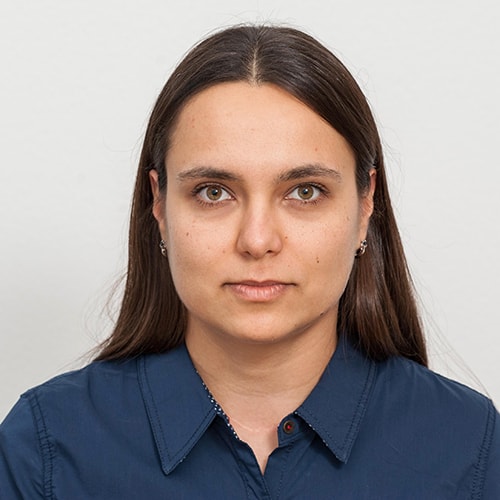
Trine Krogh Boomsma is a Professor in the Department of Insurance and Economics at the University of Copenhagen's Department of Mathematical Sciences. Her research focuses on optimization under uncertainty with significant applications in energy systems, particularly electricity markets, renewable energy investments, and power system planning. PhD in Mathematics-Economics, Aarhus University (2003-2007) Visiting PhD at University of Duisburg-Essen (2004) Academic career includes positions at Risø National Laboratory for Renewable Energy and Imperial College London Her work spans stochastic programming, real options analysis, and dynamic programming to address energy sector challenges. Key areas include support schemes for renewables, market risk modeling, and operational optimization of hybrid conventional-renewable systems. Recent research explores policy impacts on investment decisions and advanced scenario generation techniques. Major publications (2012-2020) cover renewable energy policy frameworks, power plant valuation models, and sequential market bidding strategies. These works emphasize electricity market dynamics, investment risk quantification, and robust planning under uncertainty. She teaches linear programming, integer programming, and stochastic programming applications in operational analysis, contributing to energy economics education at the department.
Aisha Ameen is a Researcher in the Department of Veterinary and Animal Sciences (Pathobiological Sciences) at the University of Copenhagen's Faculty of Health and Medical Sciences, holding dual appointments as Research Assistant and Guest Researcher. Her research centers on Alzheimer's disease mechanisms with emphasis on astrocyte metabolism, glucose/glutamate dynamics, and short/medium-chain fatty acid roles. She employs functional metabolic mapping, dMRI, immunohistochemistry, and hiPSC models to investigate neurodegenerative processes at cellular and systemic levels. Analysis of her 2022-2025 publications reveals consistent focus on metabolic dysregulation in Alzheimer's pathology, particularly astrocyte energy substrate competition and fatty acid interventions. Her work bridges neuroscience, metabolism, and translational disease modeling with significant citation impact and media attention.
Anders Damgaard is an Associate Professor and Head of BSc studies at the Department of Environmental and Resource Engineering (DTU Sustain), Technical University of Denmark. His research focuses on environmental assessment methodologies, particularly Life Cycle Assessment (LCA), and their application to waste management systems, resource recovery, and policy development. He leads the development of LCA models like EASEWASTE/EASETECH and collaborates with institutions such as the Danish EPA and Nordic Council of Ministers. Key research areas include carbon footprints of waste treatment, textile waste composition, and additive impacts in plastics recycling. Education: Not explicitly stated in provided texts. Research Interests: Waste management optimization, circular economy frameworks, sustainable technologies, and policy-driven environmental assessments. His recent publications address topics such as carbon footprints of sewage sludge treatments, Nordic textile waste composition, and challenges in plastic additive inclusion in LCA studies. He supervises PhD students in projects involving lifecycle modeling, construction waste recycling, and consumer practices in circular economies. As part of DTU Sustain, he contributes to interdisciplinary teams advancing sustainable resource management and policy solutions.
Allan Larsen is a Professor and Deputy Head of Division at the Department of Technology, Management and Economics (DTU Management) at the Technical University of Denmark. He heads the Operations and Supply Chain Management Section. His academic background includes an MSc in Applied Mathematics and a PhD in Operations Research, both from DTU. He teaches courses in Operations Management and Simulation at both undergraduate and graduate levels. Research Focus: His work applies operations research methodologies to complex planning problems in supply chain management, logistics, healthcare operations, and public transport. Key areas include urban freight transport, healthcare supply chains, and optimization of public transport resources like crew and fleets. Collaborations with industries, especially in freight transport, have been extensive. He previously co-directed the Transport DTU research center and co-chaired Denmark’s Transport Innovation Network. Education: MSc in Applied Mathematics (1989–1995), PhD in Operations Research (1997–1999), both from DTU. Recognition: Recipient of the Hedorf’s transportpris award in 2022 for contributions to transport research. Research Projects: Supervises multiple PhD students (e.g., on electric freight transport, healthcare resource optimization, and Industry 4.0 applications). Active in projects like 'Pioneering Electric Heavy-Duty Freight Transport' and 'Resource optimization in healthcare.' Labs/Teams: Leads the Operations and Supply Chain Management research group and collaborates in initiatives like the Transport Innovation Network, focusing on sustainable transport solutions.
Olga Saukh is an Associate Professor at the Institute of Technical Informatics, Graz University of Technology (TU Graz), and a Faculty member at the Complexity Science Hub Vienna (CSH). She leads the Embedded Learning and Sensing Systems research group, which operates across both institutions, focusing on the design and deployment of efficient AI-based systems on edge and mobile platforms. Her work bridges deep learning and embedded systems, with applications in environmental monitoring, precision agriculture, and digital health. Ph.D. in Computer Science, University of Bonn (2009) Habilitation in Embedded Systems, TU Graz (2020) Postdoctoral Training, ETH Zurich (2010–2016) B.Sc. in Applied Mathematics, Taras Shevchenko National University of Kyiv (2002) M.Sc. in Applied Computer Science, University of Freiburg (2004) Her research centers on efficient machine learning, particularly model optimization, neural network pruning, and contrastive learning for resource-constrained devices. She is deeply engaged in solving real-world challenges in IoT, sensor networks, and cyber-physical systems. Her work emphasizes data privacy, sustainability, and practical deployment of AI at the edge. The 15 most recent publications highlight a strong trend in efficient deep learning, including model compression, pruning, and transfer learning, applied to diverse domains such as environmental sensing (air quality, pollution tracking), digital agriculture (cattle farming), and embedded AI (sensor calibration, on-demand sensing). Her work frequently appears in top-tier venues like NeurIPS, ICLR, and IEEE/ACM IPSN, reflecting her leadership at the intersection of machine learning and embedded systems. Scientific awards include: CONET Ph.D. Academic Award (2010) Multiple Best Paper Awards at IEEE PerCom, ACM/IEEE IPSN, IEEE ICPADS, IEEE SECON, and UrbCom Spotlight and Oral presentations at ICML and CoLLAs workshops Ph.D. scholarship from IPVS, University of Stuttgart (2004–2005) Prizes in Ukrainian national mathematics competitions (1996–1998) Olga Saukh actively serves on program committees of leading international conferences in machine learning and embedded systems. She has advised multiple students and leads a collaborative research group spanning TU Graz and CSH Vienna. Her group develops practical AI systems for real-world deployment, with a focus on sustainability and privacy. She co-organizes the public EfficientML reading group and has secured recognition through numerous grants and awards. Her future work continues to explore the theoretical and practical challenges of deploying efficient, trustworthy AI in mobile and embedded environments. Her research group, Embedded Learning and Sensing Systems, operates jointly between TU Graz and CSH Vienna, fostering interdisciplinary collaboration across institutions. The team develops AI solutions for edge computing, sensor networks, and cyber-physical systems, with a strong emphasis on environmental sustainability and data privacy. Members work on joint challenges using advanced collaboration tools, reflecting the distributed nature of modern academic research.
Jan Madsen is a Professor at DTU Compute, Technical University of Denmark, and Head of the Embedded Systems Engineering section. His research focuses on system-level modeling and design of embedded computing systems, particularly cyber-physical systems, microfluidic biochips, and synthetic biology applications. Develops design automation tools and methodologies for embedded systems Supervises numerous PhD students and leads major research projects Research Interests Key areas include: Embedded systems-on-a-chip Cyber-Physical Systems (Internet-of-Things) Microfluidic Lab-on-Chip devices Synthetic biology with molecular computing Design, modeling, and optimization of complex systems Scientific Awards DATE Fellow (2019) IEEE CEDA Outstanding Recognition (2019) DTU Scientific Advise Award (2013) Best Paper Awards at MECO (2013) and CASES (2009) Jorck’s Foundation Research Award (1995) Publications His 14+ journal papers and 115+ conference papers demonstrate expertise in: SystemC-based modeling frameworks Energy-aware sensor networks Self-healing eDNA architectures Microfluidic biochip synthesis RTOS modeling and MPSoC exploration
Evangelos Katsanos is an Associate Professor in the Department of Civil and Mechanical Engineering at the Technical University of Denmark (DTU), where he contributes to research and education in structural engineering and safety. He is affiliated with the Structures and Safety research group and actively supervises PhD students. His work spans advanced computational methods for structural monitoring and risk assessment. Research Interests: His expertise lies in structural dynamics, modal analysis, state estimation, and structural health monitoring of civil and offshore infrastructure. He applies physics-informed models and data-driven techniques to assess structural response under extreme loading conditions such as earthquakes, storms, and wave impacts. His research integrates finite element modeling with Kalman filtering methods for enhanced system identification and damage detection. The recent publications highlight a strong trend toward physics-informed and data-driven structural health assessment, particularly for offshore and wind energy infrastructure. Topics include joint input-state estimation, slamming loads on offshore jackets, and damage identification using Kalman filters. These works emphasize robust modeling under uncertainty and real-world applicability in extreme environments. Scientific Awards: No specific awards are mentioned in the provided text. Advising and Grants: Evangelos Katsanos is the main supervisor of PhD student Al-Hagri, A., and co-supervisor or collaborator on several research projects. He is Principal Investigator (PI) or co-PI on multiple funded research initiatives, including projects on physics-informed structural health assessment of offshore infrastructures, residual bearing capacity of damaged concrete beams, and quality assurance for construction 3D printers. These projects reflect his leadership in interdisciplinary and applied research with societal impact. Labs and Teams: He is part of the research environment at DTU Construct, specifically within the Structures and Safety group, which focuses on resilience, risk assessment, and advanced monitoring of civil and mechanical systems. His collaborations extend to national and international partners in offshore and wind energy engineering.
Frede Blaabjerg is a Professor at Aalborg University (AAU Energy) , affiliated with the Faculty of Engineering and Science . Since 1998, he has pioneered power electronics research in applications such as wind turbines , photovoltaic (PV) systems , reliability engineering , and Power-2-X technologies. Education : PhD in Electrical Engineering (1995, Aalborg University) Honorary Degrees : Honoris Causa at University Politehnica Timisoara (2017) and Tallinn Technical University (2018) His research focuses on power electronics control , system optimization , and reliability for renewable energy and electric mobility . Recent work includes grid-forming converters , virtual synchronous generators , and smart EV charging systems. Key publication trends span 15+ years , with over 3,733 peer-reviewed articles and 900+ journal papers in power electronics , renewables , and energy storage . Notable book series: Control of Power Electronic Converters and Systems (4 volumes, Elsevier). Scientific Awards : 46 IEEE Prize Paper Awards 2020 IEEE Edison Medal 2019 Global Energy Prize 2014 IEEE William E. Newell Power Electronics Award Leadership Roles : Editor-in-Chief, IEEE Transactions on Power Electronics (2006–2012) Chairman, Danish Council for Research and Innovation Policy (2020–) President, IEEE Power Electronics Society (2019–2020)
Ninette Pilegaard is a Professor and serves as Deputy Head of Division and Head of Section for Transport Policy at the Department of Technology, Management and Economics, Technical University of Denmark (DTU). Her academic career spans multiple research domains with significant contributions to transportation policy and economics. Her research interests focus on transportation policy analysis with particular expertise in: Road charging systems and pricing mechanisms Bicycle infrastructure and safety analysis Commuting behavior and accessibility impacts Car ownership and usage patterns Relationship between transportation accessibility and labor market outcomes Dr. Pilegaard's scholarly work demonstrates a strong empirical approach combining transportation engineering with economic analysis. Her recent publications reveal a consistent focus on evidence-based policy evaluation, particularly in the Danish context. She frequently employs quasi-natural experimental methods to assess transportation policy impacts, with particular attention to road pricing, cycling infrastructure, and the economic implications of transportation systems. Her research has been supported by major funding bodies including Innovation Fund Denmark and Forskningsrådsfinansiering, and has resulted in publications in high-impact transportation journals such as Transportation Research Parts A and D, and Journal of Safety Research. As an academic supervisor, Dr. Pilegaard has served as Main Supervisor for PhD projects, including the 'Productivity and agglomeration' project. She has been actively involved in numerous research collaborations both within DTU and with external partners. Her laboratory work focuses on transportation data analysis, particularly utilizing Danish transportation datasets to examine policy impacts. She has developed expertise in analyzing hospital data for traffic safety research and has contributed to methodologies for assessing infrastructure effects on traffic accidents.
Asbjørn Moltke is a Postdoctoral Researcher at the Department of Electrical and Photonics Engineering at the Technical University of Denmark (DTU), working within the Fiber Sensors & Supercontinuum research group. His research is centered on advanced photonic technologies, including supercontinuum generation, ultrafast lasers, and nonlinear optical phenomena, with applications in renewable energy and biosensing. His research interests span nonlinear optics , fiber photonics , UV light generation , and laser-based material processing . He applies these technologies to areas such as solar cell fabrication , optical sensing , and metasurface engineering . His work contributes to UN Sustainable Development Goals related to clean energy and responsible innovation. The recent publications highlight a strong trend in developing high-power, low-noise UV and visible supercontinuum sources through pump modulation techniques, as well as their application in solar cell processing and biomolecular detection . These works reflect a multidisciplinary approach combining theoretical modeling, numerical simulation, and experimental validation in advanced photonic systems. No scientific awards were mentioned in the provided text. Asbjørn Moltke has been involved in significant research projects and has served as a supervisor in a PhD project focused on UV supercontinuum sources and metasurfaces. He has presented his work at international conferences, demonstrating active engagement in the scientific community. While no specific grants are listed, his participation in funded PhD projects indicates involvement in competitively supported research. He is affiliated with the Fiber Sensors & Supercontinuum group at DTU, a leading team in nonlinear fiber optics and advanced light source development. This team focuses on pushing the boundaries of supercontinuum technology for industrial and biomedical applications.
Michael Kjær is a Clinical Professor at the Department of Clinical Medicine, University of Copenhagen, Faculty of Health and Medical Sciences. He specializes in Internal Medicine: Rheumatology and leads research groups focused on exercise physiology, sports injuries, and aging. His work addresses the impact of physical activity on the human organism, with particular emphasis on tissue damage and repair mechanisms. Dr. Kjær's primary research interests center around sports medicine, physiology, and exercise science. His work investigates tendon pathology, muscle physiology, sports injuries, and the effects of exercise on aging populations. He has made significant contributions to understanding sports-related injuries, particularly tendon overuse conditions, and the physiological responses to physical activity across different age groups. His recent publications (2025) demonstrate a strong focus on tendon research, sports injury treatment dilemmas, effects of anabolic steroid abuse, muscle physiology, and bone health in athletes and older adults. The research spans from basic science investigations of cellular mechanisms to clinical studies addressing practical sports medicine challenges. His work shows particular strength in connecting molecular and tissue-level changes with clinical outcomes in sports medicine. With 415 research outputs including 369 journal articles, 15 book chapters, and 15 reviews, Dr. Kjær maintains an active research program with substantial impact. His work has been referenced in Wikipedia pages, cited by Bluesky users, and picked up by news outlets, demonstrating its relevance to both academic and public discourse. Dr. Kjær leads multiple research groups within the Center for Healthy Aging Damage and Repair at the Department of Clinical Medicine. His laboratory work focuses on tissue response to injury and exercise, particularly examining tendon and muscle physiology using both in vivo and in vitro approaches. His research bridges basic science with clinical applications in sports medicine and rehabilitation.
Anders Krogh is a Professor at the Department of Computer Science, University of Copenhagen, and also holds a position at the Department of Public Health in the Section for Health Data Science and AI. He serves as the head of the Center for Health Data Science (HeaDS) in the Faculty of Health and Medical Sciences. Previously, he was affiliated with the Department of Biology at the University of Copenhagen until 2020. Dr. Krogh earned his PhD in theoretical physics but transitioned into machine learning and bioinformatics during his doctoral studies. His research spans both theoretical foundations and practical applications in these fields. He is particularly renowned for his pioneering work on hidden Markov models for biological sequences, which has had significant impact in computational biology. In recent years, Krogh's research has focused on deep generative models applied to gene expression data and other biomedical applications. His work bridges computer science with healthcare, developing AI-driven approaches for precision medicine, cancer diagnostics, and analysis of complex biological systems. His current research integrates machine learning with quantum computing applications in biomolecular modeling. Analysis of his recent publications reveals a strong trend toward applying artificial intelligence to healthcare challenges, particularly in rare diseases, cancer diagnostics, and personalized medicine. His work increasingly incorporates federated learning approaches to address privacy concerns while enabling collaborative research across institutions. There's also a growing emphasis on quantum computing applications in biomolecular modeling and drug discovery. As head of the Center for Health Data Science, Krogh leads interdisciplinary research efforts that bring together computer scientists, medical researchers, and clinicians. His team develops novel computational frameworks like MOSAIC for multimodal analysis of rare cancers and multiDGD for multi-omics data integration. These tools are designed to translate AI innovations into clinical practice while addressing the unique challenges of medical data.
Anja Boisen is a Professor and Head of the Drug Delivery and Sensing Section at the Department of Health Technology, Technical University of Denmark (DTU). Her research focuses on advanced drug delivery systems, sensing technologies, and nanotechnology applications in biomedical engineering. She leads a multidisciplinary team developing innovative devices such as microcontainers, microneedles, and lab-on-a-disc platforms for targeted drug delivery and diagnostics. Her work contributes to UN Sustainable Development Goals, particularly in improving health and reducing inequalities. Key research areas include surface-enhanced Raman spectroscopy (SERS), microfabrication for medical devices, and biomaterials for tissue engineering. She has supervised multiple PhD students, including projects on oral drug delivery systems, gastrointestinal retention devices, and energy-harvesting materials for biomedical applications. Boisen’s team has pioneered technologies like self-unfolding foils for oral delivery and smart drug delivery microparticles. Their innovations aim to enhance therapeutic efficacy while minimizing side effects. She has been recognized with the Sensor Division Outstanding Achievement Award (2022) for her contributions to sensor technology. Her lab actively collaborates internationally, advancing applications in cancer therapy, antibiotic monitoring, and gut microbiota research. Current projects explore high-throughput 3D tumor modeling, SERS-based diagnostics, and biodegradable materials for bone fixation.
Per Christian Hansen is a Professor at the Department of Applied Mathematics and Computer Science (DTU Compute), Technical University of Denmark (DTU), where he leads the Section for Scientific Computing. He is a VILLUM Investigator and heads the CUQI (Computational Uncertainty Quantification for Inverse Problems) research initiative, aiming to develop accessible computational platforms for uncertainty quantification in inverse problems. His expertise lies in numerical analysis, numerical linear algebra, iterative reconstruction methods, and computational inverse problems, with applications in tomography, signal analysis, and plasma physics. His research integrates theoretical analysis—such as perturbation and convergence analysis—with the development of robust, adaptive, and efficient computational methods. He has co-authored five books, over 100 scientific papers, and several widely used MATLAB software packages, including IR Tools and Regularization Tools. His recent work (2023–2025) emphasizes uncertainty quantification, Bayesian inversion, and high-dimensional tomography in fusion plasmas, reflecting a strong trend toward probabilistic and robust modeling in inverse problems. He is a SIAM Fellow (2015) for his contributions to computational methods for rank-deficient and discrete ill-posed problems and regularization techniques. His scientific leadership is evident in both theoretical advances and practical software implementations. He actively collaborates across disciplines, particularly in nuclear fusion and medical imaging, and continues to supervise PhD students and publish in top-tier journals such as Inverse Problems , SIAM Journal on Scientific Computing , and Nuclear Fusion . SIAM Fellow (2015) VILLUM Investigator He advises PhD and Master’s students in computational mathematics and inverse problems, and his research is supported by major grants, including the VILLUM Investigator award. He leads the CUQI team, which develops open-source tools for non-experts to apply uncertainty quantification in inverse problems. His lab focuses on creating modeling frameworks that bridge theory, computation, and real-world applications in materials science, imaging, and plasma diagnostics.
Jacob Østergaard is a Professor and Head of the Division for Power and Energy Systems at DTU Wind and Energy Systems, Technical University of Denmark. His research focuses on renewable energy systems, offshore wind power hubs, and quantum computing applications in energy systems. He leads initiatives like EnergyLab Nordhavn and PowerLabDK, emphasizing collaboration between academia and industry. Education: MSc in Electrical Engineering from DTU (1989–1995). External positions include roles at Research Institute of the Danish Electric Utilities and Ørsted (now SK Energy). Research Interests: Power system stability, flexibility markets, offshore wind energy, quantum computing in energy systems, Power-to-X, and energy storage. He advocates for integrated, market-based energy systems to achieve the green transition. Publications highlight quantum computing for grid optimization, offshore energy hubs, and Denmark’s energy island strategy. Recent work emphasizes scientific advice for energy policy and green hydrogen production. Awards: A. Angelo’s Prize (1996), AEG Electron Prize (2007), Danish Design Award (2019), and EU RESponsible Island Prize (2020). Advising and Grants: Supervises PhD students in grid integration and control. Active in projects like OEH (Offshore Energy Hubs) and BOSS (Battery Energy Storage System). His work drives Denmark’s energy policy through roles on Energinet’s board and the Danish Energy Commission. Labs/Teams: Leads PowerLabDK and EnergyLab Nordhavn, experimental facilities for smart grid and energy system research.