Bhaskar Reddy Sudireddy is an Associate Professor in the Department of Energy Conversion and Storage at the Technical University of Denmark (DTU). His research focuses on advanced materials for energy technologies, including solid oxide fuel cells, electrocatalysts, and ceramic processing. He contributes to UN Sustainable Development Goals related to affordable and clean energy (SDG 7) and industry innovation (SDG 9). His work emphasizes the development of high-performance electrodes, metal-supported solid oxide cells, and gas sensors. He leads projects on eco-friendly fabrication methods for energy storage systems and collaborates on piezoelectric materials sintered in humid air. His research group, Applied Ceramics and Processing, explores novel ceramic materials for applications in renewable energy and environmental monitoring. Advises five PhD students working on projects like high-temperature electrolysis cells and antiferroelectric materials. Supervises interdisciplinary research spanning electrochemistry, materials synthesis, and device fabrication. Located at DTU’s campus in Kgs. Lyngby, Denmark, with extensive international collaborations.
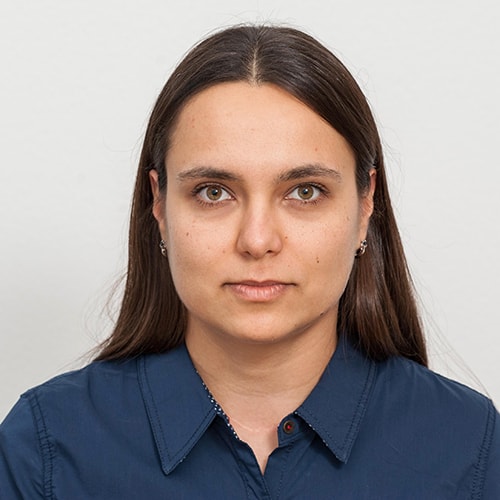
Olga Saukh is an Associate Professor at the Institute of Technical Informatics, Graz University of Technology (TU Graz), and a Faculty member at the Complexity Science Hub Vienna (CSH). She leads the Embedded Learning and Sensing Systems research group, which operates across both institutions, focusing on the design and deployment of efficient AI-based systems on edge and mobile platforms. Her work bridges deep learning and embedded systems, with applications in environmental monitoring, precision agriculture, and digital health. Ph.D. in Computer Science, University of Bonn (2009) Habilitation in Embedded Systems, TU Graz (2020) Postdoctoral Training, ETH Zurich (2010–2016) B.Sc. in Applied Mathematics, Taras Shevchenko National University of Kyiv (2002) M.Sc. in Applied Computer Science, University of Freiburg (2004) Her research centers on efficient machine learning, particularly model optimization, neural network pruning, and contrastive learning for resource-constrained devices. She is deeply engaged in solving real-world challenges in IoT, sensor networks, and cyber-physical systems. Her work emphasizes data privacy, sustainability, and practical deployment of AI at the edge. The 15 most recent publications highlight a strong trend in efficient deep learning, including model compression, pruning, and transfer learning, applied to diverse domains such as environmental sensing (air quality, pollution tracking), digital agriculture (cattle farming), and embedded AI (sensor calibration, on-demand sensing). Her work frequently appears in top-tier venues like NeurIPS, ICLR, and IEEE/ACM IPSN, reflecting her leadership at the intersection of machine learning and embedded systems. Scientific awards include: CONET Ph.D. Academic Award (2010) Multiple Best Paper Awards at IEEE PerCom, ACM/IEEE IPSN, IEEE ICPADS, IEEE SECON, and UrbCom Spotlight and Oral presentations at ICML and CoLLAs workshops Ph.D. scholarship from IPVS, University of Stuttgart (2004–2005) Prizes in Ukrainian national mathematics competitions (1996–1998) Olga Saukh actively serves on program committees of leading international conferences in machine learning and embedded systems. She has advised multiple students and leads a collaborative research group spanning TU Graz and CSH Vienna. Her group develops practical AI systems for real-world deployment, with a focus on sustainability and privacy. She co-organizes the public EfficientML reading group and has secured recognition through numerous grants and awards. Her future work continues to explore the theoretical and practical challenges of deploying efficient, trustworthy AI in mobile and embedded environments. Her research group, Embedded Learning and Sensing Systems, operates jointly between TU Graz and CSH Vienna, fostering interdisciplinary collaboration across institutions. The team develops AI solutions for edge computing, sensor networks, and cyber-physical systems, with a strong emphasis on environmental sustainability and data privacy. Members work on joint challenges using advanced collaboration tools, reflecting the distributed nature of modern academic research.
Michael Kjær is a Clinical Professor at the Department of Clinical Medicine, University of Copenhagen, Faculty of Health and Medical Sciences. He specializes in Internal Medicine: Rheumatology and leads research groups focused on exercise physiology, sports injuries, and aging. His work addresses the impact of physical activity on the human organism, with particular emphasis on tissue damage and repair mechanisms. Dr. Kjær's primary research interests center around sports medicine, physiology, and exercise science. His work investigates tendon pathology, muscle physiology, sports injuries, and the effects of exercise on aging populations. He has made significant contributions to understanding sports-related injuries, particularly tendon overuse conditions, and the physiological responses to physical activity across different age groups. His recent publications (2025) demonstrate a strong focus on tendon research, sports injury treatment dilemmas, effects of anabolic steroid abuse, muscle physiology, and bone health in athletes and older adults. The research spans from basic science investigations of cellular mechanisms to clinical studies addressing practical sports medicine challenges. His work shows particular strength in connecting molecular and tissue-level changes with clinical outcomes in sports medicine. With 415 research outputs including 369 journal articles, 15 book chapters, and 15 reviews, Dr. Kjær maintains an active research program with substantial impact. His work has been referenced in Wikipedia pages, cited by Bluesky users, and picked up by news outlets, demonstrating its relevance to both academic and public discourse. Dr. Kjær leads multiple research groups within the Center for Healthy Aging Damage and Repair at the Department of Clinical Medicine. His laboratory work focuses on tissue response to injury and exercise, particularly examining tendon and muscle physiology using both in vivo and in vitro approaches. His research bridges basic science with clinical applications in sports medicine and rehabilitation.
Jacob Østergaard is a Professor and Head of the Division for Power and Energy Systems at DTU Wind and Energy Systems, Technical University of Denmark. His research focuses on renewable energy systems, offshore wind power hubs, and quantum computing applications in energy systems. He leads initiatives like EnergyLab Nordhavn and PowerLabDK, emphasizing collaboration between academia and industry. Education: MSc in Electrical Engineering from DTU (1989–1995). External positions include roles at Research Institute of the Danish Electric Utilities and Ørsted (now SK Energy). Research Interests: Power system stability, flexibility markets, offshore wind energy, quantum computing in energy systems, Power-to-X, and energy storage. He advocates for integrated, market-based energy systems to achieve the green transition. Publications highlight quantum computing for grid optimization, offshore energy hubs, and Denmark’s energy island strategy. Recent work emphasizes scientific advice for energy policy and green hydrogen production. Awards: A. Angelo’s Prize (1996), AEG Electron Prize (2007), Danish Design Award (2019), and EU RESponsible Island Prize (2020). Advising and Grants: Supervises PhD students in grid integration and control. Active in projects like OEH (Offshore Energy Hubs) and BOSS (Battery Energy Storage System). His work drives Denmark’s energy policy through roles on Energinet’s board and the Danish Energy Commission. Labs/Teams: Leads PowerLabDK and EnergyLab Nordhavn, experimental facilities for smart grid and energy system research.
Mehdi Savaghebi is a Professor in Power Electronics-Enabled Power Systems and Head of the Energy Technology and Computer Science Section at the Department of Engineering Technology, Technical University of Denmark (DTU), Ballerup, Denmark. He has previously held academic positions as Associate Professor at Aalborg University and the University of Southern Denmark, where he also served as a Research Team Leader. He is currently accepting PhD students and is actively involved in research, supervision, and editorial work. His research interests focus on modern power systems enabled by power electronics, particularly in the domains of renewable energy integration, microgrids, smart grids, and Power-to-X technologies. His expertise lies in control strategies for inverters, power quality improvement, harmonic mitigation, and protection of distributed energy systems. He is deeply engaged in advancing grid-forming and grid-following inverter technologies, energy islands, and sector coupling for sustainable development. The recent publications highlight a strong trend in advanced control methodologies for power electronic converters, particularly in microgrid applications. His work emphasizes active damping, capacitor voltage decoupling, disturbance rejection, and dynamic performance enhancement in both grid-following and grid-forming inverters. These efforts support broader goals in renewable integration, industrial energy efficiency, and resilient low-carbon grids. Mehdi Savaghebi serves as Editor for IET Smart Grid . He is a member of review committees at Tallinn University of Technology and Nanyang Technological University. He has delivered guest lectures at international institutions, including Tallinn University of Technology. As a main supervisor, he advises PhD student A. July on the project 'Coordinated control of energy storage units and grid-forming converters in energy islands'. He leads multiple research projects, including GRACE (Grid Capacity-Aware Investment Roadmap for Eco-Industrial Clusters) and Communication Technologies for Control of Microgrids. His lab and research team focus on power electronics, microgrid control, and energy system integration, working on real-world applications such as the CLA-µGrid for the Alcântara Launch Center in Brazil and electric weed control in agriculture.
John Bagterp Jørgensen is a Professor at the Department of Applied Mathematics and Computer Science, Technical University of Denmark (DTU). His research focuses on computational methods for Model Predictive Control (MPC), numerical optimization, and dynamic optimization, with applications in industrial processes, biomedical systems, and sustainable energy. He holds leadership roles in 2-control ApS, a company developing advanced control solutions for industries such as cement production and oil recovery. Education: PhD and M.Sc. in Technical Sciences from DTU (1997–2005 and 1991–1997). Professional experience includes roles as an Assistant Professor at DTU and CTO/CEO at 2-control ApS. Research interests span MPC algorithms, numerical methods for differential equations, and system identification. His work bridges academia and industry, addressing challenges in energy efficiency, vaccine manufacturing, diabetes treatment, and cement production processes. His recent articles emphasize industrial applications of control systems, including cement rotary kiln dynamics, vaccine production optimization, and dual-hormone artificial pancreas development. He has received the Nordic Energy Research Award (1994) and contributed to UN Sustainable Development Goals related to affordable energy and industrial innovation. Advising and grants: Supervises multiple PhD projects on topics like electrification of industrial processes and sustainable SCP production. Collaborates with global institutions on energy and biomedical research. Labs/teams: Leads teams in DTU’s Scientific Computing and Center for Energy Resources Engineering, with active partnerships in industry and academia.
Jiri Srba is a Professor at Aalborg University's Department of Computer Science, part of the Technical Faculty of IT and Design. He leads research in the Distributed, Embedded and Intelligent Systems group and contributes to projects like "ControLing wAter In an uRban Environment" and "Collective Adaptive System SynThesIs using Non-zero-sum Games". His office is located at Selma Lagerløfs Vej 300, 9220 Aalborg Øst, Denmark. Contact him at +4599409851 or srba@cs.aau.dk. His core research focuses on formal methods and applied computer science: Model checking and verification of concurrent systems Petri nets and their applications Network protocol verification and synthesis Distributed system correctness Automated reasoning for industrial systems His publication record shows strong emphasis on network verification, model checking optimization, and applying formal methods to environmental systems. Recent work integrates computer science with sustainable engineering, particularly in water management systems and energy control.
Torsten Berning serves as Associate Professor at AAU Energy within The Faculty of Engineering and Science at Aalborg University, Denmark. His research focuses on thermal engineering systems, hydrogen production technologies, and electro-fuels development, with significant contributions to fuel cell and electrolyzer innovation. His primary research domains include fuel cell engineering, electrolyzer technology, and computational fluid dynamics applied to energy systems. He investigates water management in proton exchange membrane fuel cells, heat and mass transfer in electrolysis cells, and efficiency optimization of hydrogen production systems. His methodology combines experimental validation with advanced CFD modeling to address durability and performance challenges in electrochemical energy conversion. Recent publications (2024-2025) demonstrate concentrated research on alkaline electrolysis systems and thermal management solutions. Key advancements include reducing gas crossover in electrolyzers, optimizing indirect evaporative coolers, and designing proton exchange membrane electrolyzers. His work leverages computational modeling to enhance efficiency and scalability of hydrogen production technologies while addressing multiphase flow and heat transfer complexities. Professor Berning actively supervises PhD candidates: H. D. Miller on Degradation Modeling and Lifetime Prediction of Electrolyzers D. L. Martinho on Computational Fluid Dynamics of Alkaline Electrolysis Cells W. Liu on Water Transport in Proton Exchange Membrane Fuel Cells His research is funded by multiple grants including EUDP's 'Boosting Economic Electrolyzer Stack Technology 2' (2022-2025) and the Danish Energy Agency's 'Degradation Modeling and Lifetime Prediction of Electrolyzers' project (2024-2027). He collaborates within AAU Energy's research ecosystem on hydrogen production systems and thermal management technologies, contributing to projects like the Adiabatic Cooling Systems for Decentralised Ventilation and advancing electrolyzer stack technology through industry partnerships.
Erik Bjørnager Dam is a Professor in the Machine Learning section at the Department of Computer Science, University of Copenhagen (UCPH). His research spans theoretical foundations of machine learning to practical applications in medical data analysis, sustainability, and materials science. His key research interests include: Small-scale and resource-efficient deep learning Medical image analysis and segmentation Sustainable and environmentally conscious AI development Graph neural networks for materials science Resource-constrained AI systems Professor Dam's recent publications demonstrate a strong focus on making AI more accessible and sustainable while maintaining high performance standards. His work on 'Performance Per Resource Unit' metrics addresses critical challenges in deploying AI in resource-limited environments, particularly in healthcare applications. His research bridges theoretical machine learning with practical implementations across multiple domains. His notable professional activities include: Co-founding Cerebriu A/S (since 2018) Co-founding Biomediq A/S (since 2008) Delivering lectures on AI's role in green transition (April 24, 2023) Media contributions on deep learning applications in plant research (September 13, 2018) With 74 documented research outputs, Professor Dam maintains an active research profile with significant contributions in 2023-2025 across medical imaging, sustainable AI, and materials science applications.
Anker Degn Jensen is a Professor in the Department of Chemical and Biochemical Engineering at the Technical University of Denmark (DTU), where he is affiliated with the CHEC Research Centre. His research spans chemical reaction engineering, catalysis, and particle technology with applications in energy and sustainability. His research interests include chemical reaction engineering , catalysis , combustion , gasification of solid fuels , flue gas cleaning (especially NOx and Hg removal), production of liquid fuels , and fluidized bed processes for coating and agglomeration in white biotechnology. His work significantly contributes to UN Sustainable Development Goals related to clean energy and climate action. The recent publications highlight a strong trend in bio-oil upgrading , ammonia synthesis , plasma-assisted methane conversion , and adsorption modeling . These works reflect a deep engagement with sustainable fuel production, catalytic process optimization, and fundamental surface reaction mechanisms. Conversion of Furfural as a Bio-Oil Model Compound An Adsorption Isotherm That Includes Interactions Plasma-Assisted Non-Oxidative Coupling of Methane Optimisation of a Haber-Bosch Synthesis Loop Production of Phenolic Compounds from Argan Shell Waste Anker Degn Jensen is actively supervising multiple PhD students and leading research projects in hydrogen production, CO2 and H2O electrochemical reduction, bio-oil hydrotreating, and catalytic upgrading of biomass. He is involved in over 100 projects, including active grants on Conversion of hydrocarbons to hydrogen , Modeling electrochemical CO2 reduction , and Catalytic upgrading of pyrolysis oil . He is associated with the CHEC Research Centre at DTU, a hub for chemical engineering and catalysis research. His team collaborates on advanced reactor designs and catalytic processes for renewable fuels and chemicals.
Philip Bille is a Professor and Head of the Algorithms, Logic and Graphs section at the Department of Applied Mathematics and Computer Science, Technical University of Denmark (DTU), College of Engineering. His research centers on the design and analysis of efficient algorithms, particularly for string processing, compressed data, and data structures. His research interests lie at the intersection of theoretical computer science and practical applications. He focuses on algorithms , data structures , string indexing , pattern matching , and compressed computation . His work enables efficient querying and processing of large-scale, repetitive data, with applications in bioinformatics, intrusion detection, and green computing. The recent publications reflect a strong trend in developing space-efficient and fast algorithms for modern computational challenges. Key themes include compressed data structures , sliding window indexing , finite automata compression , and energy-aware matrix operations . These works demonstrate expertise in balancing theoretical rigor with practical performance. Philip Bille actively supervises multiple PhD students and leads several research projects. He contributes to advancing sustainable computing aligned with UN SDGs. His work integrates algorithmic theory with real-world efficiency. Supervises PhD projects on hierarchical compression, adaptive computation, and vector processor algorithms. Involved in research on green computing, compressed formats, and efficient data models. He is affiliated with the Algorithms, Logic and Graphs group at DTU, a hub for theoretical and applied algorithmic research. The team explores fundamental problems in data representation and processing, pushing the boundaries of what is computationally feasible in terms of time and space.
Navid Bayati is an Associate Professor at the University of Southern Denmark, affiliated with the Institute of Mechanical and Electrical Engineering and the Centre for Industrial Electronics. He leads the Control and Protection of Smart Grids (CAP-SG) group and focuses on renewable/hybrid power systems, microgrid protection, and grid code compliance. Education: Ph.D. in Power Systems & Microgrid Protection (2020, Aalborg University); M.Sc. in Power Systems (2017, Amirkabir University of Technology) His research spans renewable energy integration , transient analysis , grid interconnection , and digital twin applications . Recent work includes machine learning for carbon emission prediction, fault localization in DC microgrids, and supercapacitor resilience in hybrid systems. Collaborations include projects like IEA Wind Task 50 and RePoSys , addressing grid renovation, life cycle assessment, and digital twin resilience. His teaching portfolio covers power electronics , energy management , and microgrid control .
Pooya Davari is a Professor and Head of the Section for Applied Power Electronic Systems at Aalborg University , Denmark. He leads the EMI/EMC in Power Electronics Research Group and serves as Vice Chair of the Energy Efficiency Mission. His research focuses on electromagnetic interference (EMI) and harmonic mitigation in power electronic systems, with over 200 publications and significant contributions to renewable energy integration. Education: B.Sc. and M.Sc. in Electronic Engineering (2004, 2008), Ph.D. in Power Electronics from Queensland University of Technology (2013) Prior Roles: Lecturer at QUT (2013–2014), Postdoc at AAU (2014) Research Interests: Harmonic and EMI analysis in grid-tied converters High power density converter design Signal processing for converter modeling Reliability of power electronic systems Article Trends: Recent work emphasizes EMI/EMC in renewable energy systems, wide bandgap semiconductors (SiC/GaN), and reliability modeling for EVs and hydrogen production via electrolysis. Sub-fields include converter topologies, grid integration challenges, and AI-driven diagnostics. Scientific Awards: Equinor 2022 Prize (Denmark’s oldest engineering award) IEEE EMC Society Young Professional Award (2020) World’s Top 2% Highly Cited Scientist (Stanford, 2021–2025) Multiple best paper awards (IEEE, Applied Sciences, etc.) Grants & Editorial Roles: Recipient of grants from Innovation Fund Denmark (Supra-EMC project), Horizon Europe (SOLARIS), and industry partnerships. Serves as Area Editor for IEEE Transactions on Transportation Electrification , Associate Editor for IEEE Transactions on Power Electronics , and Editor-in-Chief of Circuit World Journal (2020–2025). Labs & Standards: Coordinator of the EMC Laboratory at Aalborg University. Member of IEC standardization Working Groups 6 and 8 (TC77A), focusing on EMC strategies for power grids.
Yang Cheng is an Associate Professor at the Department of Materials and Production, Aalborg University, Denmark. He holds a PhD in Mechanical Engineering from the same institution (2011), focusing on manufacturing strategy and network dynamics. His research spans supply chain management, sustainability, and global operations, with a focus on integrating technology and environmental policies into manufacturing systems. He leads or participates in high-impact projects like MAASive (2024–2026) and the Sino-Danish Center Research Project (2011–present), addressing resilience in value networks and global operations innovation. Research Interests: Supply Chain Management & Integration Sustainability & Green Technologies Manufacturing Strategy & Networks Technology Policy & Digitalization Global Operations & Cross-Border Collaboration Recent Work Trends: Prof. Cheng's 2025 articles emphasize blockchain in sustainable supply chains, green technology investments under carbon policies, and digitalization's ethical implications. His 2024 research explores smart factories, EU battery regulations, and robotization in manufacturing. These studies blend quantitative models with case-based analysis to address real-world challenges. Awards: 2024 Emerald Literati Awards – Outstanding Reviewer Advising & Grants: As PI for multiple Global Operations Management PhD programs (2019–2025), he guides research on digital transformation and university-industry collaboration. His projects receive funding from Danish and international grants, focusing on innovation and resilience in manufacturing networks. Labs/Teams: Collaborates with the Center for Industrial Production at Aalborg University and engages in international partnerships through the Sino-Danish Center. Active editorial roles include Production Planning & Control and Journal of Manufacturing Technology Management .
Martin Nordal Petersen is an Associate Professor at the Department of Electrical and Photonics Engineering , Technical University of Denmark (DTU) . His work spans Internet of Things (IoT) , optical networking , and wireless communication systems, with notable contributions to LoRa , NB-IoT , and LPWAN technologies. He actively supervises PhD projects on topics such as machine learning in IoT edge devices , secure 5G communication , and smart community architectures . Active projects (2024–2027): Machine Learning in IoT Edge Devices , Deterministic and Secure 5G Communication Finished projects (2021–2024; 2018–2021; 2015–2018): Reliable M2M/IoT Communication , Smart Communities , IoT 100% , Network Slicing His research explores: IoT Reliability : Multi-RAT communication, backup systems, and signal propagation Optical Networks : Alien wavelength integration, SDN control, and network emulation platforms Wireless Innovation : GPS-free geolocation, maritime NB-IoT use cases, and multimode fiber distribution Current collaborations emphasize cross-disciplinary applications of IoT in healthcare , industrial ergonomics , and smart environments .