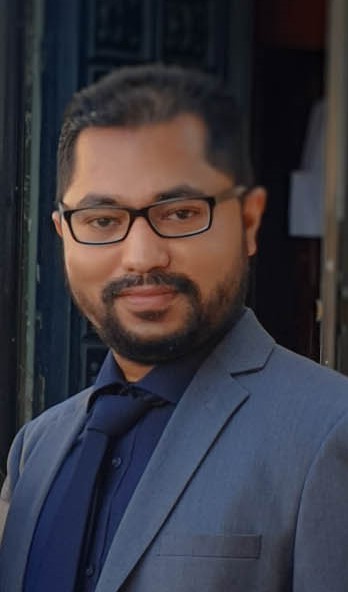
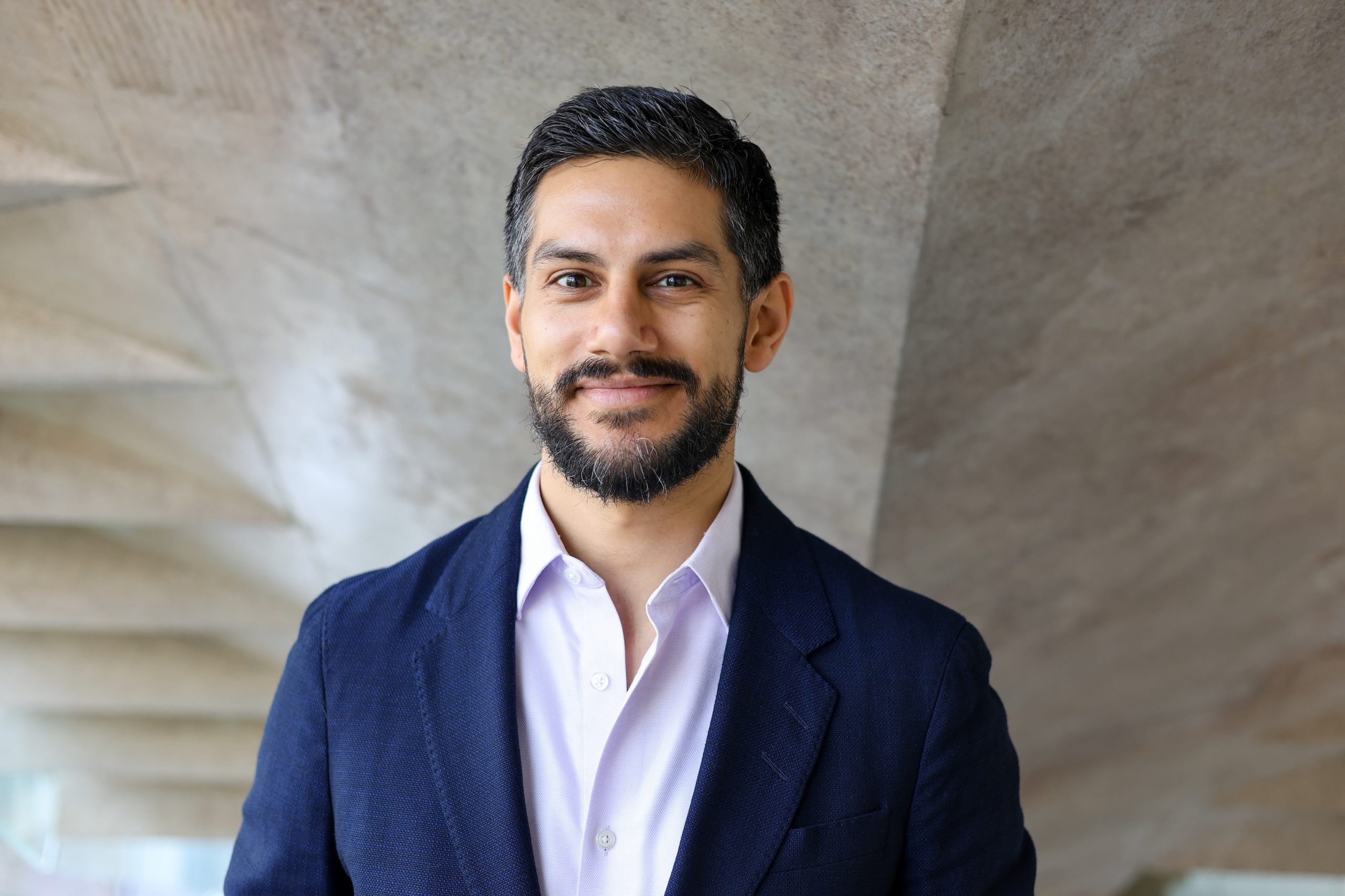
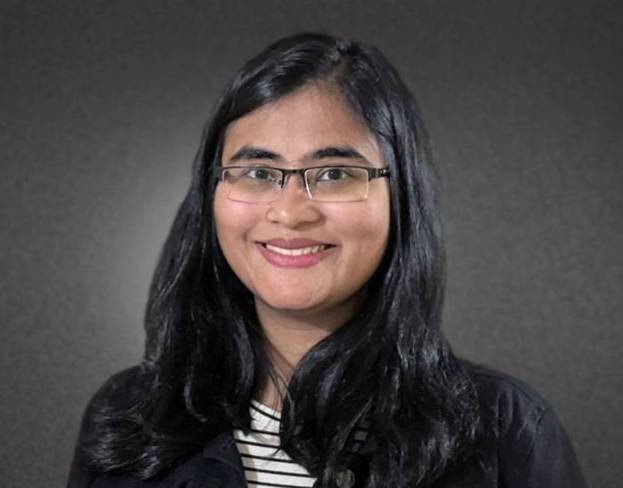
Shouro Dasgupta is a Lecturer at Università Ca’ Foscari Venezia and a Researcher at Fondazione CMCC . His work focuses on climate change impacts on labour, food security, health, and inequality, with a strong emphasis on socioeconomic vulnerability and climate adaptation policies. PhD in Science and Management of Climate Change from Università Ca’ Foscari Venezia MA in Economics from University of New Hampshire His research combines climate data with socioeconomic indicators to address: Heat stress impacts on UK labour productivity and health Socioeconomic vulnerabilities in Small Island Developing States (SIDS) Climate change effects on child health in Burkina Faso and Egypt Adaptation strategies for Bangladesh’s workforce and agriculture Recent publications include multi-model assessments of climate-equality dynamics, Lancet Countdown reports on health-climate linkages, and frameworks for climate-resilient vaccine allocation and infectious disease monitoring. Co-author of Lancet Countdown reports (2022–2024) Leads ISIMIP Labour Impacts sector Coordinates PROCLIAS COST Action adaptation taskgroup He collaborates with institutions like the Grantham Research Institute and participates in EU and global climate policy dialogues.
Hans-Joachim Hof is a Professor and Vice President for Teaching and Students at Technische Hochschule Ingolstadt (THI), where he has been employed since 2016. He serves as Head of Bachelor Cybersecurity (since 2022), Project Manager for THIsuccessAI (since 2021), and Head of the Research Group 'Security in Mobility' at the CARISSMA Institute of Electric, Connected and Secure Mobility. Additionally, he chairs the Scientific Board of the Center of Entrepreneurship and serves on the Supervisory Board of AININ. Professor, Head of INSecurity - Ingolstadt Applied IT Security Research Group (since WS 2016) Professor of Secure Software Systems, Head of MuSe - Munich IT Security Research Group at HAW Munich (2011-2016) Research Scientist at University of Karlsruhe (2008-2011) Research Assistant at Institute for Telematics, University of Karlsruhe (TH) (2003-2007) Professor Hof holds a doctorate in engineering and completed studies in computer science with a specialization in telematics and reliability architectures of systems, with a minor in law. His research spans automotive security, network security, and IT security, with recent focus on security in the Internet of Things, development processes for Secure Automotive Software, Automotive Blockchains, and Future Automotive Security Architectures. His work bridges theoretical security frameworks with practical automotive applications, particularly in electric vehicle security and battery management systems. Hof's recent publications reveal a strong trend toward automotive cybersecurity, with particular emphasis on electric vehicle infrastructure security, battery management systems, and vehicle security operations centers. His research increasingly addresses the security challenges of connected and autonomous vehicles, with growing attention to trust management systems and the security implications of AI in automotive contexts. The interdisciplinary nature of his work connects computer security with automotive engineering, energy systems, and digital forensics. Professor Hof has received numerous prestigious awards for his research contributions: Multiple Best Paper Awards at SECURWARE (2015, 2016, 2017) Best Paper Awards at CENTRIC (2010, 2012) Best Speaker Award at ESE Congress 2015 IARIA Fellow recognition Best Paper Award at ICIW 2010 As Editor-in-Chief of the International Journal on Advances in Security and Chairman of the German Chapter of the ACM, Hof plays a significant role in shaping security research discourse. His leadership extends to the German Informatics Society where he serves on the Executive Board. His research group INSicherheit (http://insi.science) actively collaborates with industry partners on real-world security challenges. Professor Hof leads the INSecurity research group at THI, which focuses on applied IT security with particular expertise in automotive contexts. The group maintains strong industry connections and operates within the CARISSMA research institute, which specializes in electric, connected, and secure mobility. Their work includes practical security testing, development of security architectures, and analysis of emerging threats in automotive systems, with notable contributions to EV charging security, battery management systems, and vehicle forensics.
Dr Natalia Falagan Sama is a Senior Lecturer in Food Science and Technology at Cranfield University, affiliated with the Plant Science Laboratory within the Centre for Soil, Agrifood and Biosciences. Her work focuses on reducing food waste and improving food security through innovative postharvest strategies for fruits and vegetables. University: Cranfield University School: Centre for Soil, Agrifood and Biosciences Department: Plant Science Laboratory Academic Rank: Senior Lecturer Dr Falagan Sama's research centers on understanding the biological mechanisms of ripening and senescence in fresh produce and developing sustainable technologies to extend shelf life. Her expertise spans food quality, food safety, controlled and modified atmosphere storage, and urban agriculture. She investigates how stress responses in crops can be harnessed to maintain nutritional quality and reduce losses across the supply chain. Her work integrates plant physiology, food engineering, and sustainable systems thinking. Her recent publications highlight a strong focus on postharvest biology, sustainable packaging, cold chain optimization, and the role of urban agriculture in food security. Trends in her research show increasing emphasis on climate resilience, net-zero food systems, and the societal impacts of food production, particularly during crises like the COVID-19 pandemic. She frequently publishes in high-impact journals such as Postharvest Biology and Technology , Journal of the Science of Food and Agriculture , and Frontiers in Plant Science . Top 50 Women in Engineering: Engineering Heroes award (2021) Medal from the Royal Academy of Engineering (Spain) (2022) Best Research Supervisor at Cranfield University (2023) Dr Falagan Sama advises on major research projects funded by BBSRC, GCRF, ESRC, and NERC, including initiatives on avocado waste reduction in Mexico and the Rurban Revolution for resilient UK food systems. She collaborates with clients such as the World Bank, Johnson Matthey, and the Department of International Trade. As a STEM ambassador, she leads the Postharvest Technology module for MSc students and is a Fellow of the Higher Education Academy. She contributes to policy through advisory roles in the Food Standards Agency, the Cool Coalition, and the African Centre of Excellence for Sustainable Cooling and Cold Chain. She is actively involved in research teams focusing on sustainable food systems, cold chain innovation, and urban agriculture resilience. Her labs and projects emphasize interdisciplinary collaboration, integrating plant science, engineering, and social science to address global food challenges.
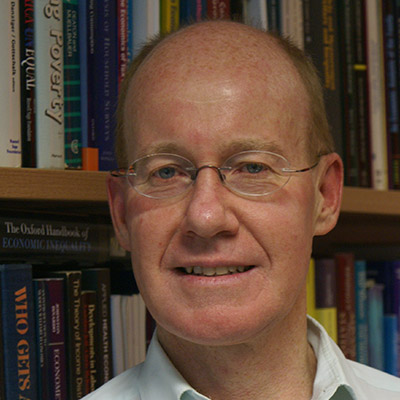
Professor Stephen Jenkins is a leading expert in Economic and Social Policy at the London School of Economics and Political Science (LSE) since 2011, with a focus on inequality , poverty dynamics , and applied econometrics . He has held leadership roles including Head of the Department of Social Policy (2016-2019, 2023-2024) and coordinates the Global Inequalities Observatory at LSE’s International Inequalities Institute. Education: BSc in Economics, University of Otago (1974-1977) PhD in Economics, University of York (1983) His research interests span: Analysis of income distribution, redistribution via taxation and social security Income mobility and poverty dynamics Measurement errors in survey and administrative data Survival analysis and limited dependent variable models Recent research trends emphasize: Top-income inequality using tax and survey data Labour market volatility and income risk Policy impacts on inequality and poverty Statistical methods for income distribution analysis Scientific awards and honors : Presidency of three major global associations: IARIW (2006-08), ECINEQ (2021-23), ESPE (1998) Distinguished Fellow of the New Zealand Association of Economists (2019) Research Fellow at IZA, Bonn (since 2000) Editorial leadership roles: Journal of Economic Inequality (2014-17), The Stata Journal (current) Advising and grants : Supervises doctoral research in inequality, poverty, and econometrics Contributed to high-impact policy reports for UK DWP, OECD, and New Zealand Treasury REF2021 Impact Case Study: Better measurement of income inequality Member of scientific advisory boards for IAB, WIFO, and Motu Labs and teams : Coordinator of the Global Inequalities Observatory at LSE Key member of LSE’s Department of Social Policy and International Inequalities Institute Collaborates with institutions including IZA, Motu, and IAB
Dr. Kamal Donko is a Researcher at LASDEL Benin and affiliated with the University of Bayreuth's Department of Political Geography within the Faculty of Biology, Chemistry & Earth Sciences. His research focuses on migration studies, border dynamics, and conflict resolution in West Africa, particularly addressing terrorism, resource conflicts, and EU-Africa policy intersections. Education includes a PhD in Political Geography (2020) from the University of Bayreuth, an MA in Culture & Environment in Africa (2011) from Cologne, and a Sociology-Anthropology BA (2008) from Université d’Abomey-Calavi. Professional experience spans roles as a post-doctoral researcher on migration control, crisis prevention expert with the German Federal Foreign Office, and senior researcher on migrant entrepreneurship. His work emphasizes borderland geographies, EU externalization policies, and the socio-economic impacts of migration infrastructure. Key publications analyze Sahel border dynamics, ECOWAS free movement challenges, and terrorism's regional effects. He actively contributes to workshops on migration, security, and governance in West Africa.
Mark Griffin is a Professor and Director of the Future of Work Institute at Curtin University’s Faculty of Business and Law. His research focuses on organizational performance, leadership, workplace safety, and employee well-being. He holds a PhD from Pennsylvania State University and has held academic positions at institutions including the University of Queensland and the University of Sheffield. Griffin’s research spans multilevel modeling, safety climate, and leadership behaviors. He has managed large-scale projects across industries like healthcare, energy, and construction, emphasizing practical applications of theory. His work has been published in top-tier journals such as the Journal of Applied Psychology and Academy of Management Journal . Key awards include Fellowships from the Australian Academy of Social Sciences and the US Society for Industrial/Organizational Psychology. He has also served as an editor for major journals including the Journal of Management and Organizational Psychology Review . Griffin’s current role at the Future of Work Institute promotes productive and meaningful work in the digital age, addressing societal and economic challenges through collaborative research. His work integrates psychological and systems perspectives to advance organizational practices and workplace well-being.
Sara Benjamin-Neelon is a Professor at the Johns Hopkins Bloomberg School of Public Health, with a primary appointment in the Department of Health, Behavior and Society and a joint affiliation with the Department of International Health. She is also the Director of the Lerner Center. Holding a PhD, JD, and MPH, her interdisciplinary expertise spans child nutrition, public health law, and chronic disease prevention. Educational Background: JD, Mitchell Hamline School of Law, 2017 PhD, University of North Carolina at Chapel Hill, 2006 MPH, University of North Carolina at Chapel Hill, 2002 BS, Ithaca College, 1995 Dr. Benjamin-Neelon’s research centers on early life predictors of obesity and chronic diseases, with a strong emphasis on health equity. Her work explores community-based interventions for children and families, food insecurity, policy evaluation (especially in nutrition and physical activity), epigenetic and environmental influences on child growth, and the social determinants of early life feeding, physical activity, sleep, and stress. She examines both domestic and global contexts, contributing significantly to understanding how policy changes can create healthier environments. Her extensive publication record includes over 196 research outputs, with recent articles focusing on childcare environments, breastfeeding policies, cannabis use during pregnancy, university beverage contracts, and infant feeding regulations. The trends in her recent work highlight a strong focus on policy analysis, health equity, and the evaluation of natural experiments in public health. She frequently investigates how structural and environmental factors shape child health outcomes. She has not received any explicitly mentioned scientific awards in the provided text. Dr. Benjamin-Neelon advises students and leads significant research projects, including evaluations of state nutrition and physical activity policies, the impact of childcare on obesity risk, and initiatives to improve healthy feeding in early childhood. Her work often involves collaboration with interdisciplinary teams and has significant implications for public health grants and policy development. She leads or contributes to key research initiatives such as the evaluation of South Carolina’s nutrition and physical activity policies, studies on licensing laws for infant and toddler care, and the Maryland Collaborative to reduce excessive college drinking. Her research environment is collaborative, involving multiple institutions and public health agencies.
Liam Midzain-Gobin serves as Associate Professor in the Department of Political Science within the Faculty of Social Sciences at Brock University. A settler scholar who completed his PhD at McMaster University in 2020, he has rapidly established himself as a significant voice in critical Indigenous and settler colonial studies. His academic journey includes an M.A. from the University of Ottawa (2015) and a B.Soc.Sci. from the same institution (2012). Dr. Midzain-Gobin's research centers on how settler colonialism persists in contemporary political structures and how Indigenous peoples revitalize governance practices to challenge colonial sovereignty. His work examines the 'logic of improvement' as a constitutive element of international order, exploring how cosmological assumptions about human dominion over the earth underpin settler sovereignty. Employing community-engaged methodologies, he collaborates directly with Indigenous communities through two major research projects: 'Building Inter-National Sovereignty: The Case of the Big Salmon River' (funded by SSHRC) and 'Indigenous Visions for Making Home in Niagara' (funded by the Niagara Community Foundation). His scholarly output reveals a consistent focus across Indigenous politics, settler colonial theory, and decolonial international thought. The 15 most recent publications demonstrate his engagement with critical questions of sovereignty, Indigenous governance, and resistance across multiple disciplinary contexts including political science, international relations, security studies, and Indigenous studies. His work frequently addresses the material and epistemic dimensions of settler colonialism while highlighting Indigenous strategies of resurgence and self-determination. Among his professional activities, Dr. Midzain-Gobin serves as Associate Editor for Critical Studies on Security and is co-editing the 'Handbook of Critical Understandings of Canada in the World' with colleagues Heather A. Smith, David Black, and David J. Hornsby. His commitment to community engagement extends beyond research into teaching practice, where he emphasizes critical approaches to Indigenous-settler relations. In the classroom, he teaches foundational and specialized courses including Introduction to International Relations, Research Design and Methods, Canadian Political Thought, Indigenous Politics in Canada, Global Indigenous Politics, and Indigenous-Settler Relations. His pedagogical approach reflects his scholarly commitment to decolonizing knowledge production and fostering critical engagement with Indigenous governance and sovereignty questions.
Dr. Laura Marie Phipps is a Clinical Assistant Professor in the Department of Kinesiology at The University of Texas at Arlington (UTA). Her academic roles include teaching and research in public health, disaster management, and environmental health. She holds a PhD in Public Health from the University of North Texas Health Science Center and dual BS degrees in German and Microbiology from UTA and Texas A&M University. She is certified in Public Health (CPH) and licensed as a Registered Sanitarian (RS). Education: PhD in Public Health, University of North Texas Health Science Center (2018) MA in Public Health, University of North Texas Health Science Center (2012) BS in German, The University of Texas at Arlington (1996) BS in Microbiology, Texas A&M University (1993) Dr. Phipps' research focuses on disaster resilience, international emergency management, and environmental health. She has led grants such as the "Mobilizing Communities to Strengthen Resilience" project (2024–2025) and co-authored a book on international disaster management trends. Her teaching includes courses on emergency preparedness, global health, and public health ethics. Her service activities span academic leadership roles, including committee memberships at UTA and professional organizations. She actively contributes to community initiatives addressing public health inequities and disaster preparedness.
Hanna Schwander is a Full Professor and Chair of Political Sociology and Social Policy at Humboldt University of Berlin. She leads the Einstein Research Unit ‘Coping with Affective Polarization’ and directs the Berlin Polarization Monitor, a large-scale panel study tracking polarization dynamics. Her research intersects comparative politics, political sociology, and political economy, focusing on welfare state transformations, labor market inequality, and climate policy. Previously, she held professorships at the Hertie School of Governance and the University of Zurich, with prior roles at institutions like the European University Institute and University of Oxford. Education includes a PhD from the University of Zurich (2012) and a Licentiate in Political Science from the same institution (2008). Research projects include exploring the political feasibility of climate policies, the rise of Green parties, and the role of Universal Basic Income. She has been funded by the Einstein Foundation and the Berlin University Alliance. Key research areas include affective polarization, distributive politics, and the societal impacts of economic inequality. Her work examines how structural challenges like climate change and welfare reforms influence political processes. Teaching focuses on comparative political economy, party politics, and inequality studies.
Abhipsita Das is an Assistant Professor of Practice and Coordinator of the Master of Agribusiness (MAB) program at the Department of Agricultural and Applied Economics, Texas Tech University. Her work bridges academia and the agribusiness industry, with a focus on consumer economics, food policy, and nutrition-sensitive demand analysis. Previously, she held roles as an Assistant Professor of Economics at Alabama State University and postdoctoral positions at Arizona State University and Texas State University. Bachelor's: Economics, St. Xavier's College-University of Calcutta, India (2012) Master's: Economics, Gokhale Institute of Politics & Economics, Pune, India (2014) PhD: Applied Economics, Auburn University (2022) Her research examines how household financial constraints exacerbate food insecurity in both developed and developing countries, analyzing long-term health and productivity impacts. She investigates intersections between formal food assistance programs (e.g., SNAP) and informal safety nets like food banks. Her publications span topics including biofuels, fisheries subsidies, international R&D spillovers, and SDG-aligned policy analysis. Key article themes reflect interests in agricultural economics, econometrics, and food security. Notable trends include policy evaluation for sustainability, cross-border economic collaboration, and demand-side interventions. No scientific awards or student advisement details are listed in the provided texts.
Roberto Dominguez is a Professor of Government at Suffolk University , specializing in International Relations and Comparative Politics . He is on sabbatical for Fall 2025 and serves as a Visiting Scholar at Harvard University's Center for European Studies . His academic career spans roles as Professor, Associate Professor, and Assistant Professor at Suffolk University since 2005. PhD in International Studies, University of Miami (2005) MA in International Studies (1999) Jean Monnet Fellow, European University Institute (2012-13) His research focuses on Global Institutional Innovation , Regional Risks and Threats , and Euro-Latin American Governance , with a specific emphasis on North American regionalization and governance of global insecurity . Recent publications analyze EU-Latin American relations, border management, and security governance. His scholarly work includes books and chapters on EU foreign policy, transatlantic trade, and security dynamics, often bridging European Studies and Latin American Politics . He has served as an editor for Relaciones Internacionales and contributed to projects commissioned by the European Commission and European Parliament . Jean Monnet Fellowship (2012-13) He has advised research teams for EU policy analysis in the United States and Mexico (2016) and contributed to modernizing EU-Mexico agreements (2014). His teaching portfolio includes courses on International Security , Global Political Economy , and Latin American Politics .
Corinne Wallace is an Adjunct Assistant Professor in the Department of Civil Engineering at McMaster University , with research expertise at the intersection of water security, climate change, public health, and gender equity. Her work spans both technical engineering analysis and community-engaged studies, particularly focusing on marginalized populations in Canada, East Africa, and South America. Dr. Wallace's research interests include: Water-Health Nexus Climate Change Impacts on Disease Gender Equity in Water Access Indigenous Water Governance Mosquito-Borne Disease Modeling Rainwater Harvesting Systems Her publication trends show increasing focus on climate-health interactions (2025), gender-water linkages (2024), and machine learning applications for water quality analysis (2025). She employs mixed-methods approaches and works closely with First Nations communities and international development organizations. Dr. Wallace utilizes art-science communication strategies like the Virtual Water Gallery to transform water and climate knowledge dissemination. Her recent work explores EDI (Equity, Diversity, Inclusion) implementation in large research networks and conceptual frameworks for climate-water equity.
Moses Kansanga is an Assistant Professor in the Department of Geography at George Washington University, holding a PhD from the University of Western Ontario. His research focuses on agriculture and sustainable food systems, political ecology, natural resource management, environment and health, and Sub-Saharan Africa. He teaches GEOG 3195/6293: Agriculture and Sustainable Food Systems. Research Interests: Prof. Kansanga explores how climate change, policy frameworks, and socio-cultural dynamics intersect with food security, natural resource governance, and gender equity in African contexts. His work emphasizes community-led solutions, agroecological practices, and the political dimensions of environmental conservation. Recent studies investigate smallholder farmers' adaptation strategies, the impact of mechanization on gender roles, and the role of social capital in climate resilience. Key Contributions: His research spans Ghana, Malawi, and Canada, addressing topics like charcoal trade governance, migrant women's food insecurity, and solar-powered food preservation technologies. He critiques conventional conservation models and advocates for participatory approaches to agricultural policy. Affiliations: Full-time faculty member at GWU's Department of Geography. Engaged in interdisciplinary collaborations on climate resilience and food systems. Grants & Projects: No specific grants mentioned in provided texts. Active in publishing peer-reviewed articles focusing on Sub-Saharan Africa's environmental and socio-economic challenges.
Stephen J. Scanlan is a Professor, Interim Chair, and Director of Graduate Studies in the Department of Sociology and Anthropology at Ohio University's College of Arts and Sciences. He is based in the Bentley Annex and can be reached via email at scanlans@ohio.edu or by phone at 740-593-1384. Education: Ph.D., The Ohio State University, 2000 Dr. Scanlan's research centers on environmental sociology, food insecurity, global inequality, and social movements. His work critically examines the political economy of hunger, environmental justice in Appalachia, and the role of gender in development. He has published extensively on topics such as greenwashing, agribusiness, and the social impacts of globalization, with a strong emphasis on justice-oriented community initiatives. His recent publications reflect a deep engagement with interdisciplinary themes including sustainability, environmental communication, and the structural roots of poverty. The works span journals and handbooks in sociology, environmental studies, and development, showcasing a consistent focus on inequality, advocacy, and systemic change. Scientific Awards and Honors: Fulbright Scholar Award (2013) Ohio Magazine Excellence in Education Honoree (2018) Outstanding Faculty Mentor, Ohio University Honors Tutorial College (2019) Dr. Eric A. Wagner Professor of Sociology (2019–2022) Dr. Scanlan has actively advised graduate students and led seminars in poverty, globalization, and environmental sociology. He has contributed to significant scholarly conversations through collaborative research and mentorship. His teaching includes core courses such as SOC 2300 (Social Inequalities), SOC 4810 (Environmental Sociology), and SOC 4950 (Capstone in Environmental Justice). He is involved in research teams focused on food justice and environmental movements, particularly in Appalachia. His work often bridges academic scholarship with community-based action, advocating for policy changes and sustainable development.