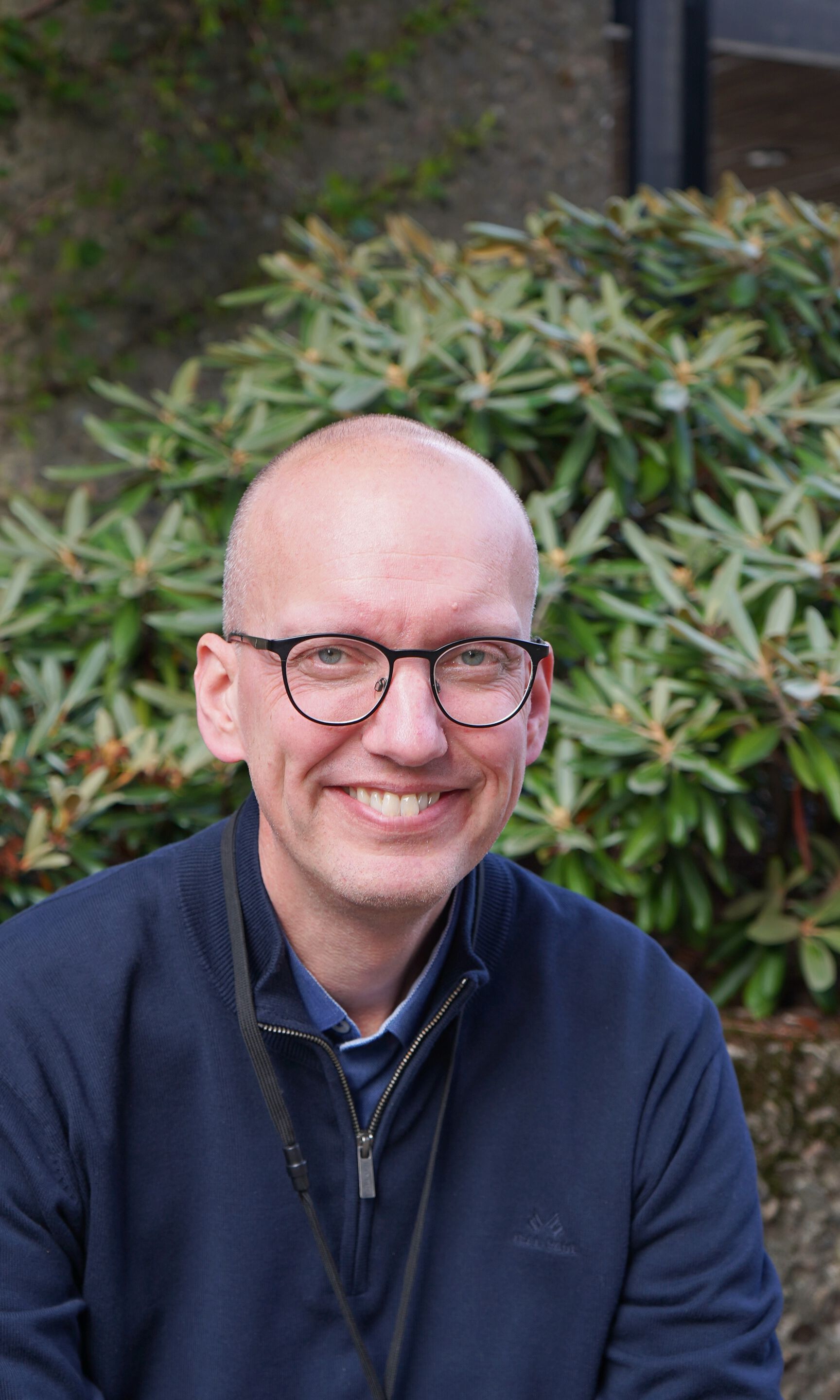
Robert Jenssen is a Professor in the Machine Learning Research Group at UiT The Arctic University of Norway and serves as the Director of Visual Intelligence , an 8-year Research Council of Norway-funded SFI center. His research focuses on solving societal challenges in healthcare, marine mapping, energy, and Earth observation through collaborations with industry and public stakeholders. Director, Visual Intelligence (SFI) Center Professor, UiT Adjunct Professor, Pioneer Centre for AI (University of Copenhagen) and Norwegian Computing Center His methodological expertise spans neural networks, information-theoretic learning, self-learning, and explainable AI (XAI). Recent work emphasizes multimodal learning, uncertainty estimation, and medical image analysis. Scientific awards include: Best Paper, Pattern Recognition Letters (2024) Dissertation Award, Norwegian AI Society (2023) Best Paper, Color and Visual Computing Symposium (2022) IEEE GRS Society Letters Prize (2013) Prize for Young Researchers, University of Tromsø (2007) He contributes to international leadership as a member of the Scientific Advisory Board (SAB) for the Max Planck Institute for Intelligent Systems, France's SequoIA AI Excellence Cluster, and Denmark's DIREC center.
Sverre Steen is a Professor and Head of the Department of Marine Technology at the Norwegian University of Science and Technology (NTNU). He leads the Kongsberg Maritime University Technology Centre focused on 'Ship Performance and Cyber-physical Systems' and is a member of the standing committee for the Symposium of Marine Propulsors. His research emphasizes ship propulsion, hydrodynamics, and big data analysis of in-service vessel performance. Key interests include seakeeping, high-speed marine vehicles, and model testing techniques. Steen teaches TMR 4217 Hydrodynamics of High-Speed Marine Vehicles , covering cavitation, experimental hydrodynamics, and propulsion systems. He collaborates internationally on projects like the Norwegian Ocean Technology Centre. His recent work explores wave-energy extraction via hydrofoil vessels, resistance modeling for fast ferries, and propulsion efficiency in real sea states. He has contributed to global shipping emission models (MariTEAM) and reliability analysis of structural components under vibration. Steen's publications span propulsion in waves, engine-propeller dynamics, and data-driven methods for ship performance monitoring. His applied research bridges experimental testing and computational modeling to address challenges in sustainable maritime transport and operational safety.
Snorre Aunet is a Professor at the Department of Electronic Systems at the Norwegian University of Science and Technology (NTNU), with additional roles as an Adjunct Professor at the Department of Informatics, University of Oslo. His academic career spans institutions in Norway, Germany, and the USA, including sabbaticals at Bielefeld University and University of California, San Diego. Education: Electronics Engineering (Trondheim Technical College, 1987), Informatics (UiO, 1993), and Physical Electronics (NTNU, 2002) Research Focus Dr. Aunet specializes in ultra-low-power mixed-signal integrated circuits and nanoscale CMOS technologies . His work includes innovative MEMS transducer designs for energy harvesting, digital IC development, and robust circuit solutions for emerging semiconductor challenges. Recent Publications His recent contributions include advancements in MEMS technology for sustainable energy systems, editorial leadership at NorCAS conferences, and policy discussions on the European Chips Act. These reflect expertise in both cutting-edge design and strategic technology development. Scientific Recognition 2019: Elected to Norwegian Academy of Technical Sciences (NTVA) 2015: Best Paper Award at Asia Symposium on Quality Electronic Design 2006: IEEE Senior Member (Electron Devices Society) 2003: Best Poster Award at Int'l Conf. on Evolvable Systems Leadership & Grants He has chaired multiple IEEE conferences and contributed to projects like Robust Ultra-Low-Power Circuits for Nano-Scale CMOS (NTNU/University of Paderborn). His career combines academic leadership with industry collaboration through Nordic Semiconductor and international research councils.
Katrine Eldegard is a Professor at the Norwegian University of Life Sciences (NMBU), Faculty of Environmental Sciences and Natural Resource Management (MINA), Department of Ecology and Natural Resource Management (INA). She leads BatLab Norway and contributes extensively to national and international conservation science policy. Institution: Norwegian University of Life Sciences School: Faculty of Environmental Sciences and Natural Resource Management Department: Department of Ecology and Natural Resource Management Position: Professor Her research centers on understanding how human activities and land use affect natural ecosystems and species across taxa and spatial scales. She specializes in the behavioral, population, and community-level responses of mammals, birds, and insects to anthropogenic pressures such as energy infrastructure, transport networks, and forestry. A major focus is on bat ecology and conservation, pollination dynamics, and biodiversity monitoring in boreal and agricultural landscapes. Her recent publications reveal strong trends in climate change impacts on bat morphology and distribution, pollinator-plant interactions under environmental change, and the ecological consequences of infrastructure development. These works integrate field ecology with advanced modeling and policy-relevant assessments. She has played leading roles in key scientific committees: Chair, Mammal Committee, Norwegian Red List for Species (2021) Chair, Mammal Committee, Norwegian Alien Species List (2023) Member, Norwegian Scientific Committee for Food and Environment (VKM), CITES Expert Panel Norway’s representative, UNEP/Eurobats Advisory Committee Eldegard has supervised numerous research projects and collaborated with government agencies and private partners on applied ecology. She teaches courses including NATF200 Vern og forvaltning av norsk natur and the upcoming NATF300 Conservation Science. Her work is supported by extensive fieldwork, interdisciplinary collaboration, and integration of ecological theory with practical conservation. She leads BatLab Norway, a research group dedicated to advancing knowledge on bat ecology, behavior, and conservation through innovative methods including telemetry, acoustic monitoring, and landscape analysis.
Malgorzata Agnieszka Cyndecka is a Professor at the Faculty of Law, University of Bergen (UiB) , where she specializes in EU/EEA state aid law and data protection/GDPR. She is affiliated with SLATE (Centre for the Science of Learning & Technology) and serves as a member of the Norwegian Data Protection Board. Since 2019, she has been Associate Editor of the European State Aid Law Quarterly . She also holds an Associate Professor II position at the University of Oslo and contributes to interdisciplinary research on AI, privacy, and education. University: University of Bergen School: Faculty of Law Academic Rank: Professor Email: malgorzata.cyndecka@uib.no Affiliations: SLATE, Norwegian Data Protection Board, Council of Europe Expert Group on AI and Education Her research centers on EU/EEA state aid rules —particularly their application in tax, energy, and education sectors—and data protection law , with a focus on GDPR compliance in AI-driven educational technologies. She has led and contributed to major projects such as the Norwegian Data Protection Authority’s Sandbox for Responsible AI (AVT project), where she provided legal guidance on processing student data, and UiB’s DIGI courses, where she co-developed DIGI113 on Privacy and GDPR. Her work bridges legal theory with practical policy, influencing national and international frameworks on digital rights and public aid. The analysis of her recent publications reveals a strong focus on the evolution of state aid jurisprudence , especially the Market Economy Operator Principle (MEOP), burden of proof in aid cases, and sustainability in public support. Concurrently, her interdisciplinary work explores AI and privacy challenges in education , anonymization of unstructured data under GDPR, and ethical implications of algorithmic decision-making. Her contributions span legal doctrine, policy recommendations, and public commentary. Scientific Awards: European State Aid Law Quarterly PhD Award (2012–2016) for best doctoral dissertation in state aid law Advising and Grants: She supervises master’s students in EU/EEA law, data protection, and GDPR. She has been involved in externally funded projects including the Norwegian Data Protection Authority’s Sandbox for Responsible AI, the ENDO4P project (aimed at personalized endocrinology treatment via EU Horizon funding), and the Clean Up Project (Machine Learning for Anonymisation of Unstructured Personal Data) at the University of Oslo. She has also coordinated collaborations with Media City Bergen for law and technology education. Her teaching includes course leadership in JUS2302, JUS3502, JUS2303, JUS3503, and DIGI113. Labs and Teams: She is a key member of SLATE (Centre for the Science of Learning & Technology) at UiB and participates in multiple research groups including the Research Group for Information and Innovation Law. She contributes to interdisciplinary teams working on digital competence, AI ethics, and data governance in education and health. She is also active in the Academy for Young Researchers (AYF) and leads the EU and EEA Law Issues Committee in the Norwegian branch of the International Commission of Jurists (ICJ).
Vidar Hepsø is a Professor at the Department of Computer Technology and Informatics, Faculty of Information Technology and Electrical Engineering, Norwegian University of Science and Technology (NTNU). His work bridges anthropology of science and technology with practical challenges in digitalization, energy transition, and remote operations. Research focuses on digital infrastructures, socio-technical systems, and human factors in oil and gas industries Active in NTNU Applied Information Technology and NTNU Energy Transition Initiative Publications emphasize open-source ecosystems, autonomous systems, and environmental monitoring His scholarly output spans computer-supported collaborative work, IT infrastructure governance, and risk-informed anomaly detection in subsea systems. He leads projects connecting digital innovation with offshore wind and petroleum geoscience.
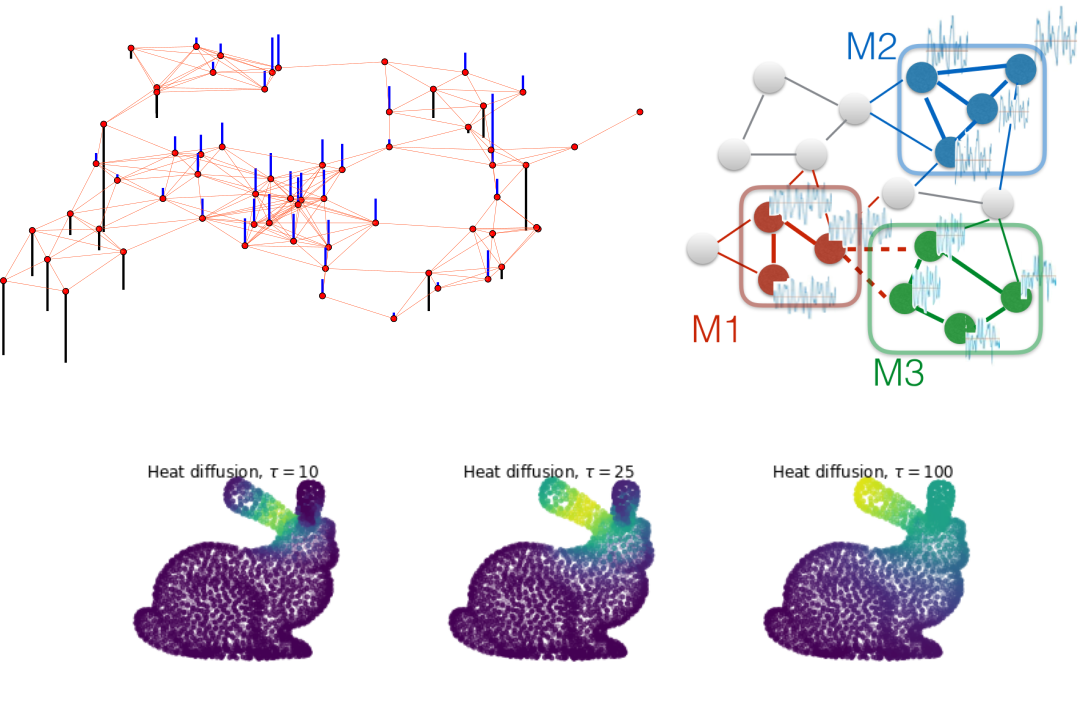
Benjamin Ricaud is an Associate Professor and Group Leader in Machine Learning at UiT The Arctic University of Norway's Department of Physics and Technology. His core affiliations include membership in the Machine Learning Group, Visual Intelligence center, and co-directorship of the Digital Technology Innovation Lab focused on Arctic-region tech startups. He also co-chairs the annual Northern Light Deep Learning conference. Ricaud's research spans: Fundamental ML : Graph signal processing, explainable AI, and generative models Applications : Microfossil classification, medical diagnostics (retinal aging), drug analysis, and climate data interpretation Emerging domains : Self-supervised learning and biological data analysis using Raman spectroscopy His recent publications (2020-2025) cluster in three domains: Graph ML methodologies (35%) Biomedical/biological applications (40%) Geoscience/climate informatics (25%) with consistent focus on interpretability and real-world data challenges. Teaching includes Image Processing (FYS-2010), Pattern Recognition (FYS-3012), and Machine Learning (FYS-2021). He leads outreach initiatives developing AI exhibits for Tromsø Science Centre.
Roles and Affiliations: Fred Espen Benth is a Professor in the Department of Mathematics at the University of Oslo, affiliated with the Risk and Stochastics research group. He holds a Dr. scient (PhD equivalent) in mathematics from the University of Oslo (1995). His academic journey includes roles as a researcher at the Norwegian Computing Center, a postdoc at the Universities of Aarhus and Oslo, and an Associate Professor at the University of Trondheim before becoming a full professor in 2002. Research Interests: Benth’s research focuses on mathematical finance, particularly energy and weather markets, commodity derivatives, and stochastic analysis. He explores modeling, estimation, and simulation of spot and forward prices, as well as pricing options and portfolio optimization. Recent work extends to climate systems, energy transition dynamics, and machine learning applications in financial and environmental modeling. Publications and Projects: His extensive publication record includes over 150 journal articles and book chapters, with a focus on energy markets, stochastic processes, and climate-related financial instruments. Notable projects include ‘Spatial-Temporal Uncertainty in Energy Systems (SPATUS)’ and contributions to interdisciplinary energy informatics. His work bridges theoretical stochastic analysis with practical applications in energy systems and risk management. Labs and Collaborations: Benth collaborates with the Stochastics of Renewable Energy Markets (STORE) group and contributes to initiatives like the ‘Computational Modelling and Machine Learning for Applications in Hydropower’ project. His research emphasizes the integration of stochastic methods with real-world energy and climate challenges.
Joao Carlos Amaro Ferreira is a Professor at the Faculty of Logistics, Molde University College (HiMolde), Norway. He holds PhDs in Computer Engineering and Industrial Engineering from the Technical University of Lisbon and the University of Minho, respectively. His research focuses on Artificial Intelligence (AI) applications in healthcare, energy, transportation, IoT, blockchain, and smart cities. He has led over 40 projects, including 6 as Principal Investigator, and contributed to international conferences like OAIR and INTSYS. He served as IEEE CIS President (2016-2018) and is an IEEE Senior Member since 2015. His academic contributions span AI-driven solutions for public sector informatics, healthcare data quality, and cybersecurity. He actively participates in European projects such as e-Hospital4Future and explores blockchain applications in supply chains and medical records. Ferreira leads the ABC-AI research group, emphasizing ethical and applied AI. His work bridges academia and industry through projects like gamification systems for eco-driving and AI in fisheries traceability. Recent publications highlight AI's role in cardiovascular disease detection, emergency department optimization, and blockchain-enhanced healthcare interoperability. He collaborates internationally, co-editing journals like Applied Sciences , and has authored patents in edge computing for maritime monitoring.
Prof. Chong-Yu Xu is a Professor of Hydrology at the University of Oslo's Department of Geosciences, affiliated with the Section for Geography and Hydrology (GeoHyd). He has held this position since 2005, having previously served as an Associate Professor at Uppsala University (1998–2005) and Assistant Professor (1994–1998). His research focuses on hydrological modeling, climate change impacts, regional evapotranspiration, and uncertainty analysis. He teaches courses such as GEO4310 (Stochastic Methods in Hydrology) and GEO4320 (Hydrological Modelling). Education: BSc in Hydrology (Nanjing University, 1978–1982), MSc in Regional Hydrological Modeling (Free University Brussels, 1986–1988), and PhD in Hydrological Modelling (Free University Brussels, 1988–1992). He has been honored with prestigious awards, including the NHF Lifetime Achievement Award (2022) and IWA Publishing Award (2022). He serves as an honorary professor at institutions like Hohai University and is a doctoral supervisor at multiple universities. His research spans global, regional, and local hydrological modeling, with a focus on climate change adaptation and water resource management. He leads projects such as the NORHED-II initiative on climate change and ecosystem management in Malawi and Tanzania. His work bridges theoretical hydrology with practical applications, including flood risk reduction and hydropower optimization. Publications highlight advancements in hydrological extremes, non-stationary drought assessment, and AI-driven flood prediction. Collaborative efforts with international networks like the Nordic Hydrological Association underscore his global impact in hydrological sciences.
Kristin Braa is a Professor at the Department of Informatics, University of Oslo, and serves as Director of the HISP Center. Her career includes an 8-year tenure as Research Director at Telenor, where she established a Research and Innovation Center in Malaysia. Academic Roles: Vice Head of Department of Informatics, head of Information Systems (IS) research group Research Focus: Mobile extensions of open-source DHIS2 software for low-resource settings, action research methods, sustainable health information systems Research Themes: She investigates innovative approaches to support rural healthcare workers and underserved populations, emphasizing long-term engagement in national health systems. Her projects include MobiHealth (2010–2014) and NORAD-funded initiatives (2010–2014) for health information systems in developing countries. Scientific Awards: 2023 AIS Impact Award (with Jørn Braa) 2020 Roux Prize (with Jørn Braa) 2013 University of Oslo Innovation Prize 2013 Researcher of the Year (Faculty of Mathematics and Natural Sciences, UiO) 2011 ICT and Energy Researcher of the Year 2011 Rosing Prize Finalist for rural Bangladesh health initiative Collaborations: Active in the IS research group and Climate Health Network. She advocates for sustainable, community-empowering information systems through participatory design and sociotechnical approaches.
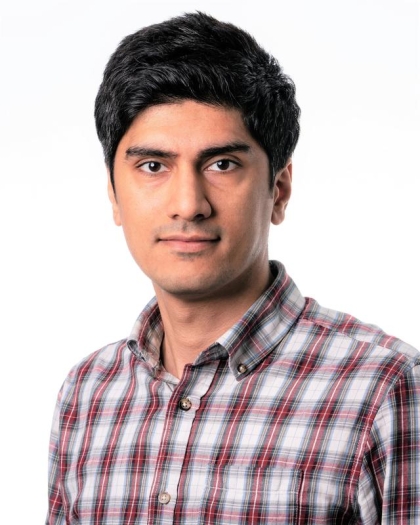
Amirhosein Taherkordi is a Professor in the Networks and Distributed Systems group at the Department of Informatics, University of Oslo, Norway. His research focuses on resource-efficiency, scalability, adaptability, dependability, mobility and data-intensiveness of distributed systems for emerging computing technologies including Internet of Things (IoT), Fog/Edge/Cloud Computing, and Cyber-Physical Systems (CPS). Dr. Taherkordi received his Ph.D. from the Informatics Department at the University of Oslo under the supervision of Prof. Frank Eliassen, with his thesis titled "Programming Wireless Sensor Networks: From Static to Adaptive Models." He holds an M.Sc. in Information Technology Engineering (Software Engineering) from University of Science and Technology and a B.Sc. in Computer Engineering from Sharif University of Technology. His research spans multiple domains of distributed systems with emphasis on practical applications. He investigates energy efficiency in wireless sensor networks, communication optimization in IoT systems, and adaptive resource allocation in edge computing environments. His work addresses critical challenges in network traffic classification, federated learning for vehicular networks, and data processing across heterogeneous platforms. Analysis of his recent publications reveals a strong trajectory toward communication-efficient federated learning techniques for vehicular networks, energy-aware protocols for IoT data collection, and advanced machine learning approaches for network traffic analysis. His research consistently focuses on optimizing resource usage while maintaining system performance and privacy in distributed architectures. Dr. Taherkordi actively contributes to several research initiatives including the CPS Lab at UiO for Cyber Physical Systems, DILUTE: Fluid Service Abstraction for Large-Scale Cloud IoT Systems, and the Gemini Centre on IoT at UiO. His work bridges theoretical advances with practical implementations in transportation systems, environmental monitoring, and industrial automation.
Loïc Guégan is an Associate Professor in the Department of Informatics at UiT The Arctic University of Norway, affiliated with the Faculty of Science and Technology. His work is centered on energy-efficient cyber-physical systems and distributed computing, particularly in extreme and constrained environments such as the Arctic. His research focuses on cyber-physical systems (CPS) , distributed data dissemination , IoT and edge computing , and energy-efficient protocols . He actively contributes to the development of the Distributed Arctic Observatory (DAO) project and has designed tools like the ESDS simulator for evaluating distributed systems in challenging conditions. His technical work includes power monitoring using single-board computers and the design of the LoRaLitE protocol for low-energy wireless communication. The recent publications highlight a consistent trend in data dissemination strategies , simulation frameworks , and energy optimization for IoT and edge systems deployed in remote, resource-limited settings. These studies often leverage real-world Arctic deployments and epidemic-style algorithms to ensure robustness and scalability. Loïc is a member of the Cyber Physical Systems (CPS) research group and contributes to projects including The IoT-to-Extreme-Edge Infrastructure and Sustainable Distributed Systems for Sustainable Research and Education . He teaches courses such as Parallel Programming and Operating Systems . His research is supported through institutional and project-based funding, though specific grants are not detailed in the text.
Runar Hilleren Lie is a Postdoctoral Research Fellow at the Department of Public and International Law, Faculty of Law, University of Oslo. He is actively engaged in interdisciplinary research at the intersection of law, technology, and international relations, contributing to major projects such as COPIID, NoRDASIL, and CLEANUP. His research interests span International Investment Law , Computational Legal Studies , International Economic Law , Energy Law , and Legal Technology . He employs data-driven and computational methodologies to analyze legal texts, arbitrator behavior, treaty development, and institutional dynamics in international dispute settlement. The most recent publications reveal a strong trend toward empirical and computational analysis of international investment law, particularly focusing on influence networks, authorship prediction, compliance politics, and the evolving role of legal actors in arbitration. His work bridges traditional legal scholarship with cutting-edge data science techniques. He teaches JUS5080 – Programming for Lawyers and JUS5671 – Legal Technology: Artificial Intelligence and Law , reflecting his commitment to integrating technological literacy into legal education. Email: r.h.lie@jus.uio.no, rhlie@jus.uio.no Phone: +47 22859431 Visiting Address: Domus Juridica, 7th floor, Kristian Augusts gate 17, 0164 Oslo Postal Address: Postboks 6706 St. Olavs plass, 0130 Oslo He is affiliated with the Law and Technology (JOT) research group and the Research Group on International Law . His current research projects include: COPIID : Compliance Politics and International Investment Disputes NoRDASIL : Advancing Data Science in Migration Law (NORDFORSK) CLEANUP : Machine Learning for the Anonymisation of Unstructured Personal Data (Research Council of Norway, 2020–2023)
Dr. Ahmad Hemmati is an Associate Professor at the Department of Informatics, University of Bergen. His research focuses on optimization models and algorithms for logistics, transportation, and maritime systems. He holds a PhD from the Norwegian University of Science and Technology (NTNU) in 2015. His work addresses challenges in inventory routing, drone delivery systems, and combinatorial optimization using methods like reinforcement learning and metaheuristics. Key contributions include models for maritime cargo optimization, synchronized truck-drone delivery, and feeder network design. He has collaborated internationally with institutions like MIT and the University of Antwerp. His findings are published in journals such as European Journal of Operational Research and Computers & Operations Research , with a focus on practical solutions for industrial logistics problems. Education: PhD in Operations Research (NTNU, 2015). Research Interests: Maritime Logistics, Inventory Routing Problems, Combinatorial Optimization, Drone Delivery Systems, and Algorithm Design. His work bridges theoretical models with real-world applications in transportation networks and sustainability. Publications Trends: Recent articles emphasize deep reinforcement learning applications and maritime environmental monitoring. Earlier work includes foundational contributions to tramp shipping and VMI service routing. His methodologies often blend heuristic algorithms with mathematical programming. Grants/Awards: No specific awards mentioned, but his work has been funded by the Research Council of Norway and industry collaborations.