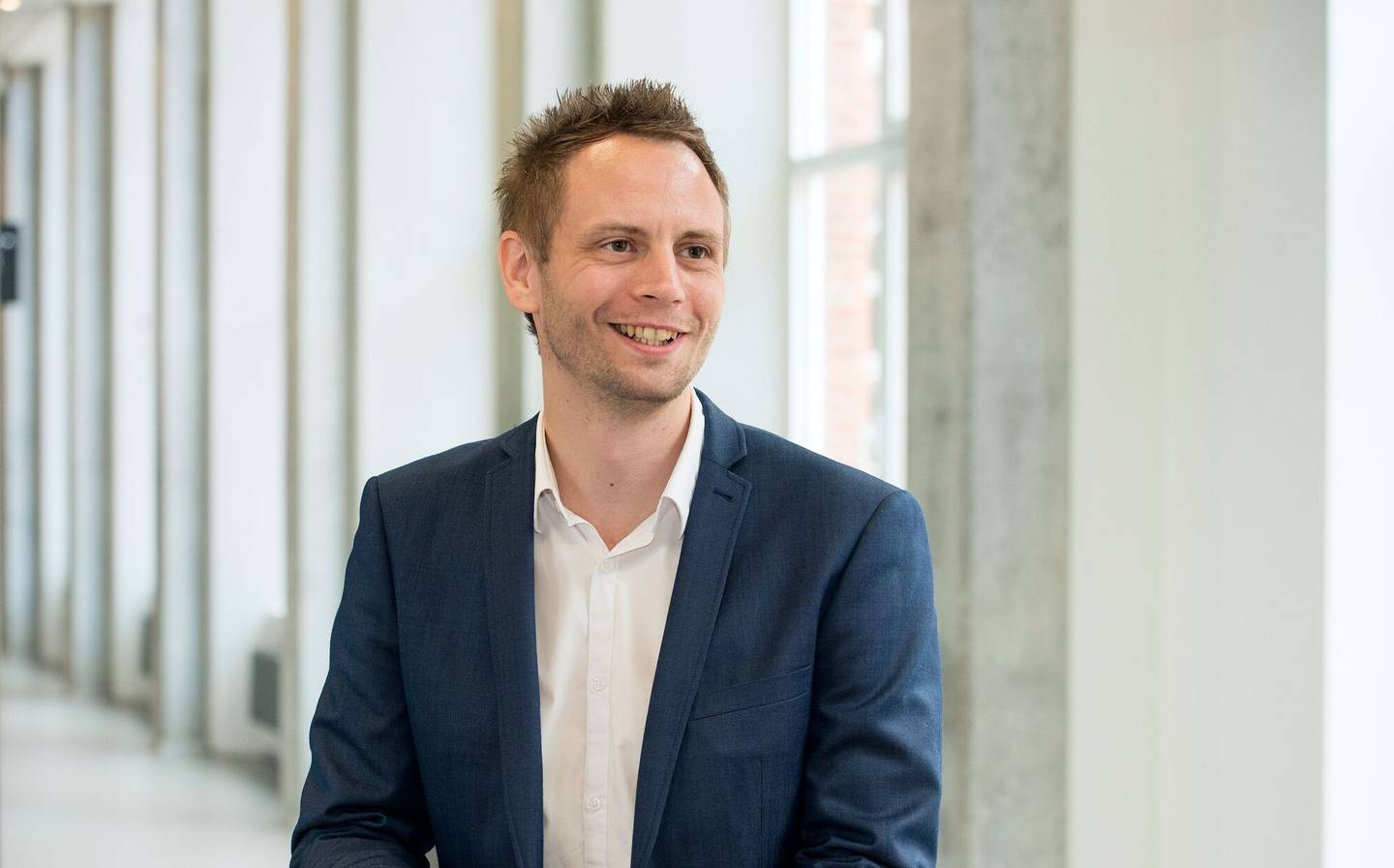
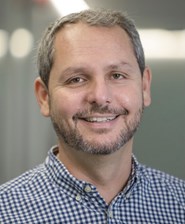
Harald Kirchsteiger is a Professor at the University of Applied Sciences Wels , affiliated with the Research Center Wels and the ASiC Center of Excellence Energy . His research focuses on energy management systems, renewable energy integration, and model predictive control for energy systems. He leads and participates in multiple EU-funded projects including RESINET (resilience of energy grids), InduGrid (industrial microgrids), and HyBRID (hydrogen applications). His work addresses challenges in grid stability, battery optimization, and energy storage solutions. Recent projects involve developing predictive control models for photovoltaic systems and optimizing nonlinear energy management problems. He has authored over 40 publications with an h-index of 12, focusing on smart grid technologies and energy efficiency. Key research areas include distributed energy systems, battery inverter efficiencies, and energy resilience strategies. Collaborations span academic and industrial partners across Europe, addressing challenges in decarbonization and grid modernization.
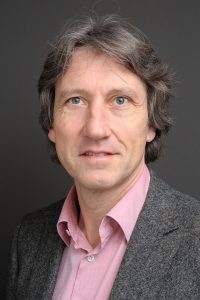
Prof. Dr. Corinne Moser is a Professor of Economic Psychology at the School of Applied Psychology, FHNW University of Applied Sciences. Her research focuses on sustainability, consumption behavior, sustainable mobility, and decision-making processes. She holds a PhD from ETH Zurich (2008-2012) and has extensive experience in projects addressing behavioral change and policy design. Her work spans academic publications, industry collaborations, and policy-oriented research. Education: PhD Candidate (Institute for Environmental Decisions, ETH Zurich, 2008-2012); PostDoc (Institute for Environmental Decisions, ETH Zurich, 2012-2013). Research Interests: Sustainable consumption patterns, behavioral interventions for environmental goals, and mobility behavior analysis. She explores how psychological insights can drive policy and design effective strategies for sustainability transitions. Main Article Trends: Her recent work emphasizes reducing car dependency in leisure travel, evaluating sharing economy impacts, and promoting energy-efficient technologies through experiential learning. Publications often bridge psychological theory with practical policy applications. Grants and Collaborations: Collaborated with organizations like the Swiss Federal Office of Energy (BFE) and SCCER CREST. Projects include analyzing mobility habits, energy consumption patterns, and innovation models for renewable energy adoption. Labs/Teams: Affiliated with the Institute for Market Supply and Consumer Decision-Making, focusing on consumer behavior and market dynamics in sustainability contexts.
Haitham Abu-Rub is a Professor at Texas A&M University at Qatar specializing in power systems, renewable energy integration, and power electronics. His research focuses on developing innovative solutions for grid stability, EV charging infrastructure, and intelligent control systems. He has published extensively in IEEE journals and conferences, addressing challenges in smart grids and sustainable energy systems. His work spans power converter design, fault diagnosis, and AI applications in energy management. Recent projects include decentralized PV trading systems, resilient inverter networks, and physics-informed neural networks for insulation diagnostics. Dr. Abu-Rub collaborates internationally on projects involving grid-interactive buildings, digital twins for power converters, and adaptive control techniques for electric vehicle charging.
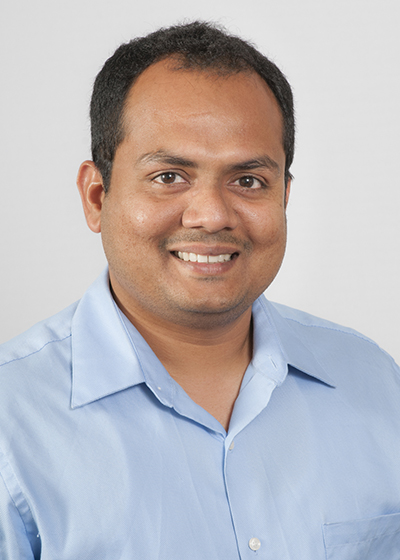
Christa Searle is an Assistant Professor in Business Analytics at Heriot-Watt University's School of Social Sciences and Edinburgh Business School. She joined in 2021 and serves as Programme Director for the MSc Business Analytics and Consultancy. Her research focuses on sustainability, logistics, and human behavior, employing operational research, agent-based simulation, and data analytics. She holds an extraordinary senior lecturer position at Stellenbosch University, where she earned her PhD in Industrial Engineering (2019). Her work addresses challenges like hydrogen refuelling infrastructure design, supply chain optimization, and modeling complex systems such as tuberculosis spread in informal settlements. Key projects include the ATHENA framework for hydrogen infrastructure analysis and Agent-Based Modeling of forced migration and consumer behavior. Christa has been recognized with awards including the Tom Rozwadowski Medal (2022) and Fellow of the Higher Education Academy (FHEA, 2023). She actively participates in conferences and workshops, such as the 53rd Annual Conference of the Operations Research Society of South Africa (2024) and the Sustainable Road Freight Workshop (2023). She contributes to research groups like the Centre for Logistics & Sustainability and the FeMe Network. Her teaching emphasizes authentic, industry-engaged assessments and spans business and data analytics. Current research collaborations explore decarbonizing freight transport and SDG-aligned solutions, reflecting her commitment to practical sustainability outcomes.
Mahdi Abolghasemi is a Senior Lecturer in Statistical Data Science at Queensland University of Technology (QUT), within the School of Mathematical Sciences, Faculty of Science. He previously held academic positions at Monash University and The University of Queensland. He serves on the editorial board of the International Journal of Forecasting and reviews for journals like Scientific Reports , International Journal of Production Research , and Applied Energy . Education: PhD in Statistics (University of Newcastle). Research Interests: Time series forecasting, decision optimization, and machine learning applications in retail and energy sectors. His work focuses on hierarchical structures, systematic events, and volatility in time series data, with funded projects exceeding $900k. Notable areas include demand forecasting in supply chains, renewable energy forecasting, and decision-focused predictive analytics. His research has been recognized by awards from the International Institute of Forecasters, Australian Mathematical Society, and IEEE Computational Intelligence Society. Awards: International Institute of Forecasters Award Australian Mathematical Society Award IEEE Computational Intelligence Society Award Australian Mathematical Sciences Institute Recognition Teaching: A Fellow of the Higher Education Academy (FHEA), he emphasizes bridging theory with industry-relevant projects. Courses taught include data science, business analytics, time series forecasting, and statistical machine learning. Received the Faculty of Science Highly Regarded Early Career Teaching Excellence Award at The University of Queensland. Grants & Funding: Over $900k from national/international organizations supporting his research in forecasting and optimization. Supervision: Currently accepting research students in areas such as hierarchical forecasting, Bayesian-focused learning, inventory optimization, and energy supply chain decision-making. Research Centres: Energy Transition Centre and Centre for Data Science at QUT. Collaborations with industry partners like Sanitarium, Coles, Woolworths, Australian Energy Market Operator (AEMO), and Australian Renewable Energy Agency (ARENA).
Philippe Baecke is a Professor of Business Analytics and Artificial Intelligence at Vlerick Business School, where he also serves as Programme Director for the Master in Business Analytics & AI and two executive programmes. He holds adjunct roles as Lecturer at Trinity Business School, Ireland, and Professor at the University of Namur. He earned his Doctorate in Applied Economics from Ghent University, complemented by an Advanced Master and Master in Applied Economics, both from Ghent University. His research focuses on leveraging big data analytics across marketing, operations, and finance, with specialties in digital marketing, customer relationship management, and network analysis. Notable areas include ad targeting, spatial modeling, and the application of AI in call center optimization and emotion recognition. He advises companies like KBC, ING, and Telenet on data strategy, blending strategic and operational insights. His recent work explores digital transformation trends, cost-effective AI adoption for SMEs, and the integration of human judgment in forecasting systems. He has published extensively in peer-reviewed journals, addressing topics like telecom data monetization, churn detection, and consumer privacy in addressable TV advertising. Baecke’s expertise also extends to vehicle telematics in insurance risk selection and spatial econometrics in customer acquisition modeling. He has collaborated on projects involving Bluetooth tracking in retail environments and the analysis of urbanization effects on customer behavior.
Ulf Melin is Professor and Dean at Linköping University's Department of Management and Engineering, specializing in digital government, public sector transformation, and smart city solutions. His research examines how digital technologies reshape bureaucratic organizations and public service delivery, with particular focus on Scandinavian governance models. Key research areas include robotic process automation in government, open data ecosystems, AI governance policies, and socio-technical aspects of smart city development. His work balances technical innovation with institutional analysis to address tensions between digital efficiency and public values. Professor Melin has received multiple awards including the Emerald Literati Award and EGOV Outstanding Paper awards. He leads projects investigating automation ethics, administrative burden in digital services, and municipal transformation strategies, contributing to national policy discussions on AI governance in Sweden.
Sylvia Bohnenstengel is a researcher at the University of Reading's Department of Meteorology, specializing in urban meteorology, climate change impacts, and air quality. Her work involves numerical weather prediction, boundary layer dynamics, and urban energy balance studies. Her research interests include: Urban heat island effects and mitigation Anthropogenic heat emissions Scalar dispersion in urban environments Climate change adaptation for cities Atmospheric turbulence and flow Surface energy balance parameterization Recent publications analyze: 2024: Urban heat flux evaluation via scintillometry 2024: Convective motions' impact on dispersion models 2022: Turbulence dynamics in idealized urban geometries 2018: Sea-breeze detection algorithms 2016: Urban heat island effects on health Multi-decadal urban climate modeling (2004-2015) She contributed to the ClearfLo project (2015) examining London's meteorology-air quality-health nexus, and participated in international urban energy balance model comparisons (2010-2011). Her work bridges meteorology, urban planning, and public health.
Bin Hu is a Professor of Operations Management at the Naveen Jindal School of Management, University of Texas at Dallas. He holds a PhD in Business Administration from the University of Michigan and a BS in Mathematics from Peking University, with academic appointments spanning the University of North Carolina at Chapel Hill and UT Dallas. Education: PhD (University of Michigan, 2011), BS (Peking University, 2005) His research focuses on procurement and supply chain management, innovative operations, and sustainability. Current work includes analyzing scope 3 emission disclosures, battery-as-a-service models, and food waste reduction through ugly produce retailing. He explores freemium service monetization and user conduct regulation in digital platforms. Notable awards include the 2018 Outstanding Senior Editor for Production and Operations Management, 2012 ProQuest Distinguished Dissertation Award, and 2011 Charles H. Gessner Fellowship. His scholarship addresses supply chain disruptions, vertical integration, and technology sharing strategies. Professional Affiliations: INFORMS, MSOM, POM Societies He has advised numerous PhD students and served on editorial boards for leading journals like Management Science and Production and Operations Management. His work bridges operational efficiency with environmental responsibility, emphasizing contractual design and behavioral dynamics in supply chains.
Miguel Poblete-Cazenave is an Assistant Professor in the Environmental Economics department at the Vrije Universiteit Amsterdam (VU), within the Faculty of Science. His research focuses on economic modeling, econometrics, and machine learning applied to sustainability, energy economics, and economic development. He previously held positions as a Postdoctoral Associate at Yale School of the Environment and a Research Scholar at IIASA (International Institute for Applied Systems Analysis). Education: PhD in Economics, Stony Brook University (2018) MA in Economics, University of Rochester (2012) Professional Degree in Industrial Engineering, University of Santiago, Chile (2010) BSc in Engineering, University of Santiago, Chile (2009) His research interests include modeling pathways toward sustainable development goals, climate policy design, and energy transition strategies. Recent work addresses climateflation dynamics, heat pump adoption policies, and spatial analysis of well-being using fused household data. He collaborates on global modeling frameworks like MESSAGEix-GLOBIOM to integrate water and climate impacts. Articles highlight interdisciplinary approaches to energy access, health impacts of clean cooking transitions, and post-pandemic energy systems. He teaches courses such as Master Thesis Guidance and Sustainable Energy Systems.
Prof. Hartmut Wittig is a Full Professor at the Institute of Nuclear Physics, Johannes Gutenberg University Mainz since 2005. He leads the Cluster of Excellence PRISMA+ (Precision Physics, Fundamental Interactions and Structure of Matter). His research focuses on Lattice QCD, hadron structure, and precision calculations of the muon's anomalous magnetic moment. Wittig holds a PhD from the University of Hamburg (1992) and habilitation in theoretical physics (1998). He has held positions at the University of Southampton (1992–1995), DESY-Zeuthen (1995–1996), and the University of Oxford (1996–2000 as PPARC Advanced Fellow). His research interests include lattice QCD applications to hadron spectroscopy, muon g−2, and precision electroweak observables. Notable achievements include pioneering work on the hadronic vacuum polarization contribution to the muon’s magnetic moment and advancing machine learning techniques in lattice calculations. He has advised over 20 PhD students, many focusing on lattice QCD and precision physics. Awards include CERN Scientific Associate (1999/2000) and a teaching award from Mainz University (2013). Wittig’s lab contributes to global initiatives like the FLAG (Flavour Lattice Averaging Group) and collaborates on projects such as the Muon g−2 experiment. His work bridges theoretical calculations with experimental precision demands in particle physics.
Liping Wang is a Professor in the Department of Civil and Architectural Engineering at the University of Wyoming, part of the College of Engineering and Physical Sciences. She also serves as the Director of the Center for Controlled Environment Agriculture, highlighting her leadership in sustainable building and agricultural systems. Her work bridges engineering, energy efficiency, and environmental resilience. Academic Background: B.S., Xi’an University of Architecture and Technology, China M.S., Xi’an University of Architecture and Technology, China Ph.D., National University of Singapore Her research interests focus on building performance modeling, fault detection and diagnosis for HVAC systems, energy efficiency in indoor agriculture, and the development of resource-efficient and resilient future communities. She applies data-driven and adaptive modeling techniques to enhance building energy systems and indoor environmental quality. The analysis of her recent publications reveals a strong trend toward intelligent building systems, with recurring use of machine learning (e.g., Gaussian mixture models, particle swarm optimization) for HVAC modeling, fault detection, and energy optimization. Her work increasingly integrates controlled environment agriculture, reflecting a shift toward sustainable food-energy-water nexus solutions. Topics span from fundamental thermodynamics to applied field evaluations of ASHRAE standards. Scientific Awards: NSF CAREER Award (1944823), National Science Foundation, 2019 Appreciation Award, Advisor of ASHRAE Student Branch, University of Wyoming, 2019 Liping Wang has secured competitive research funding, notably the NSF CAREER Award, and mentors students through research and professional engagement. She actively contributes to the academic community as an Associate Editor of the International Journal of Sustainable Energy Technologies and Assessments and a guest editor for Energy and Buildings . Her work involves interdisciplinary collaboration, with co-authors from diverse engineering and environmental science backgrounds. She has served as an ad hoc reviewer for top journals including Building and Environment , Energy and Buildings , and Applied Energy . She leads the Center for Controlled Environment Agriculture, which likely involves a research team focused on energy-efficient indoor farming technologies, greenhouse modeling, and sustainable building-agriculture integration. Her lab appears to utilize low-cost sensor systems (e.g., Arduino-based platforms) for real-time monitoring of environmental conditions.
Saravanan Venkatachalam is an Associate Professor in the Department of Industrial and Systems Engineering at Wayne State University. His research focuses on stochastic programming, robust optimization, and discrete event modeling with applications to supply chain management, healthcare, energy systems, and unmanned vehicle operations. Education Ph.D. in Industrial and Systems Engineering, Texas A&M University M.S. in Industrial and Systems Engineering, Texas A&M University B.E. in Production Engineering, PSG College of Technology, India His work addresses decision-making under uncertainty through decomposition algorithms and data-driven approaches. Recent projects include autonomous vehicle path planning with uncertain parameters, community-aware electric vehicle charging networks, and optimization models for radio advertisement placements. Current research trends emphasize stochastic programming for resource allocation in dynamic environments, robust optimization for transportation and energy systems, and multi-vehicle routing under uncertainty. He has supervised multiple graduate students in thesis work related to optimization models and taught core courses such as Operations Research, Deterministic Optimization, and Stochastic Programming at both undergraduate and graduate levels.
Joachim Schleich is an Adjunct Professor at Virginia Tech's Department of Agricultural and Applied Economics. He heads the Energy and Climate Policy unit at the Fraunhofer Institute for Systems and Innovation Research in Karlsruhe, Germany, where he focuses on environmental policy instruments, international climate policy architectures, and innovation in environmentally friendly technologies. Current research examines CO2 emissions trading systems , residential water demand , and political economy of environmental policies Collaborates with Virginia Tech on graduate research committees and joint projects Key publications analyze energy efficiency barriers, EU ETS dynamics, and endogenous technological change impacts
Apostolos Theos is an Associate Professor at Umeå University's Department of Community Medicine and Rehabilitation , where he serves as Head of the Sports Medicine Section. He is also affiliated with the Umeå School of Sport Sciences as Director of its Sport Science Division. PhD in Molecular Exercise Physiology (University of Athens, 2012) Deputy Head of Department since 2022 Director of Studies role His research focuses on: Hormonal and metabolic responses to exercise in children Development of test batteries for athlete performance prediction Muscle physiology and training adaptations Key research trends from his publications include: Pediatric physiological adaptations to resistance training Individualized performance prediction models in alpine skiing Exercise interventions for chronic disease populations Cross-transfer effects of resistance exercise Molecular mechanisms of exercise-induced tissue remodeling Current projects include Hip and groin problems in elite ice hockey players (2024-2029).