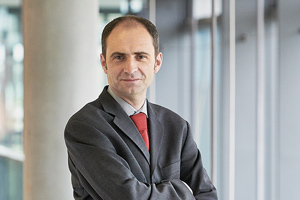
Anastasia Semykina is a Professor of Economics and Deputy Dean (Research and Innovation) at RMIT University's School of Economics, Finance & Marketing. She holds a PhD from Michigan State University (2006) and previously served as Charles and Joan Haworth Professor of Economics at Florida State University. Her expertise spans theoretical and applied econometrics, with a focus on panel data models, missing data estimation, and their application in labor economics, education economics, transition economies, and economic psychology. She teaches advanced econometrics and microeconomics courses at both undergraduate and graduate levels. Research Interests: Theoretical and Applied Econometrics Labor Economics Economics of Education Transition Economies Economics and Psychology Health Economics Her recent publications address topics such as panel data methodologies, healthcare cost-effectiveness analysis, and educational policy evaluation. She is actively involved in supervising PhD and Master's research students in econometrics and applied economics.
Professor Jiti Gao is a Donald Cochrane Chair in Econometrics & Business Statistics at Monash University's Faculty of Business and Economics. He leads the Department of Econometrics and Business Statistics, specializing in non- and semi-parametric econometrics, time-series analysis, and panel data methodologies. His research focuses on developing statistical models for climate change, energy demand, and financial forecasting. Affiliations: Monash University, Impact Labs Grants: Multiple ARC Discovery Projects (e.g., 2020–2025 on climate-energy time series, 2017–2020 on econometric model building) Collaborations: CSIRO, Yale University, and international partners from China, Norway, and Singapore Research interests include climate econometrics, financial time series, and policy evaluation. Over 136 publications span econometric theory and applications, with recent work on nonlinear trending models and quantile regression. His grants emphasize methodological advancements in time series and panel data analysis. Awards: Not explicitly mentioned, but recognition includes Australian Professorial Fellow status and international research leadership roles. Advising/Grants: Primary Investigator on multiple ARC-funded projects, focusing on climate modeling and financial econometrics Labs/Teams: Part of Monash's Impact Labs and collaborates with global institutions on climate and econometric initiatives
Sridhar R. Tayur is the Ford Distinguished Research Chair and University Professor of Operations Management at Carnegie Mellon University’s Tepper School of Business. He holds a Ph.D. in Operations Research from Cornell University and a B.Tech. in Mechanical Engineering from IIT Madras. His research focuses on quantum computing applications in operations research, healthcare systems optimization, and supply chain management. He has held visiting roles at MIT, Stanford, and Cornell, and founded companies like SmartOps and OrganJet. His recent work spans quantum-inspired optimization algorithms, healthcare decision support systems, and fair resource allocation policies. He has contributed to over 110 publications, including high-impact papers in Management Science , Operations Research , and IEEE Transactions . Awards include INFORMS Fellow and NAE membership. He teaches courses in quantum integer programming, healthcare operations, and service management at the Tepper School. Education: Ph.D. (Cornell), B.Tech. (IIT Madras) Research Labs: Quantum Technology Group, OrganJet Key Awards: INFORMS Fellow, NAE Member, MSOM Distinguished Fellow Teaching: MBA Operations Management, PhD Quantum Optimization, Healthcare Systems His interdisciplinary work bridges quantum computing, healthcare policy, and logistics, supported by collaborations with industry and government institutions.
Jordan Siegel is a Professor of Strategy at the Ross School of Business, University of Michigan, and a Michael R. and Mary Kay Hallman Faculty Fellow. He also serves as a Visiting Faculty member at The American College of Greece (ACG). His academic background includes a Ph.D. from MIT, and B.A. and M.A. degrees from Yale University. Professor Siegel’s research focuses on global strategy, particularly how companies leverage institutional differences across borders to gain competitive advantages through governance and human resource management strategies. His work examines institutional arbitrage—how firms exploit formal and informal rules (e.g., laws, cultural norms) to enhance performance, even in single-country operations. Notably, he investigates how foreign multinationals in Japan and South Korea exploit social biases by promoting female managers, leading to long-term performance improvements. His findings highlight the strategic use of labor market discrimination as a competitive tool. Professor Siegel’s research has been published in top-tier journals such as Management Science , Administrative Science Quarterly , and Strategic Management Journal . He is affiliated with the William Davidson Institute and Harvard Korea Institute, contributing to interdisciplinary studies on global business strategy and institutional dynamics.
Don John Omale serves as a Senior Lecturer in Criminology within the College of Business, Law and Social Sciences, focusing on critical issues in Nigerian and African criminal justice systems. His work bridges theoretical frameworks with practical field applications across diverse security and justice contexts. Dr. Omale's research centers on restorative justice mechanisms, police ethics, and conflict resolution in Africa. He extensively examines traditional African dispute resolution models alongside modern criminal justice challenges, with particular emphasis on Nigeria. His studies address farmer-herder conflicts, prison conditions, terrorism countermeasures, and domestic violence in semi-urban settings, consistently advocating for culturally grounded solutions that enhance community trust and institutional accountability. Analysis of his 15 most recent publications (2010-2025) reveals a dominant focus on restorative justice implementation and police accountability in Nigeria. His work demonstrates a methodological shift from theoretical discourse (2005-2011) toward empirical field studies examining practitioner perspectives and community-level impacts, particularly in conflict-affected regions like the Niger Delta and North Central Nigeria. The research consistently connects indigenous African conflict resolution traditions with contemporary security challenges. No scientific awards were documented in available sources Professional activities show no recorded student advising or grant funding in the provided materials, though his extensive publication record suggests active research supervision. His work frequently engages criminal justice professionals and community stakeholders, indicating collaborative field-based approaches to justice reform.
Prof. Dr. Harald Tauchmann is a Professor of Health Economics at Friedrich-Alexander University Erlangen-Nuremberg (FAU), where he has held a faculty position since 2013. He is affiliated with the School of Business, Economics and Social Sciences, specifically within the Department of Economics. Prof. Tauchmann also participates in multiple research focus areas at FAU, including 'Insurance and Risk' and 'Work in Transition,' demonstrating his interdisciplinary approach to health economics. Prof. Tauchmann received his education at Heidelberg University and the University of Manchester, UK, where he studied economics, political science, and sociology. He graduated in 1998 and completed his doctorate at the Interdisciplinary Institute for Environmental Economics (University of Heidelberg) in 2003. Prior to joining FAU, he worked as a research associate at the Rhineland-Westphalian Institute for Economic Research (RWI) in Essen from 2003 to 2012 and headed a junior research group at the health economics research center CINCH at the University of Duisburg-Essen. His research expertise lies in empirical health economics, with a particular emphasis on health insurance choice and competition, as well as individual health behavior. He has made significant contributions to understanding obesity, health shocks, mental health care payment systems, and thyroid diagnostics through his extensive publication record. His methodological work includes developing specialized Stata modules for econometric analysis, which have been widely adopted by researchers in the field. Prof. Tauchmann's scholarly work demonstrates a consistent focus on applying rigorous econometric methods to pressing health policy questions. His research portfolio shows particular strength in causal analysis of health behavior, especially regarding obesity interventions, health insurance market dynamics, and the economic consequences of health shocks. His recent publications (including several forthcoming in 2025) indicate continued scholarly productivity and relevance to current health policy debates. From March 2021 to April 2022, Prof. Tauchmann served as chairman of the German Society for Health Economics, highlighting his leadership and recognition within the national health economics community. His email contact is harald.tauchmann@fau.de for professional inquiries.
Ruonan Xu is an Assistant Professor in the Department of Economics at Rutgers University, specializing in Econometrics. She joined the department in Fall 2020. Her research focuses on finite population inference, spatial correlation, and causal inference methodologies. Education: Ph.D. in Economics, Michigan State University, 2020 B.A. in Mathematical Economics, Fudan University, 2015 Research Interests: Dr. Xu’s work emphasizes econometric methodologies for addressing complex data structures, including spatial correlation, clustered data, and interference effects. She has contributed to instrumental variable estimation with binary endogenous variables and developed design-based approaches for spatial analysis. Her recent focus includes robustness considerations in econometric models and multidimensional clustering techniques. Publications & Work in Progress: Her published work includes studies in The Econometrics Journal and Economics Letters . Current projects explore distributionally robust average treatment effects and difference-in-differences with interference mechanisms. A working paper on multidimensional clustering has been submitted to the Journal of Econometrics . Advising & Grants: No formal advisees or grants explicitly listed in the provided materials.
Owen Skinner is an Assistant Professor in the Department of Chemistry and Chemical Biology at Northeastern University, affiliated with the Barnett Institute of Chemical and Biological Analysis. He leads the Skinner Lab, which specializes in high-resolution mass spectrometry to study protein-metabolite interactions in health and disease. Skinner earned his Ph.D. from Northwestern University and conducted postdoctoral research at Massachusetts General Hospital. His research focuses on thiol redox regulation, vitamin cofactor metabolism, and oxidative phosphorylation dynamics. Education: Ph.D. in Chemistry (Northwestern University), Postdoctoral Fellowship in Analytical Chemistry (Massachusetts General Hospital). Research interests include proteomics, metabolomics, mitochondrial dysfunction, and metabolic signaling. The lab actively recruits graduate students, undergraduates, and postdoctoral researchers across Northeastern's scientific community. Affiliations: Barnett Institute, College of Science Lab Members: PhD students Yifan Liu, Michael Xiao, Angela Rojas-Merchan; Undergraduates Helena Rittenhouse, Ridha Shah; High School collaborator Helen Loango Techniques: Native mass spectrometry, proteomics, metabolomics, redox biology Publications span mitochondrial metabolism, metabolic biomarkers in septic shock, and enzyme engineering. The lab emphasizes interdisciplinary collaboration and supports students through Northeastern's experiential learning programs.
Martin Huber is Professor of Applied Econometrics and Policy Evaluation at the University of Fribourg, Switzerland, within the Faculty of Management, Economics and Social Sciences, Department of Economics. He leads the Chair of Applied Econometrics and maintains an active research profile with numerous publications in top economics and statistics journals. His work bridges theoretical econometrics with practical policy applications across multiple domains including labor, health, and education economics. Professor Huber earned his Ph.D. in Economics and Finance in 2010 and served as Assistant Professor at the University of St. Gallen until 2014. He has conducted research stays at Harvard University (2011/2012) and the University of Sydney (2014 and 2019), establishing an international research network. His academic affiliations include the Committee for Econometrics of the Verein für Socialpolitik, Global Labor Organization, Soda Labs (Monash Business School), and Centre for European Economic Research (ZEW) Mannheim. Huber's research focuses on data-based causal analysis , machine learning applications in economics , and policy evaluation methods . He specializes in developing and applying statistical and econometric methods for measuring causal effects, with particular emphasis on semi- and nonparametric microeconometrics. His work spans labor economics (gender occupational segregation, maternal labor supply), health economics, education policy, and competition policy (bid-rigging cartels detection). His recent publications (2023-2025) demonstrate a clear trajectory toward integrating machine learning techniques with traditional econometric methods for causal inference. This includes developing frameworks for causal discovery, improving difference-in-differences methods with machine learning, and creating novel approaches for detecting collusion in markets. His 2023 book "Causal Analysis: Impact Evaluation and Causal Machine Learning with Applications in R" (MIT Press) has become a key reference in the field. As an active researcher, Professor Huber directs several research projects including experimental evaluations of gender occupational segregation in the Swiss apprenticeship market. His work combines theoretical rigor with practical policy relevance, often employing experimental and quasi-experimental methods to address questions of causal mechanisms in social and economic phenomena. Through his Chair of Applied Econometrics, Huber supervises Ph.D. students and maintains an active research group focused on advancing causal inference methodologies. His work has significant implications for evidence-based policymaking across multiple sectors, particularly in evaluating the effectiveness of social programs and economic policies.
Harald Van Heerde is a Research Professor of Marketing at the University of New South Wales, Sydney, within the UNSW Business School's Department of Marketing. He holds roles as Editor of the Journal of Marketing and Executive Vice-Chairman/Program Director of the Marketing Science Hub at AiMark. His academic career includes positions at Maastricht University, the University of Waikato, Tilburg University, and Massey University. Education: Ph.D. in Economics (Cum Laude), University of Groningen, the Netherlands (1999) M.Sc. in Econometrics (Cum Laude), University of Groningen, the Netherlands (1995) Research Interests: Harald focuses on applying econometric models and large datasets to address critical marketing challenges. His work explores marketing mix effectiveness , brand equity , digital marketing strategies , consumer behavior in crises , and cross-industry applications such as retailing, healthcare, and entertainment. Methodologically, he emphasizes dynamic models, endogeneity correction, optimization techniques, and text mining. Articles Trends: Recent publications highlight analysis of inflation's impact on consumer spending , mobile app engagement , brand recovery post-crisis , and econometric frameworks in marketing decision-making. His work bridges theoretical advancements with practical business implications, particularly in stochastic cost industries and global market dynamics. Awards & Fellowships: 2024: AMA Fellow & Shelby/Hunt Best Paper Award 2021: Churchill Award (Lifetime Contributions) 2004–2023: 10+ paper awards including MSI/Root, Paul Green, and multiple long-term impact recognitions Advising & Grants: Currently supervising doctoral candidates Ayesha Hossain (Human Branding) and Ada Choi (consumer financial decision-making). Supervised 12 completed theses across branding, retailing, and digital marketing. Secured over AU$2 million in grants including ARC Discovery, MSI, and the Marsden Fund. His grants examine topics like brand crisis management, price war dynamics, and mobile marketing ROI. Labs & Teams: Leads the Marketing Science Hub at AiMark, a nonprofit connecting academics with household panel data. Consults for global firms including Unilever, Edeka, and AZTEC. His work emphasizes collaborative data-driven research with industry partners.
Fred Feinberg is the Joseph and Sally Handleman Professor of Marketing and Professor of Statistics (by courtesy) at the University of Michigan, where he is also an Affiliated Faculty member of the Center for the Study of Complex Systems. His work integrates advanced Bayesian methods with large-scale marketing data to illuminate how people make choices under uncertainty. Education Ph.D., Sloan School of Management, Massachusetts Institute of Technology (1989) Doctoral program in Mathematics, Cornell University (1983–84) S.B. Mathematics & S.B. Philosophy, Massachusetts Institute of Technology (1983) Research Focus Feinberg’s scholarship centers on discrete choice models that leverage real-world decisions to infer latent attributes such as demographics, product appeal, and socioeconomic status. Methodologically, he employs Hierarchical Bayes (HB) models and cutting-edge MCMC algorithms to handle massive data sets, while theoretically he advances dyadic utility theory and optimal search under uncertainty. Applications span click-through behavior, menu-based choice, online dating preferences, spatial marketing, and consumer reactions to intangible or aesthetic product features. Recent empirical studies explore the wearout versus weariness effects of online advertising, the impact of data breaches on consumer behavior, and dynamic pricing for digital media subscriptions. Across these projects, Feinberg couples rigorous statistical innovation with actionable managerial insights, bridging marketing science, operations, and engineering. Scientific Awards & Leadership Joseph and Sally Handleman Endowed Professorship Past President, INFORMS Society for Marketing Science Departmental Editor, Production and Operations Management Former Co-Editor, Marketing Science Co-author (with T. Kinnear & J. Taylor) of the textbook Modern Marketing Research: Concepts, Methods, and Cases Grants & Collaborations While explicit grant lists are not provided, Feinberg’s prolific publication record in top-tier journals (e.g., Journal of Marketing Research , Marketing Science , Management Science ) and editorial board service imply sustained external funding and interdisciplinary partnerships, particularly with operations, engineering, and computer-science groups. Laboratories & Teams Feinberg is formally affiliated with the Center for the Study of Complex Systems (CSCS) at the University of Michigan, where he collaborates on network-based choice frameworks and large-scale behavioral data analytics. He maintains active ties to the Ross Marketing faculty and the Department of Statistics, fostering joint workshops and doctoral training initiatives.
Stefan Hoderlein is a Professor in the Department of Economics at Emory University. His expertise lies in econometrics, with a focus on nonparametric methods, panel data analysis, and structural models. He holds a PhD from Bonn University and the London School of Economics (2002), and a Diplom Volkswirt from Bonn University (1997). His research interests include advanced econometric techniques such as instrumental variable estimation, demand analysis, and random coefficient models. He has contributed to methodologies addressing unobserved heterogeneity, endogeneity, and identification challenges in economic data. His work often explores applications in consumer behavior, market structure, and policy evaluation. Recent research trends in his publications emphasize nonparametric identification strategies, panel data methodologies, and the integration of big data into econometric frameworks. His technical contributions include Stata modules for statistical testing and frameworks for analyzing aggregate demand and welfare effects. While no specific awards are listed, his extensive publication record reflects sustained scholarly impact in econometric theory and applied economics. Advising details and grant information are not explicitly provided in the sources, though his work often involves collaborative research teams. His office is located in the R. Rollins Building (R428), and he maintains an active academic website.
Joachim Freyberger is a Professor at the University of Bonn , affiliated with the Department of Economics. He is associated with the Institute for Financial Economics & Statistics and the Hausdorff Center for Mathematics, focusing on econometrics and nonparametric methods. Institute for Financial Economics & Statistics Hausdorff Center for Mathematics His research spans econometrics, nonparametric identification, instrumental variables, and financial economics. Key areas include shape restrictions in estimation, interactive fixed effects in panel data, and structural analysis of consumer markets and asset pricing. Recent publications show a focus on nonparametric econometric theory, interactive fixed effects models, and applications to financial panels. Papers address challenges in identification, confidence band construction, and digital market analysis. He teaches advanced courses including Econometrics I and II , Topics in Econometrics and Statistics , and Research Module in Econometrics at Bonn, as well as introductory and graduate econometrics at UW-Madison.
Prof. Dr. Kai Hoberg is a Professor of Supply Chain and Operations Strategy at Kühne Logistics University (KLU) since 2017, where he also served as Department Head of the Operations and Technology Department from 2017 to 2023. Prior to joining KLU as an Associate Professor in 2012, he was an Assistant Professor at the University of Cologne (2010–2012) and a strategy consultant at Booz & Company (2006–2010). His research interests span supply chain analytics and technology integration inventory modeling for intermittent demand digital transformation in operations management additive manufacturing in after-sales services human-machine interaction in forecasting pharmaceutical supply chain challenges IoT-enabled vendor-managed inventory behavioral aspects of operations . Recent publications highlight empirical studies leveraging machine learning for semiconductor order fulfillment, typologies for additive manufacturing adoption, and process mining applications in SCM. His work frequently combines theoretical modeling with real-world validation, including partnerships with firms in food manufacturing, postal services, and medical devices. He earned a PhD in Supply Chain Management from Münster University (2006) and a Diplom in Industrial Engineering from Paderborn University and Monash University. He has held visiting scholar roles at institutions like Cornell, NUS, Oxford, and Stellenbosch.
Guillaume Bourque is a Professor in the Department of Human Genetics at McGill University's Faculty of Medicine. He serves as an Investigator at the Victor Phillip Dahdaleh Institute of Genomic Medicine and as the Scientific Director of the Canadian Centre for Computational Genomics (C3G). His laboratory is based at 740 Dr Penfield Ave, Room 6103, Montréal, Québec, Canada, H3A 1A4, where he leads research in computational genomics and bioinformatics. Professor Bourque's research focuses on understanding mammalian genomes using comparative genomic and epigenomic analyses. His lab investigates the evolution of regulatory sequences , the role of transposable elements in gene regulation , and the impact of genome rearrangements in evolution and cancer . His team develops computational methods and resources for the functional annotation of genomes with special emphasis on sequencing-based assays including ChIP-seq, RNA-Seq, exome- and whole-genome sequencing, and single-cell analysis. The lab's work involves examining billions of DNA base pairs to interpret how variation impacts basic biology and disease. Recent publications (2024-2025) demonstrate Bourque's leadership in pangenome graph construction , transposable element analysis , epigenomic profiling , and cancer genomics . His work spans multiple disciplines from basic genome evolution to clinical applications in cancer and infectious disease. Notable projects include the development of tools like DeepPolisher for genome assembly polishing and contributions to understanding the genomic basis of long COVID. Bourque's laboratory is actively recruiting postdocs and graduate students with backgrounds in programming or statistics. The lab emphasizes quantitative approaches to biology, requiring applicants to have experience in quantitative biology as a plus. His collaborative work extends across multiple institutions and international consortia, reflecting the interdisciplinary nature of modern genomic research.