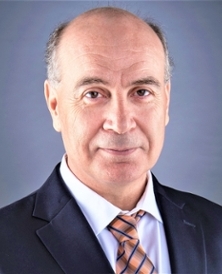
Bryan Donyanavard is an Assistant Professor in the Department of Computer Science at San Diego State University's College of Sciences. His research focuses on self-aware computing systems and cyber-physical systems optimization. Ph.D. in Computer Science from UC Irvine B.S. & M.S. in Computer Engineering from UC Santa Barbara Research interests span self-aware systems, embedded systems, and machine learning applications in resource-constrained environments. Current projects explore runtime optimization for autonomous vehicles and cyber-physical systems management. Recent publications analyze reversible neural network pruning for safety-critical systems, hybrid learning models for edge-cloud networks, and cross-layer optimization for mobile devices. Key trends include machine learning integration with hardware systems and performance maximization in embedded environments. Actively advising graduate and undergraduate researchers, with past advisees working on topics like lane following system optimization, SLAM algorithms, and sensor perception in platooning vehicles. Email: bdonyanavard@sdsu.edu Lab: DRG-Lab LinkedIn: https://linkedin.com/in/bryandony
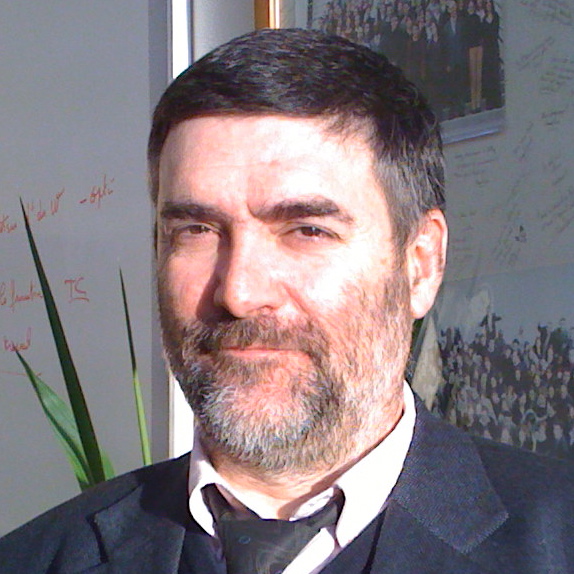
Mansour Karkoub serves as Associate Dean of Accreditation & Assessment at Lamar University's College of Engineering, holding the Michael E. and Patricia P. Aldredge Endowed Chair while serving as Professor of Mechanical Engineering. His academic career spans leadership roles at Texas A&M University, the Petroleum Institute (Abu Dhabi), and INRIA (France), with expertise rooted in robotics and control systems. Education: Ph.D. Mechanical Engineering, University of Minnesota M.S. Mechanical Engineering, University of Minnesota B.S. Mechanical Engineering, University of Minnesota Habilitation to Direct Research (HDR), University of Versailles, France Research Focus: Dr. Karkoub pioneers Robust Control methodologies (H-infinity, adaptive, AI-based), Vibration Control for flexible structures, and Robotics applications spanning medical, inspection, and manufacturing systems. His work on Ground/Underwater Autonomous Vehicles addresses self-driving technologies and mobile robotics, while his Engineering Education research integrates ABET accreditation standards with technology-enhanced learning. Publication Trends: Recent articles (2021-2024) reveal concentrated advancements in neural network-integrated motion cueing algorithms, adaptive fuzzy control for underwater manipulators, and sustainable energy harvesting from vehicle suspensions. His work consistently bridges theoretical control frameworks with real-world applications in autonomous systems, emphasizing uncertainty handling and disturbance rejection. Scientific Recognition: Outstanding Researcher Award (2019, Texas A&M Qatar) Distinguished Achievement Award (2012, Dwight Look College) Best Teacher Award (2012, Texas A&M Qatar) Fellow of ASME, IET, and IMechE IEEE Senior Member Research Leadership: Secured over $12M in funding including a $1.2M 2022 grant for smart vehicle research. Founded and directs the Smart Systems Laboratory at Texas A&M Qatar, mentoring teams focused on autonomous vehicle innovation while leading ABET accreditation initiatives as a commissioner. Laboratory Impact: The Smart Systems Laboratory drives advancements in underwater vehicle manipulators, medical robotics, and energy-efficient transportation through cross-disciplinary collaboration, directly translating control theory into deployable autonomous systems for industrial and medical applications.
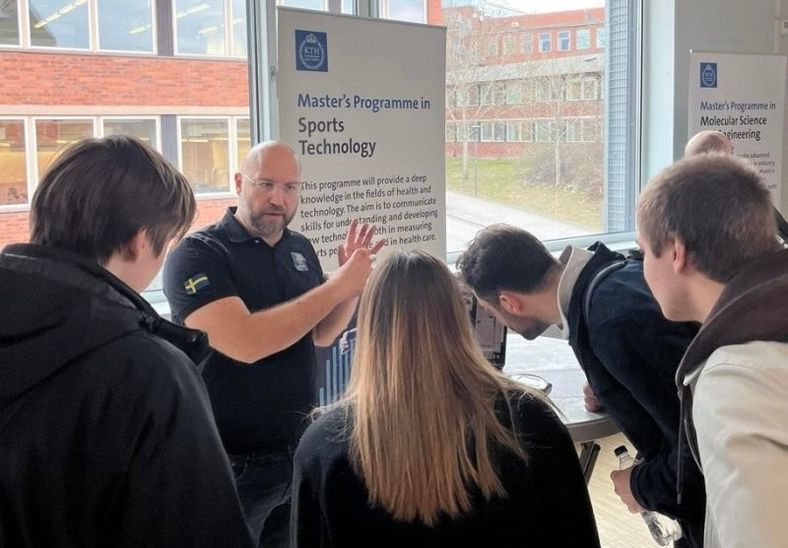
Jonas Willén is a Lecturer at KTH Royal Institute of Technology, working within the Division of Health Informatics and Logistics. He serves as Program Director for the MSc in Sports Technology and Director of RIU (National Sports University) at KTH. His professional focus centers on developing technological solutions to improve quality of life through health and sports applications. Willén's research interests span health informatics and sports technology, with particular emphasis on wearable sensor systems, data synchronization, and applications for assisted living. His work addresses critical issues in elderly care, such as developing mobile security alarm systems that overcome the limitations of current home-bound solutions. He also focuses on sports instrumentation for performance analysis and coaching, with applications for both elite athletes and general fitness. His publication record from 2011-2025 shows consistent research in sensor networks, wearable technology, and applications in healthcare and sports. The research trends indicate a progression from foundational work on data synchronization and sensor networks toward more applied solutions in health monitoring and sports performance analysis. His recent work demonstrates increasing focus on real-world implementation of these technologies. As an educator, Willén teaches multiple courses including FullStack Development and DevOps, Health and Sports Instrumentation, Medical Engineering, Mobile Applications and Wireless Networks, and Sports Technology and Instrumentation. His teaching reflects his research interests, bridging theoretical knowledge with practical applications in technology development. Willén's professional philosophy emphasizes technology's potential to evolve human capabilities, particularly in health and sports contexts. His work consistently aims to translate technical solutions into tangible benefits for end users, whether seniors needing reliable security systems or athletes seeking performance insights.
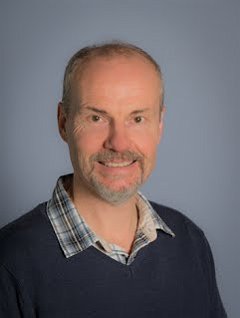
Patrick Girard is a Full Professor in Data Engineering at ISAE-ENSMA (Institut Supérieur de l'Aéronautique et de l'Espace - École Nationale Supérieure de Mécanique et d'Aérotechnique) in France. He is a member of the Data Engineering Team within the LIAS (Laboratoire d'Ingénierie des Applications de la Sensorique) laboratory, with dual affiliations at ISAE-ENSMA in Chasseneuil and ENSIP in Poitiers. Professor Girard's research focuses on Human-Computer Interaction , with particular expertise in task modeling , interactive systems design , and programming by demonstration techniques. His work spans theoretical foundations to practical applications in model-based development, user interface design methodologies, and educational technology for programming. He has made significant contributions to task model validation, simulation techniques, and the application of these principles in complex systems engineering, particularly in aerospace contexts. His publication history demonstrates a consistent evolution from foundational work on programming by demonstration and task-oriented architectures in the 1990s to more recent applications in complex systems engineering and avionics. A distinctive trend in his work is the integration of formal methods with practical HCI approaches, creating robust frameworks for developing user-centered interactive systems with safety-critical applications. Professor Girard has mentored numerous researchers throughout his career, with frequent collaborations showing sustained relationships with scholars like Loé Sanou, Nicolas Guibert, and Thomas Lachaume. His research has involved multiple interdisciplinary projects, often connecting academic research with industrial applications, particularly in the aerospace sector. Within the LIAS laboratory, Professor Girard works in the Data Engineering Team alongside colleagues in Automatic Control and Real Time research groups. The laboratory maintains strong industry partnerships, especially with aerospace companies, enabling practical implementation of theoretical research in real-world engineering contexts. His work bridges computer science theory with practical engineering applications, particularly in the French aerospace ecosystem.
Ali Mesbah is a Professor in the Department of Electrical and Computer Engineering at the University of British Columbia (UBC), where he leads the SALT lab. His research focuses on software engineering with emphasis on AI-driven software analysis, software testing, and software evolution. Previously, he was a Visiting Research Scientist at Google during 2017-2018. Dr. Mesbah received his BSc/MSc (2003) and PhD (2009) degree cum laude in Computer Science from the Delft University of Technology (TUDelft). After completing a postdoctoral fellowship with the Software Engineering Research Group at TUDelft and a Visiting Researcher position at Fujitsu Laboratories of America, he joined UBC in 2011. His research interests span software engineering with particular focus on AI-driven software analysis, software testing, software evolution, program comprehension, fault localization and repair. His work has significant applications in web application testing, JavaScript analysis, and automated program repair. He has pioneered techniques for testing modern web applications, analyzing JavaScript code, and leveraging AI for software maintenance tasks. His recent publications demonstrate a clear evolution toward integrating large language models with traditional program analysis techniques, focusing on test generation, bug repair, and understanding multi-hunk patches. His work bridges theoretical software engineering concepts with practical applications, particularly in web technologies and AI-assisted development. Amazon Research Award (2023) Killam Accelerator Research Fellowship (KARF) (2020) Killam Faculty Research Prize (2019) NSERC Discovery Accelerator (DAS) award (2016) ACM Distinguished Paper Awards at ICSE (2009, 2014) IEEE Distinguished Paper Award at ICST (2018) Best Paper Award at ESEM (2015) Best Paper Award at ICWE (2013) Dr. Mesbah has advised numerous PhD and MASc students, many of whom have gone on to positions at leading technology companies including Google, Amazon, Apple, Microsoft, and SAP. His research has been supported by various grants including the Amazon Research Award and NSERC funding. He leads the SALT lab at UBC, which focuses on software analysis, testing, and learning, with current research directions including AI-driven software engineering, web application testing, and program repair. The lab maintains active collaborations with industry partners and academic institutions worldwide.
Yintong Huo is an Assistant Professor at the School of Computing & Information Systems, Singapore Management University (SMU), where he leads research in intelligent software engineering. He received his PhD from The Chinese University of Hong Kong (CUHK) in 2024 under Prof. Michael R. Lyu and holds a Bachelor's degree from the University of Electronic Science and Technology of China. His research focuses on empowering AI models (particularly LLMs) for software development, testing, and operations, with two flagship projects: LogPAI (open-source AI platform for automated log analysis) and WebPAI (multimodal intelligence for automatic webpage development). His work spans log analysis, code intelligence, UI generation from prototypes, and configuration diagnostics. Huo's publication record shows strong trends in leveraging multimodal LLMs for practical software engineering challenges, with recent work on interactive webpage generation (Interaction2Code), configuration logging (ConfLogger), and log parsing (LILAC). His research bridges theoretical AI advancements with real-world system reliability needs. ICSE Distinguished Reviewer Award (2025) ISSRE Distinguished Reviewer Award (2024) IEEE Open Software Services Award (2022) ACM SIGSOFT CAPS Travel Grants National Scholarship (2019) Huo actively supervises PhD students (including Shi Ying Chang and Dan Huang) and research engineers. His lab has secured funding for multiple projects including WebPAI and LogPAI. He serves on program committees for major conferences (ASE, ICSE, FSE) and reviews for top journals. Current projects include dynamic webpage generation and configuration diagnostics, with ongoing work on small language models for logging systems. Huo leads the LogPAI and WebPAI research groups, developing open-source tools for automated log analysis and multimodal UI code generation. The LogPAI project has garnered over 3,000 GitHub stars and 70,000 downloads. His team collaborates with industry partners on AIOps challenges and is expanding into configuration diagnostics through the ConfLogger project.
John Grundy is a Professor of Software Engineering and Senior Deputy Dean at Monash University's Faculty of Information Technology in Melbourne, Australia. He is also an Australian Laureate Fellow (2020-2026) and leads the "Human-centric Software Engineering" (HumaniSE) research lab. With over 32 years of academic experience, Professor Grundy has held numerous leadership positions including Pro Vice-Chancellor at Deakin University and Dean roles at Swinburne University and the University of Auckland. BSc(Hons), MSc, PhD and DSc degrees in Computer Science from the University of Auckland IEEE Fellow, Fellow of Automated Software Engineering, Fellow of Engineers Australia Lero Parnas Fellow (2023) Recipient of the ACM SIGSOFT Distinguished Service Award (2023) and Dean's Award for Graduate Research Student Supervision (2024) Professor Grundy's research focuses on making "Software Engineering more like traditional Engineering disciplines" through human-centric visual modeling approaches. His primary research areas include model-driven engineering, software architecture, visual languages, software security engineering, and human factors in software development. He specifically investigates how personality, emotions, gender, age, and disability impact software usage, requirements engineering, design, and testing. His current projects include the Visual Wiki platform for knowledge engineering, Marama meta-tools, and Software Process and Product Improvement initiatives. His research has significant implications for accessibility, usability, and the alignment of software applications with diverse user needs. Professor Grundy has published extensively in top software engineering venues and has supervised numerous PhD students throughout his career. IEEE Technical Council on Software Engineering Distinguished Education Award (2014) ACM SIGSOFT Distinguished Service Award (2023) CORE Distinguished Service Award (2023) Lero Parnas Fellow (2023) Dean's Award for Graduate Research Student Supervision (2024) Professor Grundy has supervised numerous PhD students and has received funding for various research projects, most notably his 5-year Australian Laureate Fellowship (2020-2026) focused on human-centric software engineering. His HumaniSE research lab brings together interdisciplinary teams to address challenges in making software systems more responsive to human needs and contexts. His lab focuses on developing new conceptual foundations and modeling techniques that incorporate human factors throughout the software development lifecycle, with applications in smart homes, digital health, and smart city solutions.
Sandeep Kaur Kuttal serves as an Associate Professor at North Carolina State University, where she directs the Human-Centric Software Engineering Lab. Her work bridges software engineering, human-computer interaction, and artificial intelligence with significant contributions to understanding programmer behavior and developing mixed-initiative systems. Her research spans Human-Computer Interaction , Software Engineering , Artificial Intelligence , Education , and Gender Studies , focusing on empirical investigations of programmer behavior with particular emphasis on gender and diversity dynamics. Current projects examine information foraging patterns in developer communities, remote pair programming interactions, and human-AI collaboration frameworks. Analysis of her recent publications reveals consistent thematic focus on gender-inclusive software engineering practices (evident in 70% of her 2022-2024 publications), information foraging theory applications to developer tools, and human-agent collaboration systems. Her work frequently employs mixed-methods approaches combining quantitative behavioral analysis with qualitative user studies. Dr. Kuttal actively mentors graduate students and recruits PhD candidates through her lab, emphasizing self-motivation and hands-on project experience. Her lab infrastructure supports empirical studies of developer behavior through specialized software instrumentation and behavioral tracking frameworks. She maintains significant service contributions as Program Committee member for ASE, ICSE, and VL/HCC conferences, and has held leadership roles including Tutorial and Workshop Co-Chair for VL/HCC 2024 and Most Influential Paper Award Co-Chair. Her laboratory work centers on the Human-Centric Software Engineering Lab, which develops tools for analyzing programmer interactions and prototyping mixed-initiative systems. Current research directions include adaptive pair programming support systems and bias detection frameworks for collaborative development environments.
Hongyu Zhang is a Professor and Dean of the School of Big Data and Software Engineering at Chongqing University, China, and an Honorary Professor at The University of Newcastle, Australia. Previously, he served as a Lead Researcher at Microsoft Research Asia and an Associate Professor at Tsinghua University, China. He received his PhD from the National University of Singapore in 2003. His academic journey spans prestigious institutions, combining industry research experience with academic leadership. Dr. Zhang's research interests focus on intelligent software engineering, software analytics, data-driven software engineering, software fault management, testing and debugging, and software maintenance and reuse. His work centers on improving software quality and productivity by mining and analyzing vast amounts of software data. Over the years, he has developed innovative methods that apply data mining, machine learning (including deep learning), and information retrieval techniques to extract knowledge from software data and solve complex software engineering problems. His research spans three major areas: intelligent programming (code search, code summarization, code generation), intelligent quality prediction (defect prediction, cloud failure prediction, performance prediction), and intelligent fault detection and diagnosis (log-based fault detection, crash-based fault localization, bug report analytics). His recent publications demonstrate a clear trend toward integrating large language models and deep learning techniques with traditional software engineering practices. The research spans intelligent programming assistance, code security, UI automation, distributed systems optimization, and performance analysis. His work increasingly focuses on practical applications of AI in software engineering, with emphasis on real-world impact in industrial settings, particularly in microservices, cloud systems, and large-scale software development environments. 8 ACM Distinguished Paper Awards Best Paper Award: How Long Will it Take to Mitigate this Incident for Online Service Systems? David Lorge Parnis Fellowship Senior Member of IEEE Distinguished Member of ACM Distinguished Member of CCF Fellow of Engineers Australia (FIEAust) Recognized in The Australian's Top Researchers special edition as leading researcher in Software Systems World's Top 2% Scientists (career-long) Dr. Zhang has successfully advised numerous PhD and Master's students who have gone on to prominent positions at leading technology companies and academic institutions worldwide. His research has been supported by significant grants including Australian Research Council Discovery Projects (as Lead CI) and multiple National Science Foundation of China projects. His work has made tangible impacts in industry, most notably through the Microsoft Developer Assistant project which received over 450K downloads in 2016. He leads research groups focused on intelligent software engineering and software analytics, with strong collaborations between Chongqing University, The University of Newcastle, and Microsoft Research. His teams develop practical tools for code intelligence, log analysis, and fault diagnosis that are deployed in real-world online service systems.
Sybille Caffiau serves as a Lecturer in Data Engineering at ISAE-ENSMA's School of Engineering, affiliated with the LIAS laboratory across both ENSIP (Poitiers) and ISAE-ENSMA (Chasseneuil) campuses. Her research focuses on Human-Computer Interaction with specialization in task modeling and user interface validation. Her research interests span Human-Computer Interaction , Task Modeling , and User-Centered Design . She develops and evaluates tools like K-MADe for modeling user activities, with emphasis on empirical validation of task modeling approaches. Her work bridges cognitive science principles with practical software engineering applications, particularly in educational technology and interactive system design. Analysis of her publication trends reveals consistent contributions to HCI conferences and journals since 2006, with increasing focus on tool development (notably K-MADe) and empirical validation methodologies. Her recent work demonstrates strong interdisciplinary connections between cognitive modeling, software engineering, and educational technology. No scientific awards or fellowships are documented in the available materials. While her collaborative network includes prominent researchers like Laurent Guittet and Patrick Girard, specific details about student advising or research grants are not provided in the source materials. Her thesis work (2009) established foundations for model-driven interactive application design. She operates within the LIAS laboratory's Data Engineering team, contributing to research on interactive systems and task modeling frameworks. The KMADe environment represents her primary software contribution for activity description and task modeling.
Yassine Ouhammou is an Associate Professor in computer science at École Nationale Supérieure de Mécanique et d'Aérotechnique (ENSMA), where he is a member of the "Real-Time and Embedded Systems" research team at LIAS laboratory. His work focuses on critical real-time embedded systems with applications in avionics, drones, and control command systems. His research interests include: Software architectures for critical real-time embedded systems Design and analysis of critical real-time systems regarding their temporal performances Model-based design using domain specific languages (MoSaRT, AADL, Capella, Time4Sys) Real-time scheduling and dimensioning Knowledge repositories for expertise capitalization, reuse and reproducibility Collaborative engineering for complex systems design Model-driven engineering and formal methods Dr. Ouhammou's publication record shows consistent contributions to real-time systems, embedded architectures, and model-based approaches. His recent work demonstrates increasing emphasis on drone technology and avionic applications, with numerous collaborations on autopilot design, scheduling optimization, and verification methodologies. His research bridges theoretical computer science with practical aerospace engineering challenges, addressing safety-critical aspects of embedded systems. Professional service includes: PC Member of MEDES 2020, INISTA 2020, WIMS, SADASC 2020 PC Chair of DETECT 2019 General Co-Chair of RTNS 2018 PC Member of multiple international conferences since 2017 Dr. Ouhammou collaborates extensively with researchers in the field of real-time systems, particularly with Emmanuel Grolleau and other members of the LIAS laboratory. His work often involves interdisciplinary teams addressing complex challenges in aerospace and embedded systems engineering, with practical applications in drone technology and avionic systems.