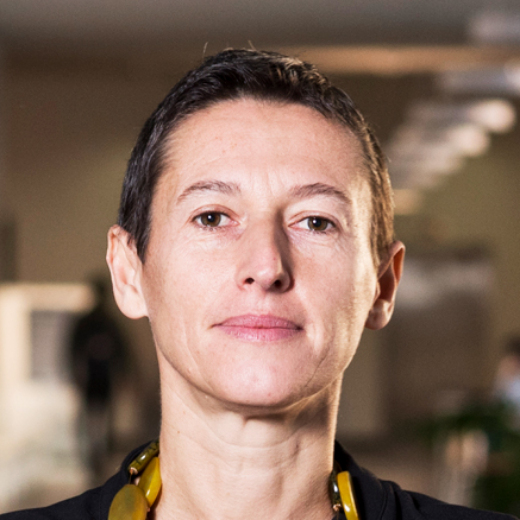
Dr. Abdelhak Bentaleb is an Assistant Professor in the Department of Computer Science and Software Engineering at Concordia University and founder/director of the IN2GM Lab. His research focuses on optimizing networked multimedia systems using machine learning, with emphasis on video streaming, edge computing, and 5G/6G networks. He holds a PhD from the National University of Singapore (awarded SIGMM and DASH-IF Best Thesis prizes) and completed a postdoctoral fellowship there. Education: PhD in Computer Science, National University of Singapore (2019) Postdoctoral Research Fellowship, National University of Singapore (2019-2022) Research Interests: AI-driven video streaming optimization, low-latency media delivery, network protocols, immersive media technologies, and IoT systems. Current projects explore end-to-end AI-enabled systems for QoE optimization in video delivery using reinforcement learning and deep learning techniques. Awards: SIGMM Award for Outstanding PhD Thesis DASH Industry Forum Best PhD Dissertation Award Multiple DASH-IF Excellence Awards His work includes over 50 publications in top venues (e.g., ACM MMSys, IEEE INFOCOM, USNIX NSDI) and 3 patents. The IN2GM Lab focuses on applied AI/ML solutions for networked systems challenges.
David I. August is a Professor of Computer Science at Princeton University, affiliated with the Department of Electrical Engineering. He earned his Ph.D. from the University of Illinois at Urbana-Champaign in 2000. His research focuses on compilers and computer architecture, emphasizing synergistic design between compilers and microarchitecture. He leads the Liberty Research Group, which explores topics such as automatic parallelization, memory profiling, and speculative execution. August joined Princeton in 1999 as a lecturer, advancing to full professor in 2012. He has served as program chair for MICRO 2009 and on committees for ISCA, PLDI, and ASPLOS. His notable accolades include the IEEE Fellow designation, Best Paper Awards at PLDI and CGO, and teaching awards from Princeton's School of Engineering. His work spans compiler optimizations, hardware-software co-design, and security architectures like TrustGuard. Recent research includes GPU scheduling (GhOST), memory profiling frameworks (PROMPT), and instruction prefetching (PDIP). He advises over 20 graduate students, many now leading roles at tech companies and academia. August teaches courses such as COS-126 (Intro to CS), COS-375 (Computer Architecture), and graduate seminars. His projects often bridge theory and practice, with tools like NOELLE and Liberty Research Group initiatives advancing compiler infrastructure and parallelism extraction.
Dr. Amir Ghanbaripour is a Discipline Lead in Planning, Property, and Project Management at Bond University's Faculty of Society & Design, with a PhD in Construction Project Management (2020). He teaches postgraduate courses and leads the Project Management program. His expertise spans project management methodologies, systems thinking, organizational maturity, and gender equality in projects. He is an active member of the Project Management Institute (PMI) as Associate Director for Academic Outreach. Education: PhD in Construction Project Management (Bond University, 2020), MSc in Civil Engineering (Iran University of Science and Technology, 2012), BSc in Civil Engineering (Amirkabir University of Technology, 2009). Research focuses on project success models, agile methodologies, and technology integration in construction education. He leads research projects on megaprojects, sustainable practices, and gender diversity in the industry. Grants include the 2023 FSD Research Project Grant (focusing on construction project strategies) and the 2023 FSD Deans Award (exploring robotics in manufacturing). He supervises PhD candidates and collaborates with national/international organizations on project management innovation.
Henry Corrigan-Gibbs is an Assistant Professor in MIT's Department of Electrical Engineering and Computer Science (EECS) and a member of the Computer Science and Artificial Intelligence Laboratory (CSAIL). He leads research in computer security, cryptography, and privacy-preserving systems. His work focuses on practical cryptographic systems that empower users while maintaining strong security guarantees. Notable contributions include the Tiptoe private search engine, Prio for privacy-preserving data aggregation, and Larch for secure authentication. His research has influenced industry standards at Apple, Google, and Mozilla, and has been recognized with awards such as the Best Young Researcher Paper at Eurocrypt and the Caspar Bowden Award. Education: PhD in Computer Science (Stanford University, advised by Dan Boneh), Postdoc at EPFL (hosted by Bryan Ford). B.S. in Computer Science from Yale University. Research Interests: Private Information Retrieval, Secure Authentication, Cryptographic Systems, Privacy-Preserving Analytics, and Hardware Security. His lab collaborates with PDOS and CSS research groups at MIT and co-hosts the MIT Security Seminar series. Grants and Funding: Supported by industry and government agencies (details in paper acknowledgments). Teaching roles include co-instructor for Applied Cryptography (6.5610) and Foundations of Computer Security (6.1600). Key Projects: Prio (used in iOS/Android), Tiptoe (private web search), Larch (backdoor-resistant authentication), and Whisper/Poplar systems for private data aggregation. His team includes postdocs, PhD students, and undergrad researchers working on cutting-edge cryptographic protocols.
Norman Sadeh is a Professor in the School of Computer Science at Carnegie Mellon University (CMU), where he has made significant contributions to cybersecurity, privacy, and AI research. He has co-founded and co-directed several groundbreaking graduate programs at CMU, including the Privacy Engineering Program (2012-present), the Ph.D. Program in Societal Computing (2003-2013), and the MBA track in Technology Strategy and Product Management (2005-2017). Carnegie Mellon University, School of Computer Science Software and Societal Systems Department CyLab Security and Privacy Institute Manufacturing Futures Institute Dr. Sadeh received his Ph.D. in Computer Science at CMU with a major in Artificial Intelligence and a minor in Operations Research. He holds an M.Sc. in computer science from the University of Southern California and a BS/MS degree in electrical engineering and applied physics from the Free University of Brussels (Belgium) as 'Ingénieur Civil Physicien.' Professor Sadeh's research spans cybersecurity, online privacy, Human-AI Interaction, AI governance, mobile computing, the Internet of Things, user-oriented machine learning, and language technologies. He is particularly known for his pioneering work on AI-based privacy enhancing technologies, including privacy assistants, automated privacy compliance tools, and NLP-based privacy solutions. His work has influenced the design of privacy features at major technology companies including Apple, Google, and Facebook/Meta, as well as privacy policies at regulatory agencies like the Federal Trade Commission and the California Office of the Attorney General. Analysis of his recent publications shows a strong focus on practical privacy solutions, particularly in mobile and IoT contexts, with an emphasis on making privacy more usable and understandable for end users. His work bridges technical innovation with policy implications, addressing both the technological and human aspects of privacy protection. 2018 Outstanding Entrepreneur of the Year award from the Pittsburgh Venture Capital Association Test of time award by the AAAI Conference on Web and Social Media (ICWSM) Gartner Group's Magic Quadrant leader in Security Awareness Computer-Based Training for 4 consecutive years Deloitte's Technology Fast 500 recognition for 3 consecutive years Professor Sadeh has advised numerous students, including PhD candidates like Aerin (Shikhun) Zhang, whose dissertation focused on understanding diverse privacy attitudes. His research has been funded through various grants, including NSF SaTC projects, and has resulted in technologies that protect tens of millions of users worldwide. He also founded Wombat Security Technologies, which was acquired by Proofpoint in 2018 and whose technologies are used by over 75% of Fortune 100 companies. Professor Sadeh leads several research initiatives including the Privacy Engineering Program, the Usable Privacy Policy Project, the Personalized Privacy Assistant Project, and CMU's Privacy Infrastructure for the Internet of Things. His Mobile Commerce Lab and E-Supply Chain Management Lab have produced influential research that has been commercialized by major organizations including IBM, Raytheon, Boeing, and the U.S. Army.
Jukka Manner is a Full Professor (tenured) of Networking Technology at Aalto University's Department of Communications and Networking (Comnet), School of Electrical Engineering. With a career spanning over two decades in internet technologies, he leads research in networking, wireless systems, and energy-efficient ICT solutions. Dr. Manner received his MSc (1999) and PhD (2004) degrees in computer science from the University of Helsinki. His academic journey has been marked by significant contributions to internet standardization through the IETF since 1999, where he served as co-chair of the NSIS working group. Professor Manner's research focuses on networking, software and distributed systems, with particular emphasis on wireless and mobile networks, transport protocols, energy efficient ICT and cyber security. His work bridges theoretical advancements with practical applications, addressing critical challenges in modern communication systems, sustainable networking practices, and security frameworks. His research group has made significant contributions to 5G technologies, UAV communications, and energy-efficient network design. His extensive publication record shows a clear evolution toward sustainability in networking technologies, with recent work focusing on energy efficiency in 5G systems, sustainable web technologies, and the environmental impact of digital infrastructure. The research demonstrates strong interdisciplinary connections between telecommunications engineering, computer science, and environmental science, with particular emphasis on reducing the carbon footprint of digital systems while maintaining performance. Cross of Merit, Signals (2014) Medal for Military Merits for contributions in national defence and C4 (2015) Professor Manner has supervised over 200 MSc theses and more than 20 doctoral dissertations, establishing himself as a dedicated mentor in the field. He has been principal investigator and project manager for over 15 national and international research projects, including serving as Academic Coordinator for the Finnish Future Internet research programme (2008-2012). His leadership extends to conference organization, having served as local co-chair of Sigcomm 2012 in Helsinki, and active participation as a peer reviewer and member of various Technical Program Committees. As an active contributor to internet standardization through the IETF, Professor Manner's work has practical impact on global networking technologies. His research group maintains strong connections with industry partners and participates in shaping future networking standards and practices, particularly in the areas of sustainable networking, 5G evolution, and security frameworks for emerging technologies.
Christos Gatzidis serves as Executive Dean of Bournemouth University's Faculty of Science and Technology since October 2023, overseeing six departments including Computing and Informatics, Creative Technology, and Psychology. Previously Deputy Dean (2021-2023) and Head of Creative Technology Department (2016-2021), he was appointed Professor in Creative Technology in November 2019. The Faculty leads five REF Units of Assessment and secures funding from AHRC, NIHR, and Innovate UK for research spanning digital healthcare, gaming technologies, and cultural heritage applications. His educational qualifications include: PhD in Information Science, City University London (2010) PG Cert in Research Degree Supervision, Bournemouth University (2010) MA in Computer Animation, Teesside University (2003) BSc (Hons) in Computer Studies (Visualisation), University of Derby (2002) Professor Gatzidis specializes in computer graphics with research spanning virtual reality, serious games, and digital healthcare applications. His work bridges technical innovation and practical implementation, particularly in mindfulness prototypes for healthcare and stroke rehabilitation systems. Current projects focus on the multidisciplinary application of gaming technologies in medical contexts, emphasizing user experience and therapeutic outcomes through collaborations with industry partners. His publication record (2014-2025) demonstrates evolving expertise from foundational computer graphics research in terrain generation and deformation to applied work in healthcare, cultural heritage, and music education. Key trends include virtual reality for therapeutic mindfulness, usability studies in mobile gaming, and digital cultural presentation techniques, reflecting a trajectory toward socially impactful technological solutions with strong industry translation. No scientific awards are documented in the provided information. He has supervised PhD students and secured competitive research funding, including two Innovate UK Knowledge Transfer Partnerships. His principal investigator role in a virtual reality mindfulness prototype project exemplifies his approach to translating academic research into practical industry solutions, with current focus on expanding knowledge exchange activities to support the University's civic engagement mission. As Executive Dean, he leads faculty-wide research strategy across six departments, fostering interdisciplinary collaborations particularly in digital healthcare and cultural heritage. His personal research integrates computer graphics expertise with clinical applications through partnerships with healthcare providers and technology companies, driving innovation in therapeutic VR systems and educational gaming platforms.
Mustafa A. Mustafa is a Senior Lecturer (Associate Professor) in the Department of Computer Science at The University of Manchester, where he leads the Trusted Digital Systems Cluster as part of the university-wide Centre for Digital Trust and Society. His academic journey spans prestigious institutions including The University of Manchester, where he completed his PhD, and KU Leuven in Belgium, where he served as a post-doctoral research fellow. Dr. Mustafa earned his educational qualifications through an impressive academic path: a B.Sc. in communications from the Technical University of Varna, Bulgaria (2007), an M.Sc. in communications and signal processing from Newcastle University, UK (2010), and a Ph.D. in computer science from The University of Manchester, UK (2015). His doctoral research focused on "Smart Grid Security: Protecting Users' Privacy in Smart Grid Applications," laying the foundation for his subsequent research career. Dr. Mustafa's research expertise centers on information security, data privacy, and applied cryptography with particular focus on smart grid systems, smart city applications, e-health, and IoT. His work addresses critical challenges in securing peer-to-peer electricity trading markets, smart metering infrastructure, electric vehicle charging systems, and health data management. He has developed innovative solutions for keyless car sharing systems, frictionless authentication mechanisms, and privacy-preserving protocols for data collection and distribution. His scholarly contributions demonstrate a consistent trajectory toward increasingly sophisticated privacy-preserving techniques applied across multiple domains. Recent work shows a growing integration of artificial intelligence and machine learning approaches with traditional cryptographic methods, particularly in federated learning systems and large language model verification. His research bridges theoretical cryptography with practical implementations in energy systems and healthcare applications. Dr. Mustafa's scientific achievements have been recognized with several prestigious awards: Winner of the Student Video Competition at IEEE SmartGridComm 2017 for "Secure and Privacy-friendly Local Electricity Trading" Best Paper Award at SECURWARE 2017 Distinguished Achievement Award as Postgraduate Research Student of the Year nominee by the School of Computer Science of The University of Manchester (2015) Dame Kathleen Ollerenshaw Research Fellowship (2018-2023) As an academic supervisor, Dr. Mustafa has mentored numerous graduate students through their PhD and Master's research, with a particular focus on privacy and security challenges in emerging technologies. His current supervision portfolio includes research on privacy-friendly multi-agent systems for smart grids, security for IoT in e-health, vulnerability detection in IoT cryptography, and bot detection systems. He has secured significant research funding through multiple competitive grants including EnnCore: End-to-End Conceptual Guarding of Neural Architectures (EPSRC, 2020-2024), SCorCH: Secure Code for Capability Hardware (EPSRC, 2019-2023), and SNIPPET: Secure and Privacy-friendly Peer-to-peer Electricity Trading (FWO-SBO project, 2019-2023). Dr. Mustafa leads the Trusted Digital Systems Cluster within the Centre for Digital Trust and Society at The University of Manchester. His research group comprises PhD students, postdoctoral researchers, and collaborators working on cutting-edge security and privacy solutions. The team maintains strong international collaborations, particularly with KU Leuven in Belgium, and contributes to standards development as evidenced by Dr. Mustafa's role as an expert in the IEC/SYC/WG 3 "IEC Smart Energy Roadmap."
AnHai Doan is the Vilas Distinguished Achievement Professor and Gurindar S. Sohi Professor in the Department of Computer Science at the University of Wisconsin-Madison. His research focuses on data integration, entity matching, and data science, with particular emphasis on building end-to-end systems that leverage machine learning, scalable data management, and human-data interaction. He leads the Magellan project, which develops open-source tools for entity matching as part of the Python data ecosystem. Dr. Doan's research interests include: Data cleaning and integration: Building end-to-end data integration systems as parts of the Python ecosystem of open-source data tools Data science: Developing an agenda that integrates research, system building, education, and outreach, with focus on data quality Crowdsourcing: Pioneering work on using crowdsourcing for data management and integration Knowledge bases: Building community-centric knowledge bases His recent work shows a strong trend toward developing practical systems for data integration that combine machine learning with traditional database techniques. The Magellan project represents a comprehensive effort to build an end-to-end entity matching system, with numerous publications spanning entity matching algorithms, debugging tools, and cloud-based matching services. His research increasingly focuses on the intersection of data science and data management, particularly on data quality issues. Selected scientific awards: Gurindar S. Sohi Professorship (2020) Vilas Distinguished Achievement Professorship (2018) SIGMOD Research Highlight Award (2017) Vilas Associate, UW-Madison (2016) Alfred P. Sloan Research Fellowship (2007) NSF CAREER Award (2004) ACM Doctoral Dissertation Award (2003) Dr. Doan has been actively involved in service to the data management community, including serving on the SIGMOD Advisory Board, as associate editor for VLDB, and co-chairing the industrial program for VLDB. He has also played a key role in strategic initiatives at UW-Madison, including helping to establish the School of Computer, Data, and Information Sciences. He has mentored numerous students and researchers through his work on the Magellan project and related research efforts. Additionally, he co-founded GreenBay Technologies to commercialize Magellan, which was later acquired by Informatica. He leads the Database Group at UW-Madison and has been instrumental in developing data science educational programs at both undergraduate and graduate levels. His work bridges research, education, and practical applications in the rapidly evolving field of data management and data science.
Lin Zhong is the Joseph C. Tsai Professor of Computer Science at Yale University, leading the Efficient Computing Lab. He holds a Ph.D. from Princeton University and M.S./B.S. degrees from Tsinghua University. Previously, he served at Rice University from 2005 to 2019. His research focuses on optimizing computing efficiency, quantum error correction, operating systems, and mobile systems. Education: Ph.D., Princeton University M.S., Tsinghua University B.S., Tsinghua University Research Interests: His work spans quantum computing (e.g., decoding algorithms for surface codes), operating systems (safety, correctness, and lightweight kernels), and mobile/networking systems (massive MIMO, energy-efficient designs). Recent trends include integrating large language models (LLMs) into robotics and securing cloud-based AI workflows. Awards: NSF CAREER Award ACM SIGMOBILE RockStar (2014) and Test of Time (2022) Fellowships from IEEE and ACM Best Paper Awards at ACM MobileHCI, IEEE PerCom, ACM MobiSys, and more Lab & Teams: His Efficient Computing Lab explores systems for quantum error correction (e.g., FPGA-based decoders), secure embedded systems, and LLM-driven robotics. Projects include TimelyLLM (real-time LLM serving) and Blindfold (confidential memory management).
Rosella Gennari is an Associate Professor in Computer Science at the Faculty of Engineering, Free University of Bozen-Bolzano, where she conducts research and teaches in Human-Computer Interaction (HCI). Her work is centered on designing interactive technologies for children, focusing on physical-digital (phygital) artefacts, Technology-Enhanced Learning (TEL), and inclusive design. She leads the Research Unit Human-Centred Intelligent Systems and is actively involved in institutional leadership, including serving on the Third-Mission Board. Ph.D. : Computer Science, Amsterdam University (2002) Postdoctoral Experience : CWI, Amsterdam (ERCIM Alain Bensoussan Fellow); FBK-irst, Trento Leadership : Scientific & Technological Coordinator of the FP7-EU TERENCE project Her research explores how children interact with and design smart technologies, including IoT and AI, through playful and tangible interfaces. She investigates socio-emotional learning, digital well-being, and responsible design, often employing participatory and action research methods. Her work bridges computer science, education, and social impact, aiming to empower young learners as co-creators of technology. The analysis of her recent publications reveals a strong trend in developing and evaluating toolkits and frameworks for children and pre-teens to engage in designing smart things, IoT systems, and sustainable cities. Her work consistently emphasizes inclusivity, reflection, and responsible design, often in collaboration with teachers and learners. The publications span top HCI venues and journals, demonstrating a focus on practical applications in educational settings and the impact of technology on young users. Scientific Awards and Recognition ERCIM Alain Bensoussan Fellowship for talented young researchers Editorial Board Member, Journal of Child Computer Interaction (Elsevier, Q1) Regular reviewer for top HCI conferences and journals Advising and Grants : While specific advisees are not listed, her leadership role in the FP7-EU TERENCE project and numerous other research initiatives indicates extensive experience in securing and managing competitive grants. She mentors students through her research group and teaching, fostering the next generation of HCI researchers. Her collaborative network is extensive, with frequent co-authorship with researchers such as Alessandra Melonio, Maristella Matera, and Mehdi Rizvi. Labs and Teams : She leads the Human-Centred Intelligent Systems research unit, which serves as her primary lab and team. This group focuses on placing humans at the center of computer science and information engineering research. She is also a core member of the organizing committee for the MIS4TEL international conference series, highlighting her role in building and sustaining a global research community in Technology-Enhanced Learning.
Adam J. Aviv is an Associate Professor of Computer Science at The George Washington University, leading the George Washington University Usable Security and Privacy Lab (gwusec) . His work focuses on computer security, privacy, and usable security , with a particular emphasis on user behavior, authentication systems, and mobile/web security. University: The George Washington University Academic Rank: Associate Professor Email: aaviv@gwu.edu Research Interests: His research investigates how users interact with security and privacy systems, including studies on: Biometric and mobile authentication Password manager usability Generative AI risk perception Online proctoring and institutional decisions Data breach responses Privacy labels and user trust Recent Publications (2024–2025) span venues like USENIX Security, IEEE S&P, ACM CHI, and PoPETs, covering topics such as: Wearable-based contact tracing in low-resource settings WhatsApp mod security perceptions Password manager issues Privacy label accuracy Grants & Awards: Recipient of the OVPR Research Mentorship Award for his work with students. Currently holds NSF grants for collaborative cybersecurity research and travel funding for Privacy Enhancing Technology Symposium. Teaching: Offers Intro to Usable Security and Privacy (CSCI 4533/6533) in Fall 2025, with students engaging in: Secure messaging studies Interview and survey methodology Full research projects with ethics reports Laboratory: The gwusec lab focuses on user-centered security and privacy research , collaborating with institutions like Tel Aviv University and University of Haifa.
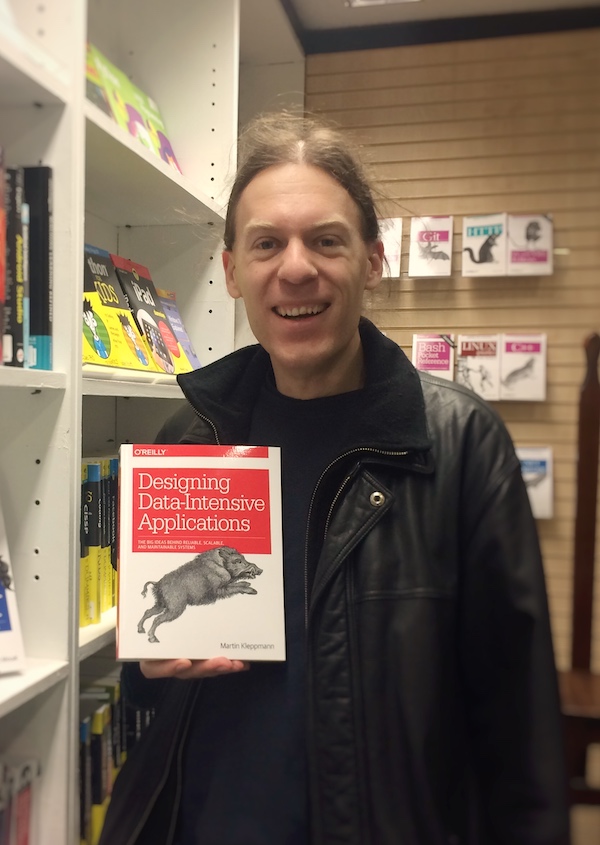
Dr. Martin Kleppmann is an Associate Professor at the University of Cambridge, specializing in local-first software and security protocols . He leads research in distributed systems, focusing on decentralized architectures, collaborative editing tools, and cryptographic methods. As a key contributor to the Automerge open-source project, he bridges academic innovation with real-world applications. Formerly a research fellow at TU Munich (2022–2023) and Cambridge (2015–2022), he has also worked as a software engineer and startup founder, including LinkedIn (acquired 2012). Research Interests span Distributed Systems Security , Conflict-Free Replicated Data Types (CRDTs) , Collaborative Software , and Cryptography . His work addresses challenges in decentralized social networks, privacy-preserving protocols, and efficient data synchronization. Recent projects include Kintsugi (end-to-end encrypted key recovery) and Pudding (private user discovery for anonymity networks). Publications emphasize Collaborative text editing (2025: Eg-walker, 2023: The Art of the Fugue) CRDTs for JSON and trees (2021, 2017) Privacy in decentralized systems (2024: Pudding, 2025: Emission Impossible) Scientific Awards include Gilles Muller Best Artifact Award (EuroSys 2025) Distinguished Paper & Artifact Awards (OOPSLA 2017) Best Presentation Awards (Security Protocols Workshop 2018, PaPoC 2025)
Dominik Wermke serves as an Assistant Professor in the Department of Computer Science at North Carolina State University. He is affiliated with multiple research entities including the Secure Computing Institute (SCI), the Wolfpack Security and Privacy Research (WSPR) Lab, and the Secure Software Supply Chain Center (S3C2). His educational background includes: Ph.D. in Computer Science from Leibniz University Hannover (2023) M.Sc. from Saarland University (2016) B.Sc. from Saarland University (2015) Wermke's research focuses on computer security with emphasis on human-centered security, examining how security mechanisms align with software professionals' and end users' needs, practices, and limitations. His work employs mixed-methods approaches including interviews, user studies, surveys, and large-scale ecosystem analyses to identify behavioral patterns and systemic risks in secure software development. His expertise spans cybersecurity, human-computer interaction, and user experience with particular focus on software supply chain security and open source ecosystems. His publication record shows a clear trend toward addressing software supply chain security challenges through empirical studies of developer practices, trust mechanisms in open source communities, and reproducible builds. Recent work increasingly examines the human factors in security implementations, with publications appearing in top venues including IEEE S&P, USENIX Security, ACM CCS, and NDSS. His notable recognition includes: Distinguished Paper Award at the 43rd IEEE Symposium on Security and Privacy (2022) Wermke actively mentors students interested in security research, with his lab focusing on empirical security studies that bridge technical and human aspects of software security. His research has been supported through institutional affiliations with NC State's security research centers which provide infrastructure for large-scale security ecosystem analyses. He maintains active collaborations with researchers at CISPA Helmholtz Center for Information Security and other institutions, evidenced by multi-institutional publications. His current research agenda continues to explore security challenges in modern software development practices with particular attention to supply chain vulnerabilities and trust mechanisms in distributed development environments.
Luigi De Russis is an Associate Professor at the Department of Control and Computer Engineering (DAUIN) within Politecnico di Torino . He serves as Deputy Director of DAUIN and is a member of the PIC4SeR (PoliTO Interdepartmental Centre for Service Robotics). His academic roles focus on Human-Computer Interaction , Digital Wellbeing , and Artificial Intelligence applications. Research interests: Accessibility, Conversational agents, Developers tools, Digital wellbeing, Intelligent user interfaces, Internet of Things Teaching: Courses in Human-AI Interaction, Web Applications, and Computer Vision at undergraduate and graduate levels Leadership: Vice-President of ACM SIGCHI (2024-), Executive Committee member (2021-2024) His research explores: Digital wellbeing education for teens through gamified systems AI-assisted UI design tools Smart home interaction via multimodal commands End-user development for self-control technologies Integration of accessibility guidelines in AI systems Recent article trends show a focus on generative AI for interface design, attention-capturing heuristics, and educational systems for step-by-step learning. He has received the Most Influential Paper Award (2024) and Best Late Breaking Results Award (2025) from ACM SIGCHI. Scientific awards: Award of Scientific Excellence, University of Salamanca (2011) Most Influential Paper Award, International Conference on Intelligent Environments (2024) Best Late Breaking Results Paper Award, ACM SIGCHI Symposium (2025) As advisor, he supervises PhD students in Artificial Intelligence and Computer Engineering , focusing on topics like user-centered AI, generative models, and digital self-control interfaces. He leads the ELITE research group and contributes to commercial projects including TEIA (AI tourism) and MAPP (interactive museums).