Sarah E. Chasinsمشاهده پروفایل
استادیار
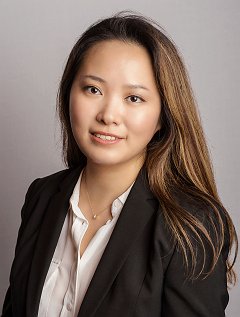
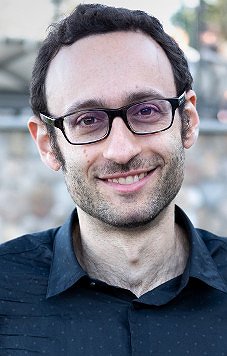
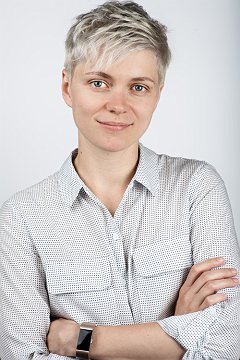
Sarah E. Chasins is an Assistant Professor in the Electrical Engineering and Computer Sciences (EECS) department at the University of California, Berkeley, with research spanning programming languages and human-computer interaction. She leads the PLAIT Lab (Programming Languages for Approachable and Inclusive Tools) and serves as a faculty affiliate at the Berkeley Institute for Data Science (BIDS). Her work bridges computer science with social sciences, climate reporting, legal systems, and biological research through extensive collaborations. Dr. Chasins' research focuses on democratizing programming for non-traditional programmers including scientists, social scientists, journalists, and data scientists. Her work emphasizes creating approachable programming tools that help practitioners reach correct programs while understanding, extending, and trusting those programs. She specifically investigates program synthesis, programming tools for scientific domains, and human-centered programming language design. Her research mission aims to make programming a path to a more informed and evidence-driven society rather than just a way to get wrong answers faster. Her recent publications demonstrate a clear trajectory toward making programming more accessible and understandable. The work spans code search techniques, program synthesis approaches, refactoring tools, and studies of how domain experts interact with programming languages. A consistent theme across her research is placing human needs at the center of programming language design and implementation. Dr. Chasins actively mentors PhD students including Justin Lubin, Eric Rawn, Parker Ziegler, Sarah "Slim" Lim, Hellina Hailu Nigatu, David Minh-Duy Cao, and Marlena Preigh. She has previously advised numerous master's and undergraduate students who have gone on to work in both academia and industry. Her teaching includes core courses like CS164 (Programming Languages and Compilers) and specialized courses like CS294-184 (Building User-Centered Programming Tools) and CS39-001 (Technology, Society, and Power). She maintains an active service record in the programming languages community, having served on program committees for major conferences including PLDI, POPL, OOPSLA, and SPLASH. Notably, she co-chaired the Student Research Competition at PLDI 2020 and 2021 and has been involved in organizing workshops focused on programming languages and human-computer interaction.