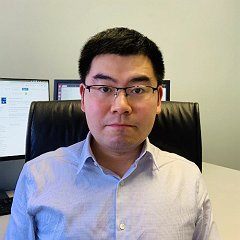
Professor Sally McClean is an academic at Ulster University's School of Computing , holding the title of Professor of Mathematics . Her research spans computational mathematics, machine learning, and process mining, with applications in healthcare, IoT, and smart cities. Focus areas include Process Mining , Activity Recognition , and Lead Toxicity Prediction Funded by organizations like The Royal Society and Invest Northern Ireland Her work contributes to the UN Sustainable Development Goals in health and technology domains. Recent publications analyze smart home IoT systems, emergency department logistics, and federated process mining privacy frameworks. Awarded Honorary award (2021) for heartbeat rhythm analysis Received TM Forum Catalyst Industry Contribution (2022)
Dr. Paolo Palmieri is a Senior Lecturer in Cyber Security at the University College Cork (UCC) , affiliated with the School of Computer Science & IT . He serves as a Funded Investigator in Insight and CONNECT research centers, Supervisor in ADVANCE and AI Centres for Research Training, and co-Investigator in DTIF-Holistics and SFI-Spoke on Blended Autonomous Vehicles . PhD in Cryptography (2013), Université catholique de Louvain Prior positions: Lecturer at Cranfield University and Bournemouth University (UK), Post-Doctoral Researcher at Delft University of Technology (Netherlands) Research spans cryptography, privacy, and security , with focus on: Secure multi-party computation Homomorphic encryption Location privacy mechanisms Spatial Bloom filters Smart city security Blockchain applications in IoT Recent publications highlight advancements in blockchain-based healthcare authentication , privacy-preserving vehicular networks , and homomorphic encryption for sentiment analysis . He chairs Malicious Software and Hardware in Internet of Things (Mal-IoT) and Location Privacy Workshop (LPW) . Active in PhD supervision , he currently advises students in cryptographic protocols for location-based services. Collaborates with Smart City Lab at the University of Bologna and participates in international research networks .
Kwangsu Lee is an Associate Professor in the Department of Computer and Information Security at Sejong University, specializing in cryptography and computer security. With a research career spanning over two decades, he has established himself as a prominent figure in cryptographic protocols, particularly in identity-based encryption, functional encryption, and digital signatures. His educational background includes a B.S. from Yonsei University (1998), an M.S. from KAIST (2000), and a Ph.D. from Korea University (completed around 2010-2011). Prior to his current position, he served as a Postdoctoral Researcher at Columbia University (2012) and as an Assistant Professor at Korea University (2014-2016). Professor Lee's research interests focus on cryptographic protocols with emphasis on revocable encryption systems, functional encryption, and secure multi-party computation. His work has significantly advanced the field of identity-based encryption, particularly through his studies on revocable storage systems with access control on ciphertexts, revocable identity-based encryption via subset-difference methods, and functional encryption for inner products that can compute on different ciphertexts. His research addresses critical challenges in key management, access control, and efficiency in cryptographic systems. His publication record shows consistent output with 47 research publications since 2003, with recent work focusing on threshold cryptography, multi-signatures, and decentralized functional encryption. His articles demonstrate a clear progression toward more practical cryptographic solutions with improved efficiency while maintaining strong security guarantees. The research spans theoretical foundations to practical implementations, with applications in cloud security, blockchain, and secure data sharing. Professor Lee actively participates in the cryptographic research community, having presented at major conferences including ASIACRYPT, ICISC, and ACNS. He has maintained a strong research trajectory with increasing publication output over the years, particularly in high-impact journals like IEEE Transactions on Information Forensics and Security, Designs, Codes and Cryptography, and IEEE Access. His research has practical implications for secure cloud computing, privacy-preserving systems, and cryptographic infrastructure for modern applications requiring fine-grained access control and efficient key management.
Chunyi Peng is an Associate Professor in the Department of Computer Science at Purdue University's College of Science, where she leads the Mobile System, Security and Networking (MSSN) lab. She joined Purdue in Fall 2017 after serving as an Assistant Professor at the Ohio State University. Dr. Peng earned her Ph.D. in Computer Science from UCLA in 2013, with additional M.Eng and B.Eng degrees in Automation from Tsinghua University, both with highest honors. Prior to her academic career, she worked as an Associate/Assistant Researcher at Microsoft Research Asia. Her research focuses on mobile networking, systems, and security, with recent emphasis on innovating 5G/6G mobile network architecture, mobile network analytics, network verification, and security. She also explores efficient visual sensing and computing for IoTs, particularly through computer vision techniques for autonomous drones, vehicles, and robots. Her work bridges theoretical networking concepts with practical implementations, often developing tools like MobileInsight for cellular network analysis. Her recent publications reveal a clear research trajectory toward securing and optimizing next-generation mobile networks, particularly focusing on 5G/6G security vulnerabilities, emergency service reliability, drone-based network applications, and performance optimization. The work shows increasing integration of AI techniques with networking protocols and a growing emphasis on practical, real-world network measurement and validation. ACM Distinguished Member (2024) Best Community Paper Award at MobiCom'16 Best Demo Award at MobiCom'18 Best Community Paper Runner-up at MobiCom'22 Dr. Peng actively mentors numerous graduate students through the MSSN lab, with current research projects including AI for Networks, Mobile Network Security, AirLab for autonomous drones, and MI-LAB for network data analysis. She has secured significant research funding including NSF AI Institute for Future Edge Networks and Distributed Intelligence (AI-EDGE, CNS-2112471), Evolving Mobile Network Security (Cellular-911 Security: CNS-2246051), and Diagnostic Testing of Next-Generation Radio Access Network (CNS-2403048). The MSSN lab maintains an active research agenda with multiple ongoing projects that bridge academic research with practical applications, evidenced by numerous student successes including PhD defenses, conference awards, and industry placements at companies like Bytedance, Meta, and Amazon.
Takahisa Harayama is a Professor at the School of Advanced Science and Engineering, Waseda University. His research focuses on mathematical physics , condensed matter physics , and nonlinear optical systems , particularly chaotic dynamics in semiconductor lasers and microcavities. Affiliation: Faculty of Science and Engineering, Waseda University Research Areas: Chaos theory, photonic integrated circuits, quantum dot optics, laser dynamics Harayama's work bridges theoretical physics and applied optics , with significant contributions to understanding single-mode lasing in chaotic cavities , random bit generation using optical chaos , and polarization switching in microcavities . His studies often combine Maxwell-Bloch equations , ray-wave correspondence , and experimental validation via semiconductor devices. The articles highlight trends in chaotic laser systems for secure communications, directional emission via dynamical tunneling , and high-speed physical random number generation . Key subfields include feedback delay control , mode interaction , attractor expansion , and applications to cryptography .
Raymond Veldhuis is a Professor at the Norwegian University of Science and Technology (NTNU) and a researcher in Data Management & Biometrics. His work spans biometrics, machine learning, and computer vision. Research Interests : Machine learning (traditional and deep learning) Biometric systems (face recognition, finger vein recognition) Computer vision (neural networks, synthetic face generation) Data security (encryption, attack modeling) Transformer-based time series forecasting Recent Article Trends : His publications focus on biometric encryption, face recognition vulnerabilities, deep learning efficiency, and comparative studies of classical vs. modern recognition methods. Scientific Awards : Best paper award (2024)
Beáta Megyesi is a Professor of Computational Linguistics at Uppsala University's Department of Linguistics and Philology, currently on leave from August 2023 to December 2025. She holds a PhD in Speech Communication from the Royal Institute of Technology (KTH) and has been a prominent figure in computational linguistics research and education at Uppsala University since at least 2000. Her academic background includes: PhD in Speech Communication, Department of Speech, Music and Hearing, KTH (2002) BA in Computational Linguistics, Department of Linguistics, Stockholm University (2000) Megyesi's research focuses on the intersection of computational methods and humanities, particularly historical cryptology and digital philology. She develops innovative tools that enable humanists and social scientists to obtain quantitative analyses of historical texts, with special emphasis on automatically cracking historical ciphers. Her work bridges linguistic analysis, computer science, and historical research, creating methodologies for processing and analyzing encoded historical documents. She has pioneered approaches to automatic transcription, key structure extraction, and deciphering techniques for historical manuscripts, making significant contributions to both computational linguistics and historical research. Analysis of her recent publications reveals a strong trend toward interdisciplinary research combining historical cryptology with advanced computational methods. Her work demonstrates increasing sophistication in handling historical ciphers through machine learning, image processing, and language modeling techniques. The research spans multiple languages and historical periods, with particular focus on early modern European diplomatic correspondence. Her publications show consistent contributions to both theoretical frameworks and practical tools for historical document analysis, with growing attention to privacy concerns in language learner data. Megyesi has held significant leadership roles including: President of Northern European Association for Language Technology (NEALT, 2020-2021) Head of Department, Department of Linguistics and Philology (2009-2018) Director of English Park Campus, Uppsala University (2017-2018) Member of Swedish Research Council's preparatory group for Linguistics (2021-2023) As an educator, Megyesi has supervised graduate students including Eva Pettersson and Mojgan Seraji, and has taught courses on language technology, digital philology, and computational linguistics at both undergraduate and graduate levels. She has received research funding from Vetenskapsrådet (Swedish Research Council) for multiple projects including DECRYPT (2018-2024) and DECODE (2015-2017), demonstrating sustained research productivity and external recognition of her work's significance. Megyesi leads the DECRYPT project focused on developing methods to automatically crack historical ciphers, working with interdisciplinary teams of linguists, computer scientists, and historians. Her research group has developed specialized tools for transcription of encrypted manuscripts and created important resources like the DECODE Database of Historical Ciphers and Keys. She is an active participant in the international historical cryptology community, frequently organizing and contributing to conferences in this specialized field.
Nagarajan Kandasamy is a Professor and Interim Department Head in the Department of Electrical and Computer Engineering at Drexel University. His research focuses on computer engineering, with expertise in neuromorphic computing, embedded systems, fault-tolerant architectures, and distributed systems. Prior to Drexel, he worked as a research scientist at Vanderbilt University's Institute for Software Integrated Systems. PhD, University of Michigan (2003) MS, University of Connecticut BE, Guindy Engineering College, Anna University, Chennai, India His research interests include neuromorphic computing, spiking neural networks, and reliable system design. He has contributed to fields like deformable image registration, self-testing hardware, and wireless security frameworks. Kandasamy's publications emphasize neuromorphic architectures, medical imaging algorithms, and secure communication protocols. His work often intersects hardware-software co-design and machine learning applications. National Science Foundation Early Faculty (CAREER) Award (2007) Best Paper Award, IEEE International Conference on Autonomic Computing (2006) He collaborates across disciplines in neuromorphic engineering, with grants from NSF and industry partners. His team develops tools for radiation oncology, low-power AI systems, and FPGA-based security protocols.
Abhishek Jain is an Associate Professor in Computer Science at Johns Hopkins University and a Senior Scientist at NTT Research . His research focuses on Cryptography , Theoretical Computer Science , and Computer Security , with significant contributions to obfuscation, zero-knowledge proofs, and secure computation. Current affiliations: Johns Hopkins University (since 2015), NTT Research (since 2023) Research groups: Cryptography Group , Theory Group , Information Security Institute His work is supported by grants from NSF Career , DARPA , JP Morgan , Ethereum Foundation , Stellar , Cisco , Samsung , and JHU Catalyst . He has received the Best Paper Award at EUROCRYPT 2021 and journal invitations for FOCS 2022 and CRYPTO 2023 papers. Advising highlights include PhD students Aditya Hegde , Harry Eldridge , and Pratyush Ranjan Tiwari , and postdocs Pedro Branco and Nils Fleishhacker . He actively recruits interns and postdocs for NTT Research in Sunnyvale, CA.
Daniel Burgarth is a Professor at the Chair for Theoretical Physics within the Department of Physics, Faculty of Sciences at Friedrich-Alexander University Erlangen-Nuremberg (FAU), a position he has held since 2023. He actively contributes to quantum research initiatives and academic events at FAU. His research focuses on Quantum Control and Light-Matter Interaction within theoretical quantum systems. As a core member of the FAU Profile Center Light.Matter.QuantumTechnologies , he investigates fundamental quantum mechanics applications and emerging quantum technologies. His work bridges theoretical physics with practical implementations in quantum computing and encryption systems. Burgarth co-organizes significant academic events including the Control of Quantum System @Erlangen 2024 workshop (ConQuEr24), demonstrating his leadership in the quantum research community. He collaborates extensively with physics and engineering departments across FAU's Faculty of Sciences and Faculty of Engineering to advance interdisciplinary quantum research.
Clifton Paul Robinson serves as Assistant Professor of Computing and Data Science at Wentworth Institute of Technology while maintaining his research affiliation as Research Associate at Northeastern University's Institute for the Wireless Internet of Things under Professor Tommaso Melodia. He completed his Ph.D. in Cybersecurity at Northeastern in December 2024, building upon his M.S. in Cybersecurity (2020) and B.S. in Computer Science and Mathematics magna cum laude from Bridgewater State University (2018). His educational credentials include: Ph.D. in Cybersecurity, Northeastern University (2024) M.S. in Cybersecurity, Northeastern University (2020) B.S. in Computer Science and Mathematics, Bridgewater State University (2018) Dr. Robinson's research program focuses on the critical intersection of wireless security and artificial intelligence. His pioneering work on DeepSweep enables parallel and scalable spectrum sensing through convolutional neural networks with 98% accuracy while maintaining sub-millisecond inference times. He has made significant contributions to wireless security through his eSWORD framework for emulating jamming attacks and his award-winning TwiNet system that establishes bidirectional links between physical networks and their digital twins. His research addresses fundamental challenges in spectrum management, adversarial signal detection, and secure wireless communications infrastructure. His publication trajectory shows increasing sophistication in digital twin applications for wireless networks, with recent work demonstrating how bidirectional communication between physical and virtual networks can transform spectrum utilization and security monitoring. This research direction has important implications for 5G/6G networks, military communications, and critical infrastructure protection. His scientific recognition includes: Best Paper Award at IEEE GLOBECOM 2024 for TwiNet paper IEEE WCNC Student Travel Grant KCCIS Graduate Fellowship As an educator, Dr. Robinson has served as Instructor of Record for CY 2550 - Foundations of Cybersecurity at Khoury College, developing curriculum that integrates real-world case studies with theoretical concepts. His teaching extends to guest lectures on OSI model layers and cybersecurity ethics. His research has received support through the Global Resilience Institute's Critical Infrastructure Network project funded by the U.S. Department of Energy, and he completed a Signal Analysis Internship at The MITRE Corporation focusing on RF fingerprinting. Dr. Robinson works within Northeastern's Wireless Networks and Embedded Systems (WiNES) Laboratory, collaborating with a multidisciplinary team on cutting-edge wireless security projects. His work with METEOR and Colosseum represents significant advancement in large-scale wireless network emulation capabilities, bridging the gap between theoretical research and real-world implementation.
Daoyuan Wu is an Assistant Professor at the School of Data Science, Lingnan University, Hong Kong, one of eight UGC-funded universities in the region. Previously, he held positions as a Research Assistant Professor at HKUST CSE, Senior Research Fellow at Nanyang Technological University, Senior Researcher at Huawei HKRC, and Research Assistant Professor in the Department of Information Engineering at The Chinese University of Hong Kong (CUHK), where he also served as an Adjunct Assistant Professor from 2022-2023. His research focuses on the intersection of Large Language Models and security, with specialization in LLM for Security and Security of AI/Blockchain/Code/Mobile . His work spans multiple domains including AI/LLM4Sec (using LLMs for vulnerability detection), AI/LLM-Sec (securing LLMs themselves), Blockchain and Web3 Security, and Mobile and Software Security. He leads the AIS2Lab which is actively researching LLM applications in cybersecurity contexts. His recent publications demonstrate a strong trend toward applying LLMs to security problems across multiple domains, with significant contributions to smart contract security through tools like PropertyGPT (which received a Distinguished Paper Award at NDSS 2025), GPTScan, and ACFix. His work combines program analysis with LLM capabilities to address complex security challenges that traditional methods struggle with. Distinguished Paper Award at NDSS 2025 for PropertyGPT: LLM-driven Formal Verification of Smart Contracts through Retrieval-Augmented Property Generation Dr. Wu actively advises PhD and research students, with several former students now working at top institutions and companies including Huawei, OKX, and academia. He's currently hiring PhD students for Fall 2026 with scholarship support of approximately HK$19,000 per month. His lab receives funding from multiple internal and external grants supporting PhD students, RAs, and PostDocs. He leads the AIS2Lab which focuses on AI/LLM applications in security contexts across multiple domains including blockchain, mobile security, and software security. The lab maintains active collaborations with researchers at top institutions globally and has developed multiple influential tools and frameworks for security analysis.
Craig Bauer is a Professor of Mathematics at York College of Pennsylvania, affiliated with the Kinsley School of Engineering, Sciences and Technology. His research and teaching focus on cryptology, historical codebreaking, and mathematical applications in security. Dr. Bauer holds a Ph.D. and M.S. from North Carolina State University and a B.A. from Franklin & Marshall College. His educational background forms the foundation for his extensive work in mathematical cryptography. His research interests span cryptology, historical cryptanalysis, enumerative combinatorics, and mathematical history. Bauer has made significant contributions to understanding historical ciphers, World War II codebreaking, and unsolved cryptographic mysteries. His work bridges pure mathematics with practical historical applications, particularly in intelligence history. Bauer's publications reveal a strong focus on historical cryptography, with particular attention to World War II codebreaking, unsolved ciphers, and the mathematical foundations of encryption. His recent work shows increasing interest in modern cryptographic challenges while maintaining strong connections to historical contexts. As Editor-in-Chief of The International Journal of Cryptologia and former Scholar-in-Residence at NSA's Center for Cryptologic History, Bauer has established himself as a leading academic in cryptologic studies. His book Secret History: The Story of Cryptology (2013, 2nd ed. 2021) is considered a seminal work in the field. Bauer has received significant recognition through media appearances, including History Channel's The Hunt for the Zodiac Killer and PBS's American Experience . His sabbatical was supported by the NSA's Center for Cryptologic History for completing Unsolved! (2017), demonstrating strong institutional support for his research. Through his extensive speaking engagements at institutions including West Point, NSA, and numerous universities, Bauer has become a prominent public educator on cryptographic history and techniques. His work connects academic research with public understanding of cryptography's vital role in history and modern security.
Dr. Preethi Srivathsa is an Assistant Professor - Senior Scale in the School of Computer Engineering at Manipal Academy of Higher Education (MAHE), Bengaluru. She holds a B.Tech, M.Tech, and Ph.D. (awarded by Presidency University in 2022). Her academic career includes positions at Presidency University (2019-2023) and East Point College of Engineering (2008-2019). Her research focuses on: Computer architecture and low-power hardware design IoT applications and cyber-physical systems Cryptography and blockchain security Machine learning implementations in hardware FPGA-based accelerators and optimization techniques Her publication portfolio shows strong emphasis on hardware-efficient algorithms, cryptographic systems (especially elliptic curve applications in blockchain), and emerging IoT architectures. Recent work integrates machine learning with hardware acceleration for smart home systems and agricultural technology. Awards and recognitions: Best Paper Award at IEEE iSES-2021 for low-power sorter design Infosys Bronze Partner Faculty (2013) She has developed intellectual property including IoT-based monitoring systems and blockchain educational frameworks. Technical skills include Verilog, FPGA design, IoT platforms (Arduino/Raspberry Pi), and multiple programming languages.
Orlando Hernandez is an Associate Professor in the Department of Electrical and Computer Engineering at The College of New Jersey. He holds a Ph.D. in Electrical Engineering from Southern Methodist University (2002), an M.S.E.E. (1993) and B.S.E.E. (1991) from the University of South Florida. Prior to his academic career, he held industry positions at Texas Instruments and Maxim Integrated Products from 1993-2003, serving in design management roles for imaging systems, ASIC development, and microcontroller technologies. His research focuses on high-performance VLSI architectures for computer vision applications, including color image segmentation, digital signal processing, embedded systems, and mixed-signal design. Key research areas include hardware acceleration for image compression algorithms, real-time traffic monitoring systems, autonomous robotics, and advanced encryption implementations. His work consistently bridges theoretical algorithms with practical hardware implementations. Professional affiliations include Senior Membership in the Institute of Electrical and Electronics Engineers (IEEE). He has secured multiple research grants including a $93,320 National Science Foundation award for image processing instrumentation and several industry-sponsored equipment grants from Texas Instruments and Xilinx.