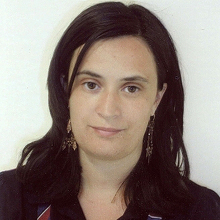
Vera Ribaudo is a researcher in Italian Literature at Ca' Foscari University of Venice's Department of Humanities. Her work focuses on Dante studies, Renaissance commentaries, and medieval philology. Education: University of Padua (BA in Literature, 2000), Ca' Foscari (MA in Italian Philology, 2010; PhD in Italian Studies, 2015) Research spans Dante's reception in the 16th century, including critical editions of Libro de l'arte de la mercatura by Benedetto Cotrugli and Spositione all'Inferno by Lodovico Castelvetro. Her publications analyze intersections between religious polemic, textual criticism, and cultural heritage enhancement. She contributes to digital humanities projects like electronic editions of Dante's Commedia . Key trends in her work include: Medieval-Renaissance philosophical continuity Manuscript tradition analysis Etymological practices in poetry Commercial ethics in Renaissance literature Awarded: ERC Starting Grant BIFLOW project (2013–335949) National Scientific Qualification for Associate Professor (2018) Active in academic service, she collaborates with the AdI - Association of Italianists and contributes to editorial boards including L'Alighieri .
Dr Zheyuan Liu is a Research Fellow at the Australian Institute for Machine Learning within the Faculty of Sciences, Engineering and Technology at The University of Adelaide. His research focuses on machine learning, computer vision, and multimodal learning, particularly in areas like federated learning, semantic segmentation, and vision-language models. His research interests include: Federated fine-tuning of large language models Text-to-video generation with diffusion models Weakly supervised semantic segmentation techniques Multimodal image retrieval systems Audio-visual source localization Recent publications demonstrate expertise in cross-domain adaptation, contrastive learning, and re-ranking methods. He is eligible to supervise Masters and PhD students.
Marianne Vedeler serves as a Professor at the Museum of Cultural History, University of Oslo, within the Department of Archaeology since 2015, where she manages the Medieval Collection and integrates academic research with heritage curation to advance understanding of Norway's material culture from the Iron Age through the Middle Ages. Her educational foundation includes a Dr. Art in Archaeology, though specific institutional details of her degrees remain unspecified in available documentation. This doctoral training underpins her methodological rigor in artifact analysis and historical interpretation. Vedeler's research centers on Medieval and Viking Age archaeology , particularly the language of form in material culture and the socio-cultural significance of textiles, clothing, and accessories across centuries. She pioneers investigations into food culture and collection management systems, revealing how everyday objects encoded identity, status, and cultural exchange in historical societies through meticulous stylistic and contextual analysis. Her extensive 2018-2024 publication record demonstrates an increasingly interdisciplinary trajectory, merging archaeological fieldwork with metabolomics, ancient DNA analysis, and digital imaging to reconstruct past lifeways. This work consistently focuses on Norwegian contexts—especially medieval Oslo—exploring textile production networks, dietary shifts, and trade routes while developing innovative techniques for analyzing fragmentary evidence like food residues and degraded textiles. No specific scientific awards are documented in current sources, though her contributions are evidenced through leadership in major research initiatives and high-impact publications. Vedeler's scholarly impact extends through projects including TexRec (Virtual Reconstruction of Oseberg textiles) and FOODIMPACT (medieval urban food systems), supported by collaborative funding that enables cross-institutional teams to investigate cultural heritage through scientific and digital methodologies. She actively contributes to the Centre for Viking-Age Studies (ViS) and Cloth Cultures in and Beyond the Viking Age research group, fostering international dialogue on Scandinavian material culture while leveraging the Museum of Cultural History's collections for cutting-edge research and public engagement.
Anne Kavounoudias is a Professor at Aix-Marseille University, where she serves as Director of the Body & Multisensoriality team within the NeuroMarseille Institute. She also holds the position of Director of EUR Neuroschool, a University Research School that brings together L3, Master and PhD programs in Neurosciences from Aix-Marseille University. Since 2020, she has served as Deputy Director of the NeuroMarseille Institute and previously served as a member of CNU section 69 (2015-2022) and the Board of the Doctoral School of Life and Health Sciences (2019-2021). Dr. Kavounoudias' research focuses on the mechanisms and neural bases underlying multisensory integration in the representation and control of human body movement. Her work sits at the interface of neurophysiology and experimental psychology, examining how muscular proprioceptive, tactile, and visual sensitivities interact to ensure movement perception and control. She conducts studies with healthy adults, elderly subjects to understand adaptive processes during non-pathological aging, and individuals who are transiently deafferented (through immobilization) or permanently (amputees, deafferented patients). Her research methodology incorporates functional brain imaging (fMRI), structural imaging (DWI), MR-spectroscopy of the brain and spinal cord, psychophysical approaches, electromyography, and multisensory stimulations including tendon vibration, visual vection, and tactile vection. Current projects include the ANR ASTRID 'PhantomPain' Project (2021-2025) on phantom pain in amputees, an AMIDEX Excellence Incubator Project (2020-2021) on new therapies for phantom pain, and previous projects like 'DISREMO' (2017-2019) and the ANR JCJC 'MULTISENSE' project (2012-2016). Analysis of Dr. Kavounoudias' recent publications reveals a consistent evolution in her research focus, with increasingly sophisticated neuroimaging approaches to study multisensory integration. Her work demonstrates growing attention to age-related changes in sensory processing and expanding applications to rehabilitation contexts, particularly for amputees and individuals with movement disorders. The publications show a progression from basic research on sensory integration mechanisms to more translational work with clinical applications. Her research has been supported by multiple competitive grants including: ANR ASTRID 'PhantomPain' Project (2021-2025) - Phantom pain in amputees: understanding its central and peripheral origins AMIDEX Excellence Incubator Project (2020-2021) - New therapy for phantom pain after amputation 'DISREMO' Project (2017-2019) - Exploration of audio-haptic interactions in texture perception ANR JCJC 'MULTISENSE' Project (2012-2016) - Multisensory integration and kinesthetic perception As Director of EUR Neuroschool, Dr. Kavounoudias oversees graduate education in neuroscience at Aix-Marseille University, coordinating L3, Master and PhD programs. She previously served as Co-director of the ICN PhD Program and Co-manager of the Brain Master Program, both initiatives aimed at internationalizing neuroscience education at AMU. Dr. Kavounoudias leads the Body & Multisensoriality research team at the NeuroMarseille Institute, where her group investigates the neural mechanisms of body representation and movement control. Her laboratory employs a multidisciplinary approach combining neuroimaging, psychophysics, and electrophysiological techniques to study sensory integration in both healthy and clinical populations, with particular focus on developing rehabilitation approaches for movement disorders.
Beáta Megyesi is a Professor of Computational Linguistics at Uppsala University's Department of Linguistics and Philology, currently on leave from August 2023 to December 2025. She holds a PhD in Speech Communication from the Royal Institute of Technology (KTH) and has been a prominent figure in computational linguistics research and education at Uppsala University since at least 2000. Her academic background includes: PhD in Speech Communication, Department of Speech, Music and Hearing, KTH (2002) BA in Computational Linguistics, Department of Linguistics, Stockholm University (2000) Megyesi's research focuses on the intersection of computational methods and humanities, particularly historical cryptology and digital philology. She develops innovative tools that enable humanists and social scientists to obtain quantitative analyses of historical texts, with special emphasis on automatically cracking historical ciphers. Her work bridges linguistic analysis, computer science, and historical research, creating methodologies for processing and analyzing encoded historical documents. She has pioneered approaches to automatic transcription, key structure extraction, and deciphering techniques for historical manuscripts, making significant contributions to both computational linguistics and historical research. Analysis of her recent publications reveals a strong trend toward interdisciplinary research combining historical cryptology with advanced computational methods. Her work demonstrates increasing sophistication in handling historical ciphers through machine learning, image processing, and language modeling techniques. The research spans multiple languages and historical periods, with particular focus on early modern European diplomatic correspondence. Her publications show consistent contributions to both theoretical frameworks and practical tools for historical document analysis, with growing attention to privacy concerns in language learner data. Megyesi has held significant leadership roles including: President of Northern European Association for Language Technology (NEALT, 2020-2021) Head of Department, Department of Linguistics and Philology (2009-2018) Director of English Park Campus, Uppsala University (2017-2018) Member of Swedish Research Council's preparatory group for Linguistics (2021-2023) As an educator, Megyesi has supervised graduate students including Eva Pettersson and Mojgan Seraji, and has taught courses on language technology, digital philology, and computational linguistics at both undergraduate and graduate levels. She has received research funding from Vetenskapsrådet (Swedish Research Council) for multiple projects including DECRYPT (2018-2024) and DECODE (2015-2017), demonstrating sustained research productivity and external recognition of her work's significance. Megyesi leads the DECRYPT project focused on developing methods to automatically crack historical ciphers, working with interdisciplinary teams of linguists, computer scientists, and historians. Her research group has developed specialized tools for transcription of encrypted manuscripts and created important resources like the DECODE Database of Historical Ciphers and Keys. She is an active participant in the international historical cryptology community, frequently organizing and contributing to conferences in this specialized field.
Carmen Klein Herenbrink is a Guest Researcher in the Department of Neuroscience at the University of Copenhagen, specializing within the Neuropharm and Genetics research group. Her work integrates molecular neuroscience with advanced imaging techniques to investigate neurotransmitter systems and receptor dynamics. Her research focuses on neuropharmacology and molecular mechanisms underlying dopamine signaling and GPCR function. She develops innovative methodologies including genetically encoded fluorescent sensors and single-molecule localization microscopy to study cellular processes in real-time. Current investigations examine constitutive endocytosis of GPCRs and dopamine transporter visualization, with implications for neurological disorder therapeutics. Dr. Herenbrink's publication trends reveal consistent contributions to high-impact journals in cellular neuroscience, with increasing emphasis on membrane biophysics and molecular imaging techniques. Her collaborative work spans international teams addressing fundamental questions in receptor biology and neurotransmitter detection systems. She operates within the Neuropharm and Genetics research environment at the University of Copenhagen, utilizing state-of-the-art facilities for molecular neuroscience investigations. Her collaborative network includes prominent researchers in receptor pharmacology and neuroimaging across multiple European institutions.
Dr. Matthew Betts is a researcher specializing in neuroscience, with a focus on neuroimaging, noradrenergic/dopaminergic systems, and neurodegenerative diseases like Alzheimer's. His work primarily involves collaborative projects under SFB 1315, investigating biomarkers, cognitive aging, and MRI/PET methodologies. Research interests span the role of noradrenaline and dopamine in memory consolidation, neuromodulation techniques (e.g., transcutaneous vagus nerve stimulation), and the development of imaging standards for brainstem structures. His studies frequently explore links between neurotransmitter dysfunction and pathologies like Alzheimer's and Parkinson's disease. Publications emphasize advanced MRI applications, CSF biomarkers, and computational modeling to decode neurodegenerative mechanisms. Collaborative frameworks dominate his output, highlighting interdisciplinary approaches to brain aging. No awards, students, or grants are detailed in available texts. Betts contributes to teams at institutions like Humboldt-Universität zu Berlin, focusing on translational neuroscience.
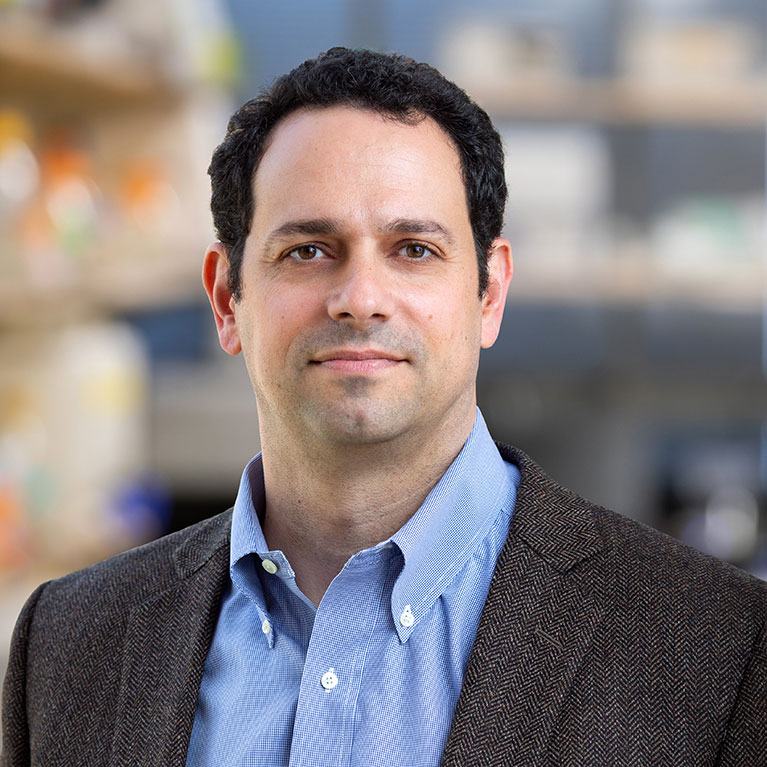
Alan Saghatelian is a Professor and holds the Dr. Frederik Paulsen Chair at the Salk Institute for Biological Studies, where he leads the Clayton Foundation Laboratory for Peptide Biology. His research focuses on the discovery and characterization of natural small molecules, particularly metabolites and peptides, using advanced mass spectrometry techniques. Dr. Saghatelian received his Bachelor of Science in Chemistry from the University of California, Los Angeles, and his Ph.D. in Chemistry from The Scripps Research Institute. He completed his postdoctoral training as a Merck Fellow with the Life Sciences Research Foundation. His research program distinguishes itself through its focus on biology related to metabolites and peptides, which he refers to as natural small molecules. These molecules have vital roles in human physiology and disease but have been historically understudied due to technical challenges in their detection. Saghatelian's lab has made significant discoveries, including the identification of FAHFAs (fatty acid esters of hydroxy fatty acids), a novel class of lipids with anti-inflammatory properties that can reverse diabetes symptoms in mice. His team has also discovered thousands of human genes encoding microproteins that could advance our understanding of molecular pathways controlling diseases such as cancer and autoimmunity. Dr. Saghatelian's work spans multiple disease areas, with significant contributions to diabetes research, cancer biology, neurodegenerative diseases, and immunological disorders. His laboratory collaborates extensively with other researchers at Salk to understand the role of peptides and metabolites across various biological contexts. Mark Foundation for Cancer Research Endeavor Award (2022) American Association for the Advancement of Science Fellow (2020) Sloan Foundation Fellow (2011) Searle Scholars Program Award (2008) New Innovator Award, National Institutes of Health (2007) Burroughs Wellcome Fund Career Award in Biomedical Sciences (2005) Dr. Saghatelian's laboratory has been highly productive, with numerous publications in top-tier journals. His recent work has focused on microprotein discovery, lipid signaling molecules like FAHFAs, and the application of advanced proteomics and metabolomics techniques to understand disease mechanisms. His research program demonstrates a strong trajectory of innovation, moving from fundamental discoveries of new biological molecules to potential therapeutic applications. The Saghatelian Lab develops and applies novel mass spectrometry strategies to measure changes in small molecules that are often overlooked by traditional biological methods focusing on DNA, RNA, and proteins. The lab's work has revealed previously unknown aspects of human biology, including novel signaling pathways and regulatory mechanisms mediated by small molecules.
Max Hort is a researcher at Simula Research Laboratory in Norway specializing in Machine Learning for Software Engineering, Defect Detection, and Software Fairness. He has established himself as an active contributor to the software engineering research community through numerous publications and program committee roles at major conferences. His research focuses on: Machine Learning for Software Engineering Defect Detection Software Fairness Program Repair Log Parsing Hort's recent work demonstrates a strong emphasis on applying large language models to software engineering challenges, particularly in program repair and defect detection. His publications reveal a methodical approach to evaluating AI techniques in software engineering contexts, with special attention to reliability concerns like non-determinism in language models. He has also made significant contributions to the understanding of software fairness and bias mitigation. Through his active participation in program committees for ASE, ICSE, ESEC/FSE, and SANER conferences, Hort has earned recognition as a knowledgeable contributor to the field. His work bridges theoretical machine learning advancements with practical software engineering challenges, addressing critical issues in modern software development as AI-assisted programming becomes increasingly prevalent.
Mohamed GAFSI is a Professor of Management Sciences at the National Higher School of Agricultural Education of Toulouse-Auzeville (ENSFEA) and a permanent member of the Interdisciplinary Laboratory for Solidarity, Societies, Territories (LISST), specifically within the Rural Dynamics team. His work focuses on sustainable farm management through analysis of farmers' strategies, innovations in production systems, and conditions for improving sustainability via collective action and learning processes across diverse agricultural contexts in France and Africa. Professor GAFSI's research spans productivist agriculture, organic farming, and subsistence farming, employing intervention research approaches with quantitative and qualitative methods. He is renowned for his contributions to the IDEA4 method for farm sustainability assessment, which provides scientifically valid, pedagogical tools for evaluating sustainability levels and identifying change levers in farming systems. His work bridges theoretical frameworks with practical applications in agricultural management and sustainability transitions. His recent publications reveal strong thematic continuity around sustainable agricultural systems, with particular emphasis on animal traction as part of sustainable production models, the emergence of biosourced value chains (especially hemp, wool, and leather), and the application of sustainability assessment methods in agricultural education. The IDEA4 framework serves as a unifying thread across his scholarly output, demonstrating consistent methodological rigor and practical relevance. Professor GAFSI actively supervises doctoral research with 5 theses currently in progress and contributes extensively to academic service through scientific committees for conferences and seminars, including the SFER 'Journées' in Montpellier (2010), the SFER-DEVAB colloquium on organic agriculture in Strasbourg (2011), and the ACTA-INRA seminar on crop-livestock systems in Toulouse (2013). He serves as a reviewer for leading journals including Agricultural Systems, Cahiers Agricultures, and Journal Rural Studies. As part of LISST's Rural Dynamics team, Professor GAFSI collaborates with researchers across France and internationally, particularly in West and Central Africa, to understand how family farms adapt to changing environmental, economic, and social conditions. His work on the adaptation and resilience of family farms addresses critical challenges related to climate change, market integration, and sustainability transitions in agricultural systems.
Dario Colazzo is a Professor at Université Paris-Dauphine, affiliated with the LAMSADE laboratory. His research focuses on database systems and programming languages, particularly in cloud databases, type systems for semi-structured data, and query processing optimizations. He has contributed extensively to XML and XQuery research, including parallel query execution and static analysis techniques. His teaching includes courses on programming (Java), UML, database systems, and semantic web technologies at both undergraduate and graduate levels (in French). Key research interests span XML/XQuery optimization, JSON processing, distributed systems, and type systems for safe and efficient data handling. His work emphasizes scalable cloud-based solutions and efficient query execution models. Publications highlight advancements in parallel query processing (e.g., PAXQuery), type-based optimizations for XML updates, and semantic graph analytics. He has collaborated with institutions like EDBT, WWW, and VLDB conferences.
Aaron Elmore is an Associate Professor in the Department of Computer Science at the University of Chicago, affiliated with The College. His research focuses on elastic databases, cloud computing, and distributed systems, with an emphasis on database-as-a-service, resource-efficient systems, and collaborative analytic platforms. Education : PhD in Computer Science, University of California, Santa Barbara (2015) MS in Computer Science, University of Chicago (pre-PhD) Industry experience prior to academia Research Interests : Cloud computing, distributed systems, database systems, IoT analytics, edge computing, and data management. He develops systems like CrocodileDB (resource-efficient query execution), VergeDB (IoT analytics), and CodecDB (data-driven encoding). His work also explores compression techniques ( DenseStore , EdgeTSD ) and collaborative tools ( DataHub , Decible ). Labs & Groups : ChiDATA: Research on large-scale video analysis and data economics Systems Group: Focus on systems, programming languages, and software engineering CERES Center: Unstoppable computing and system resilience Awards include the NSF CAREER Award (2021), multiple Google DANI Awards (2024–2023), and ACM SIGMOD recognitions. Grants & Advising : Active in securing industry grants (e.g., J.P. Morgan, Google) and has advised numerous PhD students and postdocs, including Dixin Tang (now Assistant Professor at UT Austin) and Chunwei Liu (MIT postdoc). Labs/Teams : ChiDATA, Systems Group, and the CERES Center for collaborative and resilient computing initiatives.
Monty Escabi is a Professor in the Department of Biomedical Engineering at the University of Connecticut (Storrs), where he leads the Physiological Acoustics Laboratory. His research bridges neurophysiology and computational modeling to understand auditory processing, focusing on neural coding of complex sounds in the inferior colliculus, thalamus, and cortex. He develops biologically inspired algorithms for noise-robust speech recognition systems. Education: B.S., Electrical Engineering, Florida International University (1993) M.S., Electrical Engineering: Signal Processing and Stochastic Modeling, Columbia University (1995) Ph.D., Bioengineering, University of California at Berkeley and San Francisco (2000) Research Interests: Dr. Escabi investigates how the central nervous system processes speech and natural sounds in noisy environments. His work combines neurophysiological recordings, computational modeling, and psychoacoustics to study: (1) spectrotemporal encoding in auditory pathways, (2) neural mechanisms for sound-source segregation, and (3) biologically inspired hearing technologies. Key areas include neural ensemble coding, auditory hierarchy optimization, and translating neurobiological principles into machine learning models for speech recognition. Publication Trends: Recent articles focus on neural mechanisms of auditory perception, computational models of speech recognition, and sound-statistics-based approaches to hearing science. Predominant themes include noise-robust auditory processing, hierarchical neural coding, and applications in neuroprosthetics, reflecting interdisciplinary integration of neuroscience, engineering, and machine learning. Laboratory: The Physiological Acoustics Laboratory employs large-scale neural recordings and computational techniques to study natural hearing principles and develop advanced auditory technologies.
Lukas Radl is a University Assistant and PhD Student at the Institute of Visual Computing, Graz University of Technology, where he works on 3D Scene Representations for View Synthesis under the supervision of Markus Steinberger. His research focuses on advancing real-time rendering techniques, particularly in Neural Radiance Fields (NeRF) and Gaussian Splatting, to bridge digital and physical world representation. Education: Master of Science in Computer Science (with distinction), Graz University of Technology, 2018-2023 Bachelor of Science in Software Engineering, Graz University of Technology, 2018-2023 Research Focus: Radl's work intersects Computer Graphics, Computer Vision, Machine Learning, and Parallel Processing. He pioneers practical implementations of Radiance Field Representations, addressing critical challenges in view consistency, anti-aliasing, and real-time performance for interactive applications. His innovations enable robust rendering in virtual reality and complex lighting scenarios through novel geometric and neural approaches. Publication Impact: Recent publications (2024-2025) demonstrate a cohesive trajectory toward production-ready radiance field systems. Key advances include sorting algorithms for view consistency (StopThePop), anti-aliasing frameworks for Gaussian Splatting (AAA-Gaussians), and VR-optimized pipelines (VRSplat). These contributions establish new standards for real-time performance while maintaining visual fidelity across diverse hardware platforms. Scientific Recognition: Dean's List (top 5% of students) at Graz University of Technology (2019, 2020) Mentorship & Service: Radl actively shapes academic discourse as a reviewer for premier venues (CGF, ICCV, TVCG) and mentors students through open projects in real-time rendering. His teaching portfolio spans exercise coordination for core visual computing courses since 2020, with current leadership in Real-Time Graphics and Computer Graphics instruction. He fosters talent through student projects advancing Gaussian Splatting implementations. Research Ecosystem: Embedded in Graz University of Technology's Institute of Visual Computing, Radl collaborates within a specialized team focused on radiance field optimization. The group maintains active pipelines for NeRF and Gaussian Splatting research, with strong industry connections evidenced by his upcoming Meta Reality Labs internship. Current projects target foveated rendering, geometric consistency, and editing capabilities for next-generation AR/VR systems.
Dr. Enda Bates is an Assistant Professor and Deputy Course Director in the Music and Media Technologies Programme at Trinity College Dublin. He leads research in spatial music, spatial audio for VR, and electroacoustic aesthetics while maintaining active roles as a composer, producer, and performer. His work bridges academic and artistic domains, with notable contributions to immersive media, accessibility in health data design, and interdisciplinary digital humanities projects. Educated at Trinity College Dublin, he completed a PhD titled *The Composition & Performance of Spatial Music* in 2010. His research has been supported by grants from Trinity College Dublin and Rode Microphones, focusing on projects like the Trinity 360 initiative producing immersive 360-degree music videos. He collaborates widely, including with the Spatial Music Collective and on virtual reality adaptations of Samuel Beckett’s works. Research interests span spatial audio technologies, VR audio design, and the aesthetics of contemporary electroacoustic music. He explores the intersection of sound and technology in performance contexts, such as augmented instruments and site-specific compositions. His work on accessibility includes evaluating health data representations for older adults, emphasizing user-centric design principles. Recent publications highlight advancements in ambisonic decoder methodologies, VR audio systems, and interdisciplinary arts. Awards include the Gaudeamus Music Prize shortlist (2009) and Música Viva Competition Prize (2010). His music has been performed globally by ensembles like the RTÉ National Symphony Orchestra and Crash Ensemble. Bates advises on audio engineering projects and leads collaborative initiatives like *Virtual Play, after Samuel Beckett*, merging theater, VR, and sound design. His lab’s work often explores the technical and creative potentials of 360 media and free-viewpoint video.