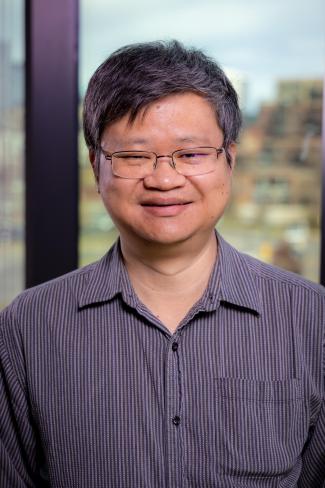
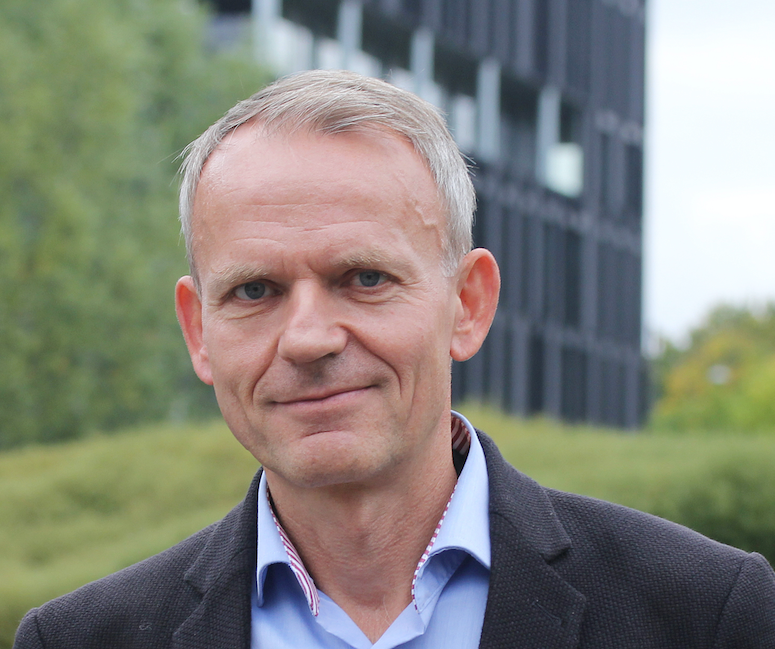
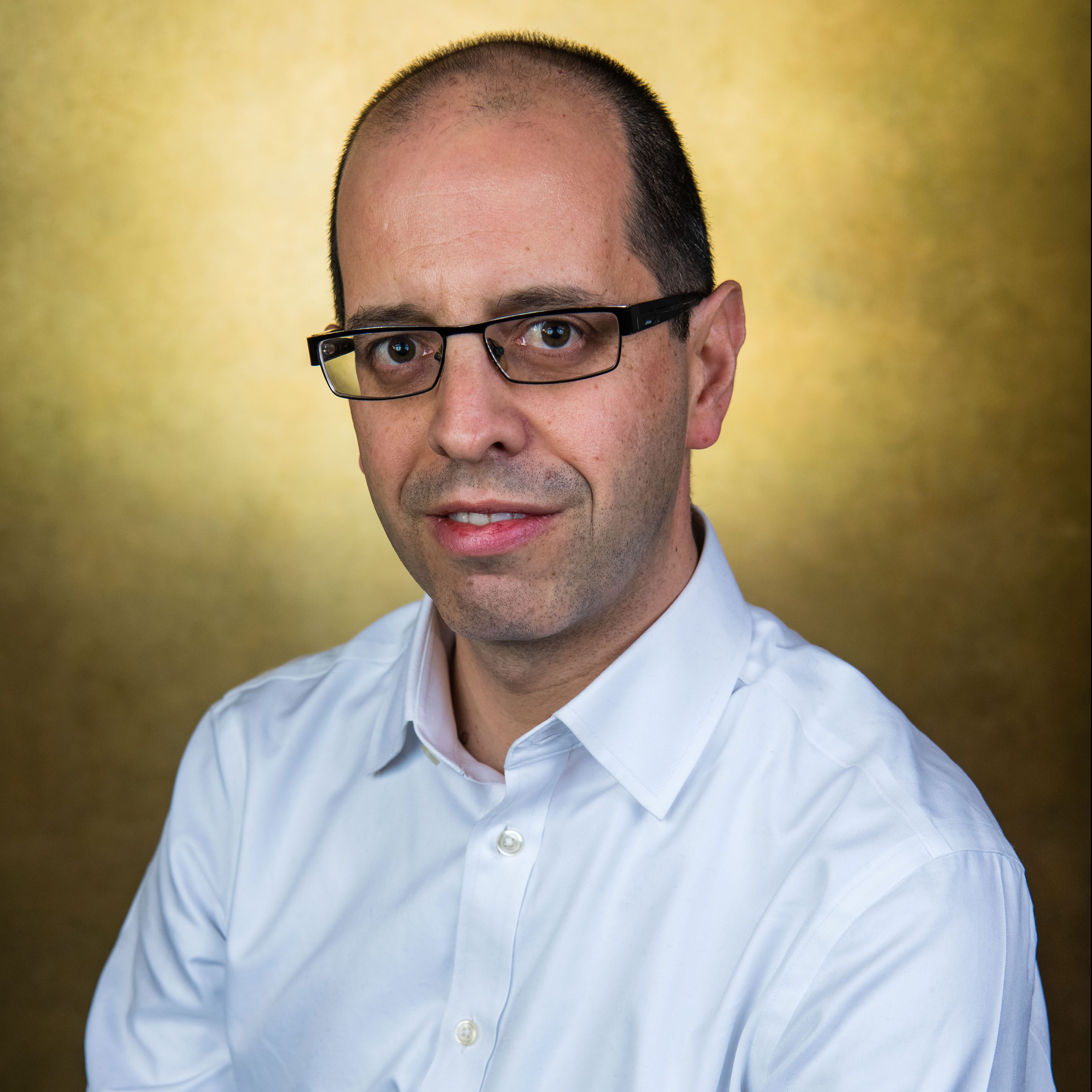
Prof. Dr. Rainer Schnell is a Professor at the Institute of Sociology, University of Duisburg-Essen. His research focuses on advanced survey methodologies, privacy-preserving data linkage techniques, and statistical analysis of health and social data. He leads the Chair of Empirical Social Research and contributes to interdisciplinary studies combining sociology, computer science, and public health. Research interests span: Survey Methodology : Innovations in web surveys, non-response analysis, and data quality assurance Data Privacy : Cryptographic techniques for secure record linkage and vulnerability assessments Health Analytics : Vaccination behavior studies, health data governance, and pandemic-related research Recent publications demonstrate a strong emphasis on: Privacy-enhancing technologies for sensitive data integration Methodological critiques of survey and data linkage practices COVID-19-related behavioral research using large-scale population data
Dr. Bogumiła Hnatkowska serves as Assistant Professor at the Institute of Informatics within the Faculty of Computer Science and Management at Wrocław University of Science and Technology. Her academic career spans software engineering research and education with emphasis on model-driven approaches and quality assurance methodologies. Her research interests include: Software Engineering Analysis and Design of Information Systems Software Development Methodologies Model-Based Software Development Domain-Specific Languages Software Quality Recent publications (2021-2025) reveal concentrated research in model-driven engineering, business rules processing, and ontology integration. Key trends involve textual specification languages for use-cases, automated test generation mechanisms, and formal transformations for ontologies – demonstrating consistent application of theoretical rigor to practical software development challenges across agile and model-based contexts. Scientific Awards: No scientific awards were mentioned in the provided text Dr. Hnatkowska has served as principal investigator for multiple State Committee for Scientific Research grants including UML extensions for multimedia systems (2000), real-time systems analysis (2005), and model-driven database design (2008). Her teaching portfolio includes Software Engineering, Software System Development, and Advanced Programming Techniques courses where she supervises team projects providing students with hands-on development experience. She actively participates in partner programs including Visual Paradigm's Academic Training Partner Program (providing UML/BPMN/agile tools) and IBM Academic Initiative, supporting her research in software engineering methodologies and educational tool development.
Hai Lin serves as Professor and Departmental Chair in the Department of Chemistry at the University of Colorado Denver. His academic career spans over two decades with progressive appointments from Assistant Professor (2005-2011) to Associate Professor (2011-2017) and ultimately to full Professor and Department Chair (2017-present). Dr. Lin received his academic training at the University of Science and Technology of China, earning a BSc. in Engineering (1993), M.S. in Physics (1995), and Ph.D. in Chemistry (1998). His postdoctoral experience includes positions as a Max-Planck Postdoctoral Fellow in Germany (2001-2003) and a Minnesota Supercomputing Institute Scholar at the University of Minnesota (2003-2005). Dr. Lin's research program focuses on the development and application of computational methods to study chemical and biological processes in complex environments. His Group of Theoretical/Computational Chemistry has made significant contributions to quantum mechanics/molecular mechanics (QM/MM) methodologies, particularly in adaptive partitioning techniques that improve the accuracy of molecular simulations. His work spans enzymatic reactions, protein-ligand binding, ion transport mechanisms, and membrane protein dynamics. The theoretical frameworks developed in his laboratory bridge computational chemistry with practical applications in biochemistry and biophysics. An analysis of Dr. Lin's recent publication record reveals a consistent focus on advancing QM/MM methodologies with particular emphasis on adaptive partitioning schemes, proton transfer reactions, and ion channel mechanisms. His interdisciplinary research connects computational chemistry with structural biology, physical chemistry, and biophysics, demonstrating both theoretical innovation and practical applications to biological systems. Dr. Lin has received numerous prestigious awards that recognize both his research excellence and teaching capabilities: Cottrell Scholar, Research Corporation for Science Advancement (2015) Henry Dreyfus Teacher-Scholar Award, Camille & Henry Dreyfus Foundation (2014) Research Corporation Cottrell College Science Multi-Investigator Award (2013) NSF CAREER Award (2010) Excellence in Research & Creative Work Award (2007) Research Corporation Cottrell College Science Award (2006) As an educator, Dr. Lin teaches across the chemistry curriculum including General Chemistry, Physical Chemistry, and specialized graduate courses in Computational Chemistry and Molecular Modeling. His leadership as Departmental Chair reflects his administrative capabilities and commitment to the academic mission of the Department of Chemistry at the University of Colorado Denver.
Professor Silke Adam serves as the Director of the Institute of Communication and Media Studies (IKMB) at the University of Bern, Switzerland. The institute operates within the Department of Social Sciences and focuses on political communication in digital environments. Professor Adam leads research examining how digitization transforms political communication, the influence of algorithms and artificial intelligence, and comparative analyses of communication in democratic and authoritarian contexts. Her primary research interests include political communication in digital environments, conspiracy theories, online information behavior, and right-wing populism. Professor Adam has pioneered research on how conspiracy theories spread during crises, particularly during the COVID-19 pandemic. Her work combines web tracking, survey research, and experimental methods to understand media effects on belief formation. She has made significant contributions to understanding how mainstream media can effectively debunk conspiracy theories without inadvertently reinforcing them. Professor Adam's research portfolio demonstrates a strong focus on methodological innovation in digital communication research, particularly in web tracking and computational content analysis. Her recent publications reveal increasing attention to algorithmic influences on information exposure, the spread of misinformation, and the relationship between political attitudes and selective information consumption. She has developed sophisticated approaches to studying online behavior through combined tracking, survey, and automated text classification methods. ICA Top Faculty-Award of the Mass Communication Division for 'Tracing Knowledge Gaps: Investigating the Influence of Education on News Exposure and Knowledge using Digital Trace Data' Professor Adam actively bridges academic research and practical journalism through workshops connecting media professionals with communication scholars. She has secured funding from the Multidisciplinary Center for Infectious Diseases for pandemic-related communication research. Her work emphasizes the importance of empirical evidence in guiding journalistic practices, particularly regarding how to address conspiracy theories without amplifying them. She supervises research projects examining political communication in digital environments and has mentored numerous researchers in the field. The Institute of Communication and Media Studies under Professor Adam's leadership maintains strong connections with the Multidisciplinary Center for Infectious Diseases and collaborates with media professionals through regular workshops. Her research team employs innovative methodologies including web tracking, algorithmic content analysis, and experimental designs to investigate contemporary challenges in political communication. The institute actively contributes to academic discourse through publications, conferences, and direct engagement with media practitioners to improve evidence-based journalism.
Anders Olof Larsson is a Professor at the School of Communication, Leadership and Marketing at Kristiania University College in Oslo, Norway. Originally from Sweden, he specializes in digital political communication, with particular expertise in social media platforms' role in political processes, journalism, and election campaigns. His research takes a strongly comparative approach across countries, platforms, and time periods. Professor Larsson's research interests focus on political communication in digital environments, with particular attention to how political actors use social media platforms for campaigning and public engagement. His work examines cross-national differences in digital political communication, platform-specific affordances, and longitudinal changes in how political actors utilize emerging technologies. He has conducted extensive research on Facebook, Twitter, Instagram, and newer platforms like TikTok, with special attention to comparative Scandinavian contexts. His recent publications reveal a strong focus on comparative digital political communication across multiple dimensions - comparing different countries' approaches, analyzing various social media platforms' unique characteristics, and examining longitudinal changes in digital campaigning. His work spans theoretical, methodological, and empirical contributions to understanding how digital technologies reshape political communication globally. Professor Larsson actively supervises research and has sought both master's level research assistants and PhD candidates for projects including the 'Scandinavian Political Communication During the Pandemic' initiative. He has organized academic events including the 'Comparative Digital Political Communication' preconference for the International Communication Association. His research is conducted through several collaborative projects including the DigiWorld project and CamforS (Campaigning for Strasbourg), which conducts cross-national comparisons of campaign mobilization in social media. These projects adopt comparative approaches to studying political communication across different contexts and platforms.
Dr. S. Zannettou is a Researcher specializing in Technology, Policy and Management with a focus on Organisation & Governance. He is an active contributor to the Cybersecurity (TPM) research project, investigating internet security, data governance, and information policy within socio-technical systems. His research spans interdisciplinary domains including: Cybersecurity infrastructure and threat analysis Social media algorithm behavior and user engagement Data donation methodologies for platform studies Toxicity dynamics in online communities Personalization systems in content recommendation Information dissemination patterns Recent publications analyze social media ecosystems through empirical data, examining TikTok's recommendation mechanics, news consumption patterns, and personalization tradeoffs. His work consistently employs computational methods to study platform governance, algorithmic bias, and user behavior across digital environments. He collaborates with international researchers on the Cybersecurity (TPM) project, which investigates: Cyber threat intelligence frameworks Internet infrastructure vulnerabilities Business risk modeling Information control mechanisms
Leigh VanHandel serves as Chair of the Music Theory Division and Associate Professor of Music Theory at the University of British Columbia's School of Music within the Faculty of Arts. Her academic journey includes a B.M. from Ohio State University, an M.M. from SUNY Stony Brook, and a Ph.D. from Stanford University. Dr. VanHandel's primary research focuses on music theory pedagogy, music cognition, the relationship between music and language, and computer-assisted research. Her scholarship seeks to understand how music works and how humans process music, with particular emphasis on applying cognitive research to music theory teaching methods. She investigates how best practices in STEM pedagogy can be adapted to music theory instruction, bridging scientific understanding with practical teaching applications. Her recent publications include The Routledge Companion to Music Theory Pedagogy (2021), which she edited and contributed to, and Oxford University Press's Music Theory Skill Builder , an online drill and practice program. These works reflect her commitment to developing innovative approaches to music education that incorporate cognitive science principles. Dr. VanHandel directs the UBC VanLab, an interdisciplinary research group investigating music cognition, with current projects including the Tempo Project that examines how listeners perceive and process tempo in music. She also founded and hosts the Workshops in Music Theory Pedagogy at UBC, which brings together scholars to discuss current research and practices in the field. Her service extends to editorial boards for Music Theory Spectrum , Music Perception , Empirical Musicology Review , and the Journal for Music Theory Pedagogy , as well as leadership roles in the Society for Music Theory and the Society for Music Perception and Cognition.
Dag Sjøberg is a Professor at the Department of Informatics (Ifi), University of Oslo . He also holds a part-time position at SINTEF Digital . His research focuses on empirical software engineering with emphasis on development processes , agile methodologies , technical debt , and programming skill assessment . Research Interests: Empirical methods (controlled experiments, case studies) Construct validity frameworks Agile and Lean practices Microservices architecture Software quality and maintainability Scientific Achievements: Led Simula Research Laboratory's Software Engineering department ranked #1 globally (2004-2008) Developed Guidelines for Construct Validity in software engineering research Extensive publication record in top venues like IEEE Transactions and Journal of Systems and Software Academic Background: Cand.scient. in Informatics (University of Oslo, 1987) PhD in Software Engineering (University of Glasgow, 1993) Professional Involvement: Co-founder and board member of three IT companies Former research director at Simula Research Laboratory (2001-2008) Current head of the Programming and Software Engineering research section at Ifi
Benedikt Schmitz is a PostDoc researcher at the Technical University of Darmstadt, working at the Institute of Nuclear Physics (IKP) and the Theory of Electromagnetic Fields (TEMF). His research spans multiple domains of physics including superconductivity, laser-plasma interactions, and AI-supported modeling of complex physical phenomena. PhD in Physics from Technical University of Darmstadt (2023) Master's research at Helmholtz-Zentrum Berlin (2016-2018) Dr. Schmitz's research focuses on superconductivity, particularly magnetic field interactions with superconductors, and laser-plasma physics for particle acceleration. His work on radiochromic film dosimetry led to pyRES, an open-source evaluation tool. He pioneered AI applications in physics research, developing surrogate models using deep learning for neutron yield prediction and liquid target experiments. His research bridges traditional physics with modern computational approaches, demonstrating how machine learning can transition from research subject to research tool. His publication record shows a clear evolution from superconductivity research toward laser-plasma physics and AI modeling. Early works focused on SRF cavity diagnostics, while recent publications center on laser-driven neutron sources and deep learning applications. This progression reflects his doctoral work and growing expertise in computational physics. His articles demonstrate interdisciplinary approaches combining plasma physics, nuclear engineering, and machine learning to solve complex problems in particle acceleration and detection. First prize at Medtech:Hack with BIOSCAN at CERN (April 2018) Dr. Schmitz has led multiple research projects including SRF Magnetometry during his Master's work, Neutron Prediction and TNSA Liquid Leaf for his PhD, and ongoing development of pyRES. His BIOSCAN detector project resulted in a patent and demonstrates his ability to translate physics concepts into medical applications. He has developed software tools like LabTab for electronic lab journals and maintains active GitHub repositories for his research code. His projects consistently combine experimental work with computational modeling and increasingly incorporate machine learning approaches. His research is conducted within collaborative teams including the TEMF group at TU Darmstadt under Prof. Boine-Frankenheim for his doctoral work, and previously with Prof. Jens Knobloch's group at Helmholtz-Zentrum Berlin. His work spans multiple laboratories and computational environments, utilizing particle-in-cell simulations, Monte Carlo methods, and deep learning frameworks to advance understanding in his fields of interest.
Daniel Barreto is a Professor at Edinburgh Napier University , specializing in Discrete Element Method (DEM) simulations and soil mechanics . His research emphasizes particle shape and size distribution effects on granular material behavior, with applications in permeability estimation, liquefaction mitigation, and nature-inspired ground engineering. Education : PhD in Soil Mechanics (Imperial College London, 2010), MSc in Soil Mechanics and Engineering Seismology (Imperial, 2005), Civil Engineering (Universidad de los Andes, 2003). Research : Focuses on DEM, grading entropy theory, and particle-scale interactions in sand-rubber mixtures, with implications for seismic isolation and sustainable soil stabilization. Awards : Royal Academy of Engineering Leverhulme Trust Fellowship COST Action Chair for Open Network on DEM Simulations (ON-DEM) Emeritus Member of Royal Society of Edinburgh Young Academy of Scotland Publications : Pioneering studies on DEM-based critical state behavior, particle breakage quantification, and permeability models for granular soils, with a 2023 Transportation Geotechnics paper on hydraulic radius applications. Collaborations : Leads ON-DEM, a global network advancing open-source DEM tools, and contributes to interdisciplinary projects involving synthetic root mimics and microbial soil interactions.
Christoph Breunig is a Professor in the Department of Economics at the University of Bonn. His work bridges theoretical econometrics with empirical applications, focusing on nonparametric methods, instrumental variable modeling, and causal inference. His research addresses challenges in high-dimensional data, missingness mechanisms, and treatment effect estimation. University: University of Bonn Department: Economics Academic Rank: Professor Email: cbreunig@uni-bonn.de Research Trends: Nonparametric and semiparametric estimation techniques Applications of instrumental variables in causal inference Handling missing data and measurement error High-dimensional statistical models with economic applications Specification testing in complex regression frameworks Connections between microeconomic theory and empirical methods
Kai Reimers is a Professor of Business Information Systems at RWTH Aachen University's School of Business and Economics. He has held this position since September 2003 and previously served as a guest professor at Tsinghua University's School of Economics and Management in Beijing from 1998 to 2003 with support from the German Academic Exchange Service (DAAD). Professor Reimers received his education in business sciences in Germany, earned his doctorate in economics and business administration from the University of Wuppertal, and completed his habilitation at the University of Bremen. His academic career spans over two decades with a focus on the intersection of business information systems and organization theory. His research primarily focuses on: Development of industry-wide information infrastructures Development of IT standards Development of enterprise-wide information systems Professor Reimers' work examines how economic activities organization affects Electronic Business and vice versa, with the ultimate goal of better designing and managing inter-organizational information systems (IOIS). His research spans from foundational work on electronic markets in the 1990s to contemporary studies on digital transformation, data governance, and healthcare information systems. His recent publications (2024-2025) address cutting-edge topics including applying boundary object theory to medical prescriptions in digital healthcare contexts and proposing ownership-based approaches for data market compatibility aligned with EU privacy and antitrust objectives. Professor Reimers leads the Research Group Electronic Business, which is part of the School of Business and Economics at RWTH Aachen University and closely associated with the Computer, Learning and Teaching Space (CLeVer) of the Faculty. The group focuses on diverse aspects of Electronic Business, particularly the electronic support of inter-organizational business processes through information technology.
Lorenzo Garlappi is the TSX Venture Exchange Professor of Finance at the Sauder School of Business, University of British Columbia. He holds a PhD from UBC, a Doctorate from the University of Trieste, and a BS in Economics from Bocconi University, Italy. His research focuses on asset pricing, credit risk, real options, and portfolio choice, with applications to corporate finance and investment strategies. Education: PhD in Finance, University of British Columbia (UBC) Doctorate in Economics, University of Trieste, Italy BS in Economics, Bocconi University, Milan, Italy Research Interests: Garlappi explores theoretical and empirical aspects of financial markets, including: Credit risk dynamics and debt issuance strategies Monetary policy impacts on investment behavior Climate change effects on real estate pricing Optimal portfolio diversification under uncertainty Real options in corporate decision-making Awards & Recognition: Dimensional Fund Advisors Distinguished Paper Award (2021) Best Paper Award at ASU Sonoram Winter Conference (2019) Summer Haven Investment Management Prize (2019) Crowell Memorial Prize (2010) Teaching & Contributions: Teaches Risk Management and Financial Engineering at Sauder. His work bridges academic rigor and practical finance, offering frameworks for addressing market inefficiencies and uncertainty. He collaborates with industry practitioners to refine asset allocation strategies and corporate finance policies. Labs & Teams: Leads research initiatives at Sauder’s Finance Division, focusing on computational finance, corporate governance, and sustainable investing. Engages in interdisciplinary projects with economics and environmental science departments.
Serkan Gugercin is the Class of 1950 Professor of Mathematics and Deputy Director of the Division of Computational Modeling and Data Analytics (CMDA) at Virginia Tech's College of Science. He is also affiliated with the Department of Mechanical Engineering. His research focuses on model reduction, dynamical systems, numerical analysis, and scientific computing, with applications in engineering and data-driven methods. Gugercin has held prestigious titles such as the A.V. Morris Professorship (2016–2019) and received awards like the NSF Early CAREER Award (2007) and Alexander von Humboldt Fellowship (2016). He earned his Ph.D. in Electrical Engineering from Rice University (2003) and has secured over $5.5M in research funding. His work bridges numerical methods, control theory, and optimization, emphasizing high-fidelity reduced models for complex systems. Education: B.S., Middle East Technical University (1997); M.S. and Ph.D., Rice University (1999, 2003). Key contributions include co-authoring the textbook *Interpolatory Methods for Model Reduction* (SIAM) and advancing structure-preserving interpolation techniques for nonlinear systems. Research areas include data-driven modeling, parametric systems, and energy-based approximation methods. Labs/Teams: CMDA Program, part of Virginia Tech’s Academy of Integrated Science. Collaborates on interdisciplinary projects involving power networks, fluid dynamics, and mechanical systems. Active in editorial roles for SIAM Journal on Scientific Computing and Systems & Control Letters.
Dr. Emily Winter is a Lecturer in Computing and Communications at Lancaster University, part of the School of Computing and Communications (SCC) since 2018. Her research focuses on socio-technical aspects of software engineering, including developer attitudes toward automation, human values in SE, and diversity in computing education. She holds a PhD in Sociology from Lancaster University, an MA in Sociological Research, and a BA in History. Emily has contributed to projects like the Fixie Project (investigating developer attitudes to automated tools) and the Values in Computing initiative. She is a Fellow of AdvanceHE and has received an ESRC 1+3 award for her postgraduate studies. Her external roles include serving as a Reviewer for Information and Software Technology , Workshop Chair for the International Workshop on Genetic Improvement (2022), and Program Committee member for several conferences. Emily teaches the SCC 130 module and actively engages in research addressing gender dynamics in CS education and ethical software design. Key research interests include qualitative methods in SE, developer-centric tool design, and fostering inclusive educational environments. Her work bridges social sciences and computing, emphasizing empirical studies of human-computer interaction in software development. Emily has published widely on topics like automatic program repair, SAST tool usage, and gender representation in CS. Her awards reflect her commitment to pedagogical innovation and social science contributions to computing. She is affiliated with the Security Lancaster research group and is based at InfoLab21.