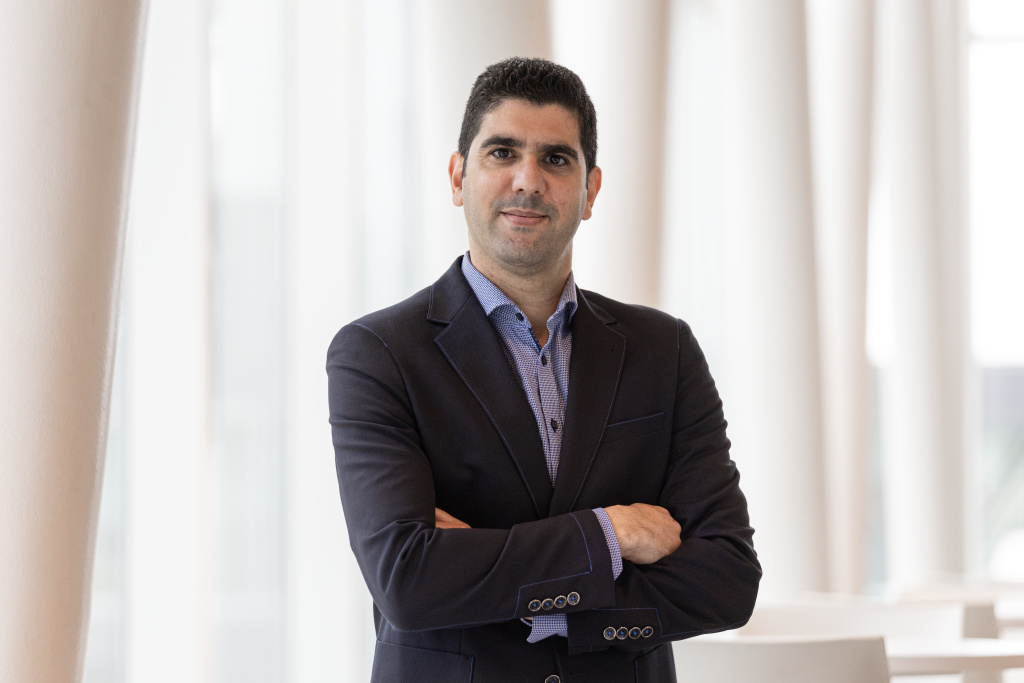
Prof. Dr. Martin Luccarelli serves as Professor of Industrial and Material Design and Deputy Head of the Teaching and Research Centre for Interactive Materials (LFZ IMAT) at Reutlingen University's TEXOVERSUM School of Textiles. His expertise bridges sustainable design, material innovation, and user-centered product development. Teaching Areas: Industrial/material design Location: Building 1, Room 116 Research focuses on green design cues , interactive materials , and sustainable product personality , particularly in automotive contexts. Publications highlight interdisciplinary approaches to design education , eco-friendly material perception , and user interface optimization . Key projects include InBiO (bio-based car interiors) and KICKup (AI-driven cellulose cycles). Contact: martin.luccarelli@reutlingen-university.de
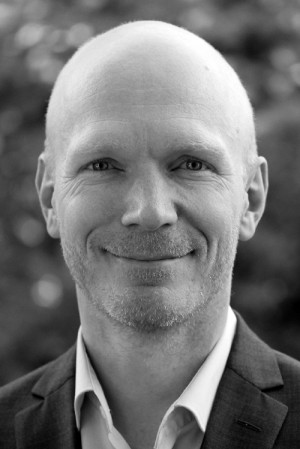
Dr. Catrine Torbjørnsen Halås is a Professor of Social Work at Nord University, a position she has held since 2023. She previously served as an Associate Professor at the University of Nordland from 2012, which later became part of Nord University. She has held significant leadership roles including Head of the Center for Practical Knowledge and Program Manager for the PhD program in Professional Science. She was also the cohort coordinator for the National Research School for Teacher Education (NAFOL) at NTNU from 2018 to 2020. Her research centers on practical knowledge , experiential learning , and qualitative methodologies , with a strong emphasis on ethnographic and narrative approaches. She explores how professional practice in social work can be informed by lived experience and reflective processes. Her work with vulnerable youth focuses on participation, involvement, and creating meaningful change through dialogue and recognition. The recent publications of Dr. Halås reveal a consistent engagement with knowledge-reflected practice , praxeology , and democratic knowledge production . Her research spans topics such as the role of practical knowledge in education, youth narratives challenging social norms, and participatory methods like the Dialogue Café. She emphasizes the integration of theory and practice in professional training and advocates for inclusive, reflective, and ethically grounded research. She is actively involved in research networks such as the European Association of Social Work Research (EASWR), where she convenes a Special Interest Group on Social Work Practice Research, and the International Community for Practice Research in Social Work. She leads the PrepChild Research Center for Children and Youth and Social Preparedness and contributes to the Nordic research network on youth, belonging, and outsiders. Her editorial work includes influential anthologies like Practical Knowledge: An Introduction (2023) and Humanistic Research Approaches to Professional Practice (2017), which have shaped discourse in the field. Dr. Halås has extensive experience in both academic and practical social work. Before her academic career, she served as a Senior Advisor to the County Governor of Nordland (1996–2011) and as a caseworker and manager in Oslo’s Grorud social welfare office (1989–1996). This background deeply informs her research, grounding it in real-world challenges and professional practice. She has not received any explicitly mentioned scientific awards, but her sustained scholarly output and leadership in research networks indicate significant influence in her field.
Waël Jaafar is a Professor in the Department of Software Engineering and IT at École de technologie supérieure (ETS), a constituent school of the Université du Québec system in Montreal, Canada. His research spans multiple critical domains in modern communications and computing infrastructure, with a particular focus on next-generation wireless networks and intelligent systems. Dr. Jaafar holds a B.Eng. from Sup'Com Tunisie, and both M.Sc.A. and Ph.D. degrees from Polytechnique Montréal. His academic background provides a strong foundation for his interdisciplinary research that bridges theoretical concepts with practical engineering solutions. His research interests center around wireless communications systems, with particular emphasis on 5G/6G networks, UAV communications, space telecommunications, and machine learning applications for networking. He has developed significant expertise in federated learning techniques for distributed networks, cybersecurity applications for next-generation mobile systems, and edge computing architectures. His work frequently explores the intersection of communication theory, artificial intelligence, and network security, with applications ranging from industrial IoT to public safety communications. Analysis of his recent publications reveals a strong trend toward integrating artificial intelligence with wireless networking infrastructure, particularly focusing on UAV-assisted communications, federated learning approaches for distributed networks, and security enhancements for 5G/6G systems. His research demonstrates increasing emphasis on practical implementation challenges including energy efficiency, communication overhead reduction, and reliability in non-ideal network conditions. As an academic supervisor, Dr. Jaafar actively mentors numerous graduate students across various projects. He currently supervises doctoral candidates working on blockchain-enhanced security for 5G networks, green network slice orchestration, and federated learning approaches for Open RAN architecture. His master's students are engaged in diverse topics including LiDAR-based power line monitoring, multimodal behavioral authentication, and 5G/6G security using AI techniques. Dr. Jaafar is affiliated with two prominent research laboratories at ETS: LASI (Computer System Architecture Research Laboratory) and LACIME (Communications and Microelectronic Integration Laboratory). At LASI, he contributes to research in AI-based systems engineering, resource orchestration in edge/cloud environments, and intelligent network design. Through LACIME, he engages with broader communications research spanning from microelectronic components to complex communication systems, with particular focus on wireless networks and signal processing applications.
Christian Unkelbach is Professor of Social Psychology at the Department of Psychology, Faculty of Humanities, University of Cologne, where he leads the Unkelbach Group. His research spans multiple domains of social and cognitive psychology with significant contributions to understanding evaluative processes. His primary research interests include Social Cognition, Evaluative Judgments, Information Ecologies, Stereotypes and Prejudice, Evaluative Learning, Fluency Effects, and Sport Psychology. Unkelbach's work examines how humans process evaluative information in social contexts, with particular focus on the truth-by-repetition effect , evaluative conditioning , and cognitive ecological frameworks that explain why certain information patterns dominate social cognition. His research demonstrates how repetition increases belief in information , how attributes become associated through mere pairings , and why positive information is processed more efficiently than negative information. Analysis of his recent publications reveals a consistent trajectory examining the relativity of social cognition , truth effects across contexts , and metacognitive awareness of cognitive biases . His work increasingly integrates cross-linguistic perspectives and examines real-world applications in media consumption and social judgment. Honorary Doctorate from UCLouvain (2025) ISCON Best Paper Award 2020 Speaker of DFG Research Unit FOR2150 'Relativity in Social Cognition' (2017-2021) Emmy Noether Research Grant (DFG, 2009-2013) Feodor Lynen Research Scholarship (Alexander von Humboldt Foundation) Fulbright Scholarship Unkelbach has advised numerous doctoral researchers including Andreas Miculka, Anne Irena Weitzel, Felix Speckmann, Lea Sperlich, and Tabea Zorn. His research group has secured multiple C-SEB grants for projects examining social cognition phenomena. The Unkelbach Group maintains active collaborations with international researchers across Europe and North America, with recent work funded through the DFG Research Unit on Relativity in Social Cognition. The Unkelbach Group laboratory at Richard-Strauss-Str. 2 in Cologne comprises postdoctoral researchers, doctoral candidates, and student assistants working on experimental paradigms examining evaluative learning, truth effects, and social judgment processes. Current projects investigate cross-linguistic truth effects, metacognitive monitoring of repetition effects, and ecological validity in social cognition frameworks.
Robert Vertes is a Professor at Florida Atlantic University's Charles E. Schmidt College of Science, based in Boca Raton (BS-12 521) with contact number 561-297-2362 and email rvertes@fau.edu. He holds a Ph.D. from The New School in New York, NY. Vertes's research centers on the midline thalamus (particularly nucleus reuniens and supramammillary nucleus) and its critical roles in learning, memory, affective behavior, and sleep-wake regulation . His work examines brainstem-diencephalic-septohippocampal systems controlling hippocampal EEG states (theta/non-theta), functional interactions between hippocampus-medial prefrontal cortex-ventral midline thalamus, and serotonergic systems of the brainstem. He actively challenges theories about sleep's role in memory consolidation. Analysis of his 15 most recent publications reveals consistent focus on nucleus reuniens as a critical bridge between hippocampus and prefrontal cortex, with demonstrated roles in anxiety, spatial working memory, and attentional signaling during sleep. His methodology combines electrophysiology, anatomical tracing, and behavioral assays in rat models, increasingly incorporating Cre+ strains for serotonergic pathway studies. No scientific awards were documented in the source material. Vertes maintains active mentorship through co-authored publications with researchers including Linley, S.B. and Viena, T.D. His lab conducts NIH-relevant neuroscience using lesion studies, electrophysiological recordings, and behavioral paradigms to investigate thalamic contributions to cognition. Current work emphasizes serotonergic regulation of limbic thalamic nuclei in affective processing. The laboratory operates within FAU's College of Science, specializing in thalamic circuitry with particular expertise in nucleus reuniens physiology and its modulation of hippocampal-prefrontal networks during cognitive and emotional tasks.
Sergio Agnoli is Associate Professor of General Psychology at the Department of Life Sciences, University of Trieste. He serves as Director of the Dynamics of Creativity Lab (DoC Lab) and Co-Coordinator of the Doctoral Course in Neuroscience and Cognitive Sciences. Academic Affiliation: University of Trieste Research Institutions: Marconi Institute for Creativity (Senior Scientist) Editorial Roles: Associate Editor of Journal of Creative Behavior and Possibility Studies & Society His research focuses on the cognitive, emotional, and neurophysiological substrates of creative thinking . Key methodologies include EEG for temporal brain dynamics, eye-tracking for attentional mechanisms, and neurofeedback/tDCS for causal brain-behavior investigations. Current projects examine contextual inspiration, creative frustration dynamics, and multidimensional creativity models. Recent publications highlight advancements in: Neurophysiological prediction of creative originality via EEG alpha power Emotional intelligence in creative resilience Contextual modulation of idea generation Theoretical frameworks integrating cognitive-emotional factors Eye-tracking analysis of attentional filtering in creativity Awarded the Gabriele Di Stefano Prize (Italian Psychology Association) and featured on NeuroImage cover (Vol. 207). Active in international societies including ISSCI, SfNC, and PSN. Current research involves European FP7 and Italian PRIN projects, with interdisciplinary collaborations across neuroscience, psychology, and education. The DoC Lab maintains partnerships with institutions in Bologna, Graz, Penn State, London, Padua, and Georgetown.
Dr Christopher Grey serves as a Pearl Jubilee Research Fellow and Lecturer in Theological Aesthetics at the London School of Theology, with additional affiliations to the American Maritain Association and the Personal Ordinariate of Our Lady of Walsingham. His career bridges practical music education and advanced philosophical-theological scholarship. His academic credentials include: PhD in Philosophy and Music (2017-2021) from The Open University UK as an AHRC Scholar MA in Music Education (2004-2006) from University College London BMus, LRAM (1987-1990) from the Royal Academy of Music Grey's research centers on Aesthetics and Philosophy of Music through a Thomistic lens, exploring how musical beauty intersects with theological concepts. His work develops Jacques Maritain's aesthetic theory to construct a tradition-constituted framework that addresses modern challenges while overcoming Enlightenment limitations. Key themes include virtuous aesthetic experience, the ineffable in music, and historical contexts of musical beauty in ecclesial settings. His publication trajectory (2010-2023) reveals evolving focus from congregational singing dynamics to Maritain's creative intuition, culminating in current work commemorating the 50th anniversary of Maritain's death. Articles consistently bridge Thomistic philosophy, Catholic theology, and musical practice, with increasing emphasis on Maritain's unfinished musical theory. No scientific awards beyond his AHRC doctoral scholarship were documented. Grey supervises postgraduate research at the London School of Theology in theological aesthetics. Current Pearl Jubilee Research Fellowship supports his monograph on Thomist musical aesthetics and a Maritain-focused conference. Past funding includes AHRC doctoral support. He contributes to the Margaret Beaufort Institute of Theology's research ecosystem and collaborates with the American Maritain Association, aligning with the Institute's Centre for Ecclesial Ethics initiatives.
Christopher Cramer is a Professor in the Department of Development Studies at SOAS University of London. He joined SOAS part-time in 1993 and full-time in 1996 after teaching in Cambridge and Maputo, Mozambique. He has served as Head of the Department of Development Studies and is currently Co-Director of the Development Leadership Dialogue (DLD) at SOAS. He designed and launched the MSc Violence, Conflict and Development, which marked its 25th year in 2025. Cramer earned his PhD in Economics from the University of Cambridge in 1994 with a thesis titled The Political Economy of War in Angola and Mozambique . Before joining SOAS, he worked for the Economist Intelligence Unit (EIU) and the Macroeconomic Research Group (MERG) in South Africa during its democratic transition. Professor Cramer's research focuses on structural change, high value agriculture, industrial policy, development strategy, extreme deprivation, war to peace transitions, and labor in value chains. His work primarily draws on field research in Southern Africa and Ethiopia, with additional projects in Colombia and Brazil. He has made significant contributions to understanding the political economy of violence and conflict in developing countries, challenging conventional wisdoms about economic performance in African contexts. His recent work has increasingly focused on high-value agricultural exports as pathways to structural transformation, particularly examining how classification systems affect production processes. His recent publications show a strong emphasis on African economic development, with particular attention to labor conditions in global value chains and innovative approaches to measuring extreme deprivation. Cramer's work often challenges mainstream development economics frameworks, especially through his critiques of the Lewis Model, while developing practical tools like the Extreme Deprivation Index for poverty measurement in rural contexts. Editorial Board Member, Journal of Southern African Studies (1996-present) Fellow of the Academy of Social Sciences (2016) Visiting Professor at University of Johannesburg (2020) Professor Cramer has supervised numerous PhD students working on diverse topics including coffee policy in Ethiopia, non-state security actors in Nigeria, rural labor regimes in Sudan, and labor retention in Ethiopia's apparel industry. He designed and launched the pioneering MSc Violence, Conflict and Development program at SOAS, which celebrated its 25th anniversary in 2025. In 2025, he also started the innovative module Structural Change and Economic Development in Africa (SCEDA), co-designed with the Mandela School of Public Governance in South Africa, taught synchronously to cohorts at both institutions. As Co-Director of the Development Leadership Dialogue (DLD), Cramer leads an institute focused on understanding the political economy of development. He has served on various committees including the Royal African Society (as former Vice Chair), the University of London's Centre of African Studies (as former Chair), and SOAS committees including the Honorary Degrees Committee and the project board for the Paul Webley Wing construction project.
Associate Professor Stefanie Becker is a cognitive psychologist at the School of Psychology, University of Queensland , where she has been employed since 2007. Her research focuses on attention, visual search, and the relational account of attentional guidance using EEG, fMRI, and eye-tracking. She was awarded a PhD in Cognitive Psychology from the University of Bielefeld (Germany) in 2007, receiving the National German Dissertation Award. Education: PhD in Cognitive Psychology/Experimental Psychology, University of Bielefeld, Germany (2007) Research Interests: Relational account of attention (guidance by relative features such as 'reddest', 'darkest') Emotion and attention dynamics (e.g., processing of emotional faces) Inattentional blindness and awareness Visual working memory and attentional interference Neural mechanisms of visual search Article Trends: Her recent work (2023-2025) explores how relational features guide attention independently of context, the role of consciousness in emotional face capture, and interactions between attentional selection and visual working memory. Earlier studies (2016-2022) investigate EEG clustering techniques, spatial attention modulation by task-relevancy, and the balance between bottom-up and top-down processes in visual search. Scientific Awards: National German Dissertation Award (2007) UQ Postdoctoral Research Fellowship (2009-2018) Supervision: She supervises and has completed several PhD and Master’s projects on attentional templates, emotional face processing, visual working memory, and sensory substitution. Students include Aimee Martin, James D. Retell, and others. Labs/Teams: Becker leads the Centre for Perception and Cognitive Neuroscience at UQ, collaborating on interdisciplinary projects involving cognitive psychology, neuroscience, and computational methods.
Ian A. Anderson is a Postdoctoral Scholar Research Associate in Computational Neuroscience of Social Media and Emotion at the California Institute of Technology (Caltech), working under Professor Dean Mobbs. His research bridges social psychology and computational methods to investigate habitual behaviors in digital environments, with significant contributions to understanding misinformation spread and online engagement patterns. His academic credentials include: BA in Economics and Political Science from Swarthmore College (2013) MS in Management (Marketing and Consumer Psychology) from INSEAD (2019) MA (2021) and PhD in Social Psychology from the University of Southern California (2024) Anderson's research centers on psychological mechanisms underlying social media interactions, particularly how automatic processes drive online behaviors like scrolling, posting, and sharing. He examines intersections of habit formation with hate speech, conspiracy theories, identity expression, and well-being, employing mixed-method approaches including NLP, experimental designs, and advanced statistical modeling. His work reveals how habitual actions often operate independently of conscious motivation, challenging assumptions about user agency in digital spaces. Analysis of his publications shows a consistent trajectory toward understanding the neural and psychological foundations of social media habits. His PNAS-featured work demonstrates how misinformation sharing functions as automatic behavior rather than deliberate bias, while later studies explore interventions for breaking harmful digital patterns. This research program uniquely combines computational neuroscience with social psychology to address contemporary challenges in online ecosystems. Key recognitions include: Communicator of the Year 2023 (USC Dornsife College) Honorable Mention for Psych of Tech Dissertation Award 2022 Though currently in a postdoctoral role without formal advisees, Anderson actively collaborates across institutions including USC, Caltech, and the CERES Lab. His grant-funded projects investigate adolescent well-being, hate speech reporting mechanisms, and cross-platform misinformation dynamics. He maintains strong industry connections through past social media consultancy work while advancing academic research agendas. At Caltech, Anderson contributes to Professor Mobbs' research group focusing on the neuroscience of social media engagement. His collaborative network spans the CERES Lab (adolescent studies), INSEAD (marketing psychology), and interdisciplinary teams developing habit-intervention frameworks for digital well-being.
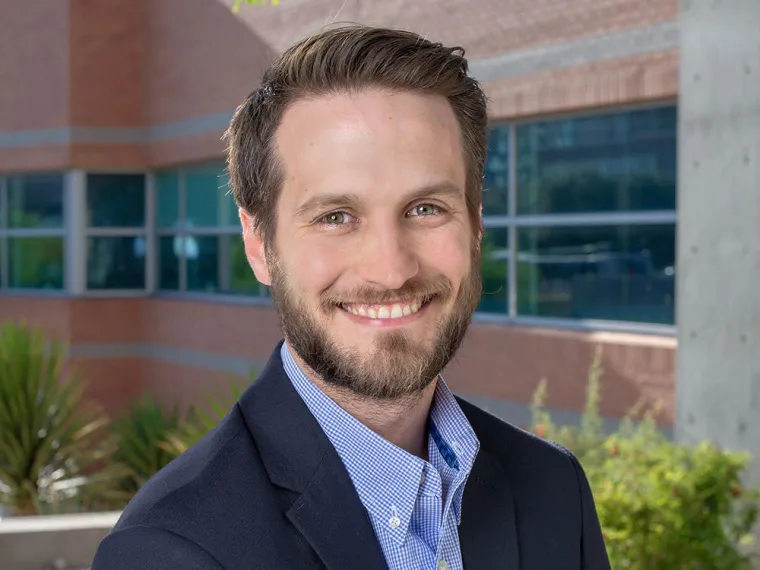
Jeremy Douthit is an Associate Professor of Accounting at the Eller College of Management, University of Arizona, where he joined in 2014. He holds a PhD in Accounting from Florida State University (2014), an MAcc from The Ohio State University, and a BA from Troy University. His research centers on Management Accounting with emphasis on Budgeting, Control Systems, Behavioral Economics, and Corporate Social Responsibility. He investigates how social norms, firm CSR initiatives, and control system designs influence managerial decision-making processes and employee behavioral outcomes through experimental methodologies. Dr. Douthit's publication trend (2012-2024) reveals consistent contributions to top accounting journals including The Accounting Review and Journal of Management Accounting Research. His work demonstrates a progression from foundational agency theory investigations toward contemporary explorations of CSR's internal organizational impacts, with recurring themes of honesty in reporting, control system design, and behavioral responses to incentives. Scientific awards: Eller Fellow While no formal advisees are listed in the provided materials, his active research agenda suggests ongoing mentorship activities. His working papers on relative performance incentives and team uncertainty indicate current grant-supported projects, though specific funding sources aren't detailed in the source text. Dr. Douthit maintains affiliations with the Dhaliwal-Reidy School of Accountancy and the Center for Trust Studies, reflecting his integration into specialized research communities focused on accounting ethics and organizational trust dynamics.
Ewa Miedzobrodzka is a postdoctoral researcher at Utrecht University's Faculty of Social and Behavioural Sciences , specializing in the JEDi consortium project (Youth and Digitalization). She holds a PhD in Communication Science from Vrije Universiteit Amsterdam (2023) and has held academic roles at multiple institutions. Current position: Researcher at Utrecht University (2023-present) Previous roles: Vrije Universiteit Amsterdam (2013-2023), University of Amsterdam (2020-2022) Research Focus: Investigates digital media's impact on adolescent development through behavioral, neuroimaging (ERP), and longitudinal studies. Key areas include: Violent video game effects on empathy and social cognition Digital inequality during pandemic education Self-regulated learning in digital environments Cross-contextual media landscape analysis Academic Contributions: Published 13+ research outputs (journal articles, book chapters, reports) with international collaborators. Active in academic conferences and media outreach. Teaching & Supervision: Supervised 13+ Master's students across institutions, taught courses on media psychology and assessment methods, and contributed to systematic reviews on pandemic educational impacts.
Dr. phil. habil. Alexandra Manske serves as an Acting Professor of Sociology at the University of Duisburg-Essen within the Faculty of Social Sciences, where she leads research and teaching activities at the Institute of Sociology. Her academic profile centers on work sociology, gender studies, and social inequalities, with particular expertise in cultural and creative industries. Her research interests include: Work sociology and transformations in labor relations Gender studies and inequalities in workplace structures Social inequalities and precarious work conditions Cultural and creative industries Contemporary work cultures and organizational practices Digital transformation's impact on labor Professor Manske's scholarly output reveals a consistent analytical focus on the paradoxes of creative labor, where glamour and precarity coexist. Her work examines how emotional labor functions as organizational currency in design agencies, power dynamics in theater production, and gendered impacts of pandemic conditions on cultural workers. She investigates tensions between traditional work structures and digital transformation, particularly how hybrid work models affect creative professionals. Her research demonstrates how seemingly progressive creative industries often perpetuate traditional gender hierarchies despite apparent flexibility. Her significant research projects include the DFG Network 'Artistic-Creative Employment' (2017-2023), the current 'Self-employment and Retirement Provision' study (2024-2026), and the 2023 analysis of 'Funding architecture for the independent performing arts in Hamburg.' Professor Manske has received invitations to speak at major academic and cultural events including the Sociology Congress 2025, Westphalian Cultural Conference, and Digital Arts Zurich. Her scholarly contributions extend beyond academia through media engagement, including an interview featured in the July 2025 Soziopolis newsletter discussing changing work cultures, creative labor paradoxes, and industrial society revival. Her ability to bridge theoretical sociology with contemporary social challenges demonstrates her commitment to relevant academic work.
Sarah E. Einstein is an Associate Professor in the Department of English at the University of Tennessee at Chattanooga (UTC). She is a creative nonfiction writer and academic whose work interrogates the intersection of Jewish and Appalachian identities, ethical research methodologies in personal writing, and narrative structure. Education: PhD in Creative Writing from Ohio University (2016), MFA in Creative Nonfiction from West Virginia University (2011) Her research explores: Ethical boundaries when writing about friends/family Travel as a research methodology in narrative nonfiction Authorial selfhood in first-person writing Hybrid identities (Jewish/Appalachian) Her recent publications include a 2025 Judith Magazine essay on selfhood, 2022 Hippocampus and Brevity articles on research ethics, and a 2016 Assay journal piece analyzing authorial responsibility. Key themes across her work: cultural hybridity, memory ethics, and narrative voice in nonfiction. Academic Recognition: Pushcart Prize winner AWP Prize for Creative Nonfiction recipient Featured in Best of the Net anthology As organizer for UTC's Urban League STEAM Enrichment Program (2021-2025), she has mentored students in narrative design. Current service roles include Faculty Senate President Elect (2025-2026) and General Education Committee membership (2024-2025).
Monika Rosińska is an Assistant Professor at SWPS University's Faculty of Design in Warsaw, where she serves as Head of the Department of Design Theory and Research and as Dean's Representative for Interdisciplinarity. She is affiliated with both the Institute of Social Sciences and the Design Institute within the university. Her research focuses on the socio-cultural dimensions of design practices, with particular expertise in non-anthropocentric design, science and technology studies (STS), and critical/speculative design approaches. She investigates the history of design within political, social and cultural contexts, and examines the sociology of objects in everyday life. Dr. Rosińska explores why the creative process extends beyond form and function, pursues definitions of "good design," and investigates what matters to contemporary designers. Her scholarly work reveals consistent themes across publications, with recent research increasingly focused on multi-species communities and non-anthropocentric approaches to design. Her 2019 paper "Zoepolis: Non-anthropocentric design as an experiment in multi-species care" represents a significant contribution to this emerging field, building on earlier work exploring urban revitalization and participatory design. Dr. Rosińska has curated exhibitions including "Zoepolis. Design for Plants and Animals," which serves as both research output and practical exploration of her theoretical frameworks. Her publications span from foundational works on collective behaviors ("Deindywiduacja. Socjologia zachowań zbiorowych") to cutting-edge explorations of AI in visual arts (2025). She actively contributes to academic discourse through platforms including Google Scholar, ResearchGate, Academia.edu, and ORCID, maintaining visibility across multiple scholarly networks. Her work bridges sociology and design in innovative ways that challenge traditional disciplinary boundaries.