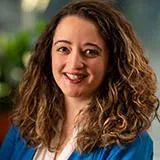
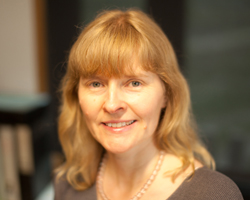
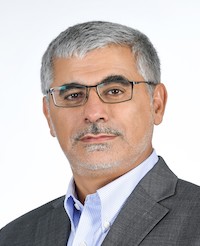
Wim VAN LENT is a Full Professor of Management at IÉSEG School of Management , France. He holds an HDR in Management from IAE Paris Sorbonne and a Ph.D. in Business Administration from ESSEC Business School. His academic career includes roles as Visiting Professor at Curtin University (Australia), Griffith University (Australia), and Researcher at the University of Paris I Panthéon-Sorbonne. He coordinates the 'Strategy and Sustainability' track and is a member of the LEM research group. His research focuses on Management Strategy , Business Ethics , Innovation and Entrepreneurship , and Historical Methodology . Notable areas include corporate archives' strategic use, temporal dynamics in organizations, and ethical repair mechanisms. His work often employs historical case studies, such as the Dutch East India Company (VOC) and colonial-era corporations, to analyze organizational adaptation and institutional contradictions. Van Lent's publications span top journals like Academy of Management Review , Small Business Economics , and Business Ethics Quarterly . His recent studies explore periodization practices in organizations, entrepreneurial time narratives, and moral repair frameworks. Teaching includes international strategy and corporate social responsibility at the MSc level. His research bridges historical analysis with contemporary management challenges, emphasizing how understanding past institutional dynamics informs modern organizational behavior and ethical decision-making.
Haitong Li is an Assistant Professor in the School of Electrical and Computer Engineering at Purdue University's College of Engineering, joining the faculty in 2022. His research bridges nanoelectronic devices, integrated circuits, and nanotechnology-inspired AI hardware to address critical challenges in energy-efficient artificial intelligence systems. Education: Ph.D. in Electrical Engineering, Stanford University Research Interests: Dr. Li pioneers emerging memory technologies—particularly Resistive RAM (RRAM)—for in-memory computing and neuromorphic systems. His work focuses on 3D monolithic integration of RRAM and gain cell memory with CMOS to enable edge AI, with recent breakthroughs in hardware acceleration for large language models and sustainable computing. Key innovations include carbon footprint prediction for LLMs and zeroth-order fine-tuning techniques. Publication Trends: Dr. Li's 2023-2025 publications reveal a strategic shift toward sustainable AI hardware, emphasizing carbon-aware LLM inference and edge deployment. His research consistently targets data movement reduction through memory-centric architectures, spanning photonic accelerators, neuro-symbolic computing, and heterogeneous 3D integration. Awards: No scientific awards were documented in the provided sources. Advising and Grants: Current advisees and grant funding details were not specified in the available materials. Labs and Teams: Research group composition and laboratory facilities were not described in the source text.
Professor Lizelle Bisschoff is a Professor of Film Studies at the University of Glasgow’s School of Culture & Creative Arts. She specializes in African cinema with particular focus on gender representation, digital technologies, and film festival curation. Her research bridges academic scholarship and practical initiatives, such as co-founding the Africa in Motion Film Festival (AiM). She holds a PhD from the University of Stirling and has held prestigious fellowships including the Leverhulme Trust (2010-2012) and Lord Kelvin Adam Smith (2012-2015). Education: PhD in African Cinema (University of Stirling, 2009) MSc in Cultural Studies (University of Edinburgh, 2005) Research Interests: Gender dynamics in African filmmaking Emerging digital film industries across sub-Saharan Africa Postcolonial cinema and modernist aesthetics Her work emphasizes decolonizing film studies through projects like AiM Festival and edited volumes such as Women in African Cinema . Recent research explores African science fiction and feminist archives. She has secured £115k in grants for film restoration and educational outreach programs. Awards: Leverhulme Trust Postdoctoral Fellowship AHRC Follow-on Funding for Impact (£90k) British Federation of Women Graduates Scholarship Teaching: Convenes MSc Film Curation program Teaches Introduction to African Cinemas and Race on Screen Key Projects: Lead curator for Africa’s Lost Classics restoration initiative Organized international symposia on African art and activism
Muhannad S. Bakir is the Dan Fielder Professor in the School of Electrical and Computer Engineering at Georgia Institute of Technology and serves as the Director of the 3D Systems Packaging Research Center. His research focuses on heterogeneous integration of microsystems, including 2.5D and 3D ICs and packaging technologies, with significant contributions to advanced cooling systems, electrical and photonic interconnects, and biosensor integration with CMOS. Dr. Bakir's research interests span heterogeneous microsystem design and integration, advanced cooling and power delivery for emerging architectures, electrical and photonic interconnect technologies, biosensor technologies, and nanofabrication. His work addresses critical challenges in next-generation electronics, enabling polylithic integration that concatenates heterogeneous ICs of various functionalities while mimicking monolithic-like densities. His research particularly focuses on co-design of thermal technologies, power delivery networks, and signaling networks for silicon nanoelectronic systems. His recent publications demonstrate strong trends in fused-silica stitch-chip technology for heterogeneous integration, with particular emphasis on RF and mm-wave applications, power delivery for AI accelerators, and thermal management solutions. His work bridges electrical engineering, materials science, and thermal management to solve critical bottlenecks in computing performance and efficiency. 2013 Intel Early Career Faculty Honor Award 2012 DARPA Young Faculty Award 2011 IEEE CPMT Society Outstanding Young Engineer Award 2012 National Academy of Engineering Frontiers of Engineering Symposium Invited Participant 2015 IEEE CPMT Society Distinguished Lecturer 2014 Best Paper of the IEEE Transactions on Components Packaging and Manufacturing Technology More than 25 conference and student paper awards Twelve issued US Patents Dr. Bakir leads the Integrated 3D Systems Lab (I3DS) at Georgia Tech, which is actively researching advanced packaging, interconnects, electrical and thermal design, and system integration. His team has received significant recognition for their work, including multiple best paper awards from major conferences like ECTC, IITC, and CICC. The lab is currently seeking postdoctoral researchers and research faculty to advance next-generation electronics through collaborative research. His lab focuses on enabling the next phase of Moore's Law through polylithic integration, which concatenates heterogeneous ICs of various functionalities (digital, analog, photonic, and mm-wave) using advanced off-chip '2.5D' and '3D' heterogeneous interconnects and packaging. This work impacts applications in high-performance computing, machine learning, edge intelligence, autonomous vehicles, augmented/virtual reality, and healthcare.
Sumeet Kumar Gupta is an Associate Professor in the Department of Electrical and Computer Engineering at Purdue University. His academic career spans from his current role to a prior Assistant Professorship at Pennsylvania State University (2014-2017) and an engineering position at Qualcomm Inc. (2012-2014). He holds a PhD in Electrical and Computer Engineering from Purdue University (2012), an M.S. from the same institution (2008), and a B.Tech in Electrical Engineering from IIT Delhi (2006). B.Tech, Electrical Engineering, IIT Delhi (2006) M.S., Electrical and Computer Engineering, Purdue University (2008) PhD, Electrical and Computer Engineering, Purdue University (2012) Dr. Gupta's research focuses on neuromorphic computing, low power variation-aware VLSI design in emerging nanotechnologies, device-circuit co-design, and nano-scale device modeling/simulations. His work addresses challenges in ferroelectric materials, crossbar arrays for deep neural networks, and energy-efficient AI hardware. Recent publications (2025-2024) highlight trends in: Ferroelectric HfO2/HZO thin films Compute-in-memory architectures Variability/stochasticity analysis Machine learning for device optimization Interconnect resistance/temperature effects AI hardware fault tolerance Scientific Awards & Recognitions: DARPA Young Faculty Award (2016) Early Career Professorship, Penn State (2014) 6th TSMC Outstanding Student Research Bronze Award (2012) Magoon Award (Purdue) Outstanding Teaching Assistant Award (Purdue, 2007) Intel PhD Fellowship (2009) His professional journey includes academic appointments at Purdue University (2020-present, Associate Professor) and Pennsylvania State University (2014-2017, Assistant Professor) after industry experience at Qualcomm Inc. (2012-2014). He maintains IEEE and EDS membership while publishing over 100 refereed works.
Dmitri Strukov is a Professor at the University of California, Santa Barbara in the Department of Electrical and Computer Engineering. His work spans material science, electrical engineering, and computer science, focusing on novel computing paradigms using emerging memory devices. Education: PhD in Electrical and Computer Engineering from SUNY Stony Brook, MS in Applied Physics and Mathematics from Moscow Institute of Physics and Technology. Research Interests include neuromorphic computing , non-volatile memory applications , and mixed-signal circuits for machine learning and hardware security. His group develops memristive crossbar arrays and 3D NAND flash for energy-efficient systems. Scientific Leadership features Fellow of IEEE and Distinguished Lecturer roles. His work has been recognized with best paper awards at ASPLOS’19 and Computing Frontiers’13. Students: Mentored PhD graduates in neurocomputing, security, and memristor design including Z. Fahimi, S. Larimian, M.R. Mahmoodi, and X. Guo. Grants: Funded by AFOSR, ARO, DARPA, NSF, and industry leaders like Google and Samsung. Labs: Utilizes UCSB’s nanofabrication center and advanced tools for memristor characterization.
Dr. Hillary Briffa is a Senior Lecturer in National Security Studies and Assistant Director of the Centre for Defence Studies at King’s College London. She holds a Ph.D. in War Studies from King’s College London, focusing on small states’ grand strategy. Her roles include teaching National Security Studies, Small States and International Security at MA level, and leading BA3 Dissertation training. Research interests span small states’ security, climate security, grand strategy, and First World War propaganda. She leads the Climate Change and International Order portfolio at the Centre for Grand Strategy and co-organizes the annual U.S.-U.K. World Order summer school. Grants include maritime security for small states (with Georgetown University Qatar), national energy transitions, and foresight with the Estonian Defence Forces. Briffa advises the UK government on strategic reviews, international organizations, and defense policy. Awards include the U.S. State Department’s Emerging Young Leaders Award (2016), Hans J. Morgenthau Fellowship (2020/21), and Fellow of the Higher Education Academy (2023). She serves on King’s Academic Board, EDI committees, and chairs the Circle-U Climate Knowledge Hub. Her work bridges academia and policy, emphasizing small states’ strategic agency in global challenges. Publications include analyses of Maltese neutrality, Indo-Pacific maritime security, and small states’ pandemic responses. She co-authored sections in volumes on war studies, climate policy, and international order. Briffa’s research and outreach aim to enhance small states’ resilience and influence in evolving security landscapes.
Judith Driscoll is Professor of Materials Science at the University of Cambridge in the Department of Materials Science & Metallurgy. She holds the prestigious Royal Academy of Engineering Chair in Emerging Technologies and serves as a Visiting Staff Member at Los Alamos National Laboratory. As the founding Editor-in-Chief of APL Materials, she has significantly contributed to the materials science community. Dr. Driscoll's research focuses on Energy Efficient Oxide Materials for Information and Communications Technologies and energy devices. Her work spans the development of non-volatile memory, resistive switching devices, and ferroelectric materials for neuromorphic computing applications. She investigates oxide thin films for applications ranging from data storage to energy generation and conversion, with particular emphasis on creating more energy-efficient device technologies to handle the exponential growth of data-centric applications. Her recent publications demonstrate strong trends in developing novel oxide-based memory devices with improved energy efficiency, particularly for AI applications. The work shows significant progress in hafnium-zirconium oxide ferroelectrics, resistive switching mechanisms, and vertically aligned nanocomposite structures for enhanced device performance. These innovations address critical challenges in reducing the unsustainable energy demands of modern computing, particularly for artificial intelligence systems. Fellow of the Royal Academy of Engineering Fellow of the Materials Research Society Fellow of the American Physical Society Fellow of IOM3, IOP, and Women Engineers Society Fellow of the American Academy of Arts and Sciences Recipient of ERC Advanced Grant Editor-in-Chief of APL Materials Dr. Driscoll leads a vibrant research group that has secured significant funding including her Royal Academy of Engineering Research Chair, an ERC Advanced Grant, and an ECCS-EPSRC grant in collaboration with researchers from the USA. She has founded the Cambridge Centre for Neuromorphic Computing (Neucam) in 2023. Her group operates world-leading growth equipment including pulsed laser deposition with RHEED control, high temperature oxide sputtering, and spatial ALD systems. She collaborates extensively across the University of Cambridge and with international partners to solve complex materials challenges, with her group's role often being to identify optimal materials for functional goals, predict fabrication methods, and then create and characterize these materials.
Holger Fröning is a full professor at Heidelberg University’s Institute of Computer Engineering (ZITI), where he leads the Hardware and Artificial Intelligence (HAWAII) Lab. His research focuses on embedded machine learning , high-performance computing , and hardware-software co-design , with emphasis on resource efficiency, power optimization, and emerging architectures like analog , photonic , and resistive memory systems. He has held leadership roles including Managing Director of ZITI (2023–present) and Dean of Studies for Computer Science (2019–2022) , and has collaborated with institutions such as NVIDIA Research, Chinese Academy of Sciences, and Graz University of Technology. Research Trends : His recent publications explore Bayesian neural networks , green machine learning , analog computing noise mitigation , and GPU/FPGA optimization . Articles highlight photonic computing for AI , memory-efficient training , and hardware-aware DNN compression . Scientific Awards : 2025 HiPEAC Paper Award (Nature Computational Science) 2014 Google Faculty Research Award Multiple Best Paper Awards (IPDPS, ICPP, ECML-PKDD workshops) Leadership & Service : Organized workshops (WEML, ITEM, F4HD), chaired tracks at EuroPar and ISC, and served on program committees for ICPR, ECAI, and FPL. Education & Affiliations : PhD and MSc from University of Mannheim (2007/2001). Sponsors include DFG, FWF, FFG, NVIDIA, SAP, and XILINX.
Prof. Baker Mohammad serves as Professor and Director of the System on Chip Lab in the Department of Computer and Information Engineering at Khalifa University. With over 15 years of industrial experience at Intel and Qualcomm designing microprocessors and DSP chips, he bridges academic research with real-world engineering challenges in high-performance computing and low-power systems. His educational background includes: Ph.D. in Electrical and Computer Engineering, University of Texas at Austin (2008) M.S. in Electrical and Computer Engineering, Arizona State University B.S. in Electrical Engineering, University of New Mexico Dr. Mohammad's research spans cutting-edge domains where VLSI design converges with AI acceleration and emerging memory technologies . His work pioneers Memristor applications in environmental sensing (radiation, vacuum, glucose) and neuromorphic computing, while advancing energy harvesting systems for wearable electronics. The integration of in-memory computing with security primitives represents a paradigm shift in hardware design, moving beyond traditional CMOS limitations. His publication trajectory reveals accelerating focus on self-powered neuromorphic systems and RRAM-based architectures, with recent work (2021-2023) emphasizing hardware-software co-design for edge AI. Over 75% of his recent publications involve cross-disciplinary collaborations spanning materials science, chemistry, and biomedical engineering. Notable scientific recognition includes: IEEE TVLSI Best Paper Award 2016 IEEE MWSCAS Myrill B. Reed Best Paper Award Qualcomm Qstar Award for Performance Leadership KUSTAR IP Excellence Award Multiple SRC Techon Best Session Papers As a dedicated mentor, he has supervised over 15 graduate students while securing competitive funding from Khalifa University, ADEK, Qualcomm, Tii, and UAE space agencies. His grant portfolio demonstrates exceptional translational impact, converting fundamental research in memristive devices into drone flight computers and medical sensors. Current projects integrate academic rigor with industrial deployment timelines. The System on Chip Lab operates as a multidisciplinary hub where semiconductor physicists collaborate with AI researchers to develop RISC-V-based secure processors and piezoelectric nanogenerator systems. Recent expansions include partnerships with Tii for aerospace applications and medical device startups for glucose monitoring technology.
Kent A. Ono is a Distinguished Professor in the Department of Communication at the University of Utah, where he has held faculty appointments since 2012. Previously, he served as Department Chair (2012-2017) and has held leadership positions including Director of Asian American Studies at UIUC (2002-2007) and Director of Cultural Studies at UC Davis (1999-2002). He earned his PhD in Rhetorical Studies from the University of Iowa (1992), MA from Miami University (1988), and BA from DePauw University (1987). Professor Ono's research examines critical media analysis through frameworks of race, gender, sexuality, and nation. His work spans rhetorical theory, intercultural communication, and cultural studies, with emphasis on: Representations of Asian Americans in media Immigration discourse and border rhetoric Postcolonial media criticism Critical race methodologies Transnational cultural flows His recent publications demonstrate sustained focus on immigration rhetoric, racial representation in media, and critical intercultural communication. Thematic analysis reveals consistent engagement with power structures, identity negotiation, and resistance narratives across 30+ years of scholarship, with emerging work on K-pop globalization and digital culture. Awards & Honors: Presidential Citation, National Communication Association (2024) Fellow, International Communication Association (2021) Douglas W. Ehninger Distinguished Rhetorical Scholar (2018) Distinguished Scholar Awards from NCA (2015, 2022), WSCA (2020) Teachers on Teaching Award, NCA (2015) He has held editorial leadership positions including Editor of Communication and Critical/Cultural Studies and co-editor of NYU Press's Critical Cultural Communication series. As NCA President (2020), he advanced equity initiatives and disciplinary transformation. Ono founded the Asian American Cultural Politics Research Cluster at UC Davis and secured grants including 'Portraits of Courage: Photographs by Shane Sato' (2019). He teaches graduate seminars in Rhetorical Studies and International Communication.
Professor Guy Williams is a leading academic at the University of Cambridge with a focus on imaging science and clinical neurosciences, affiliated with Downing College and the Wolfson Brain Imaging Centre . Holding a PhD in Physics from his initial Natural Sciences degree, he specializes in nuclear magnetic resonance (NMR) and MRI techniques for brain imaging. Education: BA, PhD in Physics His research centers on non-invasive imaging of brain structure and function, particularly in traumatic brain injury (TBI) and dementia. His work involves developing novel MRI pulse sequences and advanced data analysis algorithms, including AI-based diagnostic tools. He leads studies on white matter integrity post-trauma, longitudinal dementia assessment, and applications of MRI in disorders of consciousness and addiction. Recent publications highlight collaborations in traumatic brain injury outcomes, AI-guided dementia prediction, and neuroimaging of post-COVID cognitive deficits. His team's work on ultra-high field laminar fMRI and distortion correction methods has advanced clinical neuroscience applications. Key techniques include diffusion tensor imaging (DTI), 7 Tesla MRI, and positron emission tomography (PET/MR). His research spans from basic NMR physics to clinical translation, with a strong emphasis on multi-site studies and real-world diagnostic implementation.
Prof. Dr. Amelie Hagelauer holds a professorship in Micro- and Nanosystem Technology at the TUM School of Computation, Information and Technology, Technical University of Munich. Her work focuses on advanced electronics and systems integration across quantum computing hardware, resistive memory technologies, and high-frequency RF systems. She has contributed to innovations in superconducting qubit readout architectures, multi-level RRAM designs, and 3D-integrated CMOS-compatible quantum devices. Research interests span quantum hardware design, nanoelectronic devices, RF front-end systems, and emerging memory technologies. Her work emphasizes practical implementation challenges such as low-power operation, high-voltage handling in RF switches, and wafer-scale fabrication processes. Recent projects include D-band radar systems, energy-efficient 60 GHz transceivers, and antenna tuning solutions for 5G applications. Publications from 2023-2025 showcase advancements in resistive switching device characterization, mitigation of TLS losses in superconducting qubits, and reconfigurable AI accelerators using RRAM-based digital twins. Her work bridges theoretical device physics with practical integrated circuit design, addressing scalability and reliability in next-gen electronics. Awards and grants: None explicitly listed in provided texts. Active collaborations include EU-funded projects on quantum computing platforms and TUM's Electronic Photonic Integration initiatives. Leads research teams in microsystem technology with emphasis on cross-disciplinary approaches combining CMOS processes, MEMS, and quantum engineering.
Dana Pe'er is a Professor and Chair of the Computational and Systems Biology Program at the Sloan Kettering Institute (SKI) of Memorial Sloan Kettering Cancer Center. She is also an Investigator of the Howard Hughes Medical Institute and holds the Alan and Sandra Gerry Endowed Chair. Dr. Pe'er leads an interdisciplinary research group that combines advanced genomics approaches with machine learning to address fundamental questions in biomedical science, with particular focus on cancer biology, developmental biology, and immunology. Dr. Pe'er earned her PhD from Hebrew University in Jerusalem, Israel. Her academic journey includes a postdoctoral fellowship with George Church at Harvard Medical School. Before joining Memorial Sloan Kettering Cancer Center in 2016, she held faculty positions at Columbia University. Dr. Pe'er's research focuses on understanding cellular plasticity, the consequences of intra-tumor heterogeneity, cancer evolution and metastasis, and the mechanisms by which regulatory circuits go awry in disease. Her lab combines single-cell and spatial profiling technologies with machine learning approaches to investigate gene regulation, cellular plasticity, and cell-cell communication in the contexts of cancer, immunity, and development. They are particularly interested in how organisms develop from a single cell to generate diverse cell types, how epigenetic control rewires during development, and how cells communicate to execute multicellular responses. Analysis of Dr. Pe'er's recent publications reveals a strong focus on developing computational methods for single-cell and spatial genomics data analysis. Her work spans cancer types including pancreatic, prostate, colorectal, and breast cancer, with emphasis on tumor heterogeneity, metastasis mechanisms, and cellular plasticity. A significant portion of her research involves creating novel algorithms and tools like CellRank, REUNION, and SEACells that enable researchers to extract meaningful biological insights from complex genomic datasets. 2023 Class of 2023 Inductee - American Academy of Cancer Research (AACR) Academy 2023 Innovator Award - International Society for Computational Biology (ISCB) 2021 Fellow - International Society for Computational Biology (ISCB) Howard Hughes Medical Institute Investigator (2021) 2019 Ernst W. Bertner Memorial Award - University of Texas MD Anderson Cancer Center 2016 Lenfest Distinguished Faculty Award - Columbia University 2014 Director's Pioneer Award - National Institutes of Health 2014 Overton Prize - International Society for Computational Biology (ISCB) Dr. Pe'er is known for her dedicated mentorship approach, describing herself as "a mama bear" who cares deeply about her trainees while expecting independence, innovation, and hard work. She mentors numerous PhD students and postdocs in her lab. Her HHMI Investigator award provides approximately $9 million over seven years, enabling ambitious research directions. She also collaborates extensively with the Single-cell Analytics and Innovation Lab (SAIL) at MSK to generate new data from emerging technologies, working closely with wet-lab collaborators at MSK and beyond to apply computational methods to cutting-edge datasets across multiple disease areas. The Pe'er Lab is an interdisciplinary group of computational biologists with diverse backgrounds ranging from pure mathematics to clinical medicine. They work closely with wet-lab collaborators to apply their computational methods to cutting-edge datasets across cancer, immunology, and developmental biology. The lab is described as open, supportive, collaborative, and fun, with access to world-class facilities at the Sloan Kettering Institute. Dr. Pe'er's work continues to push the boundaries of computational biology and cancer research, with the ultimate goal of developing more effective, personalized therapies for cancer patients.
Prof Aaron Thean is the Deputy President (Academic Affairs) and Provost at the National University of Singapore (NUS). Formerly, he served as Dean of the College of Design and Engineering at NUS and held senior roles at IMEC (Belgium) as Vice President of Logic Technologies and Director of Logic Devices Research. His expertise spans advanced semiconductor device technologies, including FinFETs, nanowire FETs, III-V/Ge channels, and emerging beyond-CMOS architectures. He holds degrees from the University of Illinois Urbana-Champaign (B.Sc., M.Sc., Ph.D. in Electrical Engineering) and has published over 300 papers with 50+ patents. His awards include the Gregory Stillman Award (2001) and Compound Semiconductor Innovation Award (2014). Research interests focus on semiconductor innovation, device-process co-optimization (DTCO), and monolithic 3D integration. Notable contributions include industry-first Gate-First HKMG technologies, advanced strained silicon platforms, and neuromorphic computing hardware. His work bridges academia and industry through collaborations with Qualcomm, IBM, and foundry partners. Current initiatives emphasize energy-efficient computing and wearable sensor systems. Prof Thean’s leadership spans NUS-wide academic strategy and global research partnerships. His technical legacy includes foundational advancements in transistor scaling, low-power CMOS design, and AI-driven failure analysis methodologies.