Professor Kevin Burden is an international expert in the application and impact of digital technologies in learning at the University of Hull's Education Studies school. His work focuses on mobile technologies' transformational use in formal and informal educational spaces, including schools, universities, and museums. Visiting Scholar at the University of Hong Kong Distinguished Visiting Professor at the University of Technology, Sydney His research interests span mobile learning , educational technology , and digital pedagogy , including the ethics of AI in K-12 education and the development of next-generation digital eBooks. Recent publications analyze 360-degree video in education, the ethics of AI, and mobile learning frameworks like the iPAC model. Supervision activities include PhD students on topics such as Interactive Whiteboards in Brunei , Web 2.0 in Educational Supervision , and Analytics for Student Retention . Collaborative projects involve international partners like the EU, British Council, and UNESCO.
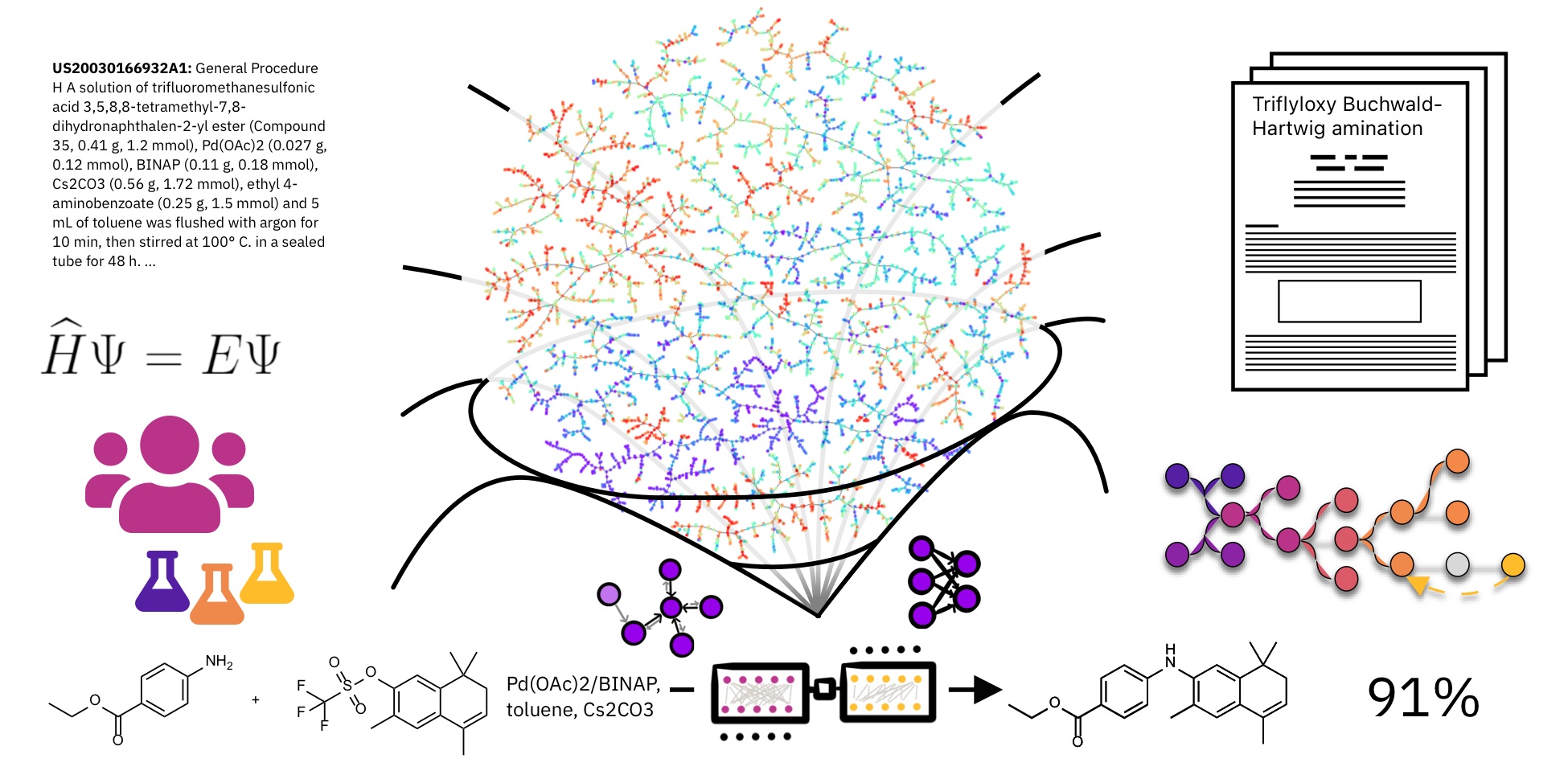
Philippe Schwaller is a Tenure Track Assistant Professor at École Polytechnique Fédérale de Lausanne (EPFL), School of Basic Sciences, within the Institute of Chemical Sciences and Engineering. He leads the Laboratory of Artificial Chemical Intelligence (LIAC), a research group focused on leveraging artificial intelligence to accelerate molecular discovery and sustainable chemistry. He is also a core Principal Investigator of the NCCR Catalysis, a national Swiss research center. His research lies at the intersection of chemistry, materials science, and computer science, with a strong emphasis on developing machine learning models for molecular design and synthesis. LIAC's work is driven by real-world sustainability challenges, aiming to reduce the time and cost of discovering new functional molecules and materials. The recent publications and projects from his lab highlight a strong trend in generative AI for chemistry, including memory-augmented models, hypergraph neural networks, and large language models tailored for scientific discovery. These efforts are complemented by educational initiatives such as the 'AI for Chemistry' course and practical programming resources for chemists. He actively supervises a diverse group of PhD students and contributes to multiple doctoral programs at EPFL, including EDCH and EDPY. His teaching portfolio includes courses on computational chemistry, AI applications in chemistry, and scientific machine learning. Philippe Schwaller is deeply involved in advancing AI-driven scientific discovery through both research and education, positioning his lab at the forefront of artificial chemical intelligence. The lab maintains active open-source contributions on GitHub, fostering collaboration and transparency in scientific AI development.
Tom Zick serves as Director of Responsible AI at Charles Schwab and holds an academic affiliation as a Research Fellow at Harvard University's Berkman Klein Center for Internet & Society. Her work bridges technical AI development and legal frameworks, focusing on governance mechanisms for emerging technologies. She has advised organizations from startups to Fortune 500 companies while collaborating with frontier AI labs and public institutions like the City of Boston on AI deployment and data governance initiatives. Her educational foundation includes a JD from Harvard Law School and a PhD in Astrophysics from UC Berkeley, providing interdisciplinary expertise critical to her research. This dual background enables rigorous analysis of complex technology-policy intersections. Zick's research centers on creating accountable AI systems through technical oversight frameworks and regulatory compliance strategies. She investigates generative AI's societal impacts, reinforcement learning risks, and privacy-preserving identity solutions like personhood credentials. Her work emphasizes red teaming, model alignment, and global regulatory harmonization, addressing both immediate implementation challenges and long-term existential risks through law-technology integration. Analysis of her publication trajectory reveals escalating focus on governance scalability as AI capabilities advance. Early work examined foundational risks in reinforcement learning, while recent publications address generative AI's disruption of education systems and the urgent need for cross-jurisdictional regulatory frameworks. Her taxonomy development for AI regulation demonstrates systematic approaches to navigating fragmented global policy landscapes. As an advisor, Zick has guided corporate and municipal entities through AI implementation challenges, notably helping Boston operationalize data governance frameworks. Her Berkman Klein fellowship involved direct collaboration with major AI labs on alignment research and red teaming exercises. She contributes to industry-wide initiatives including Twitter's decentralized social media project (bluesky), focusing on protocol-level solutions for content integrity. Zick's collaborative ecosystem spans frontier AI companies, academic researchers, and public sector innovators. Her current work with the City of Boston demonstrates practical governance implementation, while ongoing personhood credentials research addresses AI-generated content verification challenges. These partnerships reflect her commitment to translating theoretical frameworks into operational systems across multiple sectors.
Juan Wachs is the James H. and Barbara H. Greene Professor at the Edwardson School of Industrial Engineering, Purdue University. He holds a courtesy appointment in Biomedical Engineering and is an Adjunct Professor of Surgery at the IU School of Medicine. His research focuses on the intersection of robotics, human-AI interaction, and healthcare systems, with a particular emphasis on surgical robotics, assistive technologies, and telemedicine. Education: PhD in Industrial Engineering (Intelligent Systems), Ben-Gurion University of the Negev MSc in Industrial Engineering (Information Systems), Ben-Gurion University of the Negev BEdTech in Electrical Education, ORT Academic College in Jerusalem Research interests include surgical telementoring via augmented reality, gesture-based interfaces for sterile environments, and semi-autonomous robotic systems for healthcare. His ISAT Lab develops solutions like the STAR telementoring system and robotic assistants like Gesturenurse and FIST-D for explosive ordnance disposal. Recent work emphasizes AI-driven medical decision support (Trauma THOMPSON), burn wound characterization, and robotic ultrasound automation. Key contributions include over 100 publications in robotics, medical AI, and human factors. Scientific Awards: James H. and Barbara H. Greene Professorship Purdue University Faculty Scholar Advising & Labs: Guides over 10 PhD/Master’s students in robotics and healthcare tech ISAT Lab fosters interdisciplinary projects in surgical robotics, human-robot interaction, and accessibility
Ben Collier is an Assistant Teaching Professor of Business Analytics at the Tepper School of Business , Carnegie Mellon University. He holds a PhD in Information Systems and Organizational Behavior from Carnegie Mellon and has extensive experience in data science leadership roles in industry. PhD, Information Systems and Organizational Behavior (2012), Carnegie Mellon University MS, Information Systems and Organizational Behavior (2009), Carnegie Mellon University MBA, Information Systems (2007), University of Wisconsin-Madison BBA, Management Computer Systems and Mathematics (2004), University of Wisconsin-Whitewater His research focuses on data mining for business , data visualization , and large-scale experimental design , with applications in healthcare analytics, online community dynamics, and gender equity in technology. His recent work includes monetization data science for Duolingo's $6.5 billion IPO and developing UPMC's CognitiveRx analytics engine. Ben's publications span topics including gender gaps in Wikipedia , leadership in open collaboration communities , and conflict resolution in crowdsourced platforms . He has served on CMU committees for curriculum review and summer summit planning, and actively advises MSBA capstone projects.
Joshua McVeigh-Schultz is an Associate Professor in the Department of Visual Communication Design at San Francisco State University. His research bridges design, anthropology, and media studies, focusing on speculative design, ritual, and emerging technologies. He holds a PhD in Media Arts and Practice from USC’s School of Cinematic Arts, an MFA from UC Santa Cruz, and degrees from UC Berkeley and the University of Chicago. His work explores the intersection of ritual and technology, with projects like the Sloan-funded LoveLog short film and investigations into social VR design through collaborations with Steelcase and Intel Labs. He has published widely on topics including immersive design, affordance theory, and civic media. Key contributions include developing 'immersive design fiction' methodologies and studying interaction rituals in virtual environments. Awards include an Intel PhD Fellowship (2013) and recognition for his design research in social VR interfaces. McVeigh-Schultz has also contributed to academic platforms like Culture Digitally and worked in industry with Microsoft Research and the Institute for the Future. His teaching and research emphasize bridging speculative design with practical applications, often using VR to prototype future social systems and mediate human relationships through technology.
Dr. John Robert Bautista is Assistant Professor at University of Missouri's School of Nursing, employing socio-technical approaches to examine technology impacts on health professionals and consumers. Research spans blockchain applications, AI ethics, and health misinformation. Education includes: PhD in Health Informatics and Health Communication, Nanyang Technological University Postdoctoral Fellowship, UT Austin iSchool MPH, University of the Philippines - Manila BSN, Trinity University of Asia Current research develops ethical AI frameworks for clinical decision support and blockchain-based identity management systems. Publications appear in Computers in Human Behavior, International Journal of Medical Informatics, and JMIR journals. Projects examine clinical adoption of emerging technologies, focusing on implementation challenges and ethical considerations for AI systems in healthcare settings.
Pankaj Jaiswal is a Professor in the Department of Botany and Plant Pathology at Oregon State University. He leads the Jaiswal Lab, which focuses on plant genomics, bioinformatics, and systems biology. His research integrates computational and experimental approaches to study flowering time, seed development, and plant responses to abiotic stresses. Dr. Jaiswal is affiliated with the Center for Quantitative Life Sciences and collaborates with projects like the Gramene Database and Plant Ontology. Education: Ph.D. (1998), M.Sc. (1992), B.Sc. (1990) from Lucknow University, India. Professional awards include the Emerging Scholar Faculty Award (2013) and recognition from the Rice Genetics Cooperative (2009). Research interests span comparative plant genomics, functional genomics, bioinformatics tools, and database development. His lab has contributed to projects such as the Gramene Database, Plant Reactome, and Planteome, supporting interdisciplinary training in plant biology and computational methods. Key achievements include the chia genome assembly, space biology studies on plant transcriptomes, and collaborations on pathway databases for rice, maize, and other species. His work emphasizes leveraging genomic resources to address agricultural challenges like crop improvement and climate adaptation.
Dr. Chitra Rangan is a Professor in the Department of Physics at the University of Windsor and serves as the Associate Dean of the Faculty of Graduate Studies. She holds cross-appointments in Chemistry and Biochemistry (2008–2011) and has been a Visiting Associate Professor at the University of Michigan (2006–present). Her research focuses on quantum control, nanoplasmonics, and light-matter interactions, with applications in clinical diagnostics and quantum computing. She leads the BiopSys NSERC Strategic Network and contributes to Mathematics of Information Technology and Complex Systems (MITACS) . Education: Ph.D. in Physics, Louisiana State University (2000) M.Sc., Indian Institute of Technology, Madras (1993) B.Sc., University of Madras (1991) Affiliations: Ontario Physics Education Network (PI) NSERC Evaluation Committee (2018) International Day of Light Steering Committee (2018) Her research interests span quantum control theory, nanoplasmonic biosensors, and optimization in medical physics. She has advised over 40 students, many of whom pursue advanced degrees or careers in academia and industry. Notable grants include NSERC, CFI, and Mitacs funding. Publications highlight advancements in quantum state initialization, nanoplasmonic sensor design, and trapped-ion qubit control. Awards include the CAP Medal for Teaching and UWindsor Research Excellence (Emerging Scholars). Dr. Rangan actively promotes science outreach, organizing events like Science Rendezvous Windsor and delivering public lectures on quantum mechanics and medical physics. She has mentored dozens of students through co-op programs and summer projects, emphasizing hands-on learning and interdisciplinary collaboration.
Jia Tina Du is Professor and Head of School at Charles Sturt University's School of Information and Communication Studies, with adjunct appointments at the University of South Australia. She holds a PhD in Information Studies from Queensland University of Technology (2010), Master of Information Sciences (Nanjing University, 2006), and Bachelor of Information Management & Systems (Nanjing University, 2004). Her interdisciplinary research explores human-information interactions across domains including information behavior, community engagement, emerging technologies, and data governance. Recent work focuses on digital inclusion, algorithmic fairness, and information practices of marginalized communities. Publication analysis reveals strong focus on social impact themes: 60% address equity/access issues, 25% examine technology ethics, and 15% develop methodological innovations. Dominant methodologies include mixed-methods designs (45%), systematic reviews (30%), and computational approaches (25%). Australian Research Council DECRA Fellowship ASIS&T Distinguished Member (2023) National Field Leader in Library & Information Science (2020) 6 Best Paper Awards Winnovation Award Leads the Information and Innovation Lab supervising 22 PhD completions and 8 current candidates. Research has attracted AUD$1.9M+ in competitive funding. Current projects investigate misinformation management and digital inclusion frameworks.
Suryadipta Majumdar is an Associate Professor at the Concordia Institute for Information Systems Engineering (CIISE), part of Concordia University. His primary research interests focus on Cloud Computing Security and Privacy, Internet of Things (IoT) Security and Privacy, and Software-Defined Network (SDN) Security. He has contributed extensively to proactive security measures in containerized systems and Kubernetes environments, alongside developing tools like ACE-WARP and PerfSPEC to address real-time threats. In terms of education, he holds a PhD in a relevant field, though specific details about his academic background (e.g., institutions, thesis topics) are not explicitly mentioned in the provided text. His work bridges theoretical cybersecurity frameworks with practical implementations, emphasizing automated translation, differential privacy, and compliance auditing across cloud and IoT ecosystems. Majumdar’s research trends highlight a focus on layered security analysis, anomaly detection in IoT networks, and mitigating vulnerabilities in network functions virtualization (NFV). He has explored topics such as resilient in-band OpenFlow networks, runtime security policy enforcement in OpenStack, and privacy-preserving network data anonymization via tools like SegGuard. His recent publications reflect collaboration with international conferences and workshops, including contributions to Digital Forensics and Applied Cryptography. No scientific awards are explicitly mentioned in the text. His advising activities and grant history remain unlisted, though he has developed notable security frameworks and tools. He is affiliated with CIISE and likely contributes to its research initiatives in emerging technologies like 5G and edge-core environments.
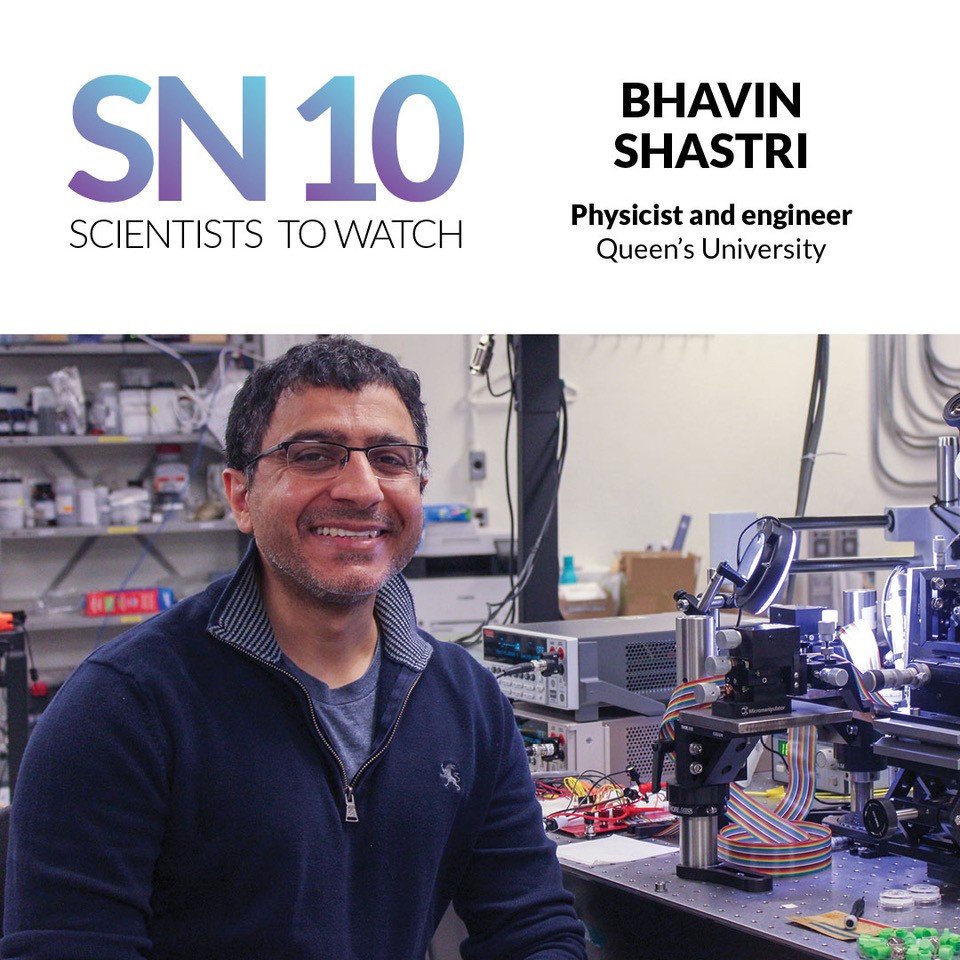
Bhavin Shastri is Canada Research Chair in Neuromorphic Photonic Computing and Assistant Professor of Engineering Physics at Queen's University. He directs research developing light-based computing systems that mimic neural processing for AI applications. His lab designs photonic integrated circuits that implement neural network architectures on chip-scale platforms. Research focuses on overcoming limitations of conventional computing through nanophotonic physics and novel materials. Publications demonstrate advances in photonic tensor cores, quantum photonic neural networks, and microwave photonic processors. Recent work achieves orders-of-magnitude improvements in processing speed and energy efficiency over electronic systems. Awards include: Alfred P. Sloan Research Fellowship (2025) Royal Society of Canada College Member (2024) Science News SN10 Scientist to Watch (2024) SPIE Early Career Award (2022) As Scientific Co-Director of NSERC's NUCLEUS program, he leads national efforts in photonic computing. Guides 12+ graduate students researching silicon photonics, neuromorphic architectures, and quantum photonics.
Akshay Narayan is a Senior Lecturer (Educator Track) at the School of Computing, National University of Singapore (NUS), where he teaches senior undergraduate and graduate-level courses in AI Planning and Decision Making, as well as introductory and intermediate-level Software Engineering courses. Education: Ph.D. in Computer Science from National University of Singapore (completed in 2020) M.Tech. in Information Technology from International Institute of Information Technology Bangalore, India B.E. in Computer Science & Engineering from Visveswaraya Technological University, India Research Interests: Dr. Narayan's research spans multiple domains within computer science with a primary focus on artificial intelligence and its applications. His current research centers on transfer learning in reinforcement learning, multi-agent decision making, and AI planning. He has also made significant contributions to cloud computing research, particularly in areas such as smart metering, chargeback systems, power-aware cloud metering, and workload analysis for virtual machine sizing. His work bridges theoretical foundations with practical applications, addressing real-world challenges in computing systems. He has recently expanded his research to include technology in education, exploring how AI can be integrated into teaching and learning processes. Publication Trends: Dr. Narayan's publication record demonstrates a clear evolution from foundational work in cloud computing to more recent explorations in reinforcement learning and AI education. His early work focused on practical applications in cloud systems, including smart metering and QoS monitoring. More recently, his research has shifted toward AI planning, decision making, and the educational applications of AI. This progression shows his ability to adapt to emerging fields while maintaining a strong foundation in systems research. Awards and Recognition: Teaching and Mentoring: Dr. Narayan teaches a variety of courses at NUS including CS2113 Software Engineering & Object-Oriented Programming, CS3219 Software Engineering Principles and Patterns, CS3268 Responsible AI: From Algorithms to Impact, and IT5100F Industry Readiness: Data Analytics and AI in Practice. He has also taught CS4246/CS5446 AI Planning and Decision Making. His teaching approach integrates his research expertise with practical applications, providing students with both theoretical foundations and hands-on experience. He has taught these courses across multiple academic years from AY-2013/14 through AY-2020/21. Research Groups and Collaborations: Dr. Narayan has collaborated with researchers across multiple institutions, including work with Prof. Tze Yun Leong at NUS (his PhD advisor), Shrisha Rao, Zhuoru Li, and others. His research has often involved interdisciplinary collaborations that bridge theoretical computer science with practical system implementations.
Jingxian Wang is an NUS Presidential Young Professor and Assistant Professor in the Department of Computer Science at the National University of Singapore's Faculty of Computing. His research builds next-generation wireless systems and satellite networks, with primary focus on integrating AI with wirelessly networked devices from WiFi to satellites. He earned his PhD from Carnegie Mellon University and previously served as a research scientist at Microsoft Research in Redmond, where he led the Smart Surface for 6G and Space initiative. His educational journey includes: PhD, Carnegie Mellon University Wang's research spans Wireless Systems , Satellite Networks , Artificial Intelligence , and Internet of Things , emphasizing AI-augmented wireless systems. His interdisciplinary work bridges robotics , materials science , and AI to develop sustainable sensing methods, robust communication networks, and multimodal AI techniques. Key projects include Multimodal AI for IoT (funded by Microsoft's Accelerate Foundation Models Program) and Satellite IoT Networks. His publication trends reveal accelerating integration of AI into wireless systems, with recent focus on satellite networking, soft robotics actuation, and generative models for IoT. The research consistently targets real-world deployment challenges in battery-free systems and space networks. His scientific contributions have earned prestigious recognition: ACM SIGMOBILE Doctoral Dissertation Award 2023 Communications of the ACM Research Highlights (2021, 2022) ACM SIGMOBILE Research Highlights 2021 Best Paper Awards at IPSN 2021 and UbiComp 2020 Microsoft Research Fellowship 2020 Emerging Rockstar in IEEE Pervasive Computing 2024 Wang actively mentors doctoral students and postdoctoral researchers through his AIoT Group. His grant portfolio includes Microsoft's Accelerate Foundation Models Research Program funding for multimodal AI projects, with ongoing work targeting satellite IoT infrastructure and wireless-powered soft robotics. Future directions emphasize foundation models for space networks and battery-free IoT systems. He leads the AIoT Group, fostering cross-disciplinary collaboration between computer scientists, roboticists, and materials engineers to pioneer wireless sensing and actuation technologies.
Lynn Carol Miller is a Professor of Communication at the University of Southern California’s Annenberg School for Communication and Journalism. Her research focuses on leveraging virtual environments, AI agents, and computational models to address health-related social behaviors, particularly in HIV/AIDS prevention and mental health. Funded by NIH, CDC, and DARPA (over $20M), her work integrates neuroscience, behavioral science, and technology. She pioneered interventions like SOLVE (Socially Optimized Learning in Virtual Environments) and Systematic Representative Design. Education: PhD in Personality Psychology from University of Texas at Austin. Key areas include health communication, gaming for behavior change, and computational modeling of social processes. She has supervised 17 doctoral students and collaborators across universities globally. Research emphasizes scalable interventions using fMRI-compatible tools and virtual reality. Notable contributions include reducing shame in HIV prevention games and analyzing neural correlates of risk-taking behaviors. Awards include the Early Career Award (2003) and ICA’s Outstanding Contribution to Communication Science (2020). Labs/Teams: Active in multidisciplinary teams at USC and collaborating institutions, focusing on virtual environment design, AI-driven interventions, and neurobehavioral studies. Current projects explore AI for public health and inclusive avatar representations in social VR.