Leonardo Banh is a Researcher at the University of Duisburg-Essen within the Faculty of Computer Science and its Chair of Business Information Systems and Software Engineering . M.Sc. in Business Information Systems (University of Duisburg-Essen, 2022) B.Sc. in Business Information Systems (University of Duisburg-Essen, 2020) Semester abroad at Instituto Superior Técnico, Lisbon (2021) His research focuses on Generative AI and its socio-technical implications, particularly in Machine Learning and Deep Learning applications. He explores intersections with NeuroIS , Smart Tourism , and E-commerce Ecosystems , emphasizing sustainability and digital transformation. Recent publications analyze Generative AI in Software Engineering , AI in Music Sentiment Analysis , and AI-Based Sign Language Translation . His work often involves design science research and grounded theory frameworks. Best Paper in Track Award (ICIS 2024) Nominated for Best Paper Award (ICIS 2024) Outstanding Reviewer (ICIS 2024) As advisor, he supervises theses on topics including AI-Based Mental Health Chatbots , Generative AI in HR , and Smart Tourism Applications . He also contributes to the Institute of Computer Science and Information Systems and serves on appointment/habilitation committees.
Dr. Sooyeon Lee is an Assistant Professor in the Department of Informatics at the New Jersey Institute of Technology (NJIT). Her research focuses on accessible technologies for people with disabilities, particularly those with visual impairments and deaf or hard-of-hearing (DHH) needs. She designs innovative solutions in areas such as AI-driven navigation systems, multimodal interaction frameworks, and inclusive virtual reality experiences. Her work bridges human-centered design principles with cutting-edge AI and sensor technologies. Dr. Lee holds a Ph.D. and B.S. in Information Sciences and Technology from Pennsylvania State University, with a specialization in Human-Computer Interaction. Her academic contributions span over 30 peer-reviewed publications, including seminal work on NaviGPT, an AI-driven navigation system for visually impaired users, and BubbleCam, a privacy-focused remote assistance tool. Central to her research are collaborations with user communities, including participatory design studies with blind users, DHH viewers, and ASL learners. She explores topics such as non-speech audio captioning trends, spatial audio descriptions for VR performances, and text simplification for DHH adults. Her datasets, such as the ASL-Homework-RGBD dataset, have become benchmark resources for sign language technology research. Dr. Lee’s work addresses emerging challenges in human-AI collaboration for accessibility, ethical AI practices in assistive tech, and the intersection of privacy and remote assistance systems. She actively contributes to advancing accessibility standards in multimedia content, educational tools, and smart environments.
Dr. Sena Chae is an Assistant Professor in the College of Nursing at the University of Iowa. She holds a PhD in Nursing from the University of Iowa, an MS in Health Informatics from the same university, an MSN from Yonsei University (South Korea), and a BSN from CHA University (South Korea). Her research focuses on nursing informatics, data-driven solutions for symptom prediction, standardized nursing terminology (NIC/NOC), and symptom science. She has developed algorithms to extract symptom data from clinical notes and explores relationships between chronic conditions and symptoms in acute leukemia patients. Dr. Chae’s work emphasizes leveraging health informatics for risk prediction in home healthcare, including models for hospitalization and emergency department visits. Her research integrates machine learning, natural language processing, and clinical decision support systems to improve patient outcomes. Notable projects include clustering cancer patients by symptom trajectories and validating nursing outcome classifications for cardiac disease. Education: PhD in Nursing, University of Iowa MS in Health Informatics, University of Iowa MSN in Nursing Education & Administration, Yonsei University BSN, CHA University Her articles highlight trends in predictive analytics for home healthcare risks, natural language processing of clinical notes, and symptom trajectory modeling. She has contributed to improving the readability of mHealth apps for heart failure patients and explored concordance between POLST documentation and care practices. Labs/Teams: Collaborates with the Center for Nursing Classification and Clinical Effectiveness (CNC) and the Iowa Center for Advancing Multimorbidity Science (CAMS). Grants & Future Work: Focuses on innovativeness in healthcare progress through academia-practice collaboration, fairness in AI models, and symptom science in oncology and chronic disease management.
Pablo Rivas is an Assistant Professor in the Department of Computer Science at Marist College, where he contributes to teaching and research in artificial intelligence and machine learning. He is the Director of the Center for Standards and Ethics in Artificial Intelligence, an NSF IUCRC planning grant initiative, emphasizing his leadership in responsible AI development and ethical frameworks. Education: PhD in Electrical and Computer Engineering, The University of Texas at El Paso (2011) MS in Electrical Engineering, Chihuahua Institute of Technology (2006) BS in Computer Science, Nogales Institute of Technology (2004) Dr. Rivas's research spans Artificial Intelligence , with a strong emphasis on Responsible AI , AI Ethics , Deep Learning , and Fuzzy Systems . His work integrates machine learning with applications in cybersecurity, healthcare diagnostics, natural language processing, and environmental monitoring. He explores ethical dimensions in technology, particularly under societal and organizational pressures. The analysis of his recent publications reveals a consistent focus on applying AI to real-world problems—from detecting eye diseases in children using smartphone photos to classifying DDoS attacks and modeling sentence quality through deep learning. His interdisciplinary work bridges computer science, medicine, ethics, and environmental science, showcasing a versatile and impactful research agenda. Scientific Awards: No awards listed in the provided text. Dr. Rivas has been involved in significant research projects, including postdoctoral work at Baylor University and a graduate internship at NASA Goddard Space Flight Center. While no formal grants are listed, his leadership in the NSF IUCRC planning grant for AI ethics indicates active grant-seeking and collaborative research. He has mentored research but no formal students are listed. He has not held administrative roles beyond research leadership. He is associated with the Center for Standards and Ethics in Artificial Intelligence, where he leads efforts to develop ethical guidelines and standards for AI deployment. This center serves as a hub for interdisciplinary collaboration on trustworthy AI systems.
Professor Mathias Broth at Linköping University's Department of Culture and Society (IKOS) specializes in multimodal interaction analysis, examining how humans coordinate communication through speech, gestures, and environmental cues. His research spans interaction in traffic environments, preschool mobility practices, and language-culture dynamics. Develops multimodal interaction analysis methodologies Studies traffic interaction between autonomous vehicles and human drivers Investigates preschool children's participation in traffic safety practices Explores communication in driver training contexts Research trends focus on embodied communication, showing how people coordinate gaze, gesture, and verbal cues in real-time interactions across different environments including: Traffic situations with autonomous vehicles Preschool group movements Driver training instruction Human-robot interaction Media production scenarios Second language classrooms Broth contributes to the Language and Culture research environment while supervising PhD students in interaction studies.
Berenike Herrmann is a Professor in the Faculty of Linguistics and Literary Studies at the University of Bielefeld, Germany. She is affiliated with the Department of German Studies and the Department of Literary Studies, and actively contributes to interdisciplinary research through centers such as the Bielefeld Center for Data Science (BiCDaS) and the Center for Uncertainty Studies (CeUS). She leads major research projects within Collaborative Research Centers SFB 1288 and SFB 1646, focusing on comparative literature and linguistic creativity. Faculty of Linguistics and Literary Studies Department of German Studies Department of Literary Studies Collaborative Research Center 1288 – Subproject E06 SFB 1646 – Project A05 Bielefeld Center for Data Science (BiCDaS) Center for Uncertainty Studies (CeUS) Her research spans computational stylistics, data humanities, German-Swiss literature, affect and emotion, metaphors, and social reading practices. She employs digital methods to analyze literary texts and reader responses, bridging traditional literary scholarship with computational approaches. Her work emphasizes comparative frameworks, national literature formation, and the impact of digitality on contemporary literary culture. The 15 most recent articles reflect a strong interdisciplinary trend, combining literary theory with data science, cognitive linguistics, and affect studies. Key themes include computational analysis of style and creativity , emotional dynamics in literature , metaphorical structures , and digital reading practices . The research is characterized by methodological innovation, using metrics and models to study linguistic and literary phenomena in both historical and contemporary contexts. Deputy Chairwoman, Board of Literary Studies Deputy Chair, Library Commission Member, IKM Officers (with Prof. Dr. Maximilian Benz) Voting Member, Linguistics Department Member, BiSEd (Faculty of Linguistics and Literature) She is involved in academic governance and digital infrastructure, advising on library policy, research data services, and curriculum development. She is the module responsible for 'Literature in the present: Culture, media, digitality' (23-GER-PLit2_a), indicating active teaching and program leadership. Her projects are supported by third-party funding, particularly through the German Research Foundation (DFG), and she collaborates across disciplines, especially at the intersection of humanities and data science. Berenike Herrmann is embedded in several interdisciplinary research environments, including the Collaborative Research Centers 1288 and 1646, the Bielefeld Center for Data Science (BiCDaS), and the Center for Uncertainty Studies (CeUS). These labs and teams foster innovative, cross-disciplinary approaches to literary and linguistic research, combining traditional hermeneutics with computational modeling and data-driven analysis.
Dr. Ly Dinh is an Assistant Professor at the School of Information within the College of Arts and Sciences at the University of South Florida. Her research focuses on computational social science, leveraging network analysis, social simulations, and text mining to study social and organizational systems. She explores network science applications in crisis informatics, emergency response coordination, and interdisciplinary collaboration dynamics. Her work has been recognized with the 2020 Grace Hopper Scholar for Women in Computing and the 2018 Network Science Fellowship. Dr. Dinh holds a Ph.D. and M.A. from the University of Illinois at Urbana-Champaign and a B.A. from the University of Southern California. Her research spans structural balance theory, crisis communication patterns, and computational methods for analyzing social media data during disasters. Recent projects include studying hurricane response networks, disinformation propagation, and the impact of team science on collaboration diversity. Education: Ph.D., University of Illinois at Urbana-Champaign M.A., University of Illinois at Urbana-Champaign B.A., University of Southern California Her publications emphasize methodological advances in network analysis, crisis informatics, and computational linguistics. Recent work highlights the use of ERGM models for peer review networks, taxonomy alignment experiments, and geospatial text mining for disaster zone identification. She has also contributed to understanding public perception disparities through crowdsourced data and the role of structural balance in signed directed networks. Awards: 2020 Grace Hopper Scholar for Women in Computing 2018 Network Science Fellow at Visible Networks Labs Dr. Dinh’s research bridges theory and practice, with applications in emergency response coordination, academic collaboration optimization, and social media-driven crisis management. She is affiliated with interdisciplinary teams advancing computational methods for societal challenges.
Dr. Monika Mitra holds the Nancy Lurie Marks Professorship of Disability Policy at Brandeis University’s Heller School for Social Policy and Management, where she also directs the Lurie Institute for Disability Policy. Her work bridges disability policy, public health, and reproductive justice, focusing on healthcare access for disabled individuals, particularly women and parents with disabilities. Education: PhD and MA from Boston University MS from Calcutta University BSc from Loreto College, Kolkata Research Interests: Dr. Mitra investigates disparities in sexual and reproductive health, maternal and perinatal outcomes for disabled populations, and systemic barriers in healthcare. She co-leads the National Research Center for Parents with Disabilities and the National Center for Disability and Pregnancy Research, translating evidence into policy reforms. Key Contributions: Her studies highlight intersectional inequities in maternal mortality, contraceptive access gaps, and violence against disabled women. Recent work addresses clinician attitudes toward perinatal care for intellectually disabled patients and housing stability for disabled parents. Awards: 2021 Peg Nosek Award (APHA Disability Section) 2021 Gibbs Leadership Prize (Jacobs Institute) 2021 Commendation Award (NARRTC) Advocacy & Grants: Funded by NIH, NIDILRR, HRSA, and CDC, her research drives national policy. She also serves as co-editor-in-chief of the Disability and Health Journal and advises the Lancet Commission on Disability and Health. Labs/Teams: Directs the Lurie Institute, collaborating with interdisciplinary teams to advance disability-inclusive healthcare systems and parenting rights.
Ja-Ling Wu is a distinguished Professor in the Department of Electrical Engineering at National Taiwan University's College of Electrical Engineering and Computer Science. With an extensive publication record spanning over four decades (1984-2025), Professor Wu has established himself as a leading researcher in multimedia systems, image processing, and security technologies. His academic career demonstrates consistent productivity with 255 indexed publications showing no signs of slowing down, with numerous papers published in 2024 and 2025. Professor Wu's research interests center on image compression, cryptography, privacy-preserving systems, and machine learning applications. His work bridges theoretical foundations with practical implementations, particularly in multimedia security and efficient data representation. Over his career, he has developed innovative approaches to image and video coding, data hiding techniques, and secure computation methods that have influenced both academic research and industry applications. Analysis of his recent publications (2023-2025) reveals a strategic evolution of his research toward contemporary challenges in AI security, with increasing focus on learned image compression, privacy-preserving machine learning, and the integration of cryptographic techniques with deep learning systems. His work demonstrates a consistent ability to adapt to emerging technological landscapes while maintaining core expertise in multimedia processing. Professor Wu has mentored numerous students who have become active researchers in their own right, with many continuing to collaborate with him on cutting-edge projects. His leadership in the field is evident through his sustained publication output across top venues including IEEE Transactions, ACM Multimedia, and specialized cryptography conferences.
Aileen Aldalur is a licensed Deaf clinical psychologist and Assistant Professor in the Department of Psychiatry at the University of Rochester's School of Medicine and Dentistry. She serves as the Research Director at the Deaf Wellness Center, focusing on culturally adapted mental health care for Deaf adults. Education: Ph.D. in Clinical Psychology, Gallaudet University (2020) Her research examines Deaf cultural influences on mental health, acculturative stress, evidence-based treatment adaptation, suicide risk prevention, and professional development challenges in Deaf communities. She has developed assessment tools like the SAFE-D scale and investigates systemic barriers in academic medicine. Research Trends: Her publications span clinical psychology, addiction medicine, and cultural adaptation, with recent work on pandemic impacts on AUD, Deaf healthcare access, and interdisciplinary interventions. Key Roles: Research Director, Deaf Wellness Center Individual/Couples Counseling for Deaf Adults
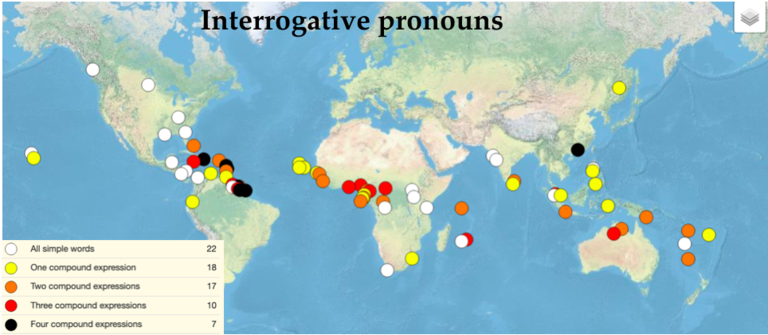
Susanne Maria Michaelis is a comparative linguist affiliated with the Max Planck Institute for Evolutionary Anthropology (Department of Linguistic and Cultural Evolution) and Leipzig University. Her research focuses on creole languages, sign languages, and language contact. She co-edited the seminal Atlas of Pidgin and Creole Language Structures (2013) and leads projects on grammaticalization and language complexity. Her career includes roles as Research Scientist (PI), guest researcher, and postdoctoral researcher at institutions such as the Max Planck Institutes and Leipzig University. Education: M.A. in Romance Philology & Linguistics (University of Freiburg, 1988) Ph.D. in Romance Philology (University of Freiburg, 1991) Research Interests: She investigates creole typology, grammaticalization processes, and sociolinguistic factors shaping language structure. Her work emphasizes comparing creole languages' grammatical patterns and their lexical sources, with a focus on European lexifiers and substrate influences. She also explores language evolution in contact scenarios and emerging sign language systems. Recent Article Trends: Her work analyzes grammatical complexity across languages, the stability of creole grammars during emergence, and the role of societal factors in linguistic structures. Key themes include robust grammar transmission, functional adaptation in syntax, and cross-linguistic parallels between creoles and sign languages. Grants & Leadership: Currently leads the DFG-AHRC project on cross-modal grammaticalization (2023–2026). Previously coordinated ERC-funded projects on grammatical universals and language typology. Active in scholarly networks and editorial roles for major linguistic publications. Labs/Teams: Collaborates within the Department of Linguistic and Cultural Evolution at MPI, focusing on global language datasets and computational linguistics. Works closely with interdisciplinary teams studying language evolution and sociolinguistic dynamics.
Elisabet Trengereid-Olsen is an Assistant Professor in the Department of Language, Literature, Mathematics and Interpreting at the Western Norway University of Applied Sciences. Her work focuses on deaf immigrants/refugees, particularly deaf female immigrants' inclusion in Norwegian society, and their use of depiction in Norwegian Sign Language (NSTM). She leads Work Package 3 in the DEPICT project, funded by the Norwegian Research Council, which explores depiction as a tool for inclusion and communication. Her research addresses interpreting challenges for deaf immigrants, societal integration, and language access barriers. She teaches courses such as Sign Language Interpreting, Professional Ethics, and Deaf Studies. She is completing her PhD on deaf, signing immigrant women's experiences with mandatory integration programs, emphasizing language training. As a member of the SILC research group (Sign Language, Interpreting, Linguistics, and Communication), she contributes to advancing linguistic and sociocultural understanding of NSTM. Her publications analyze systemic gaps in interpreting services and advocate for policy reforms to enhance accessibility for deaf immigrants.
Fred Adams is a prominent Professor specializing in Philosophy of Cognitive Science and Epistemology, with significant contributions to debates on extended cognition, mental representation, and knowledge theories. His career spans over four decades with continuous scholarly output. His educational foundation includes a 1982 dissertation on Goal-Directed Systems from The University of Wisconsin - Madison, establishing his early focus on cybernetic models of teleological behavior. This philosophical grounding evolved into interdisciplinary work bridging cognitive science and philosophy. Adams' research centers on critical examinations of extended cognition frameworks (notably in The Bounds of Cognition with Kenneth Aizawa), truth-tracking epistemology, and semantic theories of mental content. His work consistently challenges prevailing theories while developing nuanced alternatives, particularly regarding how cognitive systems interface with environmental information. Recent publications demonstrate sustained engagement with foundational epistemological problems through modal analyses of knowledge conditions. Analysis of his 15 most recent publications reveals consistent focus on epistemic justification frameworks, with growing emphasis on interdisciplinary cognitive science applications. His work shows particular expertise in adapting Nozick's tracking theory to contemporary challenges while maintaining philosophical rigor. Notable scholarly contributions include: Critical analysis of extended cognition hypotheses Development of fact-tracking knowledge models Refinements to causal theories of mental representation Interdisciplinary bridges between philosophy and cognitive neuroscience His advising and collaborative work shows strong mentorship patterns through co-authored publications with emerging scholars, particularly in consciousness studies and epistemology. While specific grant details aren't documented in the source text, his sustained publication record across multiple academic presses indicates successful research funding support throughout his career. Adams maintains active laboratory engagement through theoretical cognitive modeling, particularly in the philosophy-cognitive science interface, with ongoing collaborations examining neural correlates of semantic processing and epistemic justification frameworks.
Dr. Diane Brentari is the Mary K. Werkman Professor of Linguistics at the University of Chicago and Co-Director of the Center for Gesture, Sign, and Language. Her research focuses on sign language grammars, phonology, and the emergence of protactile systems in DeafBlind communities. She holds a Ph.D. from the University of Chicago (1990) and has taught there since 2011. Key interests include modality effects on language structure, language variation, and typological comparisons. Her work has been supported by the National Science Foundation, a Guggenheim Fellowship, and the Neubauer Collegium. Notable contributions include books like Sign Language Phonology (2019) and edited volumes on sign language creation and phonological theory. Awards include Fellow of the Linguistic Society of America and membership in the American Academy of Arts and Sciences. Research Highlights: Analysis of Nicaraguan Sign Language emergence, tactile phonology in protactile communities, and cross-modal comparisons of gesture and sign. Courses Taught: Phonological Analysis, American Deaf Community Studies, and Seminars on Multiple Verb Predicates. Dr. Brentari's lab investigates sign language morpho-phonology and its sociocultural dimensions. Recent projects explore how tactile languages utilize touch and proprioception as linguistic resources. Her work bridges theoretical linguistics with empirical studies of language emergence and variation.
Astrid GUILLAUME serves as an HDR Lecturer in the Faculty of Letters, specializing in semiotics with a focus on human and non-human animal communication systems. Her academic position bridges theoretical linguistics, cultural studies, and animal ethics, examining how meaning transfers across species and temporal frameworks through verbal and non-verbal channels. Her research centers on three interconnected domains: theoretical semiotics (intertheoricity and transferogenesis), zoosemiotics (animal communication, sentience, and liminality), and cultural semiotics (semiotranslationology and semiomedievalistics). GUILLAUME challenges anthropocentric paradigms by developing frameworks for understanding non-human sign systems, advocating for terms like 'animal liminaire' in academic discourse. Her work integrates medieval studies with contemporary animal ethics to analyze evolving human-animal relationships. Recent publications (2021-2023) reveal consistent focus on practical applications of semiotic theory to animal welfare crises, particularly cetacean captivity, commercial fishing practices, and hunting ethics. She employs transdisciplinary methodologies to critique anthropocentric exploitation while proposing legislative reforms based on semiotic evidence of animal sentience and communication complexity. Though specific advisory roles remain undocumented, GUILLAUME's direction of academic collections ('Zoosémiotique' and 'Traditions et Croyance') and organization of doctoral seminars demonstrates scholarly leadership. Her editorial work bridges theoretical semiotics with real-world animal advocacy, positioning her as a key figure in emerging humanimalist scholarship.