
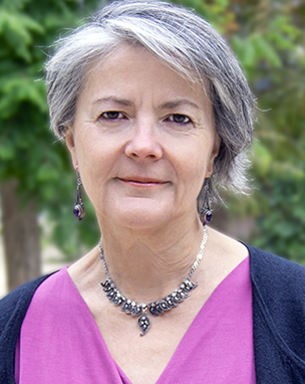
Ildikó Asztalos Morell is an Associate Professor and Senior Lecturer in the Division of Rural Development at the Swedish University of Agricultural Sciences (SLU). Her academic work critically engages with issues of social justice and citizenship through intersectional lenses of gender, ethnicity, and age. With extensive research experience spanning postsocialist transitions, rural development, and indigenous studies, she leads multiple funded projects exploring multicultural aging, migration, and food sovereignty. Her work connects theoretical frameworks with practical applications in rural communities across Sweden, Hungary, India, and the Arctic regions. Dr. Asztalos Morell earned her PhD from Uppsala University in 1999 with a thesis titled "Emancipations Dead-End Roads? Studies in the formation and development of the Hungarian Model for Agriculture and Gender (1956-1989)". Her academic journey has taken her through various research positions focusing on gender studies, rural sociology, and postsocialist transitions. Her research interests center on social justice and citizenship from intersectional perspectives of gender, ethnicity, and age. She explores how these intersecting identities shape experiences in socio-economic transitions, particularly in postsocialist contexts. Her work spans diverse areas including gender regimes under state socialism, family farm emergence, poverty governance, migration studies (particularly focusing on unprivileged EU migrants and asylum-seeking youth), multicultural aging, and indigenous Arctic food sovereignty. She approaches these topics through critical analysis of public-private partnerships, denizenship, and securitization processes, often employing comparative methodologies across national contexts. Her recent publications reveal a clear trajectory toward increasingly intersectional and globally comparative research. While maintaining her foundational focus on postsocialist transitions and gender dynamics in rural contexts, her work has expanded to examine indigenous food sovereignty in Arctic regions, multicultural aging across Sweden and India, and the impacts of digitalization on traditional industries. The thematic evolution shows a progression from national (Hungarian) case studies toward transnational comparative frameworks, with growing emphasis on policy relevance and practical applications for vulnerable populations. Her research consistently bridges theoretical insights with practical implications for social policy and community development. Dr. Asztalos Morell has led numerous significant research projects funded by various agencies: Forte and ICMR funded collaborative project on healthy aging in indigenous communities (2023-2026) JUSTNORTH project on indigenous entrepreneurship in the Arctic (EU-funded, 5.999.994 Euro) FUTURE FOOD project on indigenous food systems (450,000 SEK) Multicultural aspects of Active Aging (Forte and IMRC, 3,000,000 SEK) Local care regimes in rural transformation (Formas, 2,250,000 SEK) Negotiating poverty in post-socialist rural communities (Vetenskapsrådet, 7,000,000 SEK) As a dedicated mentor, Dr. Asztalos Morell has supervised multiple PhD students to completion, including Cecilia Bygdell (2014) and Carl Johansson (2023). She has also co-supervised Jonas Welander (2017) and provided postdoctoral supervision for Elena Bogdanova. Her collaborative approach extends to numerous research circles with municipalities and authorities, particularly focusing on gender equality, multicultural aspects of care, and human rights. These collaborations have resulted in policy-relevant insights while maintaining strong academic rigor. Her grant portfolio demonstrates exceptional success in securing competitive funding across diverse thematic areas, reflecting both the quality of her research and its societal relevance. Dr. Asztalos Morell is actively involved with SLU's Future Food initiative and the Sami-related research center, contributing to interdisciplinary approaches to food sovereignty and indigenous knowledge systems. Her work with the JUSTNORTH project connects her with international partners across the Arctic region, while her ongoing collaborations with municipalities in Sweden demonstrate her commitment to applied research that addresses real-world challenges in rural development and social inclusion.
