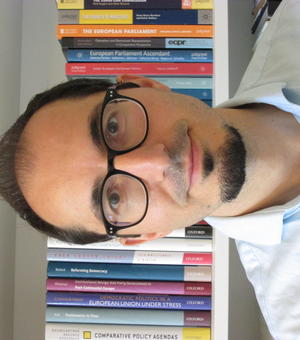
Scot Schraufnagel is a Professor in the Department of Political Science at Northern Illinois University. His research and teaching focus on elections, U.S. Congress, political parties, and state government, with an emphasis on promoting civil, representative, and effective governance in the United States. He holds a Ph.D. from Florida State University and served as former chair of his department. Education: Ph.D., Florida State University His scholarly work explores institutional effectiveness, policymaking, and policy innovation. Publications analyze factors influencing legislative productivity, electoral systems, and the intersection of voting rights with public health. Recent articles examine voting restrictions, institutional arrangements for elections, and comparative environmental policies. Scientific Recognition: Research on voting ranked No. 80 in scholarly attention and discussion in 2020. He has collaborated with students on studies of local council effectiveness and electoral dynamics in Indonesia, demonstrating a commitment to mentoring emerging scholars.
Marta Gallina is a Lecturer in political science at the European School of Political and Social Sciences (ESPOL) within the Catholic University of Lille. She completed her PhD at the Catholic University of Leuven in 2021 and has held postdoctoral positions at the Autonomous University of Barcelona, Waseda University, and the Catholic University of Leuven. Education PhD in Political Science, Catholic University of Leuven (2021) Research Interests Her work focuses on political communication, political behavior, populism, dimensionality of political issues, political space, consistency of opinions, and Voting Advice Applications. She investigates how citizens form political opinions, the impact of party rhetoric on voter behavior, and the structural dynamics of political competition across Western and non-Western contexts including Europe and East Asia. Recent Publications Trends Her 2023-2025 publications reveal a strong emphasis on representation styles, political sophistication, and cross-national populism studies. Key themes include the ecological foundations of opinion constraint, digital media's role in shaping political space, and the micro-foundations of populist voting behavior. Methodologically, she combines ecological analysis, experimental designs, and social media data mining to examine voter ambivalence and ideological structuring. Scientific Awards No awards mentioned Advising and Grants Current advising activities and grant funding details are not specified in available sources. Her publications indicate independent and collaborative research but provide no explicit information about supervised students or active grants. Labs and Teams Marta Gallina is affiliated with ESPOL-Lab, the dedicated research unit of the European School of Political and Social Sciences, which facilitates interdisciplinary research in political and social sciences through collaborative projects and academic events.
Kimberly Cowell-Meyers is an Associate Professor of Government in the School of Public Affairs at American University, Washington DC, and is simultaneously affiliated with the university’s Women & Politics Institute. She conducts comparative research on how representative democracies channel political identities through parties, legislatures and social movements. Education Ph.D. in Political Science – American University M.A. in Political Science – American University B.A. – Smith College Research Interests Cowell-Meyers centers her scholarship on two intersecting areas of identity politics: the political participation and representation of women, and ethnic/sectarian politics with a regional focus on Northern Ireland. Her work explores how institutional arrangements, electoral systems and party gatekeeping shape the inclusion or exclusion of marginalized identities. Methodologically, she combines quantitative analysis of large-N datasets with in-depth comparative case studies. Recent projects include an original dataset of more than 50 women’s political parties across Europe, comparative case studies of women’s parties in Northern Ireland, Sweden and Switzerland, and collaborative analyses of power-sharing and sectarian dynamics in post-conflict Northern Ireland. Scholarly Output Her research has appeared in leading journals such as Politics & Gender , Perspectives on Politics , Political Studies , Scandinavian Political Studies , Foreign Affairs , The Journal of Women, Politics & Public Policy , Irish Political Studies and Nationalism and Ethnic Studies . Together these publications trace a decade-long trajectory from institutional design and ethnic accommodation to the emergence and impact of women’s political parties. Advising & Mentoring At American University she teaches undergraduate and graduate courses in comparative politics, research methodology and Northern Ireland politics. She founded and continues to advise Clocks & Clouds , the university’s undergraduate research journal in politics and public affairs, mentoring students through all stages of the scholarly publication process. Professional Affiliations & Fieldwork Cowell-Meyers has held visiting appointments at the Centre for the Advancement of Women into Politics, Queen’s University Belfast, and at the University of Zürich. She has practical policy experience from the British Parliament, the Northern Ireland Assembly and the United States Institute of Peace. She also co-authors regular commentary on Northern Irish politics for The Washington Post ’s Monkey Cage blog.
Roger Karapin is a Professor of Political Science at Hunter College and the Graduate Center, City University of New York (CUNY). He serves in the Department of Political Science within the School of Arts and Sciences at Hunter College, where he teaches courses on American Government, Democracy and the Media, Politics of Climate Change, and Protest Movements in American Politics. Dr. Karapin received his Ph.D. in Political Science from the Massachusetts Institute of Technology and holds both a B.A. and M.A. in Political Science from Pennsylvania State University. His academic background provides a strong foundation for his research in comparative politics, environmental policy, and social movements. Professor Karapin specializes in climate and energy politics, environmental policy, U.S. politics, comparative politics (particularly German politics), and social and political movements. His research examines how political institutions, social movements, and business interests shape environmental and climate policies at various governmental levels. He has conducted extensive comparative work on climate policy development in California, New York, and at the federal level in the United States, as well as in Germany. His scholarly work reveals important patterns in climate policy adoption, showing that effective policies emerge during "windows of opportunity" when problem awareness aligns with political commitment. Karapin's research demonstrates how policy advocates can overcome institutional constraints and industry opposition through strategic mobilization during these critical periods. His comparative approach highlights both the challenges and possibilities for climate action across different political contexts. Professor Karapin has received significant recognition for his scholarship: 2018 Caldwell Prize for best book on environmental politics and policy (American Political Science Association) for "Political Opportunities for Climate Policy" 2008 Charles Tilly Award for best book published in collective behavior and social movements (American Sociological Association) for "Protest Politics in Germany" As an educator and mentor, Professor Karapin maintains regular office hours for student consultation and has advised numerous graduate students through their research. His work has been supported by research grants that have enabled extensive fieldwork and data collection in both the United States and Germany. He serves as editor-in-chief of Polity, a prominent political science journal, further contributing to the advancement of scholarship in his field. Professor Karapin's research contributes to ongoing policy debates about federalism and climate action, demonstrating how subnational governments can drive environmental policy innovation even in the absence of federal leadership. His work continues to influence both academic discourse and practical approaches to climate governance.
Professor Anke Schwittay is Professor of Anthropology & Global Development at the University of Sussex's School of Global Studies, where she serves as Associate Dean for Global and Civic Engagement in the Faculty of Social Sciences. She holds a PhD in Anthropology from the University of California, Berkeley and previously taught at the Centre for Development Studies at the University of Auckland. Her research centers on emerging actors in global development, with current focus on student housing cooperatives as responses to housing crises, creative education for global challenges, and representations in development. She founded the MA Media Practice for Social Change and Development program and teaches modules on Urban Futures and Activism for Social Change. Her publications reveal strong thematic evolution toward prefigurative politics and alternative futures, particularly through housing cooperatives and creative pedagogies. The 2021 book Creative Universities: Reimagining Education for Global Challenges and Alternative Futures synthesizes her work on critical hope and future-building in education, while recent articles (2023-2024) deepen analysis of cooperative models and pedagogical innovation. She supervises PhD research on housing cooperatives, humanitarian design, financial inclusion, and creative development practices, currently guiding two doctoral candidates while having completed supervision for seven students on topics ranging from micro-philanthropy to women in transport sectors. Her significant grant activity includes the 2023-2026 Leverhulme Trust project "Decolonising the geopolitical 'map of learning': locating the university in a global past and present for reparative higher education futures." She co-founded the Silicon Valley-based RiOS Institute and has consulted for the World Bank Institute and UN Global Alliance for ICT and Development.
Klenio BARBOSA is an Associate Professor at SKEMA Business School in France, specializing in Finance & Accounting with expertise in Banking, Corporate Finance, Regulation, and Public Economics. He is based at the Sophia Antipolis campus and has built a distinguished career spanning multiple academic institutions including SKEMA Business School (since 2019), Insper Institute of Education and Research in Brazil (2017-2019), and Sao Paulo School of Economics - Fundação Getulio Vargas (2010-2016). His research focuses on the intersection of financial regulation, banking competition, public procurement, and political economy. BARBOSA's work examines how regulatory frameworks impact financial stability, market competition, and public sector efficiency. His research methodology combines theoretical modeling with empirical analysis of large datasets from various countries, particularly focusing on Brazilian financial and public sectors. BARBOSA's publication record demonstrates consistent output in top finance and economics journals, with recent work focusing on Basel III implementation effects, payment systems regulation, climate finance through green bonds, and healthcare procurement mechanisms. His research shows a clear trajectory from studying Brazilian financial markets to broader international comparisons and theoretical contributions to auction theory and procurement design. IPEA/Roberto Campos Research Award (2019 Runner-up) UNITED HEALTH GROUP Brazil Quality Award (2018) FEBRABAN Award for Best Master Thesis in Banking (2018 Runner-up) As an academic leader, BARBOSA serves on scientific committees for the Brazilian Econometric Society and Lancaster University, acts as co-editor for the Quarterly Review of Economics and Finance, and has served on numerous doctoral thesis committees. His extensive peer review activities across top economics journals demonstrate his standing in the academic community.
Dominique Andolfatto is a Professor of Political Science at the University of Burgundy, affiliated with the CREDESPO laboratory. His research focuses on trade unions, political parties, industrial relations, and public policies. Key Research Themes : Trade union decline in France, social dialogue, political party sociology, electoral systems, and labor movement history. Collaborations : Sylvie Contrepois (CNRS), Dominique Labbé (Université Grenoble Alpes), and Marnix Dressen (Université Versailles Saint-Quentin). Recent article trends analyze union responses to crises (e.g., pandemic), comparative European labor models, and the evolution of syndicalism in public sectors. His work spans historical studies of the CGT to modern debates on union transparency and political influence. Media Engagements include interviews on French labor strikes, political party decline, and social tensions during events like Euro 2016 protests. He has contributed to Le Monde , Libération , and France Culture .
Stine Eckert is an Associate Professor in the Department of Communication at Wayne State University's College of Fine, Performing and Communication Arts in Detroit. She serves as Editor of the bilingual open access journal Journalism Research/Journalistik and is Co-Principal Investigator on the NSF ADVANCE grant WSU-GEARS (Gender Equity Advances Retention in STEM, 2020-2024). Additionally, she chairs the Helen Award Committee for Emerging Feminist Scholarship of the Feminist Scholarship Division of the International Communication Association. Eckert earned her Ph.D. in Journalism Studies from the University of Maryland's Philip Merrill College of Journalism, an M.S. in Journalism from Ohio University, a Graduate Certificate in Women's Studies from the University of Maryland, and her undergraduate equivalent in Journalism, Communication and Media Studies, and American Studies from Universität Leipzig. Her research spans journalism studies, gender media studies, new media, marginalized groups, public spheres and democracy, and online harassment . Eckert's work demonstrates a consistent commitment to intersectional feminist approaches to media scholarship, with particular attention to gender equity in both media content and newsroom structures. Recent projects examine feminist responses to Big Data/AI, the #MeToo movement in academia, and women's leadership in journalism. Analysis of her recent publications reveals a strong trajectory connecting feminist media scholarship with practical interventions in STEM equity and digital literacy. Her work increasingly bridges academic research with community engagement, particularly through initiatives like the Wikid GRRLs project that teach online skills to teenage girls. Chair, Helen Award Committee for Emerging Feminist Scholarship Co-PI, NSF ADVANCE grant WSU-GEARS (2020-2024) Editor, Journalism Research/Journalistik Eckert leads the Wikid GRRLs project, which teaches online skills to teenage girls in Detroit Public Schools with the goal of addressing Wikipedia's gender gap. Through this initiative, she has supervised numerous Wayne State University honors students who have reflected on the transformative impact of teaching middle school girls about internet safety, digital content creation, and Wikipedia editing. Her NSF GEARS project represents a significant institutional effort to advance gender equity in STEM fields at Wayne State University.
Daniel Scheller serves as Associate Professor of Public Administration and Director of the Master of Public Administration (MPA) program within the Department of Political Science at Texas Tech University. Holding a Ph.D. in Political Science from Florida State University, he maintains active scholarly contributions across urban governance, neighborhood development, and public administration pedagogy, with publications spanning Urban Affairs Review and Journal of Urban Affairs. His research program critically examines neighborhood governance structures including homeowners associations (HOAs) and their impacts on civic participation, racial dynamics, housing markets, and public goods provision. Scheller investigates how local institutions shape community development while advancing statistical methodologies for public affairs education, particularly through innovative applications of R programming in hybrid and asynchronous learning environments. Scholarly output from 2014-2024 reveals consistent engagement with urban policy challenges, including pandemic-era impacts on urban design and voter behavior, fire department operational efficiency, and walkability economics. His work bridges theoretical frameworks with practical governance solutions, emphasizing neighborhood-level democracy and data-driven decision-making in public administration. No scientific awards were documented in available materials. As MPA Director, Scheller oversees graduate program administration and student advising, though specific mentorship details and grant funding mechanisms remain unspecified in current documentation. His leadership role underscores commitment to developing public service professionals through curriculum innovation in statistical analysis and policy implementation.
Massimiliano Albanese is a Professor and Associate Chair for Research in the Department of Information Sciences and Technology at George Mason University. He serves as the Executive Director of the Institute for Digital Innovation (IDIA) and Director of the Center for Infrastructure Security in the Era of AI (ISEAI). Previously, he was the Associate Director of the Center for Secure Information Systems (CSIS). Dr. Albanese earned his PhD and MS in Computer Science and Engineering from the University of Naples Federico II. After completing a postdoctoral position at the University of Maryland, College Park, he joined George Mason University in 2011. His primary research focuses on Information and Network Security, with particular emphasis on Modeling and Detection of Cyber Attacks, Cyber Situational Awareness, Network Hardening, Moving Target Defense, Configuration Security, and Vulnerability Metrics. His recent work has expanded into election security, AI-enhanced cybersecurity, and vulnerability scoring frameworks. He has developed innovative approaches to cyber defense that integrate machine learning, game theory, and formal modeling techniques. Dr. Albanese's publication record shows a clear evolution from foundational work in moving target defense and attack modeling toward more applied research in vulnerability metrics, election security, and AI-assisted cyber defense. His recent publications demonstrate growing interest in practical security implementations, election infrastructure protection, and the intersection of AI with cybersecurity. 2014 Mason Emerging Researcher/Scholar/Creator Award Best Paper Award at IEEE CNS 2020 for SCIBORG Best Paper Award at SECRYPT 2018 Best Paper Runner-up Award at IEEE CNS 2015 Dr. Albanese has participated in 33 sponsored projects totaling $13.1M, with a personal share of $3.5M. His research has been funded by prestigious organizations including the National Science Foundation, Department of Defense, National Security Agency, and Virginia Innovation Partnership Authority. He has served as Principal Investigator on 18 projects, demonstrating strong leadership in securing research funding. His current projects focus on election security, cybersecurity scholarships, and AI-enhanced threat detection. Dr. Albanese leads multiple research centers and initiatives, including the Center for Infrastructure Security in the Era of AI. His work bridges academic research with practical applications, particularly in securing election systems and developing frameworks for vulnerability assessment. He actively collaborates with government agencies and industry partners to translate research into real-world security solutions.
Julia Sylva serves as an Adjunct Professor at Southwestern Law School since 2017, bringing over thirty years of experience as an elected public official and policy-maker. Founder of The Law Offices of Julia Sylva, she is nationally recognized for expertise in cannabis regulation and municipal law. Her educational foundation includes: B.A. in Political Science with Public Administration minor, California State University, Long Beach (1977) J.D., Loyola Law School, Los Angeles (1983) Professor Sylva's research centers on cannabis law and land use entitlements , where she advises public entities on regulatory frameworks and represents commercial cannabis businesses. Her scholarship extends to municipal governance , examining ethics laws, the Brown Act (open meetings), and California's initiative process. She bridges academic rigor with practical policy development through frequent collaborations with elected officials. Her publication trajectory reveals growing specialization in cannabis regulation since 2016, complemented by enduring analysis of local government structures. Early works focused on municipal finance and ethics, evolving into nuanced examinations of federal-state-local conflicts in emerging industries. Professional recognition includes: AV Rating from Martindale-Hubbell (highest tier for legal ability and ethics) Through her active law practice and community engagement, Professor Sylva maintains direct connections with policymakers that inform her teaching. She regularly contributes to industry discussions as a panelist for the Los Angeles County Bar Association and Pincus Pro Ed, translating real-world regulatory challenges into classroom insights.
Dr. Mihail Chiru serves as a Departmental Lecturer in Politics at the University of Oxford, jointly appointed with the Oxford School of Global and Area Studies (OSGA) and the Department of Politics and International Relations (DPIR) since 2019. Previously, he taught at the University of Southampton and Central European University. His academic work centers on legislative behaviour, party politics, and voting behaviour within the European Union and Central and Eastern Europe, with regional expertise in Romania, Hungary, Bulgaria, Moldova, and broader Eastern European contexts. Dr. Chiru's research spans three interconnected agendas: (1) analyzing how single-shot and relational clientelism shapes political party organization and intra-party democracy in young democracies; (2) examining the European Parliament's institutional responses to democratic backsliding in EU Member States and assessing whether this has catalyzed an East-West political cleavage; and (3) investigating the evolution of programmatic linkages between citizens and political parties in Eastern Europe. His methodological approach combines quantitative analysis of legislative behaviour with qualitative insights into party organization, published in leading journals including European Journal of Political Research and West European Politics. His recent publications demonstrate a concentrated focus on European Parliament dynamics, democratic backsliding, and electoral systems. Key trends include empirical analysis of parliamentary oversight during crises (notably the COVID-19 pandemic), the role of clientelism in party organization, and the impact of electoral rules on representation and candidate selection. His work consistently bridges theoretical political science with empirical analysis across Central and Eastern European contexts, emphasizing institutional responses to democratic challenges. Scientific recognition includes: Achieving Impact Award from Oxford’s Department of Politics and International Relations (2023) for applied work with the European Parliament's Special Committee on the COVID-19 pandemic Dr. Chiru has secured competitive funding from the European Parliament Research Service and the Romanian Ministry of Education and Research, with his grant-supported projects directly informing policy work. While specific student advising details are not provided, his research profile suggests active engagement with graduate students in legislative studies and comparative politics. His institutional affiliations with OSGA and DPIR position him within Oxford's core political science research infrastructure despite no explicitly mentioned laboratory teams.
Dorottya Szikra is a Research Professor and Head of Department at the Centre for Social Sciences in Budapest, and serves as a Visiting Professor in the Department of Gender Studies at Central European University (CEU) Vienna. At CEU, she teaches courses on Welfare State and Gender under Undemocratic Rule and Critical Theory on Policy and Practice for the 2023/2024 academic year. She leads the ERC project WelfareExperiences and previously led the CIVICA research project WELDECO. Education PhD Habilitation Research Interests Her primary research focuses on welfare state and family policy development in Central and Eastern Europe, with particular attention to the interplay between gender, democracy, and populism. She examines how welfare systems affect mental health and employment, especially under conditions of democratic backsliding. Her work also addresses the resilience of welfare states during crises, such as the COVID-19 pandemic, and the impact of populist regimes on social protection systems. Publication Trends Recent publications analyze the emergence of illiberal welfare states in Hungary and Turkey, and comparative family policy trajectories in Poland, Hungary, and Romania from 1945 to 2020. Her research integrates political science, social policy, and gender studies, highlighting the impact of authoritarian regimes on social protection and the historical evolution of family-oriented welfare policies in post-communist contexts. Research Projects and Grants Szikra leads the ERC-funded WelfareExperiences project, which analyzes how different welfare systems affect people's mental health and chances of returning to work. She previously directed the CIVICA project WELDECO on welfare, democracy, and populism during the COVID-19 crisis. She serves as the country-lead for the ERC project and has been involved in significant collaborative research initiatives across Europe.
Rhenish Friedrich Wilhelm University of BonnGermany
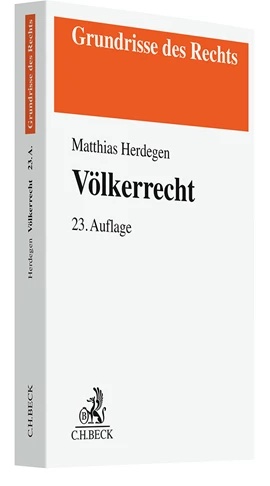
Professor Matthias Herdegen holds the Chair of International Law and Public Law at the University of Bonn's School of Law. He directs both the Institute of Public Law and Institute of International Law, and actively engages in research, teaching, and public discourse through seminars on topics like international biotechnology law, cybersecurity, and contemporary challenges in international law. He collaborates with scholars such as Prof. Erika de Wet and Prof. Claudia Seitz on specialized courses. 3rd edition of "Principles of International Economic Law" (2024) 2nd edition of "The International Law of Biotechnology" (2024) Author of 23rd edition of core international law textbook His research examines international law intersections with: Armed conflict dynamics (Ukraine, Middle East) Human rights tensions in economic contexts Emerging technologies (AI, crypto) Migration policy frameworks UN system effectiveness Recent publications and media contributions analyze: Legality of Ukraine weapon supplies ICJ's role in the Gaza conflict Human rights in EU economic frameworks Taiwan's international status Delegitimization of international tribunals Biotechnology legal governance He leads seminars at institutions including the University of Graz and participates in global expert discussions about: 75th anniversary of Geneva Conventions Ukraine reconstruction legal mechanisms Post-war international order changes UN Security Council reform possibilities
Noel Healy is a Full Professor of Geography and Sustainability at Salem State University, where he teaches courses including Foundations of Global Studies, Global Climate Change, and Energy and the Environment. He serves as Director of the Climate Justice and Just Transformations Lab at SSU and holds additional appointments as a Global Center for Climate Justice Research Fellow and Visiting Professor at EAFIT University in Colombia. Originally from Ireland, Dr. Healy received his PhD from the National University of Ireland, Galway in 2009 after studying at UC Berkeley's Department of Environmental Science Policy and Management. His academic journey reflects his deep commitment to understanding the political ecology of energy systems and climate justice. Dr. Healy's research examines the political ecology of rapid energy transitions, the cross-border responsibilities and impacts of fossil-fuel supply chains, and how decarbonization policies can address socio-energy transition inequities. His work integrates social, economic, and racial justice frameworks into climate and energy policy analysis. He has contributed significantly to understanding fossil fuel obstructionism, just transition frameworks, and the political economy of extractive industries. His research spans multiple continents, with fieldwork in Ireland, the US, China, Germany, and Latin America. Dr. Healy has received numerous research grants totaling over $240,000, including multiple Climate Social Science Network Grants from Brown University and several Salem State University research awards. His work has been recognized with the Salem State University Civic Engagement Hall of Fame award in 2018. As an active public intellectual, Dr. Healy has published in major media outlets including The Guardian, The Hill, Scientific American, and The Boston Globe. He was a contributing author for the IPCC 6th Assessment Report and gave an invited talk at the Oxford Union in May 2024 titled "International Climate Policy is Neo-Imperialist." He founded the SSU Fossil Fuel Divestment campaign, which successfully led Salem State University to commit to fossil fuel divestment in 2016. Dr. Healy directs the Climate Justice and Just Transformations Lab at SSU, which focuses on research at the intersection of climate policy, energy transitions, and social justice. The lab supports collaborative research with international partners, particularly in Colombia through his visiting professorship at EAFIT University.