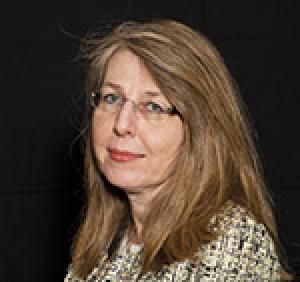
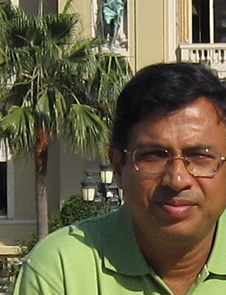
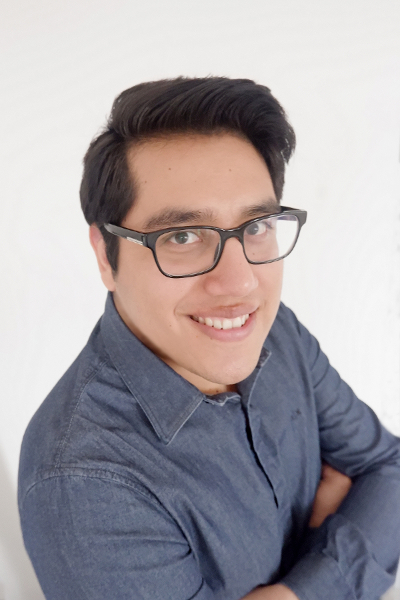
Paul Rohmeyer is an Adjunct Professor at Stevens Institute of Technology's School of Business, holding roles such as Associate Teaching Professor (2015-Present) and former Program Director for the MSIS program (2017-2019). He holds a PhD in Information Management from Stevens (2006) and has extensive industry experience in IT governance, risk management, and leadership roles across AXA Financial, SAIC/Bellcore, and American Home Products. His research focuses on Information Security Management, Risk Assessment, Project Management, and Business Intelligence. Notable work includes his 2018 book on Financial Cybersecurity Risk Management and studies on network dynamics impacting company profitability (2015), cloud computing risks (2015), and cybersecurity policy frameworks (2012). Rohmeyer is a Ponemon Institute Fellow and actively contributes to professional organizations like ISACA and PMI. He teaches advanced courses in cybersecurity, data management, and project management at both graduate and undergraduate levels, including MIS 646 Information Security Management and FIN 545 Risk Management for Financial Cybersecurity. His career spans academic leadership and executive IT roles, with a strong emphasis on bridging theoretical research and practical applications in organizational security and technological innovation.
Michael Hagan is a Professor of Physics at Brandeis University, affiliated with the Martin A. Fisher School of Physics. His research focuses on understanding the physical principles governing assembly and dynamic organization in biological and biomimetic systems. He employs computational and theoretical methods, including machine learning, to study viral capsid assembly, bacterial microcompartments, and active matter systems. His work bridges length and time scales to elucidate emergent behaviors in nonequilibrium systems. Education: PhD in Physics from the University of California, Berkeley (2003). His group, the Hagan Lab, collaborates with experimentalists and has received funding from the DOE, NSF, Keck Foundation, and NIH. Key areas include viral genome assembly optimization, bacterial microcompartment formation, and the dynamics of active nematics. Recent studies explore defect-ordered phases, phase separation in active colloids, and programmable self-assembly of geometric structures. Research interests span biophysics, soft condensed matter, and computational modeling. His lab's work has implications for synthetic biology, drug design, and material science. Collaborations with experimental groups (e.g., Z. Dogic's lab) have led to discoveries in active matter dynamics and biomimetic systems.
Yang Wang is an Associate Professor in the Department of Computer Science and Software Engineering at Concordia University, holding an adjunct position since 2022. Previously, he served as an Associate Professor at the University of Manitoba (2012–2022) and worked as Chief Scientist in Computer Vision at Huawei Canada (2020–2022). He holds a PhD from Simon Fraser University, MSc from the University of Alberta, and BEng from Harbin Institute of Technology. His research focuses on computer vision, machine learning, and deep learning, particularly in meta-learning, test-time training, and continual learning. Key areas include crowd counting, anomaly detection, video highlight detection, and gaze estimation. His work has been recognized with awards such as the Falconer Emerging Researcher Rh Award (2017) and a Faculty of Science Research Chair (2019–2022). Recent research emphasizes AI models that are personalized and adaptable, leveraging techniques like meta-learning and few-shot learning. He has published extensively in top venues (CVPR, ICCV, ECCV) and holds patents in related fields. His group collaborates with industry partners like Huawei and Sightline Innovation.
Tae Eun Kim is an Associate Professor in Maritime Safety Management at UiT The Arctic University of Norway, working within the Department of Technology and Security. Her research, teaching, and industrial collaboration focus on maritime safety and human factors, with particular expertise in maritime safety management, accident analysis, Maritime Autonomous Surface Ships (MASS), and human factors in maritime operations. Dr. Kim's research spans four interconnected domains: maritime safety management and leadership, maritime accident and casualty analysis, Maritime Autonomous Surface Ships (MASS), and human factors in maritime operations. She has developed assessment instruments like the Safety Leadership Self-Efficacy Scale (SLSES) and conducted STAMP-based causal analyses of maritime accidents. Her work on MASS addresses safety challenges in mixed navigational environments and examines leadership competencies for autonomous shipping operations. Her human factors research explores how technological advancements impact navigators' performance, crew dynamics, and safety outcomes, including gender parity issues in the maritime industry. Dr. Kim's publication record reveals a strong focus on the intersection of maritime safety, technology, and human performance. Her recent work increasingly addresses autonomous shipping technologies, with numerous publications on AI decision transparency, learning analytics in maritime simulator training, and multi-modal data analysis for nautical skill development. She has conducted systematic reviews on simulator training approaches and scenario design, contributing significantly to methodology development in maritime education and training. Her research demonstrates a clear trajectory toward integrating emerging technologies with traditional maritime safety practices as the industry transitions toward greater automation. Dr. Kim is actively involved in several significant research projects, including the i-MASTER EU Horizon Europe Research and Innovation Project, the REFRAME project, and the SPRICE project (Multidisciplinary approach for spray icing modelling). She is a member of both the Advanced Maritime Ship Operations research group and the Maritime Safety Science (MARSCI) Research Group, demonstrating her commitment to collaborative research in maritime safety science. Dr. Kim teaches several specialized courses at UiT, including SVF-3206 Safety Management and Accident Investigation, TEK-3014 Navigation Technology, MFA-2100 Maritime Digitalization, MFA-8010 Maritime HTO (Human-Technology-Organisation) and Innovation, and MFA-2018 Maritime Administration and Leadership. Her teaching portfolio reflects the interdisciplinary nature of her expertise, bridging engineering, safety science, and organizational behavior in maritime contexts.
Erik Scheme is an Associate Professor in the Department of Electrical and Computer Engineering at the University of New Brunswick (UNB), and serves as Associate Director of the Institute of Biomedical Engineering (IBME). He holds a PhD and is a Professional Engineer (PEng). His roles include advising the Dr. J. Herbert Smith Centre for Technology Management and Entrepreneurship, emphasizing innovation in biomedical technologies and healthcare systems. His research focuses on advanced human-machine interaction through biomedical engineering, with a strong emphasis on myoelectric prosthetics, wearable sensors, and machine learning applications. Key areas include improving neuroprosthetic control via incremental learning, gait analysis using underfoot pressure sensors, and developing robust EMG-based gesture recognition systems. His work bridges clinical needs with technological innovation, addressing challenges in rehabilitation, activity monitoring, and user-centric design. Recent publications highlight advancements in adaptive control systems, sensor fusion, and ethical data practices in healthcare. His contributions span both theoretical frameworks (e.g., self-supervised learning models) and applied technologies (e.g., gold-plated 3D-printed electrodes). Dr. Scheme collaborates across disciplines, integrating robotics, signal processing, and clinical validation to create impactful solutions. His lab, affiliated with IBME, actively explores emerging areas like exhaled breath analysis for disease detection and federated learning in healthcare data analytics.
Overview Amir Rahmati is an Assistant Professor in the Department of Computer Science at Stony Brook University , where he directs the Ethos Security & Privacy Lab and is a member of the National Security Institute. His work focuses on securing emerging technologies like IoT, AR, and ML systems. Education PhD in Computer Science & Engineering, University of Michigan (2017) Research Focus His research addresses security threats in emerging systems, including: Cyber-Physical System vulnerabilities Adversarial ML attacks Hardware security Privacy-preserving frameworks Notable contributions include work on cryptocurrency scam detection, neural network robustness, and AR system security. Grants & Awards Supported by the Air Force Office of Scientific Research (AFOSR), Office of Naval Research (ONR), Meta, NVIDIA, and IBM. His research has been featured in MIT Technology Review , Washington Post , and Bloomberg . Advising Seeking students with expertise in hardware, software, ML, UX, or network protocols passionate about security/privacy. Apply via the graduate program and fill out his interest form. Labs & Collaborations Leads the Ethos Lab focusing on securing IoT, AR, and ML systems. Collaborates on projects like Erebus (AR access control) and Valve (serverless computing security).
Marina Freire-Gormaly is an Assistant Professor in the Mechanical Engineering Department at York University's Lassonde School of Engineering. Her research focuses on renewable energy-powered water treatment systems, machine learning for smart design, advanced manufacturing, and sustainable engineering solutions for remote communities. She holds a PhD and M.A.Sc. from the University of Toronto, specializing in carbon capture and storage technologies. She has worked on nuclear energy projects at Ontario Power Generation and contributed to World Bank sustainability assessments. She currently chairs the Canadian Society of Mechanical Engineers' Student and Young Professional Affairs committee. Education: PhD in Mechanical Engineering, University of Toronto M.A.Sc. in Mechanical Engineering, University of Toronto Research Interests: She pioneers solar-powered reverse osmosis systems, energy recovery mechanisms, and IoT-driven smart systems. Her lab explores nanotechnology applications in environmental sustainability, including carbon capture and aquatic remediation. She integrates machine learning for optimizing energy-water nexus challenges in off-grid regions. Key Contributions: Developed models for membrane fouling in desalination systems, advanced pore network characterization for geologic CO2 storage, and designed automated renewable energy systems. Her work bridges engineering innovation with global sustainability goals. Grants & Collaborations: Engages with industries like Honda Canada and Trane Canada on sustainability initiatives. Supervises graduate students in emerging areas like nanobubble technology and direct air capture systems. Lab Activities: The Freire-Gormaly Lab focuses on clean energy-water systems, with current projects involving nano-technology for space applications (Canadian Space Agency collaboration) and life cycle assessments of carbon storage technologies.
Thomas S. Dee is the Barnett Family Professor at Stanford University's Graduate School of Education (GSE), a Research Associate at the National Bureau of Economic Research (NBER), a Senior Fellow at the Stanford Institute for Economic Policy Research (SIEPR), and a Senior Fellow (Joint) at the Hoover Institution. He serves as the Faculty Director of the John W. Gardner Center for Youth and Their Communities and holds multiple administrative appointments including Member of the Executive Committee of Stanford's Public Policy Program. Professor Dee's research focuses on the use of quantitative methods to inform contemporary issues of public policy and practice, with particular emphasis on education policy, economics of education, and program evaluation. His work spans critical areas including pandemic education effects, chronic absenteeism, school choice, educational equity, STEM education, and research methodology. He has made significant contributions to understanding how quantitative analysis can shape effective educational policy and practice. Dee's recent publications reveal a strong focus on pandemic-related educational disruptions, examining issues like chronic absenteeism, enrollment declines, and school reopening preferences. His research demonstrates expertise in quasi-experimental methods and has increasingly addressed questions of educational equity, particularly regarding underrepresented students in STEM fields. His 2025 work on Advanced Placement computer science shows how course design can broaden participation among female and minority students. Outstanding Public Communication of Education Research Award, American Educational Research Association (2024) Peter H. Rossi Award for Contributions to the Theory or Practice of Program Evaluation, Association for Public Policy Analysis and Management (2024) Research-Practice Partnership Award (co-recipient), California Educational Research Association (2023) Community Outcomes and Impact Award, International Association for Research on Service Learning and Community Engagement (2020) Raymond Vernon Memorial Award, Association for Public Policy Analysis and Management (2019) Raymond Vernon Memorial Award, Association for Public Policy Analysis and Management (2015) Professor Dee actively contributes to academic discourse through editorial roles on journals including the American Educational Research Journal and Education Finance and Policy. His teaching portfolio includes advanced courses in quantitative policy analysis and quasi-experimental research design, reflecting his methodological expertise. While specific grant information isn't detailed in the provided text, his extensive publication record and leadership roles suggest significant research funding support. As Faculty Director of the John W. Gardner Center for Youth and Their Communities, Dee leads initiatives connecting Stanford with community organizations to address youth development challenges. His work bridges academic research with practical community applications, emphasizing the importance of research-practice partnerships in creating meaningful educational change.
Dr Joseph Lee is a Reader in Corporate and Financial Law at the University of Manchester School of Law . Previously, he served as Senior Lecturer at the University of Exeter and Assistant Professor at the University of Nottingham. He directs the Manchester Online LLM in International Commercial and Technology Law and authored key publications including Crypto-Finance, Law and Regulation (2021) and Web3 Governance: Law and Policy (2025). Principal Investigator for UKRI/British Academy-funded projects Holds visiting positions at Bocconi University, KU Leuven, and National Taiwan University Acting Arbitrator in crypto-assets and fintech disputes His research focuses on commercial law intersecting with emerging technologies, including blockchain governance, AI systems in finance, and cybersecurity regulation. Recent work explores decentralized finance (DeFi), token transferability, and Web3 policy frameworks. Dr Lee contributes to the UN Sustainable Development Goals through digital trust initiatives. His projects include the AI Law and Policy: UK, US and EU Comparative Study (2023-2024), and he convenes the Digital Technology, Crime and the Law Conference 2025 .
Jonathan Doye is a Professor of Theoretical Chemistry at the University of Oxford, affiliated with Queens College. He holds positions in the Department of Chemistry and collaborates with the Brandeis Bioinspired Soft Materials MRSEC. His research focuses on theoretical and computational studies of soft matter and biomolecular systems, including DNA biophysics, DNA nanotechnology, liquid crystals, and quasicrystals. He co-developed the oxDNA coarse-grained model for DNA simulations, widely used in nanotechnology research. Education: Bachelor’s and PhD in Theoretical Chemistry from the University of Cambridge Postdoctoral research at FOM Institute in Amsterdam (1996–1998) Research Interests: Coarse-grained modeling of DNA and RNA Patchy-particle self-assembly (including quasicrystals) Prokaryotic S-layer structural analysis Liquid crystal phase behavior of DNA origami rods Key Achievements: Discovery of one-component icosahedral quasicrystals via patchy particles Development of oxDNA model for DNA origami simulations Structural elucidation of S-layers across prokaryotes Awards: Royal Society of Chemistry Harrison Memorial Prize (2000) Labs/Teams: Jonathan Doye's Research Group focuses on computational studies of soft matter systems, with experimental collaborations in DNA nanotechnology and materials science.
Professor Bruce N. Walker holds a joint appointment in the School of Psychology and School of Interactive Computing at Georgia Institute of Technology, within the College of Sciences. His research focuses on human-centered technology design, emphasizing accessibility, auditory displays, and human-AI interaction. He leads the Sonification Lab, pioneering multimodal interfaces and inclusive technology solutions. He earned his Ph.D. in Human Factors and Human-Computer Interaction from Rice University in 2001. Research Interests: Trust in technology, accessible interfaces, sonification, AI-human collaboration, and HCI in non-traditional environments. Current projects include the AccessCORPS VIP initiative to enhance course accessibility and studies on automated vehicle interaction. Awards: Best Paper Award at AudioMostly 2014 for auditory weather reports research. Active in professional organizations like the International Community for Auditory Display and Human Factors and Ergonomics Society. Teaching: Courses include Research Methods for Human Factors, Sensation and Perception, and HCI Foundations. Supervises interdisciplinary teams in the Sonification Lab R&D Studio and AccessCORPS VIP. Labs/Teams: Sonification Lab (multimodal data exploration) and AccessCORPS (disability-inclusive course design). Collaborates on international projects like the Mwangaza initiative for learners with vision impairment in Kenya.
David Danks is a Professor of Data Science, Philosophy, and Policy at the University of California, San Diego. His work bridges AI ethics, causal inference, and policy, focusing on governance frameworks for emerging technologies. He leads research on trustworthy AI systems, healthcare technology applications, and sociotechnical risks. Danks is affiliated with the DIVER Lab, exploring interdisciplinary approaches to AI's societal impact. His research spans causal discovery algorithms, ethical AI design, and the intersection of science and policy. Notable themes include mitigating bias in quantum machine learning, dynamic certification for autonomous systems, and addressing unforeseen technological harms. He has contributed to national AI policy through roles like the National Artificial Intelligence Advisory Committee. Publications emphasize ethical challenges in AI development, such as algorithmic fairness, epistemic utility, and moral responsibilities in dual-use technologies. His work frequently intersects with healthcare innovation, including personalized hemodynamic models for surgical risk reduction. While no formal awards or grants are listed, Danks' involvement in high-profile initiatives like the CCC Whitepaper on pandemic prevention underscores his leadership in translational ethics and policy.
Justyna Karakiewicz is a Professor in Urban Design at the Melbourne School of Design, University of Melbourne. Her research focuses on urban design, sustainability, and complex adaptive systems, with a particular emphasis on high-density environments and urban form evolution. She has been recognized for her work, including the RIBA Housing Design Award (2008) for Spinney Garden and authored influential books such as Promoting Sustainable Living (2015) and The Making of Hong Kong (2014). Her recent projects explore sustainability transitions and urban resilience in coupled natural-urban systems, leveraging interdisciplinary approaches that integrate computer science, social sciences, and design. Her research directions include 'Design and Creative Research' and 'Future Cities,' with a focus on volumetric urbanism and adaptive systems. Key publications span urban morphology analysis, sustainability frameworks, and speculative urban futures. She leads the Southern Cities Research Centre and Complex Adaptive Systems and Rule-Based Design initiatives, emphasizing practical design solutions and theoretical advancements in urban sustainability. Her work bridges academic and practical domains, advocating for cities that balance ecological, social, and infrastructural challenges through innovative design strategies. Awards and publications reflect her global influence in urban studies and sustainable development.
Amiya Nayak is a Professor at the School of Electrical Engineering and Computer Science of the University of Ottawa. His research focuses on Fault-Tolerant Computing , Distributed Systems , and Ad hoc and Sensor Networks . He specializes in cybersecurity, IoT security, blockchain integration, and machine learning applications in healthcare and vehicular networks. His work addresses challenges in secure communication protocols, distributed learning frameworks, and energy-efficient network designs. Notable research areas include: IoT Security : Developing frameworks for threat detection, privacy-preserving systems, and blockchain-empowered IoT defenses. Federated Learning : Enhancing healthcare predictions and IoT management through decentralized, privacy-aware machine learning. Vehicular Networks : Securing Vehicle-to-Everything (V2X) communication and optimizing QoS in cooperative internet of vehicles (IoV). Network Optimization : Leveraging deep reinforcement learning and graph neural networks for WDM network restoration and edge computing. His publications (2020–2025) highlight contributions to: Secure authentication protocols in medical sensor networks. AI-driven metaverse security solutions. Decentralized energy trading using NFTs. Energy-efficient sleep scheduling in wireless body area networks (WBANs). Nayak holds a Ph.D. and is a P.Eng. (Professional Engineer). His work bridges theoretical computer science with practical applications in telecommunications and healthcare systems.
Dr. Damian Arellanes is a Lecturer (Assistant Professor) in Computer Science at Lancaster University, UK, affiliated with the Software Engineering Group and Lancaster Centre for Intelligent, Robotic and Autonomous Systems (LIRA). He holds a PhD from The University of Manchester (2020) and a Postgraduate Certificate in Academic Practice from Lancaster University (2023). His research focuses on theoretical foundations of algebraic composition for high-level computation models, including emergent/self-organising systems and software composition. He has contributed to areas such as category theory, control-flow separation, and compositional programming for IoT systems. Education: PhD in Computer Science, University of Manchester (2020) Postgraduate Certificate in Academic Practice, Lancaster University (2023) MSc in Computer Science, supported by CONACYT (2012–2014) BEng in Computer Engineering, supported by PRONABES (2009–2012) Research Interests: Damian’s work emphasizes algebraic semantics, compositional models for software, and theoretical computer science principles. He explores how abstract mathematical frameworks (e.g., category theory) can formalize computational systems and enable scalable IoT solutions. Publications: Damian has published extensively on algebraic composition, IoT systems, and formal methods. Key themes include compositional programming, self-organizing software, and scalable service architectures. Awards: Official Nominator for the VinFuture Prize (2024) Honourable Mention for Most Outstanding Mexican Student in STEM (2021) Nick Sanders Kickstarter Fund (2019) Outstanding Doctoral Paper Award (2019) Best MSc Thesis in AI (2015) Advising & Grants: Damian supervises PhD students, such as Mina Yavari, and actively reviews for journals like IEEE TSC and conferences like TASE. He has secured scholarships and fellowships from CONACYT and the Mexican government. Labs/Teams: Member of LIRA’s Fundamentals Section and the Software Engineering Group at Lancaster University.