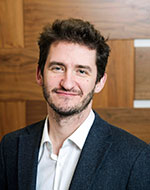
Professor Eero Vaara, currently at Saïd Business School, University of Oxford, is a globally recognized expert in organizational theory, strategic change, and institutional dynamics. With 39 publications in Financial Times top 50 journals between 2008-2022, his work explores historical perspectives, discursive processes, and paradoxes in organizational transformations. Affiliation: Saïd Business School, University of Oxford Research Focus: Strategic change, institutional work, narrative theory, and historical embeddedness Eero’s research bridges macro-institutional and micro-practice approaches, emphasizing how unmaterialized decisions, discursive struggles, and temporal dynamics shape organizational trajectories. His work spans multinational corporations, public sector governance, and extreme contexts, with a growing interest in historical analysis and critical discourse studies. His recent publications highlight themes such as strategy-as-practice , national identity , and temporal intentionality . Articles like Near-histories and strategy emergence and Discursive legitimation demonstrate his interdisciplinary approach combining institutional theory, paradox theory, and narrative analysis. Scientific Awards: Academy of Management fellowship Ranked 11th most published management scholar in FT top 50 journals (2008-2022) Eero’s collaborative research style and resilience in the publication process have led to influential contributions in strategic management and organizational studies. His colleague Eric Zhao notes that his work “opens up new ways of thinking about organizations, strategy, and change,” reflecting Oxford Saïd’s commitment to research excellence.
Angela Crow is an Associate Professor at James Madison University (JMU) in the School of Writing, Rhetoric and Technical Communication, where she has served since 2012. Her research bridges literacy studies, design, and urban mobility, focusing on how communities advocate for car-free infrastructure and equitable public spaces. She explores the role of digital communication in fostering feminist interventions, particularly around cycling advocacy and street design. Her work intersects with gender studies, urban studies, and rhetorical theory. Educated at the University of Kansas (Ph.D., 1997) and Point Loma College (B.A., 1987), she has authored books on writing programs and composition studies, including Aging Literacies (2006) and Field of Dreams (2002). Recent publications analyze surveillance, privacy in digital contexts, and transportation equity. Her research often highlights marginalized voices in shaping public discourse. Research Interests: Her current projects examine embodied literacies in mobility advocacy, social media practices of grassroots movements, and the rhetoric of urban infrastructure. She critiques car-centric planning through feminist and critical frameworks, emphasizing accessibility and safety for non-car users. Her work also addresses aging populations’ digital literacies and the intersection of technology with social inequality. Publications: Her articles span rhetorical analysis of social movements, educational assessment frameworks, and the sociotechnical dimensions of writing. Recent trends include collaborations on privacy in big data and participatory design for community mobility.
Tiffany Lewis is an Associate Professor at the Marxe School of Public and International Affairs, Baruch College, CUNY. Her work bridges rhetoric, social movements, and public affairs to explore gendered political advocacy. Education: Ph.D., Communication, University of Maryland, College Park M.A., Communication, University of Montana, Missoula B.A., Speech Communication, University of Washington, Seattle Research Interests: Historical analysis of women's activism in the progressive-era U.S. Embodied and performative advocacy tactics (mountain ascents, hikes, road trips) Visual rhetoric and cartography in social movements Decolonizing assessment methods in communication pedagogy Publications Trends: Her work primarily examines the intersection of gender, regional identity, and rhetorical strategy in early 20th-century advocacy, with a focus on Western U.S. suffrage movements. She employs archival research, discourse analysis, and geospatial methods. Committee Service: Executive Committee, Marxe School Assessment Committee, Marxe School Strategic Planning Committee, Marxe School Editorial Board, Recovering Democracy Archive: Speech Recovery Project Teaching: She instructs courses on public communication, equity-focused advocacy, social movement activism, and women in U.S. politics.
Richard Walsh is Professor in the Department of English and Related Literature at the University of York, where he leads the Interdisciplinary Centre for Narrative Studies and founded the British and Irish Association for Narrative Studies. His research bridges literary theory, cognitive science, and complex systems, examining narrative as a fundamental mode of human cognition. His research focuses on three interconnected domains: The rhetorical theory of fictionality and its cultural manifestations Interdisciplinary approaches to narrative cognition and sensemaking Complexity science applications to narrative structures across media This work extends to innovative fiction, digital narratives, and cross-cultural storytelling. Analysis of Walsh's recent publications reveals strong emphasis on narrative cognition, interdisciplinary methodologies, and emerging topics in AI storytelling. Thematic clusters include: Foundational studies in fictionality and rhetorical frameworks Complexity theory applications to narrative dynamics Interdisciplinary intersections with cognitive science and digital media His scholarly recognition includes the distinguished Institute of Advanced Study Research Fellowship at Durham University (2016) Walsh directs multiple research groups including the Narrative and Complex Systems Group (NarCS) and supervises doctoral projects on narrative theory. He leads collaborative initiatives like the RIDERS project on emergent narrative and the Threshold Worlds project on dream cognition.
Jennifer Nish serves as Associate Professor of Rhetoric and Composition at Michigan Technological University, holding dual affiliations with the Academy of Teaching Excellence and the Institute of Computing and Cybersystems (ICC). Her interdisciplinary work critically examines power dynamics in digital activism and transnational feminist movements. Her academic credentials include: Ph.D. in English from the University of Kansas B.A. in English & Psychology from the University of Nebraska at Lincoln Dr. Nish's research centers on intersections between rhetorical practices and systems of power, with signature contributions in transnational feminist rhetoric, disability justice advocacy for Long Covid/ME communities, and digital media activism. Her monograph Activist Literacies: Transnational Feminisms and Social Media Rhetorics establishes frameworks for analyzing contemporary activism, while recent projects expand into chronic illness narratives and globalization's impact on rhetorical studies. She teaches graduate courses in Disability Studies and undergraduate Advanced Composition. Analysis of her 2016-2024 publications reveals evolving methodological priorities: early work focused on digital campaign rhetoric (e.g., Humans of New York analysis), while current research integrates crip theory with transnational feminist approaches to address disability justice in academic labor and chronic illness communities. This trajectory demonstrates increasing engagement with embodied knowledge systems and intersectional activism. As an ICC member, Dr. Nish contributes to cyber-social systems research through rhetorical perspectives on technology-mediated activism and community formation.
Warren Buckland is a Reader in Film Studies at Oxford Brookes University's School of Arts. He holds a PhD in Film Studies from the University of East Anglia (1993) and previously studied photography at Derby (1987). Research: Film semiotics, cognitive film theory, narrative theory (puzzle films), digital humanities, independent American cinema Professional Roles: Editor of New Review of Film and Television Studies (2003-2016), editorial board member for Signata and book series Thinking Cinema and Hollywood Studio System His article trends analyze: Impossible storyworlds in Hollywood blockbusters Stylometric approaches to independent cinema Semiotic structures in music videos Epistemological foundations of film criticism Cognitive dimensions of cinematic rhetoric Contemporary auteur theory applications Awards: British Academy Post-Doctoral Fellowship (1994) Senior Research Fellow at Freie Universität Berlin (2016) As an educator, he supervises: PhD theses on film style, philosophy, puzzle films MA dissertations on Hollywood, digital humanities BA/MA film theory and research methods
Sheena Malhotra is a Professor of Gender & Women’s Studies at California State University, Northridge (CSUN), where she serves as Director of Queer Studies and Academic Director of the MA in Humanities Program. She holds concurrent appointments within the College of Humanities and Gender and Women's Studies Department, with extensive administrative experience including former roles as Associate Dean of the College of Humanities (2017-2019) and Chair of Gender and Women's Studies (2009-2013). Her academic trajectory bridges Indian film/television production and critical academia. Her educational background includes a Ph.D. in Communication Studies (1999) from the University of New Mexico, an M.A. (1993) from Pepperdine University, and a B.A. (1991) from DePauw University. Research interests span Media and Gender , Postcolonial Analysis of Indian Media , Queer Diasporic Audiences , and Racialized Implications of Silence , with methodological roots in intercultural communication and feminist theory. Her publication portfolio reveals consistent thematic evolution toward intersectional analyses of globalization, media, and identity. Early work focused on Indian television commercialization and Bollywood's cultural politics, while recent scholarship examines neoliberal impacts on youth imaginaries and queer coalition-building. Key methodological threads include postcolonial critique, discourse analysis, and embodied feminist approaches across 15+ peer-reviewed articles and two major books. Silence, Feminism, Power: Reflections at the Edges of Sound (2013, Palgrave MacMillan) - Co-edited anthology exploring silence as political strategy Answer the Call: Virtual Migration in Indian Call Centers (2013, University of Minnesota Press) - Co-authored ethnographic study of call center labor National Television Award nominations (India, 1995) during executive television production career Her advisory work includes five years on SATRANG's board (serving South Asian LGBTQIA+ communities in SoCal) and founding directorship of CSUN's Queer Studies Program. Current teaching includes GWS 351 (Gen Race Clas Sex) with hybrid/online course design expertise. Documentary film production remains integral to her scholarly practice through projects like The Shape of Water (2006) examining global feminist organizations.
Andrew Campana is an Assistant Professor of Asian Studies at Cornell University's College of Arts and Sciences, specializing in modern and contemporary Japanese literature and media. His research explores the possibilities and limitations of expression during media transitions, with particular focus on poetry, digital media, and disability studies. His academic journey includes a Ph.D. in East Asian Languages and Civilizations from Harvard University and an Honors B.A. in East Asian Studies from the University of Toronto. Campana's first book, Expanding Verse: Japanese Poetry at the Edge of Media , published by the University of California Press in 2024 as an open access work, examines Japanese poetic practice from the 1920s to the present as poets engaged with evolving media technologies including film, tape recording, television, and the internet. As a researcher, Campana's work bridges literary studies, media studies, game studies, and disability studies, with current projects exploring how poetry became a key site of digital experimentation in Japan. His research methodology combines traditional literary analysis with hands-on creative practice, informed by his experiences at MIT's Trope Tank laboratory. His scholarly interests span Japanese media history, disability representation in literature and gaming, digital poetics, and gender studies. His research has received significant media attention, including features in the Cornell Chronicle ('Poets in Japan Experiment at the Edge of Media' and 'Japanese Poets Open New Ways of Thinking About Media'), The Statesman, and interviews on NPR's Academic Minute and the Curiosity Daily podcast discussing his work on gaming and accessibility. As an educator, Campana teaches courses including 'Introduction to Japan,' 'Japanese Poetry,' and 'The Glitch: Errors, Disability, and the Edges of Digital Media' (ASIAN 4703/6703), guiding students through interdisciplinary explorations of Japanese literature, media, and digital culture. His teaching reflects his commitment to understanding media transitions through both theoretical and practical lenses.
Maksymilian Del Mar is Professor of Legal Theory and Legal Humanities in the Department of Law at Queen Mary University of London's School of Law. He has held this position since joining Queen Mary in 2011, contributing significantly to legal scholarship and education. His academic journey spans multiple disciplines and institutions, reflecting his interdisciplinary approach to legal studies. Professor Del Mar received his BA Hons/LLB Hons in philosophy, literature, and law from the University of Queensland, Australia (1999-2004), with an Honours dissertation in philosophy and literature on Italo Calvino. He then completed a Doctorate in Philosophy (PhD) at the University of Edinburgh (2006-2009), followed by a Doctorate in the Social Sciences (DSS) at the University of Lausanne (2009-2012). Prior to academia, he qualified as a lawyer in Brisbane, Australia, and worked as a Judge's Associate in the Supreme Court of Queensland. Professor Del Mar's research interests span the intersection of legal theory and legal humanities. His work explores the relations between legal theory and legal history, the history and historiography of politics and philosophy, and the theory and history of imagination, emotion, and related language arts. He has a particular focus on Scottish philosophers and jurists from the 18th to 20th centuries, including David Hume, Adam Smith, and Neil MacCormick. His current research projects examine the relations between character sketching and legal reasoning, and the imagination in eighteenth century Scotland. His scholarship reflects a commitment to building bridges across disciplines and articulating the essential role of arts and humanities in legal pedagogy and scholarship. His recent publications demonstrate a consistent focus on cognitive legal humanities, imagination in law, and the historical dimensions of legal reasoning. There is a clear trend toward interdisciplinary approaches that integrate insights from literature, rhetoric, cognitive science, and history into legal analysis. His work increasingly explores the embodied and affective dimensions of legal reasoning, moving beyond purely textual analysis to consider kinesic intelligence, emotional dimensions, and the materiality of legal practice. Professor Del Mar has received recognition for his work, including the IVR's Commendation for Excellence for 'Artefacts of Legal Inquiry'. Professor Del Mar actively supervises doctoral students working in legal theory and legal humanities, with a focus on the theory and history of common law reasoning, relations between law and cultural theory and history, the history and historiography of legal philosophy, law in a global context, and Scottish jurisprudence. His current and recent students include Isa Bellati, Luiza Tavares da Motta, Gabrielle Schwarzmann, and Adela Halo. His editorial work demonstrates significant scholarly activity, including editing the Law in Context series at Cambridge University Press, the Cambridge Elements in Legal Humanities, and the Encounters with Books from Other Disciplines series for the International Journal of Law in Context. He serves on the Editorial Board of Law & Literature. Professor Del Mar convenes the interdisciplinary research network on 'Imagination' at the Institute for the Humanities and Social Sciences at Queen Mary University of London. He previously founded and convened the Cotterrell Lectures in Sociological Jurisprudence (2015-2025) and the Centre for Law and Society in a Global Context (2013-18). He is also Co-Convenor of the Research Seminar series of the Queen Mary Centre for Eighteenth Century Studies and a Member of the Advisory Committee of the Centre for the History of Political Thought at Queen Mary.
Carolyn Rouse is the Ritter Professor of Anthropology at Princeton University and an HMEI Associated Faculty member in the Grand Challenges Program. Her work interrogates the intersections of race, religion, healthcare disparities, and development through ethnographic and visual anthropological methods. Research Interests: Development, medical anthropology, visual anthropology, resistance, critical race theory, consciousness, North America, Ghana, environmental humanities, and environmental policy/ethics. Key Affiliations: Department of Anthropology, Princeton University; Environmental Humanities and Environmental Policy and Ethics through HMEI Grand Challenges Program. Her research critically examines how evidence shapes narratives of social inequality, particularly in healthcare access, racial disparities, and international development. She authored Engaged Surrender , Uncertain Suffering , and Televised Redemption , and created the Ethnographic Data Visualization Lab (VizE Lab) in 2016 to bridge biological and social scientific data. Recent publications explore necropolitics, liberal bias in the Trump era, and epistemological challenges in evidence-based policy. Her films include Chicks in White Satin (Academy Award-nominated), Purification to Prozac , and Listening as a Radical Act . Scientific Awards: 1995 American Anthropological Association Award for Excellence ( Tales from Arab Detroit ) Academy Award nomination for Chicks in White Satin
Kelly Medina-López is an Assistant Professor in the Department of Humanities & Communication, focusing on Latinx rhetorics, border studies, and decolonial methodologies. Her work intersects social justice with translingual practices and place-based epistemologies. Key research areas include racioalphabetic ideologies, myth-as-methodology, and the intersection of embodiment and spatial identity. Research Focus: Latinx rhetoric, border rhetorics, feminist/indigenous methodologies Key Concepts: Querencia, rasquache aesthetics, translingual pedagogy Her publications explore the US-Mexico border's rhetorical landscapes and the role of myth in knowledge production. Recent works analyze alternative writing systems as acts of resistance and the cultural significance of New Mexico's place narratives. Advising and grant details are not documented in the provided materials.
Rick Busselle is an Associate Professor at Bowling Green State University (BGSU), affiliated with the School of Media & Communication within the College of Arts & Sciences. His research focuses on how mediated narratives influence perceptions of social issues like poverty and crime, emphasizing engagement, perceived realism, and the social construction of reality through media. He holds a B.S. in Journalism from BGSU, an M.A. in Telecommunication, and a Ph.D. in Mass Media, both from Michigan State University. Dr. Busselle’s work appears in journals like Communication Theory and Media Psychology , with a focus on narrative engagement, media effects, and psychophysiological responses. He has served on editorial boards for Media Psychology , The Journal of Broadcasting & Electronic Media , and co-edited Media Psychology . His courses include Media Effects, Quantitative Research Methods, and Strategic Communication. His scholarship bridges narrative theory and audience psychology, exploring how stories shape social realities. Recent publications (2022–2008) highlight themes like epistemic monitoring in stories, narrative persuasion, and the cultivation of perceived realism. His research underscores the interplay between cognitive processes and media influence, with applications in communication studies and journalism. Busselle’s contributions extend to editorial leadership and academic mentorship, shaping discourse in media psychology and communication theory without explicit awards but recognized through peer contributions and publication impact.
Christian von Scheve is a Professor of Sociology and Head of the Department of Sociology of Emotions at Freie Universität Berlin. He also serves on the board of the Collaborative Research Center (SFB) 1171 'Affective Societies' and is a Research Fellow at the German Institute for Economic Research (DIW Berlin). His academic journey includes positions as a Research Professor at DIW Berlin (2011-2014), Junior Professor at Freie Universität Berlin (2008-2014), and Assistant Professor at the University of Vienna (2007-2008). His research examines the interplay between culture, social structures, and emotions, with emphasis on: The social/cultural constitution of emotions and affective experiences Emotional dimensions of economic action Human/non-human social interaction He employs diverse methodologies including surveys, interviews, and experiments. His recent publications (2022-2025) predominantly explore affective polarization , refugee integration , and the role of emotions in political discourse, utilizing interdisciplinary approaches spanning sociology, neuroscience, and political science. A consistent theme is how emotions shape social cohesion and conflict in contemporary societies. He holds key editorial roles including Co-Editor of Soziale Welt , Associate Editor of Emotion Review , and Editorial Board positions for multiple book series on affective societies and emotion research. He actively advises Master's students, requiring thesis proposals to be submitted six weeks before registration deadlines. His research is embedded in collaborative projects like SFB 1171 'Affective Societies' and the 'Social Cohesion and Civil Society' initiative.
Grace Lavery is an Associate Professor in the Department of English at the University of California, Berkeley. Her research and creative work interrogate the intersections of capitalism, gender, and embodiment, with a focus on the ascription of sexual meaning to flesh. She holds expertise in 19th-Century British literature, critical theory, cultural studies, and gender studies. Lavery’s scholarly monographs include *Quaint, Exquisite* (2019), *Pleasure and Efficacy* (2023), and *Closures* (2024), alongside her creative memoir *Please Miss* (2022). Her current research explores contemporary demonology and possession narratives. She frequently lectures on trans studies, queer theory, and literary form at institutions such as Harvard, Princeton, and Brown. Her academic career includes teaching at Berkeley since 2016, focusing on courses that blend literary analysis with critical theory. Lavery’s work bridges scholarship and creative writing, examining how formal and generic frameworks shape understandings of the body. Her research often engages psychoanalysis, poststructuralism, and cultural materialism to unpack themes of identity, desire, and power. Notable contributions include rethinking trans literature through historical figures like Christine Jorgensen and analyzing modern media’s portrayal of heterosexuality in sitcoms. Her interdisciplinary approach has led to collaborations across departments and institutions, reflecting her commitment to expanding critical discourses on gender, sexuality, and culture.
Krista Ratcliffe is a Foundation Professor in the Department of English at Arizona State University (ASU). She previously held academic roles at Marquette University and Purdue University, including department chair positions. Her research focuses on intersections of rhetoric, feminist theory, and critical race studies. She has authored and co-edited influential works such as Rhetorical Listening: Identification, Gender, Whiteness (2006), which won multiple awards, and Rhetorics of Whiteness (2017). Ratcliffe has also contributed to editorial roles, including co-editing the Landmark Essays series for Routledge. Education: PhD in English from The Ohio State University (1988). Research interests span rhetoric and composition studies, feminist rhetoric, critical race studies, and writing program administration. Her work emphasizes ethical listening practices, whiteness studies, and feminist methodologies. She has published widely in journals like College Composition and Communication , Rhetoric Society Quarterly , and JAC . Awards include the 2006 JAC Gary Olson Award, 2007 CCCC Outstanding Book Award, RSA Book Award, and Fellow status in the Rhetoric Society of America. Her national service includes presidencies of CWSHRC and RSA. Ratcliffe advises graduate students across English, Linguistics, and related fields through courses like Research, Thesis, and Dissertation supervision. She maintains active involvement in academic governance and feminist administrative practices. Her recent scholarship examines post-racial discourses, feminist agency in cultural texts, and rhetorical listening as a transformative practice. She continues to advocate for inclusive pedagogical frameworks and critical race analyses in higher education.