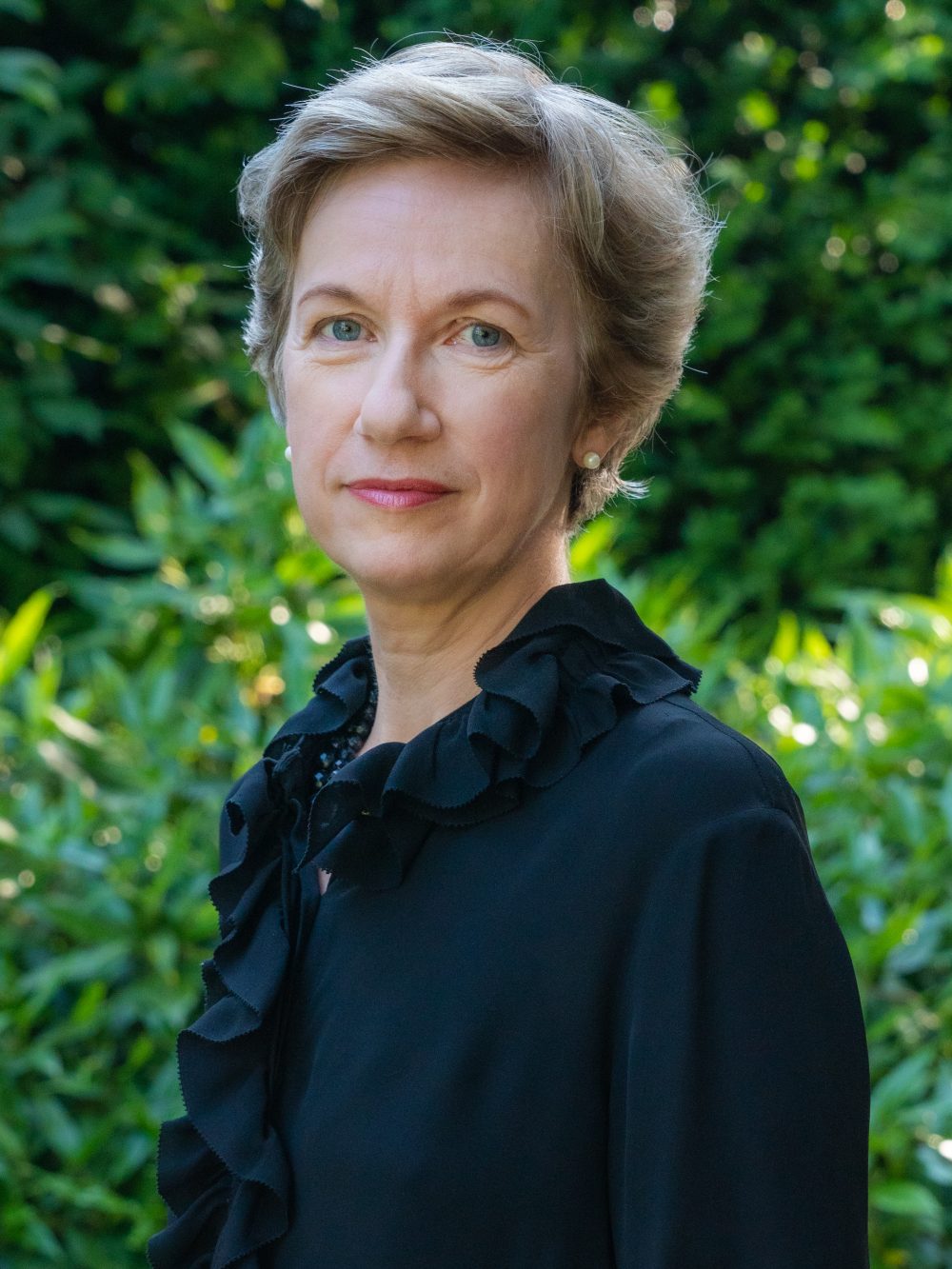
Anna Levina is an Assistant Professor for Computational Neuroscience at the University of Tübingen , affiliated with the Department of Computer Science under the Faculty of Science. Her research focuses on the self-organization of neuronal activity, critical dynamics in neural networks, and the excitation/inhibition balance in cortical circuits. Current positions: Assistant Professor (since 2018), Group Leader (2017-2018), Equality Officer (Computer Science) Previous roles: IST Fellow (2015-2017), Associated Researcher (2011-2015), Postdoc/PI (2011-2015), Postdoc (2008-2011) Her research integrates mathematical modeling , statistical physics , and computational neuroscience to study criticality phenomena, neural avalanches, and adaptive network dynamics. Key interests include: Self-organized criticality in neural systems Excitation/Inhibition balance mechanisms Network topology and dynamics Timescale analysis in neural processing Stochastic modeling of neural activity Recent publications reveal trends in understanding critical dynamics across biological and artificial networks, with applications to memory systems, sensorimotor integration, and disease modeling. She has received recognition as an IST Fellow .
Mathias Funk is an Associate Professor in the Industrial Design department at Eindhoven University of Technology (TU/e), leading the Things Ecology lab. His research focuses on designing with data and systems behavior, particularly in IoT and medical technology contexts. He co-founded UXsuite GmbH and developed the OOCSI communication framework. With a PhD in Electrical Engineering from TU/e (2011), Funk has held academic roles since 2013, including postdoctoral positions in Electrical Engineering and Industrial Design. He teaches courses like 'Data-enabled design' and supervises projects on AI, data foundry, and OOCSI applications. His work bridges engineering and design, addressing sustainability and human values through systemic design approaches. Education: PhD in Electrical Engineering, TU/e (2011) Computer Science background from RWTH Aachen Postdoc at TU/e's Electrical Engineering and Industrial Design departments Research Interests: Data-driven design methodologies, IoT systems, medical technology innovation, sustainable design practices, and interactive systems for musical expression. Recent work emphasizes telemonitoring efficacy in heart failure care and federated learning applications. Awards: Best Paper Award (2014) Honorable Mention (2021) Grants/Projects: Leading initiatives like MEDICAID (medtech solutions), ACACIA (interpretable AI), and Data-Driven Servitizing in Professional Printing. Active in clinical workflow prototyping and cardiovascular disease detection projects. Lab Activities: Manages the Things Ecology lab, focusing on systemic design challenges in smart ecosystems. Collaborates internationally through spin-offs and visiting lectureships.
Associate Professor James Andrew Phillips is a faculty member in the Department of Philosophy within the School of Humanities and Languages at the University of New South Wales (UNSW). He has been at UNSW since 2006, initially serving as a Vice-Chancellor's postdoctoral fellow, followed by an ARC Australian Research Fellow from 2007-2011, before assuming his current combined research-teaching position. His educational background includes undergraduate studies at the University of Queensland, an MA in Comparative Literature and Critical Theory from Monash University, and a PhD in Philosophy from the University of Tasmania (2002). During his doctoral studies, he spent time as an OeAD scholar in Innsbruck and a DAAD scholar in Potsdam. He has also been a visiting research fellow at the Institute for Advanced Studies in the Humanities at the University of Edinburgh and a resident associate at the National Humanities Center in North Carolina. Phillips' research focuses on aesthetics, phenomenology, film and philosophy, political theory, literary criticism, and British and Irish literature. His current book project explores the philosophy of fiction, drawing on concepts of 'world' in Kant and Heidegger. He has translated two significant philosophical works: Christoph Menke's Tragic Play: Irony and Theater from Sophocles to Beckett (2009) and Alexander García Düttmann's Philosophy of Exaggeration (2007). His recent publications demonstrate a strong focus on the intersection of philosophy, aesthetics, and cinema, with particular attention to phenomenological approaches to film studies and the political dimensions of aesthetic experience. His work bridges continental philosophy with contemporary cultural analysis, creating connections between historical philosophical traditions and modern artistic practices. Philosophy Group Convenor Research Committee Member - School of Humanities and Languages Phillips currently supervises PhD candidate Finnegan Hassey (on Arendt's concept of nationalism, jointly with Jess Whyte) and MA student Sofia Kartavtseva (on Sade and aesthetics). He teaches political philosophy, aesthetics, and the history of German philosophy, with planned courses for 2025 including ARTS3368 'Modern European Philosophy' and ARTS2384 'Political Philosophy'.
Shane Butler is the Nancy H. and Robert E. Hall Professor in the Humanities and Professor of Classics at Johns Hopkins University, where he also directs the Classics Research Lab and serves as Director of Graduate Studies. He holds a PhD from Columbia University (2000) and has taught at the University of Bristol, UCLA, and the University of Pennsylvania. His research spans Latin literature, classical reception, sensation studies, aesthetics, queer theory, and media history, focusing on the interplay between embodiment and art. Education: PhD in Classics from Columbia University (2000). Prior to Hopkins, he held faculty positions at the University of Bristol, UCLA, and UPenn. He has been a residential fellow at the American Academy in Rome, Villa I Tatti, the Getty Villa, and the MPIWG Berlin. Research focuses on Latin literature from antiquity to early modernity, classical reception theory, and the sensory dimensions of ancient aesthetics. Notable works include The Passions of John Addington Symonds (2022), The Ancient Phonograph (2015), and Sound and the Ancient Senses (2019). He co-edits the Classical Philology special issue on 'Philology Transfigured' and directs the John Addington Symonds Project. Awards include fellowships at leading institutions and editorial roles, including Associate Editor of the I Tatti Renaissance Library. His recent work explores queer philology and the intersection of sound studies with ancient literature.
Shuran Song is an Assistant Professor of Electrical Engineering at Stanford University, with a courtesy appointment in Computer Science. Previously, she was faculty at Columbia University. She holds a Ph.D. in Computer Science from Princeton University and a BEng from HKUST. Her research focuses on the intersection of computer vision and robotics, particularly in embodied AI, robot manipulation, and sensorimotor learning. Song's work emphasizes learning from physical interactions to enable robots to perform complex tasks autonomously. She leads the Robotics and Embodied AI Lab (REAL@Stanford) and has received prestigious awards, including the NSF Career Award, Sloan Fellowship, and Microsoft Faculty Fellowship. Education: Ph.D., Computer Science, Princeton University; BEng, HKUST Affiliations: Stanford School of Engineering, Department of Electrical Engineering Research interests include deformable object manipulation, visuomotor policy learning, and generalizable robot skills. Her lab develops algorithms for robots to learn through interaction, with applications in household assistance (e.g., TidyBot) and industrial automation. Notable contributions include the TossingBot and Diffusion Policy frameworks. Publications span robotics, computer vision, and AI conferences (RSS, ICRA, CVPR), focusing on policy learning, deformable object handling, and embodied intelligence. Awards highlight her impact in advancing robot learning and perception. Advises doctoral and master's students in robotics and AI, and collaborates on grants from NSF, DoD, and industry partners. Teaches courses on robot perception and embodied AI at Stanford.
Professor Merje Kuus is a distinguished political geographer at the Department of Geography , Faculty of Arts , University of British Columbia . Her work bridges political geography , international relations , and sociology to examine knowledge production in policy-making contexts. PhD from Syracuse University (1999) WSET Level 3 Award in Wine holder Active in Arctic Circle's Mission Council on the GlobalArctic Research focuses on expertise in diplomatic practices , with empirical specializations in European Union and Arctic governance . She also explores geographical imaginaries in wine production , connecting policy analysis to cultural geography. Key publications include: Geopolitics and Expertise: Knowledge and Authority in European Diplomacy (Wiley Blackwell, 2014) Geopolitics Reframed: Security and Identity in Europe’s Eastern Enlargement (Palgrave Macmillan, 2007) Ashgate Research Companion to Critical Geopolitics (co-edited, 2013) Recent scientific awards include: Fulbright Fellowship Killam Fellowship SSHRC Canada grants Her supervision portfolio spans climate governance, disaster response expertise, and transnational policy networks, with completed PhD theses on topics ranging from Vancouver's climate governance to Arctic resource governance .
Hedvig Kjellström is a Professor at the Division of Robotics, Perception and Learning within the School of Electrical Engineering and Computer Science at KTH Royal Institute of Technology. She holds significant affiliations with the Swedish e-Science Research Centre and the Max Planck Institute for Intelligent Systems in Germany. Her work spans multiple interdisciplinary domains and she serves as Editor-in-Chief for CVIU and was Program Chair for CVPR 2025. Her research centers on Computer Vision as a sub-field of AI, with three interconnected themes: Computational Aesthetics (exploring aesthetic aspects of human communicative behavior), Communicative Behavior (developing models of how humans and animals perceive and produce non-verbal communication), and Embodied Artificial Intelligence (creating methodologies for robots and autonomous agents to perceive the world through sensors, primarily vision). Her work has significant applications in medical diagnostics, animal welfare, human-robot interaction, and creative arts. Analysis of her recent publications reveals a strong trend toward multimodal AI systems that integrate vision, language, and action understanding. Her research increasingly focuses on animal-centered applications, particularly equine pain detection and behavior analysis, while maintaining strong foundations in human communication modeling, gesture recognition, and 3D reconstruction techniques. The interdisciplinary nature of her work bridges computer science with veterinary medicine, neuroscience, and performing arts. Hedvig Kjellström actively supervises numerous PhD and Master's students across various projects and maintains extensive collaborations with institutions including Karolinska Institutet, Swedish University of Agricultural Sciences, and international partners. Her research is supported by major funding bodies including WASP, VR, and SeRC. She leads or participates in several notable projects including OrchestrAI (communication between conductor and orchestra), ANITA (Animal Translator), MARTHA (3D horse motion analysis), and STING (synthesis and analysis with transducers and invertible neural generators). Her work with ACAI (Animal Centered Artificial Intelligence), which she co-founded and directs, demonstrates her commitment to applying AI for animal welfare.
Michael Wheeler is a Professor in Philosophy at the University of Stirling, focusing on cognitive science, phenomenology, and the philosophy of technology. His work bridges existentialist philosophy with modern AI ethics and embodied cognition. Key Research Themes: Extended mind, distributed cognition, and transparency in smart machines. Recent Projects: Explore the societal impact of AI, cognitive change in the arts, and the interplay between aging and cognition. Selected Articles (2024-2019): His publications span topics like creativity and contingency in the arts, transparency in AI, and the evolutionary psychology of reasoning. Notable Contributions: Advocates for integrating phenomenology into cognitive science and challenges representationalist frameworks in AI and robotics.
Pourang Irani is a Professor and Principal’s Research Chair in Ubiquitous Analytics at the University of British Columbia (Okanagan campus), within the Irving K. Barber Faculty of Science’s Department of Computer Science, Mathematics, Physics and Statistics. Previously, he served at the University of Manitoba for 19 years as a faculty member and Acting Associate Dean of Science. His research focuses on Human-Computer Interaction (HCI), Wearable Computing, and Information Visualization, with an emphasis on designing interactive systems for 'anytime, anywhere' sensemaking using emerging technologies like mixed reality and smart devices. He leads interdisciplinary projects such as the NSERC CREATE grant on Visual and Automated Disease Analytics, training data scientists in health analytics. Education: PhD in Computer Science (University of New Brunswick, 2002), supervised by Dr. Colin Ware. Research Interests: Wearable interfaces (smartwatches, smartrings, and AR/VR) Data visualization for health and pervasive systems Persuasive health technologies and data storytelling Mid-air and hands-free interaction techniques Embodied interaction through social robots Recent Work Trends: Articles emphasize innovations in smartwatch interaction (e.g., bezel-to-bezel gestures), tactile visualizations via skin-dragging, and voice assistant-driven health data queries. Projects like Databiting explore transient personal data exploration, while Data Videos focus on narrative-driven health communication. Grants & Leadership: Principal Investigator of NSERC CREATE Visual and Automated Disease Analytics program. Co-leads UBCO’s Digital Transparency cluster. Active in interdisciplinary teams addressing health informatics and HCI challenges. Labs & Teams: Leads a lab developing prototypes in wearable computing, spatial analytics, and immersive technologies. Collaborates with researchers in medicine, engineering, and data science to translate HCI innovations into practical solutions.
Barbara Gail Montero is the Rev. John A. O’Brien Professor of Philosophy at the University of Notre Dame, where she holds a faculty position in the Department of Philosophy within the College of Arts and Letters. She earned her BA from the University of California, Berkeley, and her PhD from the University of Chicago. Her research focuses on two core areas: the metaphysical relationship between mind and body, and the role of consciousness in expert action. Notably, she explores how physicalism interacts with abstract entities and how athletes defy skill plateaus through orthogonal models of attention and automaticity. Her key publications include Continuous Improvement: Intertwining Mind and Body in Athletic Expertise (2022, co-authored), A Very Short Introduction: Philosophy of Mind (2021), and Thought in Action: Expertise and the Conscious Mind (2016). She has also published influential papers on pain memory gaps, expertise-induced amnesia, and critiques of flow-state theories. Montero’s interdisciplinary work bridges philosophy with dance performance, as seen in collaborations like Curved Spacetimes: Where Friedrich Nietzsche Meets Virginia Woolf . Her teaching spans philosophy of mind, logic, and science, emphasizing neural plasticity and conscious engagement in expertise.
Rosalind Gill is a prominent Professor at Goldsmiths, University of London, with a distinguished career spanning gender studies, media studies, and cultural studies. Her extensive publication record demonstrates leadership in critical analyses of postfeminism, neoliberalism, and digital culture. Gill's research interests focus on the intersections of gender, media, and neoliberal subjectivity, with particular attention to postfeminist discourse, digital culture, embodiment, and creative labor. Her work critically examines how contemporary media cultures shape gendered subjectivities, with significant contributions to understanding the 'postfeminist sensibility' as a dominant cultural framework. She has pioneered research on the affective dimensions of neoliberalism, particularly how it shapes women's experiences of confidence, self-care, and embodiment in digital environments. Analysis of Gill's recent publications reveals a consistent scholarly trajectory examining the psychological and affective dimensions of contemporary culture. Her work increasingly focuses on digital embodiment, social media practices, and the 'editable self,' exploring how visual culture and digital technologies reshape bodily experiences and self-perception. Gill's research demonstrates a sophisticated understanding of how neoliberal imperatives intertwine with postfeminist discourse to create new forms of gendered subjectivity. Gill has produced significant scholarly collaborations, particularly with researchers like Shani Orgad, Julia Coffey, and Akane Kanai. Her influential book 'Confidence Culture' (2022, co-authored with Orgad) offers a critical analysis of how confidence has become a moral imperative within contemporary neoliberal feminism. Her academic contributions extend to professional activities, including submissions of evidence to UK Parliamentary committees on employment rights, demonstrating her engagement with policy-relevant research. Gill's work consistently bridges theoretical sophistication with attention to contemporary social issues, making significant contributions to feminist scholarship and cultural studies.
Dr Marion Kant is a Lecturer in the Department of German at the University of Cambridge's Faculty of Modern and Medieval Languages and Linguistics. Her work bridges musicology and dance history, focusing on body politics, the history and aesthetics of performance (theatre, opera, dance, ballet), German-Jewish relations, Nazi ideology, and anti-fascist exile. Her research explores the intersection of physical culture, nationalism, and avant-garde arts. She is currently editing a six-volume Cultural History of Dance for Bloomsbury, examining German nationalism and movement concepts from the 19th and 20th centuries. Her publications span German physical cultures, nationalist ideologies, and the role of dance in exile communities. Key Research Themes: Body aesthetics, German-Jewish assimilation, Nazi cultural policies, avant-garde movements, and transnational exile networks. Notable Projects: Analysis of Nazi-era dance policies, documentation of anti-fascist artists in Los Angeles, and historical studies of German physical cultures.
Professor Holly Thorpe is a Professor of Sociology in Te Huataki Waiora / School of Health at the University of Waikato, specializing in Sport and Human Movement. She serves as Associate Dean Research in the Division of Health PVC Office and is an internationally recognized sociologist of sport, physical culture and gender whose work has earned prestigious fellowships and awards including Fulbright, Leverhulme, and Royal Society honors. Her educational background includes a PhD from the University of Waikato and Papa Reo Level 1 certification from Te Wananga o Aotearoa, reflecting both academic excellence and cultural engagement with Māori language and knowledge systems. Professor Thorpe's research centers on equity and inclusion in sporting cultures, with particular attention to women's health and wellbeing, sport and gender, and the impact of social media on athletic experiences. She employs critical and feminist theoretical frameworks with expertise in qualitative methods to examine how sport, physical activity, and health intersect in rapidly changing social landscapes. Her work spans gender studies, feminist methodologies, sports science, sociology of health, and digital media studies within sporting contexts, with a strong commitment to community-engaged research. Her extensive publication record reveals consistent thematic focus on contemporary issues including menstruation in sport, digital technologies and athlete experiences, pandemic impacts on wellbeing, and the gendered dimensions of mega-sport events. Her work frequently employs intersectional analysis and collaborates across disciplines to address complex questions about embodiment, identity, and social change in sporting cultures, particularly as they relate to women and marginalized communities. Professor Thorpe's significant scholarly recognition includes: Royal Society Early Career Research Excellence Award for Social Sciences (2018) Fellow of the North American Society for the Sociology of Sport (2018) Royal Society James Cook Fellowship for a two-year project focused on women's wellbeing through and beyond pandemic (2021) She actively supervises students and has secured substantial research funding including the Te Punaha Matatini CORE Research Institute project 'Youth Wellbeing in Uncertain Times: The Voices of Rangatahi from Flood-Effected Tairāwhiti Gisborne' (2023-2025). Professor Thorpe collaborates extensively with international and national sports organizations including the International Olympic Committee, High Performance New Zealand, Sport New Zealand, Skateistan, and Voice in Sport to ensure her research has real-world impact on policy and practice. She serves as Series co-editor for 'New Femininities in Digital, Physical and Sporting Cultures' and maintains active media engagement through The Conversation and other outlets. Professor Thorpe leads several significant research initiatives including 'Reimagining Fields of Play' (2023) and co-organized the 'Gender, Health and Wellbeing Symposium' (2022), demonstrating her commitment to creating spaces for critical dialogue about sport, gender, and health while advancing culturally responsive methodologies that center Indigenous and diverse perspectives.
Dhruv Shah is an Incoming Assistant Professor of Electrical and Computer Engineering at Princeton University starting January 2026 and currently serves as a Senior Research Scientist at Google DeepMind. He is also an Associated Faculty member in Princeton's Center for Statistics and Machine Learning, focusing on the convergence of machine learning and robotics for real-world deployment. His academic credentials include a Ph.D. and M.S. in Electrical Engineering and Computer Sciences from the University of California, Berkeley (2024) and a B.Tech. (Honors) in Computer Science and Engineering from the Indian Institute of Technology, Bombay (2019). Shah's research pioneers foundation models for robotics, emphasizing large-scale robot learning, out-of-distribution generalization, and long-horizon reasoning. His group adopts a full-stack methodology spanning algorithmic innovation to system design, drawing from cognitive science to develop physical AI systems at the perception-learning-control interface. Key focus areas include reinforcement learning, human-robot interaction, and continual learning for challenging environments. Analysis of his 15 most recent publications reveals dominant trends in foundation models for visual navigation, language-conditioned policies, and multi-agent systems. His work increasingly integrates multimodal inputs (vision, language) while addressing generalization gaps in real-world settings, with strong emphasis on efficient data curation and scalable robot learning frameworks. His accolades feature the Microsoft Future Leaders in Robotics & AI Fellowship (2024), two IEEE ICRA Best Conference Paper Awards (2024), multiple ICRA finalist awards across cognitive robotics and manipulation categories, and the Berkeley Fellowship (2019-2024). Shah will recruit PhD students for Princeton's upcoming admissions cycle, establishing a research group dedicated to full-stack robotics development. While specific grant details aren't provided, his trajectory indicates significant funding for AI-robotics convergence projects, particularly in foundation model development and real-world deployment challenges. His laboratory at Princeton will integrate algorithmic innovation with system design, focusing on physical AI systems that bridge perception, learning, and control while maintaining strong ties to cognitive science principles for human-aligned robotic intelligence.
Zsolt Kira serves as an Assistant Professor in the School of Interactive Computing at Georgia Institute of Technology's College of Computing, with additional affiliations at the Georgia Tech Research Institute and as Associate Director of ML@GT. He leads the Robotics Perception and Learning (RIPL) Lab, driving research at the intersection of machine learning and robotics. Dr. Kira earned his Ph.D. in 2010 under Professor Ron Arkin, establishing foundational expertise in robotics and AI before transitioning to his current academic role after industry experience at SRI International Sarnoff. His research pioneers beyond supervised learning through unsupervised, semi-supervised, self-supervised, and continual/lifelong learning frameworks, while advancing distributed perception via multi-modal fusion and cross-robot information integration. This dual focus addresses core challenges in robotic autonomy and sensor processing. Analysis of his 15 most recent publications reveals dominant trends in embodied AI systems, robust foundation model adaptation, and multimodal learning architectures. Key themes include neural radiance field applications, reinforcement learning for locomotion, and novel benchmarks for memory evaluation in agents. While specific advisees and grants aren't documented in the source material, his RIPL Lab leadership implies active graduate mentorship and research funding acquisition. The lab's work directly enables next-generation robotic systems through algorithmic innovation in perception and learning. The RIPL Lab operates as a hub for developing machine learning techniques that solve difficult perception problems in robotics, with particular emphasis on unsupervised learning paradigms and distributed multi-robot systems that push the boundaries of autonomous operation.