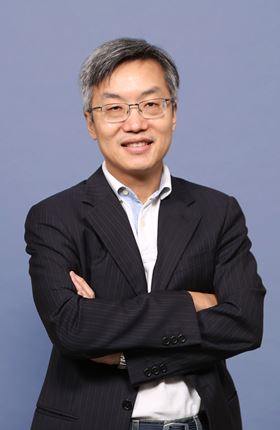
Professor Henry Duh is Associate Dean (Global & Industry Engagement) and Full Professor at the School of Design, The Hong Kong Polytechnic University. He also serves as Director of the PolyU-NVIDIA Joint Research Centre and Research Centre for Art and Culture Technology. PhD in Psychology, Industrial Design, and Engineering Postdoctoral Training: NASA-Johnson Space Centre His research focuses on human-centric augmented/virtual reality systems, interaction design, and immersive technologies. With over 150 publications and 6,100 citations, he explores cognitive behaviors in digital environments and develops applications for training, education, and cultural preservation. Recent publications demonstrate expertise in adaptive testing frameworks, VR locomotion mechanics, and AI-driven design tools. His work bridges psychology, computer science, and digital art through interdisciplinary approaches. Editor-in-Chief: Journal of Visual Languages and Computing (Elsevier) FAA certified Advanced Ground Instructor and Private Pilot As principal investigator, he secured millions in grants from institutions like the National Research Foundation Singapore, Australian Research Council, and Microsoft. He collaborates with CISCO, Oracle, and Microsoft to align curricula with industry needs. He has led academic units at University of Tasmania and La Trobe University, and held visiting positions at Tsinghua University and National Taiwan University.
Erik Estany Tigerström is a Lecturer in Photography and Audiovisual Creation at Universitat Abat Oliba CEU, where he teaches Image Generation with AI for the Degree in Photography and Audiovisual Creation. He also teaches the Photography Creation Laboratory for the Bachelor of Design at Eina and the Production and Thinking Workshop on Language and AI for the Master's Degree in Photographic Creation and New Audiovisual Formats at ESCAC. Additionally, he directs and teaches the Laboratory on Images, Language and AI 'Jugar Contra la Máquina' on the educational platform Ensambles.org. His research interests focus on the agency of images in contemporary culture, the ideological structure of image-producing technologies, and the implications of visual centrality in modern life. He explores how AI-generated imagery challenges traditional photographic truth claims and how language interacts with visual representation in digital spaces. His work critically examines capitalist realism through visual means and investigates the limitations and biases embedded in machine learning systems. Tigerström's recent projects analyze the relationship between language and images through AI generation, particularly examining how textual prompts translate into visual representations. His work 'Imaginar amb els dits' documents a collaborative project with high school students exploring AI image generation, while 'Inevidence' appropriates existing photographic works to train AI models, creating layers of meaning about photographic truth. Plat(t)form nomination of the Fotomuseum Winterthur Art Photo BCN Festival award Fòrum Fotogràfic Can Basté award As an active exhibiting artist, Tigerström has shown work at Sala Amárica in Gasteiz, Bòlit Centre d'Art Contemporani in Girona, and Sala Cava de Can Basté in Barcelona, among other venues including Las Nuits Paris, Festival Panorámico, and OFF Bratislava. His teaching and artistic practice form an integrated approach to understanding contemporary visual culture through both theoretical and practical engagement with emerging technologies.
Pancho Tolchinsky is a lecturer in undergraduate and postgraduate programmes at IDEP Barcelona, Harbour.Space University, and Eina, focusing on cognitive sciences applied to design. His academic journey includes a Mathematics degree from Universitat Autònoma de Barcelona (2001), a PhD in Artificial Intelligence from Polytechnic University of Catalonia (2012), and a postdoc at Yahoo! Research Lab in Barcelona (2013). Universitat Autònoma de Barcelona (Mathematics, 2001) Polytechnic University of Catalonia (PhD in AI, 2012) Yahoo! Research Lab (Postdoc, 2013) His research explores how embodied experience generates meaning, prioritizing poetic and affective dimensions over logic. This has led to interdisciplinary work connecting cognitive sciences, creativity, and education. He has led workshops on creativity and cognitive science for organizations like Twitter, Mucho, and Shenkar College of Engineering, Design and Art. Tolchinsky bridges academia and professional practice: he directed the Holss Llanogrande School in Colombia (infant to secondary education), collaborated with Mucho studio on strategic design, and partnered with Alzheimer Catalunya Fundació on strategic communication. He is co-founder of Acerca, a platform hosting conferences and podcasts about interactions shaping cultural and biological life.
Ying-Tung Lin is an Associate Professor at the Institute of Philosophy of Mind and Cognition , National Yang Ming Chiao Tung University (NYCU), Taipei, Taiwan. His research sits at the intersection of philosophy of mind, cognitive science, and AI ethics, with a focus on self-experience in mental simulation, algorithmic bias, and authenticity in memory interventions. Education: PhD in Philosophy from Johannes Gutenberg-Universität Mainz (2014). Research interests include: Philosophy of Mind & Consciousness Cognitive Enhancement via Neurotechnology Algorithmic Fairness in AI Episodic Memory & Bodily Self-Identification Observer Perspective in Mental Simulation Autobiographical Self-Modeling His publication trends show interdisciplinary engagement between 2014-2024, covering topics like dream epistemology , AI governance frameworks , and neuroethical policy . Key methodologies involve conceptual analysis combined with empirical data from cognitive studies. Advising information is not explicitly available in provided texts. Grants or funding sources aren't mentioned in the scraped content. Dr. Lin participates in cross-disciplinary initiatives like the Philosophy, Intelligence, Brain, and Mind Program at NYCU, and contributes to academic events including the International Society for the Philosophy of the Sciences of the Mind conference (2025).
Dr. José Manuel de Almeida Pereira is an Assistant Professor at the School of Education of Viseu, Polytechnic Institute of Viseu, Portugal, where he has been teaching since 2006. He currently serves as President of the Technical-Scientific Council and has held various leadership positions including Director of the Department of Communication and Art. His work focuses on the intersection of digital art, educational technology, and language learning. PhD in Fine Arts (Multimedia Art) from University of Lisbon Faculty of Fine Arts (2019) - "Aesthetics of collective actions in Internet Art: crowdsourcing and the awakening of creative audiences." (Approved with Distinction and Praise) Master's in Educational Technology (Image Technologies) from University of Minho (2004) - "Anatomy of Visual Grammar in Art Education: Digital Image versus Traditional Image" (Very Good unanimously) Bachelor's Degree in Visual and Technological Education from Polytechnic Institute of Viseu School of Education of Viseu (1997) Dr. Pereira's research interests center on digital art education, visual literacy, and the integration of technology in teaching practices. He explores how digital tools and multimedia approaches can enhance foreign language learning, particularly through storytelling and non-linear narratives. His work emphasizes interdisciplinary connections between art, technology, and language education, with a focus on practical applications in higher education settings. He investigates how immersive environments and gamification strategies can transform traditional teaching methods. His recent publications demonstrate a consistent focus on the intersection of digital art, educational technology, and language learning. A significant portion of his work examines how digital storytelling, non-linear narratives, and multimedia approaches can enhance foreign language acquisition in higher education. He has also explored applications of these approaches in special education contexts, particularly for individuals with autism spectrum disorder. His research shows a progression from theoretical investigations of digital aesthetics to practical applications of digital tools in educational settings. Dr. Pereira has directed numerous research projects, including PAGE (Agricultural and Food Landscapes with innovative women generations), HARVEST (Valuing the Family Garden to Educate for a Mediterranean, Healthy and Sustainable Diet), and APSASeG (Opening Classroom Doors: Serious games - the impact of gamification on foreign language teaching/learning in higher education). He has also led the JASM project (Janela aberta sobre o mundo: línguas estrangeiras, criatividade multimodal e inovação pedagógica no ensino superior), which explores multimodal creativity as a tool for pedagogical innovation in foreign language learning. As an academic advisor, Dr. Pereira has supervised numerous Master's students, primarily in the field of Visual and Technological Education. His advisees have explored topics ranging from digital photography in technological education to the inclusion of children with autism spectrum disorder through visual and technological education disciplines. He has also organized several academic events, including the "Solstício: arte a três tons" Arts Festival and international seminars on foreign language learning and digital creation. Dr. Pereira directs a laboratory at the School of Education of Viseu and has been instrumental in developing the IPVerso initiative, which focuses on education and co-creation through art. His work bridges theoretical research with practical applications, creating opportunities for students and community members to engage with digital art and technology in meaningful educational contexts.
Dean Cooper-Cunningham serves as Tenure Track Assistant Professor in the Department of Political Science at the University of Copenhagen , where they completed their PhD. Their research merges feminist and queer theory , critical security studies , and visual politics to examine power dynamics in international relations. PhD in Political Science, University of Copenhagen MSc Political Science, University of Copenhagen MA International Security, University of Sussex MA Hons International Relations, University of St Andrews Their work explores how powerful actors employ pro- or anti-queer agendas in foreign policy, evidenced in publications across International Feminist Journal of Politics , Security Dialogue , and International Affairs . Current research projects include Queering Atrocity Prevention , a policy initiative reimagining mass atrocity frameworks through queer ethical perspectives. Methodologically, they pioneered qualitative visual methods and discourse analysis , developing novel approaches like visual genealogy through archival research and digital meme analysis. Their forthcoming book introduces innovative visual methodologies for security studies. Erik Hoffmeyers Travel Grant Chancellor’s Masters Scholarship Michael Nicholson PhD Thesis Prize Education Award in Teaching Practice As Associate Editor for Critical Studies on Security and member of Bristol University Press's Feminist Reimaginings series, they shape critical security discourse. Their teaching emphasizes inclusive pedagogy , co-creation of knowledge, and critical methods in international relations and gender politics.
Stephen D. Looney is a Teaching Professor in Applied Linguistics at Pennsylvania State University and Director of the ITA Program. His research focuses on classroom interaction and second language assessment through conversation analysis. Education: Ph.D. in Linguistics from the University of Georgia M.A. in TESOL from Carson-Newman University Dr. Looney specializes in multimodal classroom discourse as morally ordered social practice, examining how teachers and students navigate epistemics, deontics, and emotion in situ. His work includes mixed-methods research on L2 interactional competence assessment to inform test rating criteria. He teaches courses in classroom discourse analysis, conversation analysis, pronunciation pedagogy, and second language acquisition. His recent publications demonstrate consistent focus on conversation analysis in educational settings, particularly exploring multimodal resources like laughter, teasing, and embodiment in managing classroom interactions. Key trends include third-turn repetitions in foreign language classrooms, translingual practices in workplace contexts, and Rasch modeling for assessment validity.
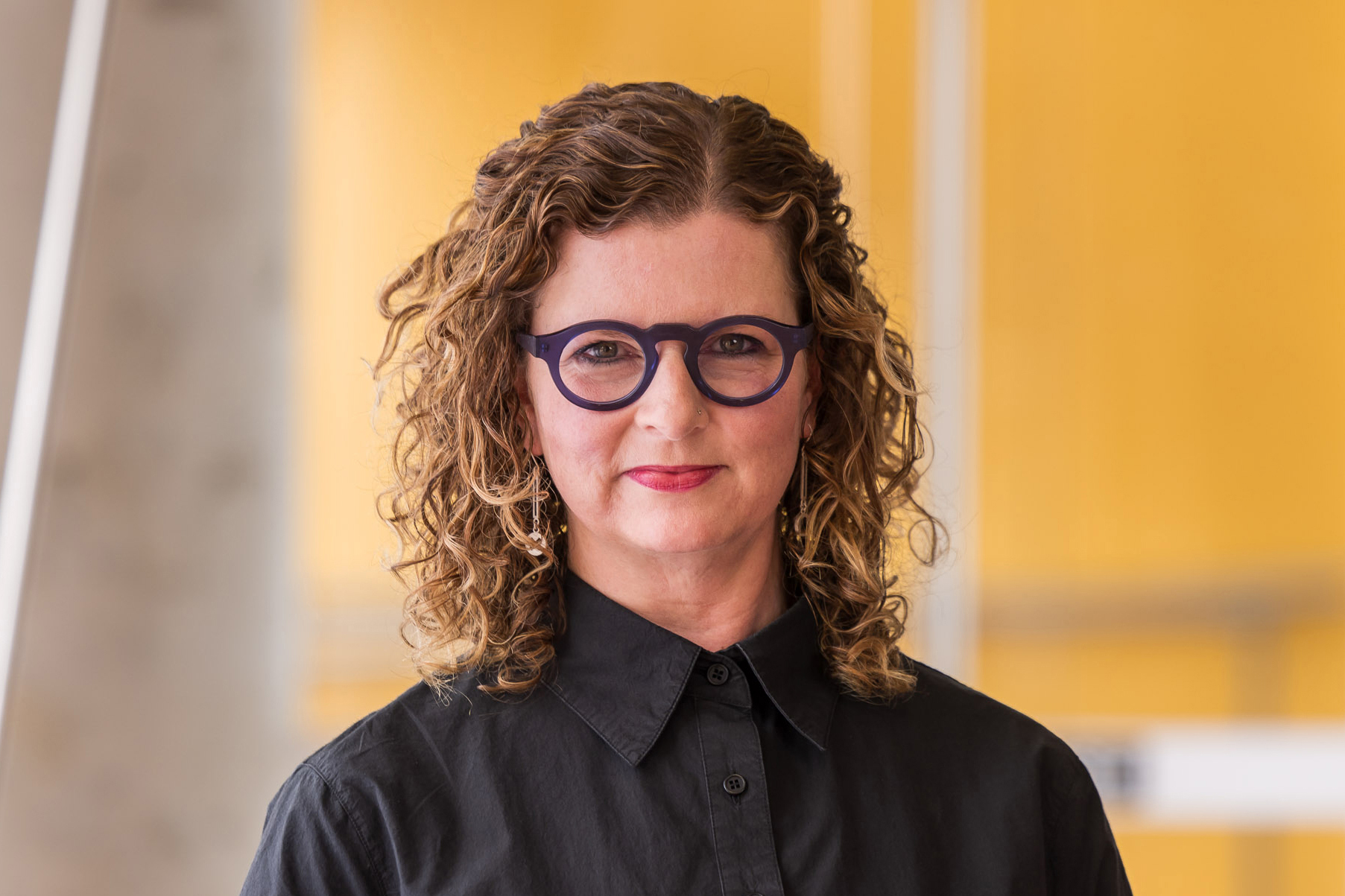
Associate Professor Ainslie Murray is an interdisciplinary artist and academic at UNSW Sydney within the Faculty of Arts, Design & Architecture . Trained in Architecture at the University of Adelaide (1993-1998) and holding a PhD in Visual Arts from the University of Sydney (2011), her work bridges architecture, visual arts, and environmental practice through walking, site-specific installations, and explorations of immaterial spatial forces. Research Interests : Ainslie investigates essentiality and minimalism in architectural space, focusing on ephemeral, immaterial, and participatory forms. Her practice includes immersive installations, films, textiles, and performative works, often emphasizing ecological themes like air quality, dust, and climate adaptation. Recent projects, such as the Registry of Itinerant Architectures and A.W.E. Collective collaborations, expand architecture's disciplinary boundaries via landscape and mobile practices. Scientific Awards : Notable accolades include the 2022 National Research Award (AILA), 2022 Red Dot Design Award , and 2007 Beth Winspear Scholarship . She has been shortlisted for international events like the Venice Architecture Biennale (2017) and received grants for projects such as Breathing Buildings (2017). Teaching & Supervision : At UNSW, she leads architectural design studios informed by walking practice and supervises PhD candidates in areas like Environmental Art , Nomadic Architecture , and Landscape Anthropocene . Her supervision emphasizes practice-based research across art, architecture, and spatial practices.
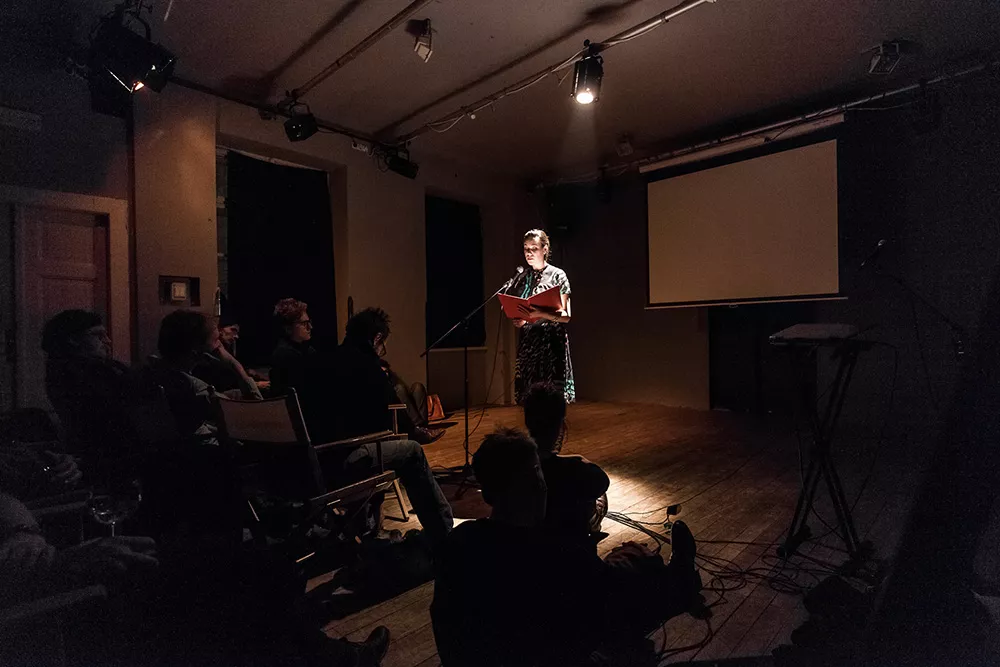
Jana Kapelová is an Associate Professor and Studio Manager at the Department of Intermedia, Academy of Fine Arts and Design in Bratislava. Her practice bridges intermedia art, institutional critique, and civic activism. Academy of Fine Arts and Design, Bratislava (2009-2013, ArtD.) Faculty of Fine Arts, Banská Bystrica (2004-2006, MFA) University of Trnava (2000-2004, MA in Slovak Language & Art Education) Her research interrogates: Social resistance strategies through performance and participatory projects Temporal dynamics of labor and leisure in bureaucratic systems Institutional critique of Slovak cultural policy Oral history and polyphonic narratives in art practice Urban space alienation and reclamation Intergenerational identity transmission through art Major works include the Kunsthalle documentary project (2011-2012), which compiled 18 expert testimonies about Slovakia's failed contemporary art institution campaign, and Free Working Time (2011), analyzing creative acts during labor hours through Michel de Certeau's 'tactics' theory. She employs video installations, mail art, and public interventions as primary mediums. Scientific recognition includes: 2014 Oskár Čepan Award for emerging Slovak artists 2014 Tatra Tiger Award for innovative art projects 2013 Essl Art Award CEE Finalist 2005 Egoart Award Finalist She has completed international residencies at ICPA New York (2015) and Oberliht Moldova (2013), while co-founding Artyčok TV (2009-2015) – Slovakia's first art-focused online television platform.
Dr. Melita Morales is an Assistant Professor in the Department of Art Education at the School of the Art Institute of Chicago (SAIC), where she bridges artistic practice, learning science, and curriculum design. Her interdisciplinary scholarship investigates knowledge emergence through embodied and material art experiences across educational contexts. Her educational background includes: Undergraduate studies in science and art at Santa Clara University Graduate specialization in art education at Rhode Island School of Design PhD in Curriculum and Instruction from Boston College Research focuses on transdisciplinary learning design, ethnographic analysis of art experiences, and expansive disciplinary possibilities that honor multiple relational and axiological orientations. She employs arts-based research methods to explore how material interactions shape knowledge construction in educational settings. Dr. Morales teaches core courses including Art Education curriculum design for children/youth, human development theory, and graduate thesis supervision. Her pedagogy integrates culturally responsive practices, visual-verbal literacies, and iterative curriculum development emphasizing student-centered assessment without standardizing artistic outcomes. Her scholarly contributions appear in leading journals such as Curriculum Inquiry , Linguistics and Education , Mind, Culture, and Activity , and the Journal of Interdisciplinary Studies in Education , reflecting significant impact in art education research. As a former practicing art educator, she brings practical experience to her academic work, guiding graduate students through thesis development while emphasizing critical analysis of visual culture and socially just pedagogical frameworks.
Laura Maria Beloff is an Associate Professor and Vice Dean at Aalto University's School of Art, Design and Architecture , where she leads the Department of Art and Media . Her work bridges art, science, and technology , focusing on wearable systems, bioart, and speculative design. Ph.D. in Art and Technology from the University of Plymouth Master of Arts from Helsinki University of Arts and Design Her research explores human-technology-environment interactions , including biosemiotics , artificial life , and critical design . She investigates planetary and microscopic scales, addressing how these domains reshape societal values. Recent projects like R-Bus (2023), Gâteau Vivant & Friends (2024), and Monsterscope (2025) highlight her interdisciplinary approach , merging AI , robotics , and living systems . Her 2025 articles emphasize gifting practices and structural color in biological-artistic contexts. Beloff actively mentors students in experimental art and collaborative research , leading projects such as ABRA (Artificial Biology, Robotics, and Art). She co-founded the RAT (Radical Art and Transformation) research group and contributes to UN Sustainable Development Goals through eco-art and education.
Juuso Tervo is an Assistant Professor of Arts-Based Research and Pedagogy at the Department of Art and Media , Aalto University. He serves as the Head of the Nordic Master in Visual Studies and Art Education MA program , focusing on integrating international collaboration into art education frameworks across Nordic and Baltic institutions. His research synthesizes critical theory , literary theory , political philosophy , and philosophy of history to interrogate art education’s sociopolitical dimensions. Recent articles explore hybrid learning models, radical publishing in design education, and the spatial/temporal dynamics of artistic pedagogy. Notable scientific awards include: the Manuel Barkan Memorial Award (2018), Aalto University Excellence Award in Teaching (2017), and the Elliot Eisner Dissertation Research Award (2015). He coordinates the EDDA Norden network ’s Nordplus-funded projects (2024–2026) to internationalize teacher training programs.
Arja Karhumaa is an Associate Professor in Visual Communication Design at Aalto University's Department of Art and Media. She co-founded the experimental publishing collective Multipöly, focusing on innovative intersections of typography, design, and experimental writing. Research Interests: Her work explores typography, language, publication as art/design practice, and redefining communication design through new materiality. Her doctoral research, Epä/igenesis (2021), and the bookwork Epägenesis: Katalogi X (2020) examine material and conceptual writing. Recent Publications: Karhumaa's recent projects include Aquatic Encounters: A Glossary of Hydrofeminism (2024) and collaborative works on fungal biology choreography, embodied design, and hybrid book objects. Her research emphasizes sustainable academic practice beyond commercial interests. Scientific Awards: Hopeahuippu award for Mycoscores / Choreospores Honorary mention in Fiction Category; The Most Beautiful Books in Finland 2023 Honorary mention in Fiction/Non-Fiction Category; The Most Beautiful Books in Finland 2022 Artist residency at Frans Masereel Centre (2021) Grants and Collaborations: She received Kone Foundation funding for the Eurantie Window Publication (2025–2028) and personal grants from the Arts Promotion Centre Finland (2023). Her work intersects typography, experimental publishing, and interdisciplinary art-science collaborations. Labs and Teams: As a co-founder of Multipöly, she drives experimental publishing projects that blend design, art, and academic research, including the street-level Eurantie Window Publication (2022–present).
Michiel Doorman is an Associate Professor of Mathematics Education and Academic Director at the Freudenthal Institute, Faculty of Science, Utrecht University. His research bridges mathematics education, STEM integration, and innovative pedagogical approaches, with a focus on context-based learning, mathematical modeling, and embodied design. Research interests center on: Context-based mathematics education using real-world applications to enhance conceptual understanding. Inquiry-based learning across mathematics and science disciplines. Embodied cognition in mathematical reasoning, leveraging tools like augmented reality. STEM education reform , particularly in teacher training and curriculum design. Recent publications emphasize technology-enhanced learning (e.g., augmented reality, Braille interfaces), cross-cultural studies in mathematics education, and responses to educational disruptions like COVID-19. A strong trend involves interdisciplinary work connecting mathematics with physics, sustainability, and special education. As Academic Director of the Freudenthal Institute, he leads initiatives in mathematics education research and teacher professional development. He supervises graduate students and contributes to European STEM education projects.
André Tiago Abelho Pereira is a Researcher at KTH Royal Institute of Technology working in the Department of Speech, Music and Hearing (TMH). His work focuses on designing, implementing and evaluating socially intelligent systems, particularly robots that interact naturally with humans in domains such as education, healthcare, and entertainment. His research interests center around creating autonomous embodied agents capable of sustained social interaction with human users in real-time. These systems are designed to establish social relationships, simulate empathy and emotions, and generate natural gaze patterns and dialogue. His work bridges computer science, artificial intelligence, and human-centered design. Dr. Pereira teaches in the Artificial Intelligence (DD2380) course as examiner, course manager, and teacher, and assists with the Multimodal Interactions and Interfaces (DT2140) course, demonstrating his commitment to both research and education in his field.