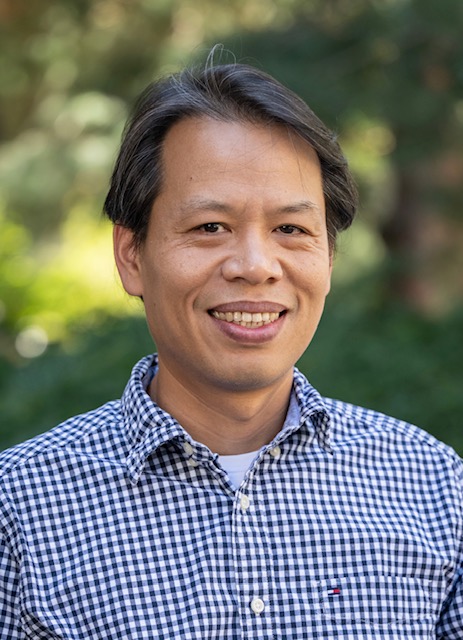
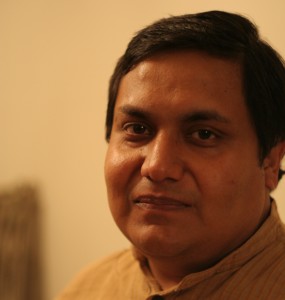
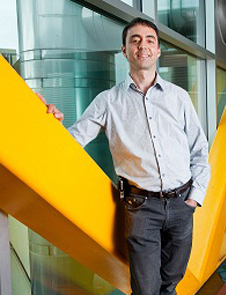
Magnus Westerlund is a Senior Lecturer in Information Technology and Director of the Laboratory for Trustworthy AI at Arcada University of Applied Sciences in Helsinki, Finland. His industry background spans telecom and information management, and he holds a doctoral degree in Information Systems from Åbo Akademi University. He actively contributes to the Z-Inspection® network, focusing on ethical AI implementation and governance. Westerlund’s research emphasizes trustworthy AI, cybersecurity, and distributed systems. Key areas include AI regulatory compliance (e.g., EU AI Act), healthcare AI applications, blockchain security, and IoT edge solutions. His work bridges academia and industry, such as the Valohai-CSC collaboration for machine learning infrastructure in Finnish academia. His publications highlight practical AI assessment methods, ethical AI integration, and decentralized technologies. Notable contributions include frameworks for sustainable AI development, privacy-preserving autonomous systems, and smart contract-based IoT security protocols. Westerlund also explores educational innovations, such as integrating large language models (LLMs) into coding education. His research consistently addresses real-world challenges like pandemic-era healthcare AI, edge computing for IoT, and cybersecurity in autonomous systems.
Mirella Lapata is a Professor of Computer Science at the University of Edinburgh , affiliated with the School of Informatics and the EdinburghNLP group. Her research focuses on developing AI systems that reason, generalize, and handle long contexts, with specific interests in compositional generalization, cross-lingual transfer, and verifiable generation. She leads projects funded by UKRI and ERC , including the UKRI AI Centre for Doctoral Training in Responsible NLP and Turing AI Fellowship for human-like reasoning in models. Research Emphasis : Coarse-to-fine decoding in semantic parsing, parameter-efficient LLMs, collaborative writing frameworks, and multimodal summarization. Advising : Supervises current PhD students and has mentored 23 PhD graduates since 2007, including notable alumni like Li Dong and Siva Reddy. Labs & Teams : Co-leads the Generative AI Laboratory (GAIL) and contributes to the Edinburgh Laboratory for Integrated Artificial Intelligence (ELIAI). Her recent work addresses hallucinations in generative models, cross-lingual semantic parsing, and structured reasoning in text-to-SQL tasks. She has co-authored 15+ publications in 2024 alone, spanning journals like TACL , NeurIPS , and ACL .
Luciano Lavagno is a Full Professor at the Department of Electronics and Telecommunications, Polytechnic University of Turin, with over two decades of academic and research contributions. His work bridges hardware acceleration, low-power electronics, and intelligent system design. Research Focus: Hardware-accelerated machine learning, high-level synthesis (HLS) for FPGA/ASIC, heterogeneous CPU/GPU/FPGA platforms Key Projects: SPACE (predictable acceleration), REBECCA (secure AI acceleration), HPC-National Center (quantum computing), and oral history preservation via "Ti racconto una storia" initiative His recent publications analyze CNN inference optimization, subgraph isomorphism, and superword-level parallelism exploitation. Lavagno supervises multiple PhD students working on FPGA acceleration, neural network hardware, and embedded systems. As Principal Investigator for national and EU-funded projects (PRIN, JTI-ECSEL, PNRR), he drives advancements in sustainable computing infrastructure. His patented technologies include MIx&Latch timing methodology, capacitive sensing innovations, and 5G acceleration frameworks.
Prof. Jörg Henkel serves as Professor and Head of the Chair for Embedded Systems (CES) at Karlsruhe Institute of Technology (KIT), Germany. Previously a Senior Research Staff Member at NEC Laboratories Princeton, he holds a PhD from Braunschweig University (Summa cum Laude) and directs major research initiatives including the DFG's SPP 1500 program on 'Dependable Embedded Systems'. Research Focus: His work centers on embedded systems dependability , low-power design , and adaptive computing architectures . Through the SPP 1500 program and TR89 Collaborative Research Center, he pioneers fault-tolerance techniques and runtime adaptation for safety-critical applications, addressing energy efficiency challenges in hardware/software co-design. Scientific Recognition: IEEE Fellow (for contributions to low-power dependable embedded systems) Multiple Best Paper Awards (DATE 2008, ICCAD 2009, Codes+ISSS 2011/2014/2015) DAC 2014 Designer Track Best Poster Award DATE 2013 Best IP Award Leadership & Service: As Editor-in-Chief of IEEE Design&Test Magazine and former ACM TECS EiC, he shapes scholarly discourse. He has chaired premier conferences (ICCAD 2012/2013, ESWeek 2016) and delivered 10+ keynotes on embedded systems reliability. His DFG-coordinated projects secure substantial funding for national collaborative research. Technical Infrastructure: Leads the Chair for Embedded Systems (CES) within KIT's Institute of Technical Informatics, driving innovation in hardware/software co-design and invasive computing through the TR89 consortium.
Prof. Dr. Andreas Koch leads research on reconfigurable computing at TU Darmstadt, focusing on FPGA-based acceleration, heterogeneous architectures, and hardware/software co-design for database systems and embedded applications.
Dr. Andy Nguyen is a Senior Lecturer in the School of Engineering at the University of Southern Queensland. He holds a PhD from Queensland University of Technology (QUT), an MEng from the National University of Civil Engineering (NUCE), and a BEng from NUCE. His research focuses on structural health monitoring, integrating machine learning and deep learning techniques to assess infrastructure integrity. Key areas include damage detection in bridges, pavements, and buildings, as well as sustainable construction materials like bamboo. Nguyen leads projects such as the 'Next Generation Living Laboratory for Engineering Education and Engagement,' emphasizing real-world applications of technology in civil infrastructure. His work spans crack detection algorithms, finite element model updating, and vibration-based structural analysis. He collaborates on AI-driven solutions for autonomous vehicle object detection and smart maintenance planning. Nguyen’s contributions include over 50 peer-reviewed publications and active supervision of postgraduate research in composite materials and transport infrastructure. His research outputs highlight advancements in computational mechanics, sensor technologies, and data-driven methods for infrastructure resilience. Nguyen’s expertise bridges civil engineering challenges with cutting-edge machine learning, advancing both theoretical and applied solutions for sustainable and safe structures.
Elisa Riedo is a tenured Professor of Chemical and Biomolecular Engineering at New York University (NYU) Tandon School of Engineering, with joint appointments as Professor of Physics in NYU’s College of Arts and Science and as affiliated Professor of Mechanical Engineering at Tandon. She serves as Director of Faculty Development at NYU Tandon and has held prior tenured positions at Georgia Tech (2003–2015) and CUNY ASRC (2015–2018). Her academic career spans over two decades, with a Ph.D. in Physics from the University of Milano (2000) and postdoctoral work at EPFL. Her research focuses on nanotechnology , graphene and 2D materials , and thermal scanning probe lithography (tSPL) , with applications in biomedical diagnostics quantum electronics electromagnetic interference shielding mechanical reinforcement of materials She pioneered tSPL for sustainable nanofabrication and discovered diamene—a single-layer diamond structure from graphene under pressure. Her recent work involves transparent infrared electrodes using silver nanowires (2025) and self-organized graphene stacking domains for quantum technologies (2024). She has secured major grants from National Science Foundation , Department of Defense , and Army Research Office . Scientific honors include: 2023 NYU Tandon Excellence in Research Award 2013 American Physical Society Fellow 2005 CREA Innovation Award Membership in the Academy of Europe (2023) She contributes to editorial boards for journals like 2D Materials and Applications and advises companies such as Mirimus Inc. and SwissLitho AG .
Long Nguyen is a Professor of Statistics at the University of Michigan, Ann Arbor, with a courtesy appointment in Electrical Engineering and Computer Science. He is affiliated with the Michigan Institute for Data Science (MIDAS) and the Vietnam Institute for Advanced Study in Mathematics (VIASM). His research focuses on Bayesian nonparametrics, optimal transport, machine learning, and spatiotemporal data analysis. Nguyen holds a PhD in Computer Science from UC Berkeley and has held postdoctoral positions at Duke University and the Statistical and Applied Mathematical Institute. Education: B.Sc. in Computer Science from Pohang University of Science and Technology; M.Sc. in Mathematics from Arizona State University; Ph.D. in Computer Science from UC Berkeley (2007). Research Interests: Bayesian nonparametric methods, optimal transport theory, statistical inference for complex models, and applications in spatiotemporal data, functional data analysis, and hierarchical modeling. He emphasizes developing scalable algorithms and geometric approaches for statistical learning. Editorial Roles : Annals of Statistics Journal of Machine Learning Research SIAM Journal on Mathematics of Data Science Bayesian Analysis Awards : IMS Fellow, ASA Fellow NSF CAREER Award IEEE Signal Processing Young Author Award L. J. Savage Dissertation Award (via student Aritra Guha) Advising & Collaborations : Guided over 20 PhD students and postdocs, many now in academia and industry. Collaborates on projects in AI ethics, music theory, and environmental data science. Active in organizing summer schools in Vietnam on Bayesian statistics and machine learning. Labs & Teams : Co-leads the Statistical Machine Learning reading group at U-M and collaborates with the VIASM on advanced mathematical research in Hanoi.
Trevor E. Carlson is an Assistant Professor at the School of Computing, National University of Singapore (NUS), focusing on high-efficiency microarchitectures, hardware/software co-design, and secure chip design for IoT and server applications. He earned his Ph.D. in Computer Science from Ghent University (2014) and B.Sc./M.Sc. in Electrical & Computer Engineering from Carnegie Mellon University (2002/2003). Research Interests include energy-efficient processors, secure computing platforms, neuromorphic accelerators, and fast simulation methodologies. He co-developed the Sniper Multi-Core Simulator used globally for performance/power evaluation. Scientific Awards : Best Paper Award, International Conference on Embedded Computer Systems (2016) Best Paper Award, International Symposium on Performance Analysis of Systems and Software (2013) Heidelberg Laureate Forum participation (2015) HiPEAC Technology Transfer Award for Sniper Simulator (2013) Current Research involves secure Systems-on-Chip (SOCure project), hardware security for IoT, and simulation methodologies. He leads a lab with researchers working on topics like Capstone for trustless secure memory access and LABS for laser fault injection benchmarks.
Mohamed Hefeeda is a Professor in the School of Computing Science at Simon Fraser University (SFU), Canada. He leads the Network and Multimedia Systems Lab (NMSL) and previously served as Director of the School from 2018 to 2023. His research focuses on multimedia networking, mobile computing, cloud systems, and hyperspectral imaging. He holds an ACM Distinguished Member designation and has received prestigious awards including the NSERC Discovery Accelerator Supplements (2011) and multiple best paper awards at top conferences like ACM MM and IEEE Infocom. Education: Ph.D., Purdue University, 2004 M.Sc., University of Connecticut, 2001 B.Sc., Mansoura University, Egypt, 1994 Research Interests: Design of efficient multimedia systems and protocols for wired/wireless networks Cloud gaming optimization and video encoding techniques Hyperspectral imaging for healthcare and mobile applications AI-driven multimedia systems and mobile computing innovations Grants & Industry Collaborations: Funded by NSERC, CFI, and companies like AMD, Huawei, and CBC Co-founded Video Semantics (acquired by tech firm) Partnered with CBC on peer-assisted content distribution systems Awards Highlights: 2025: ACM Distinguished Member 2019: Best Student Paper Award at ACM MMSys 2015: NSERC Discovery Accelerator Supplements Labs & Leadership: Network and Multimedia Systems Lab (NMSL) at SFU Contributed to creation of Qatar Computing Research Institute (QCRI)
Charles Rizzo is a Research Assistant Professor in the TENNLab neuromorphic computing group at the University of Tennessee, Knoxville, within the Department of Electrical Engineering and Computer Science. He earned his PhD in Computer Science (2024), MS (2021), and BS (2019) from the same institution. PhD in Computer Science, University of Tennessee, Knoxville (2024) MS in Computer Science, University of Tennessee, Knoxville (2021) BS in Computer Science, University of Tennessee, Knoxville (2019) His research focuses on neuromorphic computing, particularly for embedded applications involving event-based vision processing and machine learning with spiking neural networks. He has contributed to neuromorphic control systems, event camera data processing, and spiking network architectures. Recent publications emphasize neuromorphic hardware design (e.g., memristor-based synapses, RISP neuroprocessor), algorithm adaptation (DBSCAN clustering), and real-time applications in vision processing and control. Key subfields include event-based sensors, recurrent spiking networks, and low-power embedded systems. Charles is affiliated with the TENNLab neuromorphic computing group and supports course website development for EECS programs. His work bridges neuromorphic theory with practical implementations in embedded environments.
Dr. David Wright is a Professor in the Department of English and Technical Communication at Missouri University of Science and Technology (Missouri S&T). He joined the faculty in 2007 after prior roles at NASA’s Education Project, Oklahoma state government, and the software industry. He holds a Ph.D. in Technical Communication (Oklahoma State University, 2007), an M.S. in Higher Education Administration (1996), and a B.S. in Organizational Psychology (1993), all from Oklahoma State University. His research focuses on smart home technology and artificial intelligence, particularly examining human-AI interaction through usability and user experience (UX) testing. He also explores technology diffusion, technical communication practices in emerging technologies, and educational methodologies for technical fields. His work integrates interdisciplinary approaches, blending engineering, sociology, and computer science. Recent publications highlight his contributions to IoT usability, smart home adoption challenges, and the intersection of AI ethics with virtual assistants. He has also authored studies on knowledge graph design, technical documentation in software development, and educational initiatives in computer science and healthcare. Dr. Wright teaches courses in technical writing, usability studies, and web-based communication. His academic service includes curriculum development and advising on technical communication pedagogy. While no specific awards are listed, his extensive publication record reflects sustained scholarly impact in his fields.
Anupam Joshi is the Acting Dean of the College of Information Technology and Engineering and Oros Family Professor of Computer Science and Electrical Engineering at the University of Maryland, Baltimore County (UMBC). He also directs UMBC’s Center for Cybersecurity and leads the National Cybersecurity FFRDC for the University System of Maryland. His research focuses on networked computing, AI-driven cybersecurity, privacy-preserving technologies, and policy-driven security frameworks. He holds a Ph.D. in Computer Science from Purdue University (1993), an M.S. (1991), and a B.Tech in Electrical Engineering from the Indian Institute of Technology, Delhi (1989). Dr. Joshi’s work spans over 400 publications with 32,650+ citations (h-index 92) and nine patents. His grants include funding from NSF, DARPA, NASA, NIST, and industry partners like IBM and Northrop Grumman. Key contributions include developing CAPD frameworks for IoT security, FABULA for automated threat intelligence, and KiNETGAN for intrusion detection through synthetic data. He is an IEEE Fellow and pioneer in applying AI to secure critical infrastructure, smart grids, and healthcare systems. His research trends emphasize AI-empowered cybersecurity, privacy compliance in data sharing (e.g., agriculture, healthcare), and mitigating attacks on smart systems. Notable projects include combating fake cybersecurity reports using provenance analysis, securing EV charging infrastructure, and enhancing smart farming resilience through policy-driven access control. Awards: IEEE Fellow Grants: Over $30M from NSF, DoD, NASA, and industry collaborations Labs/Teams: Director of UMBC Center for Cybersecurity, Cybersecurity Knowledge Graph initiatives Future work includes advancing neurosymbolic AI for cybersecurity, semantic data extraction from scientific literature, and AI ethics in healthcare applications.
Aaron Trammell is an Associate Professor of Informatics at the University of California, Irvine (UCI), with affiliations in African American Studies and Media Studies. His research examines the cultural, social, and ideological underpinnings of games, particularly focusing on how military strategies, gender norms, and racial biases are embedded in game design. He emphasizes the need to diversify game creation and player experiences to foster inclusivity and challenge systemic inequities. Trammell has authored two significant books: Repairing Play (MIT Press, 2023) and The Privilege of Play (NYU Press, 2023). He also serves as Editor-in-Chief of Analog Game Studies and Multimedia Editor of Sounding Out! . His work has been published in journals such as New Media and Society , Games and Culture , and International Journal of Role-Playing . His research highlights how games perpetuate white privilege and hegemonic masculinity, advocating for design practices that engage marginalized communities. Trammell’s interdisciplinary approach bridges game studies with critical theory, contributing to both academic discourse and practical applications in educational and professional training contexts.
Robert Laganière is a Professor at the School of Electrical Engineering and Computer Science at the University of Ottawa, where he has been actively contributing to the fields of computer vision and image analysis. He is a member of the VIVA research laboratory and holds a Ph.D. and M.Sc. from INRS-Telecommunications in Montreal, as well as a bachelor's degree in Electrical Engineering from École Polytechnique de Montréal. Bachelor's in Electrical Engineering: École Polytechnique de Montréal (1987) Master's Degree: INRS-Telecommunications (1990) Doctorate: INRS-Telecommunications (1996) Professor Laganière's research focuses on computer vision, with particular expertise in image and video analysis, visual surveillance, embedded vision systems, and deep learning applications. His work spans fundamental research in feature detection and matching to practical applications in autonomous driving, human recognition, and real-time object tracking. He has made significant contributions to the development of algorithms for pedestrian detection, age and gender recognition, and 3D object localization. His publication trends reveal a consistent focus on practical computer vision applications with a strong emphasis on real-time performance and embedded implementation. Over the past decade, his research has evolved from foundational work in feature matching and homography estimation toward more complex applications in action recognition, human-computer interaction, and intelligent surveillance systems. His work consistently bridges theoretical computer vision with practical engineering constraints, particularly for mobile and embedded platforms. Best Paper Award, IEEE International Conference on Computer and Robot Vision (CRV 2014) Best Paper Award, CVPR Embedded Vision Workshop, Providence, RI, June 2012 Best Real-time Tracker, IEEE International Conference on Computer Vision (ICCV) Workshop on Visual Object Tracking (VOT2015) Professor Laganière has supervised numerous graduate students through the years, with a particular focus on practical applications of computer vision in surveillance, human recognition, and embedded systems. His research has been supported through industry partnerships with companies including CogniVue Corp, NXP, iWatchLife.com, Solink Corp, CBSA Canada, Ross Video, Thales, Habitat Seven, and YouI Labs. He has successfully translated his research into commercial applications through his founding of Visual Cortek (acquired by iWatchLife in 2009) and Tempo Analytics (founded in 2016). As a member of the VIVA research laboratory, Professor Laganière collaborates with colleagues on advanced computer vision projects, particularly those involving intelligent video analytics for security and commerce applications. His work on NAVIRE (Virtual Navigation in Remote Environments) demonstrates his commitment to developing practical solutions for real-world navigation challenges using image-based representations of real environments.