Walter Didimo is a Full Professor of Computer Engineering at the University of Perugia, with a career spanning over two decades. His expertise lies in Graph Drawing, Network Visualization, and Algorithm Engineering, contributing to advancements in Computational Geometry and Big Data. Researcher in Graph Algorithms (1996-2000) Assistant Professor (2001-2004), Associate Professor (2005-2024), Full Professor (2024-) Director of Research Unit CINI (2019-2022) His research focuses on hybrid graph visualization models (e.g., ChordLink), distributed graph processing (e.g., GiViP), and practical applications in cultural heritage (e.g., CHIP) and web analytics (e.g., COWA). Recent work includes scalable algorithms for heterogeneous networked data and visual analytics for genomics (GGB Consortium). Scientific Awards: Best Paper Award - Track 2, Graph Drawing 2021 He has been instrumental in technology transfer, co-founding Vis4 Srl (2009) and contributing to the GGB Consortium. His editorial roles include Associate Editor of IEEE Access and guest editorships for CGTA and JGAA.
Santa Di Cataldo is an Associate Professor at the Department of Control and Computer Engineering (DAUIN) of Politecnico di Torino. His research focuses on computer vision, pattern recognition, digital image processing, and medical image processing, with applications in industrial systems and AI for manufacturing. Scientific Branch: IINF-05/A - Information Processing Systems ERC Sectors: PE6_8 - Computer graphics, computer vision, multi media, computer games ERC Sectors: PE6_11 - Machine learning, statistical data processing His work includes developing AI-driven anomaly detection frameworks, physics-informed neural networks for additive manufacturing optimization, and neuro-symbolic approaches for Industry 4.0 applications. He supervises PhD students in Artificial Intelligence and Computer Engineering programs, collaborating on projects like BIG (Blue Is Green) and PNRR-Complementary Plan. Premio Donna Innovazione (2010) He leads courses such as Machine Learning in Applications and Applied AI and Machine Learning , while contributing to bioinformatics and robotics-related teaching. His research is supported by IAM@PoliTo and EDA groups, utilizing LADISPE laboratory facilities.
Claudio Passerone is a Tenured Associate Professor at the Department of Electronics and Telecommunications (DET) of Politecnico di Torino. He is affiliated with the College of Electronic, Telecommunications and Physics Engineering and serves as an Invited Member in the College of Computer, Film, and Mechatronics Engineering. His teaching focuses on electronics for embedded systems across multiple academic cycles. Research interests: Embedded Systems, Hardware-Software Co-design, Machine Learning, Cubesat, and Low-Cost Space Technologies Skills: Computer Architecture, Distributed Systems, Signal Processing, and Machine Learning Applications He supervises Pierpaolo Mori', whose PhD research explores DNN optimization techniques. Passerone contributes to the Nanosatellites research group and leads initiatives in the Zero Robotics competition.
Alessandro Savino is an Associate Professor at the Department of Control and Computer Engineering (DAUIN) of Politecnico di TORINO. He serves as an academic advisor for Bachelor’s and Master’s degree programs in Computer Engineering (Ingegneria Informatica) and contributes to PhD programs in Artificial Intelligence and Computer Engineering. Research Interests: Approximate computing, Cybersecurity (including automotive systems), Dependability, Parallel computing, Reliability analysis, and Neuromorphic architectures. Key Projects: Leads RESCHIP4EU (2024-2028), NEUROPULS (2023-2027), and commercial contracts focused on real-time OS validation and avionics design. Publications: Recent work spans hardware security (e.g., VeriSide for leakage assessment), spiking neural networks (SpikeExplorer, SpikingJET), and automotive cybersecurity (CARACAS, CAN-MM). Teaching: Instructs courses on Parallel and Distributed Computing, Hardware & Wireless Security, and System Programming across Politecnico di TORINO and Scuola IMT Alti Studi - LUCCA. Research Group: Leads the SMILIES group, focusing on resilient computer architectures and life sciences.
Mario Baldi is an Associate Professor (on leave) of Information Processing Systems at the Department of Control and Computer Engineering , Politecnico di Torino , and concurrently a Fellow in the Office of the CTO, Adaptive and Embedded Computing Group, at AMD, San Jose, CA. His career blends deep academic research with extensive industry R&D leadership. Education M.Sc. (Summa Cum Laude) in Electrical Engineering, Politecnico di Torino, 1993 Ph.D. in Computer and System Engineering, Politecnico di Torino, 1998 Research Focus Baldi’s research spans programmable data planes, software-defined networking, big-data analytics for network management, network security, high-performance switching architectures, optical networking, QoS mechanisms, and multimedia/voice-over-IP systems . He is especially known for pioneering work on P4 -based programmable networks and SmartNIC architectures. Publication & Patent Impact Across 150+ refereed papers and 35+ US patents (plus European filings), his recent output concentrates on machine-learning-driven network data-plane functions , disaggregated stateful network services , and cloud-grade DPUs . The 2021–2024 articles emphasize real-time inference directly in the network data plane and modular SDN programming. Awards & Honors Best Paper Award, IEEE ICC 2007 Best Paper Award, IEEE ISCC 2008 Best Paper Award, IEEE GreenComm 2009 Best Paper Award, ACM/IEEE WI/IAT 2014 Grants & Projects Baldi has served as Principal Investigator or Scientific Coordinator on numerous EU Framework and Italian national projects (PRIN, FAR), leading consortia on energy-efficient packet networks, trusted software execution, wireless mesh architectures, and streaming media delivery. Teaching & Mentoring He has taught graduate courses on Enterprise Network Technologies, Computer Network Technologies and Services, Networks/Cloud/Application Security at Politecnico di Torino since 2003. He has also supervised PhD collegi for the Computer and Systems Engineering doctoral program (cycles 19–23) and held visiting/adjunct positions across four continents. Labs & Teams Previously headed the NetGroup (Computer Networks Group) at Politecnico di Torino (2001–2007) and co-chairs the p4.org Architecture Workgroup , driving open standards for programmable networking.
Luca Barbierato is a Fixed-term Assistant Professor at the Department of Control and Computer Engineering (DAUIN), Politecnico di Torino, specializing in applied artificial intelligence, cybersecurity, and co-simulation infrastructures for integrated energy systems. He actively contributes to research in edge computing, IoT, and sustainable energy technologies. Research Focus: AI applications in energy systems, secure IoT infrastructures, and co-simulation frameworks Teaching Roles: Invited PhD teaching component (2025/26), teaching assistant across multiple programs His recent publications address critical areas including OpenTitan-based security controllers, urban building energy modeling, and distributed power system co-simulation. Barbierato's work aligns with SDG Goals 7 (Affordable Energy), 9 (Innovation Infrastructure), and 11 (Sustainable Cities). Notable scientific recognition includes the Learning to Teach (L2T) badge from Politecnico di Torino.
Professor Benedetta Mennucci is a Full Professor of Physical Chemistry at the Department of Chemistry and Industrial Chemistry, University of Pisa, where she has built her entire academic career. She currently serves as the Vice-Rector for Research Promotion at the University of Pisa, having previously held significant institutional roles including Coordinator of the Doctoral School in Chemical and Materials Sciences (2012-2015) and President of the Graduate Program in Chemistry (2016-2019). Her educational background includes: Chemistry degree from University of Pisa (1994) Research experience at University of Colorado and University of Pittsburgh Doctorate in Chemistry from University of Pisa (1999) Professor Mennucci's research focuses on the development of multiscale computational approaches that combine quantum chemical descriptions with classical models to study molecular processes in complex systems. Her work has significantly advanced our understanding of light harvesting processes in photosynthetic organisms and the activation mechanisms of photoreceptor proteins. She employs sophisticated quantum mechanical/molecular mechanical (QM/MM) methods to investigate photoinduced phenomena at the molecular level, with particular emphasis on energy transfer, electron transfer, and protein-chromophore interactions. Analysis of her recent publications reveals a consistent focus on light-driven biological processes, particularly in photosynthetic systems and photoreceptor proteins. Her work integrates advanced computational methodologies with experimental insights to unravel complex photochemical mechanisms. Key themes include quantum effects in biological energy transfer, protein-environment interactions in photofunctional systems, and the development of novel computational approaches for modeling excited states in complex environments. Her scientific achievements have been recognized with prestigious awards: ERC Starting Grant (2011) for project "EnLight" ERC Advanced Grant (2018) for project "LLIFETimeS" Membership in the International Academy of Quantum Molecular Science (IAQMS) since 2014 Membership on the Board of the World Association of Theoretical and Computational Chemists (WATOC) since 2015 Professor Mennucci has coordinated numerous national and international research projects and serves as Senior Editor of "The Journal of Physical Chemistry Letters." Her extensive publication record of over 350 peer-reviewed articles, with more than 44,000 citations and an H-index of 71 (as of 2022), demonstrates her significant impact in the field. She has mentored numerous students and researchers through her involvement in doctoral programs and research projects. She leads a research group focused on computational photochemistry and photobiology, developing and applying advanced multiscale modeling approaches to understand light-driven processes in biological systems. Her team collaborates extensively with experimental groups worldwide, creating a synergistic approach to studying complex photobiological phenomena.
Professor Luca Fanucci is a Full Professor of Electronics at the Department of Information Engineering , University of Pisa. He serves as Rector's Delegate for Inclusion of Students with Disabilities and leads research in integrated circuits, embedded systems, and assistive technologies . Institutional roles include membership in the National University Conference of Delegates for Disability (CNUDD) and leadership in the PhD program in Information Engineering. Born: Montecatini Terme (1965) Education: Laurea in Electronic Engineering (1992), PhD in Information Engineering (1996), University of Pisa Professional Journey: ESA research (1992-1996), CNR researcher (1996-2004), University of Pisa faculty (2004-present) His research focuses on: System-level design of integrated circuits and embedded systems Hardware-software co-design for low power consumption Spacecraft and satellite communication systems Medical devices and telemonitoring platforms Assistive technologies for disabilities Recent publications highlight AI in space applications and telemedicine systems . Key projects include the Ingeniars spin-off for satellite communications and the AsTech National Laboratory for assistive technologies. Scientific Recognition : IEEE Fellow (2019) 40+ patents H-index 34 (5000+ citations) He coordinates international conferences (DATE, HiPEAC, Spacewire) and serves as Associate Editor for Technology and Disability and Microprocessors and Microsystems journals.
Simone Lenti is an Assistant Professor (Ricercatore RTDa) at the Department of Computer, Control, and Management Engineering of Sapienza University of Rome. He is an active member of the A.WA.RE research group , which specializes in visual analytics. Lenti obtained his Ph.D. in 2021 with a dissertation on visual analytics techniques for cybersecurity. His research bridges cybersecurity , visual analytics , and human-computer interaction , focusing on: Developing computational methods for vulnerability analysis (e.g., NLP for CVE relevance, smart contract taxonomies) Designing visual tools for threat detection (e.g., attack graphs, firmware fuzzing) Enhancing interpretability in data-driven systems (e.g., partial dependence analysis, process mining) Lenti's publications (2019–2025) demonstrate a consistent focus on applying visual analytics to cybersecurity challenges , with recent expansions into bioinformatics and education. Key trends include automated vulnerability management, human-centered explainability, and scalable threat modeling. Awards: IEEE VizSec 2018 Best Paper for contributions to cybersecurity visualization. He contributes to academic infrastructure through tools like easyDeclare (declarative process modeling) and BUCEPHALUS (business-centric cybersecurity analysis), emphasizing practical applications of his research.
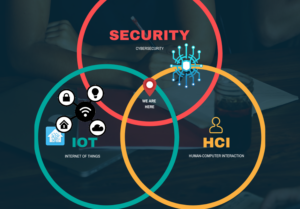
Luca Mannella is a Research Fellow at the Department of Control and Computer Engineering (DAUIN) , Politecnico di Torino. His work spans Cybersecurity , Internet of Things (IoT) , Software Engineering , and Human-Computer Interaction (HCI) . PhD in Computer and Control Engineering from Politecnico di Torino (2024) M.Sc. and B.Sc. in Computer Engineering from Politecnico di Torino (110/110 final score) His research focuses on IoT security , particularly in smart home gateways and automotive systems , with recent work on SOCMATI (Social Media Automotive Threat Intelligence) and COLTRANE-V projects. He has contributed to frameworks for CAN attack simulation , cryptomining detection , and privacy-preserving vulnerability scanning . Publications since 2018 reflect expertise in malware optimization , Cloud-IoT security , and edge computing for constrained devices. His teaching roles since 2020 include Web Applications and Algorithms and Programming courses. He is also a member of the SMILIES research group and co-founded the Mu Nu Chapter of IEEE-HKN .
Stefano Di Carlo is a Full Professor at the Department of Control and Computer Science (DAUIN) at Politecnico di Torino. He is the Coordinator of the Doctoral School in Artificial Intelligence and a member of the PolitoBIOMed Lab and the Doctoral School Council. His research spans Artificial Intelligence , Computer Architecture , Bioinformatics , and Cybersecurity , with a focus on 3D bioprinting , hardware security , and reliability analysis . Research Interests : Approximate computing systems Cybersecurity for connected vehicles Spiking neural networks and neuromorphic hardware Multicellular synthetic biological systems Hardware-based malware detection Biomedical simulation tools Article Trends : His recent publications address approximate computing (7/15), cybersecurity (6/15), and bioinformatics (4/15). Key subtopics include RISC-V security , gradient inversion attacks , photonic computing , and real-time fault injection . Scientific Awards : Best Paper Awards at IEEE AQTR (2010, 2012), IEEE DDECS (2013), and BIOINFORMATICS/BIOSTEC (2014) IEEE Computer Society Golden Core Award (2006), Meritorious Service Award (2010) IEEE Fellow (2011-) and Senior Member Advising & Grants : He supervises 14 PhD students and leads projects like Vitamin-V (RISC-V cloud services), APROPOS (approximate computing), and SERICS (cybersecurity). His lab, SMILIES, focuses on resilient computer architectures and bioinformatics . Labs & Teams : Lab 6 - Research Laboratory (DAUIN) SMILIES - Resilient computer architectures and life sciences PolitoBIOMed Lab - Biomedical engineering
Paolo Rech is an Associate Professor in the Department of Industrial Engineering at the University of Trento, Italy, teaching core courses including Informatica (DISPARI) and Advanced Programming and Artificial Intelligence for Industrial Engineering students. His research spans hardware-software reliability under radiation exposure with emphasis on real-world applications. His primary research domains feature: Reliability Engineering : Pioneering fault-tolerance methodologies for radiation-prone environments Radiation Effects : Quantifying neutron/gamma impacts on GPUs, TPUs, and quantum devices Computer Architecture : Designing hardened RISC-V systems and post-CMOS accelerators AI Reliability : Developing fault-aware neural networks for safety-critical deployment Quantum Vulnerability : Characterizing error mechanisms in quantum circuits Analysis of his 15 most recent publications reveals a dominant focus on radiation-hardened computing systems, with 83% of works addressing neutron-induced faults in GPUs/TPUs and quantum devices. His methodology consistently integrates neutron beam experiments, fault injection frameworks, and architectural hardening techniques across space, medical, and autonomous systems applications. Scientific Awards: None documented in available sources. His teaching directly feeds into research supervision, with course content on C++ programming, object-oriented design, and quantum computing foundations forming the basis for student projects in fault-tolerant system development. Current grants likely support neutron irradiation testing and quantum reliability initiatives given publication patterns, though specific funding details aren't publicly itemized. He operates within University of Trento's engineering research ecosystem, collaborating with teams specializing in radiation testing and quantum computing through projects like ARCHYTAS and Trikarenos, though no dedicated lab name is specified in source materials.