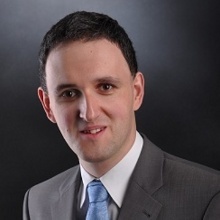
Martin Grohe is a Professor at the School of Logic and Theory of Discrete Systems , part of the Department of Computer Science at RWTH Aachen University . His research spans Algorithms and Complexity , Logic , Database Theory , Graph Theory , and Machine Learning , with a focus on integrating logical frameworks into computational models. His recent work explores graph neural networks , Weisfeiler-Leman algorithms , and parameterized complexity , as seen in publications on isomorphism testing , database repairing , and probabilistic query evaluation . While no specific scientific awards are mentioned, his contributions to graph theory and machine learning are widely recognized through numerous peer-reviewed publications.
Fatma Deniz is a Full Professor (W3) of Computer Science at Technische Universität Berlin, supported by the Berlin Equal Opportunities Program. She leads the Chair of Language and Communication in Biological and Artificial Systems, and is a member of the Berlin Bernstein Center for Computational Neuroscience. Her roles include membership in TU Berlin's Executive Board and the Berlin University Alliance Steering Committee. She holds a Ph.D. (Dr. rer. nat.) from TU Berlin and a Diploma in Computer Science from Technische Universität München, with research training at Caltech and postdoctoral work at UC Berkeley. Her research focuses on understanding neural mechanisms of language processing, integrating computational neuroscience, cognitive science, and artificial intelligence. Key areas include semantic representation dynamics, cross-modal neural alignment, and language learning in bilingual contexts. She has pioneered studies showing the brain's invariant semantic processing across reading and listening modalities. Her grants include an ERC Starting Grant (2023-2028) for studying language learning shifts and a NSF-BMBF CRCNS grant on bilingual representations. She co-edited The Practice of Reproducible Research: Case Studies in Data Science (UC Press, 2017) and contributed to foundational work on reproducible data science methodologies. She has advised projects in neuroimaging, AI ethics, and computational linguistics, and collaborates with institutions like UCSF and the German Academic Exchange Service. Her lab explores neural correlates of language through fMRI, MEG, and machine learning techniques.
Prof. Vladimir Spokoiny is a leading figure in stochastic algorithms and nonparametric statistics at the Weierstrass Institute for Applied Analysis and Stochastics (WIAS) and Humboldt University of Berlin . His work bridges mathematical statistics with practical applications in finance, medicine, and machine learning. Born in 1959 in Moscow, USSR PhD from Lomonosov Moscow State University (1988) Habilitation from Humboldt University (1996) Head of WIAS research group since 2000 Professor at Humboldt University since 2002 Spokoiny's research focuses on adaptive nonparametric methods, high-dimensional data analysis, and statistical finance. His innovations in local homogeneity testing and propagation-separation methods have advanced volatility modeling, image analysis, and manifold learning. He employs Bayesian optimization frameworks and stochastic control techniques for financial instrument pricing. Recent scientific contributions include generalized bootstrap procedures for Bures-Wasserstein barycenters (2024), dimension-free Laplace approximation bounds (2023), and structure-adaptive manifold estimation (2022). His 19+ PhD students and editorial roles in top journals like The Annals of Statistics demonstrate sustained academic impact. International Statistical Institute member American Statistical Association fellow Institute of Mathematical Statistics member Bernoulli Society member
Jens Krause is a Professor and Head of Department at the Leibniz Institute of Freshwater Ecology and Inland Fisheries (IGB) in Berlin, leading the Research Group on Mechanisms and Functions of Group-Living. He holds a full professorship in Fish Ecology at Humboldt-Universität zu Berlin, Faculty of Life Sciences, Thaer-Institute, and since 2018 has been an Adjunct Professor at Technical University Berlin within the Excellence Cluster 'Science of Intelligence'. His research is centered on collective intelligence, social networks, decision-making, and behavioural ecology in fish and other animals. Full Professor in Fish Ecology, Humboldt-Universität zu Berlin Adjunct Professor at Technical University Berlin (since 2018) Head of Department, IGB Berlin PhD, University of Cambridge Diploma, Free University Berlin His work integrates experimental biology, network analysis, and biomimetic robotics to understand how animals make collective decisions. His expertise spans animal behaviour, evolution, and ecological physiology, with a strong focus on group-living dynamics. Recent research explores group hunting, predator evasion, social foraging, and the impact of environmental stressors on collective behaviour. The analysis of his recent publications reveals a strong trend in understanding collective behaviour in fish, including escape waves, social foraging, group hunting in marlins and sailfish, and the use of robotic agents to study social integration. His interdisciplinary approach combines marine biology, physics, robotics, and data science to uncover the mechanisms behind collective intelligence in both animal and human systems. Editorial Board, Behavioral Ecology Editorial Board, Fish and Fisheries Executive Board, Excellence Cluster 'Science of Intelligence' Advisory Board, Bimini Biological Field Station Foundation He advises numerous PhD students and postdoctoral researchers, and leads major research projects, including 'Developing exploration behaviour' funded by the Excellence Cluster. His work has been supported by extensive collaborations across Europe and North America, and he frequently publishes in top-tier journals such as Nature , Science Advances , Proceedings of the Royal Society , and Current Biology . His lab employs cutting-edge methods including automated tracking, social network analysis, and interactive robotics to study animal groups. His research group, 'Mechanisms and Functions of Group-Living', is embedded within the Excellence Cluster 'Science of Intelligence', where they investigate collective cognition, social information use, and the role of individual differences in group performance. The team combines field studies with laboratory experiments and computational modelling to understand the evolution and function of collective behaviour across species.
Prof. Daniel Große serves as Professor at the Institute for Complex Systems (ICS) within Johannes Kepler University Linz, Austria, while maintaining a dual affiliation with the German Research Center for Artificial Intelligence (DFKI) in Bremen. His research centers on Electronic Design Automation (EDA), specializing in verification, debugging, and synthesis of complex hardware/software systems through advanced virtual prototyping techniques. His primary research domains include Formal Verification , Hardware Verification , and Virtual Prototyping , with significant contributions to RISC-V architecture development and embedded systems validation. Current projects like PaSVer (automotive electronics), AUTOASSERT (analog-digital verification), and VerSys (RISC-V software platforms) demonstrate his focus on bridging simulation and formal methods for safety-critical applications. Recent publications reveal accelerating trends in metamorphic testing for embedded graphics libraries and RISC-V vector extensions, alongside innovations in waveform analysis tools like Surfer. His work increasingly integrates AI-assisted verification while maintaining rigorous formal methods foundations. Prof. Große actively supervises student research, having guided Lucas Klemmer's PhD thesis and nine Bachelor theses on topics ranging from RISC-V processor design to transaction visualization. His projects including SATiSFy (autonomous vehicle security) and CONVERS (complex system design automation) secure substantial research funding from academic and industry partners. He leads the Institute for Complex Systems' development of open-source tools such as RISC-V VP++ and contributes to international standards through program committee roles at DATE, ICCAD, and RISC-V Summit Europe.
Akash Kumar is a Professor at Ruhr University Bochum, Germany, with affiliations to multiple institutions including TU Dresden and National University of Singapore. His research focuses on computer architecture, hardware acceleration, and approximate computing, with a strong emphasis on FPGA-based systems and neural network optimization. He has contributed extensively to embedded systems, mixed-criticality systems, and security in emerging technologies like reconfigurable nanodevices. His work spans cross-layer approximation methodologies, graph neural networks, and energy-efficient processing for edge AI. Collaborations with industry and academia highlight his leadership in VLSI design and secure hardware implementations. Notable contributions include frameworks for bounding time in mixed-criticality systems and resilient logic locking techniques. Research interests include hardware-software co-design, real-time systems, and efficient neural network architectures. His publications in top-tier conferences (DAC, DATE, FCCM) and journals (IEEE Trans. CAD, ACM TECS) underscore his impact in the field.
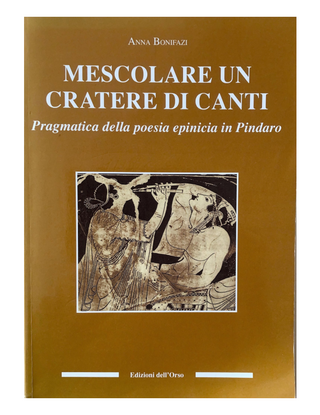
Prof. Anna Bonifazi holds a Professorship in Discourse Studies at the Department of Linguistics, University of Cologne. Her research spans Discourse Analysis, Pragmatics, Cognitive Linguistics, and Multimodal Communication with a focus on Ancient Greek Linguistics and Oral Epic traditions. She investigates phenomena like anaphoric cohesion in long texts, multimodal storytelling in film and oral traditions, and ancient Greek particles' discursive functions. Her work explores how multimodal elements (e.g., visual, musical, gestural) interact in communication, particularly analyzing films (e.g., mystery genres), ancient texts (e.g., Homeric epics), and South Slavic oral narratives. She examines cross-modal iconicity, viewpoint blending, and the cognitive underpinnings of discourse structures. Recent publications address topics like anaphoric strategies in crime stories and syntactic patterns in ancient Greek conversational frameworks. Prof. Bonifazi's research often bridges classical philology and modern cognitive theories, emphasizing embodied cognition and the interplay between language and other semiotic systems. She collaborates internationally on projects involving gesture analysis in storytelling and ancient papyrological studies. Her interdisciplinary work integrates linguistics with musicology, film studies, and cognitive science. Administratively, she oversees the Discourse Studies research group at Cologne and mentors assistants like Dr. Sandra Debreslioska and Madeleine Frings. Her lab focuses on multimodal discourse analysis using experimental and corpus-based methods.
Prof. Liqiu Meng serves as Chair of Cartography and Visual Analytics at the Technical University of Munich (TUM). He specializes in advanced geospatial research, digital cartography, and human-technology collaboration frameworks. Current Faculty at TUM Chair of Cartography and Visual Analytics Research Focus: His work bridges cartographic theory with cutting-edge technology, covering topics like 3D urban modeling, AI ethics visualization, geovisual analytics, and spatiotemporal data interpretation. Urban Morphology Analysis AI Ethics Cartography Geovisual Analytics 3D City Data Integration Location-Based Service Design Publications: Recent works (2025-2024) demonstrate expertise in explainable AI for urban analysis, multi-agent systems for geospatial interaction, and advanced spatial modeling techniques. Contact: liqiu.meng@tum.de | contact.lfk@ed.tum.de
Kede Ma is an Associate Professor in the Department of Computer Science at City University of Hong Kong (CityUHK). He received his B.E. from the University of Science and Technology of China (USTC) in 2012, and MASc and Ph.D. degrees from the University of Waterloo in 2014 and 2017, respectively. From 2018 to 2019, he was a Research Associate with the Howard Hughes Medical Institute and New York University. Prof. Ma has been named to the Highly Cited Researchers list by Clarivate Analytics in 2024 and currently serves on the editorial boards of IEEE Transactions on Image Processing, IEEE Transactions on Information Forensics and Security, and IEEE Signal Processing Letters. Prof. Ma leads the Multimedia Analytics (MA) Laboratory, an interdisciplinary research group focused on computational vision, computational modeling of human visual perception, perceptual multimedia signal processing, quality assessment, and multimedia forensics. His research spans computational photography, high dynamic range imaging and rendering, omnidirectional video analysis, camera processing pipeline design, and artificial intelligence safety in multimedia systems. His work integrates machine learning techniques including reinforcement learning, generative modeling, self-supervised learning, and continual learning for multimedia signal processing applications. His recent publications demonstrate a strong focus on image quality assessment, deep learning for multimedia processing, and multimedia forensics. His work bridges theoretical computer vision principles with practical applications in multimedia systems. The research trends show increasing integration of foundation models with specialized multimedia processing tasks, particularly in quality assessment and security applications. Highly Cited Researchers list by Clarivate Analytics (2024) Best Paper Award at IEEE International Conference on Virtual Reality and Visualization (2021) Best Paper Runner-Up at International Joint Conference on Artificial Intelligence Workshop (2021) Top 10% Award at IEEE International Conference on Image Processing (2015) Finalist for the Governor General's Gold Medal, University of Waterloo (2017) Spotlight presentation at NeurIPS (2022) Highlight paper at ICCV (2025) Oral presentation at ICLR (2025) Prof. Ma advises numerous PhD students and postdoctoral fellows in the MA Laboratory. His research is supported by various grants enabling work in multimedia analytics, image processing, and computer vision. The laboratory maintains active collaborations with researchers at institutions including SUSTech, ZJU, and HIT. Current projects focus on advancing image quality assessment methodologies, developing more robust deep learning techniques for multimedia forensics, and exploring new approaches to HDR imaging and omnidirectional video processing. The Multimedia Analytics Laboratory maintains a strong focus on both theoretical foundations and practical applications of multimedia processing. Current research directions include integrating large language models with image quality assessment, developing more robust deepfake detection methods, and advancing techniques for continual learning in multimedia applications. The lab emphasizes rigorous evaluation methodologies and maintains multiple datasets for multimedia quality assessment research.
Heiko Falk is a Professor and Head of the Institute of Embedded Systems at Technische Universität Hamburg (TUHH). His roles include serving as Workshop Chair for the 2024 Embedded Systems Week (ESWEEK), Scientific Coordinator for the B.Sc. and M.Sc. Computer Science programs, and Deputy Head of the Board of Examiners for Computer Science and Engineering. His research focuses on real-time systems, compiler optimizations, and worst-case execution time (WCET) analysis. Key areas include multi-core architectures, cache management, energy efficiency, and hardware/software co-design. Falk's work emphasizes practical compiler techniques for improving real-time performance, such as WCET-aware memory allocation, dynamic SPM optimization, and event-driven scheduling. His publications analyze shared cache interference, preemptive/non-preemptive scheduling, and DMA-aware optimizations. Recent work explores multi-objective trade-offs between WCET, energy consumption, and code size in embedded systems. No scientific awards are explicitly listed, but his contributions to WCET benchmarking (e.g., haRTStone project) and compiler frameworks demonstrate significant impact in the field. Advising and grants: No formal advisees are listed in the provided texts. Falk's work is supported through projects like teamplay, focusing on cyber-physical systems optimization. Labs/Teams: His group operates within TUHH's Institute of Embedded Systems, collaborating on projects addressing real-time system challenges in multi-core environments.
Prof. Dr. Christine Heim is a University Professor (W3) and Director of the Institute of Medical Psychology at Charité – Universitätsmedizin Berlin, where she leads interdisciplinary research on stress psychobiology. She holds concurrent appointments as Research Professor at Pennsylvania State University's College of Health and Human Development and serves as Principal Investigator in the NeuroCure Cluster of Excellence (DFG EXC 2049). Her faculty affiliations include the Berlin School of Mind & Brain, Max Planck School of Cognition, and Einstein Center for Neurosciences. Her research program investigates mechanisms through which early-life stress fundamentally alters biological adaptability across the lifespan, increasing disease risk. Key focuses include: Molecular and epigenetic embedding of stress effects Gene-environment interactions in stress vulnerability Neuroendocrine and immunological consequences of trauma Development of biomarkers and early interventions Her publications demonstrate consistent focus on stress biology across multiple levels of analysis, with recent work emphasizing epigenetic clocks, neural plasticity, and childhood maltreatment outcomes. Research employs multimodal methods integrating psychological, neuroendocrine, immunological, neural, and molecular approaches. She coordinates the BMBF-funded research network 'Programming Effects of Childhood Stress on Lifelong Disease Risk (Kids2Health)' and serves on the Steering Committee for 'Promoting Talent' in the Berlin University Alliance.
Rainer Böckmann is a Professor of Computational Biology in the Department of Biology at Friedrich-Alexander-University Erlangen-Nürnberg (FAU), Germany, where he leads the Group for Theoretical and Computational Membrane Biophysics. His research integrates molecular dynamics simulations with biophysical analysis to study membrane structure, dynamics, and function. Research Interests: His work focuses on computational biophysics, particularly lipid bilayers, membrane proteins, molecular dynamics, and structural bioinformatics. He investigates how lipid composition, cholesterol, and embedded peptides influence membrane organization, curvature, and permeability, with applications in antimicrobial strategies and mRNA vaccine delivery systems. Recent Research Trends: His recent publications reflect a strong emphasis on lipid nanoparticles (LNPs), particularly their phase behavior, pH-dependent protonation, and structural transitions relevant to mRNA vaccines. He also explores antimicrobial peptides, membrane domain formation, and the role of cholesterol in modulating membrane properties. His group develops and applies advanced simulation techniques, including constant-pH MD and coarse-grained modeling. Member of Editorial Board, Biophysical Journal (2024–present) Elected Member, DFG Review Board for Biophysics (2020–present) Chairman, Molecular Biophysics Section, German Biophysical Society (2011–2012) Leadership and Service: Böckmann is actively involved in academic governance, serving on editorial boards, DFG committees, and as a guest editor for special issues in Frontiers journals. He contributes to graduate education and high-performance computing initiatives at FAU, including the NHR@FAU and Life@FAU Graduate School. He has organized major conferences and workshops in biophysics and membrane modeling. Laboratory and Collaboration: He leads a research group focused on biomembrane physics, collaborating with experimentalists and theorists. His lab develops and applies simulation tools to study membrane systems, bridging computational insights with biological function.
Prof. Dr. Christina Raasch is Professor of Digital Economy at Kühne Logistics University (KLU) and holds a joint appointment with the Kiel Institute for the World Economy (IfW) . Since 2017 she has led research and teaching on how digitalization reshapes innovation processes, enterprise crowdfunding, and customer-driven disruptive innovation. Education Habilitation (Dr. habil.) in Business Administration, Hamburg University of Technology (TUHH), 2012 PhD in Management, University of Erlangen-Nuremberg, 2006 MSc (lic. oec.) in Economics & Management, University of St. Gallen (HSG), 2002 Visiting Researcher, MIT Sloan School of Management, 2010-2012 Research Interests Prof. Raasch’s work centers on digital transformation of innovation . She investigates how firms leverage digital technologies—ranging from AI to crowdfunding platforms—to enhance idea generation, evaluation, and implementation. Core themes include: Open & User Innovation: understanding when and how users become valuable innovators inside and outside firms. Disruptive Innovation Dynamics: analyzing whether disruptive ideas stem from users or producers under varying environmental conditions. Enterprise Crowdfunding: designing decentralized decision-making systems that mitigate hierarchy-induced biases. Publication Trends Her 70+ publications reveal a systematic exploration of demand-side innovation . Early work modeled welfare impacts of user innovation; recent studies use large-scale field data from Siemens and other multinationals to uncover cognitive and social biases in idea evaluation. A consistent thread is bridging micro-level behavioral insights with macro-level policy and strategy implications. Scientific Awards & Honors Fellow of the Open and User Innovation (OUI) Society Host of the 2023 OUI Conference at KLU Research Funding & Industry Collaboration Current grants exceed €2 million and include: FabCity-Citizen Extension (2025-2026) – decentralized urban innovation funded by the German Federal Ministry of Education and Research. EvaluationShirking (2024-2026) – idea evaluation biases in collaboration with a global industrial manufacturer. Idea Evaluation in Democratized Innovation (2019-2023) – DFG-funded project on enterprise crowdfunding design. Labs, Teams & Knowledge Transfer Prof. Raasch leads the Open & User Innovation Research Group at KLU, supervising doctoral researchers and managing industry partnerships with firms in automotive, high-tech, and logistics sectors. She regularly contributes to policy panels and media outlets such as Harvard Business Manager and Springer Professional .
Prof. Dr. Johannes Kinder is a Professor and Chair of Programming Languages and Artificial Intelligence at the Institute of Informatics , Ludwig Maximilian University of Munich. His research focuses on software security through program analysis and machine learning, particularly targeting malware detection , vulnerability analysis , and reverse engineering . He has held faculty positions at Royal Holloway, University of London, and Bundeswehr University Munich. Research Interests include: Securing software systems via program and machine learning techniques Detection of software vulnerabilities and malware Preventing exploitation through binary analysis Applications of formal methods in systems security Recent Publications highlight advancements in binary function embedding , malware detection in npm , and speculative execution attack modeling . His work appears in top venues like USENIX Security and IEEE S&P . Education : Diplom from TU Munich (2005), Doctorate from TU Darmstadt (2010). Professional Roles : General Chair, ACM CCS 2019 Doctoral Symposium Chair, ESSoS 2016 Program Committee member for NDSS 2026, IEEE S&P 2022-2025
Prof. Ilia Polian serves as Head of the Institute of Computer Engineering and Chair of the Hardware-Oriented Computer Science (HOCOS) department at the University of Stuttgart. His leadership spans research, teaching, and institutional coordination across multiple high-impact projects. Prof. Polian's research focuses on developing circuit and system architectures based on both traditional and novel principles, including neuromorphic, stochastic, and approximate architectures. His second major research focus is systematic design methodology and design automation, with particular emphasis on safety and reliability properties of developed systems. Current research directions include quantum computing engineering, secure mixed-signal neural networks, and resource-efficient stochastic circuits for near-sensor computing applications. His recent publications demonstrate strong trends in quantum computing (particularly circuit partitioning and compilation for multi-QPU architectures), hardware security (including memristive cryptographic implementations), and AI-driven approaches to hardware testing and reliability. These works bridge fundamental computer architecture research with practical industrial applications. University of Stuttgart's Publication Prize for Paper on Partitioning of Quantum Circuits Prof. Polian actively supervises doctoral students including Devanshi Upadhyaya, and leads significant research grants such as the DFG Priority Program Nano Security which he coordinates. His department offers numerous thesis and research opportunities for students interested in cutting-edge hardware research. The Hardware-Oriented Computer Science department maintains strong collaborations with industry partners including IBM, Infineon Technologies, and Advantest, as well as academic institutions through the IQST Graduate School and QuantumBW initiatives.