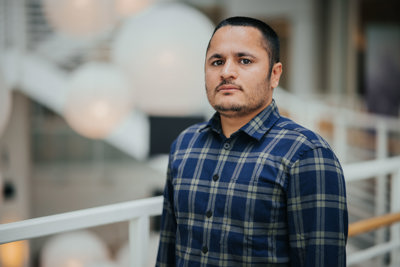
Guru Prasad Bhandari is a Researcher at Kristiania University College, School of Economics, Innovation and Technology. He specializes in software engineering, cybersecurity, and machine learning, with a focus on vulnerability detection and automated security solutions. His work includes contributions to projects like CVEfixes, which systematically collects vulnerability fixes from open-source software. Bhandari earned his Ph.D. in 2019 from Banaras Hindu University (India) and completed a postdoctoral fellowship at Simula Research Laboratory (Norway, 2019–2022). He has authored numerous papers on topics such as IoT security, AI-driven vulnerability detection, and distributed cyberattack mitigation. Awards: Silver Jubilee Scholarship (2015) from ICCR Key Projects: CVEfixes (automated vulnerability dataset), IoTvulCode (AI for IoT vulnerability detection)
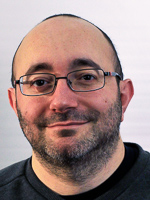
Nils Mikael Signal is an Associate Professor at the Department of Mathematical Sciences, University of Agder, Norway. His academic career spans institutions including Lund University, University of Oslo, and Halmstad University. He holds a PhD in Mathematical Statistics from Lund University (2003) and has contributed extensively to stochastic analysis and partial differential equations. PhD in Mathematical Statistics, Lund University (2003) Licentiate in Mathematical Statistics, Lund University (2000) BSc in Physics and Mathematics, Lund University (1993, 1988) His research focuses on Partial Differential Equations and Stochastic Analysis , particularly in harmonic analysis and Fourier analysis contexts. He has published key works on Hilbert space embeddings, operator factorizations, and stochastic PDEs driven by Levy and fractional Brownian noise. Research group: Differential Equations and Dynamical Systems Teaching: Statistics, Stochastic Analysis with Finance, Fourier Analysis with PDE Publications highlight his expertise in Gelfand–Shilov spaces , modulation spaces , and noise-driven wave equations. Despite no explicit awards mentioned, his collaborative work with prominent researchers like Bernt Øksendal and Joachim Toft underscores his academic impact.
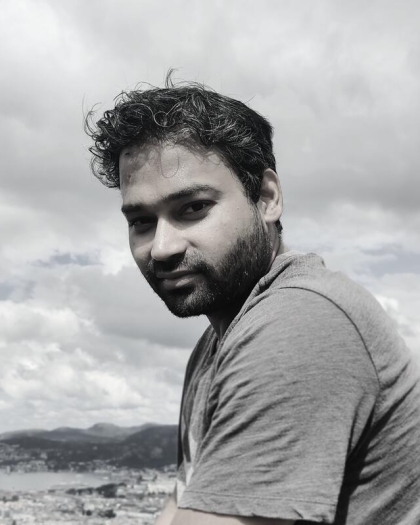
Artur Zolich is an Associate Professor at Oslo Metropolitan University's Faculty of Technology, Art and Design, within the Department of Mechanical, Electrical and Chemical Engineering. With 14 years of interdisciplinary experience in unmanned systems R&D, he specializes in developing robotic solutions (TRL3-7) for environmental and industrial applications. Research Focus: His work bridges robotics, environmental science, and embedded systems, with emphasis on: Unmanned vehicles (aerial/surface) for marine monitoring Hyperspectral imaging for microplastics detection Arctic light climate analysis using autonomous sensors Robotic telecommunication infrastructure for emergency response Publication Trends: Recent articles (2021-2024) demonstrate strong focus on field-deployable robotic systems for environmental challenges. Dominant themes include autonomous vehicles for water quality assessment (37%), microplastics research (27%), Arctic environmental monitoring (18%), and emergency communication systems (9%). Technological emphasis includes hyperspectral imaging (40%), UAV/USV platforms (35%), and sensor network integration (25%). Scientific Contributions: Key instrumentation developments include the Portable Catamaran Drone for microplastics sampling, all-sky camera systems for Arctic irradiance studies, and on-water radiometry robots for satellite validation. His work frequently involves international collaborations across Europe and the Arctic region.
Professor Peter Herrmann is affiliated with the Norwegian University of Science and Technology (NTNU) , Faculty of Information Technology and Electrical Engineering, Department of Information Security and Communication Technology. He leads research in Intelligent Transport Systems (ITS) , model-based engineering , and trust management , with a focus on distributed systems and cyber-physical systems. Collaborations : Statens Vegvesen, Jernbaneverket, Telenor, RMIT University, University of Oslo Key Projects : IoT-STOP, MobiTrack, SIMS, Arctis, EuroNF, ISIS, iTrust His Reactive Blocks tool enables formal specification and verification of networked systems, while BeSpaceD specializes in spatiotemporal analysis. Students under his supervision include Ergys Puka (dead spot mitigation), Magnus Oplenskedal (machine learning localization), and Zeeshan Ali Khan (trust-based intrusion detection). Scientific awards include two best paper awards for collaborative work with RMIT University. His research spans formal methods, security of distributed components, and energy-efficient IoT systems, with over 20 years of contributions from TLA extensions to commercialization of BitReactive .
Changkyu Choi is a Postdoctoral Fellow in Machine Learning at the Department of Physics and Technology, UiT The Arctic University of Norway. He is affiliated with the Machine Learning Group in Forskningsparken 1 B201. His research focuses on applying deep learning and machine learning to marine acoustics, with an emphasis on semisupervised learning, explainability, and underwater exploration. Key trends in his work include information-theoretic approaches, metric learning, and autonomous systems for marine data analysis. Choi has published extensively on topics like target classification in echosounder data, visual explanations for document QA, and entropy regularization in distributed learning. His collaborations span institutions in Canada, Europe, and Norway. He contributes to projects such as "Developing and deploying machine learning methods for acoustic data" (2022) and is involved in workshops like the COGMAR/CRIMAC event on fisheries acoustics.
Kristoffer Wickstrøm is an Associate Professor in the Machine Learning Group at UiT The Arctic University of Norway, where he serves as research leader for interpretability at SFI Visual Intelligence. His work focuses on deep learning, with emphasis on explainability, uncertainty modeling, and learning with limited data. Deep Learning Explainable Artificial Intelligence Uncertainty Analysis Medical Image Analysis Small Data Learning His recent research trends include: Explainable AI for medical imaging and time series Uncertainty quantification in neural networks Physics-informed learning for PET imaging Representation learning for healthcare applications Robustness in clinical AI systems Sea ice forecasting with deep learning Collaborations include work with: Prof. Gustau Camps-Valls (University of Valencia) Prof. Marina M.-C. Höhne (Technical University of Berlin) Prof. Robert Jenssen (UiT) Prof. Michael Kampffmeyer (UiT)
Michele Cascella is a Full Professor in Theoretical Chemistry at the Department of Chemistry, University of Oslo, and a Principal Investigator at the Hylleraas Centre for Quantum Molecular Sciences. His research focuses on multi-scale computational modeling of (bio)chemical systems in condensed phases, combining ab initio, classical, and hybrid QM/MM molecular dynamics with coarse-grained and mesoscale approaches. PhD in Statistical and Biological Physics from SISSA (2004) Postdoc at EPFL (Switzerland) Assistant Professor at University of Bern (2005-2014) His research explores soft matter systems at the interface between molecular and mesoscale resolutions using density-field methods, with applications in physics, chemistry, and biochemistry. He leads a DFG-funded research network on multiscale soft matter modeling and collaborates internationally. Recent publications highlight advancements in hybrid particle-field molecular dynamics, soft matter simulations under pressure, and software development for exascale computing. His work spans computational methodologies for surfactants, lipid bilayers, transition metal complexes, and biological membranes. Scientific Awards Recipient of Swiss SNF-Professorship fellowship Marie-Skłodowska Curie Actions grant He supervises computational science projects related to multiscale modeling of soft matter systems and hybrid particle-field methodologies. Current grants include funding from the German Research Foundation and leadership of the National Centre of Excellence (Hylleraas Centre).
Basil Ell is a Researcher at the University of Oslo's Department of Data and Knowledge Management, affiliated with SIRIUS labs. He holds a PhD from Karlsruhe Institute of Technology (KIT) and has held postdoctoral positions at Bielefeld University's CITEC. His work bridges Semantic Web technologies and Natural Language Processing, focusing on knowledge base population, semantic parsing, and information extraction from text/tables. He splits his time between Oslo and Bielefeld, contributing to projects like semantically enhanced Virtual Research Environments and table understanding systems. Education: B.Sc./M.Sc. in Computer Science from Mannheim University of Applied Sciences, Pohang University of Science and Technology, and IIT Madras. PhD (2015) from KIT under Prof. Rudi Studer. Research Trends: Recent publications emphasize semantic data integration (e.g., materials informatics), link prediction in knowledge graphs, and clinical trial evidence synthesis. His work often combines RDF data structures with NLP techniques. Labs/Teams: Active in SIRIUS labs (Oslo) and previously at CITEC/Bielefeld's Semantic Computing group.
Tor Anders Nygaard is a Professor at the Department of Mechanics, University of Oslo. His research focuses on aerodynamics, structural mechanics, and offshore wind energy systems. He specializes in the design and analysis of floating offshore wind turbines, including rotor dynamics, mooring systems, and hydrodynamic loading. Nygaard leads projects like OC6 (aerodynamic validation) and REDWIN (cost reduction in offshore wind), and collaborates internationally on initiatives such as the Offshore Code Comparison Collaboration (OC4). His work emphasizes experimental validation, computational fluid dynamics (CFD), and the integration of structural and geotechnical design for sustainable energy solutions. Key projects include the OC6 project (aerodynamic loading validation), REDWIN (cost reduction strategies), and DIMSELO (sea load analysis). He has contributed to advancements in floating platform design, mooring line dynamics, and the application of advanced numerical methods like VOF (Volume of Fluid) simulations for wave modeling. Nygaard’s research bridges theoretical modeling with practical field data, ensuring robust solutions for offshore renewable energy challenges. His publications span journals like Wind Energy Science , Renewable Energy , and Journal of Physics , with a focus on interdisciplinary topics such as fatigue analysis, fluid-structure interaction, and the optimization of offshore structures. Nygaard’s contributions have been pivotal in advancing the technical and economic feasibility of offshore wind energy systems.
Alok Mishra is a Professor at Molde University College, affiliated with the Faculty of Logistics. His research focuses on Artificial Intelligence, Software Engineering, Cybersecurity, and Digitalization, with a strong emphasis on blockchain technology, machine learning, and sustainability. He leads the research group 'Digitalization for Sustainability Informatics and Digitalization.' Key projects include 'Building Trust in Global Seafood Supply Chains Through DNA Analysis, Digital Product Passports (DPPs), and Blockchain Technology.' His work spans interdisciplinary areas such as AI ethics, data privacy, and IoT-based systems. Recent publications highlight advancements in code smell detection, cybersecurity policy development, and green AI initiatives. His research trends reflect a blend of theoretical and applied studies, addressing challenges in software quality, blockchain integration, and sustainable tech solutions. Collaborations with global researchers underscore his commitment to impactful, cross-disciplinary innovation.
Helge Bøvik Larsen is a Professor of Physics at the University of Stavanger, affiliated with the Faculty of Science and Technology and the Department of Mathematics and Physics. His research focuses on crystallography, X-ray diffraction, and materials physics, particularly in alloy systems and diffraction theory. Research Interests: Crystallography and structural analysis of embedded phases in metallic alloys Theoretical and experimental X-ray diffraction, including three-beam and resonant diffraction Development of computational tools for crystallographic modeling using Mathematica Synchrotron-based studies of Al-Zn-Mg and Al-Mg-Zn systems Angle calculations and instrumentation for diffractometers (kappa and goniostat systems) Applications in materials science, including cementitious binders and gene transfer lipids The recent publications highlight a strong trend in both fundamental diffraction physics and applied materials characterization. His work bridges theoretical crystallography with experimental validation, often using synchrotron radiation. There is also interdisciplinary work in biophysics (cationic lipids for gene therapy) and sustainable materials (geopolymers from mine waste), indicating collaborative and cross-cutting research. Scientific Contributions: Extensive contributions to three-beam X-ray diffraction theory and extinction effects Development of software and Mathematica-based tools for diffraction simulations Studies on goniostat and diffractometer geometry for precise crystal alignment Structural analysis of complex systems like α-D-glucose-NaCl-H₂O and silver sulfate Advising and Grants: While no explicit list of students or grants is provided, his long publication record with junior co-authors (e.g., Ramsnes, Zhang, Jubeli) suggests active supervision and mentorship. His collaborations with industry and international facilities (e.g., ESRF) indicate participation in funded research projects. The repeated co-authorship with Gunnar Thorkildsen and Ragnvald Mathiesen reflects sustained research teams and likely grant-supported work. Labs and Teams: His work implies involvement with X-ray diffraction laboratories, likely including access to synchrotron facilities. He has been part of a long-standing research group at the University of Stavanger focused on crystallography and materials characterization, often collaborating with physicists, chemists, and engineers.
Rahul Nath is a Postdoctoral Fellow at the Department of Informatics, University of Bergen, Norway. His research lies at the intersection of computational intelligence, optimization, and decision systems, with a strong focus on reliability engineering and fuzzy logic applications. His research interests include Reliability Engineering , Evolutionary Algorithms , Fuzzy Logic , Multi-objective Optimization , Anomaly Detection , and Intelligent Decision-Making under Uncertainty . These areas are central to modern intelligent systems, particularly in safety-critical and uncertain environments. The recent publications highlight a consistent trend in solving complex reliability and optimization problems using advanced evolutionary and fuzzy-based methods. Key themes include multifactorial optimization, constraint handling in many-objective problems, anomaly explanation using fuzzy vocabularies, and energy-aware scheduling in embedded systems. The work demonstrates a deep integration of theoretical algorithm development with practical engineering applications. Scientific Contributions: Developed novel evolutionary approaches for reliability-redundancy allocation. Introduced fuzzy-vocabulary-based frameworks for anomaly detection and explanation. Applied type-2 intuitionistic fuzzy logic to decision-making under uncertainty. Designed energy-efficient scheduling algorithms for real-time systems. Rahul Nath has collaborated extensively with researchers such as Pranab K. Muhuri, Amit K. Shukla, and Md. Abdul Malek Chowdury. His work is published in high-impact journals including Reliability Engineering & System Safety , IEEE Transactions on Fuzzy Systems , and Soft Computing . While no formal advising or grant information is available, his research output indicates active involvement in advanced computational intelligence projects. Currently based at the University of Bergen, he contributes to the Department of Informatics' research in intelligent systems and optimization. His work is accessible through Cristin and digital object identifiers (DOIs).
Roger Birkeland is a Researcher at the Department of Electronic Systems , Norwegian University of Science and Technology (NTNU), within the Faculty of Information Technology and Electrical Engineering . His work focuses on the design and development of small satellites for Earth observation and communication, with an emphasis on maritime and Arctic applications. Co-founder and former leader of the NTNU Student Satellite Project Key contributor to the establishment of the NTNU Small Satellite Lab Research Interests include: Small satellite systems (CubeSats) Hyperspectral imaging payloads Software-defined radios (SDRs) for space communication Arctic sensor networks Integration of unmanned surface vehicles (USVs) with satellite systems Additive manufacturing for space components Recent publications highlight advancements in: Agile satellite maneuvering for improved imaging On-board processing for hyperspectral data Interference measurement in Arctic radio bands Low-cost prototyping materials via 3D printing
Arne Morten Midjo is an Assistant Professor at the Department of Electronic Systems (IES) at NTNU. He currently serves as the Acting Deputy Head of Department for Education and Program Council Leader for the ELSYS engineering programs (BIELSYS, MTELSYS, MSELSYS). His leadership roles include Program Leader for the Bachelor’s in Electronic Systems Engineering and vocational education initiatives. Education: M.Sc. in Engineering (Real-Time Computing & Computer Architecture) from NTNU’s former Department of Engineering Cybernetics (NTH) Key Responsibilities: Curriculum development, program management, and teacher education programs His work focuses on technology education innovation , including collaborations with Thora Storm Upper Secondary School to enhance vocational teacher expertise. He also coordinates outreach initiatives like Researchers’ Night and digitalization of vocational training programs. Recent publications explore future vocational teacher education strategies and public science engagement . His teaching spans microcontroller systems, IoT applications, and engineering project management.
Jan Kenneth Bekkeng is an Associate Professor in the Department of Physics at the University of Oslo (UiO), affiliated with the Faculty of Mathematics and Natural Sciences. His research focuses on sounding rockets, instrumentation, space plasma measurements, and embedded systems. He holds a PhD in Physics from UiO (2007) and has been a Senior Scientist at the Norwegian Defence Research Establishment since 2007. His work includes developing low-cost attitude determination systems and advanced navigation algorithms. Research interests span MEMS technology, ultrasonic positioning systems, Kalman filtering, and plasma diagnostics. He teaches courses on computer-based instrumentation (FYS3240) and subatomic many-body theory (FYS4520). Key projects include the 4DSpace Strategic Research Initiative and the ICI series of sounding rockets. His publications emphasize sensor fusion, rocket instrumentation, plasma physics, and inertial measurement unit (IMU) calibration. Collaborative efforts involve institutions like ESA and focus on advancing space technology and micro-scale physics observations.