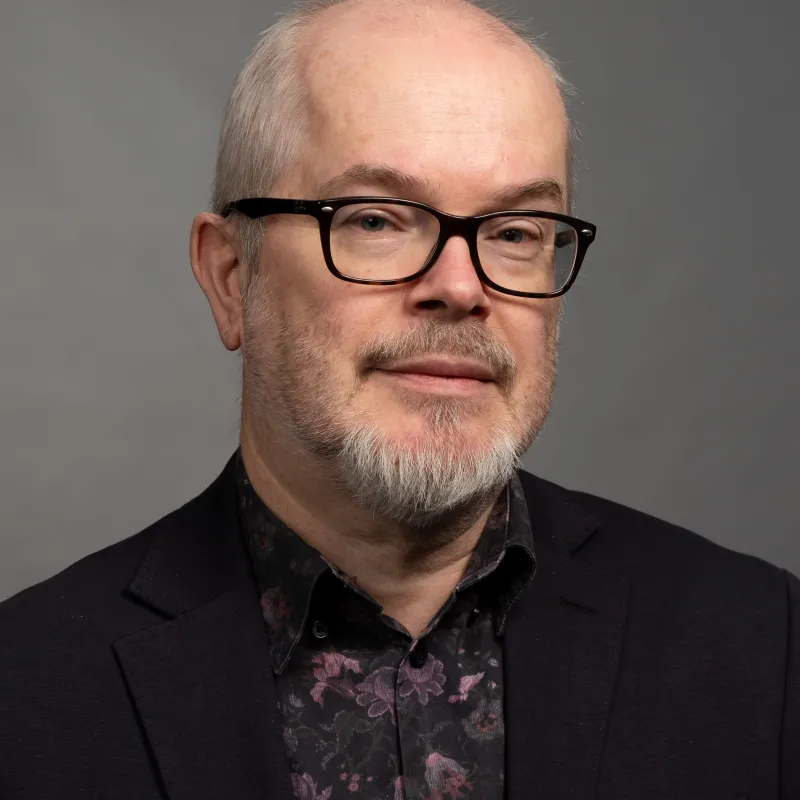
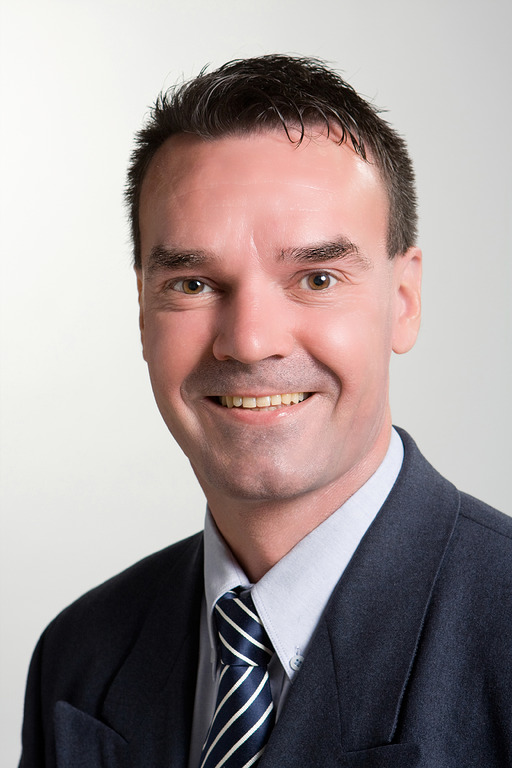
Janne Lindqvist is an Associate Professor at the Department of Computer Science, Aalto University. His research bridges security engineering, human-computer interaction (HCI), and privacy, with a focus on making security systems usable and user-centric. University: Aalto University Department: Department of Computer Science Rank: Associate Professor Email: janne.lindqvist@aalto.fi Lindqvist’s work spans security engineering , privacy systems , and user research , emphasizing practical authentication methods, password management, and human behavior in security contexts. He explores how users interact with systems like TPM APIs, gesture passwords, and mobile authentication mechanisms. Recent publications highlight trends in authentication systems , ubiquitous computing security , and mobile user behavior . Key themes include biometric authentication, gesture-based security, and balancing usability with cryptographic robustness. CHI'25 Honorable Mention Award CHI'24 Best Paper Award His research integrates empirical studies with technical implementations, such as analyzing password forgetting patterns and developing acoustic sensing for vehicle detection (e.g., Auto++, BO-Ear). Collaborative efforts span machine learning, psychology, and embedded systems.
Harri Lähdesmäki is an Associate Professor (tenured) at the Department of Computer Science, Aalto University, where he leads the Computational Systems Biology research group. His work focuses on probabilistic machine learning and deep generative models with applications in biomedicine and molecular biology. Key Research Interests: Probabilistic machine learning, deep generative models, computational biology, bioinformatics, longitudinal data modeling Contact: harri.lahdesmaki@aalto.fi | Konemiehentie 2, 02150 Espoo, Finland His recent publications highlight advancements in: Gaussian process priors for scalable deep generative models Single-cell analysis of immune repertoires in leukemia and diabetes Probabilistic deconvolution methods for RNA-seq data Epigenetic analysis using hidden Markov and mixed models Transformer-based survival prediction and missing data handling Harri’s work integrates mechanistic modeling with Bayesian inference, particularly applied to immunology, cancer biology, and early disease prediction.
Teemu Roos is a Professor at the Department of Computer Science , University of Helsinki , and a Principal Investigator for the Complex Systems Computation Group under the Helsinki Institute for Information Technology. He serves as a Supervisor for the Doctoral Programme in Computer Science and leads multiple research initiatives, including Distributed AI in Supercomputing , AI & Kids , and Generation AI . Dr. Roos also holds a Docent title in Computer Science. His research spans Artificial Intelligence , Machine Learning , and Data Science , with a focus on AI education , graph neural networks , Bayesian modeling , and health informatics . He has pioneered tools like Elements of AI , a free online course now translated into 22 EU languages, and explores the ethical implications of AI-generated content in authorship and inventorship. The 15 most recent publications highlight applications in environmental forecasting (e.g., Mediterranean Sea via graph-based deep learning), healthcare (e.g., skin cancer detection with transfer learning), and social media analysis (e.g., explainable AI platforms for K-12 education). Methodologically, his work advances clustering algorithms , dimensionality reduction , and approximate nearest neighbor search . Scientific Awards: Cor Baayen Award (2009) Nokia Foundation Recognition Award (2019) Best Paper Honorable Mention Award (2013) ICT Influencer of the Year 2019 (Vuoden TiVi-vaikuttaja 2019) World Summit AI's Top-50 Innovators in 2020 Dr. Roos has supervised 2 doctoral students and contributed to 163 academic activities , including invited talks at MIT, University of Cambridge, and the Finnish Institute in Rome. He has secured funding from the Academy of Finland and the Strategic Research Council, focusing on projects like Fast AI-assisted Space Environment Prediction and Urban Exerciser .
Hannu Toivonen is a Full Professor of Computer Science at the University of Helsinki, affiliated with the Faculty of Science and the Department of Computer Science. He leads the Discovery Research Group and is part of the Helsinki Institute for Information Technology (HIIT) and the Finnish Center for Artificial Intelligence (FCAI). He obtained his PhD in Computer Science from the University of Helsinki in 1996 and has held his professorship since 2002. His research spans Artificial Intelligence , Data Science , Computational Creativity , and Data Mining , with applications in generative art, automated journalism, and bioinformatics. His research focuses on: Developing AI systems for creative tasks (e.g., poetry, music, and art generation) Cross-lingual natural language processing and unsupervised learning Ethical and societal implications of AI in media and labor Analysis of his 15 most recent publications (2021–2025) reveals a strong emphasis on computational creativity and AI-driven content generation , with interdisciplinary applications in digital humanities, journalism, and biology. Trends include ethical AI frameworks, human-AI collaboration, and innovative evaluation methods for generative systems. Scientific Awards & Honors: Knight, First Class, Order of the White Rose of Finland (2019) Best Applied Research Award, IEEE ICDM (1998) Honorary Member of TKO-äly (2010) Member of Finnish Academy of Science and Letters He has supervised over 20 doctoral theses and secured ~7 MEUR in grants (e.g., EU projects: Embeddia , Newseye ). He leads the Discovery Research Group and collaborates with institutions like VUB (Belgium) as a Francqui International Professor (2025).
Kwantae Kim is an Assistant Professor at the Department of Electronics and Nanoengineering within Aalto University's School of Electrical Engineering . He leads the Tiny Systems and Circuits (TSirc) Group , focusing on power-efficient analog/mixed-signal ICs for biomedical and neuromorphic sensor systems. IEEE Senior Member (2025) Collaborates with institutions across Europe, Asia, and America Specializes in ultra-low-power AI-embedded IoT platforms His research emphasizes Tiny, Sensory, Intelligent, and Wireless IoT systems through: Development of energy-efficient IC architectures Democratizing access to advanced chip design Hardware-software co-design for edge computing Recent publications highlight innovations in: Spoken-language-understanding SoCs Temporal-sparsity-aware keyword spotting Open-source silicon frameworks Awards include: 2025 IEEE Senior Member 2023 Best Poster Award (AICAS) 2019 Samsung HumanTech Silver Award Research partnerships span: Prof. Tobi Delbruck (UZH/ETH Zurich) Prof. Hoi-Jun Yoo (KAIST) Prof. Shih-Chii Liu (UZH) Prof. Sohmyung Ha (NYU Abu Dhabi)
Mikko Kurimo is a Full Professor at Aalto University's Department of Information and Communications Engineering, School of Electrical Engineering. He earned his M.Sc., Lic.Tech., and D.Sc.(Tech.) from Helsinki University of Technology (1992, 1994, 1997) and pioneered neural networks for automatic speech recognition (ASR) in his PhD thesis. After research roles at IDIAP (Swiss AI center) and visiting positions at University of Colorado, Edinburgh, SRI, ICSI, and Nitech, he leads Aalto's ASR group since 2000. His work focuses on unsupervised subword modeling for morphologically complex languages (Finnish, Estonian, Turkish, Arabic) and large speech foundation models. PhD in Neural ASR (Helsinki University of Technology, 1997) Research Scientist at IDIAP (Switzerland) Visiting Fellow at University of Colorado, Edinburgh, SRI, ICSI, Nitech Head of Aalto ASR Group (2000-present) His research spans deep learning for ASR, spoken language modeling , and low-resource language solutions . Recent work explores continued pre-training of self-supervised models, multimodal emotion recognition, and pronunciation assessment using LLMs. He led the winning team in the 2017 Multi-Genre Broadcast challenge and secured competitive funding in Tekes Challenge Finland and EC's H2020-ICT-2017. Key article trends include: Advancements in children's speech recognition and dysarthric speech processing Integration of generative AI for language learning feedback Specialization in low-resource Uralic languages (Finnish, Northern Sámi) Development of robust ASR systems for complex phonetic environments Scientific Awards ACM Multimedia 2023 Computational Paralinguistics Challenge Prize First place in MGB3 2017 Arabic ASR Challenge ISCA Best Student Paper Award (2011) Professeur Invité at Université de Saint-Etienne (2005-2006) Royal Society International Short Visit Fellowship (2004) Professor Kurimo leads the Speech Recognition Group at Aalto, collaborating with COIN (Centre of Excellence in Computational Inference) and AIRC (Adaptive Informatics Research Centre). His projects like CaptainA mobile app demonstrate practical applications of ASR in language education. He has supervised numerous publications with co-authors in domains spanning bandwidth extension, stuttering detection, and speech sound disorder assessment.
Jarno Vanne is a Professor at the Department of Computing Sciences, Faculty of Information Technology and Communication Sciences at Tampere University. His research focuses on video coding standards, real-time systems, and hardware acceleration, particularly in the context of FPGA implementations and open-source tools. He leads projects involving VVC (Versatile Video Coding), V-PCC (Volumetric Video Coding), and HEVC (High Efficiency Video Coding), with an emphasis on efficiency, low latency, and machine learning integration. Key research interests include point cloud compression, saliency-guided encoding, parallelization schemes, and real-time video communication protocols. His work often addresses challenges in multi-party video streaming, embedded systems, and encryption mechanisms for privacy protection. He has contributed to open-source projects like the UVG dataset, Kvazaar encoder, and CiThruS simulation frameworks. Recent publications highlight advancements in VVC intra encoding optimizations, machine learning-driven partitioning schemes, and FPGA-accelerated solutions for edge computing. His research bridges theoretical video coding algorithms with practical implementations, aiming to improve compression efficiency while maintaining real-time performance.
Inigo Flores Ituarte is a Research Professor at Tampere University's Faculty of Engineering and Natural Sciences, affiliated with the Automation Technology and Mechanical Engineering department. He leads the Digital Design and Manufacturing (D2M) research lab, focusing on sustainable manufacturing and twin-transition strategies integrating digital and green technologies. His work emphasizes optimization-driven design, additive manufacturing innovations, and AI-driven expert systems to enhance energy efficiency and reduce environmental impacts. Key research pillars include: Pillar 1: Twin-transition in Engineering Design and Manufacturing Processes, addressing sustainable manufacturing and intelligent systems Pillar 2: Development of open D2M systems and Process-Structure-Property-Performance (PSPP) linkages in advanced materials His research explores multi-disciplinary optimization combining model-based simulations and data-driven techniques. Notable contributions include generative AI integration in CAD systems, cognitive manufacturing systems, and cost-effective process monitoring using CNN-based methods. Inigo's work emphasizes environmental sustainability, with a focus on reducing manufacturing's energy consumption (54% of global use) and CO2 emissions. He advocates for interconnected material systems, smart manufacturing processes, and AI-assisted decision-making to achieve cognitive intelligence in industrial operations. His D2M lab's overarching goal is to maximize product/process performance while improving cost-effectiveness and minimizing environmental footprints. Recent projects include railway bogie demonstrators via multi-material deposition and sensor systems leveraging IoT and ChatGPT integration.
Magnus Westerlund is a Senior Lecturer in Information Technology and Director of the Laboratory for Trustworthy AI at Arcada University of Applied Sciences in Helsinki, Finland. His industry background spans telecom and information management, and he holds a doctoral degree in Information Systems from Åbo Akademi University. He actively contributes to the Z-Inspection® network, focusing on ethical AI implementation and governance. Westerlund’s research emphasizes trustworthy AI, cybersecurity, and distributed systems. Key areas include AI regulatory compliance (e.g., EU AI Act), healthcare AI applications, blockchain security, and IoT edge solutions. His work bridges academia and industry, such as the Valohai-CSC collaboration for machine learning infrastructure in Finnish academia. His publications highlight practical AI assessment methods, ethical AI integration, and decentralized technologies. Notable contributions include frameworks for sustainable AI development, privacy-preserving autonomous systems, and smart contract-based IoT security protocols. Westerlund also explores educational innovations, such as integrating large language models (LLMs) into coding education. His research consistently addresses real-world challenges like pandemic-era healthcare AI, edge computing for IoT, and cybersecurity in autonomous systems.
Heikki Handroos is a Full Professor of Mechanical Engineering at LUT University, leading the Laboratory of Intelligent Machines since 1993. He holds a DSc (Technology) from Tampere University of Technology and has served as Vice-Dean of the Faculty of Technology (2007-2009) and currently chairs the Collegiate Body of LUT University. His research focuses on mechatronics, robotics, control systems, and fluid power, with over 300 publications and 2,400+ citations. He has supervised 34 doctoral theses and 150+ MSc projects, managed R&D projects exceeding €20M, and co-founded four tech startups. His work spans industrial collaborations, digital twin applications, and innovative robotics for nuclear energy (e.g., DEMO reactor maintenance systems). He has held visiting professorships in the U.S., Japan, and Russia, and actively contributes to academic editorial roles and professional societies like ASME and IEEE.
Valeriy Vyatkin is a Professor at the Department of Electrical Engineering and Automation, Aalto University. His research focuses on advancing industrial automation, control systems, and their integration with emerging technologies like machine learning and digital twins. He specializes in standards such as IEC 61499, addressing interoperability, formal verification, and performance optimization in distributed automation systems. Key research interests include: Physics-informed machine learning for industrial processes (e.g., steel rolling, reservoir engineering) Formal methods for control system validation and safety-critical applications Development of adaptive automation frameworks for Industry 5.0 challenges, including human-robot collaboration and energy systems Interoperability between legacy and modern industrial standards (OPAS, OPC UA) Recent work emphasizes real-time simulation, FPGA-based control prototyping, and AI-driven solutions for energy efficiency and sustainability in manufacturing, horticulture, and process industries. Publications span topics like robotic walker design, probabilistic model checking, and decentralized learning management systems. He collaborates on EU and industry-funded projects, focusing on digital twin implementation, edge computing, and virtual commissioning. His team develops tools for automated code generation, system migration, and anomaly detection in complex industrial settings.
Jari Huikku serves as Associate Professor and Head of the Department of Accounting at Aalto University School of Business, where he has been a faculty member since 2003. His academic journey includes a Doctoral degree in Accounting from Helsinki School of Economics (2009) and a Master's in Finance from Turku School of Economics. Prior to academia, Huikku accumulated 15 years of industry experience in multinational corporations such as Wärtsilä and Sanitec, holding financial director and general management positions. His educational qualifications are: Doctor of Philosophy (Accounting), Helsinki School of Economics, 2009 Master of Science (Finance), Turku School of Economics and Business Administration, University of Turku Huikku's research centers on Strategic Investment Decision-Making, Management Control Systems, Goodwill, and Post-Completion Auditing. He examines how organizations implement risk analysis in investment decisions and the motivational factors influencing management control practices. His work also extends to accounting education, investigating student learning approaches and gender differences in performance. This dual focus bridges theoretical accounting research with practical educational applications. Analysis of his recent publications (2021-2025) reveals consistent exploration of strategic investment processes, budgetary control systems, and accounting education methodologies. His work increasingly incorporates organizational theory perspectives like strong structuration theory and embedded agency, while maintaining empirical grounding through case studies and qualitative analysis. The interdisciplinary nature of his research connects accounting with organizational behavior, healthcare management, and educational psychology. Huikku has earned multiple scholarly accolades: Best Paper Award, Management Accounting Research Group Conference (2024) Best Paper Award, Massey University (2022) Huugo Raninen Prize, Finnish Journal of Business Economics (2008) Best Qualitative Paper Award, Massey University (2012) Best Paper Award, Massey University (2012) Best Paper Award, Lincoln University (2015) In his academic role, Huikku supervises master's and doctoral students in strategic investment and management control topics. He directs a capstone management consultancy course where students address real corporate challenges. His international scholarly engagements include visiting positions at Copenhagen Business School, University of Auckland, and Stockholm School of Economics, reflecting his global research network. While specific grant details aren't provided, his extensive publication record in top journals indicates sustained research funding. Though not explicitly stated, Huikku's leadership as Department Head and collaborative research across institutions suggests active involvement in academic communities and research groups focused on accounting and management control systems.
David Hästbacka is an Associate Professor (tenure track) at the Department of Computing Sciences, Faculty of Information Technology and Communication Sciences at Tampere University. His research focuses on software engineering, industrial automation, and energy systems, emphasizing system architecture, interoperability frameworks, and dependable IoT solutions. He leads a research group exploring edge and cloud computing, semantic integration, and smart energy systems. Education & Professional Background : While specific educational details are not provided, his academic career includes roles such as Postdoctoral Researcher in the SEMIS project (2017-2020) and extensive involvement in EU-funded initiatives like COCOP (EU H2020) and Horizon Europe projects. Research Projects : Active in high-impact projects like Hedge-IoT (Horizon Europe, 2024-2027), TwinfFlow (Business Finland), and TRINEFLEX (Horizon Europe), with a focus on industrial automation, distributed systems, and energy grids. Past projects include FEMMa (Business Finland), DisMa (Academy of Finland), and Arrowhead (ECSEL). Teaching & Supervision : Specializes in Web/Cloud architectures, IoT systems, and dependable automation technologies. Supervises students in topics like edge computing frameworks and MLOps pipelines. Technical Contributions : Develops frameworks for industrial interoperability (e.g., OPC UA PubSub integration), edge-cloud toolchains, and MLOps methodologies. His work addresses challenges in microservices, Kubernetes distributions, and semantic data integration. Labs & Teams : Leads a research group advancing automation technologies through interdisciplinary collaboration, with partnerships in industry and academia to bridge theory and practice in smart systems.
Sakari Lahti is a Lecturer in the Department of Computing Sciences at Tampere University, within the Faculty of Information Technology and Communication Sciences. His primary responsibilities include teaching digital logic and hardware design. He holds an ORCID identifier: 0000-0002-9915-4784 . Lahti's research focuses on High-Level Synthesis (HLS) for FPGAs, with emphasis on optimizing embedded systems, real-time applications, and digital signal processing. His work spans FPGA implementation techniques, compiler optimizations for HLS tools, and practical applications in media processing and wireless communications. Notable projects include real-time HEVC video encoding and nonlinear self-interference cancellation systems. His publications reflect a sustained contribution to FPGA-based hardware design, with a decade of work from embedded systems (2002) to modern C++ integration in HLS (2023). Collaborations include colleagues like Teemu Hämäläinen and Jari Vanne, focusing on bridging software and hardware design methodologies. His research also extends to educational aspects, such as real-world product development in system design courses. Lahti’s work is peer-reviewed and published in prestigious venues like IEEE Transactions and conferences like DDECS and ISCAS. His research unit is the Unit of Computing Sciences at Tampere University.
Tarmo Lipping is a Professor in the Department of Computer Science and Engineering at the Faculty of Information Technology and Electrical Engineering, University of Oulu. His work bridges computing sciences with biomedical engineering, environmental modelling, and data-driven societal applications. Doctor of Science (Technology), Information Technology – Awarded 14 Feb 2001 Master of Science (Technology), Information Technology – Awarded 10 Sept 1993 His research focuses on electroencephalography (EEG) , mental workload assessment , depth of anesthesia monitoring , and machine learning applications in healthcare and human-computer interaction. He also contributes to environmental informatics , particularly in land uplift modelling and radionuclide transport , aligning with UN Sustainable Development Goals. Recent publications highlight trends in transformer networks for EEG analysis , wearable HCI systems , data-driven food safety , and participatory municipal governance . His work integrates deep learning, signal processing, and real-world deployment. Scientific awards include: CIMO opettajavaihto (2017) Lipping has supervised numerous master’s students and served as an examiner in diverse topics including data vault modelling , telecom revenue estimation , and EEG hyperscanning . He has evaluated funding applications, acted as a journal reviewer (65 times), and contributed to editorial work. His activities reflect strong engagement in academic service and interdisciplinary research mentorship. He has contributed datasets on Fennoscandian land uplift , lake isolation , and archaeological shorelines to PANGAEA, supporting open science in geosciences and environmental history.