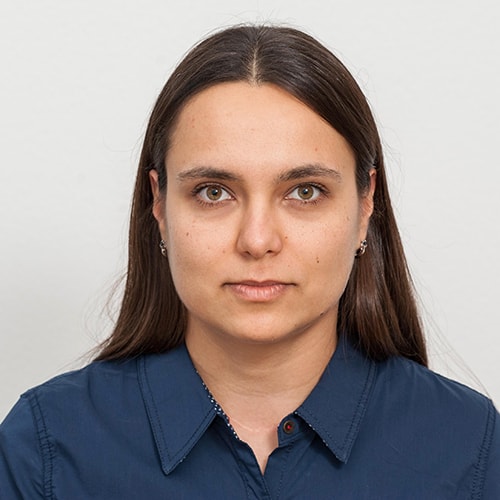
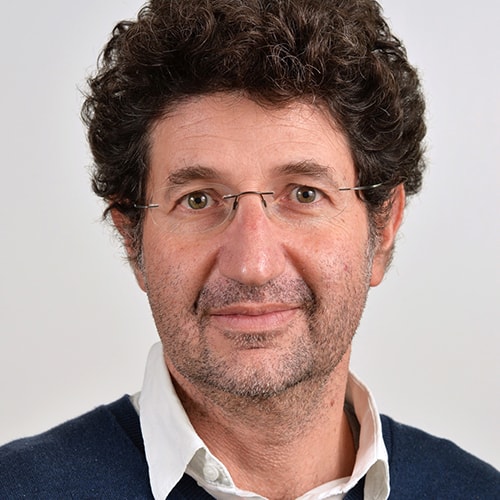
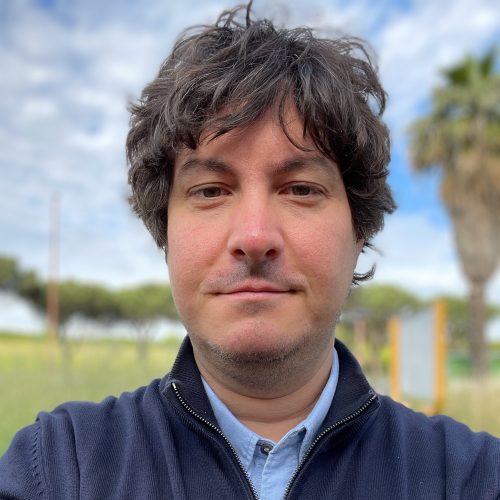
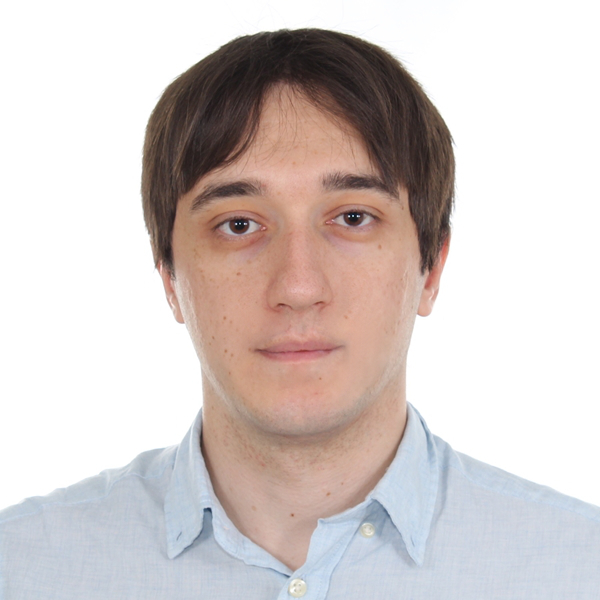
Jan Madsen is a Professor at DTU Compute, Technical University of Denmark, and Head of the Embedded Systems Engineering section. His research focuses on system-level modeling and design of embedded computing systems, particularly cyber-physical systems, microfluidic biochips, and synthetic biology applications. Develops design automation tools and methodologies for embedded systems Supervises numerous PhD students and leads major research projects Research Interests Key areas include: Embedded systems-on-a-chip Cyber-Physical Systems (Internet-of-Things) Microfluidic Lab-on-Chip devices Synthetic biology with molecular computing Design, modeling, and optimization of complex systems Scientific Awards DATE Fellow (2019) IEEE CEDA Outstanding Recognition (2019) DTU Scientific Advise Award (2013) Best Paper Awards at MECO (2013) and CASES (2009) Jorck’s Foundation Research Award (1995) Publications His 14+ journal papers and 115+ conference papers demonstrate expertise in: SystemC-based modeling frameworks Energy-aware sensor networks Self-healing eDNA architectures Microfluidic biochip synthesis RTOS modeling and MPSoC exploration
Olga Saukh is an Associate Professor at the Institute of Technical Informatics, Graz University of Technology (TU Graz), and a Faculty member at the Complexity Science Hub Vienna (CSH). She leads the Embedded Learning and Sensing Systems research group, which operates across both institutions, focusing on the design and deployment of efficient AI-based systems on edge and mobile platforms. Her work bridges deep learning and embedded systems, with applications in environmental monitoring, precision agriculture, and digital health. Ph.D. in Computer Science, University of Bonn (2009) Habilitation in Embedded Systems, TU Graz (2020) Postdoctoral Training, ETH Zurich (2010–2016) B.Sc. in Applied Mathematics, Taras Shevchenko National University of Kyiv (2002) M.Sc. in Applied Computer Science, University of Freiburg (2004) Her research centers on efficient machine learning, particularly model optimization, neural network pruning, and contrastive learning for resource-constrained devices. She is deeply engaged in solving real-world challenges in IoT, sensor networks, and cyber-physical systems. Her work emphasizes data privacy, sustainability, and practical deployment of AI at the edge. The 15 most recent publications highlight a strong trend in efficient deep learning, including model compression, pruning, and transfer learning, applied to diverse domains such as environmental sensing (air quality, pollution tracking), digital agriculture (cattle farming), and embedded AI (sensor calibration, on-demand sensing). Her work frequently appears in top-tier venues like NeurIPS, ICLR, and IEEE/ACM IPSN, reflecting her leadership at the intersection of machine learning and embedded systems. Scientific awards include: CONET Ph.D. Academic Award (2010) Multiple Best Paper Awards at IEEE PerCom, ACM/IEEE IPSN, IEEE ICPADS, IEEE SECON, and UrbCom Spotlight and Oral presentations at ICML and CoLLAs workshops Ph.D. scholarship from IPVS, University of Stuttgart (2004–2005) Prizes in Ukrainian national mathematics competitions (1996–1998) Olga Saukh actively serves on program committees of leading international conferences in machine learning and embedded systems. She has advised multiple students and leads a collaborative research group spanning TU Graz and CSH Vienna. Her group develops practical AI systems for real-world deployment, with a focus on sustainability and privacy. She co-organizes the public EfficientML reading group and has secured recognition through numerous grants and awards. Her future work continues to explore the theoretical and practical challenges of deploying efficient, trustworthy AI in mobile and embedded environments. Her research group, Embedded Learning and Sensing Systems, operates jointly between TU Graz and CSH Vienna, fostering interdisciplinary collaboration across institutions. The team develops AI solutions for edge computing, sensor networks, and cyber-physical systems, with a strong emphasis on environmental sustainability and data privacy. Members work on joint challenges using advanced collaboration tools, reflecting the distributed nature of modern academic research.
Anders Krogh is a Professor at the Department of Computer Science, University of Copenhagen, and also holds a position at the Department of Public Health in the Section for Health Data Science and AI. He serves as the head of the Center for Health Data Science (HeaDS) in the Faculty of Health and Medical Sciences. Previously, he was affiliated with the Department of Biology at the University of Copenhagen until 2020. Dr. Krogh earned his PhD in theoretical physics but transitioned into machine learning and bioinformatics during his doctoral studies. His research spans both theoretical foundations and practical applications in these fields. He is particularly renowned for his pioneering work on hidden Markov models for biological sequences, which has had significant impact in computational biology. In recent years, Krogh's research has focused on deep generative models applied to gene expression data and other biomedical applications. His work bridges computer science with healthcare, developing AI-driven approaches for precision medicine, cancer diagnostics, and analysis of complex biological systems. His current research integrates machine learning with quantum computing applications in biomolecular modeling. Analysis of his recent publications reveals a strong trend toward applying artificial intelligence to healthcare challenges, particularly in rare diseases, cancer diagnostics, and personalized medicine. His work increasingly incorporates federated learning approaches to address privacy concerns while enabling collaborative research across institutions. There's also a growing emphasis on quantum computing applications in biomolecular modeling and drug discovery. As head of the Center for Health Data Science, Krogh leads interdisciplinary research efforts that bring together computer scientists, medical researchers, and clinicians. His team develops novel computational frameworks like MOSAIC for multimodal analysis of rare cancers and multiDGD for multi-omics data integration. These tools are designed to translate AI innovations into clinical practice while addressing the unique challenges of medical data.
Desmond Elliott is an Associate Professor in the Natural Language Processing section at the Department of Computer Science, University of Copenhagen (UCPH). His research focuses on multimodal and multilingual models with specific emphasis on vision-language integration and tokenization-free NLP approaches. He teaches Bachelor and Master's level courses including Advanced Topics in Natural Language Processing (since 2019), Grundlæggende Data Science (since 2023), and previously Data Science (2021-2023). His research interests center on building and understanding multimodal and multilingual models , particularly exploring vision and language interactions through billion-parameter systems. Current work investigates cultural representation disparities in vision-language models, parameter-efficient captioning, and multimodal distributional semantics across diverse domains including food culture and medical imaging. His methodology emphasizes real-world applicability in non-English contexts and ethical considerations in multimodal systems. Elliott's recent publications (2025) demonstrate leadership in multimodal NLP, with significant contributions to vision-language pretraining, multilingual evaluation frameworks, and clinical NLP applications. His work spans theoretical advancements in model architectures and practical implementations addressing challenges in low-resource languages and domain adaptation. Best Long Paper Award at EMNLP 2021 Best Poster Award at COLING 2019 As an active educator, Elliott contributes to courses on Fair and Transparent Machine Learning and previously taught Information Retrieval. His research collaborations span international institutions with particular focus on European and non-English language contexts, reflecting UCPH's recognition as Europe's #1 institution for HCI research over the past decade.
Jiri Srba is a Professor at Aalborg University's Department of Computer Science, part of the Technical Faculty of IT and Design. He leads research in the Distributed, Embedded and Intelligent Systems group and contributes to projects like "ControLing wAter In an uRban Environment" and "Collective Adaptive System SynThesIs using Non-zero-sum Games". His office is located at Selma Lagerløfs Vej 300, 9220 Aalborg Øst, Denmark. Contact him at +4599409851 or srba@cs.aau.dk. His core research focuses on formal methods and applied computer science: Model checking and verification of concurrent systems Petri nets and their applications Network protocol verification and synthesis Distributed system correctness Automated reasoning for industrial systems His publication record shows strong emphasis on network verification, model checking optimization, and applying formal methods to environmental systems. Recent work integrates computer science with sustainable engineering, particularly in water management systems and energy control.
Søren Lundbye-Christensen is an Associate Professor and Biostatistician affiliated with the Clinical Institute at the Faculty of Health Sciences, Aalborg University, and Aalborg University Hospital in Denmark. He specializes in biostatistical support for medical research, with a strong emphasis on cardiovascular and epidemiological studies. His research interests include biostatistics, survival analysis, cohort studies, clinical epidemiology, and statistical modeling in public health. He has contributed to a wide array of healthcare research, particularly in cardiovascular diseases, cancer, maternal health, and infectious diseases. His methodological expertise spans time-to-event analysis, registry-based research, and interval-censored data modeling. The recent publications highlight a strong trend in applying advanced statistical methods to large-scale clinical and population-based datasets. His work often involves collaboration with medical researchers to derive prognostic models, validate clinical databases, and assess public health outcomes. Key themes include cardiovascular risk, fertility, cancer biomarkers, and implementation of medical training programs. Scientific Contributions and Recognition: Published over 320 research articles and datasets. Active contributor to methodological advancements in biostatistics. Regular peer reviewer, including for journals like the R Journal. Public engagement through media appearances on statistics and health. Academic Advising and Grants: Søren has supervised 31 student theses, formally serving as PhD supervisor for 14 theses and as a biostatistical advisor for 19 others, primarily in mathematics and statistics. He has participated in numerous research projects funded through institutional and national grants, including studies on seasonal disease trends, postoperative complications, and metabolic disease prediction. His work often involves interdisciplinary collaboration across medicine, public health, and data science. Labs and Research Teams: He is embedded in collaborative research networks at Aalborg University Hospital and Aalborg University, contributing statistical expertise to clinical research groups. He is involved in projects utilizing Danish national health registries and has contributed to the development and validation of clinical databases. His work supports both hypothesis-driven medical research and methodological innovation in biostatistics.
Johan Ulrik Lind is an Associate Professor and Groupleader at the Department of Health Technology, Technical University of Denmark. His research focuses on cutting-edge biomedical engineering solutions including tissue engineering, bioprinting, and microphysiological systems. He actively contributes to additive manufacturing and functional materials development. Current Affiliation: Department of Health Technology, DTU Research Areas: 3D bioprinting, hydrogel technologies, microsystems engineering Expertise: UN Sustainable Development Goals for health and well-being Lind's work spans additive manufacturing for tissue engineering, functionalized biomaterials , and dynamic microphysiological systems . His recent publications highlight innovations in hydrogel formulation, bioink development, and particulate drug delivery systems. Notably, he holds a patent for transparent bioink formulation. He supervises multiple PhD projects including: micro-perfused bioartificial ovaries, embedded bioprinting of perfusable vasculatures, and 3D printed microsystems for tissue actuation. His research portfolio demonstrates strong interdisciplinary collaboration across engineering, biology, and pharmaceutical sciences.
Stephen Alstrup is a Professor in the Algorithms and Complexity section at the Department of Computer Science (DIKU), University of Copenhagen, Faculty of Science. His research bridges theoretical computer science with practical applications in modern computational challenges. His primary research interests include: Algorithm design and analysis Graph algorithms and data structures Big Data processing techniques Streaming algorithms and Internet distribution Theoretical foundations with practical implementations Alstrup's work demonstrates how theoretical algorithm research can lead to real-world applications, as evidenced by his development of Octoshape technology for large-scale Internet streaming. His research spans from fundamental theoretical problems to applications in Big Data, cloud computing, and information retrieval systems. He has published extensively with 93 research outputs including journal articles, conference proceedings, and books. His recent work focuses on graph spanners, semantic hashing, recommendation systems, and universal graph structures, showing continued productivity in theoretical computer science. Alstrup actively engages with industry and media, contributing to discussions about Big Data applications, technology innovation, and how businesses can collaborate with universities to access cutting-edge knowledge and funding opportunities. His work has been featured in 10 media contributions discussing practical applications of algorithms in education, municipal IT projects, and business innovation.
Vito Latora is a Professor of Applied Mathematics and Chair of Complex Systems at the School of Mathematical Sciences, Queen Mary University of London, and also holds the position of Professor of Theoretical Physics at the University of Catania. He leads the Complex Systems and Networks Group, driving cutting-edge research at the intersection of physics, mathematics, and interdisciplinary sciences. His research focuses on complex systems, particularly the structure and dynamics of networks, including multiplex, temporal, and higher-order networks such as simplicial complexes and hypergraphs. He explores applications in social, biological, financial, and cognitive systems, with recent work on creativity, innovation, and success through network analysis. The 15 most recent publications reveal a strong trend in advancing network theory beyond pairwise interactions, with a focus on higher-order structures, memory effects, synchronization, and epidemic spreading. His work combines rigorous mathematical modeling with real-world applications, often published in high-impact journals like Nature Communications , Physical Review Letters , and Science Advances . Dual communities in spatial and biological networks Modeling epidemics with limited detection resources Synchronization via higher-order and directed interactions AI-driven financial risk management Evolutionary games on hypergraphs Interdisciplinary success and funding dynamics Vito Latora has mentored several researchers who appear as co-authors, including Iacopini, Williams, Di Bona, and Lacasa. While specific grants are not listed, his collaborative projects with neuroscientists and anthropologists, along with frequent publications, suggest active funding. He is involved in major scientific events such as NetSci 2023, indicating leadership in the network science community. He leads the Complex Systems and Networks Group at Queen Mary, fostering a collaborative environment for studying complex systems through theoretical, computational, and data-driven approaches.
Pernille Bjørn is a Professor in Computer Supported Cooperative Work (CSCW) at the Department of Computer Science , University of Copenhagen (DIKU), where she has been since May 2015. Her research investigates collaborative work practices to design cooperative technologies, focusing on domains like healthcare, global software development, startup companies, and digital fabrication. Faculty of Science, University of Copenhagen Human-Centred Computing Section Research Interests : Bjørn’s work spans CSCW , Human-Computer Interaction , and Digital Fabrication , with applications in healthcare systems, cross-cultural software development, and inclusive technology design. She explores collaborative virtual reality training, FemTech, and crisis computing. ACM Distinguished Member (2024) Publications : Published in top venues like ACM Transactions on Computer-Human Interaction , CSCW , and CHI , her recent work examines hybrid work asymmetry, neurodiverse accessibility, and art-driven collaborative research.
Giulio Cimini is Associate Professor of Theoretical Physics in the Department of Physics at the University of Rome Tor Vergata and a Research Associate at the 'Enrico Fermi' Research Center. He is a statistical physicist with a strong interdisciplinary focus on complex networks and their applications in socio-economic systems. His research interests include: Statistical Physics of Complex Networks Reconstruction and Validation of Economic Networks Social Network Interactions and Financial Markets Systemic Risk and Financial Contagion Scientific Success, Fitness, and Complexity Adaptive Social Recommendation Codon Usage Bias and Protein Interaction Networks His recent publications reveal a strong trend in applying statistical physics to real-world networks, particularly in finance and social systems. Key themes include the modeling of systemic risk in supply chains and financial networks, the dynamics of collective action on platforms like Reddit (e.g., the GameStop short squeeze), and the development of network reconstruction methods using maximum entropy and optimal transport frameworks. His work often combines empirical analysis with theoretical modeling. Scientific awards and recognitions include: Associate Editor, Frontiers in Physics – Interdisciplinary Physics Board Member, Network Science Society Member, Council of the Complex Systems Society Steering Committee, CCS/Italy He has advised or collaborated with numerous researchers, particularly in projects related to economic networks and complex systems. His work has been supported by Italian national grants such as PRIN and PNRR. He leads or co-leads research projects including RENet and C2T. His research is conducted within interdisciplinary teams involving physicists, economists, and computer scientists, often in collaboration with institutions like ISC-CNR, IMT Lucca, and the Network Science community.
Wiebke Meesenburg is an Assistant Professor in the Department of Civil and Mechanical Engineering at the Technical University of Denmark (DTU), specializing in Thermal Energy. She is actively involved in research on large-scale heat pump systems, district heating integration, and digital twin applications for energy optimization. Her research focuses on sustainable thermal energy systems, particularly the design, monitoring, and optimization of heat pumps in district heating networks. Key areas include dynamic modeling, real-time adaptation, fouling mitigation, and the integration of renewable energy sources. She contributes to advancing energy efficiency and sustainability in urban infrastructure. The recent publications highlight a strong trend toward digitalization and optimization of thermal systems, with an emphasis on model-based monitoring, digital twins, and operation scheduling using advanced algorithms. Her work bridges mechanical engineering, energy systems, and computational modeling to improve system performance and reliability. She has supervised PhD research and contributed to major projects such as the implementation of digital twins for heat pump systems and EnergyLab Nordhavn. Collaborations involve key figures in energy research at DTU, including Professor Brian Elmegaard. While no formal awards are listed, her active participation in conferences and project leadership demonstrates recognition in her field. Wiebke Meesenburg has been involved in organizing and presenting at international events, including the 35th International Conference on Efficiency, Cost, Optimization, Simulation and Environmental Impact of Energy Systems and workshops on Modelica and flexible heat supply. Her work is embedded in interdisciplinary teams focused on future energy infrastructures and smart urban energy systems.
Farshad Moradi is a Professor at the Department of Electrical and Computer Engineering at Aarhus University, specializing in neuromorphic engineering, spintronics, and biomedical device design. His work focuses on integrating advanced materials and circuits for applications in neural interfaces, energy-efficient computing, and wireless biomedical systems. Research Interests include: Spintronic-based neuromorphic computing architectures Ultra-low power analog/mixed-signal integrated circuits Ultrasonically powered implantable medical devices Neural signal processing and seizure detection systems Wireless energy transfer and structural health monitoring Key Projects (2016-2026): SPICE: Spintronic-Photonic Integrated Circuit Platform PHOTON-NeuroCom: Photonic-assisted Neuromorphic Computing Neuro-Sense: Flexible bioinspired neuroprostheses CorroSense: Self-powered corrosion monitoring HERMES: Hybrid Enhanced Regenerative Medicine Systems Recent innovations include: Ultrasonically powered optogenetic implants Low-power neural amplifiers for deep-brain interfaces Spin-torque nano-oscillator-based neuromorphic hardware Energy harvesting systems for structural monitoring
Abdulkadir Çelikkanat is an Assistant Professor in the Department of Computer Science at Aalborg University, Denmark, where he is part of the DKW (Data Science and Knowledge) research group. His research focuses on genome representation learning, graph representation learning, and machine learning applications in bioinformatics and network science. Research Interests: His work lies at the intersection of artificial intelligence and biological data analysis, with a strong emphasis on scalable methods for genome and metagenome representation using k-mer profiles, as well as modeling dynamic and complex networks. He develops novel machine learning models to capture the structure and evolution of graphs over time. Recent Research Trends: His recent publications, appearing in top-tier venues like NeurIPS, AAAI, and AISTATS, demonstrate a consistent focus on improving scalability and effectiveness in representation learning. Key themes include revisiting traditional k-mer methods for modern deep learning, modeling citation dynamics, and developing continuous-time node embedding techniques. His work bridges theoretical advances with practical applications in genomics and network analysis. Scientific Awards: Best Paper Award, TGL Workshop @ NeurIPS 2023 Top Reviewer, LoG 2024 Conference Advising and Grants: While current advisees are not listed, he is actively leading research projects as evidenced by his recent publications and project organization (e.g., Nordic ProbAI summer school). His work is supported through institutional affiliations and likely competitive research funding, given the high-impact venues of his publications. Labs and Teams: He is affiliated with the DKW group at Aalborg University. Previously, he was part of the Inria OPIS team and the Centre for Visual Computing during his Ph.D., and worked in the Section for Cognitive Systems at DTU Compute as a postdoctoral researcher.
Luka Radic is a Researcher in the Machine Learning Section at the Department of Computer Science, University of Copenhagen. His work bridges theoretical and applied research in machine learning, with a focus on quantum machine learning , large language models , and fairness in AI systems.