Daniel Einarson is a Senior Lecturer in Computer Science at Kristianstad University’s Faculty of Natural Science, where he teaches Software Engineering and contributes to the Master Programme in Computer Science with a focus on Sustainable Development. He also instructs pedagogical courses on Education for Sustainable Development (ESD) for university teachers and participates in university-wide sustainability initiatives. Research Interests : Programming language theory, real-time systems, IoT applications for e-health and sustainable development, distributed systems, and ICT’s role in environmental progress. Teaching : Software Engineering, ESD pedagogy, and sustainable development integration in higher education. Research Output : His recent work includes: IoMT systems for predicting medical device failures in home care IoT solutions for vulnerable populations Machine learning in concrete crack detection Employer perspectives on alumni contributions to sustainability Behavioral modeling of birds Home healthcare IT systems Distributed systems for environmental monitoring Collaborations : Active in cross-disciplinary projects, partnering with researchers like K. Klonowska, D. Mengistu, and M. Teljega. Engaged in international conferences such as SNCNW 2025 and the International Conference on Electronic Systems and Intelligent Computing. He serves as a reviewer for journals like Measurement and supervises PhD theses externally.
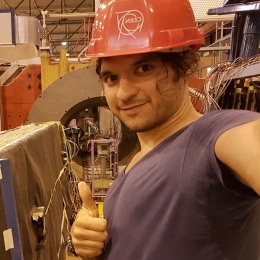
Eduardo Valdés Santurio is a Postdoctoral Fellow at the Department of Physics , Stockholm University , specializing in hardware development for radiation-tolerant environments within the ATLAS - Accelerator Based Particle Physics research group. His work focuses on front-end electronics and Trigger Data Acquisition (TDAQ) systems for the ATLAS Tile Calorimeter upgrade, addressing challenges in high-luminosity LHC (HL-LHC) conditions. Research Interests: Radiation-tolerant electronics design FPGA firmware development (Xilinx ISE, Vivado) High-speed optical link communication (SFP+, GBTx) Radiation damage mitigation (TID, NIEL, SEL, SEU) Redundant system architecture Data integrity protocols (CRC, FEC) Publications highlight contributions to: Daughterboard redesign for HL-LHC Radiation qualification testing Beam test analysis of calorimeter modules Calibration of upgraded detector electronics Responsibilities: Chair of ATLAS TileCal Upgrade weekly electronics meetings Coordinator of Stockholm TileCal Daughterboard development Teaching Lab Assistant for courses in electronics and radiation detectors Contributor to technical design reports and radiation safety protocols
Martin Törngren is a Professor of Embedded Control Systems at the Department of Mechatronics and Department of Mechanical Engineering at KTH Royal Institute of Technology. He is actively engaged in research and teaching within Embedded Systems , Mechatronics , and Cyber-Physical Systems , focusing on architecture, model-based development, and system integration. His work bridges control systems and embedded systems, emphasizing reliability and safety in industrial applications. Research Leadership: Technical coordinator of the Artemis project iFEST, focusing on functional safety for automated systems. Education: Teaches courses like Cyber-physical Systems (MF2140) , Mechatronics Higher Course , and doctoral-level courses in embedded systems. Research Interests: Törngren's work spans model-based systems engineering , distributed control systems , co-design of control and computer systems , and system safety . He emphasizes industry-university collaboration , particularly with the automotive and automation sectors. His publications highlight trends in automated driving safety , edge computing , and toolchain integration . Collaborative Initiatives: He co-founded the Innovative Centre for Embedded Systems (ICES) and participates in networks like Artist2 and ArtistDesign. His research projects often involve partnerships with global companies and academic institutions.
Jan Sandqvist is a Senior Associate Professor at Linköping University, affiliated with the Department of Health, Medicine and Caring Sciences within the Faculty of Medicine and Health Sciences. He holds a Doctor of Medical Science degree from 2007 and has been a registered occupational therapist since 1994. Education: Registered Occupational Therapist (1994) Doctor of Medical Science (2007) Research Interests: Jan's research focuses on work ability assessment, vocational rehabilitation, and the development of clinical assessment instruments such as the Assessment of Work Performance (AWP) and Assessment of Work Characteristics (AWC). These tools are grounded in the Model of Human Occupation (MOHO) and are used internationally to evaluate work capacity and job demands. His recent work emphasizes intervention development to enhance employability and evidence-based rehabilitation practices. Articles Overview: His recent publications address practical challenges in healthcare ergonomics, social insurance literacy, and the validation of assessment instruments. This reflects his commitment to translating theoretical frameworks into actionable tools for workplace rehabilitation and policy. Awards: No scientific awards explicitly mentioned in the text. Advising & Grants: Assistant supervisor to doctoral student Maria Borgestig Project coordinator for Försäkringskassan’s Activity Ability Analysis (AFU) evaluation (SEK 3 million grant) Collaborator on projects involving international translations of AWP and psychometric evaluations Labs & Teams: Jan is part of the Unit of Occupational Therapy, HELIX Competence Centre, and collaborates with institutions like Karolinska Institutet and the University of Illinois at Chicago. His work is embedded in interdisciplinary divisions focused on prevention, rehabilitation, and community medicine.
Ingemar Söderquist is an Adjunct Professor at the Division of Electronics and Embedded Systems, Royal Institute of Technology (KTH), and a Technical Fellow at Saab within Electronics Design in Avionics. His research focuses on safe, reliable, and high-performance embedded real-time systems, combining system design, software/hardware technology, and chip-level infrastructure. Education: M.S. in Electronic and Electrical Engineering, University of Linköping, 1985 Ph.D. in Electronic Devices, University of Linköping, 2002 With over 30 years of experience, Ingemar specializes in industry-academia collaborations to develop avionics technologies, methods, and tools. He joined Saab in 1985 and became an Adjunct Professor at KTH in May 2022.
Daniel Varro is a Professor and Head of Unit at the Department of Computer Science (IDA) of Linköping University, Sweden. He leads the Software and Systems (SAS) department, focusing on AI, software engineering, and cyber-physical systems. His research is supported by major grants like the Vinnova 5.6 million SEK project for AI-generated software quality assurance. Affiliation: Department of Computer Science (IDA), Linköping University Department: Software and Systems (SAS) Research Focus: Model-based systems, large language models for code analysis, reinforcement learning, and cyber-physical safety verification. His recent work includes empirical studies on machine learning notebooks, infrastructure code smells, and data leakage in large language models. He collaborates extensively within the Wallenberg Autonomous Systems Program (WASP) and trains doctoral students in software engineering.
Karl Meinke is a Professor at KTH Royal Institute of Technology, where he serves as Head of the Computer Science Department and Head of the Division of Theoretical Computer Science within the School of Electrical Engineering and Computer Science. His research focuses on applying machine learning techniques to software testing, particularly for safety-critical systems like autonomous vehicles and embedded systems. His research interests span machine learning, software testing, safety critical systems, embedded systems, autonomous driving, digital pathology, and graph neural networks. Meinke has developed innovative approaches like Learning-Based Testing that combine machine learning with formal methods for system validation. His work bridges theoretical computer science with practical applications in automotive systems and medical diagnostics. His recent publications show a strong trend toward applying graph neural networks to diverse domains including program analysis, digital pathology, and autonomous vehicle testing. His research demonstrates a consistent focus on solving the test oracle problem and generating meaningful test cases for complex systems where traditional testing approaches fall short. Meinke actively collaborates with Karolinska Institutet (KI), indicating interdisciplinary work between computer science and medical research. He is responsible for Masters level education in software testing at KTH and serves as examiner for several advanced courses including Degree Projects in Computer Science and Software Reliability. His research group has developed tools like LBTest for learning-based testing of reactive systems, and he has secured funding for projects such as the ITEA3 Testomat Project focused on next-level test automation. His work has significant implications for validating autonomous systems where safety is paramount. Meinke leads research in using machine learning to address fundamental challenges in software testing, particularly for systems where traditional test oracles are unavailable or impractical. His approach of combining active learning with formal specifications has created new pathways for validating complex cyber-physical systems.
Voravit Tanyingyong is a Lecturer at Kungliga Tekniska Högskolan (KTH Royal Institute of Technology) working in the Division of Communication Systems within the School of Electrical Engineering and Computer Science. He has been working at KTH since 2003, demonstrating a long-standing commitment to the institution. His contact information includes telephone number +46 8 790 42 08 and email voravit@kth.se, with his office located at Malvinas Väg 10. Dr. Tanyingyong received his PhD in Information and Communication Technology from KTH in 2021, with his doctoral thesis titled "Performance, Availability, and Scalability in Open Networking Platforms for Internet Services." Prior to that, he completed his Licentiate thesis at KTH in 2014 titled "Performance and Reliability in Open Router Platforms for Software-Defined Networking," establishing a strong foundation in networking research. Dr. Tanyingyong's research interests span computer systems, network applications, protocols, architectures, and the Internet of Things (IoT). His work demonstrates a consistent focus on practical implementations of networking technologies with applications in various domains including environmental monitoring, healthcare, and smart grids. His research bridges theoretical networking concepts with real-world implementations, particularly in the area of IoT systems where he has developed testbeds for air quality monitoring and smart grid applications. A significant portion of his work addresses performance, reliability, and scalability challenges in modern networking environments. Analysis of Dr. Tanyingyong's publication history reveals a clear evolution in his research focus. Early work centered on router/server performance and OpenFlow switching, reflecting the emergence of Software-Defined Networking. More recently, his research has shifted toward IoT applications, with publications on scalable IoT sensing systems, air quality monitoring, and IoT for smart DC grids. His work consistently addresses practical implementation challenges while maintaining theoretical rigor, with a particular emphasis on system performance, reliability, and scalability. The interdisciplinary nature of his research connects computer networking with environmental science, healthcare, and energy systems. Advanced Internetworking (IK2215) - Teacher Internet of Things (IK1332) - Teacher Networks and Communication (IK1203) - Teacher Ethics and Sustainable Development for Engineers (II2210) - Course Responsible Projects and Project Methods (II1302) - Course Responsible Multiple degree projects as examiner across Computer Engineering, Computer Science and Electrical Engineering specializations Dr. Tanyingyong has established himself as a dedicated educator who bridges theoretical networking concepts with practical implementations. His teaching portfolio reflects his research expertise while covering essential networking fundamentals and emerging IoT technologies. As course responsible for Ethics and Sustainable Development for Engineers, he demonstrates commitment to broader engineering principles beyond technical skills.
Dr. Rickard Karlsson works as a Lecturer at Linköping University's Department for Swedish as a Second Language, Rhetoric and Language Support (SAROS) under the Department of Culture and Society (IKOS). His teaching focuses on Swedish language didactics, grammar, and assessment of learner languages, with supervision across academic levels. PhD in Languages and Cultures of Europe Upper Secondary School Teacher in Swedish as a Second Language Research spans empirical analysis of adult language acquisition , historical linguistics , and multilingualism ideologies . Google Scholar publications reveal interdisciplinary contributions to particle filter algorithms and automotive sensor systems from 2001-2025. Notable collaborations include Fredrik Gustafsson and Per-Johan Nordlund. Recent publications (2025-2016) merge automotive engineering and historical Linguistics, covering tire diagnostics, cultural exchange patterns, and vibration-based navigation. This dual expertise reflects his transition from technical research to language education, maintaining academic connections across disciplines.
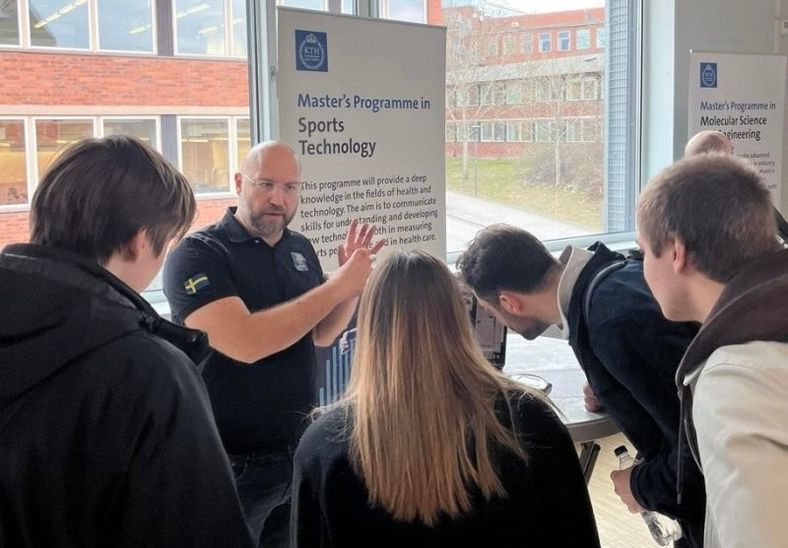
Jonas Willén is a Lecturer at KTH Royal Institute of Technology, working within the Division of Health Informatics and Logistics. He serves as Program Director for the MSc in Sports Technology and Director of RIU (National Sports University) at KTH. His professional focus centers on developing technological solutions to improve quality of life through health and sports applications. Willén's research interests span health informatics and sports technology, with particular emphasis on wearable sensor systems, data synchronization, and applications for assisted living. His work addresses critical issues in elderly care, such as developing mobile security alarm systems that overcome the limitations of current home-bound solutions. He also focuses on sports instrumentation for performance analysis and coaching, with applications for both elite athletes and general fitness. His publication record from 2011-2025 shows consistent research in sensor networks, wearable technology, and applications in healthcare and sports. The research trends indicate a progression from foundational work on data synchronization and sensor networks toward more applied solutions in health monitoring and sports performance analysis. His recent work demonstrates increasing focus on real-world implementation of these technologies. As an educator, Willén teaches multiple courses including FullStack Development and DevOps, Health and Sports Instrumentation, Medical Engineering, Mobile Applications and Wireless Networks, and Sports Technology and Instrumentation. His teaching reflects his research interests, bridging theoretical knowledge with practical applications in technology development. Willén's professional philosophy emphasizes technology's potential to evolve human capabilities, particularly in health and sports contexts. His work consistently aims to translate technical solutions into tangible benefits for end users, whether seniors needing reliable security systems or athletes seeking performance insights.