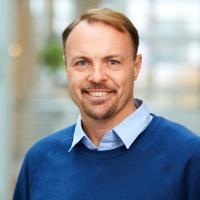
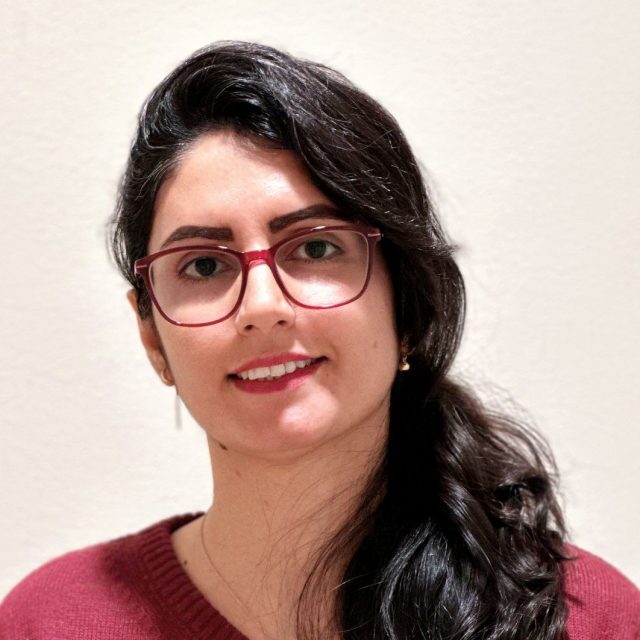
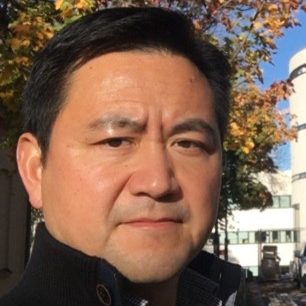
Edison Pignaton De Freitas is a Professor at the School of Information Technology , Halmstad University. His research focuses on wireless sensor networks and software technologies, particularly in applications involving UAVs and intelligent transportation systems. Research areas include machine learning for energy systems, vehicular network safety protocols, and software-defined networking Recent publications emphasize intelligent infrastructure models (2025), UAV base station positioning (2025), and SDN-based FANET emulation (2025) Key contributions span multiple domains: Scientific Focus: - Machine learning applications in photovoltaic systems and transportation networks - UAV communication optimization and swarm intelligence algorithms - Energy-efficient sensor network design for healthcare and military surveillance - Advanced antenna array positioning methods for vehicular scenarios
Birgitta Lindström is an Associate Professor of Informatics at the University of Skövde, Sweden, where she has been employed since 2000. She serves as Director of PhD education in Informatics since 2019 and leads the Distributed Real-Time Systems (DRTS) research group. Her academic home is within the School of Informatics, specifically the Department of Information Technology, where she teaches courses in software testing, concurrent programming, distributed systems, and software engineering experimentation. Lindström's research focuses on software testing methodologies, particularly mutation testing, testability analysis, and testing approaches for distributed real-time systems. Her work bridges theoretical foundations with practical applications in critical infrastructure protection, cybersecurity, and model-based testing. She has made significant contributions to understanding strong mutation theory, mutant subsumption, and efficient test set generation. Her recent publications reveal a growing emphasis on applying software testing principles to critical infrastructure systems, particularly smart grids and cyber-physical systems. The DOMINO project (2017-2025) represents her current focus on reducing the number of mutants needed for effective testing, while her earlier work in the ELVIRA (2017-2020) and TOCSYC (2013-2018) projects addressed testing of critical system characteristics including performance efficiency, robustness, and testability in complex embedded systems. Guldäpplet (Best Teacher Award) 2012 Lindström has supervised numerous BSc and MSc final year projects and served as examiner for various courses. Her research has been supported by substantial funding from sources including EU/ISF, KKS (30 MSEK for TOCSYC), and Vinnova (multiple projects totaling over 6.5 MSEK with matching from Saab Aeronautics). She has been instrumental in developing curriculum for computer science programs and establishing software testing education initiatives, including founding the TestEd workshop series focused on software testing education. As research leader of the DRTS group since 2015, she has fostered collaboration across institutions including Mälardalen University, Swedish Institute of Computer Science, Blekinge Institute of Technology, and Karlstad University. Her current DOMINO project continues this tradition of collaborative research addressing fundamental challenges in mutation testing efficiency.
Ragnar Thobaben is a Professor in Communication Theory at the Division of Information Science and Engineering, part of the School of Electrical Engineering and Computer Science (EECS) at KTH Royal Institute of Technology. He has held this position since December 2006 and is affiliated with the CERCES Center for Resilient Critical Infrastructures. His research focuses on information and coding theory, with applications to secure communication systems, machine learning generalization, and DNA-based data storage. He has also contributed to data-driven decision tools for critical care medicine, such as in sepsis management. Education: Ragnar earned a Dipl.-Ing. (M.Sc.) in Electrical Engineering from Christian Albrechts University, Kiel, Germany in 2001, followed by a Dr.-Ing. (Ph.D.) in Electrical Engineering in 2007. His academic journey is complemented by extensive editorial roles, including Editor for IEEE Transactions on Communications (2016–2020) and IEEE Transactions on Information Forensics and Security (2020–2023). He has also served as Technical Program Committee member for major IEEE conferences like GLOBECOM, ICC, and PIMRC, and held organizational roles such as Publicity Chair for the 2011 IEEE Swedish Communication Technologies Workshop and Local-Arrangement Chair for the 2019 IEEE Information Theory Workshop. Research Interests: His work bridges theoretical and applied domains, emphasizing robustness and reliability in communication systems. Key topics include physical-layer security for critical infrastructures, information-theoretic PAC-Bayes bounds in machine learning, and microwave engineering innovations like glide symmetry in antenna design. He also explores interdisciplinary applications, such as data-driven tools for ICU patient monitoring and secure wireless power transfer. Advising & Grants: Thobaben has advised multiple PhD students, including current co-supervision of Martin Lindström (machine learning) and collaborations with Karolinska Institute on medical informatics projects (Anna Sundelin and Navid Korah Soltani under main supervisor Johan Mårtensson). His prior advisees span topics from generalization theory to secure relaying in cognitive networks. His recent publications (2024–2022) highlight advancements in PAC-Bayes bounds, sepsis clinical studies, and antenna engineering.
David Broman is a Professor at KTH Royal Institute of Technology in Sweden, leading the Division of Software and Computer Systems (SCS) and serving as Associate Director Faculty for Digital Futures. He holds a Ph.D. in Computer Science from Linköping University (2010), with visiting roles at UC Berkeley (2012–2016) and Stanford University (2023–2024). His research spans programming languages, real-time systems, and probabilistic machine learning, emphasizing secure and efficient compilation techniques. Education: Ph.D. in Computer Science (Linköping University, 2010) Visiting Roles: UC Berkeley (2012–2014 part-time), Stanford University (2023–2024) Research Interests: David focuses on advancing programming language theory, compilers, and probabilistic methods. Key areas include transformer-based compilation, cyber-physical systems, and formal verification. His work bridges theory and practice, addressing challenges in software reliability and efficiency. Awards: Notable recognitions include the Best ETAPS Paper Award (2023), Distinguished Artifact Award (ESOP 2022), and Teacher of the Year (KTH 2017). His contributions also include grants from the Swedish Foundation for Strategic Research and Wallenberg AI, Autonomous Systems and Software Program (WASP). Advising & Grants: David mentors graduate students (e.g., Gizem Caylak, Viktor Palmkvist) and leads projects funded by WASP, focusing on next-generation compilation techniques. He also contributed to tools like Miking, Timed C, and FlexPRET. Labs & Teams: His team develops frameworks for probabilistic programming and real-time systems, emphasizing collaboration with industry and academia through initiatives like Digital Futures at KTH.
Professor Jörgen Hansson holds a PhD in Computer Science from Linköping University (1999). He has served as a lecturer (2000), associate professor (2005), and professor (2008) at Linköping University before joining Chalmers University of Technology as a professor of software engineering (2010–2013). Since 2013, he has been at the University of Skövde as a professor of information technology, leading initiatives in internationalization and strategic development. He has held leadership roles in the Swedish graduate school in computer science (CUGS, 2001–2005), the Software Engineering Institute at Carnegie Mellon University (2005), and the Software Centre (2010–2013). His research focuses on software engineering, model-based systems, technical debt, and embedded systems. Key contributions include work on software metrics, defect prediction, and automotive software development. He has led major industry-driven projects like the System Architecture Virtual Integration Initiative and contributed to frameworks for model-based engineering in embedded systems. Publications span topics such as technical debt management, software reliability, and real-time systems, with over 50 peer-reviewed papers since 1995. He has co-authored books on final-year student projects and thesis guidance, emphasizing practical research methodologies. Current roles include Vice-Chancellor’s Strategic Council member and course coordinator for advanced informatics programs.
Flavius Gruian is a Senior Lecturer and Reader Project Manager at the Department of Computer Science, Lund University (LTH). He holds affiliations with ELLIIT (Linköping-Lund initiative on IT and mobile communication) and the LTH Profile Area: AI and Digitalization. His research focuses on resource-constrained embedded systems, real-time scheduling, and energy-efficient hardware-software co-design, with applications in IoT, radar systems, and radio astronomy. Education and Academic Roles: No explicit education details provided, but his roles include senior lecturer, project manager, and principal investigator (PI) in multiple research projects. He advises PhD students (Boulasikis, Callanan, Waldemarson) and contributes to initiatives like GPAI (AI hardware for computing) and NordicIoT (Nordic IoT hub). Research Interests: His work spans embedded systems modeling, real-time algorithms, custom hardware architectures, Java in embedded systems, and machine learning for industrial applications. He explores energy-efficient designs and reliability in distributed embedded systems. Key Projects: Active projects include GPAI (2021–2026), TaLMiRRA (machine learning in radar/astronomy, 2019–2022), and NordicIoT (2018–2023). He also leads research on scalable actor networks and GPU programming for visual systems. Grants and Funding: PI roles in TaLMiRRA (STINT-funded) and NordicIoT (Nordic collaboration). Projects involve collaboration with international teams and industry partners. Labs/Teams: Affiliated with ELLIIT and the LTH AI profile area. Collaborates on hardware-software co-design and embedded systems optimization.
Roles & Affiliations: Professor in Dependable Software Engineering at Mälardalen University (MDU), leading the Dependable Software Engineering research group. Former Head of Software Test & Reliability Engineering at Indian Space Research Organization (ISRO), Director of BITS Pilani KK Birla Goa Campus (Mar 2015–Aug 2016), and Visiting Researcher at Ericsson since 2022 (funded by SSF's strategic mobility program). Education: PhD in Computer Science from University of York, UK (1997), focusing on schedulability analysis of fault-tolerant systems (awarded Commonwealth Scholarship). Research Interests: Real-time systems, dependability, software engineering, safety-critical systems, cybersecurity, and industrial IoT. Key focus areas include fault-tolerant scheduling, safety-critical software design, and system-of-systems analysis. Funding & Projects: Led major EU projects (InSecTT, SUCCESS, DAIS, EUROWEB series) and national initiatives. Coordinated large EU educational collaborations with Western Balkans/Asia. Active in projects like FORA fog computing platform and TSN networks. Awards & Recognition: 6 Best Paper Awards, Senior Member of IEEE, and frequent contributor to conference program committees (ETFA, HASE, DATE, etc.). Grants & Labs: Recipient of SSF strategic mobility funding. Research group develops solutions for automotive systems, industrial automation, and safety-critical infrastructure.
Kristina Lundqvist is a Professor at Mälardalen University, affiliated with the School of Innovation, Design and Engineering and the Division of Computer Science and Software Engineering. Her work focuses on formal verification, autonomous systems, and safety-critical systems. She holds a Professorship position and contributes to both academic research and industry-relevant solutions. Her research interests emphasize the intersection of formal methods, autonomous systems, and ontology-driven approaches for safety and security. She explores topics such as mission planning for multi-agent systems, hazard analysis, and assurance strategies for cyber-physical systems. Her work bridges theoretical frameworks with practical applications in automotive, aerospace, and industrial automation domains. Dr. Lundqvist’s publications span over two decades, with a strong focus on formal verification techniques, safety-critical software assurance, and ontology development for security and safety domains. Her recent work highlights advancements in scalable strategy synthesis for autonomous systems and the integration of safety and security ontologies for complex systems analysis. Her contributions include frameworks like ACICS for industrial CPS assurance and AQAF for architecture quality assurance in embedded systems. She collaborates on initiatives such as SafeML for training autonomous vehicles and has published extensively in top-tier venues.
Martin Jakobsson is an Associate Professor at KTH Royal Institute of Technology, working within the Division of Health Informatics and Logistics in the School of Engineering Sciences in Chemistry, Biotechnology and Health. He serves as a faculty member of Digital Futures and sits on the board of the KTH Center for Sports Engineering. His research focuses on robust network protocols and ICT solutions for wireless networks, WSNs, wearables, and Internet of Things applications in health, wellbeing, and sports domains. His work spans wireless sensor networks, machine learning applications in healthcare, and innovative technologies for sports performance analysis. Analysis of his recent publications (2018-2025) reveals a strong research trajectory in applying machine learning to physiological monitoring, particularly in intraoperative hypotension prediction, trauma care improvement, and wearable health monitoring systems. His work increasingly integrates drone technology for motion capture in sports performance analysis and explores LPWAN applications for health monitoring. Current projects include collaborations with Karolinska University Hospital on AI for hypotension prediction, trauma care improvement, and lifestyle intervention apps VINNOVA-sponsored projects focusing on signal processing and machine learning for surgical patients Development of the 'My Digital Drone Twin' system for sports performance analysis LPWAN applications for wearable sensor systems, including smart shoe technology As an educator, he teaches multiple courses including Communication Systems, Mobile Communications and Wireless Networks, and Network Security, demonstrating his commitment to training the next generation of engineers in wireless technologies and network security.
Soheil Samii is an Associate Professor at the Department of Computer and Information Science (IDA) at Linköping University. His research focuses on real-time systems, cyber-physical systems (CPS), and embedded systems, with particular emphasis on automotive applications, fault-tolerance, and networking. He leads the Adaptive Software for the Heterogeneous Edge-Cloud-Continuum (ASTECC) project, funded by the Swedish Foundation for Strategic Research (SSF). His work integrates software engineering, real-time scheduling, and safety-critical systems design. Samii’s research interests include resource optimization for 5G networks, time-sensitive networking (TSN), and automotive cybersecurity. He has contributed to frameworks for fault-tolerant embedded systems and cloud-assisted control systems. His publications often address challenges in distributed embedded control, vehicular networks, and reliability engineering. Recent articles highlight advancements in multi-traffic resource allocation for real-time applications and automotive CPS security. He collaborates with industry and academia on projects like zone-based architectures for trailering systems and perception-aware autonomous vehicle controllers. Samii supervises multiple PhD students and contributes to the Software and Systems (SAS) division at IDA, which emphasizes software engineering and computer systems research. His work bridges theoretical foundations and practical industrial applications in automotive and embedded computing domains.
Nutapong Somjit holds dual academic roles as an Associate Professor in the School of Electronic and Electrical Engineering at the University of Leeds and an adjunct faculty member in the Micro and Nanosystems Department at KTH Royal Institute of Technology, Sweden. His career includes a research leadership position at TU Dresden and a Doctoral Research Award from IEEE in 2012. Specializing in high-frequency components and sustainable microsystems, his work emphasizes innovative fabrication techniques and MEMS integration. He has received over a dozen awards, including the 2009 EuMIC Best Paper Award and editorial roles in IET Electronics Letters. Education: MSc (Dresden University of Technology, 2005), PhD (KTH, 2012) Awards: 6 major honors including IEEE fellowships and chair positions at international conferences Research focuses on next-gen RF systems, with 15+ peer-reviewed articles since 2006. Key innovations include 3D-printed antennas, cost-effective MEMS phase shifters, and high-aspect-ratio TSV fabrication using magnetic assembly techniques. His work bridges microfabrication scalability with practical high-frequency applications. Grants: Not explicitly stated in provided text Labs: Leads research teams at both Leeds and KTH focusing on millimeter-wave and nanoscale systems
Professor Daniel Sundmark is affiliated with Mälardalen University's School of Innovation, Design and Engineering, specifically within the Division of Computer Science and Software Engineering. His research focuses on software testing methodologies, embedded systems, fault management, and resilience engineering. He has published extensively on topics such as API testing, concurrency bugs, and safety-critical systems. Key research areas include: Model-based testing frameworks Automated test generation for embedded systems Resilience and fault recovery in networking systems Requirements engineering and similarity analysis His work spans both academic contributions and industrial collaborations, addressing challenges in automotive, railway, and telecommunications domains. Recent publications emphasize resilient system design, real-time systems, and automated testing strategies. Notable projects include the Alcea architecture analysis method and studies on fault management frameworks. He also explores integration testing challenges and the role of test automation in agile development. His research outputs demonstrate a strong focus on bridging theory and practice, with over 50 peer-reviewed articles since 2001 covering topics from concurrency bug detection to TDD optimization.
Nooshin Nosrati is a Digital Futures Postdoctoral Fellow at KTH Royal Institute of Technology, where she leads the "Lego Inspired accessible and automated design framework for demanding Edge AI Systems" project (21 August 2024 – 31 May 2026). Her research focuses on developing the SiLago framework, a modular ASIC design automation tool achieving 10X-100X energy efficiency gains over GPUs/FPGAs. The project bridges system-level implementation with application synthesis for industrial Edge AI applications. She completed her Ph.D. in Digital Electronic Systems at the University of Tehran, with a thesis on hybrid reliability provisions in embedded systems . Her expertise includes hardware modeling, VLSI, and system architecture design. Supervisors: Main Supervisor: Ahmed Hemani (Full Professor, Department of Electrical Engineering, KTH) Co-Supervisor: Artur Podobas (Associate Professor, Division of SCS, School of EECS, KTH) Project Context: Funded by KTH's Digital Futures initiative, the work aligns with societal goals in digitalized industry and cooperative research. The SiLago framework integrates computation, storage, and interconnect requirements to streamline ASIC design from application-level concepts to manufacturable silicon.
Dejiu Chen is an Associate Professor in the Unit of Mechatronics at KTH Royal Institute of Technology's Digital Futures Faculty. His research focuses on trustworthy human-compatible Cyber-Physical Systems (CPS), with applications in automotive and medical domains. He holds a Docent title and leads projects addressing system reliability, self-management, and safety assurance. Research interests include embedded control systems, anomaly detection, formal modeling, and AI integration for CPS. Key projects include TRUSST-E (trustable embedded systems), SALIENCE4CAV (autonomous vehicle safety), and SocketSense (IoMT wearable sensors). Publications span over 100 peer-reviewed articles, emphasizing topics like graph neural networks, digital twins, and fault management. He collaborates with industry partners through initiatives like the Mechatronics Twin Framework and condition monitoring methodologies. Teaches courses such as Embedded Systems Design and Smart CPS for Sustainability. Active in grants and industrial partnerships, with a focus on advancing CPS resilience and industrial relevance.
Martina Maggio is a Full Professor at both Saarland University's Department of Computer Science and Lund University's Department of Automatic Control. She is actively involved in ELLIIT (the Linköping-Lund initiative on IT and mobile communication) and serves as Coordinator of the LTH Profile Area on AI and Digitalization and as a member of the LU Profile Area on Natural and Artificial Cognition. Her research lies at the intersection of computer science and control engineering, with a focus on self-adaptive software, cyber-physical systems, real-time systems, and cloud computing . She applies control-theoretical methods to enhance the reliability, efficiency, and resilience of computing systems. Her work contributes to UN Sustainable Development Goals related to sustainable computing and intelligent systems. The most recent publications highlight a strong trend in resilience and security of control systems , particularly under timing faults, deadline misses, and stealthy attacks. Her research combines theoretical modeling with practical implementation, often validated through industrial case studies and real-world systems. Scientific Awards: ACM SIGSOFT Distinguished Paper Award (2020) Best Paper Award - ECRTS 2021 Outstanding Reviewer Award (2020) Best Paper Award (2018) Advising and Grants: Martina has supervised Ph.D. students such as Chiara Mandrioli and has led major research projects including ADMORPH (EU Horizon 2020), Trustworthy Cyber-Physical Pipelines (Swedish Research Council), and DYNACON . Her funding sources include European and national agencies, reflecting the high impact and interdisciplinary nature of her work. Labs and Research Teams: She collaborates with leading institutions including MIT's CSAIL and Bosch Corporate Research. At Lund, she is part of the Department of Automatic Control and contributes to AI and digitalization initiatives. Her work is embedded in large research networks such as ELLIIT and involves cross-institutional teams focused on autonomous, adaptive, and resilient systems.