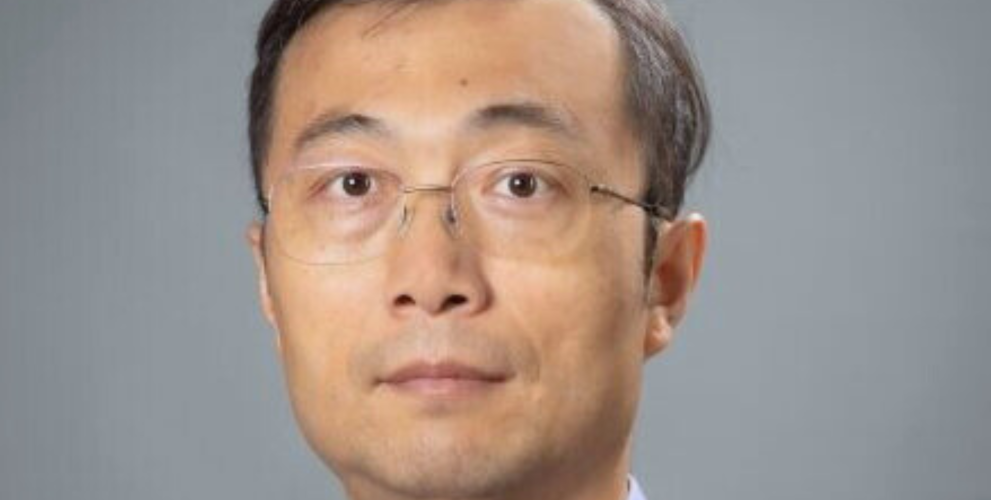
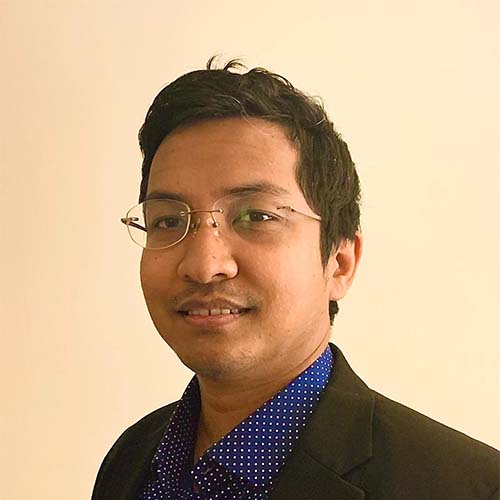
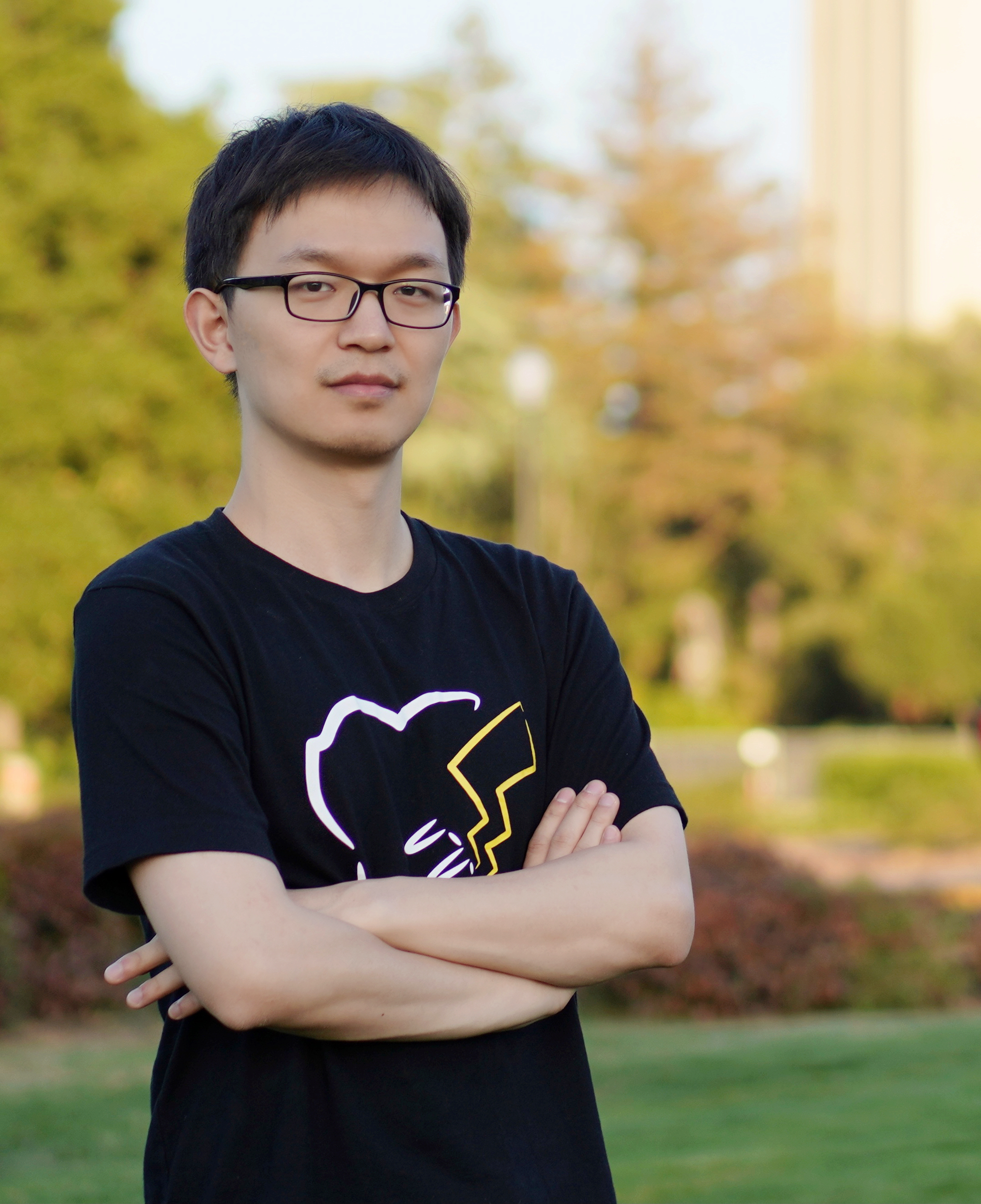
Cliff Zou is a Professor in the Department of Computer Science at the University of Central Florida (UCF), where he coordinates master’s programs in cybersecurity, privacy, and digital forensics. He directs the UCF Alliance for Cybersecurity and contributes to the university’s Cyber Security and Privacy Cluster. Education: Ph.D. in Electrical and Computer Engineering from University of Massachusetts-Amherst His research focuses on computer and network security , network modeling , and performance evaluation . Key areas include malware analysis, botnet defense, and adaptive cybersecurity protocols. His publications address threats like email worms, peer-to-peer botnets, and internet worms, reflecting his work in proactive threat mitigation and network resilience. Scientific recognition includes: Senior Member of IEEE Best Student Paper Award (ACSAC 2007) UCF Teaching Incentive Program (TIP) award (2013) Best Paper runner-up (PADS 2005, ICCCN 2004) First-place award for undergraduate project 'Personal Medication Monitor' His research has been featured in New Scientist Magazine , EurekAlert! , PCWorld , and The Register . Zou actively contributes to academic conferences as an organizer and program committee member.
Hui Wang is a Professor and Associate Chair for PhD Studies and Research in the Department of Computer Science at the Charles V. Schaefer, Jr. School of Engineering and Science, Stevens Institute of Technology. She also serves as the Director of the Data Science PhD Program and holds leadership roles in multiple institutional committees, including the Doctoral Committee, Faculty Mentoring Program, and Strategic Planning initiatives at both departmental and university levels. Research Interests: Dr. Wang's research focuses on building trustworthy machine learning systems by integrating privacy, fairness, and accountability . Her work aims to fortify ML models against privacy attacks, eliminate algorithmic biases, and ensure auditable decision-making. She explores intersections between machine learning, data mining, and cybersecurity, with applications across domains requiring ethical and secure AI deployment. Recent Research Trends: Her recent publications and funded projects reflect a strong emphasis on privacy-preserving machine learning , fairness-aware systems , and verifiable computing . Themes include securing graph embeddings, federated learning with fairness guarantees, and audit mechanisms for black-box models. Supported by NSF, Cisco, and Google, her work bridges theoretical rigor with practical system design. Scientific Awards: NSF CAREER Award, 2014 Advising and Grants: Dr. Wang actively mentors PhD students and hosts visiting scholars. She leads multiple NSF-funded projects, including Securing Network Embedding against Privacy Attacks and Privacy for All: Ensuring Fair Privacy Protection in Machine Learning . Her research is supported by substantial grants from the National Science Foundation, Cisco, and Google, reflecting her leadership in trustworthy AI. Labs and Teams: While not explicitly named, Dr. Wang leads a research group focused on trustworthy machine learning, advising students and collaborating with industry partners. She is deeply integrated into the Data Science PhD program and CS faculty leadership, shaping research and academic strategy at Stevens.
Anomadarshi Barua is an Assistant Professor in the Department of Cyber Security Engineering at George Mason University, leading the System Design and Security research group. His work spans hardware-software co-design for securing cyber-physical systems (CPS), robotics, and sensors. Prior Affiliation: PhD from University of California, Irvine (2023) Industry Experience: Intel Corporation, Solidigm, Nordic Semiconductor, IDEAS Research Themes: Focuses on multimodal system security (audio, visual, electromagnetic data), analog-digital signal integrity, and quantum-inspired defenses in CPS. Key applications include healthcare systems, smart grids, and industrial control systems (ICS). Recent ACSAC 2024 paper acceptance Best Paper Award at ACSAC 2022 NSF panel reviewer (2024) Labs & Collaborations: Collaborates with University of Louisville on robotics and works on Commonwealth-funded UG research (2024). Publications in ACM CCS, USENIX, CHES, and IEEE Transactions (TDSC, TIFS).
Dr. Siqi Ma is a Senior Lecturer at the UNSW Institute for Cyber Security (IFCYBER) within the School of Systems & Computing at the University of New South Wales (UNSW). He previously served as a Lecturer at the University of Queensland's School of Information Technology and Electrical Engineering (ITEE). He holds a Ph.D. in Information Systems from Singapore Management University (2018) and was a Postdoctoral Research Fellow at Data61, CSIRO. He also visited Carnegie Mellon University (CMU) in 2015. Current Role: Senior Lecturer, UNSW Institute for Cyber Security Former Role: Lecturer, University of Queensland Education: Ph.D. (Singapore Management University), Postdoc (Data61, CSIRO) His research spans automated vulnerability detection, mobile security, IoT security, network authentication, and graph-based adversarial robustness. Recent work focuses on drone configuration bugs, Android malware analysis via GNNs, federated learning privacy, and credential leakage in open-source projects. Key trends in his 2024-2025 publications include automated security analysis for embedded systems, deepfake detection in multimedia, and privacy-preserving mechanisms for distributed networks. He collaborates with institutions like Purdue University, Singapore Management University, and CSIRO Data61.
Yoon Chae is an Assistant Professor in the Department of Computer Science and Engineering at the University of Texas at Arlington (UTA), joining the faculty in January 2025. His work bridges wireless networking and low-power IoT systems, with a focus on millimeter-wave technologies and backscatter communication. Education: PhD in Computer Science, George Mason University, 2024 MS in Computer Science, George Mason University, 2022 MS in Electrical and Computer Engineering, University of Minnesota - Twin Cities, 2012 BS in Electrical Engineering, Yonsei University, 2012 His research centers on enabling reliable and high-speed mmWave backscatter by leveraging the unique properties of millimeter waves, with applications in vehicular networks, IoT, and spectrum efficiency. He has pioneered techniques using commodity WiFi and FMCW radar for backscatter communication, significantly advancing the field of low-power wireless systems. The recent publications highlight a strong trend in utilizing commodity hardware (like WiFi and radar) for novel wireless sensing and communication. His work spans mmWave backscatter, vehicular networking using street view imagery, and interference management between ZigBee and WiFi. The research demonstrates innovation in spectrum reuse, low-power design, and integration of real-world data for network optimization. Scientific Awards: Best Paper Award, ACM MobiSys 2022 SIGMOBILE Research Highlight, 2023 Yoon Chae actively contributes to the academic community as a reviewer for top journals including IEEE Transactions on Mobile Computing, IEEE/ACM Transactions on Networking, and ACM Transactions on IoT, as well as conferences like INFOCOM, MobiCom, and SenSys. He serves on program committees and has held leadership roles such as Registration Co-chair for ICNP'25 and Artifact Evaluation Committee for MobiSys'25. He is currently building a research lab and seeking motivated Ph.D. students and research interns to join his team. He has been involved in collaborative projects with Prof. Parth Pathak (George Mason) and Prof. Song Min Kim (KAIST), and his work has been presented at major venues including NSDI, MobiCom, MobiSys, and SenSys. His lab focuses on experimental systems design, wireless sensing, and next-generation IoT networking.
Mohamed Hefeeda is a Professor in the School of Computing Science at Simon Fraser University (SFU), Canada. He leads the Network and Multimedia Systems Lab (NMSL) and previously served as Director of the School from 2018 to 2023. His research focuses on multimedia networking, mobile computing, cloud systems, and hyperspectral imaging. He holds an ACM Distinguished Member designation and has received prestigious awards including the NSERC Discovery Accelerator Supplements (2011) and multiple best paper awards at top conferences like ACM MM and IEEE Infocom. Education: Ph.D., Purdue University, 2004 M.Sc., University of Connecticut, 2001 B.Sc., Mansoura University, Egypt, 1994 Research Interests: Design of efficient multimedia systems and protocols for wired/wireless networks Cloud gaming optimization and video encoding techniques Hyperspectral imaging for healthcare and mobile applications AI-driven multimedia systems and mobile computing innovations Grants & Industry Collaborations: Funded by NSERC, CFI, and companies like AMD, Huawei, and CBC Co-founded Video Semantics (acquired by tech firm) Partnered with CBC on peer-assisted content distribution systems Awards Highlights: 2025: ACM Distinguished Member 2019: Best Student Paper Award at ACM MMSys 2015: NSERC Discovery Accelerator Supplements Labs & Leadership: Network and Multimedia Systems Lab (NMSL) at SFU Contributed to creation of Qatar Computing Research Institute (QCRI)
Anupam Joshi is the Acting Dean of the College of Information Technology and Engineering and Oros Family Professor of Computer Science and Electrical Engineering at the University of Maryland, Baltimore County (UMBC). He also directs UMBC’s Center for Cybersecurity and leads the National Cybersecurity FFRDC for the University System of Maryland. His research focuses on networked computing, AI-driven cybersecurity, privacy-preserving technologies, and policy-driven security frameworks. He holds a Ph.D. in Computer Science from Purdue University (1993), an M.S. (1991), and a B.Tech in Electrical Engineering from the Indian Institute of Technology, Delhi (1989). Dr. Joshi’s work spans over 400 publications with 32,650+ citations (h-index 92) and nine patents. His grants include funding from NSF, DARPA, NASA, NIST, and industry partners like IBM and Northrop Grumman. Key contributions include developing CAPD frameworks for IoT security, FABULA for automated threat intelligence, and KiNETGAN for intrusion detection through synthetic data. He is an IEEE Fellow and pioneer in applying AI to secure critical infrastructure, smart grids, and healthcare systems. His research trends emphasize AI-empowered cybersecurity, privacy compliance in data sharing (e.g., agriculture, healthcare), and mitigating attacks on smart systems. Notable projects include combating fake cybersecurity reports using provenance analysis, securing EV charging infrastructure, and enhancing smart farming resilience through policy-driven access control. Awards: IEEE Fellow Grants: Over $30M from NSF, DoD, NASA, and industry collaborations Labs/Teams: Director of UMBC Center for Cybersecurity, Cybersecurity Knowledge Graph initiatives Future work includes advancing neurosymbolic AI for cybersecurity, semantic data extraction from scientific literature, and AI ethics in healthcare applications.
Dr. Hongwei Wang is a Senior Researcher at Tencent AI Lab Seattle , specializing in applied machine learning for Natural Language Processing and Interconnected Systems . His work bridges Knowledge Graphs , Recommender Systems , and Graph Neural Networks , with a focus on large language models and retrieval-augmented generation. Ph.D. (2018), B.E. (2014) in Computer Science from Shanghai Jiao Tong University Postdoctoral Researcher : Stanford University (2019-2021), University of Illinois Urbana-Champaign (2021-2022) Dr. Wang’s research explores integrating Knowledge Graphs with Graph Neural Networks to enhance recommendation systems, language models, and information retrieval. His work spans Retrieval-Augmented Generation , Representation Learning , and GAN-based Graph Modeling , with recent papers on State-Space Exploration for LLM agents and Semantic Watermarking . His 15 most recent publications (2022-2024) focus on Retrieval Granularity , Interactive Memory , and Agent Systems , with keywords spanning Computer Science , Machine Learning , and Knowledge Graphs . Trends highlight advancements in Token-Level Semantic Matching , Schema-Guided Event Prediction , and Multi-Document Summarization . Scientific Awards: 2020 CCF Outstanding Doctoral Dissertation Award 2018 Google Ph.D. Fellowship Dr. Wang contributes to open-source projects like DKN and RippleNet , with 11 repositories on GitHub. He actively engages in Knowledge Graph Conferences (KDD, WWW, AAAI) and studies Chinese Classical Poetry and Film Arts .
John Breslin is a Personal Professor in Electronic Engineering at the College of Science and Engineering, University of Galway, serving as Director of the TechInnovate and AgInnovate programmes. Associated with two Taighde Éireann – Research Ireland Centres, he is a Principal Investigator at Insight Centre for Data Analytics (specializing in data analytics) and a Funded Investigator at VistaMilk (Agri-Technology), while also leading the EDIH Data2Sustain project. With an h-index of 50, over 12,000 citations, and 300+ peer-reviewed publications including seminal books on the Social Semantic Web, he ranks among Ireland's most influential researchers in digital technologies. Breslin's research fundamentally bridges Semantic Web technologies, AI-driven data analytics, and practical innovation. His co-creation of the SIOC framework—implemented across 65,000+ websites by entities like Yahoo and Boeing—demonstrates real-world impact in social data interoperability. Current work leverages blockchain and federated learning for sustainable Agri-Technology through VistaMilk, while his TechInnovate programmes translate academic research into commercial ventures across healthcare, smart manufacturing, and energy systems. Analysis of his 15 most recent publications reveals dominant themes in AI-enhanced security (35% of works), blockchain applications for sustainability (27%), and multimodal AI for healthcare (20%). His team pioneers privacy-preserving techniques for IoT and medical devices, neurosymbolic visual reasoning frameworks, and federated learning architectures addressing data heterogeneity—directly supporting his roles in national research infrastructures like Insight and VistaMilk. John has received several prestigious awards: IIA Net Visionary Award (twice) ITAG Outstanding Contribution to the ICT Sector Award Galway Chamber President’s Award Best Irish-Published Book Award (2020 for Old Ireland in Colour) Multiple Best Paper Awards He leads major research initiatives funded by Taighde Éireann – Research Ireland: Insight Centre for Data Analytics (as Principal Investigator) VistaMilk SFI Research Centre (as Funded Investigator) EDIH Data2Sustain (as Principal Investigator) His entrepreneurial programs TechInnovate and AgInnovate have mentored 200+ startups, securing €50M+ in follow-on funding. Breslin co-founded PorterShed (Galway City Innovation District) and serves on Scale Ireland's Steering Group, creating Ireland's most active regional innovation ecosystem outside Dublin. He maintains active industry partnerships with Vodafone, Boeing, and agricultural cooperatives through VistaMilk's testbed facilities.
Magnus Westerlund is a Senior Lecturer in Information Technology and Director of the Laboratory for Trustworthy AI at Arcada University of Applied Sciences in Helsinki, Finland. His industry background spans telecom and information management, and he holds a doctoral degree in Information Systems from Åbo Akademi University. He actively contributes to the Z-Inspection® network, focusing on ethical AI implementation and governance. Westerlund’s research emphasizes trustworthy AI, cybersecurity, and distributed systems. Key areas include AI regulatory compliance (e.g., EU AI Act), healthcare AI applications, blockchain security, and IoT edge solutions. His work bridges academia and industry, such as the Valohai-CSC collaboration for machine learning infrastructure in Finnish academia. His publications highlight practical AI assessment methods, ethical AI integration, and decentralized technologies. Notable contributions include frameworks for sustainable AI development, privacy-preserving autonomous systems, and smart contract-based IoT security protocols. Westerlund also explores educational innovations, such as integrating large language models (LLMs) into coding education. His research consistently addresses real-world challenges like pandemic-era healthcare AI, edge computing for IoT, and cybersecurity in autonomous systems.
Kimia Zamiri Azar serves as an Assistant Professor in the Department of Electrical and Computer Engineering at the University of Central Florida, focusing on hardware security and verification methodologies. Her research bridges theoretical formal methods with practical security implementations in semiconductor design and testing. Her educational background includes: Ph.D. in Electrical and Computer Engineering, George Mason University (2021) Postdoctoral Research, University of Florida Dr. Azar's research spans hardware security with emphasis on system-level verification, VLSI design-for-trust, and advanced IC testing. She pioneers techniques in logic locking, secure heterogeneous integration, and IC supply chain security, developing frameworks for authenticated encryption in Systems-in-Package and runtime security monitoring. Her work integrates formal verification with innovative testing methodologies to address hardware trust challenges across the semiconductor lifecycle. Analysis of her recent publications reveals two dominant trends: (1) Application of large language models (LLMs) to hardware design tasks including high-level synthesis code generation and RTL optimization, and (2) Advancement of secure heterogeneous integration techniques for System-in-Package architectures with focus on counterfeit prevention and split-test security protocols. These directions address critical gaps in hardware trustworthiness amid increasingly complex semiconductor supply chains. Her scientific contributions have earned significant recognition: Best Paper Award at ICCAD 2019 Best Paper Award at ISVLSI 2020 Best Paper Award at ICCAD 2020 Best Paper Award at IEEE DCAS 2020 Best Paper Award at HOST 2022 Best Paper Award at DATE 2023 Dr. Azar secures substantial research funding from premier agencies including NSF, SRC, DARPA, AFRL, DoD (NG), and Microsemi. Her grants support projects spanning hardware security validation frameworks, secure heterogeneous integration, and AI-augmented verification methodologies. She actively mentors students in her research group, guiding publications in top venues like IEEE D&T, IEEE TC, and DAC while fostering industry-academic collaborations. Her work directly impacts semiconductor security standards through patented innovations and open-source verification tools. As an active IEEE and ACM member, she contributes to community advancement through conference organization (HOST, DATE), journal editorial roles, and workshop leadership on hardware security standards. Her research group collaborates with semiconductor industry leaders to translate theoretical security frameworks into practical design-for-trust methodologies for next-generation integrated circuits.
Jian Liu is an Assistant Professor in the Min H. Kao Department of Electrical Engineering and Computer Science at the University of Tennessee, Knoxville. He leads the Mobile Sensing and Intelligence Security (MoSIS) Lab, focusing on robust AI, mobile security, computational sensing, and smart healthcare. His research has been published in top-tier venues like S&P/Oakland, CVPR, and IEEE journals, with over 6,400 citations. He holds seven U.S. patents, including two licensed to industry. Education: PhD in Electrical and Computer Engineering from Rutgers University (2019), ME and BE in Communication Engineering from Wuhan University of Technology (China). Research interests include trustworthy AI, federated learning, privacy-preserving technologies, and adversarial machine learning. His recent work includes HarmonyCloak (music copyright protection against generative AI), 3D facial authentication systems, and robust backdoor attack defenses. Notable awards include the University of Tennessee’s Professional Promise in Research Award (2025), Stanford’s World’s Top 2% Cited Scientists, and multiple best paper awards. He teaches Mobile and Embedded System Security (ECE 469/569) and has supervised projects funded by UT Grand Challenges grants. Labs/Teams: MoSIS Lab focuses on AI-driven security solutions, wearable sensing, and healthcare applications. Collaborations involve interdisciplinary projects with UT’s engineering and medical schools.
Yiorgos Makris is a Professor in the Department of Electrical and Computer Engineering at the Erik Jonsson School of Engineering & Computer Science, The University of Texas at Dallas, since July 2011. Previously, he was a faculty member at Yale University for over a decade. He holds a Ph.D. in Computer Engineering from the University of California, San Diego, and a Diploma in Computer Engineering from the University of Patras, Greece. Education: Ph.D. in Computer Engineering, University of California, San Diego (2001) M.S. in Computer Engineering, University of California, San Diego (1997) Diploma in Computer Engineering and Informatics, University of Patras, Greece (1995) Research Interests: Hardware Security and Trustworthiness Statistical Side-Channel Fingerprinting Machine Learning in Semiconductor Manufacturing Trusted and Reliable Integrated Circuits Hardware Trojans in Wireless Cryptographic ICs On-Die Learning and Emergent Technologies His work focuses on enhancing hardware security through statistical methods, machine learning, and formal verification, with applications in analog/RF ICs, post-production calibration, and secure IC design. Key Contributions: Co-Founder and Site-PI of NSF CHEST I/UCRC (Hardware and Embedded System Security and Trust) Leader of the Safety, Security, and Healthcare Thrust at TxACE (Texas Analog Center of Excellence) Director of the Trusted and RELiable Architectures (TRELA) Lab Grants and Funding: NSF, NIH, SRC, ARO, AFRL, AFWERX, DARPA, DOE, and industry partnerships with Boeing, Northrop Grumman, IBM, Intel, Qualcomm, etc. Recent grants include projects on DNA storage security, analog neural networks, and malicious hardware detection. Awards and Recognition: IEEE Fellow (2025) Best Paper Awards at DATE'13, VTS'15, DCAS'22 Best Hardware Demonstration Awards at HOST'16 and HOST'18 Erik Jonsson School Faculty Research Award (2020) Labs and Teams: TRELA Lab (Focus: Secure Hardware Design, Trusted Architectures) CHEST I/UCRC (Industry-University Collaboration)
Prof. Dr. Ahmet ÖZMEN is a Professor at Sakarya University's Faculty of Computer and Information Sciences, Department of Software Engineering. He has held various administrative positions including Head of the Software Engineering Department (2019-2028) and Director of the Computer Research and Application Center (2019-2022). With extensive experience in academia since 1991, he has made significant contributions to computer vision, traffic monitoring systems, and sensor technologies. Sakarya University: Professor (2019-present), Associate Professor (2011-2019) Dumlupınar University: Assistant Professor (2001-2011), Research Assistant (2000-2001, 1993-1998) Istanbul Technical University: Research Assistant (1991-1993) Prof. ÖZMEN's research spans computer vision applications for traffic monitoring, indoor air quality systems, parallel computing, and sensor technologies. His work bridges theoretical computer science with practical engineering applications, particularly in developing vision-based systems for nighttime vehicle detection, traffic flow monitoring, and environmental sensing. His interdisciplinary approach combines machine learning, image processing, and embedded systems to solve real-world problems in transportation and environmental monitoring. His publication record shows a clear evolution from parallel and distributed systems in his early career to computer vision and sensor applications in recent years. The majority of his recent work focuses on traffic monitoring systems using computer vision techniques, particularly for nighttime conditions, and indoor air quality monitoring systems using sensor networks. His research demonstrates strong industry and societal relevance, with applications in smart transportation, environmental protection, and educational technology. TÜBİTAK Publication Awards (2006, 2008, 2009, 2010) Physical implementation award from TÜBİDER (2008) Microsoft Certified Professional Certificate (2005) YÖK overseas study scholarships (1993, 1998) Elginkan graduate scholarships (1990, 1991) Prof. ÖZMEN has supervised numerous graduate students across multiple institutions, with a focus on practical engineering problems. His research has been supported by various projects including TÜBİTAK projects, institutional research grants, and industry collaborations. He has led significant research initiatives in traffic monitoring systems, indoor air quality monitoring, and educational technology platforms. His administrative leadership has included directing research centers and shaping curriculum development in software engineering. His work has involved establishing research teams focused on computer vision applications, sensor network development, and educational technology. These teams have produced numerous publications, developed practical systems, and trained the next generation of computer engineers. Current research directions include advanced traffic monitoring systems using deep learning and multi-camera setups for urban planning applications.
Pradeep Lall is the MacFarlane Endowed Distinguished Professor and Alumni Professor in the Department of Mechanical Engineering at Auburn University’s Samuel Ginn College of Engineering. He serves as Director of the Auburn University Electronics Packaging Research Institute (EPRI) and holds a joint courtesy appointment in the Department of Electrical and Computer Engineering. A leader in flexible hybrid electronics and harsh environment systems, Dr. Lall has built a world-renowned research program focused on additive manufacturing, electronics reliability, and sustainable materials. Ph.D. in Mechanical Engineering, University of Maryland M.B.A. in Finance and Strategy, Northwestern University M.S. in Mechanical Engineering, University of Maryland B.E. in Mechanical Engineering, Delhi College of Engineering Dr. Lall’s research centers on Flexible Hybrid Electronics (FHE) , Harsh Environment Electronics , Semiconductor Packaging , and Prognostics Health Management . His work leverages additive manufacturing techniques such as Aerosol-Jet, InkJet, and screen printing to develop conformal, robust, and sustainable electronic systems. His innovations include the Flexible Biometric Band for monitoring workers in hazardous environments and additively printed antennas for aerospace applications. His recent focus includes eliminating PFAS from electronics and developing water-based inks for eco-friendly manufacturing. The 15 most recent publications reflect a strong trend toward sustainability , additive manufacturing , and real-world applications in defense, aerospace, automotive, and healthcare. His work bridges fundamental research with industrial realization, particularly through partnerships with NextFlex and federal agencies. Themes include reliability under shock and vibration, sensor development for extreme environments, and workforce training in advanced manufacturing. Dr. Lall has received numerous scientific honors, including: SMTA Founder’s Award (2024) SEMI FlexTech R&D Achievements Award (2023) ASME Avram Bar-Cohen Memorial Medal (2022) IEEE Biedenbach Outstanding Engineering Educator Award (2020) IEEE Sustained Technical Contributions Award (2018) NSF Alex Schwarzkopf Prize (2016) Fellow of ASME, IEEE, NextFlex, and Alabama Academy of Science Dr. Lall has secured over $2 million in annual research funding from SRC, NSF, and NextFlex, leading large-scale projects on sustainable electronics and workforce development. He mentors numerous graduate and undergraduate students and leads the NSF-CAVE3 Center. As founding faculty advisor of the SMTA student chapter, he promotes student engagement in electronics manufacturing. His lab, EPRI, features a full prototyping line for additive electronics and collaborates with industry and government to advance domestic manufacturing capabilities. EPRI, under Dr. Lall’s leadership, partners with the Auburn University Research and Technology Park, the Office of Economic Development, and multiple colleges to drive technology commercialization and workforce education in electronic packaging. The institute is at the forefront of the national effort to reestablish U.S. leadership in semiconductor packaging and advanced electronics manufacturing.