Dr. Erin Ash is an Associate Professor in the Department of Communication at Clemson University , where she also serves as a Faculty Scholar in the Clemson University School of Health Research (CUSHR) and an Embedded Faculty Scholar at the South Carolina Department of Public Health. Ph.D. in Mass Communications, Pennsylvania State University (2013) M.A. in Media Studies, Pennsylvania State University (2010) B.A. in Communication, College of Charleston (2008) Her research focuses on media’s role in shaping public perceptions of social issues , particularly health behaviors and policies. Recent work examines reproductive health attitudes , racial stereotypes in sports media , and narrative persuasion for health policy support . She also explores intersectional representation in gaming and media-induced elevation for intergroup connectedness . Dr. Ash’s recent publications (2024–2025) emphasize social media’s impact on health communication , including teen pregnancy prevention , cross-cultural communication norms , and maternal health disparities . Earlier studies (2023–2015) analyze racialized athlete portrayals , binge drinking prevention , and media framing of public health crises . Award for Excellence in Service, Clemson University (2025) Top Faculty Paper, AEJMC (2011) Doctoral Award for Excellence in Communications, Penn State (2012)
Lev Kirischian is an Associate Professor at the Department of Electrical and Computer Engineering , Toronto Metropolitan University. He established the Embedded and Reconfigurable Systems Laboratory in 1999 for research and graduate studies. His expertise spans reconfigurable computing, parallel systems, and embedded design. BSc/MASc in Aerospace Control Systems, Moscow Institute of Aviation Technology (MAI) PhD in Parallel and Reconfigurable Computing Systems, Moscow Power Engineering Institute (MPEI) Research Interests : Task-adaptive reconfigurable computing systems Automated architectural synthesis of data-flow parallel computers FPGA-based stream processors Article Trends : His recent research focuses on reconfigurable computing architectures, modular system optimization, and FPGA applications in aerospace and industrial systems. Work includes radiation protection for FPGAs, multi-parametric architecture optimization, and frameworks for parallel multi-tasking environments.
Prof. Ioannis Anastasopoulos is a Full Professor and Head of the Department of Civil, Environmental and Geomatic Engineering at ETH Zurich. He leads the Chair of Geotechnical Engineering, focusing on advanced geotechnical modeling, seismic resilience, and infrastructure systems. His research integrates experimental and numerical methods to address challenges in tunnel engineering, offshore foundations, and seismic protection. Key research areas include seismic response of geotechnical structures, soil-structure interaction, metamaterial-based vibration mitigation, and innovative foundation technologies. He directs the Geotechnical Centrifuge Center and Soil Testing Laboratories at ETH Zurich, advancing physical modeling and material characterization. Recent work emphasizes earthquake engineering applications, including fault rupture interactions with tunnels, pile group dynamics under combined loading, and hybrid modeling of scour effects on bridge foundations. His contributions span geotechnical design methodologies, nuclear facility safety, and additive manufacturing for masonry structures. Prof. Anastasopoulos collaborates internationally on projects like the GEOLAB initiative, advancing Europe's geotechnical physical modeling infrastructure. His teaching includes courses on geotechnical design and theoretical soil mechanics, bridging academic research with practical engineering solutions.
Juan Carlos De Martin is a Full Professor of Computer Engineering at the Polytechnic of Turin, where he is also co-founder and co-director of the Nexa Center for Internet & Society. He holds a Faculty Associate position at the Berkman Klein Center for Internet & Society at Harvard University and is a member of the Scientific Council of the Treccani Institute and the Steering Committee of Biennale Democracy. He previously served as Vice Rector for Culture and Communication at the Polytechnic of Turin (2018–2023) and as president of its libraries (2007–2015). His research centers on the societal implications of digital technologies, with a strong emphasis on algorithmic and data justice, digital power, and the democratic challenges posed by modern technology. He advocates for a more democratic and ethical technological future, particularly critiquing the dominance of smartphones and promoting digital sovereignty. His recent publications reflect a clear trend toward ethical AI, data protection, and the social impact of algorithms. He has published on gender bias in language models, GDPR compliance tools, and non-discrimination audits in software, demonstrating a sustained commitment to fairness, transparency, and accountability in digital systems. Best Student Paper Award IEEE ISCC 2011 Best Student Paper Award IEEE ICME 2005 Fellow at Harvard University (Berkman Klein Center) (2011–2015, 2016–2024) Faculty Associate at Collège d'études mondos, France (2016) De Martin has advised PhD students like Marco Rondina on Responsible AI and has led numerous EU-funded research projects such as COMMUNIA and DECODE. He has also played a key role in public policy, serving on ministerial working groups on AI and online hate. He is the founder of the Biennale Tecnologia and has authored influential books on the future of universities and technology, all published under Creative Commons licenses. He leads the Nexa Center for Internet & Society, a multidisciplinary research group focused on the legal, economic, and social aspects of the Internet. The center fosters collaboration between computer scientists, legal scholars, and social scientists to address pressing digital challenges.
Dr. Krishnendu Guha is an Assistant Professor and CONNECT Funded Investigator at the School of Computer Science and Information Technology, University College Cork. His research bridges embedded systems, cybersecurity, and quantum-safe hardware design with AI and bio-inspired strategies. PhD: University of Calcutta (Department of Science and Technology, Government of India) Postdoctoral: University of Florida Past Roles: Research Fellow at Intel India, Visiting Scientist at Indian Statistical Institute, Temporary Assistant Professor at NIT Jamshedpur His research focuses on embedded systems security , real-time security mechanisms , and quantum-safe hardware . He integrates AI (e.g., neural networks) and bio-inspired strategies (e.g., gecko crypsis behavior) into security frameworks for FPGAs and edge platforms. Recent publications highlight trends in blockchain for supply chains , quantum machine learning , secure FPGA architectures , and distributed AI systems . His work addresses energy efficiency, fault detection, and decentralized security in hardware. As a CONNECT Centre member, Dr. Guha contributes to advanced research in reconfigurable systems and cybersecurity. Grants and collaborations span quantum-safe design, cloud FPGA security, and hardware trojan mitigation.
Vincent John Mooney III is an Associate Professor at the School of Electrical and Computer Engineering and an Adjunct Associate Professor at the School of Computer Science, Georgia Institute of Technology. His research focuses on Hardware-Software Co-Design , Cyber Physical Systems Security , and Low-Power Architectures . He has authored numerous publications on topics such as probabilistic computing, hardware security, and embedded systems design. Dr. Mooney has received prestigious awards including the NSF Career Award , National Semiconductor Fellowship , and ARCS Best Paper Award . Education: Ph.D. in Electrical Engineering (1998), Stanford University MA in Philosophy (1997), Stanford University MS in Electrical Engineering (1994), Stanford University Certificate of Graduate Study (1992), University of Navarra BS in Electrical Engineering and Computer Science (1991), Yale University Research interests span hardware/software codesign, cybersecurity in embedded systems, and synthesis of reconfigurable architectures. His recent work includes Gridtrust for decentralized supply chain cybersecurity and COPPER for computation obfuscation. Dr. Mooney has supervised numerous Ph.D. students and held leadership roles in conferences such as HOST and CASES . Scientific awards include NSF Career Award (2000) National Semiconductor Fellowship (1997-1998) AT&T Engineering Scholarship Program (1987-1991) NCAA Postgraduate Scholar (1991) Senior Member, IEEE (2003) ARCS 2012 Best Paper Award Advising and grants highlight his mentorship of students like Jun Cheol Park and Yudong Tan , along with grants such as the U.S. Air Force Summer Faculty Fellowship (2007). He leads the Hardware/Software Codesign for Security Group at Georgia Tech and has contributed to advancements in real-time operating systems and deadlock detection algorithms.
Roles: Full Professor at Budapest University of Technology and Economics (BME), leading the Laboratory of Cryptography and Systems Security (CrySyS Lab) . Specializes in cyber security, IoT security, and privacy technologies. Served as Associate Editor for IEEE Transactions on Mobile Computing and Elsevier Computer Communications. Education: M.Sc. in Computer Science, BME (1995) Ph.D. in Computer Science, Swiss Federal Institute of Technology Lausanne (EPFL, 2002) Habilitation at BME (2013) Doctor of Science, Hungarian Academy of Sciences (2021) Research Interests: Focuses on malware detection on embedded systems, security of industrial control systems, and privacy-preserving AI. Current projects include DOSS (IoT supply chain security), SECURED (health data security), and SPAM (AI and cybersecurity). Published over 150 papers and co-authored books on wireless network security and cryptographic obfuscation. Grants & Awards: Awarded Dennis Gabor Award (2024), Bolyai Fellowship (2008-2011), and led EU projects like SEVECOM and WSAN4CIP. Current grants include H2020 DOSS and OTKA-funded research on federated learning incentives. Advising: Supervised 13 PhD students, including current faculty members (e.g., András Gazdag, Dorottya Papp). Active in mentoring CTF teams like !SpamAndHex (DEFCON qualifier). Labs & Teams: Director of CrySyS Lab, leading research in embedded device security, vehicle cyber defense, and industrial IoT resilience. Active in EDIH cybersecurity consulting for SMEs.
Mads Dam is a Professor in Teleinformatics at the School of Computer Science and Communication at Kungliga Tekniska Högskolan (KTH), where he heads the Department of Theoretical Computer Science. His research focuses on computer security, formal methods, and program logics, with particular emphasis on the formal modeling and verification of low-level hardware and software execution platforms for security and application isolation. His educational background includes: PhD in Computer Science from the University of Edinburgh (1990) MSc in Computer Engineering from Aalborg University, Denmark BSc in Information Technology from Aalborg University, Denmark Mads Dam's research interests center on computer security, formal methods, and program logics. His current work focuses on the formal modeling and verification of low-level hardware and software execution platforms such as hypervisors and OS kernels and their underlying hardware. He has made significant contributions to information flow security, verification of microarchitectural systems, and network programming language security. His research bridges theoretical foundations with practical security applications. His recent publications show a strong trend toward verifying low-level systems, with a focus on information flow security for processors, network programming languages (particularly P4), and microarchitectural vulnerabilities. His work combines formal methods with practical security concerns, developing verification techniques that address real-world security challenges in hardware and software systems. The research spans theoretical foundations in temporal and epistemic logics to practical applications in network security and processor verification. His scientific awards and recognition include: Two framework grants from the Swedish Foundation for Strategic Research A junior individual grant from the Swedish Foundation for Strategic Research Project grants and a five-year research fellowship from the Swedish Research Council (VR) Project grants from Ericsson, Microsoft Research, US Air Force, and Vinnova (the Swedish Innovation Agency) Mads Dam has been a principal investigator on numerous research projects and has supervised many graduate students. He has been a partner in several European projects including HATS, S3MS, VerifiCard, LOMAPS, and UaESMC. His research has been supported by substantial grants from major funding bodies, reflecting the significance and impact of his work in computer security and formal methods. He is a founding member of several research centers at KTH, including Access, the CASTOR software research center, and the CDIS center for cyber defense and information security. These centers bring together researchers from multiple disciplines to address complex challenges in cybersecurity and software engineering.
Professor Ioannis Katakis is a Faculty Member at the University of Nicosia, where he is affiliated with the School of Sciences and Engineering and the Department of Computer Science. He has held various academic positions across multiple institutions including Aristotle University of Thessaloniki, University of Cyprus, Cyprus University of Technology, Open University of Cyprus, Hellenic Open University, Athens University of Economics and Business, and National and Kapodistrian University of Athens. His educational background includes a PhD in Machine Learning for Automated Text Classification (2005-2009), a Master's in Information Systems (2005-2007), and a Bachelor's in Computer Science (2000-2004), all from Aristotle University of Thessaloniki. Professor Katakis specializes in several cutting-edge areas of computer science and data analysis. His primary research interests include Mining Social, Web and Urban Data , Sentiment Analysis and Opinion Mining , Data Streams , and Multi-label Learning . His work bridges theoretical machine learning approaches with practical applications in social media analysis, healthcare informatics, privacy protection, and smart city technologies. He has published extensively in top venues including CIKM, ECML/PKDD, IEEE TKDE, and ECAI. His recent publications demonstrate a clear trend toward applying machine learning techniques to real-world problems with societal impact. He has focused on areas such as GDPR compliance in smart devices, sentiment analysis in crowd-sourced content, healthcare applications including drug reaction classification and brain disease monitoring, and privacy protection in wearable technologies. His work often involves multi-modal data analysis and addresses challenges in data streams and multi-label classification. Professor Katakis has made significant contributions to his field, with his research cited over 4,200 times. He serves as an Editor for the journal Information Systems and has edited four special issues in journals such as DAMI and InfSys. He regularly contributes to the academic community by serving on program committees for major conferences including ECML/PKDD, WSDM, DEBS, and IJCAI, and by reviewing for prestigious journals like TPAMI, DMKD, TKDE, TKDD, JMLR, TWEB, and ML. He has been actively involved in European research projects, notably serving as Quality Assurance Coordinator and Senior Researcher for projects such as VAVEL (www.vavel-project.eu) and INSIGHT (www.insight-ict.eu). His grant activities demonstrate a strong focus on collaborative, interdisciplinary research with practical applications in urban data management, social media analysis, and healthcare informatics. He has organized three workshops at major conferences (ICML, ECML/PKDD, EDBT/ICDT) and has extensive experience translating research into practical applications through his involvement in European projects.
Luc Brunsveld is a Full Professor of Chemical Biology at Eindhoven University of Technology's Department of Biomedical Engineering, embedded in the Institute for Complex Molecular Systems (ICMS). His research focuses on chemical biology approaches to modulate protein-protein interactions, with applications in drug discovery and synthetic cell development. Brunsveld has held academic roles at TU/e since 2008, preceded by postdoctoral fellowships at the Max Planck Institute and industry experience at Organon. Education: Master's (1997) and PhD (2001, cum laude) from TU/e and University of Illinois. Grants: ERC Starting, Proof of Concept, Advanced Grants; NWO Vici Grant (2015). Research interests include molecular glues, supramolecular chemistry, and artificial cells. Recent work highlights light-activatable proteases and beta-cell protection via ChREBP modulation. Awards include the NVBMB Award (2010) and KNCV Gold Medal (2013). Co-founder of Ambagon Therapeutics. Labs/Teams: ICMS Core Group, Chemical Biology Group.
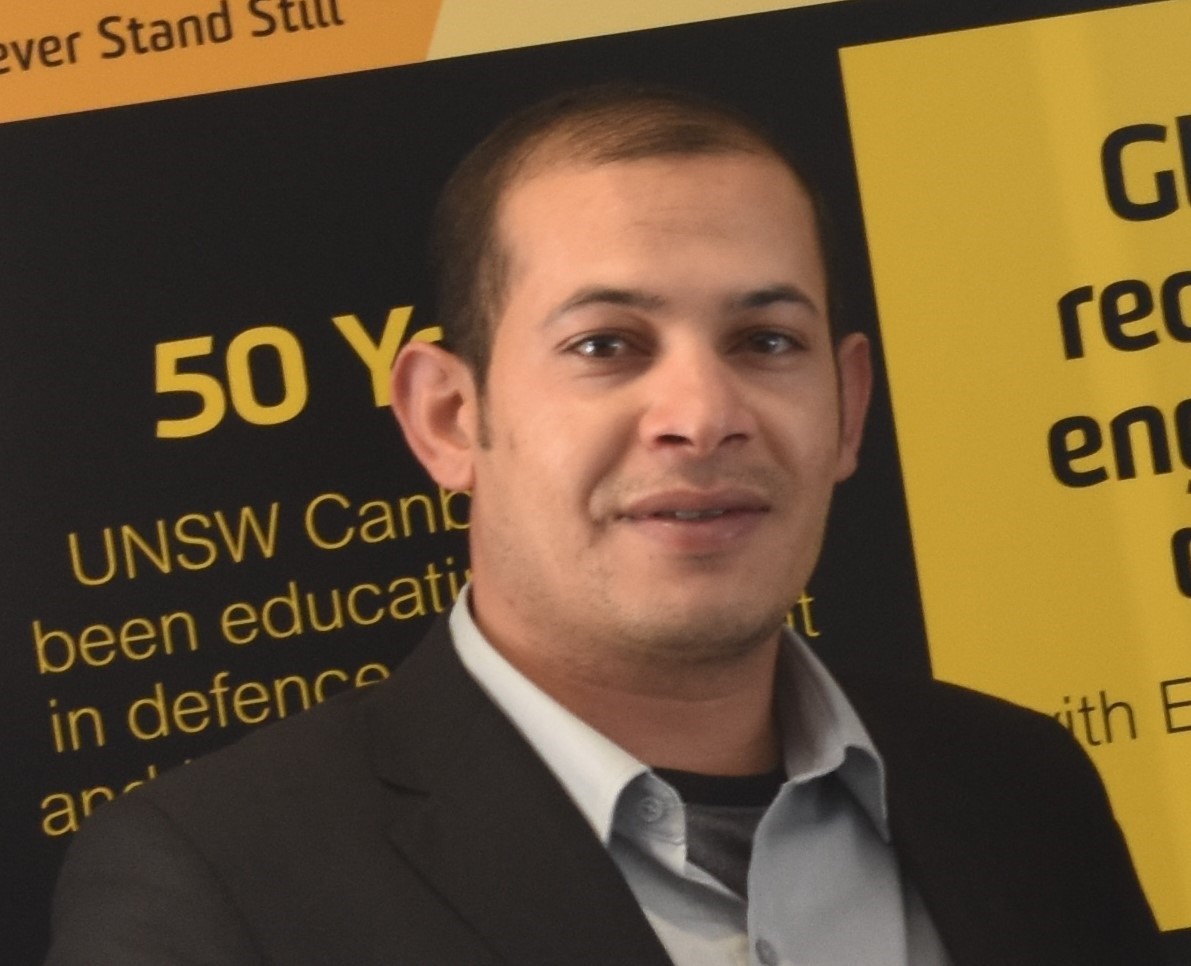
Dr. Nour Moustafa is an Associate Professor and ARC DECRA Fellow at the School of Systems & Computing (SysCom) , University of New South Wales (UNSW) Canberra , Australia. He leads the Intelligent Security Group and focuses on developing AI/ML-driven cybersecurity frameworks for smart systems. Educated at Helwan University (BSc/MSc in Information Systems) and UNSW (PhD in Cybersecurity). Research Interests include intrusion detection, threat intelligence, privacy preservation, digital forensics, and cyber resilience, with methodologies spanning statistical analysis , machine learning , and deep learning applied to IoT , Edge/Cloud , and Industrial IoT environments. His work emphasizes federated learning for privacy preservation, blockchain for secure AI, and digital twins for network self-healing. Notable contributions include the TON-IoT , Bot-IoT , and UNSW-NB15 datasets for cybersecurity evaluation. Scientific Awards : 2020 Spitfire Memorial Defence Fellowship ACM Distinguished Speaker IEEE Senior Member He has served as guest associate editor for IEEE Transactions journals and held leadership roles in conferences like IEEE TrustCom . His research bridges academia and industry, with over 75 publications in top-tier venues.
Moinuddin Qureshi is a Professor of Computer Science at Georgia Institute of Technology, affiliated with the School of Computer Science and involved in the Online Master of Science in Computer Science (OMSCS) program. He holds a Ph.D. and M.S. from the University of Texas at Austin. His research focuses on computer architecture, memory systems, hardware security, and quantum computing, with notable contributions to mitigating rowhammer vulnerabilities and advancing quantum error correction. Previously, he was a Research Staff Member at IBM T.J. Watson Research Center (2007–2011), where he contributed to caching algorithms for Power-7 processors. He has held leadership roles, including Program Chair of MICRO 2015 and Selection Committee Co-Chair of Top Picks 2017. His work has been recognized with prestigious awards, including the 2019 Persistent Impact Prize and multiple best paper awards. Key research areas include secure memory design (e.g., rowhammer mitigation techniques like MINT and Moat), quantum computing (e.g., Flag-Proxy Networks and Élivágar), and hardware vulnerability analysis (e.g., Roguerfm attacks and COAXIAL memory systems). His publications span 2009–2025, addressing topics like error correction, secure tracking, and quantum annealing optimization. Awards include membership in ISCA, MICRO, and HPCA Hall of Fame, alongside contributions to conferences like HiPC and IEEE MICRO. His work bridges theoretical advancements with practical implementations in both classical and quantum domains.
Jarno Vanne is a Professor at the Department of Computing Sciences, Faculty of Information Technology and Communication Sciences at Tampere University. His research focuses on video coding standards, real-time systems, and hardware acceleration, particularly in the context of FPGA implementations and open-source tools. He leads projects involving VVC (Versatile Video Coding), V-PCC (Volumetric Video Coding), and HEVC (High Efficiency Video Coding), with an emphasis on efficiency, low latency, and machine learning integration. Key research interests include point cloud compression, saliency-guided encoding, parallelization schemes, and real-time video communication protocols. His work often addresses challenges in multi-party video streaming, embedded systems, and encryption mechanisms for privacy protection. He has contributed to open-source projects like the UVG dataset, Kvazaar encoder, and CiThruS simulation frameworks. Recent publications highlight advancements in VVC intra encoding optimizations, machine learning-driven partitioning schemes, and FPGA-accelerated solutions for edge computing. His research bridges theoretical video coding algorithms with practical implementations, aiming to improve compression efficiency while maintaining real-time performance.
Patrick Wu is a Professor in the Department of Computer Science at American University, with additional affiliations as Faculty Fellow at the Center for Data Science and Faculty Affiliate at the Center for Security, Innovation, and New Technology. He holds a PhD in Political Science and Scientific Computing from the University of Michigan, an MA in Statistics from Michigan, and a BA in Political Science and Statistics from the University of Chicago. His research develops AI/ML and natural language processing approaches for computational social science, focusing on: Political elite and non-elite ideology measurement Affective polarization on social media platforms Detection of hateful/abusive speech and memes Application of large language models to political science research Recent work explores innovative methods for political attitude measurement using LLMs, in-context learning techniques for social media analysis, and frameworks for multimodal representation learning. His publications demonstrate consistent innovation in applying NLP and machine learning to political discourse analysis, with emerging focus on generative AI's impact on political science education and methodology. Wu teaches courses including Object-Oriented Programming and topics in Natural Language Processing/Text as Data.
Ikjot Saini is a Professor at the University of Windsor’s Faculty of Engineering, co-leading the SHIELD Automotive Cybersecurity Centre of Excellence, Canada’s first organization addressing threats in connected transportation. Her research focuses on automotive cybersecurity, vehicular networks, and privacy-preserving technologies. She has supervised doctoral students Shiva Nejati and Kunj Dhonde, and contributed to courses in the University’s Continuing Education program, specializing in cybersecurity education for professionals. Her work includes pioneering studies on blockchain-based security for connected autonomous vehicles (CAVs), machine learning-driven intrusion detection systems, and privacy-enhancing mechanisms like pseudonym-changing strategies. She has been recognized with the K.W. Michael Siu Award from the APMA Institute for Automotive Cybersecurity (2020). Saini’s research bridges theoretical advancements with real-world applications, ensuring vehicles and infrastructure remain secure against evolving cyber threats. Her contributions span academic publications, industry partnerships, and policy recommendations, positioning her as a leader in vehicular cybersecurity. Ongoing projects emphasize eco-efficiency in cybersecurity solutions and adversarial modeling for privacy evaluation.