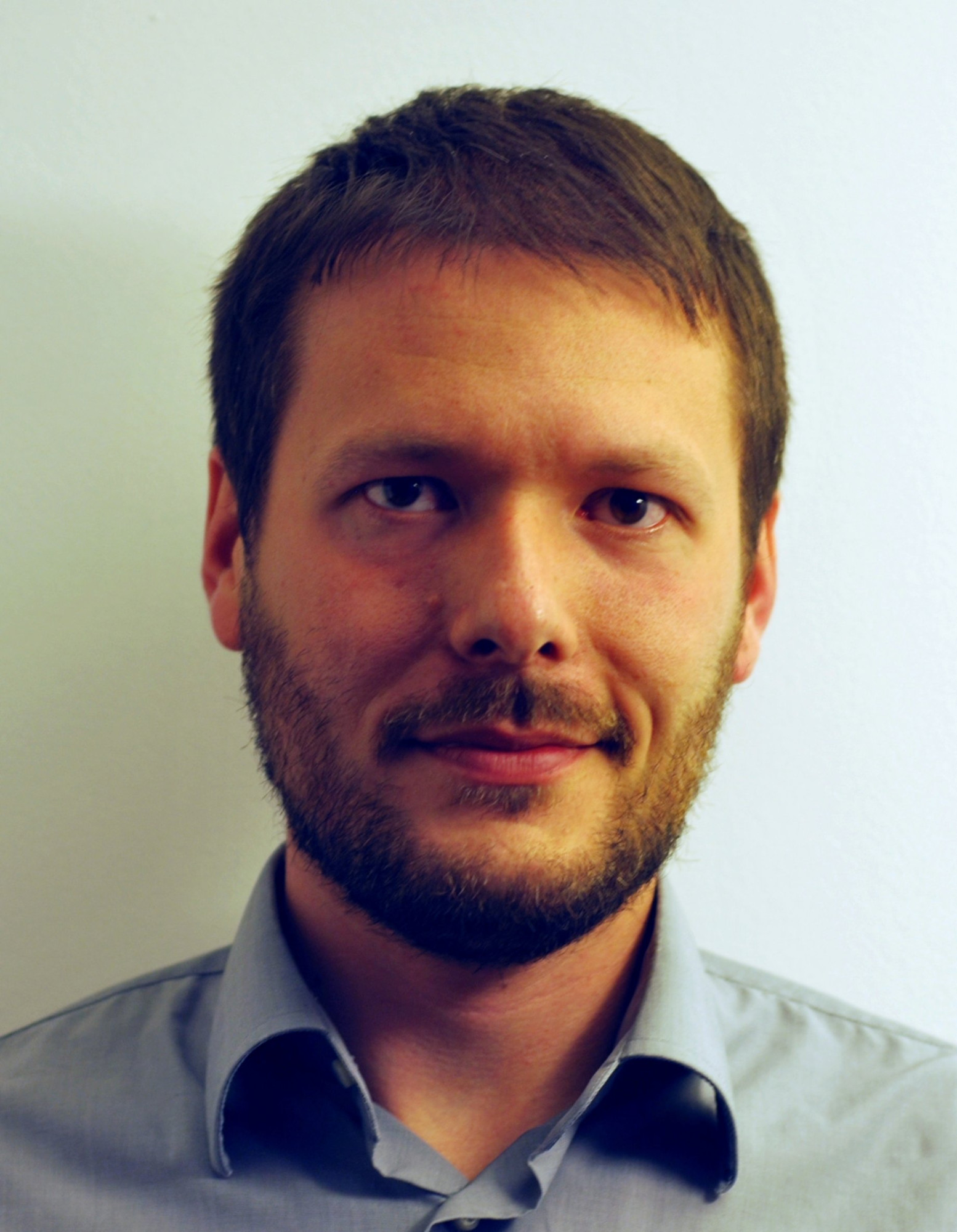
Tobias Eisenreich is a Researcher at the Technical University of Munich (TUM), affiliated with the Chair of Software Engineering led by Prof. Stefan Wagner at the Informatics Heilbronn campus. His research focuses on applying modern AI techniques to software architecture design, aiming to semi-automate the process of creating and adapting architectures from requirements. He is based in Heilbronn and can be reached at tobias.eisenreich@tum.de. His detailed research vision is published in ACM (dl.acm.org/doi/abs/10.1145/3643660.3643942), emphasizing AI-driven approaches to bridge requirements and architecture development. He oversees open thesis opportunities in the group's sections, encouraging students to propose industry-relevant topics while noting potential supervision limitations. No scientific awards or grants are explicitly mentioned in the provided texts.
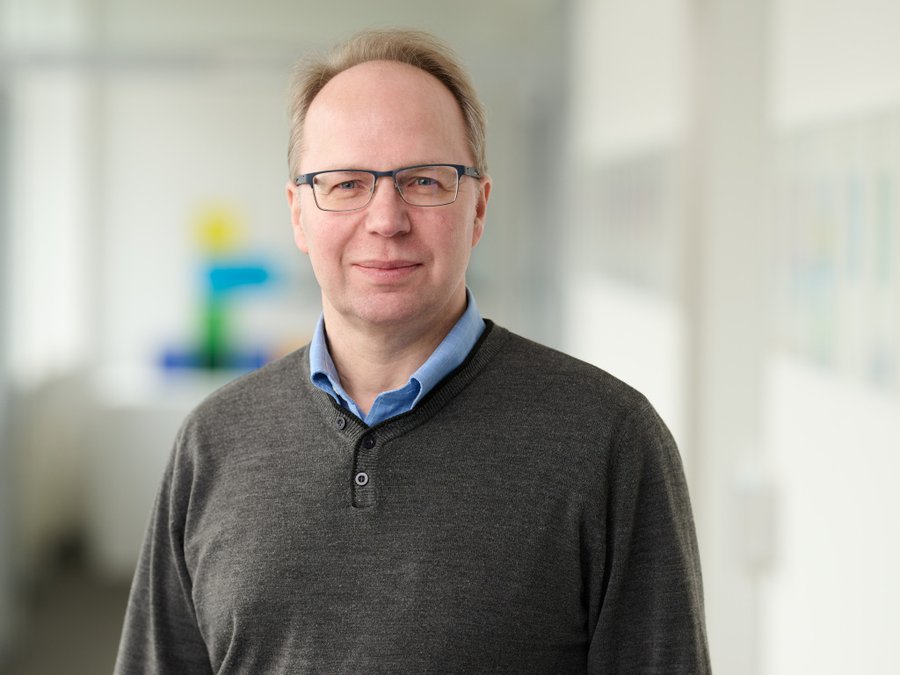
Peter Lewintan is a researcher in the Institute of Applied and Numerical Mathematics at Karlsruhe Institute of Technology (KIT), focusing on partial differential equations, functional analysis, and mechanics of deformable solids. His work bridges mathematical theory with applied continuum mechanics, particularly in Korn-type inequalities and micromorphic models. Current research includes generalized Korn inequalities for incompatible tensor fields and numerical methods for micromorphic continua Recent publications analyze wave propagation in metamaterials, boundary conditions in generalized continua, and optimal Sobolev estimates Collaborators include Patrizio Neff, Adam Sky, and Ionel-Dumitrel Ghiba. His work has been cited 128 times in 56 documents, primarily in journals like Journal of Elasticity and Computer Methods in Applied Mechanics and Engineering .
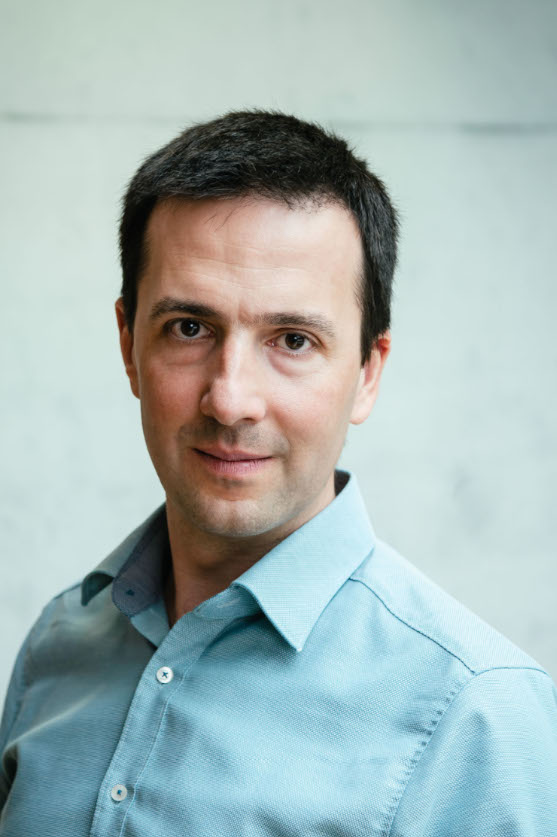
Giovanni Beltrame is a Professor at Polytechnique Montréal's Department of Computer and Software Engineering, where he directs the MIST Laboratory. His work bridges academic research and aerospace engineering applications. Education: M.Sc. in Electrical Engineering and Computer Science, University of Illinois, Chicago (2001) Laurea in Computer Engineering, Politecnico di Milano (2002) MS in Information Technology, CEFRIEL, Milan (2002) Ph.D. in Computer Engineering, Politecnico di Milano (2006) Research Focus: His work spans four interconnected domains: Intelligent Systems (swarm robotics, distributed planning, SLAM), Embedded Systems (hardware/software modeling and verification), Aerospace (avionics, radiation-hardened systems), and Optimization (multi-objective algorithms, parallel programming). These areas converge in space-system applications and fault-tolerant computing. Leadership: As Principal Investigator, he leads multiple government and industry-funded projects. He actively recruits researchers through the MIST Laboratory's structured onboarding process, requiring candidates to demonstrate prior engagement with lab materials. Teaching: He instructs specialized courses including Swarm Intelligence (INF6593ME) and Space Systems Computing (AER8300), covering topics from microprocessor architecture to spacecraft data processing design. Lab Operations: The MIST Laboratory serves as the hub for his research activities, with documented procedures for student recruitment and project collaboration in swarm intelligence and embedded aerospace systems.
Dragan Jankovic is a prominent researcher at the University of Niš, Faculty of Electronic Engineering , Department of Computer Science and Informatics. His work spans multiple disciplines with a focus on Medical Information Systems , IoT for Healthcare , and Multi-Valued Logic applications. Collaborating extensively with researchers like Petar Rajkovic and Aleksandar Milenkovic, Jankovic has contributed to the evolution of resource-aware systems, software development methodologies, and digital logic optimization.
Stefan Leue is a Professor for Software and Systems Engineering at the Department of Computer and Information Science at the University of Konstanz since 2004. He serves as a member of the Extended Directorate of the Centre for Human | Data | Society (elected in 2022) and is part of the Cluster of Excellence Centre for the Advanced Study of Collective Behaviour since 2018. His academic background includes a doctorate from the University of Bern (1995) and prior professorial positions at the University of Freiburg (2000-2004) and University of Waterloo (1995-2000). Leue's research focuses on formal methods in software engineering, particularly in the design and analysis of complex systems. His expertise spans embedded software systems, verification of AI-based software, automotive software engineering, causality analysis, and safety-critical systems. He leads several research projects including Neural Network Repair, Causality in Systems (QuantUM and CausCheck), SCADNet, TarTar, and DiRePro. His research group has produced significant work in model checking, directed search algorithms, real-time systems verification, and probabilistic system analysis. Current research trends emphasize the application of formal methods to AI safety, particularly in neural network verification and repair, as well as extending formal techniques to collective behavior modeling and safety-critical automotive systems. Steering Committee Member, SPIN Symposium on Model Checking of Software since 2007 Member, Cluster of Excellence Centre for the Advanced Study of Collective Behaviour since 2018 IEEE Computer Society member ACM member Gesellschaft für Informatik (German Informatics Society) Professor Leue has supervised numerous PhD and Master's students, many of whom now hold prominent positions in industry and academia. His research group maintains active collaborations with industry partners in automotive and safety-critical systems domains. Current work focuses on bridging formal methods with machine learning to address safety challenges in autonomous systems.
Dr. Benedikt Kohlhepp is a Researcher in the Power Electronics department at Technische Universitaet Berlin. His work focuses on power electronic systems and semiconductor technologies. Research Interests: Power Electronics, Electrical Engineering, Semiconductor Devices, Energy Conversion, Circuit Design, Embedded Systems Contact: Email: benedikt.kohlhepp@tu-berlin.de | Office: Elektrotechnische Institute, Altbau (E), Room E13A | Address: Einsteinufer 19, 10587 Berlin | Phone: +49 30 314-77723
R. Boutaba is a prominent academic in the field of computer science and networking, with extensive research contributions in cloud computing, network virtualization, and software-defined networking. His work is widely cited and published in top-tier IEEE and Springer journals and conferences. His research interests include network management, virtualization, cloud computing, and the application of machine learning in networking. He has contributed foundational surveys and algorithms in network function virtualization and virtual network embedding, influencing both academic and industrial developments. The recent articles show a strong trend toward intelligent network management, leveraging machine learning and virtualization to optimize network performance, reduce operational costs, and enhance security. His work spans theoretical modeling and practical implementation in SDN and NFV environments. Network Virtualization Cloud Computing Machine Learning for Networking Software-Defined Networking Network Security Resource Allocation R. Boutaba has collaborated with researchers such as Reaz Ahmed, S. R. Chowdhury, and Mosharaf Chowdhury. While specific details of grants and advising are not provided in the text, his high citation count and publication volume suggest significant research leadership and student supervision. He is affiliated with a major research institution, though not explicitly named here, and continues to be active in advancing networking technologies.
Florian Hecker is a Professor at the Academy of Fine Arts Munich (AdBK Munich), where he leads the Sound and Experiment program, a cross-class initiative supported by the Bavarian Top Professorship Program. His work bridges sound art, digital synthesis, and auditory philosophy, with a focus on non-traditional sonic experiences and experimental listening. His research interests include synthetic sound, algorithmic composition, auditory perception, and the philosophical dimensions of sound. Hecker investigates sound as both abstract structure and sensory phenomenon, often working at the intersection of technology, art, and cognition. His practice emphasizes off-the-grid software environments, critical listening, and the materiality of sound media. The recent body of work and publications reflects a strong trend in machine-generated sound, formal systems, and the deconstruction of auditory norms. His projects often explore how sound shapes space, perception, and meaning beyond linguistic frameworks, utilizing experimental synthesis and spatial audio techniques. Florian Hecker has presented his work internationally at venues such as Galerie Neu (Berlin), Roy and Edna Disney CalArts Theater (Los Angeles), and Simian (Copenhagen), establishing himself as a leading figure in contemporary sound art. He has an extensive discography with labels including Editions Mego, Etat, GRM, and Pan, reflecting both artistic and research-oriented outputs. Notable works include Syn As Text [AC] , Statistique Synthétique , and Inspection II , which demonstrate rigorous engagement with formal and synthetic sound processes. He advises students interested in experimental sound practices through the Sound and Experiment platform, encouraging cross-disciplinary collaboration and independent research. The program hosts lectures and performances by prominent figures in sound and media theory, fostering a vibrant intellectual and artistic environment. Hecker's work is deeply embedded in a lab-like studio practice, where sound is treated as a medium for conceptual and sensory experimentation. The Sound and Experiment program functions as a dynamic research platform, integrating artistic production, philosophical inquiry, and technological innovation.
Yulan He is an active researcher in Natural Language Processing and Computational Linguistics with numerous publications in top-tier conferences including ACL, EMNLP, and COLING from 2023-2025. Their work spans both theoretical advancements in Large Language Model architectures and practical applications in healthcare, social media analysis, and information retrieval. Research interests focus on Large Language Model optimization , including improving faithfulness in rationale generation, enhancing reasoning capabilities, personalizing outputs to user preferences, and optimizing computational efficiency. Significant contributions include frameworks for debiasing opinion summarization, improving depression detection in clinical interviews, and developing methods for Theory-of-Mind reasoning in LLMs. Their work addresses critical challenges in LLM reliability, interpretability, and efficiency. Analysis of recent publications reveals consistent focus on bridging the gap between theoretical LLM capabilities and practical applications , with particular attention to healthcare contexts, social media analysis, and complex reasoning tasks. Their research demonstrates how to make LLMs more reliable, efficient, and aligned with human needs across diverse domains. Scientific contributions include: Novel frameworks for LLM faithfulness and reasoning (Drift, EnigmaToM) Efficient inference methods (SCOPE, PECAN) Bias mitigation techniques (LASS, Rehearse With User) Personalization approaches (PROPER) Healthcare applications (Explainable Depression Detection) As evidenced by senior authorship positions across numerous publications, Yulan He leads research projects and likely supervises graduate students in NLP research. Their work demonstrates strong technical expertise combined with practical problem-solving approaches to real-world NLP challenges.
Sujian Li is an active researcher in computational linguistics and natural language processing, with recent contributions to advanced large language model applications. Their work spans multiple critical areas including hierarchical memory frameworks for Wikipedia generation, self-refining entity grounding systems, and long-context embedding model extensions. Key Research Areas: Continual learning in NLP, multimodal reasoning, cross-lingual knowledge transfer, and factual consistency evaluation. Notable Methods: MOG framework for structured generation, ISR self-refinement scheme, LongAttn token-level analysis, and IPR step-level process refinement. Article Trends show a focus on improving LLM robustness through adversarial training, enhancing coherence via discourse-level graph modeling, and developing benchmarks like WIKIGENBENCH for real-world evaluation. Their research also addresses knowledge integration in biomedical multilingual models (KBioXLM) and mathematical parsing via tree-structured decoding. Collaborations include leading researchers like Yifan Song, Dawei Zhu, and Wenhao Wu across institutions and projects.
María José Domínguez Vázquez is a Professor of German Studies at the University of Santiago de Compostela, Spain. She is a fellow of the Alexander von Humboldt Foundation and leads innovative research in digital lexicography, valence grammar, and multilingual language processing. She is the Spanish coordinator and chair of the governing board of the Erasmus Mundus Master’s program in Lexicography (EMLex), reflecting her prominent role in international academic collaboration. Her research centers on the integration of lexicography with natural language processing and generation, focusing on the development of dynamic, computer-assisted tools for multilingual syntactic-semantic pattern generation. Key projects include the design of three plurilingual language generators— Xera , Combinatoria , and CombiContext —which model noun phrase structures and embed them in full sentences across German, French, and Spanish. These tools exemplify her work in data integration, resource interoperability, and automated lexicographic content creation. The recent publications listed demonstrate a strong trend toward digital, corpus-driven, and computationally enhanced lexicography, with emphasis on multilingualism, semantic representation, and practical applications in language technology. Her work bridges theoretical linguistics with applied computational methods. Fellow of the Alexander von Humboldt Foundation She leads major research projects in multilingual lexicography and automatic language generation and plays a leadership role in the EMLex program, overseeing academic training and international coordination. While specific grant details are not mentioned, her Humboldt fellowship and publication record suggest sustained research funding and institutional support. She has contributed to major edited volumes and peer-reviewed journals in applied and computational linguistics. She is associated with the research group behind the PORTLEX lexicographic portal (http://portlex.usc.gal/) and leads work on integrated digital lexicographic systems. Her team develops tools that combine corpus linguistics, word embeddings, and automatic dictionary generation, fostering innovation in how linguistic knowledge is structured and accessed.
Professor Ralf Patz is a faculty member at the Kiel University of Applied Sciences , affiliated with the Institute of Communication Engineering and Embedded Systems (Room C13-2.07). His responsibilities include teaching core electrical engineering modules and supervising student research projects. Contact is available via telephone (+49 431 210-4113) or email. Research Focus: Prof. Patz specializes in interdisciplinary domains merging hardware and software systems, including: Magnetic Induction Tomography for non-invasive measurement techniques Embedded Systems design and implementation IoT architectures for Smart Home/City applications Wireless sensor networks (LoRaWAN, WLAN) Microcontroller-based measurement technology Teaching & Supervision: He coordinates multiple courses: Compulsory Electrical Engineering modules (winter/summer semesters) Microcontroller Technology courses Master's electives in Embedded Systems He actively supervises bachelor/master theses and semester projects through the 'Forschungs-Assistenz' program, focusing on Embedded Systems and IoT prototypes like LoRaWAN-based sports sensors.
Prof. Dr. Ioan Pop is a joint professor at the Karlsruhe Institute of Technology (KIT) and Stuttgart University, operating under the Jülich model. His research group is based at KIT, integrated within the Helmholtz Association, with presence on both the north and south campuses. He is affiliated with the Physics Institute and the Institute for Quantum Materials and Technologies (IQMT). His teaching duties are carried out at Stuttgart University. Research Interests: Prof. Pop's work centers on superconducting quantum circuits, particularly focusing on Josephson junctions and their applications in quantum memory, processing, and detection. His group aims to design quantum circuits protected against decoherence—critical for scalable quantum computing. Research themes include fluxonium qubits, granular aluminum superconductors, quantum amplifiers, and mitigation of environmental noise sources such as radioactivity and two-level systems. His recent publications reveal a strong trend toward improving coherence, control, and scalability in superconducting quantum devices. Work spans from fundamental quantum phenomena to applied quantum engineering, with emphasis on parametric amplifiers, non-demolition readout, hybrid systems, and material-level innovations in tantalum and germanium platforms. Scientific Awards: Sofja Kovalevskaja Award from the Alexander von Humboldt Foundation Advising and Grants: Since 2015, Prof. Pop has led a startup research group supported by the Alexander von Humboldt Foundation’s prestigious Sofja Kovalevskaja Award. From 2020 onward, he has continued as a research group leader in the Helmholtz Association. He supervises a growing research team at KIT, mentoring students and postdocs in experimental quantum device physics. Labs and Teams: The Pop Research Group is embedded within KIT’s Physics Institute and IQMT, operating advanced nanofabrication and low-temperature measurement facilities. The team collaborates extensively with institutions like Yale University, CNRS, and other Helmholtz centers, and participates in large-scale quantum initiatives leveraging underground laboratories for coherence enhancement.
Erika Ábrahám is a University Professor in the Department of Computer Science at RWTH Aachen University, Germany, where she leads the research group on the Theory of Hybrid Systems. Her work is centered on formal methods for cyber-physical systems, with a strong focus on hybrid and probabilistic systems, SMT solving, and symbolic computation. Her research interests include Formal Methods, Hybrid Systems, Probabilistic Systems, Satisfiability Modulo Theories (SMT), Symbolic Computation, Cyber-Physical Systems, Model Checking, Reachability Analysis, Automated Reasoning, Verification of Safety-Critical Systems, Robotics, Energy Optimization, and Artificial Intelligence . She develops theoretical foundations and practical tools for the analysis and verification of complex systems, especially in safety-critical domains like automotive and robotics. Her recent publications demonstrate a consistent focus on advancing SMT solving techniques, particularly in real algebra and cylindrical algebraic decomposition, and on analyzing probabilistic hybrid systems, including reachability and hyperproperties. She frequently contributes to and organizes major conferences and workshops in her field. Scientific Awards: No specific awards were mentioned in the provided text. Erika Ábrahám actively supervises students and researchers, with advisees including Jasper Kurt Ferdinand Nalbach, Valentin Maxim Promies, Stefan Schupp, and others. She has been involved in projects related to railway timetables, energy load control, and AI-based robotics. She also contributes to academic service through editing conference proceedings and promoting gender equality in software engineering. She is a key contributor to the HyPro library for hybrid systems reachability analysis and continues to publish in top venues such as LNCS, Springer, and Elsevier journals. Her recent work spans from core theoretical advances in SMT to applied research in sonar object detection and robotics.
Camilo Andres Gordillo Chaves serves as a Researcher in the Department of Computer Science at the University of Freiburg's Faculty of Engineering, working within the Autonomous Intelligent Systems research group under Prof. Dr. Wolfram Burgard since February 2015. His academic background includes: Master of Science in Microsystems Engineering from the University of Freiburg (2012-2014) Bachelor of Science in Mechatronics Engineering from Universidad Militar Nueva Granada, Colombia (2007-2012) His research integrates Machine Learning, Embedded Systems, and Robotics to address challenges in neural engineering and intelligent control systems. Key contributions include neural microprobe channel optimization using multi-armed bandit algorithms and computer vision-based traffic management solutions. His work demonstrates strong interdisciplinary connections between robotics, machine learning, and embedded hardware design. Publications reveal a consistent focus on real-time adaptive systems, with applications spanning neural recording technologies and intelligent transportation infrastructure. His methodologies frequently combine algorithmic optimization with physical system constraints. He actively contributes to the Autonomous Intelligent Systems group's research agenda, including the Advanced EDC project, while maintaining technical operations from his office at Georges-Köhler-Allee 080 in Freiburg.